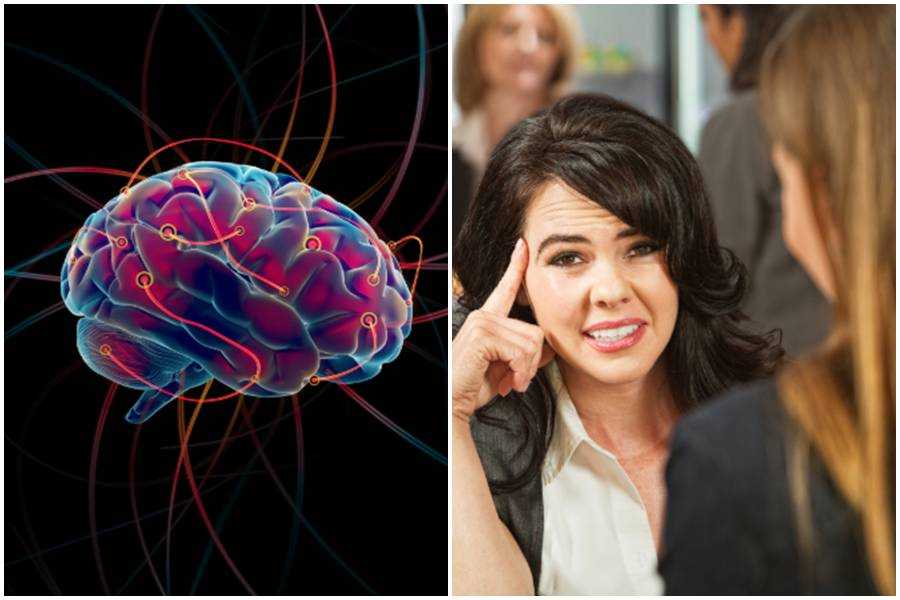
There are some people in life you may not like all that much, but it’s in your best interest to enjoy their company. It could be the brother-in-law who loves to antagonize you, a coworker who gets on your last nerve, or the parents of your child’s BFF whom you can’t ever seem to get on the same page with.
It feels nearly impossible to force yourself to like someone. However, a new study from the University of Colorado Boulder and the Max Planck Institute for Human Cognitive and Brain Sciences in Germany suggests that, thanks to a neuroscience-based trick, you can use your imagination to like people more.
How to use the 8-second rule
Let’s say that you have to go to lunch with a coworker who gets on your nerves. She talks too much, gives away too much personal information, and loves to talk behind your other coworkers’ backs. To make the situation more bearable, take just eight seconds before you go out to eat with her to imagine a scenario in which you have a good time. She lets you talk for a bit. The lunch tastes excellent, and you find out you both like the same music.
To put it simply: things turn out much better than you expected.

According to the neuroscientists behind the study, imagining an optimistic scenario with your coworker tricks your brain into thinking it was a real interaction. Therefore, you will begin to have more positive feelings toward them because of the encounter you had in the past. (Although it never really happened.)
Using this quick 8-second trick can also help people overcome phobias, much like exposure therapy. In exposure therapy, if you’re afraid of spiders, a psychologist might gradually expose you to them so repeated encounters help you overcome your fear. But this new research shows that simply imagining positive experiences with spiders can also help you overcome your fear.

“We show that we can learn from imagined experiences, and it works very much the same way in the brain that it does when we learn from actual experiences,” senior author Roland Benoit, associate professor of psychology and neuroscience at CU Boulder, said in a statement. “If memory and imagination are so similar, then theoretically people should be able to learn from merely imagined events.”
“It suggests that imagination is not passive,” author Aroma Dabas added. “Rather, it can actively shape what we expect and what we choose.”
It’s important to keep imagining positive things
The good news is that by imagining an optimistic scenario with your annoying coworker, you can increase your chances of liking them. However, imagination can also have a dark side. If you constantly imagine negative scenarios, you may experience more anxiety and depression. “You can paint the world black just by imagining it,” said Benoit.
The big takeaway is that your imagination is extremely powerful and, when used for good, can help you build a more positive reality. But you should also be careful to recognize when you’re catastrophizing about future events, because that can lead to unnecessary trouble. You are what you think. The more you imagine a positive reality, the more likely you are to live in one.