

Categories are great for some things: biology, herbs, and spices, for example.
 Image via
But bodies? Well, putting bodies into categories just gets weird. There are around 300 million people in America, but only 12 or so standard sizes for clothing: extra-extra-small through 5x.
That's why designer Mallorie Dunn is onto something with her belief — people have different bodies and sizing isn't catching up.
Dunn has found that the majority of clothing sizes stop at an extra-large, yet the majority of women in America are over that. "And that just doesn't make sense," she says.
 All images via Smart Glamor, used with permission.
Human spice rack, only, a LOT more variations of flava. ;)
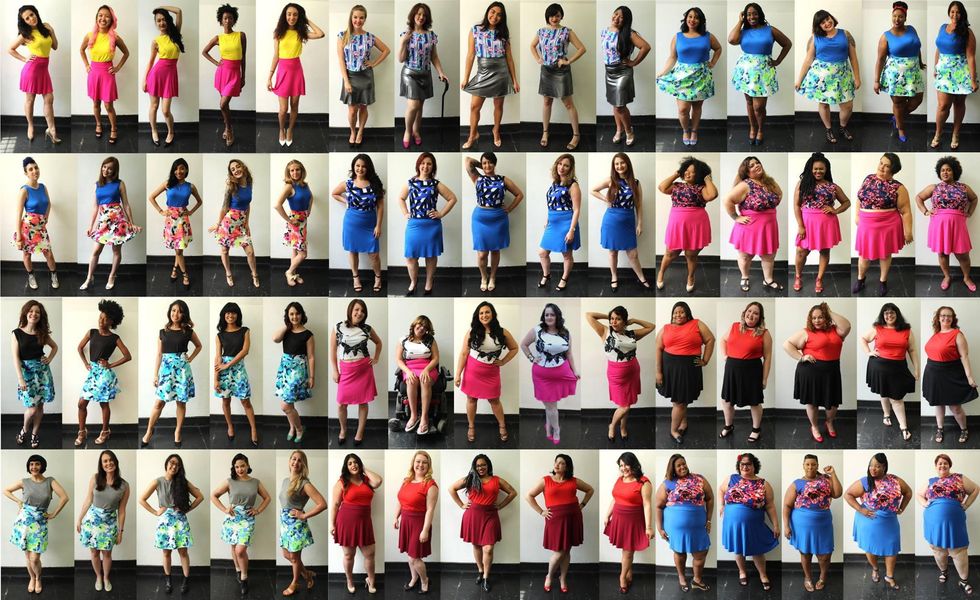
That's why she started a project around her clothing label, Smart Glamour, to document the bodies of models according to their sizes — and to show how one size can look very different on different bodies.
In pursuit of creating a fashion environment that's kinder to all bodies, Dunn has dedicated herself to educating consumers about sizing.
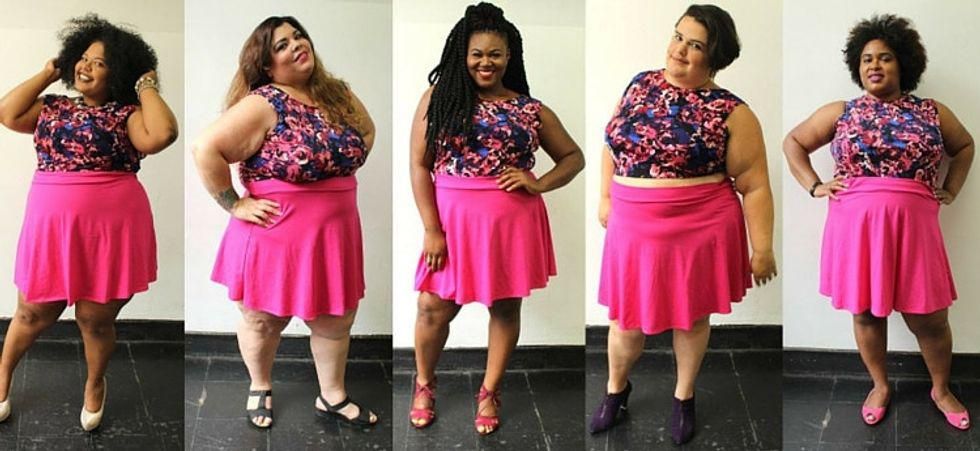
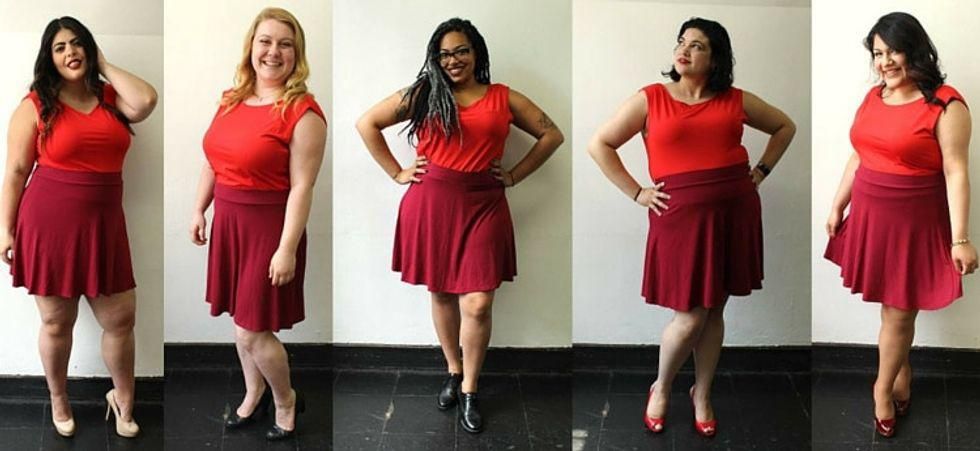
First, she found 60 people of 12 different sizes and took their pictures.
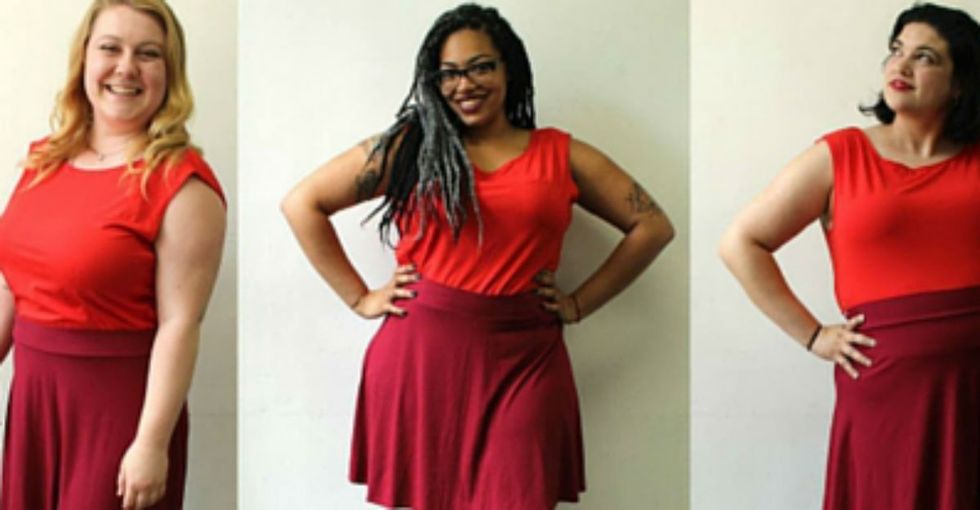
Then, she put five women at a time in the same size of skirt and shirt to show how diversely beautiful human bodies are and to prove that everyone looks different in clothes no matter what size they have on.
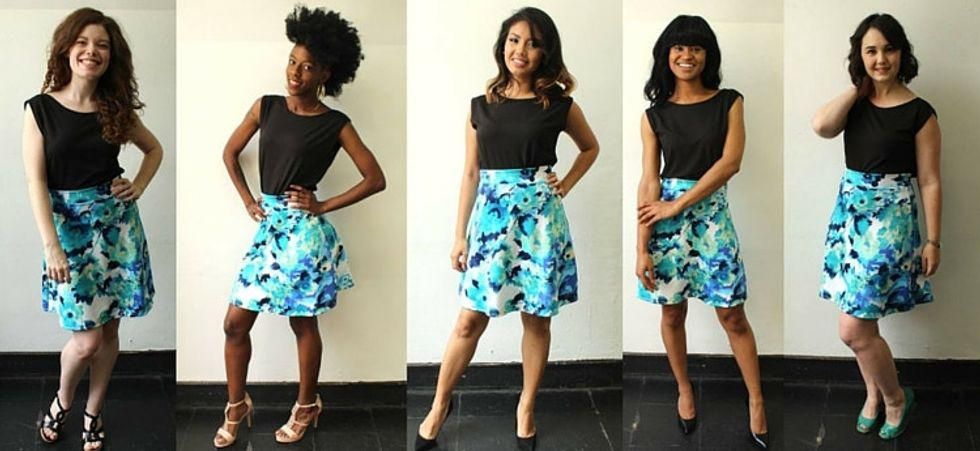
She hoped to show people that 12 sizes don't even come close to capturing the beauty of the human form.
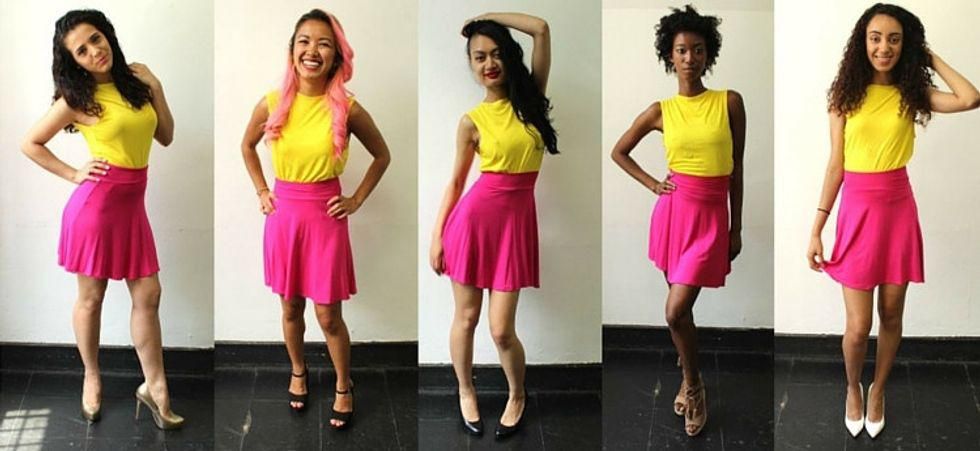
All these models are wearing the same size ... but do they look the same?
"No matter what size you are that's not what dictates your worth or your beauty."
"I had a convo with a friend of mine who was like 'Yeah, if I went from a medium to a large, I'd be fine with it, but if I went from a large to an extra-large, that wouldn't be OK' and I was like, 'Why???' And she had no rational reason behind that," Dunn said, describing a conversation we've all either had, started, or heard. "We've been taught forever that the bigger something sounds, the worse that it is."
Dunn's project also shows just how arbitrary and narrow-minded clothing sizes are.
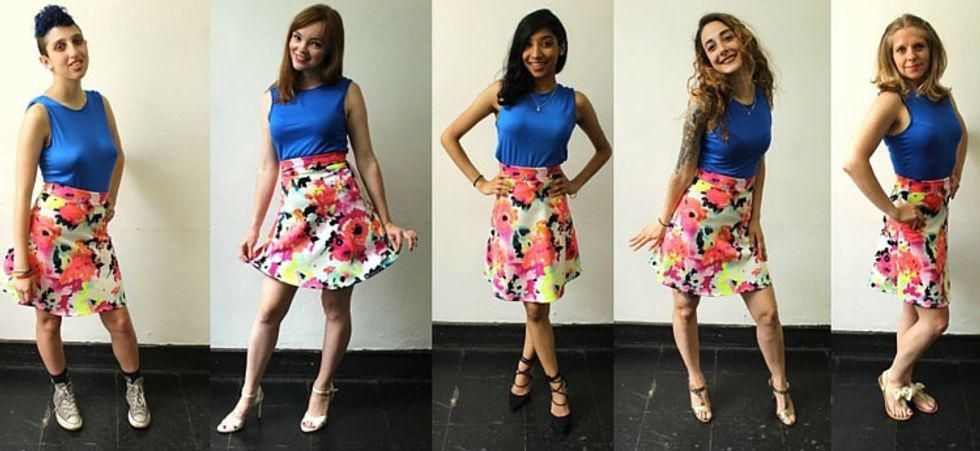
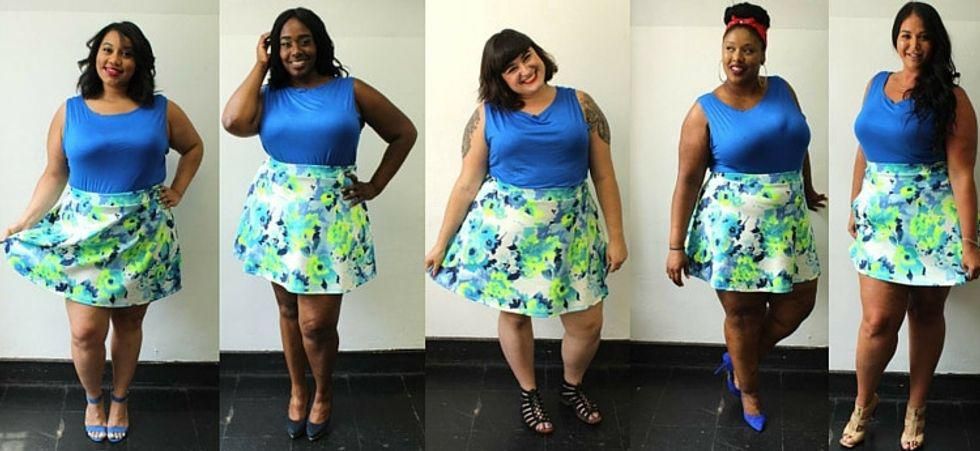
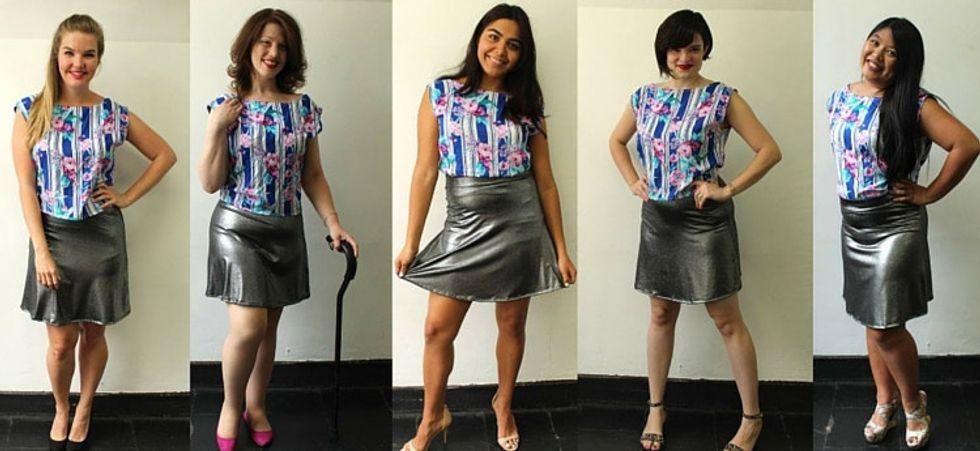
Sizes really are just numbers.
Unlike the images we are presented both in clothing ads and in entertainment and media, human beings aren't, as Dunn remarked, "robots who come out on a conveyor belt ... we're all shaped differently."
The pressure to look one way is obnoxious. And kinda dangerous.
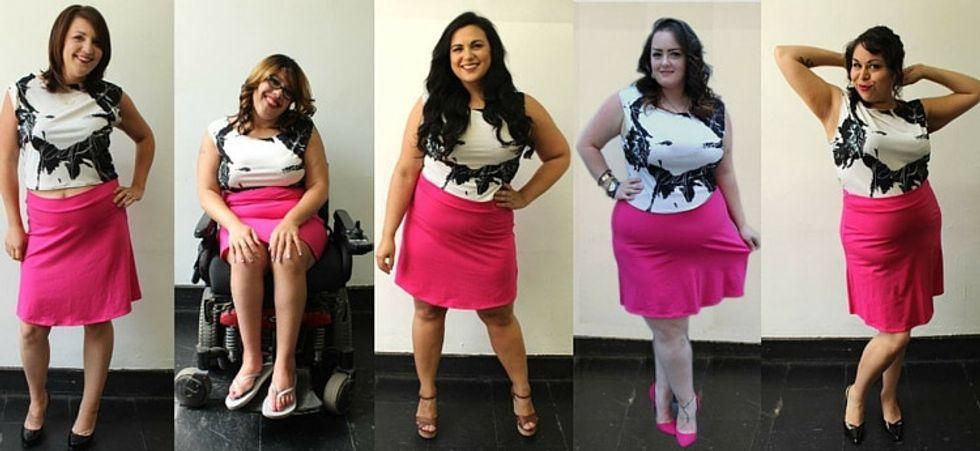
"We've been taught forever that the bigger something sounds, the worse that it is."
There's so much weight — no pun intended — on being the "right" size.
"You put an 'extra' on top of a 'large,' and suddenly it's the end of the world," Dunn said of her experience in fashion sizing. "... And it really doesn't mean anything, it really only means that there's an extra inch of fabric."
One extra inch of fabric.
3 in 4 girls report feeling depressed, guilty, or shameful after just three minutes of leafing through a fashion mag.
But I'd like to imagine a world where everyone can try on clothes and leave the emotional burden of worrying about fit to the clothes.
Instead, let's focus on what looks good on our bodies. Let the clothes handle the emotional roller coaster of not fitting, and you just live your life in the body you've been given.
Dunn, who has worked for fashion houses for her whole career, puts it bluntly: "Clothes are not made for all bodies. ... We shouldn't then think when something doesn't fit us that it's somehow our fault."
Dunn's models also have a group on Facebook where they support each other, compliment each other, and generally lift each other up. Model Stephanie describes it this way: "We see the beauty in one another and help each other to recognize our own beauty at the same time." Fashion leading to body optimism and confidence? Yes, please.
And Dunn herself drives a hard line when it comes to feeling good in the skin you've been given. Her philosophy is this: No matter what size you are, that's not what dictates your worth or your beauty.
Self-worth not based on appearances. That's a category we can all aspire to "fit" into!
This article originally appeared on 07.27.16
- Unexpected emotional moment caught on video shows the affects of body image on young boys ›
- body positivity ›
- Body positivity vs. body neutrality: One is a weapon, the other a ... ›
- What happens if you ride a roller coaster without a harness? - Upworthy ›
- Stop complimenting women for being tiny - Upworthy ›
 A Generation Jones teenager poses in her room.Image via Wikmedia Commons
 "This blanket smells like me now."
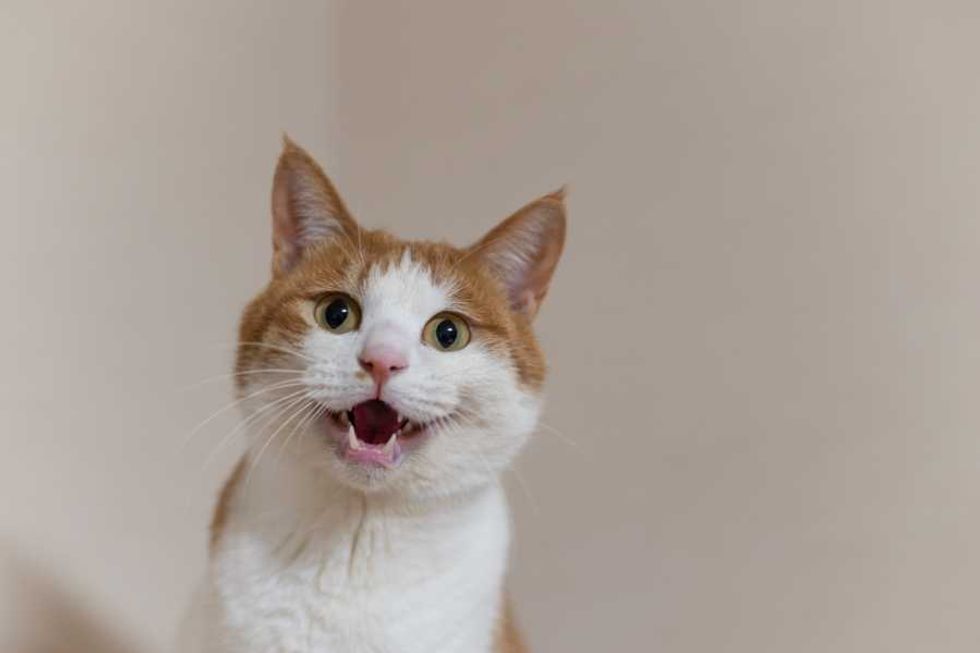 "Hey, I'm talking to you."
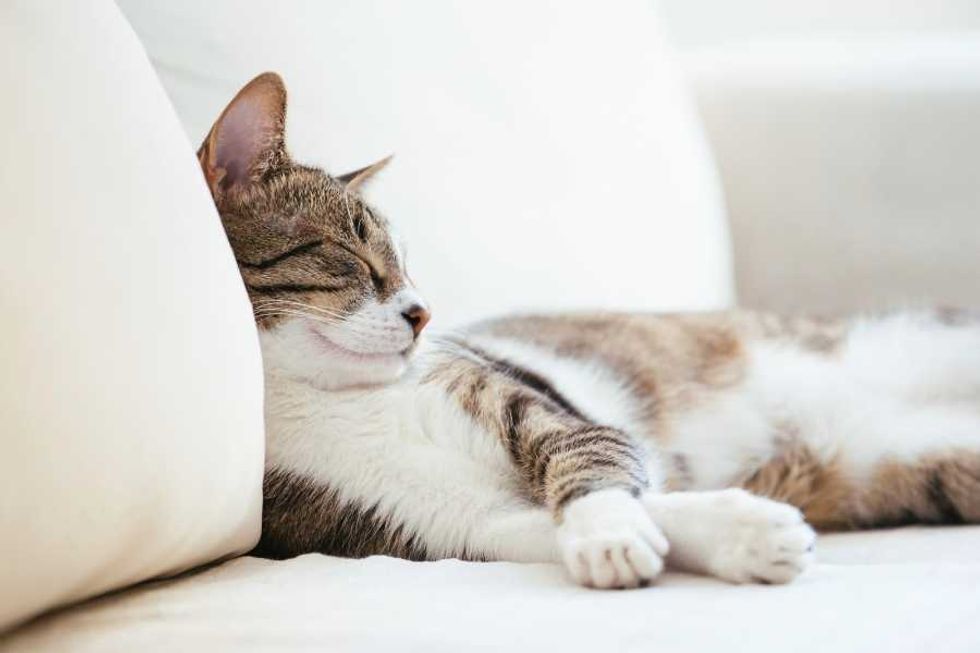 "Do not disturb."
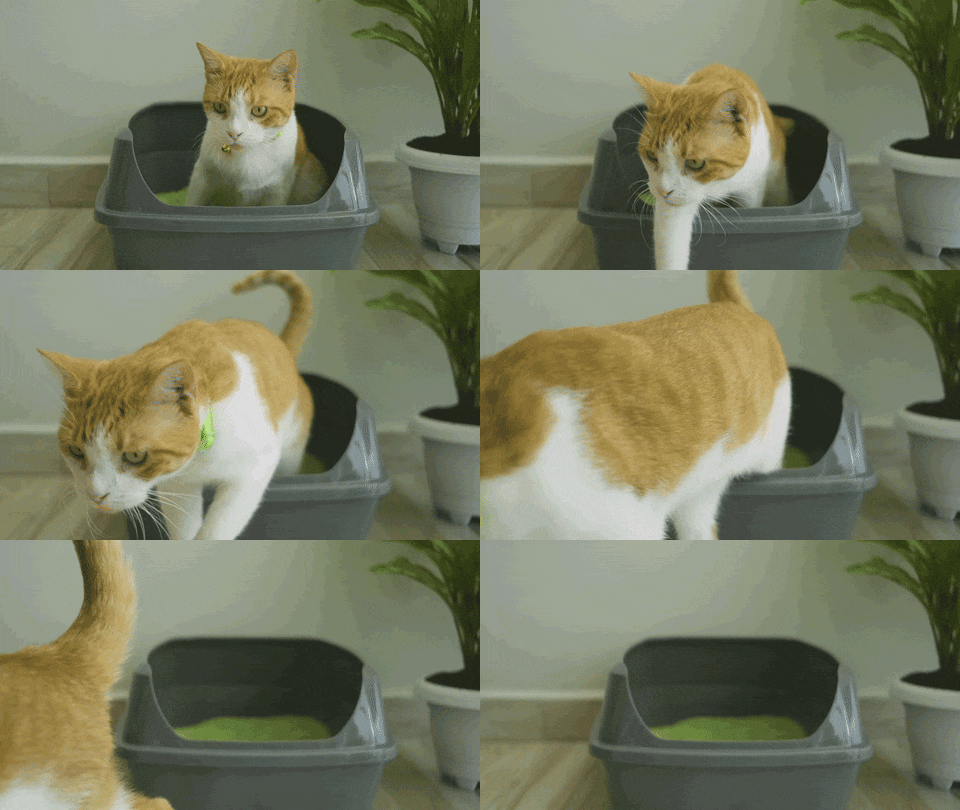 The litter box is sacred.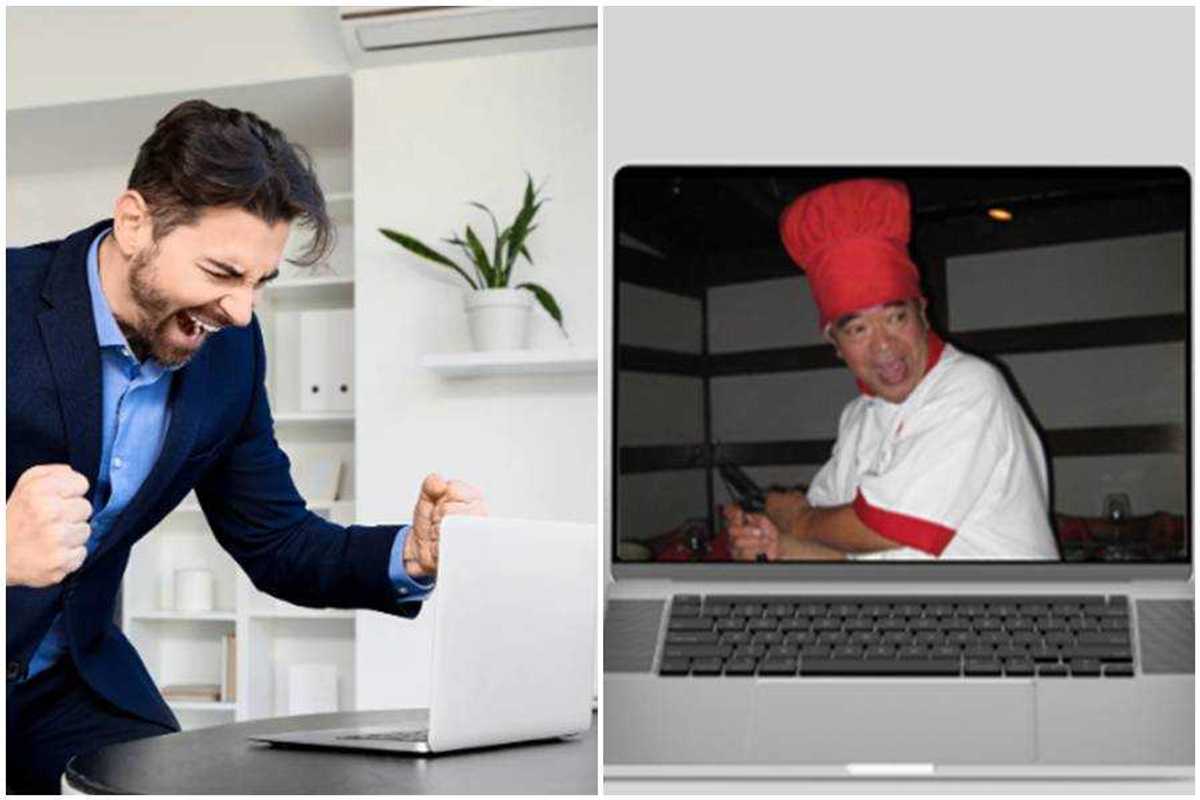
 An office kitchen.via
  An angry man eating spaghetti.via