upworthy
Add Upworthy to your Google News feed.
Google News Button
Pop Culture

24 brilliantly attainable ideas for side jobs that can make you an extra $2,000 a month

It’s a huge factor in creating real financial freedom.

side hustles, side gigs, side hustle ideas, side gig ideas, high paying side gigs, best side gigs

Nearly all of us could use some extra cash.

So many of us, even those with full-time jobs, are looking for ways to make a little extra money. It’s vital not only for these challenging economic times, but it’s also a huge factor in creating real financial freedom. This is certainly something most millionaires have figured out.

But it can be hard to figure out what that side hustle could be. It's even harder still to know whether or not the effort we put in will pay off in dividends. Many of us have a distorted concept of “passive income,” thinking that the side hustle we choose will require zero effort at some point. Unfortunately, other than investing, that’s not entirely true.

However, there are definitely ways to drum up side hustles that make sense with your lifestyle, that draw on your own interests, skills, and values, and truly add to your life, whether they be through acts of service, reselling items online, or creating new items (be they artistic or practical).

You can see this reflected in the answers given when someone on Reddit recently asked, “What’s something you do on the side that makes real extra money?” This OP added that they were hoping to raise an extra $2000 a month, and people were quick to be candid about how doable that really is. As someone pointed out, "$2K/mo is really more like a second job than a side gig" in terms of how much time and effort is needed.

Still, there are some pretty unique and time efficient ideas below, like private baseball coaching and being an elderly companion, that could get someone close to $500 a week.


Here are some of our favorite responses:


1. "I sell rare house plants on the side. "

"If I want some money for a spa or date night, I’ll just chop and propagate some plants for an easy $300-$500…Rare alocasias, monsteras, and anthuriums. There are a ton of people who collect, trade, etc. It’s my hobby, which has made it so easy to turn into a side hustle. Best part is it’s all cash."

side hustles, side gigs, side hustle ideas, side gig ideas, high paying side gigs, best side gigs A woman selling plants.Photo credit: Canva

2. "Election work."

"Literally in 14 days this year, I'll gross $6,900. Long days, easy peasy work."

3. "I host bar trivia."

"It's usually three hours a night, and it makes me about $150 a night (plus tips). I'm actually trying to make this my full-time job; I enjoy it so much. It's not hard to buy trivia games or hook up with an existing company. I am independent and write my own games that I try to sell on the side."

4. "I have a kettle corn pop-up."

"I do fairs, festivals, pumpkin patches, and can turn $300 of product and space rent into $6k+ sales in a day. Some states require [a food or vendor license] but in my popcorn is exempt from licensing because of its very low risk for foodborne illness."

5. "Landscaping."

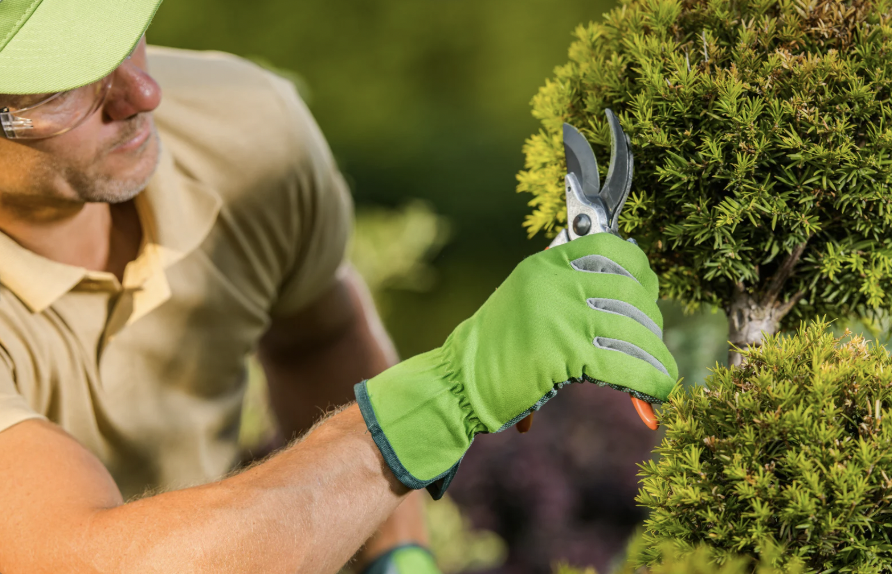
"Cash under the table, you dictate how many jobs you want to take on, and you can focus on one specific neighborhood to limit gas mileage. A mower, trimmer, blower, and small trailer will all pay themselves off in three weeks. It’ll beat you up a little, but it’s rewarding work. It’s also extremely straightforward. As long as you do what you’re supposed to do, the customer will be happy. Don't target people with complex yards. Drive through the neighborhood and find someone who's obviously over a month behind on mowing their lawn. Knock and offer to do it for $40. Tell them you'll come back every two weeks if that works for them. Get to a point where you've got 10 or so yards on rotation and you can knock them out in a day. $400 for a day's work every two weeks, under the table. Do more or less depending on how much or little you want to make."

side hustles, side gigs, side hustle ideas, side gig ideas, high paying side gigs, best side gigs A man trimming bushesPhoto credit: Canva

6. "I used to flip furniture on Craigslist and Facebook Marketplace.

"I did have to invest in a small trailer and a good cleaner. But I would get free or cheap furniture. Clean it and spruce it up. Sell it for a couple hundred bucks. Mostly couches."

7. "I make cosplay props for people."

I use my personal social media, and I have a commissions page on Ko-Fi. People will see what I usually make and ask me if I am able to make a certain prop. I will then make an agreement with the customer before starting the work."

8. "I put up and take down Christmas lights on weekends and evenings from October to January."

"$24k a season is very doable, but you gotta be able to haul and carry ladders, confidently and safely climb up and down ladders, and be OK with working in the wind and rain in the coldest part of the year. It isn’t glamorous, but it can be a nice chunk of extra money."

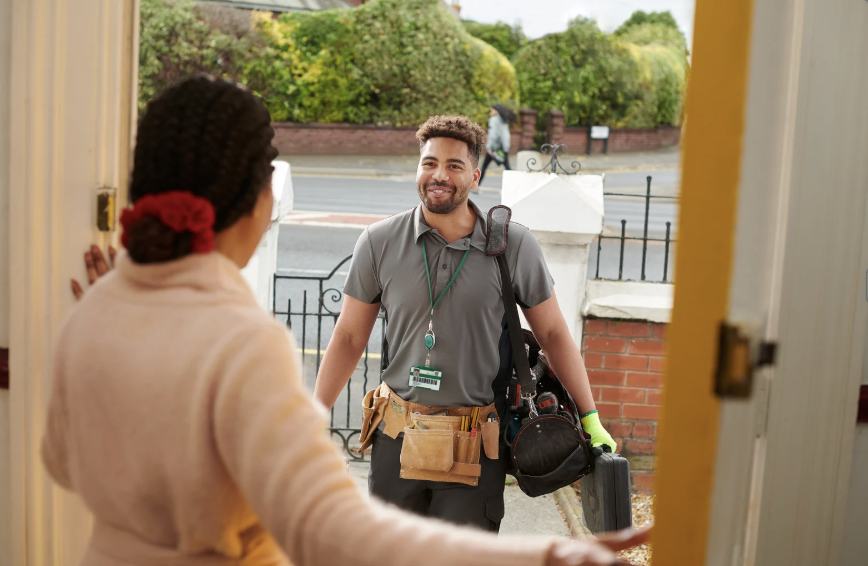
9. “If you're even a little handy, you can make good money as a handyman in elderly neighborhoods."

"My dad started out just helping neighbors with hanging curtains, painting bathrooms, etc... after about a year he was busy enough to quit his full time job and just work for himself. You don't need a lot of tools or an expensive truck, but if you can operate a drill, swing a brush, and are good with old people - there's good paying work out there for you.”

10. "I work as an ad model."

"All kinds of ads. Internet, TV, print. Work is sporadic and irregular, which means you'd better have solid income from a main source. But a little $500-$800 check from time to time sure comes in handy. "Generally, one can set up an account for a small annual fee on places like castingnetworks.com or actorsaccess.com. Specifically, it would be better if you would connect with a local talent/modeling agency. They will also ask you to sign up for a talent website, and you’re going to need professional photos. Spend money on THAT, for sure. Good photos are critical!"

side hustles, side gigs, side hustle ideas, side gig ideas, high paying side gigs, best side gigs Two models posing.Photo credit: Canva

11. "I did Rover for three years, boarding dogs in my home."

"I made $11k a year consistently. Month to month could vary widely, $0-$2k, but I always finished the year the same. But you really should have some experience and be an actual responsible person, because dogs are living beings and deserve proper care. You also need to account for things like Rover fees (20%), taxes, insurance, supplies, and licensing laws. You will end up working all holidays because that's the busiest season for dog sitting, and you'll need to commit your schedule months in advance."

12. “Over ten years ago I started my own hummus business."

"Took a bit to get started but once I was accepted to different farmer’s markets, I made pretty good dough. But omg setting up a tent and tables at 5:30am on weekends was not fun after a couple of years. It was called Bean There, Done That and I had tons of creative flavors (and punny names).”

13. "I started a YouTube channel a few years ago, and now it’s actually pulling in between $1,500 and $3,000 a month!"

"It’s nuts!!! It was just a hobby. I talk about tech stuff. I review computers, network-attached storage systems, and occasionally a tech company I follow pretty closely. My channel name is the same as my Reddit name. It did take several years before money started flowing, but now it's a pretty great side hustle because it's something I would do for free anyway."

side hustles, side gigs, side hustle ideas, side gig ideas, high paying side gigs, best side gigs A Youtuber creating contentPhoto credit: Canva

14. "I participate in focus groups and research studies."

They're a pretty cool way to spend a couple of hours, and they usually pay $150-$250 a pop. I do this with several research companies in my area because most of them only let you participate once every few months. So, if you keep filling out questionnaires and screeners with various research companies, you can rotate through them and get picked more often. Using this method, I participate in one or two studies per month. I've actually been grinding hard on applying for research studies for the last few months to pay off my credit card debt. Been making some pretty good progress!"

15. "Deliver pizza for a local place under the table."

"You can do pretty good Friday night through Sunday."

16. "My very first month of donating plasma, I made $900."

"Paid for my three-and-a-half week road trip last summer to Canada. I only do it once a week now because the center closest to me changed their hours, so I get $40 a week instead of my usual $100, but that’s still an extra $160 a month I put back into savings that doesn’t have to come out of my normal paychecks, it’s just extra. So that’s nice. I do miss the $400 months, though."

side hustles, side gigs, side hustle ideas, side gig ideas, high paying side gigs, best side gigs A handy man coming in for repairsPhoto credit: Canva

17. "None of these enterprises have made me two thousand a month individually, but all of them combined have equaled that over many months of production."

"Edible mushrooms. Microgreens. Composting worms. Compost. Vegetable plant starts. Cloned fruit trees. I've been doing these for years, and I sell directly to consumers, no restaurants or middlemen."

18. "I make about $120/hr coaching baseball lessons."

"I’ll spend a weekend with 10 lessons coaching middle school to college athletes. I also charge $75/month to program throwing/pitching training. This can be 10-30 pitchers a session, ranging from high school to professional. It’s about 5-15 extra hours a week."

19. "I used to sell my artwork online, it was a good $15,000 to $20,000 a year."

20. "I work freelance in the arts."

"I’ve done a decent job advertising my own business and have developed a side hustle doing social media marketing for other small businesses. Writing posts, finding imagery, and scheduling the posts in advance. The amount of actual work varies from month to month, but the retainer fee does not, and it’s made my life much easier and more predictable."

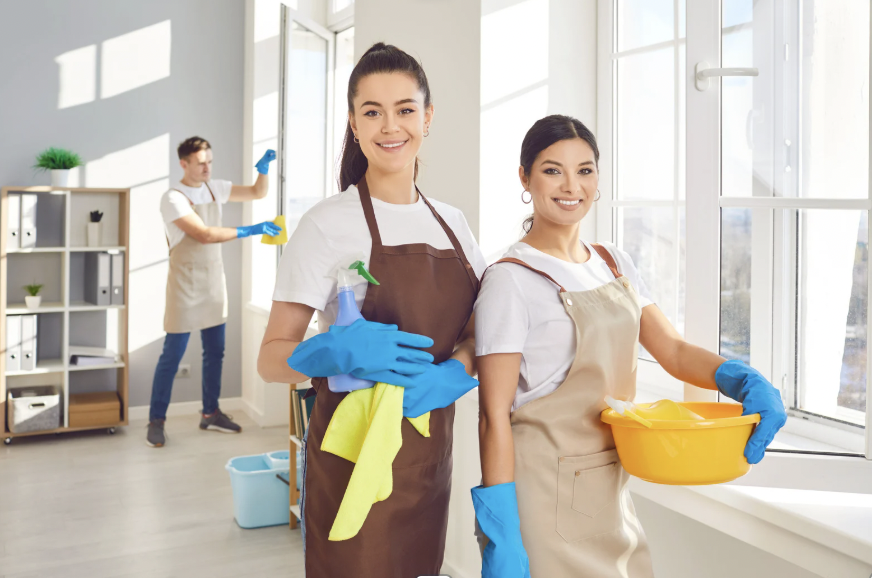
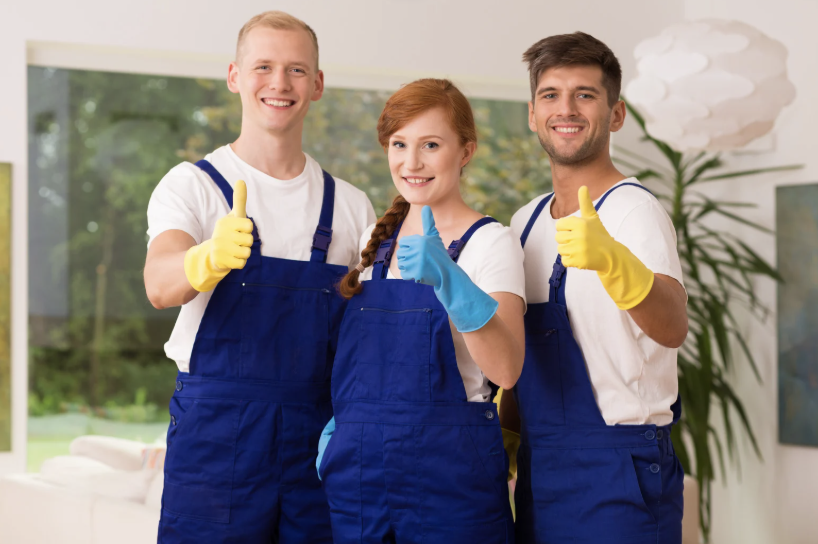
21. "I started a cleaning business."

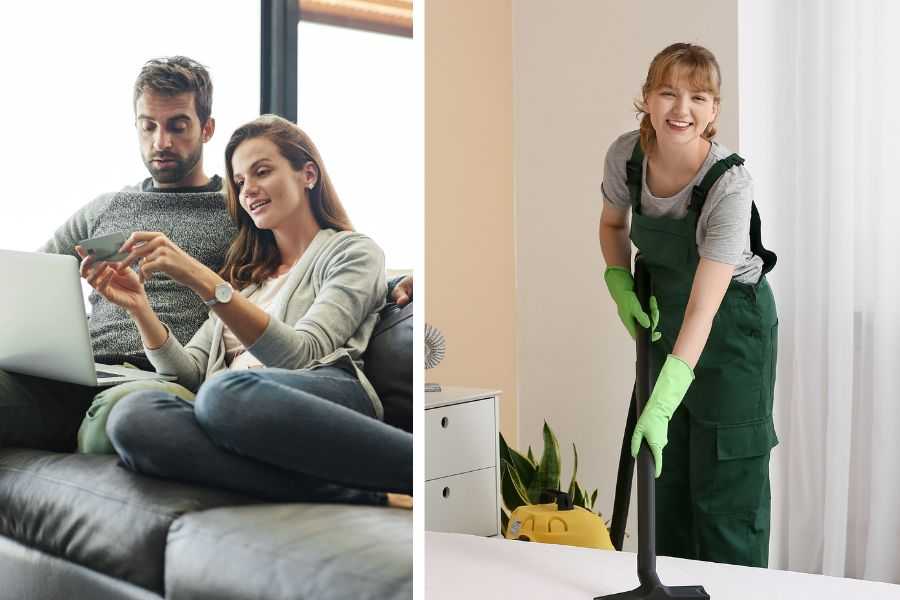
"It was very easy, and I did it on Saturday afternoons. I just posted my contact info, services, and prices to local online communities. I worked for a young, wealthy couple cleaning a condo two to three times a month. I got around $600 extra per month for just a general cleaning. I also now include move-out cleans, which can get me $400-$600 per job. It's not huge cash, but it helped me kick a car note down from $24k to $16k. And that was with one client."

side hustles, side gigs, side hustle ideas, side gig ideas, high paying side gigs, best side gigs A cleaning teamPhoto credit: Canva

22. "During the winter, I sell 3D-printed ornaments and make between $100 and $300 a week for the first two to three weeks of December."

"I specifically target the last-minute crowd and get most of my work through word of mouth. Production cost per ornament is $1.04. It takes me under an hour to make/edit the model, and then it takes 5-8 hours to print, but that can be done while I'm sleeping. I charge between $15 and $25 for an ornament. Last year, I also started selling name ornaments for $5 a pop, but they take under two hours to edit and print, so they're easy to make in large batches. These customers also tend to message me throughout the year, so I make around $600 during the Christmas season and $20-$100 other months. So kinda $20 here and there with a big yearly payout."

23. "Real estate Photography."

"It's usually $150 per house, $300 if it's a large property, and I need to use a drone. It takes about an hour to shoot and less than an hour to edit. I usually do two to three houses throughout the week. I'll stop on my way home from work, then on Saturday, I can group appointments by location. My busiest Saturday was seven houses. It's really easy. You just need a camera capable of HDR and a lens with a wide angle. I use a Nikon 16-24mm and a tripod."

24. “I do side work car repairs."

"And by repairs I mean mostly just brakes. To get 4 brakes and rotors done at a shop today is typically around $1000 or more, because they up-charge parts and labor. I am able to do it for people for around $600. I charge $300-400 in labor (for 2 hours of work), and the parts just cost what they cost. So I save people a few hundred dollars and I make a few hundred myself. Sometimes I do one of these a month. Sometimes I do a few of them. I would like to get one a week, cause then I could legit get an extra $300 a week.”

This article originally appeared in June

Gen Z; Millennials; technology; cell phones; social media; teens and technology; teens social media

Gen Z is the first generation less cognitively capable than their parents. Denmark has the solution.

Nearly every parent hopes their child will be better off than they are: smarter, more secure, and more well-adjusted. Many parents see this as a stamp of successful parenting, but something has changed for children growing up today. While younger generations are known for their empathy, their cognitive capabilities seem to be lagging behind those of previous generations for the first time in history.

Dr. Jared Cooney Horvath, a teacher turned cognitive neuroscientist who focuses on human learning, appeared before Congress to discuss concerns about cognitive development in children. In his address to the members of Congress, he says, "A sad fact that our generation has to face is this: our kids are less cognitively capable than we were at their age. Since we've been standardizing and measuring cognitive development since the late 1800s, every generation has outperformed their parents, and that's exactly what we want. We want sharper kids."


kids, intelligence, sharp kids, generations, education, cognitive abilities Student smiling in a classroom, working on a laptop.Photo credit: Canva

Horvath explains that the reason this happens is that each generation has gone to school longer than the previous generation. Gen Z is no exception to the longer duration of time spent in school, but they're the first ones who aren't meeting this normal increase in cognitive development. According to the cognitive neuroscientist, the decline is due to the introduction of screens in the classroom, which started around 2010.
"Across 80 countries, as Jean was just saying, if you look at the data, once countries adopt digital technology widely in schools, performance goes down significantly. To the point where kids who use computers about five hours per day in school for learning purposes will score over two-thirds of a standard deviation less than kids who rarely or never touch tech at school," Horvath reveals.

In most cases, the decline in performance doesn't result in better strategies. The neuroscientist shares that the standardized testing has been adjusted to accommodate lower expectations and shorter attention spans. This is an approach that educators, scientists, and researchers went to Capitol Hill to express wasn't working. But not every country is taking the approach of lowering standards to meet lowered cognitive ability. Denmark went in the opposite direction when it realized their students were slipping behind.

France24 recently interviewed educators in Denmark following their seemingly novel approach to students struggling with cognitive development. Since the beginning of the 2025/2026 school year, Denmark has not only been having students turn in their cellphones, but they've also taken tablets, laptops, and computers out of the classroom. No more digital learning for the majority of the school day. Danes went old school by bringing back physical textbooks, workbooks, and writing assignments. The results have been undeniable. Even the students can't seem to deny the success of the countrywide shift in educational approach.

"I think the biggest issue has been that, because we kind of got rid of the books and started using screens instead, that we've noticed that a lot of the kids have trouble concentrating, so it's pretty easy to swipe with three fingers over to a different screen and have a video game going, for example, in class," Copenhagen English teacher, Islam Dijab tells France24.

Now, instead of computers being part of every lesson, Denmark uses computers very sparingly and with strict supervision. One student says that it has been nice not having screen time at school because she loves to read and write. But it wasn't just the lack of attention span children were developing, they were also developing low self-esteem and poor mental health due to the amount of time spent on devices.

kids, intelligence, sharp kids, generations, education, cognitive abilities Students focused and ready to learn in the classroom.Photo credit: Canva

The data showing the negative impact of screens on teens' brains has prompted a nationwide change in Denmark that extends outside of the classroom. Afterschool activities are eliminating or extremely limiting electronic use. There is also a national No Phone Day that encourages everyone to put away their devices for the day, and Imran Rashid, a physician and digital health expert, is petitioning parliament to ban social media use for children under the age of 15. The no phone movement in Denmark is a nationwide effort that hopes to right the ship before another generation feels the effects.

upset woman, rude comment, coworkers, conflict, insult

A woman is insulted at her job.

It came out of nowhere. A coworker made a rude comment that caught you off guard. The hair on the back of your neck stands up, and you want to put them in their place, but you have to stay tactful because you're in a professional setting. Plus, you don't want to stoop to their level.

In situations like these, it helps to have a comeback ready so you can stand up for yourself while making making sure they don't disrespect you again.


Vince Xu, who goes by Lawyer Vince on TikTok, is a personal injury attorney based in Torrance, California, where he shares the communication tips he's learned with his followers. Xu says there are three questions you can ask someone who is being rude that will put them in their place and give you the high ground:

@howtoconvince

3 comebacks to gracefully shutdown disrespect #comeback #clapback #emotionalintelligence #communicationskills

Question 1: "Sorry, can you say that again?"

"This will either make them have to awkwardly say the disrespectful remark one more time, or it'll actually help them clarify what they said and retract their statement," Xu shares.

Question 2: "Did you mean that to be hurtful?"

The next step is to determine if they will repeat the disrespectful comment. "This calls out their disrespect and allows you to learn whether they're trying to be disrespectful or if there's a misunderstanding," Xu continues.

Question 3: "Are you okay?"

"What this does, is actually put you on higher ground, and it's showing empathy for the other person," Xu adds. "It's showing that you care about them genuinely, and this is gonna diffuse any type of disrespect or negative energy coming from them."

confused woman, what, woman upset, insulted women, stunned woman A woman throws her hands up in despair.via Canva/Photos

The interesting thing about Xu's three-step strategy is that by gracefully handling the situation, it puts you in a better position than before the insult. The rude coworker is likely to feel diminished after owning up to what they said, and you get to show them confidence and strength, as well as empathy. This will go a lot further than insulting them back and making the situation even worse.

Xu's technique is similar to that of Amy Gallo, a Harvard University communications expert. She says that you should call out what they just said, but make sure it comes out of their mouth. "You might even ask the person to simply repeat what they said, which may prompt them to think through what they meant and how their words might sound to others," she writes in the Harvard Business Review.

no, insulted, stop, wagging finger, angry woman, no way stop A woman wagging her finger.via Canva/Photos

More of Gallo's suggested comebacks:

“Did I hear you correctly? I think you said…”

“What was your intention when you said…?”

“What specifically did you mean by that? I'm not sure I understood.”

“Could you say more about what you mean by that?”

Ultimately, Xu and Gallo's advice is invaluable because it allows you to overcome a negative comment without stooping to the other person's level. Instead, it elevates you above them without having to resort to name-calling or admitting they got on your nerves. That's the mark of someone confident and composed, even when others are trying to take them down.

Science

Helicopters dump 6,000 logs into rivers in the Pacific Northwest, fixing a decades-old mistake

Forty years ago, restoration workers thought logs were the problem. They were wrong.

river restoration, washington, river fish, restoration, Yakama Nation, indigenous land, indigenoues tribes, salmon, trout, pacific northwest

Restoration workers now see how "critical" wood is to the natural habitat.

For decades, river restoration in the Northwestern United States followed a simple rule: if you saw logs in the water, take them out. Clean streams were seen as healthy streams, fast-moving water was seen as optimal, and wood was treated like a "barrier" to natural processes, particularly those of the local fish.

Now, helicopters are flying thousands of tree trunks back into rivers to undo that thinking.


In central Washington, one of the largest river restoration efforts ever attempted in the region is underway. More than 6,000 logs are being placed along roughly 38 kilometers, or 24 miles, of rivers and streams across the Yakama Reservation and surrounding ceded lands.

Nearly 40 years ago, Scott Nicolai was doing the opposite kind of work, all in the name of restoration.

"(Back then) the fish heads — what I call the fisheries folks — we stood on the banks, and we looked at the stream," Nicolai, a Yakama Nation habitat biologist, told Oregon Public Broadcasting. "If we saw a big log jam, we thought, 'Oh, that's a barrier to fish. We want the stream to flow.'"

river restoration, washington, river fish, restoration, Yakama Nation, indigenous land, indigenoues tribes, salmon, trout, pacific northwest Fish find shelter for spawning in the nooks and crannies of wood. Photo credit: Canva

At the time, logs were removed in an effort to simplify the habitat. However, it soon became clear that wood provided vital "complexity," creating sheltered pockets for salmon and bull trout to spawn and supporting algae that feed aquatic insects. Logs also slow water, spread it across floodplains, and allow it to soak into the groundwater. That water is then slowly released back into streams, helping keep them flowing and cooler during hot, dry periods.

The consequences of removing this "critical part of the system" (in addition to overgrazing, railroad construction, and splash dam logging) were made all too clear over the years as the rivers dried up and wildlife populations declined.

"We're trying to learn from our mistakes and find a better way to manage," said Phil Rigdon, director of the Yakama Nation Department of Natural Resources.

That's why Nicolai is now helping lead a project for the Yakama Nation aimed at rebuilding river complexity by returning logs to their rightful place. Many of these streams are now unreachable by road, which is why helicopters are used. Logs are flown from staging areas and carefully placed at precise drop locations marked with pink and blue flagging tape.

river restoration, washington, river fish, restoration, Yakama Nation, indigenous land, indigenoues tribes, salmon, trout, pacific northwest Many of these streams are now unreachable by road, which is why helicopters are used.Photo credit: Canva

The wood comes from forest-thinning projects led by The Nature Conservancy and includes species such as Douglas fir, grand fir, and cedar. Although some of the timber could have been sold, it is instead being used as river infrastructure.

For tribal leaders, the work carries even deeper meaning. During the helicopter flights, they gathered along the Little Naches River for a ceremony and prayer.

river restoration, washington, river fish, restoration, Yakama Nation, indigenous land, indigenoues tribes, salmon, trout, pacific northwest Tribal leaders gathered by the Little Naches River for a ceremony and prayer.Photo credit: Canva

"It was very simple: to bring what was rightfully part of this land back to us," said former tribal chairman Jerry Meninick.

The aftermath of the original restoration project illustrates how human concepts, such as the belief in the superiority of "cleanliness," can be limited and sometimes cause more harm than good. The miracle of nature, however, is that when left to her own devices, she can heal herself.

likable, likable person, likable people, conversation, conversation tips

Likable people say these things during conversations to build better relationships.

Making friends and developing deeper, stronger relationships starts with good conversation. Sometimes that means small talk at work, while other times it's the kind of conversation that really takes off at a party.

Some people are naturals when it comes to easy, flowing conversation—especially highly likable people, who tend to attract others and often hold the key to mastering genuine conversation. From their gestures to the way they articulate questions, there's a lot others can learn from them.


Communication experts who spoke to Upworthy say there are 10 things highly likable people do during conversations to build stronger relationships.

- YouTube www.youtube.com

1. They listen without distraction

Listeners often make the best conversationalists.

"That means not looking at your phone or scanning around the room to see who you want to talk to next," says Kerri Garbis, CEO and founder of Ovation Communication. "Focus on the person in front of you only. Make eye contact. This fosters a relationship because when you are fully present, it signals respect, interest, and helps others feel valued versus like they are competing for your attention."

2. They collect data

Being inquisitive about what people need during conversations is key to building stronger relationships.

"If you take a moment to ask your colleague or even friend, 'What are you worried about? What's the biggest concern facing you right now?' you can get great data on how you can help them - in a way that taps into something urgent and top of mind for them," says Kate Mason, PhD, an executive communications coach and author of Powerfully Likeable: A Woman's Guide to Effective Communication. "They'll remember your thoughtfulness and the actions you took."

3. They balance the conversation

Highly likable people never make it all about themselves.

"Sometimes conversations can be 'lopsided' where it's more about the other person than about you," says Rob Volpe, a communication expert and author of Tell Me More About That: Solving the Empathy Crisis One Conversation at a Time. "While that can be okay, you aren't there to be their therapist. Sometimes the context and topic may make it off balance, but if it continues and you aren't feeling seen yourself, feel free to say something like 'I'd love to share my thoughts on this' or 'May I share something I'm dealing with at the moment?'"

4. They mirror their conversation partner

Taking cues from body language can foster deeper relationships.

"It's a subtle way to make someone comfortable because they recognize themself in your actions," says Jennifer Anderson, a communication expert who works with entrepreneurs. "Your energy should match the energy of your counterpart. Think relaxing-in-lounge-chair energy vs. about-to-deliver-a-presentation energy. Those are two very different conversations. If you paired them up, there's definitely about to be some awkwardness."

- YouTube www.youtube.com

5. They skip pre-planned questions

While coming to conversations prepared with questions may help you feel less anxious, highly likable people usually don't use them.

"Often people have questions in their back pocket, like about the weather or sports, but the most likeable people in the room are those who can be present in conversations and ask follow-ups based on what someone is talking about," Garbis says. "This builds a relationship by making conversations feel relational and not transactional."

6. They are self-aware

Highly likable people are masters of self-awareness, especially during conversations.

"Self-awareness of your judgment is key to building relationships," Volpe says. "We all carry biases which can block our view of the person standing in front of us. When you catch yourself being judgmental, have some grace with yourself and get curious about the other person as well as where your judgment is coming from. This clears one of the biggest obstacles to having empathy with others."

7. They respond with affirmation

Highly likable people make others feel seen and heard.

"No matter what is coming out of the person's mouth, make it clear that you're not judging or competing with them," Garbis notes. "If they say: 'I went skiing this weekend,' don't jump in and say that you also went skiing. Say something like, 'Wow, that sounds exciting, tell me more about that.' You can respond with validating statements like: 'That makes sense, or I can see why you're so good at that, or I can see why that matters to you.' This reduces defensiveness and nervousness, and it makes people feel safe to be themselves and creates relationships faster."

@justaskjefferson

it’s been great catching up! #communicationtips #communicationskills

8. They remain calm

Bringing a sense of calm rather than chaos to a conversation can put everyone at ease.

"Calm is the most powerful communication flex you can do," Mason says. "If you can stay calm, especially in a heated conversation, you actually end up looking trustworthy, reliable and unruffled - all very powerful things to be remembered for."

9. They remember names

Highly likable people personalize conversations by using the other person's name.

"Never ever tell people you are terrible at remembering names," Garbis explains. "This will tank the conversation because it signals you don't matter, nothing you say matters, and that you aren't worth remembering. It makes a person mentally check out of the conversation. Use good tricks like repeating a person's name at the beginning and again at the end. If you forgot by the end, say something like, 'It was so fun to hear about your skiing adventure. By the way, I'm Kerri, it was so nice to meet you, and can you remind me of your name? I don't want to forget it?' They'll be so grateful you repeated your name too!"

10. They use humor where they can

Finally, highly likable people make sure to infuse conversations with laughter.

"It's a great connector," Anderson notes. "Don't try to be a standup comic, just find the lighthearted observations and details that you can share in conversations. Humor is never a weapon; judgy and mean-spirited comments convey weakness, not confidence. You'll risk alienating your conversation partner if you come in with a full roast of your friends or coworkers. If all else fails, everyone loves a Dad Joke."

Humor

Man's perfect parody of 'toxic' manager's vacation guilt-trip is hilariously relatable

"I’m glad you’re back, but it was very busy for the rest of us!"

workplace, workplace comedy, toxic boss, pto, workplace culture, viral video, comedy sketch
Photo credit: Canva, Comstock from Photo Images (left, cropped) / Aflo Images from アフロ(Aflo)(right, cropped) / SkaHero42 from pixabay (text box)

Man's parody of a "toxic" manager is painfully relatable.

Ah, that boss—you know the one. When you return from a hard-earned vacation, using the paid time off you’re legally allowed, he walks over to your cubicle and hits you with a series of passive-aggressive comments. Now, instead of feeling re-energized, you’re walking around with an unfair feeling of guilt and discomfort, as if you’re in the doghouse for breaking a non-existent rule. Not cool.

Actor-comedian Ben Sweeny satirizes this unhealthy workplace dynamic in a hilarious—and hopefully not too relatable—video titled "your toxic manager when you get back from vacation." It’s part of a series starring his character Corporate Sween, aka "CEO of Corporate America," known for his generally unpleasant office behavior. Some of these laughs may sting, but they’re worth it.


"I personally never took vacation when I was in your shoes"

In this clip, Corporate Sween confidently struts into an employee’s office, flashing an enthusiastic smile, and very quickly starts grilling them about how their PTO has affected everyone else. "Wow, look who’s back from PTO! Paid. Time. Off," he says, eyes wide. "How was vacation? Yeah, you got some good rest? You got some color! Yeah, you’re looking great. So, listen, I’m glad you’re back, but it was very busy for the rest of us while you were out lollygagging [sic] last week, okay?"

The guilt-trip is heavy: "So I need a very big week from you now that you’re back from vacation," he says. "I personally never took vacation when I was in your shoes, but I guess we’re of a different generation. I guess we’re built a little bit differently." He then checks the employee’s computer, awkwardly requests that they "lock in," and departs the room after one final, uncomfortable throat clear.

"It's just a skit, it's just a skit"

The video earned a big reaction across social media, especially on Instagram, where people seemed to feel very seen. Here are some of the top comments:

"I endured 20 years of this and eventually just thought it was normal 😂"

"I'm on PTO and I'm not looking forward to this…"

"This happened to me just a few days ago coming back from the Holidays, worst feeling ever"

"Lollygagging must be included in corporate dictionaries around the world 🙌🙌🙌"

"Time to take another vacation"

"The aggressive head nod, the upside down smile and lack of blinking. This man could put Pennywise in a PIP"

"It’s just a skit, it’s just a skit…"

"May God deliver me from ever working for this type of company again 😂"

"'Whatchya got cooking today?' Sir, this is not a Wendys"

"Good time to go back on PTO🤣"

- YouTube www.youtube.com

Sweeny has released a treasure trove of other office-cringe-comedy videos, touching on topics like holiday breaks, exit interviews, pay cuts, and productivity. But the PTO clip may touch an even deeper nerve, given that a lot of people don’t know how to handle a passive-aggressive comments from their real life manager. In 2019, Priceline surveyed more than 1,000 full-time U.S. employees, learning that 24% of Gen Z respondents felt guilty about taking a vacation, followed by Millennials (19%), Gen X (16%), and Baby Boomers (8%).

On LinkedIn, career coach Brittany Bishop wrote that, by doing three key things, we can set ourselves up to enjoy PTO guilt-free: "Give [yourself] permission to take the time off," "prepare for the time away in advance," and "actually [leave] work for others to do" and trust that they can make it happen.