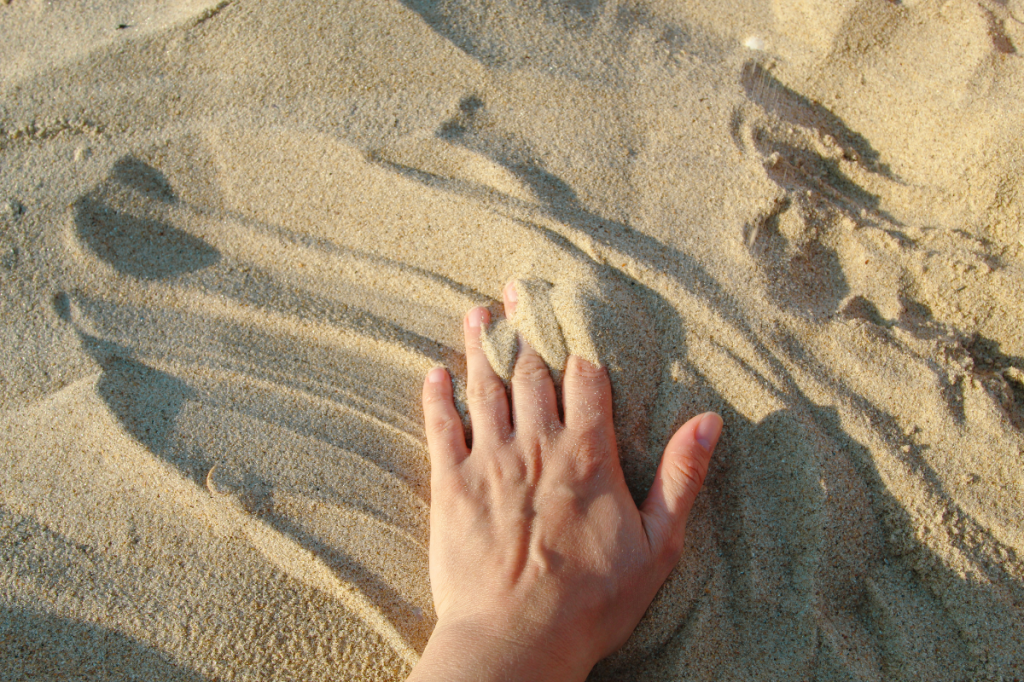
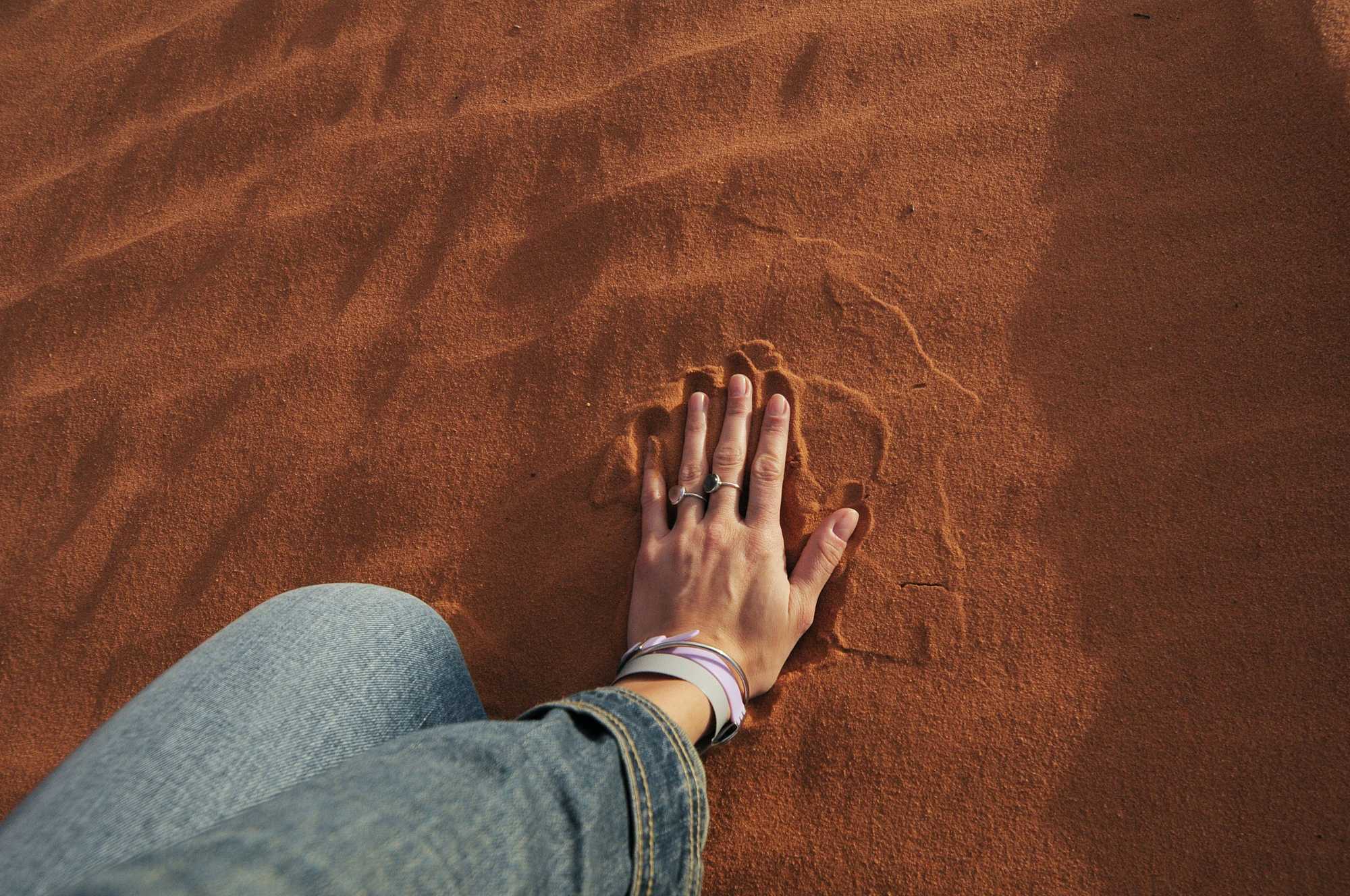
Humans have five main senses, of course, and there’s even strong scientific agreement about a sixth: proprioception, or the ability to sense where our limbs are in space. But new research suggests we may also have a “seventh sense.” Scientists are calling it “remote touch.”
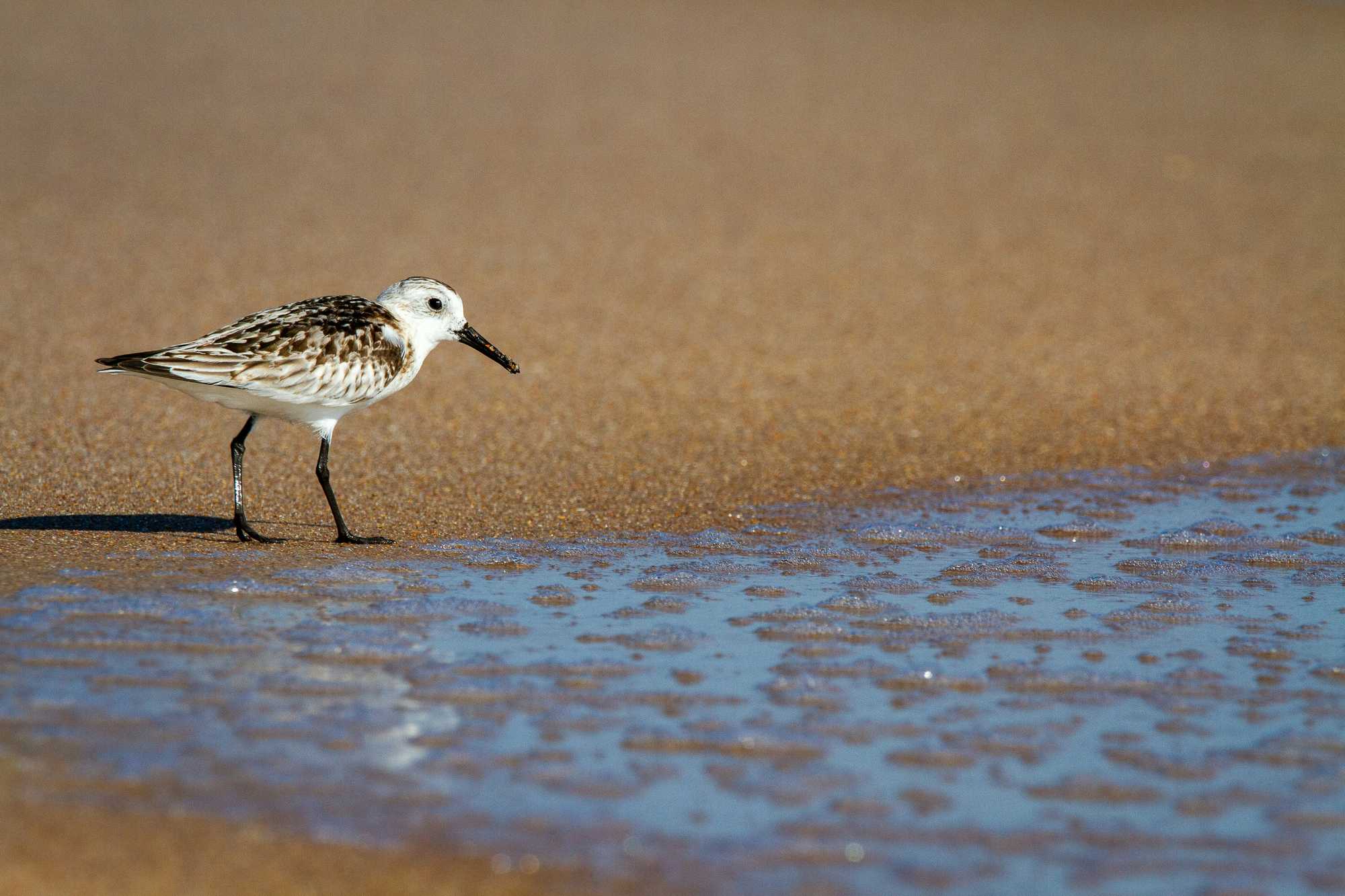
A study out of Queen Mary University of London (QMUL) recently set out to examine how humans compare to common shorebirds like sanderlings, sandpipers, and plovers.
These birds are masters at finding prey hidden in the sand. In fact, their survival depends on it. By sticking their beaks into the sand, they use a tactile foraging system finely tuned to detect subtle vibrations and pressure changes, alerting them to food sources they can’t see, smell, or hear.
The researchers had a hunch that humans might possess a similar ability and decided to put it to the test. They buried small cubes in a container of sand and asked participants to gently move their fingers around. Volunteers were told to stop when they felt they were close to touching or finding a cube, but before actually making physical contact with it.
Surprisingly, the results showed that humans were quite adept at sensing the object’s presence before they could touch it.
“Participants were able to perceive extremely small shifts in the sand caused by the buried object,” QMUL wrote on SciTechDaily. “This level of sensitivity comes close to the theoretical physical limit for detecting mechanical reflections in granular material, where moving sand subtly changes direction or resistance when it encounters a stable surface beneath it.”
On average, the human participants in the study were about 70 percent accurate at detecting the hidden cube without actually touching it.
We’ve known for a long time that humans can be very sensitive to subtle changes in heat, pressure, and sensation.
For example, it’s been a common party trick among kids for decades. One person closes their eyes while another slowly moves a finger toward the center of their forehead. Usually, the person with their eyes closed can sense when the finger is close, even before it actually makes contact. There might be a tingling, tickling, or light buzzing feeling.
However, research from QMUL shows just how advanced our remote touch abilities really are. To add further context for how finely tuned humans’ remote touch ability is, the researchers then tested specially designed robots on the same task.
The robot, armed with tactile sensors, was able to detect the hidden cube from farther away than humans, but it was far less accurate overall, with just 40 percent precision.
The implications of this first-of-its-kind study are vast. For example, we may be able to better train robots based on what we learn about humans’ extraordinarily fine-tuned sense of touch.
“The discovery opens possibilities for designing tools and assistive technologies that extend human tactile perception,” said Zhengqi Chen, a PhD student at QMUL’s Advanced Robotics Lab. “These insights could inform the development of advanced robots capable of delicate operations, for example locating archaeological artifacts without damage, or exploring sandy or granular terrains such as Martian soil or ocean floors. More broadly, this research paves the way for touch-based systems that make hidden or hazardous exploration safer, smarter, and more effective.”
More immediately, it’s always amazing to discover new things about the human body and how it works. Our sense of touch, in particular, is incredibly complex and fascinating. Did you know that the “phantom touch illusion” can cause people to experience physical sensations when they aren’t being touched at all? Or that amputees sometimes feel phantom pain coming from a limb that no longer exists?
According to the researchers, remote touch has never been studied in humans before, and we’re truly only scratching the surface when it comes to understanding this extraordinary ability. It’s also exciting to think about what an eighth sense might one day turn out to be.
In a small village in Pwani, a district on Tanzania’s coast, a massive dance party is coming to a close. For the past two hours, locals have paraded through the village streets, singing and beating ngombe drums; now, in a large clearing, a woman named Sheilla motions for everyone to sit facing a large projector screen. A film premiere is about to begin.
It’s an unusual way to kick off a film about gender bias, inequality, early marriage, and other barriers that prevent girls from accessing education in Tanzania. But in Pwani and beyond, local organizations supported by Malala Fund and funded by Pura are finding creative, culturally relevant ways like this one to capture people’s interest.
The film ends and Sheilla, the Communications and Partnership Lead for Media for Development and Advocacy (MEDEA), stands in front of the crowd once again, asking the audience to reflect: What did you think about the film? How did it relate to your own experience? What can we learn?
Sheilla explains that, once the community sees the film, “It brings out conversations within themselves, reflective conversations.” The resonance and immediate action create a ripple effect of change.
MEDEA Screening Audience in Tanzania. Captured by James Roh for Pura
Across Tanzania, gender-based violence often forces adolescent girls out of the classroom. This and other barriers — including child marriage, poverty, conflict, and discrimination — prevent girls from completing their education around the world.
Sheilla and her team are using film and radio programs to address the challenges girls face in their communities. MEDEA’s ultimate goal is to affirm education as a fundamental right for everyone, and to ensure that every member of a community understands how girls’ education contributes to a stronger whole and how to be an ally for their sisters, daughters, granddaughters, friends, nieces, and girlfriends.
Sheilla’s story is one of many that inspired Heart on Fire, a new fragrance from the Pura x Malala Fund Collection that blends the warm, earthy spices of Tanzania with a playful, joyful twist. Here’s how Pura is using scent as a tool to connect the world and inspire action.
A partnership focused on local impact, on a global mission
Pura, a fragrance company that recognizes education as both freedom and a human right, has partnered with Malala Fund since 2022. In order to defend every girl’s right to access and complete 12 years of education, Malala Fund partners with local organizations in countries where the educational barriers are the greatest. They invest in locally-led solutions because they know that those who are closest to the problems are best equipped to solve and build durable solutions, like MEDEA, which works with communities to challenge discrimination against girls and change beliefs about their education.
But local initiatives can thrive and scale more powerfully with global support, which is why Pura is using their own superpower, the power of scent, to connect people around the world with the women and girls in these local communities.
The Pura x Malala Fund Collection incorporates ingredients naturally found in Tanzania, Nigeria, Pakistan, and Brazil: countries where Malala Fund operates to address systemic education barriers. Eight percent of net revenue from the Pura x Malala Fund Collection will be donated to Malala Fund directly, but beyond financial support, the Collection is also a love letter to each unique community, blending notes like lemon, jasmine, cedarwood, and clove to transport people, ignite their senses, and help them draw inspiration and hope from the global movement for girls’ education. Through scent, people can connect to the courage, joy, and tenacity of girls and local leaders, all while uniting in a shared commitment to education: the belief that supporting girls’ rights in one community benefits all of us, everywhere.
You’ve already met Sheilla. Now see how Naiara and Mama Habiba are building unique solutions to ensure every girl can learn freely and dare to dream.
Naiara Leite is reimagining what’s possible in Brazil
Julia with Odara in Brazil. Captured by Luisa Dorr for Pura
In Brazil, where pear trees and coconut plantations cover the Northeastern Coast, girls like ten-year-old Julia experience a different kind of educational barrier than girls in Tanzania. Too often, racial discrimination contributes to high dropout rates among Black, quilombola and Indigenous girls in the country.
“In the logic of Brazilian society, Black people don’t need to study,” says Naiara Leite, Executive Coordinator of Odara, a women-led organization and Malala Fund partner. Bahia, the state where Odara is based, was once one of the largest slave-receiving territories in the Americas, and because of that history, deeply-ingrained, anti-Black prejudice is still widespread. “Our role and the image constructed around us is one of manual labor,” Naiara says.
But education can change that. In 2020, with assistance from a Malala Fund grant, Odara launched its first initiative for improving school completion rates among Black, quilombola, and Indigenous girls: “Ayomidê Odara”. The young girls mentored under the program, including Julia, are known as the Ayomidês. And like the Pura x Malala Fund Collection’s Brazil: Breath of Courage scent, the Ayomidês are fierce, determined, and bursting with energy.
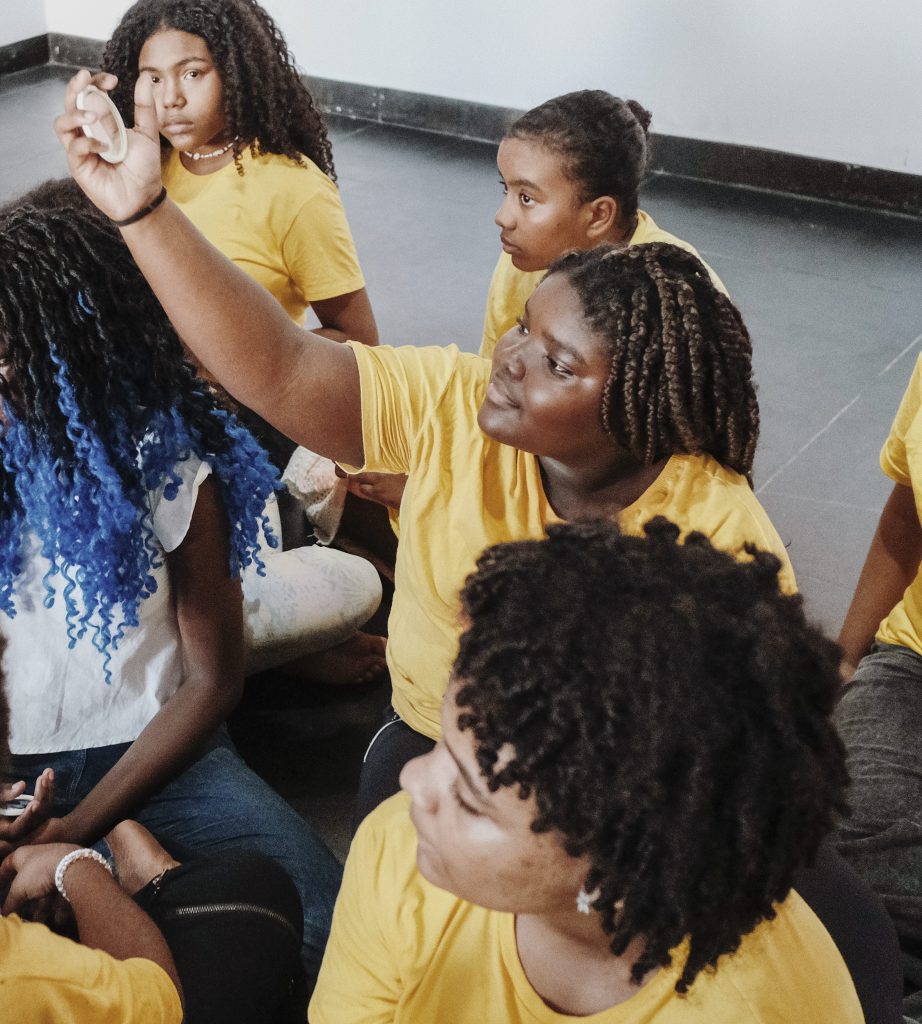
Ayomidês with Odara in Brazil. Captured by Luisa Dorr for Pura
Ayomidês take part in weekly educational sessions where they explore subjects like education and ethnic-racial relations. The girls are encouraged to find their own voices by producing Instagram lives, social media videos, and by participating in public panels. Already, the Ayomidês are rewriting the narrative on what’s possible for Afro-Brazilian girls to achieve. One of the earliest Ayomidês, a young woman named Debora, is now a communications intern. Another former Ayomidê, Francine, works at UNICEF, helping train the next generation of adolescent leaders. And Julia has already set her sights on becoming a math teacher or a model.
“These are generations of Black women who did not have access to a school,” Naiara says. “These are generations of Black women robbed daily of their dreams. And we’re telling them that they could be the generation in their family to write a new story.”
Mama Habiba is reframing the conversation in Nigeria
Centre for Girls' Education, Nigeria. Captured by James Roh for Pura
In Mama Habiba’s home country of Nigeria, the scents of starfruit, ylang ylang and pineapple, all incorporated into the Pura x Malala Collection’s “Nigeria: Hope for Tomorrow,” can be found throughout the vibrant markets. Like these native scents, Mama Habiba says that the Nigerian girls are also bright and passionate, but too often they are forced to leave school long before their potential fully blooms.
“Some of these schools are very far, and there is an issue of quality, too,” Mama Habiba says. “Most parents find out when their children are in school, the girls are not learning. So why allow them to continue?”
When girls drop out of secondary school, marriage is often the alternative. In Nigeria, one in three girls is married before the age of 18. When this happens, girls are unable to fulfill their potential, and their families and communities lose out on the social, health and economic benefits.
Completing secondary school delays marriage, and according to UNESCO, educated girls become women who raise healthier children, lift their families out of poverty and contribute to more peaceful, resilient communities.
Centre for Girls’ Education, Nigeria. Captured by James Roh for Pura
To encourage young girls to stay in school, the Centre for Girls’ Education, a nonprofit in Nigeria founded by Mama Habiba and supported by Malala Fund and Pura, has pioneered an initiative that’s similar to the Ayomidê workshops in Brazil: safe spaces. Here, girls meet regularly to learn literacy, numeracy, and other issues like reproductive health. These safe spaces also provide an opportunity for the girls to role-play and learn to advocate for themselves, develop their self-image, and practice conversations with others about their values, education being one of them. In safe spaces, Mama Habiba says, girls start to understand “who she is, and that she is a girl who has value. She has the right to negotiate with her parents on what she really feels or wants.”
“When girls are educated, they can unlock so many opportunities,” Mama Habiba says. “It will help the economy of the country. It will boost so many opportunities for the country. If they are given the opportunity, I think the sky is not the limit. It is the starting point for every girl.”
From parades, film screenings to safe spaces and educational programs, girls and local leaders are working hard to strengthen the quality, safety and accessibility of education and overcome systemic challenges. They are encouraging courageous behavior and reminding us all that education is freedom.
Experience the Pura x Malala Fund Collection here, and connect with the stories of real girls leading change across the globe.
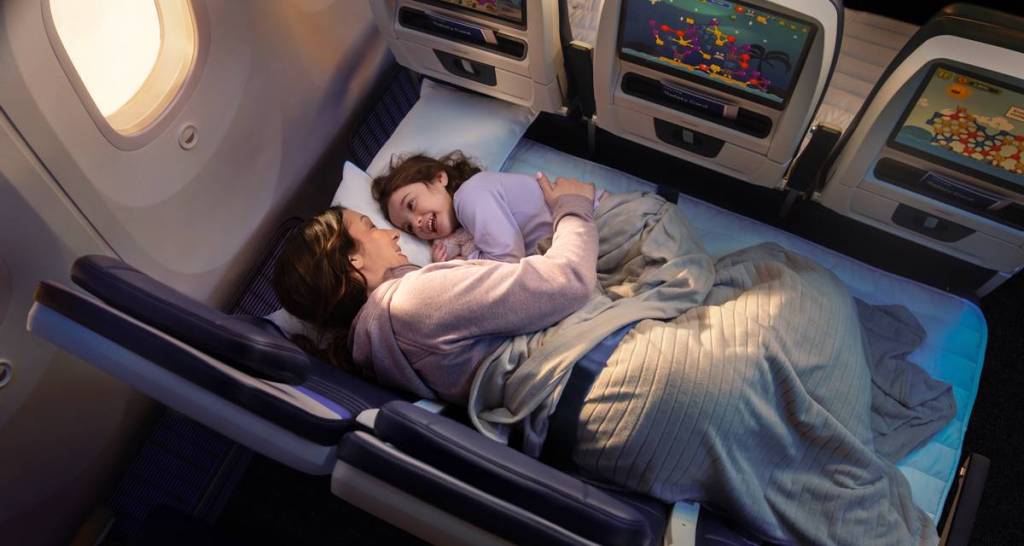
Have you ever dreamed of buying an entire row of seats on an airplane so you could either enjoy the flight without being squeezed next to a stranger or lie down as if in a bed? Now, United Airlines is making that dream a reality with its new “Relax Row” seating, where your row of seats folds into a lie-flat, mattress-like space after takeoff.
If you’re flying alone, it may be a bit expensive to buy an entire row, but if you’re sharing it with a partner or traveling with kids and were planning to buy three seats anyway, it’s a more comfortable way to fly. In addition to the bed-like layout, customers receive a custom-fitted mattress pad, a specially sized plush blanket, two additional pillows, a plush toy, and a children’s travel kit for families.
For years, people who sit in first class have been able to lie down and sleep almost as they would at home. This will be the first time that bed-like seats have been available in coach on an American airline. A similar type of seating is currently available on Air New Zealand, All Nippon Airways, and Lufthansa.
“As a leading premium airline, we’re committed to delivering new, industry-leading experiences for all of our customers–and the United Relax Row is the perfect example of that,” Andrew Nocella, United’s executive vice president and chief commercial officer, said in a statement. “Customers traveling in United Economy on long-haul flights deserve an option for more space and comfort, and this is one way we can deliver that for them. United is the only North American airline offering a product like the United Relax Row and is one of the many reasons why we’re continuing to win brand loyal customers.”
Here are the actual images of United's "Relax Row," taken by a Redditor. 📸: u/CommanderDawn pic.twitter.com/6Td4RluYi2
The new seating arrangement will launch in 2027. It will be available on more than 200 Boeing 787 and Boeing 777 aircrafts by 2030, with up to 12 United Relax Row sections per plane. United Airlines currently has more than 1,000 planes in its fleet.
The airline hasn’t shared any details on how much the Relax Row will cost compared with three regular seats on a flight, saying only that it’s intended for those who “want the value of United Economy but with a little extra comfort.”
It also appears that, in the event of turbulence, passengers won’t have to pack the bed away, as they are secured by safety belts that go across their bodies.
“United Relax Row” announced by United Airlines that lets passengers combine three seats into one usable area.
Of course, there’s an added cost on top of the price for all three seats. That charge hasn’t been announced yet.
It’s becoming harder for families to sit together on commercial airlines
The new seating arrangement is perfect for families with small children, allowing them to lie down, relax, and hopefully get some sleep during a flight.
The announcement comes at a time when it’s becoming harder for families to sit together. On many budget airlines, families who book tickets aren’t guaranteed seats together unless they pay an additional fee to select them.
No one would get a dog expecting it to not bark, try to eat human food, or need daily walks. And yet people regularly get flummoxed when their just-as-loveable cat exhibits completely natural behaviors like climbing tabletops or scratching at furniture.
Cat people, who delight in adapting their lives to make them as enriching as possible for their feline family members, know the flaw in this logic. After all, most cats spend more time in the house than their human counterparts. So shouldn’t the house belong just as much to them?
If you answered yes, then this response video from a vet should have you feeling pretty vindicated. If you answered no, prepare to reconsider.
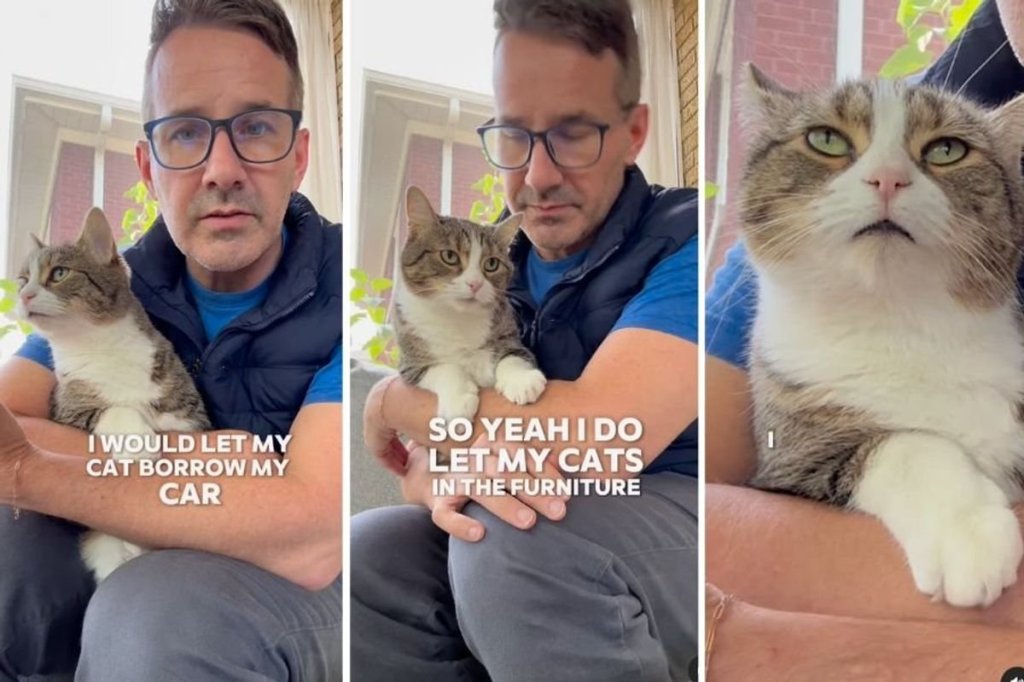
Dr. Matt McGlasson is a veterinarian and chief medical officer at Noah’s Ark Animal Clinics in Kentucky, where he oversees a four-hospital network, and also happens to be the proud dad of a special needs cat named Rupaul. As he told Newsweek, he gets several comments each week saying it’s gross to have cats on the furniture. One viewer went further and called it “disgusting.”
McGlasson’s response to that comment racked up 11.8 million views on Instagram, and with good reason.
In the clip, McGlasson holds up Rupaul, who can’t use her hind legs, and lists off everything he would do for his cat, including co-signing a loan for her, letting her do his taxes, giving her the passwords to all his accounts, going into business with her, giving her $20,000 for bringing him a dead mouse, and making her the beneficiary on his life insurance policy. He also mentioned capital punishment, which he’s not normally in favor of, but “if someone hurts Rupaul, that’s another story.” And last, but certainly not least, letting Rupaul on the furniture.
Put simply: “My cat can do whatever she wants. It’s her world. I’m just living in it.”
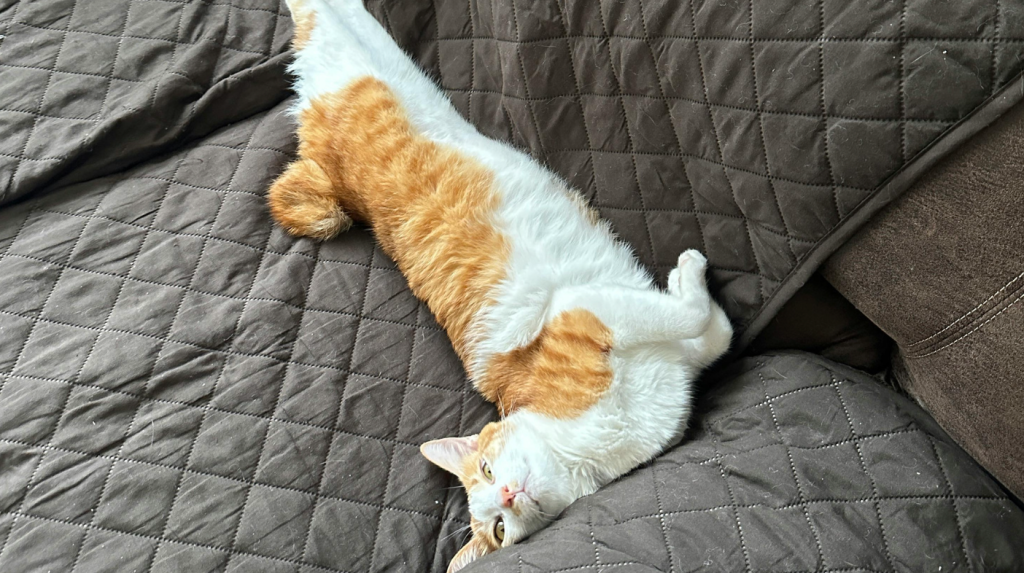
A cat stretches out on the couch. Photo credit: Canva
Fellow cat owners in the comments could not agree more.
“My husband picked his new chair based on the cat. The arm had to be wide enough for her to sit whenever she chooses to have quality time with him.”
“I would donate my kidneys to Square if she needed them. Yes, I mean both.”
“‘You let your cat sleep with you?’ Ma’am, I’d let him represent me in court.”
“I bought my house for my senior kitties. I wanted to get out of our apartment so they could feel grass beneath their paws again before their time was up.”
Bottom line: climbing is part of a cat’s inherent programming. If cat owners truly want their home to be a safe space for their cat, this needs to be part of the equation. The good news is there are plenty of ways to redirect those instincts without conflict, like making sure there are dedicated cat trees to climb and scratching posts to use, or opting for furniture fabrics that cats tend to avoid, like microfiber.
And as a general rule, cats respond to positive reinforcement rather than punishment. Contrary to popular belief, cats don’t “know” when they’re being bad. Scolding them just teaches them to associate their behavior with negative attention, which isn’t fun for anyone.
As McGlasson, now with nearly 800,000 TikTok followers and a book called “How to Rate a Cat,” would tell you: having a pet in your home provides so much fulfillment and connection that small compromises, or large bank loans, are well worth it.
By the way, McGlasson’s TikTok and Instagram are full of hilarious (and informative!) cat content. Here’s a small sampling:
Tiny houses are still a popular choice for people trying to downsize but tiny houses for cats are springing up in one man’s backyard.
Back in 2024, Barna thought he was doing a good deed for a stray cat that decided that he kinda liked hanging out in this human’s backyard. At first, the cat would show up but wouldn’t eat the food set out for him. That didn’t stop Barna.
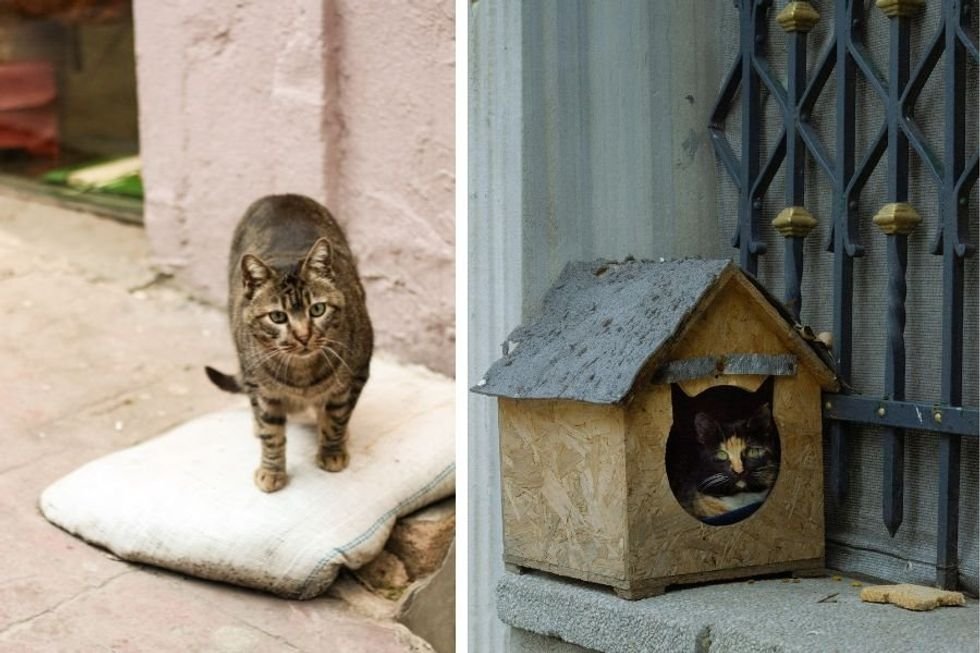
The man continued to set food out for the cat. Taking note of the changing weather, Barna decided to take one of his hobbies and build the cat, now named Domino a cozy little house. Building things is a hobby for him, so he made sure to equip Domino’s tiny abode with a heating pad, light and camera.
Before too long the situation turned into a version of the famous children’s book, If You Give a Mouse a Cookie. Another cat showed up (because of course Domino had a bestie) but it didn’t stop there.
Barna built a tiny two story condo for the two cats to hang out in while still keeping Domino’s original tiny house. The backyard looks like it was made to host furry tenants in a makeshift cat community because more cats indeed showed up. Soon the tuxedo cat had several neighbors to hang out with and thanks to Barna, none of the cats looked like they were missing any meals.
“We have about four or five cats who will go in and sleep in the houses,” Barna told The Dodo. “One night one of the biggest storms of the year hit, I saw that two kittens actually took shelter in the house. That was one of the sweetest things ever.”
A stray cat looks at the camera. Photo credit: Canva
Barna had cameras set up inside and outside of the itty bitty kitty community so he can keep an eye on his feline neighbors. The cats’ landlord expressed that he feels gratification seeing his little houses be used by furry tenants. Having a group of cats around probably isn’t too terrible for keeping pests away either, so it’s a win for all involved.
Down in the comments, people applauded Barna for taking such good care of his feline friends.
“If you build it, they will come. what a kind and thoughtful gentleman to take care of these babies during the hard weather.”
“How a man treats animals reveals who the man is. This is a good man.”
“Just imagine how good the inside of those little houses feel to a kitty after he or she has been outdoors in all kinds of weather for who knows how long. They would finally be able to relax and get a good sleep. Kudos for being so kind and handy.”
“There is most definitely a special place in heaven for the animal rescuers. I love you.”
“This world NEEDS more people like this gentleman.”
Indeed, the world could definitely use a few more Barnas. Best of luck to him and his kitty companions.
Even though commercial airlines have been taking flight for 112 years, questions about etiquette still spark heated debates. Who gets the middle seat armrest? How many bags are fair to put in the overhead compartment? And one small argument continues to rage: Should the window shade be up or down, and who gets to decide?
While plenty of online discussions ping-pong the debate, the topic went viral last month after a woman documented a flight across the Arctic Ocean. Passenger Kelly Meng was flying in an economy seat from Chicago to Tokyo when, unfortunately, a fellow passenger didn’t comply with others’ wishes.
She explained in a TikTok video that the windows on this flight didn’t have “traditional shutters,” but rather dimmers that never allow them to get “100 percent opaque.” Because the flight is long (about 13 hours), many passengers wanted to sleep after dinner service, she said. But one passenger refused to dim their window beyond 75%, even after another traveler said the bright sun was blinding his eyes.
At one point, Meng said, a flight attendant gently asked the woman to dim her window, but she refused. Meng concluded, “The lack of self-awareness is insane.”
Unsurprisingly, many commenters sided with the window-seat passenger.
“Imo, whomever pays for and sits in the window seats controls the window,” wrote one commenter, who received nearly 4,000 likes.
Another person agreed: “Unpopular opinion, but bring an eye mask if it’s going to bug you. I totally see your point in this particular case, but I like to have my window open on shorter flights, especially if we’re flying over somewhere scenic.”
A few others agreed with Meng. “Idk how people are siding with the ‘window seat’ person,” one commenter noted. “It’s as if someone is playing music over speakers and telling other people to put on their own headphones if you don’t want to hear the music.”
Another commenter added, in part, that a bright window can make the cabin hot: “I don’t think people realize that having the shades open during daytime flights is not only blinding, but it also makes the cabin HOT. Especially if you’ve got the sun directly beaming on you.”
Flight attendant settles it
Upworthy spoke with a flight attendant for a major airline who preferred to go by the name Simone for this piece. She offered a definitive answer, but it’s slightly more complicated than one might think.
“The person next to the window controls the shade, and it should be down if the sun is making the cabin too bright,” Simone said. “However, most people in the window seats are nervous travelers or children. We can’t ask anyone to lower their shades during flight, we can only ‘mean mug’ them when we walk by.”
She offered this tidbit on how flight attendants sometimes get around the issue: “On the 787, the electric windows can be controlled by the flight attendants, and we aren’t supposed to set them on 5 and lock them, but we do.”
As for takeoffs and landings: “Window shades should be up for takeoff and landing so flight attendants have visibility in case of an emergency. That’s the only time we can request the position of the window shade.”
To be clear, while the airline doesn’t officially state a preference for in-flight shade position, Simone shared her own:
“For ‘blank’ sake, lower the shade and go to sleep. You can only look at the clouds for so long. One problem is the sun shines so bright in the cabin and some people can’t see their laptops while trying to do work or read on their tablets. I hate when the shades are up during the day. Nobody needs to see my large pores and runny nose while I’m serving them sodas and snacks.”
One of the best things about house pets is that few of us expect them to be smart. There are the occasional owners who rigorously train their dogs, but most of us are perfectly happy with friendly, dumb pets—as long as they love us unconditionally and like to snuggle. However, every now and then, they surprise us and reveal just how smart they really are.
Extending to the wider world of animals, most people simply have no idea how intelligent some species can be. It’s honestly mind-boggling.
A recent viral Reddit thread asked people about the “creepiest” signs of intelligence they’d ever seen. Though the prompt didn’t specify animals, countless users chimed in with moments when they witnessed an animal do something so smart it made their jaws drop. It can even be a little unsettling.
1. The canine empath
“I was dog-walker when my daughter was a baby, and I had one dog who absolutely understood every word I said. … If she didn’t want to do something, such as cross the street to a trash can, you just had to explain why it was necessary and she’d cooperate.
One time she got irritated because I wasn’t feeling well and was walking super slowly. She kept tugging on the leash til I finally told her I was feeling sick. She immediately lead me to a bench and sat there, totally calm, for like 10 minutes before leading me back home again.”
Dogs can’t speak English, but they pick up on far more than you might realize. The smartest ones can learn hundreds of words, and many can even recognize when you’re speaking gibberish (or another language). They’re also exceptionally good at picking up on human nonverbal cues.
Put it all together, and it can sometimes seem like they understand everything you’re saying.
2. The guard crows
“I’ve been feeding this family of 5 crows for years. They have gotten comfortable enough with me that they’ll come get snacks while I’m still sitting next to the food. I can call them with a specific whistle I use just for them, and they make a rattle noise (that sounds like the Predator) with me to thank me for food.
One late night I hear this horrible loud screeching. It woke me up, so I ran outside to see what it was. There was a guy trying to break into a window in my house and the 5 crows were dive bombing him screaming as loud as they could. He ran away. … So I guess I have guard-crows now.”
Crows are not only sneaky-brilliant, but they can also become your best buds if you treat them well. According to MIT Technology Review, “A 2020 study published in Science found that crows can think about their own thoughts. They can also recognize individual human faces, associate them with friendliness or danger, and pass that knowledge along to their peers.”
If you’re cool with the local murder of crows, word may just spread.
3. Puzzling crows
“Seeing a crow solve a puzzle box in seconds after watching it once gave me chills, it felt like it was actually thinking things through. Stuff like that makes you realize some animals are way smarter than we usually give them credit for.”
Crows are thought to be about as intelligent as a 5- to 7-year-old human child. Not only can they make friends, but they can also invent and use tools, solve puzzles, and maybe even count. By all accounts, they’re among the smartest animals in the world, and they may be hanging out in your backyard right now.
4. The magpie truce
“I ended up working as an adult really close to my family home I lived in since I was born. The area has always been occupied by Magpies which swoop at you all through summer. For those who don’t know, it’s terrifying.
At work there was an injured Magpie that we fed and took care of for ages. When it got better enough to roam, it ‘told’ all the other magpies in the area and since then, about a decade ago, all the magpies in the area never swooped any of us who worked at the store again. And Alfred the magpie used to fly beside me when I’d ride my bike to work! And on the way back too, to make sure I was safe. So insane.”
Though notoriously territorial and “swoopy,” magpies, like crows, can remember human faces. They can form strong bonds with humans who are friendly and helpful to them.
5. The dog that needed thumbs
“My dog starts barking at the door so I open it to see what’s going on. there’s a border collie sitting there waiting. I go to check on the dog and he gets up and walks a bit away, sits and stares at me. I follow him. this goes on till I’m in front of a house in my neighborhood.
Collie stares at the doorbell. I ring it. no one answers. collie stares at the door. I knock, no answer. dog gets up and walks to the side gate and stares at me and then up at the latch. I open the gate for the dog. the dog walks into the back yard, turns around, sits and stares at me and then at the open gate. I close the gate and watch the dog relax. dog used me for my thumbs and wouldn’t even let me pet him.”
Dogs frequently turn to humans for help in tough situations—it’s in their nature. When an owner or friendly human isn’t around, they’ll even seek out a stranger for a helping hand. It’s a distinctly social brand of genius.
6. The sneaky octopus
“I heard of an octopus who would break out of its tank at night and eat the crabs in a neighbouring tank. The aquarium staff didn’t understand how the crabs kept getting eaten until they watched cctv and saw what the octopus was doing. Creepy thing is, the octopus knew to replace the lids and return to its own tank. That must mean it understood the need for deception.”
Variations of this story have been going around for years. It’s even a plot point in the popular novel Remarkably Bright Creatures.
While the original source is difficult to verify, the story isn’t all that far-fetched. Octopuses are extremely gifted escape artists, able to solve puzzles, unscrew jars, and navigate mazes. They also seem to possess a strong understanding of what others—prey, humans, and other octopuses—may be thinking, and they have been known to use intentional deception.
“Was at a party and had a sudden mid conversation realization that we were all standing uncomfortably close to each other. My buddies border collie had slowly herded us all to the center of the room.”
Herding is an instinct hardwired into the Border Collie. Needless to say, it can take some owners by surprise just how eerily good they are at it.
“You will never remove herding instinct from a Border Collie and neither should you want to,” writes trainer Sarah Hedderly at DingBatt Dog Training.
8. The ham dog
“My dad’s German Shepherd figured out how to open the fridge, take out one slice of ham, and close it again. We only caught him because my dad set up a camera thinking my brother was sneaking food at night. The dog looked directly at the camera once and never did it again while we were home.”
Similar to octopuses, dogs understand deception. They can sometimes tell when a human is lying to them and have even been shown to distinguish between an honest mistake and an outright lie. In turn, they can be pretty sneaky themselves.
9. The dog that found its way home
Move over, Homeward Bound: The Incredible Journey.
“Not necessarily creepy, but I have no explanation for it – I’ve told this story before but when our dog was maybe 6 months old we took her to the groomers for the first time. My wife took her there in a taxi, she was lying on the floor the entire way with no way to see out. She had never been to that area before, and it was about 4 miles from our apartment, which itself was on the third floor of an apartment block. We get a call about 30 min later saying our dog had jumped a gate and ran out of the groomer, everyone’s freaking out, she’s a labradoodle but still a puppy, and she’s alone and scared in central London in the middle of the day.
We started searching and my wife was inconsolable so I said maybe she should wait at home – she got there and our dog was sitting on our doorstep on the third floor, happy as Larry, just chilling her beans. She had jumped a 4 foot fence, got out of a locked door, then ran across 4 miles of central London traffic, crossing at least one highway, through streets she’d never been to or even seen, and got home around 25 minutes after she left the groomers.”
It may be hard to believe, but dogs can follow a scent for miles. In one widely reported case, a dog returned to its owner after an 11-mile journey. Bonnie Beaver, executive director of the American College of Veterinary Behaviorists and a professor at Texas A&M University, told Time, “An eleven-mile distance is actually not terribly long for a dog.”
10. The cozy pup
“My dog knows how to turn on my wife’s heated blanket, and he knows he likes it on the 2 setting. He will change it to the 2 setting if she has it warmer or colder.”
All the different things dogs can learn to do never cease to amaze. They can operate appliances, dial a telephone, and apparently even use a heated blanket. What’s creepy—in the best way—is that your dog may know things you don’t even realize it knows. Like humans, dogs can learn remarkably well through observation.
It’s one thing to watch documentaries or learn in school about the brilliance of dolphins, crows, and even ordinary house dogs. But seeing surprising displays of animal intelligence for yourself can be downright eerie, in the coolest way.
You probably couldn’t pay a Parisian enough money to visit the Eiffel Tower, or an Italian to swing by the Vatican, even though both landmarks are objectively extraordinary. It’s a fact of life that people take for granted what they see every day, no matter how naturally splendid or meticulously crafted it may be. But sometimes an outsider’s appreciation can help you marvel once again at the wonderful things in your own backyard.
Recently, non-Americans on Reddit offered this gift by sharing some quintessentially American things they’d like to witness or experience for themselves. At a time when political division is making many Americans feel disillusioned, the conversation offers some timely comfort—and maybe even a renewed sense of hope for the good things the country still has to offer.
It’s also interesting to see how much American pop culture shapes what visitors find intriguing. Many people suggested fairly mundane things simply because they’ve seen them again and again in American movies and TV shows. For instance, one person mentioned the allure of Chinese takeout because of the iconic white cartons that appear a bajillion American films and television shows.
Keep scrolling for American things people from outside the country are eager to experience, or grateful to have experienced in their lifetime.
Even Americans agree that these two spots are must-sees.
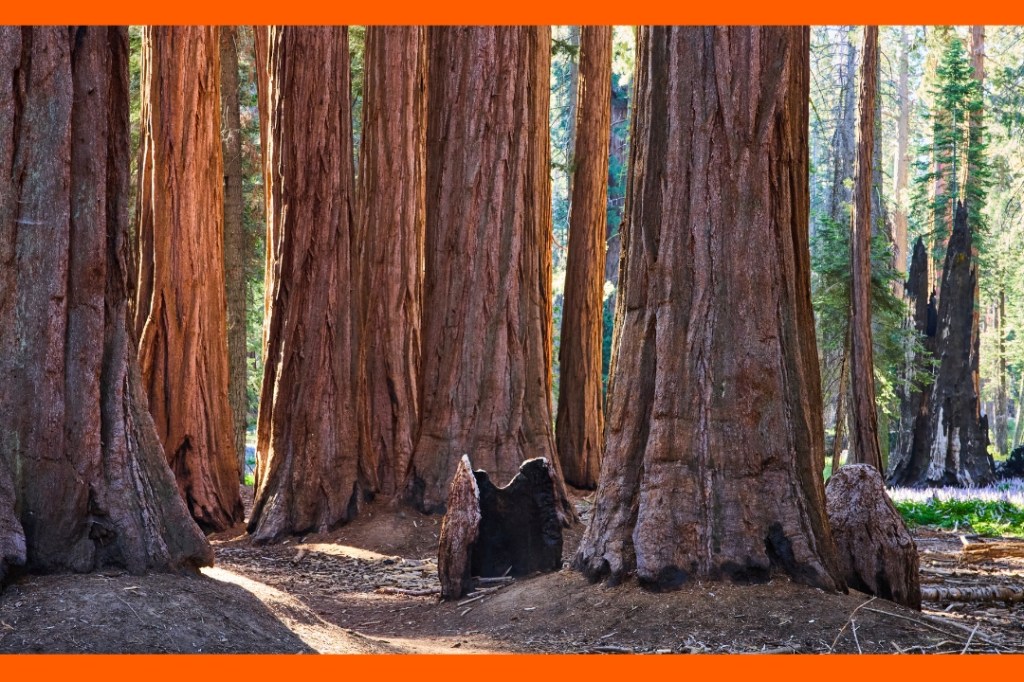
“I promise, standing at the base of a giant tree is an experience that cannot be replicated…If you have a chance, learn about the ecology and also about fire history.”
“As I’m American I always brushed off the Grand Canyon and never planned to see it. I got a random chance on a return trip from Vegas. Do it. See it. I’ve traveled a fair bit around the US and Europe and it remains the most amazing, breathtaking thing I’ve ever seen or experienced.”
“I’m also an American, and pretty well traveled. The Grand Canyon brought me to tears. It’s one of only two placed I’ve ever gone to twice in the same year because it’s just THAT good. (The second was the Cliffs of Moher in Ireland.)”
2. The rainforests of the Pacific Northwest
“I bet they smell AMAZING!!”
3. The French Quarter in New Orleans
“Nothing else like it. And you cannot get bad food there unless you just want to eat at McDonalds………”
4. Savannah, Georgia
“Savannah is great!! I stayed a couple nights there and always wanted to go back. Do a ghost tour! And a horse carriage tour!”
“I reallllyyy wanted to go to New England for the longest time lol. Such pretty leaves.”
6. Sedona, Arizona
“A friend said it was stunning but disconcerting because at times she felt things were off kilter. I like weird places and the geographic nature appeals, all those red rocks!!”
7. San Francisco
“I’m 30, an American and just landed in San Francisco this morning. It’s my first time here and I’m in love. Such a cool place. I’m actually moving here soon. Doesn’t feel real at all!”
“I lived in Mexico and Central America for many years, and one thing people kept asking me about was tornadoes…They thought it was an American thing, and a very common occurrence. Maybe because of Wizard or Oz. I had to sadly tell them I’ve never seen a tornado in my life. I’m from the west coast. They were definitely very disappointed. I also realized they don’t understand how dangerous they are. They thought it was more like lightning. Just happening in the background while people got on with their day.”
9. Gigantic stores
“Honestly just want to hit up some of those huge pc hardware stores…we don’t have anything like that scale here.”
“I wanna visit a Walmart. The closest thing to a giant store like that are some larger supermarket chains in Germany … In the Netherlands we don’t really have large stores where you can find EVERYTHING you wish for.”
“I have a good friend from Switzerland and the first thing she wanted to experience was getting to-go Chinese food and eating it out of those white cartons with chopsticks…I guess the whole Chinese food take-out in those particular cartons is pretty American, kinda like fortune cookies.”
11. Fast food restaurants
“I’m American, but my Irish colleague was so excited to try a Baconator from Wendy’s when he visited.”
“When my German friend visited she begged to visit In-N-Out because it looked ‘so fancy.’ She loved it. I surprised her by buying her a tshirt from there too.”
12. Items/places made famous by movies and TV
“Australian here, and I’ve always wanted to see a big yellow school bus, after being terrified of them in the opening scene of A Nightmare on Elm Street 2”
“I just wanna walk into a 24/7 diner at 3am and get a giant milkshake. No reason, just movie vibes.”
“My friend from England visited New York for business and thought it was wild that to-go coffee was served in the same blue and white cups she had seen on Law & Order.”
13. Halloween festivities
“I absolutely love American culture for Halloween, all those decorations, costumes and just the whole vibe about this holiday is something I would like to experience.”
“One thing that I really love about American culture is Halloween haunted houses. There’s haunted houses…There’s haunted hayrides, some where zombies attack you, and you have to try to get them with paintball guns.There’s haunted 5k runs, kids haunted houses (Not scary, just silly), even haunted car washes.”
14. Events that celebrate olden times
“I’d love to go to a Renaissance fair or at least a Medieval Times dinner show.”
Finally, people seem really eager to try rhubarb pie. Honestly, who can blame them?
Cats have an interesting way of showing up when you least expect them. Sometimes their mere presence at the oddest of times provides the perfect break from serious moments. This is especially apparent when they appear on news segments.
On the @Explaining Instagram page, they share a montage of adorable cats appearing on news broadcasts, often without their owners realizing it. In the comments, the page explains that this usually happens because cats like to see and be seen: “Cats have a funny habit of interrupting video calls, and it is mostly because they are naturally curious and attention seeking.”
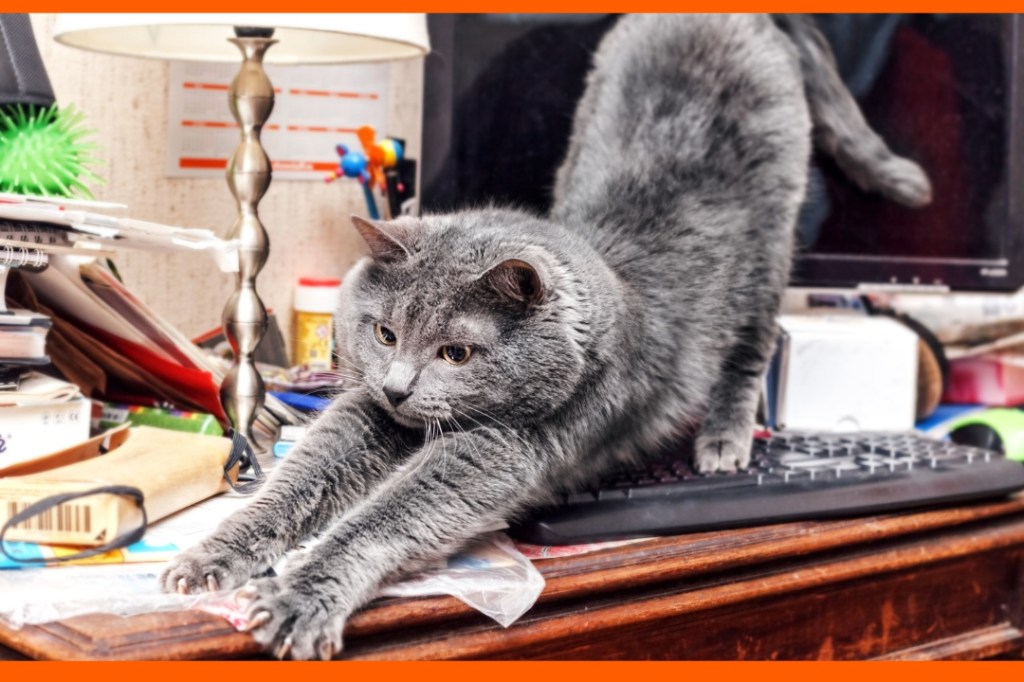
In the clip, we see different breeds of cats yawning, stretching, and yes, jumping into the middle of news shots. Often they stand frozen, their mysterious eyes widened by the lights. Other times, they are oblivious to their surroundings.
One interrupts a man doing the weather, while another jumps on a reporter doing a “man on the street” interview. The account adds that cats often think they’re the main event:
“When they see their owner staring at a screen and talking, they often assume it is something important and want to be part of it. That curiosity can lead them to walk across keyboards, sit in front of the camera, or stare directly into the lens.”
Cats have their reasons
But surprisingly, there’s another reason a cat might hop into frame. The page explains: “Cats are drawn to warmth and elevated spots. Laptops give off heat, and desks are often one of the highest places in a room, making them the perfect place for a cat to settle down right in the middle of a meeting.”
This fact is corroborated by veterinary experts. In a Catsterarticle, Editor-in-Chief Christian Adams (reviewed and fact-checked by veterinarian Dr. Luqman Javed) notes that cats prefer elevated spaces.
“Most times, laptops rest on an elevated surface, like a table, desk, or bed,” Adams writes. “The laptop offers a defined place to take a load off and a strategic vantage point. They can see who’s coming or going, peek out a window, or knock some pens on the floor—just for kicks.”
Cats are also drawn to warmth.
“For some cats, this might involve sitting near a window. Others might get more creative,” Adams writes. “Considering how warm laptops can get, most cats will gladly situate themselves right on the keyboard any chance they get. For cats, finding a warm laptop to lie on is like finding that perfect sleeping situation at night—cuddled up in your fluffy duvet, with the cool side of the pillow.”
And of course, cats simply (usually) love their humans.
“With that affection, comes the desire to be the center of our world—even at the most inconvenient times,” Adams adds.
Cat adoration
The Instagram clip already has over 164,000 likes and tons of comments. One person marvels at how fortunate we are to even be in the presence of these majestic beings, writing, “We’re so lucky that we get to live in a world where cats exist.”
Another cat lover notes that cat people know who’s really in charge, writing, “I love how none of them try to stop or move their cat, we’ve accepted that they are really in charge here.”
This person sums up the response quite nicely: “I believe if you wanna find good humans, drop a cat in front of them and see how they respond. I love every laugh and bit of joy these cats brought these news anchors and reporters.”
Close your eyes and let your imagination take you to the seaside coast of the southern Chilean rainforest. Now picture a giant cypress tree—an alerce, to be exact—thought to be a relative of the giant sequoia of North America. Beneath it is where the magic happens. Researchers have unearthed a massive number—more than 300—of fungal…
Close your eyes and let your imagination take you to the seaside coast of the southern Chilean rainforest. Now picture a giant cypress tree—an alerce, to be exact—thought to be a relative of the giant sequoia of North America. Beneath it is where the magic happens.
Researchers have unearthed a massive number—more than 300—of fungal species beneath one of these trees. While scientists already knew about the symbiosis between trees and fungi, they were shocked to find so many different types of fungi in a single soil sample. What this means for the ecosystem could be groundbreaking and, at the very least, supportive of the Darwinian view that the fittest species survive.
According to writer Helen Pilcher’s article in Discover Wildlife, these trees are not only enormous, they can grow to be thousands of years old: “These slow-growing trees can grow as tall as the Arc de Triomphe, and as wide as a shipping container. Renowned for their longevity, some individuals have lived for over 3,600 years, making Alerce the second-longest-lived tree species on Earth.”
The tree that is especially exciting to researchers in this study is called Alerce Abuelo. This individual, whose soil was studied alongside that of 31 other trees by researchers in Biodiversity and Conservation, is approximately 2,400 years old.
How it works
Pilcher explains the partnership: “These mycorrhizal fungi funnel water and nutrients into the tree roots, and help the plants to fight stressors, such as drought and pathogens. In exchange, the trees feed their fungal partners with sugars, fuelling the growth of underground networks that help shunt carbon into the soil.”
On the National Park Service’s website, they also explain how mutually beneficial these relationships can be: “Mycorrhizal fungi form a mutualistic relationship with the Redwoods and other plants in the forest. A mutualistic relationship is when both organisms benefit. The fungi will combine their mycelium with the tree’s roots. As a result, the fungi make it easier for the trees to get more nutrients and moisture from the soil, and the fungi get access to sugars from the trees.”
Why it matters
At a time when many people are concerned about climate change happening at an alarming rate, this doubling of fungal species is promising. Pilcher reiterates how exciting it was that one tree had so many fungal species: “In addition, the fungal richness under Alerce Abuelo was more than two times greater than in any other sample. The study highlights the importance of protecting these older, bigger trees.”
Pilcher also cites Adriana Correlaes, field science lead at the Society for the Protection of Underground Networks (SPUN), who exclaimed, “All that diversity means resilience.”
The Nature Conservancy further explains how important it is to have thriving, healthy trees for a number of reasons: “Through photosynthesis, trees absorb carbon dioxide from the air and store it in its wood. Trees and plants will store this carbon dioxide throughout their lives, helping slow the gas’s buildup in our atmosphere that has been rapidly warming our planet.”