See what researchers found when they tested a bottle of Fiji Water against a glass of tap water.
<span class="redactor-invisible-space"></span><span class="redactor-invisible-space"></span><span class="redactor-invisible-space"></span><span class="redactor-invisible-space"></span><span class="redactor-invisible-space"></span><span class="redactor-invisible-space"></span><span class="redactor-invisible-space"></span><span class="redactor-invisible-space"></span><span class="redactor-invisible-space"></span>

Here are six facts from the video above by The Story of Stuff Project that I'll definitely remember next time I'm tempted to buy bottled water.

1. Bottled water is more expensive than tap water (and not just a little).
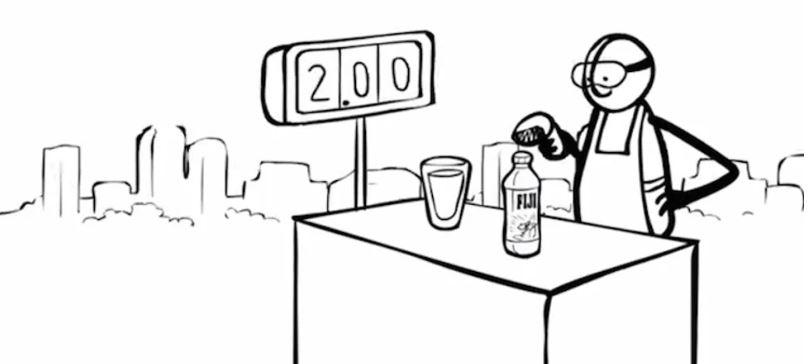

A Business Insider column noted that two-thirds of the bottled water sold in the United States is in individual 16.9-ounce bottles, which comes out to roughly $7.50 per gallon. That's about 2,000 times higher than the cost of a gallon of tap water.

And in an article in 20 Something Finance, G.E. Miller investigated the cost of bottled versus tap water for himself. He found that he could fill 4,787 20-ounce bottles with tap water for only $2.10! So if he paid $1 for a bottled water, he'd be paying 2,279 times the cost of tap.

2. Bottled water could potentially be of lower quality than tap water.
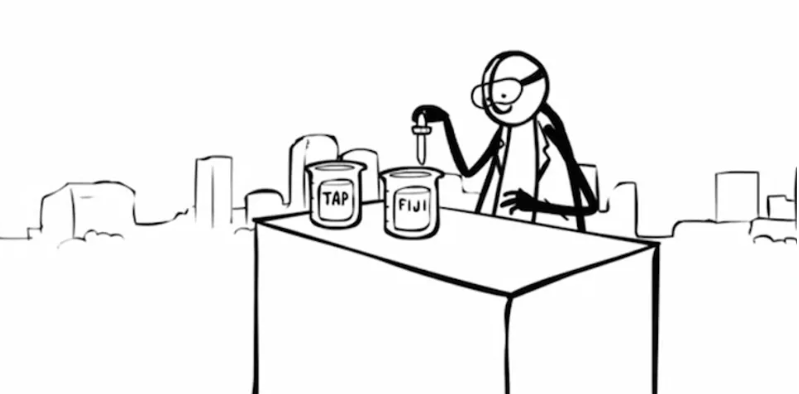
Fiji Water ran an ad campaign that was pretty disparaging about the city of Cleveland. Not a wise move. The city ordered a test of the snooty brand's water and found that Fiji Water contained levels of arsenic that weren't seen in the city's water supply.

How was that possible? Sarah Goodman of the New York Times explains:

"Bottled water manufacturers are not required to disclose as much information as municipal water utilities because of gaps in federal oversight authority. Bottom line: The Food and Drug Administration oversees bottled water, and U.S. EPA is in charge of tap water. FDA lacks the regulatory authority of EPA."

3. The amount of bottled water we buy every week in the U.S. alone could circle the globe five times!
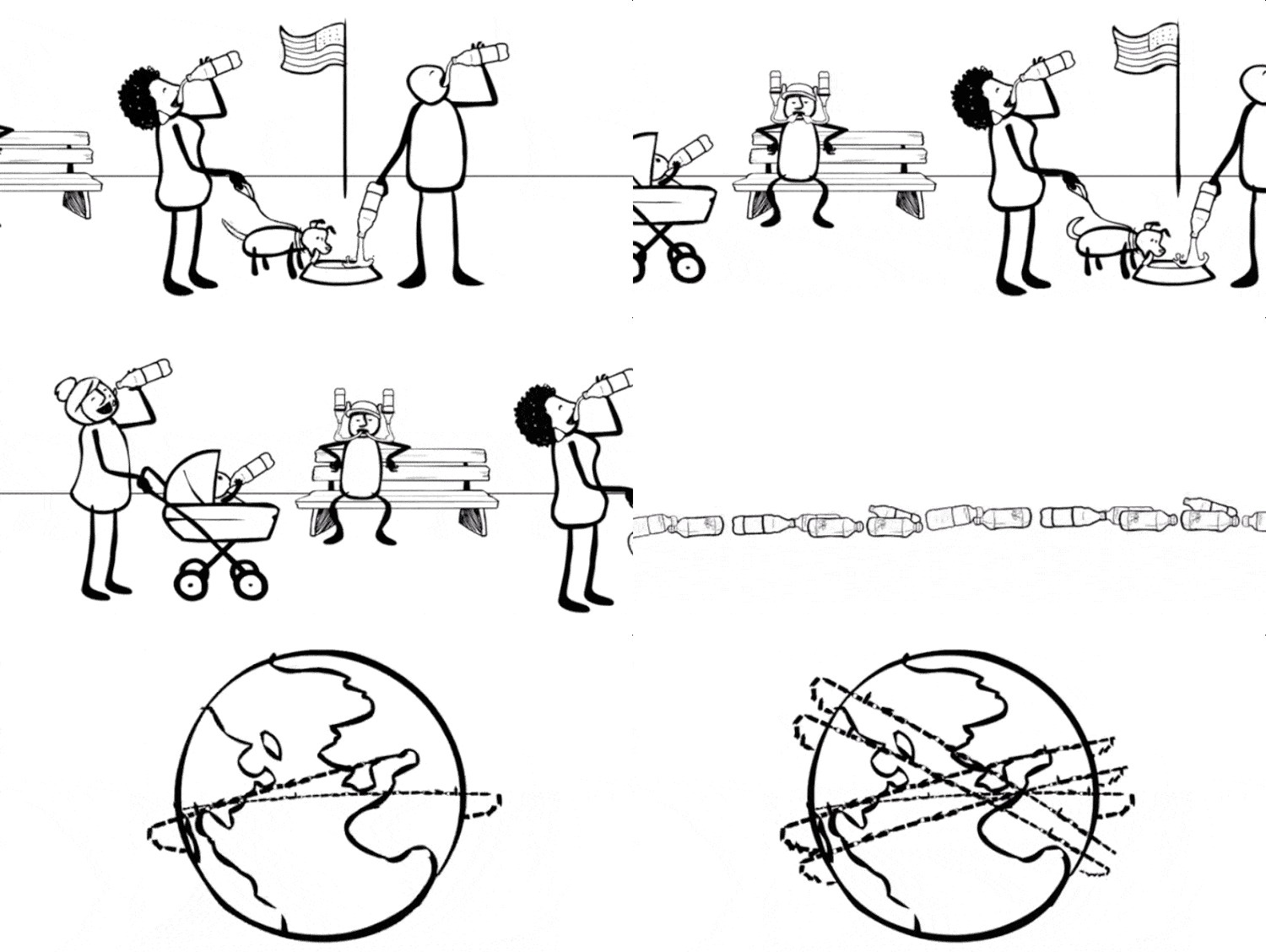
That sounded like it just had to be impossible, so we looked into it. Here's what our fact-checkers found:

"According to the video, 'People in the U.S. buy more than half a billion bottles of water every week.' National Geographic says for 2011, bottled water sales hit 9.1 billion gallons (roughly 34 billion liters).

A 'typical' water bottle is a half-liter, so that's about 68 billion bottles per year. Divided by 52 weeks would be a little over 1 billion bottles of water sold per week in the U.S. Because that's based on a smaller 'typical' bottle size, it seems reasonable that a half billion bottles a week could be accurate.

The Earth is about 131.5 million feet around, so yep, half a billion bottles of varying sizes strung end-to-end could circle the Earth five times."


4. Paying for bottled water makes us chumps.
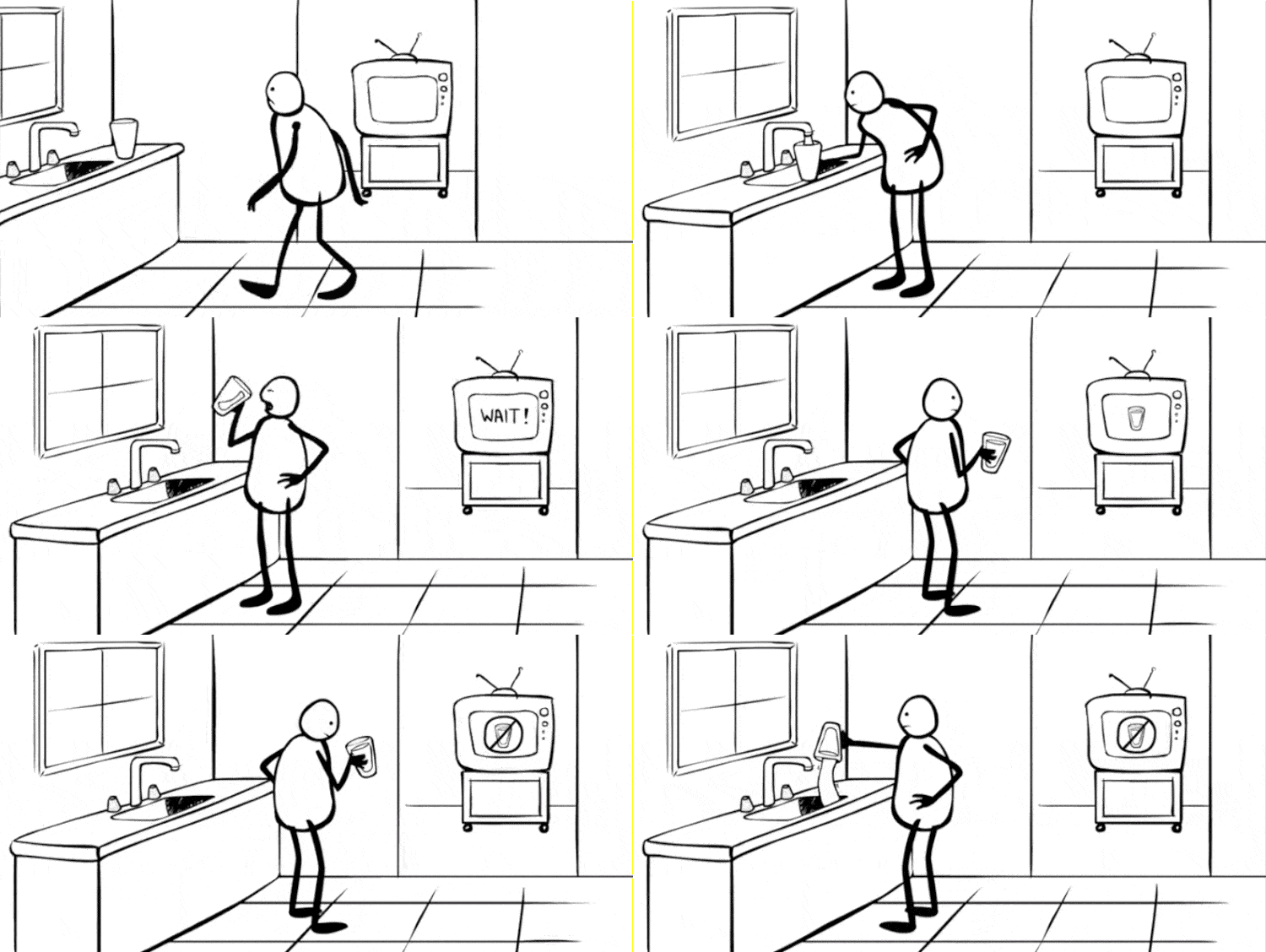
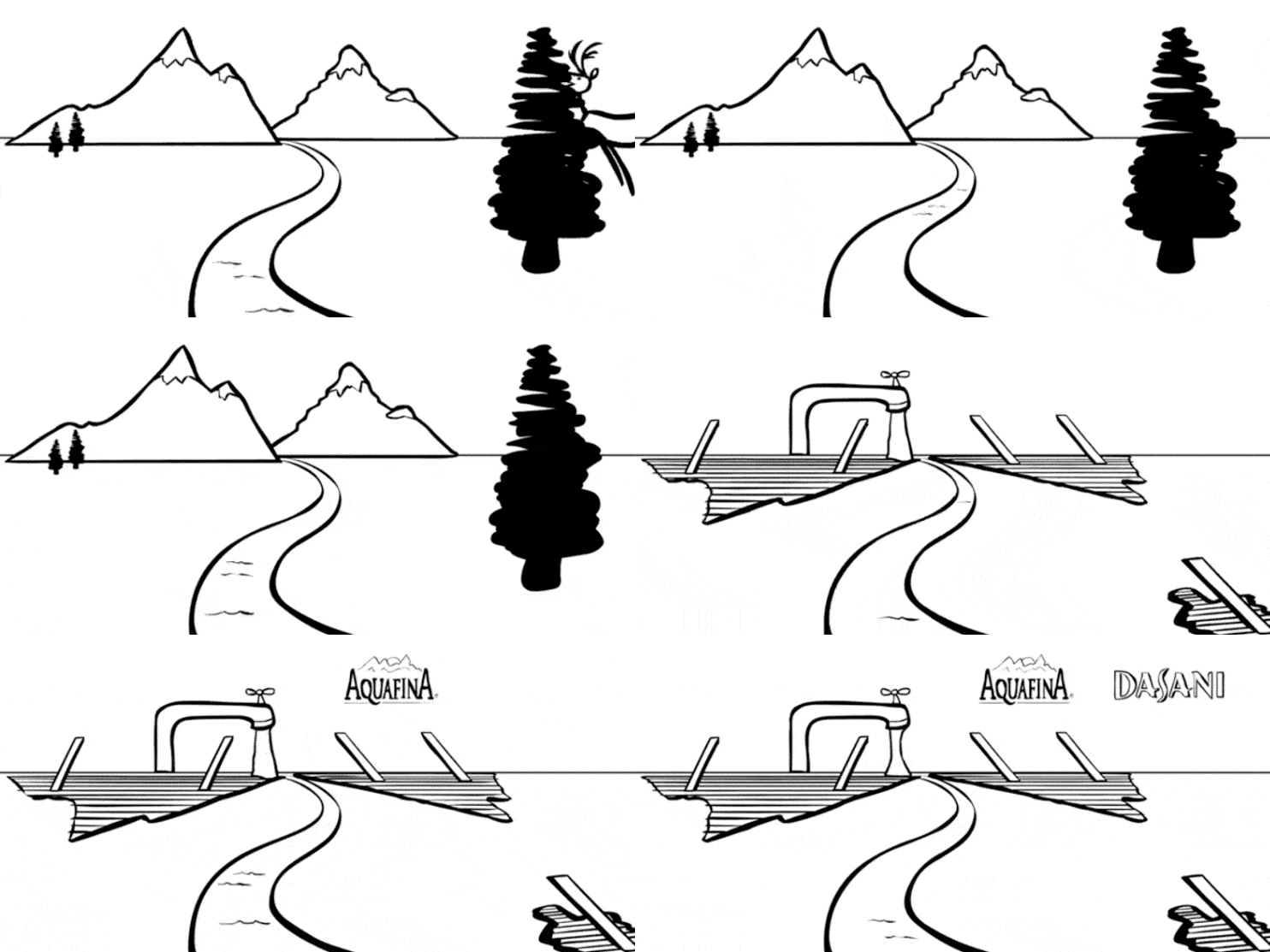
Beverage companies have turned bottled water into a multibillion-dollar industry through a concept known as manufactured demand. Bottled water advertisements used a combination of scare tactics (Tap water bad!) and seduction (From the purest mountain streams EVER!) to reel us in.

Well, we now know their claims about the superior quality of bottled water are mostly bogus. And research shows that anywhere from a quarter to 45% of all bottled water comes from the exact same place as your tap water (which, to reiterate, is so cheap it's almost free).


5. Bottled water is FILTHY.

It takes oil — lots of it — to make plastic bottles. According to the video, the energy in the amount of oil it takes to make the plastic water bottles sold in the U.S. in one year could fuel a million cars. That's not even counting the oil it takes to ship bottled water around the world.

And once we've guzzled our bottled water, up to 80% of the empty bottles end up in landfills or noxious-gas-producing incinerators. The rest is either recycled or shipped to countries like India where poor people without environmental and labor protections have to deal with it.

On top of all that, the process of manufacturing plastic bottles is polluting public water supplies, which makes it easier for bottled water companies to sell us their expensive product.

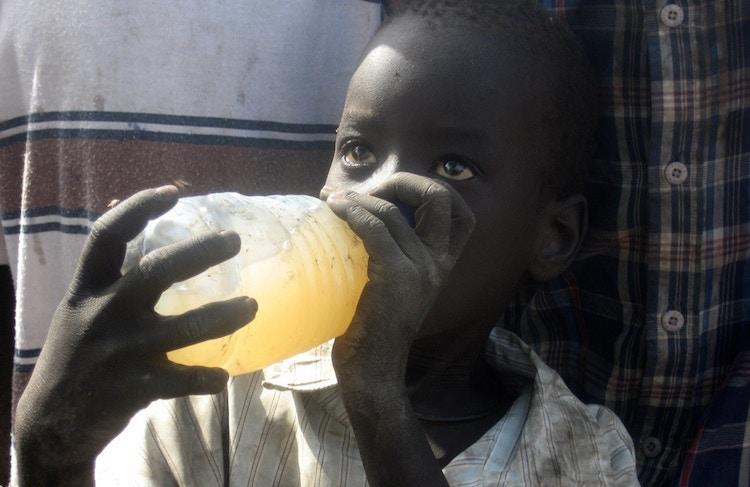
6. There are 750 million people around the world who don't have access to clean water.

Photo by H2O for Life.

A child dies every minute from a waterborne disease. And for me, that's the core of what makes bottled water so evil.

The video wraps by comparing buying bottled water to smoking while pregnant. That may sound extreme, but after learning everything I just did about the bottled water industry, I can't disagree.

If you're properly disgusted, here are a few ways you can help destroy the bottled water industry:

  1. Don't buy bottled water. Get a reusable water bottle. The savings will add up.
  2. Rally your schools, workplaces, and communities to ban bottled water.
  3. Demand that your city, state, and federal governments invest in better water infrastructure.
Images courtesy of John Scully, Walden University, Ingrid Scully
True

Since March of 2020, over 29 million Americans have been diagnosed with COVID-19, according to the CDC. Over 540,000 have died in the United States as this unprecedented pandemic has swept the globe. And yet, by the end of 2020, it looked like science was winning: vaccines had been developed.

In celebration of the power of science we spoke to three people: an individual, a medical provider, and a vaccine scientist about how vaccines have impacted them throughout their lives. Here are their answers:

John Scully, 79, resident of Florida

Photo courtesy of John Scully

When John Scully was born, America was in the midst of an epidemic: tens of thousands of children in the United States were falling ill with paralytic poliomyelitis — otherwise known as polio, a disease that attacks the central nervous system and often leaves its victims partially or fully paralyzed.

"As kids, we were all afraid of getting polio," he says, "because if you got polio, you could end up in the dreaded iron lung and we were all terrified of those." Iron lungs were respirators that enclosed most of a person's body; people with severe cases often would end up in these respirators as they fought for their lives.

John remembers going to see matinee showings of cowboy movies on Saturdays and, before the movie, shorts would run. "Usually they showed the news," he says, "but I just remember seeing this one clip warning us about polio and it just showed all these kids in iron lungs." If kids survived the iron lung, they'd often come back to school on crutches, in leg braces, or in wheelchairs.

"We all tried to be really careful in the summer — or, as we called it back then, 'polio season,''" John says. This was because every year around Memorial Day, major outbreaks would begin to emerge and they'd spike sometime around August. People weren't really sure how the disease spread at the time, but many believed it traveled through the water. There was no cure — and every child was susceptible to getting sick with it.

"We couldn't swim in hot weather," he remembers, "and the municipal outdoor pool would close down in August."

Then, in 1954 clinical trials began for Dr. Jonas Salk's vaccine against polio and within a year, his vaccine was announced safe. "I got that vaccine at school," John says. Within two years, U.S. polio cases had dropped 85-95 percent — even before a second vaccine was developed by Dr. Albert Sabin in the 1960s. "I remember how much better things got after the vaccines came out. They changed everything," John says.

Keep Reading Show less
via The Walt Disney Company / Flickr

One of the ways to tell if you're in a healthy relationship is whether you and your partner are free to talk about other people you find attractive. For many couples, bringing up such a sensitive topic can cause some major jealousy.

Of course, there's a healthy way to approach such a potentially dangerous topic.

Telling your partner you find someone else attractive shouldn't be about making them feel jealous. It's probably also best that if you're attracted to a coworker, friend, or their sibling, that you keep it to yourself.

Keep Reading Show less
Courtesy of CeraVe
True

"I love being a nurse because I have the honor of connecting with my patients during some of their best and some of their worst days and making a difference in their lives is among the most rewarding things that I can do in my own life" - Tenesia Richards, RN

From ushering new life into the world to holding the hand of a patient as they take their last breath, nurses are everyday heroes that deserve our respect and appreciation.

To give back to this community that is always giving so selflessly to others, CeraVe® put out a call to nurses to share their stories for a chance to be featured in Heroes Behind the Masks, a digital content series shining a light on nurses who go above and beyond to provide safe and quality care to patients and their communities.

First up: Tenesia Richards, a labor and delivery nurse working in New York City who, in addition to her regular job, started a community outreach program in a homeless shelter that houses expectant mothers for up to one year postpartum.

Tenesia | Heroes Behind the Masks presented by CeraVe www.youtube.com

Upon learning at a conference that black mothers in the U.S. die at three to four times the rate of white mothers, one of the widest of all racial disparities in women's health, Richards decided to take further action to help her community. She, along with a handful of fellow nurses, volunteered to provide antepartum, childbirth and postpartum education to the women living at the shelter. Additionally, they looked for other ways to boost the spirits of the residents, like throwing baby showers and bringing in guest speakers. When COVID-19 hit and in-person gatherings were no longer possible, Richards and her team found creative workarounds and created holiday care packages for the mothers instead.

Keep Reading Show less