Diana Leygerman

  • Comedian shares 7 American phrases that completely baffle the British 
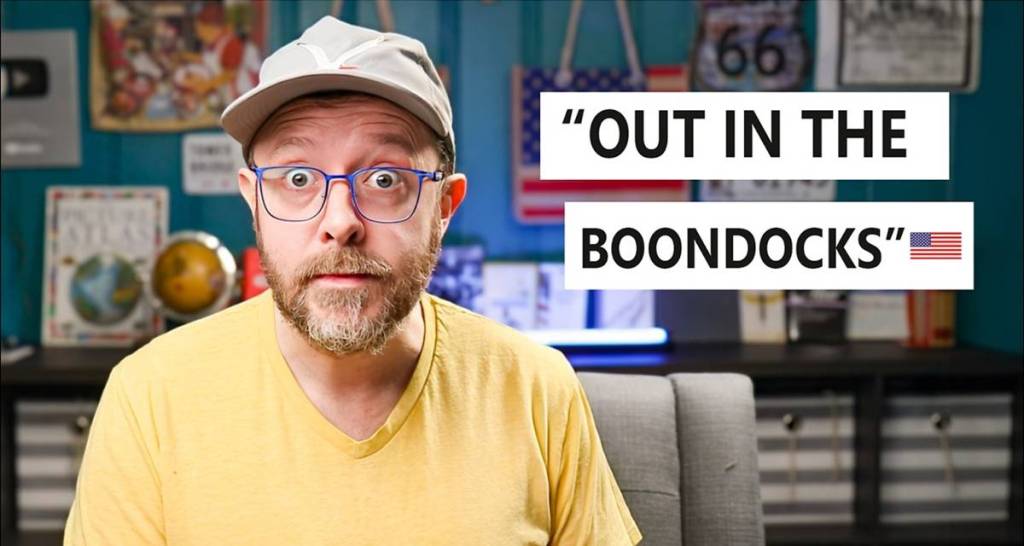
    Photo credit: YouTube/Lost in the PondLaurence Brown from Lost in the Pond.
    , ,

    Comedian shares 7 American phrases that completely baffle the British 

    “If we have them in Britain, what’s so American about this apple pie?”

    Even though Americans and British people share the same language, there are a lot of figures of speech that don’t make a lot of sense when they go from one side of the pond to the other. The British have some unique turns of phrase that are head-scratching to Americans, such as “Bob’s yer uncle” and “Taking the Mick.” 

    Laurence Brown, a Brit who moved to the midwestern U.S., documents the differences between U.S. and U.K. culture on the Lost in the Pond YouTube channel. Brown created a fun video in which he explains why some American figures of speech make absolutely no sense to most British people.  In the video, he explains how he first encountered each phrase and what they actually mean.

    1. “It’s not my first rodeo”

    “The thing is, rodeo isn’t really a common competitive sport in the UK. And so, if we are aware of it, we’re only aware of it through American movies and clips on the internet of bat crazy things that Americans do for fun. So while we can probably figure out what it means, we have absolutely no idea what it means.”

    2. “As American as apple pie”

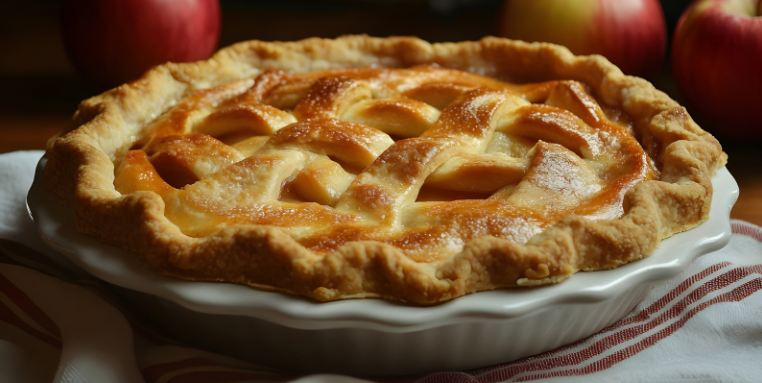
    “I was baffled by the phrase ‘as American as apple pie,’ because if we have them in Britain, what’s so American about this apple pie? Well, as I’ve pointed out on this channel, nothing. Because apple pie has its origins in England.”

    apple pie, america, hot apple pie, pie crust, apples
    Apple pie. Credit: Canva/Photos

    3. “Hit the books”

    “Americans like to use the term “hit” metaphorically, hit the gym, hit the books, hit the gas, hit the skids. … But in hindsight, even though I was quite confused by the phrase ‘hit the books’ at first, I sort of prefer it to what we’d say in Britain, which is ‘I’m doing revision.’”

    4. “The boonies”

    “Anybody who’s followed this channel for a while will know that I’ve lived in Indianapolis and Chicago, the two largest cities in their respective states. But often we find ourselves driving between the two cities, where there is nothing other than farmland. In the early days of living in the US, I remember somebody referring to these parts as ‘the boonies.’ This itself was a confusing phrase at first, because I had never heard this word before.”

    The phrase“Boondocks” appears to have entered the American lexicon from Tagalog, one of the languages of the Philippines. In Tagalog, bundok means “mountain.” The U.S. military began using the term and changed it to “Boondocks;” then, shortened to “Boonies” to describe the Vietnamese back country. 

    helicopter, vietnam, vietnam war, war, mountains
    A helicopter in Vietnam during the war. Credit: SSG Howard C. Breedlove/Wikimedia Commons

    5. The wazoo”

    “‘Wazoo’ is an American slang term for the buttocks or anus. I see. So when you’re talking out of the wazoo, you’re literally talking s**t.”

    6. “Get behind the eight ball”

    “It is a billiards term in the UK. Billiards is not really all that popular, and so the phrase, as far as I’m aware, did not really catch on over there. Well, what does the phrase mean, Laurence? Well, it turns out that it means don’t get yourself into a sticky situation. In other words, don’t be thwarted by it.”

    7. “Don’t mess with Texas”

    “When I first heard it, I thought it was the state of Texas telling everyone else, ‘If you bring a fight to us, we will absolutely destroy you.’ It’s part of the reason that I haven’t properly visited Texas yet. I think a lot of people find this tagline funny because of that weirdly provocative-sounding threat. Well, British people, and anyone who’s genuinely confused by this phrase, might, depending on your perspective, be thrilled or distraught to discover that the phrase was just part of a successful anti-littering campaign.”

    The phrase “Don’t Mess with Texas” comes from a 1985 anti-littering campaign by the Texas Department of Transportation. The first commercial, featuring blues guitarist Stevie Ray Vaughn, was a massive success, and the phrase soon entered the lexicon of Texans and the world beyond.

  • 4-year-old boy born deaf has a touching conversation with ‘Toy Story’ characters in ASL
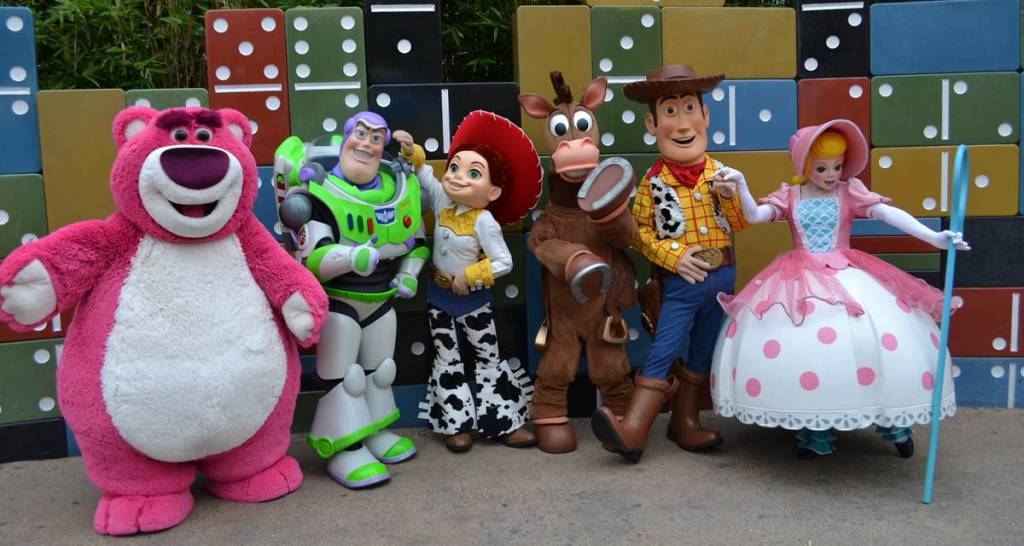
    Photo credit: FlickrToy Story cast members at a Disney park.
    ,

    4-year-old boy born deaf has a touching conversation with ‘Toy Story’ characters in ASL

    “Watching your child be included in their language… It’s a kind of magic you don’t forget.”

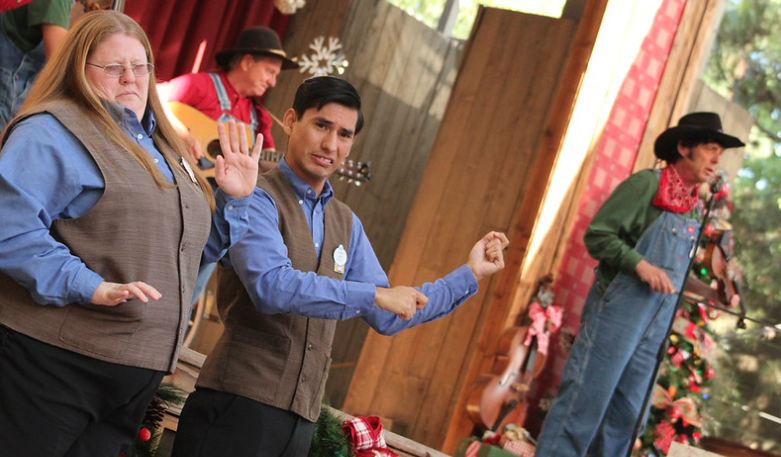
    An interaction between a 4-year-old boy and a Cast Member at Disneyland highlights the importance of inclusion and shows that learning American Sign Language (ASL) can have an incredible impact on deaf people and their families.

    Callie Foster, 38, and her husband, Leonardo Silva, 39, were recently at the park when their son, Luca, came across Disney Cast Members dressed as Jessie and Woody from the Toy Story series. The parents were taken aback when, for the first time at the park, the boy initiated a conversation in ASL with Jessie. 

    Jessie from Toy Story communicates in ASL

    “Because we go to the parks often, we really try not to put that expectation on anyone. We never assume a character will know ASL, so usually we’re the ones interpreting for Luca; we’re used to stepping in to help facilitate those interactions,” Foster told People. “This time was completely different. Luca initiated it on his own. He signed to her first, and there was this split second where we all kind of looked at each other like, ‘Wait… did that just happen?’ And then she recognized it and started signing back to him.”

    @thelacouple

    this is what magic looks like at Disneyland when your child is Deaf 🤍

    ♬ You’ve Got A Friend In Me (from “Toy Story”) – piano instrumental – Chilled Pig

    When Jessie and Luca first met, she didn’t know that he was deaf. Then, he looked up to her and signed, “What’s your name?” to which Jessie responded in ASL, “Name, J-E-S-S-E.” She then asked Luca, “Your name?” to which he responded, “Luca.” Jessie then said, “Nice to meet you,” and “Thank you.”

    “Watching your child be included in their language… It’s a kind of magic you don’t forget,” Foster concluded the video.

    This isn’t the first time Luca has gone viral for interacting with a character at Disneyland. Two years ago, when Luca was just 2 years old, a Cast Member playing Bo Peep communicated with Luca in ASL. When Luca approached Bo Peep, his mother signed, “This is Luca.” Bo Peep returned the greeting with, “Nice to meet you,” in ASL. 

    Bo Peep then knelt down to Luca’s height and signed, “You’re our friend.” Excited, Luca then tried to tell Jessie that her friend, Buzz Lightyear, was nearby.

    “I love how a lot of cast members know ASL,” Sherely wrote in the comments. “Just love Disney moments like this. Priceless,” Viv added.

    disneyland asl, american sign language, disney inclusion
    ASL interpreters at a Disney park. Credit: Brooke Pearce/Flickr

    Disney is committed to ASL inclusion in its theme parks

    The fact that many characters in Disney Parks know ASL isn’t an accident. Since 1997, Walt Disney World Resort and Disneyland Resort have offered ASL interpretation at many attractions and shows. Sign language interpretation is a service that is available in parks for guests with hearing disabilities.

    “When a show or new attraction that warrants Sign Language interpretation is being developed, my team at Walt Disney World Resort and the Disneyland Resort Accessibility team are included in planning conversations and rehearsal process. We work to ensure appropriate interpreter placement and lighting are being considered and to share show scripts and videos with the fantastic theatrical interpreters who do work for us,” Mark Jones, Manager of Accessibility and Services for Guests with Disabilities at Walt Disney World Resort, told Disney Parks Blog. 

  • Woman inherits her grandma’s ‘perpetual calendar’ from the ’70s. It’s a perfect family heirloom.
    Photo credit: CanvaSome family heirlooms truly are precious gifts.
    ,

    Woman inherits her grandma’s ‘perpetual calendar’ from the ’70s. It’s a perfect family heirloom.

    The passing down of stories, memories, and keepsakes is important in many families. But how to do that isn’t always so simple. A lot can get lost over the years, both figuratively and literally. And younger generations don’t always want or appreciate physical heirlooms. One woman shared a brilliant heirloom that belonged to her grandma,…

    The passing down of stories, memories, and keepsakes is important in many families. But how to do that isn’t always so simple. A lot can get lost over the years, both figuratively and literally. And younger generations don’t always want or appreciate physical heirlooms.

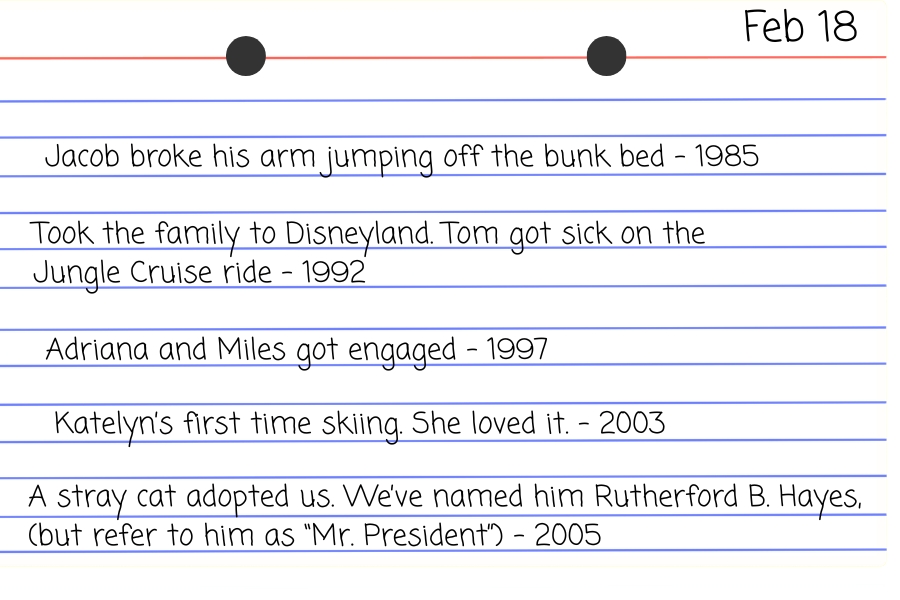
    One woman shared a brilliant heirloom that belonged to her grandma, which solves some of these problems. It’s called a perpetual calendar, and it keeps the whole family’s major memories in one spot. Essentially, it’s a ring of index cards that each have a month and day on them, but no year. As events happen in the family, they get written on the day they happened, with the year written next to them.

    Watch Jenn Perez Miller explain how her grandma’s perpetual calendar, which she started in the 1970s, works:

    The beauty of this idea is that it doesn’t take up a huge amount of space. If the cards eventually fill up, they can be stored physically or digitally and replaced with new ones, making the calendar filled with family memories essentially eternal.

    Another plus is that people can decide what they think is important to document. Will your great-grandkids care if you replaced your carpet 60 years ago? Maybe, maybe not. But not all memories have to be monumental. There’s something special about seeing the everyday events our loved ones felt were worth noting.

    An index card filled with family memories
    A sample of what a perpetual calendar card might entail. Photo credit: Canva

    People loved the idea:

    “Brb, gonna go put a perpetual calendar on my wedding registry and start this from our wedding day.”

    “If I came across something like this in an estate sale I’d immediately sit on the floor and read every single one.”

    “My boyfriend’s grandma did this and we were cryinnnnng laughing…. She talked about diarrhea a lot.”

    “This is the coolest thing I’ve ever seen.”

    “This is some serious matriarchal behavior and i am sooo jealous that you have something like this!!!”

    “I just love how women bring the family together in simple ways. 🥰”

    “I love the idea of seeing the major and insignificant things that happen on the same day years apart. Puts things into perspective.”

    “Genuinely this is such a treasure, future archeologists would lose their minds finding something like this.”

    A pile of index cards sits on a table
    You can make a perpetual calendar yourself with index cards. Photo credit: Canva

    The concept is not only simple, but it’s pretty easy to make yourself. All you need is index cards (one for each day of the year, including February 29th for leap years), a hole punch, and large binder rings. You could also use an index card box with dividers for each month instead of the rings.

    Some of us might see this idea and love it, but wish we had started earlier. But it’s never too late, especially when you think of it as something to pass down through the generations. Someone has to start sometime.

  • Hipster guy’s surprise ranking for each of Snoopy’s relatives has become a viral phenomenon
    Photo credit: Canva, Patrick Ferguson, InstagramHipster guy's surprise ranking for each of Snoopy's relatives has become a viral phenomenon.

    Snoopy, everyone’s favorite beagle from the mind of Peanuts creator Charles Schulz, is the joyous gift that keeps on giving. So, when content creator Patrick Ferguson took the time to rank each and every one of Snoopy’s relatives, it’s no surprise fans were delighted.

    Ferguson does this by playfully spoofing a popular “ranking” system commonly used on YouTube and Twitch. The idea is to put pop culture phenomenon (often movies or video games) and rank them in “tier lists.”

    Standing below an initial shot of all the animated beagles playing instruments, he begins by stating, “Snoopy is the best thing ever drawn or animated, and his siblings are pretty cool too. So I thought I would introduce you to them all and place them on a ‘tier list’ as I count them down.”

    He confirms where his references will come from: “I’m mainly discussing them from their role in Snoopy’s Reunion, but I will briefly mention the comic strips as well. And yes, ‘S’ tier does stand for ‘Snoopy tier,’ even on tier lists outside of this one.”

    Snoopy family tiers

    He begins with “Rover,” who he admits has a “cliché name even by today’s standards.” We see Rover, his light brown ears bouncing as he plays the resonator guitar. “Love his collar choice too. S tier.” From the Snoopy Town Tale fandom site, it’s reported that Rover only appeared in the TV special Snoopy’s Reunion, but never in the actual comic strip.

    Next, we see Olaf, a pudgier dog in a red hat. He blows dust off a jug, which happens to be his instrument of choice. Ferguson insists that Olaf “deserves every good thing in life that comes his way. S tier.” A site dedicated to learning about the Peanuts characters confirms that Olaf is “warm and sensitive, with a big, gentle heart.”

    We then see Molly, wearing a blue dress that Ferguson points out is similar to fellow Peanuts cast-mate Lucy’s signature style. Molly plays the mandolin and has some “really good, iconic Snoopy family qualities to her. I think I’ve gotta put her in S tier.” Like her brother Rover, Molly also only appeared in Snoopy’s Reunion.

    Then there’s Spike, who Ferguson points out has the “second most iconic look in the Snoopy family. He plays a mean fiddle.” He also notes that Spike isn’t the only S-tier dog with that name in the animated TV lexicon. Ferguson is most likely referring to the bulldog from Tom and Jerry, or quite possibly the bulldog from the Looney Tunes universe.

    The Peanuts site shares that Spike lives out in the desert: “He prefers a quiet, solitary life. His closest friends are the cacti and tumbleweeds. Spike is thoughtful and, at times, melancholic.”

    Next up is Belle. “She should have her own plushie. I think I have to go with S tier on this.” It’s stated on the site that Belle “lives in Kansas City with her teenage son. Snoopy and Belle reconnected when Snoopy hopped the wrong train on his way to Wimbledon and ended up in Missouri.”

    Up next is Marbles. The Peanuts site describes him as quiet and “weary of cats, often checking for them before entering a new place. Marbles is smart but lacks the imagination of his other siblings. He always finds himself confused by the games Snoopy plays.”

    @sy.fifilm

    #SNOOPY ૮ ◞ ﻌ ◟ ა i love andy sososo much hes so fluffy #foryou #viral #foru #4u #fyp #fup #downtownboy CREDITS: @esnopii_ 🐾

    ♬ original sound – Wayne ୨ৎ

    Lastly, we can’t forget the drummer. “Then we arrive at Andy. And this is the Snoopy sibling I want to pick up the most—but only after he and his scruffy fur are done jamming on the drum set. S tier.” Andy is described by the site as “a good traveler.” He “is always up for a walkabout, but his sense of direction is terrible.”

    As if that wasn’t adorable enough, Ferguson wants to give credit to both the guardian of the Snoopy gang and his own mother. “And could we forget the woman who raised the entire Snoopy family? Missy. One of the few S-tier moms, aside from my own.”

    Meet Patrick

    Upworthy had the delightful chance to chat with Ferguson, who shares that he’s a huge Snoopy fan. “Some of my earliest memories of laughter involve watching Snoopy as the Red Baron. I wouldn’t call myself the biggest Peanuts fan, per se, but I’ve always called Snoopy the greatest thing ever drawn.”

    He also further explains why he chose the tier system. “I made the video both to celebrate a character I love but never made a video for, and to poke fun at the idea of doing a tier list (a video concept I don’t see myself revisiting). The irony of having everyone at S tier plays into that.”

    The best part was the online response. “I’m surprised how many people commented on the wholesomeness of the video, if for no other reason than I was being very silly in every aspect of making it, albeit in a way that was also pretty sincere.”

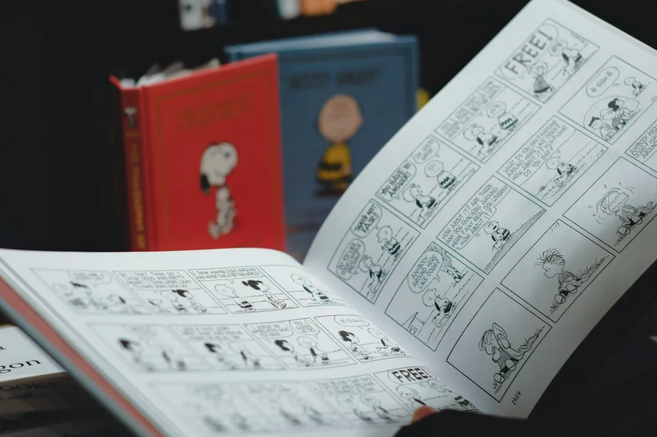
    Snoopy appears alongside his friends in the Peanuts comic strips. Photo credit: Unsplash

    The comments were definitely supportive and wholesome, indeed. The Reel has over 160,000 likes and nearly 500 comments. One Instagrammer shares, “Grinned so hard watching this. 10/10. No notes.”

    A few people argue over which instrument the puppies are playing. “95 percent sure Rover is playing a resonator dulcimer and not a resonator guitar,” one person notes. “10/10 video, though!”

    Another has thoughts on Spike, writing, “I’m kind of suspicious of the Snoopy with the mustache.”

    This commenter sums up what many seem to feel quite nicely: “I want to cuddle all of them.”

  • How Romania took its national recycling rate from 12 percent to 94 percent in just two years
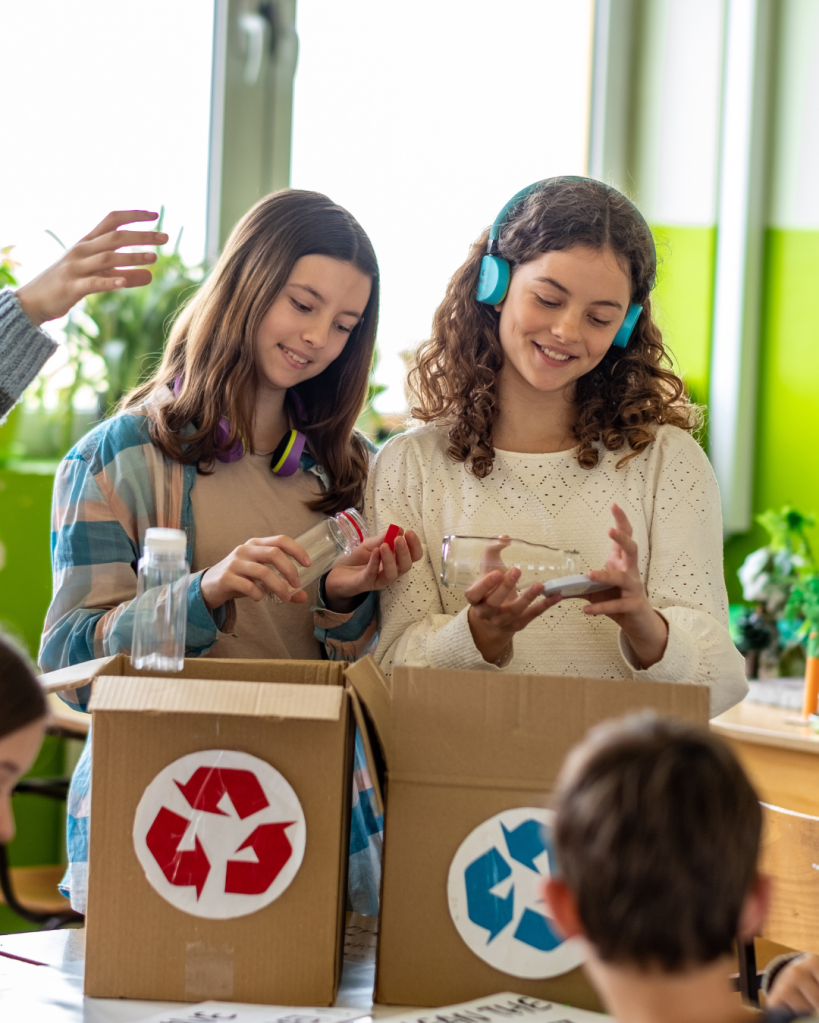
    Photo credit: CanvaRomania’s recycling revolution inspires Europe.
    ,

    How Romania took its national recycling rate from 12 percent to 94 percent in just two years

    Being late to the game may actually have given the country an advantage.

    Every week, Dana Chitucescu grabs a bag, walks around her home in the Transylvanian village of Pianu de Jos. She’s collecting something her neighbors happily hand over: empty bottles and cans.

    The 51-year-old brings them to her local shop, drops them off, and walks out with 40 brand-new Romanian leu in her pocket, about $9 USD. She uses it to feed her seven cats.

    It’s a small thing, nothing, really. But it also, somehow, encapsulates the story of how an entire country is changing the way it thinks about trash.

    From zero to hero: Romania used to be Europe’s worst recycler

    Not long ago, Romania ranked dead last in the European Union for recycling. Three-quarters of the country’s waste—74%—went straight into landfills. The environmental impact was catastrophic: rivers became clogged with plastic. Picturesque roadsides were buried under litter.

    Romania, recycling, revolution, environment, cans
    Photo credit: CanvaThe secret to Romania’s success isn’t complicated.

    The European Environment Agency even flagged Romania as being at serious risk of missing its recycling targets for years in a row. It looked like a problem without a solution.

    Then came RetuRO.

    The idea is simple

    Here’s how RetuRO works: when you buy a bottled or canned drink in Romania—water, soda, beer, anything—you pay an extra deposit of .50 Romanian leu. That’s about 11 cents in US dollars. When you finish the drink and bring the empty container back to the store, you get your money back. Voila!

    That’s it. That’s the whole idea.

    On top of that, Romania has made it ridiculously simple for citizens to recycle. Supermarkets have automated reverse vending machines that scan the container, crush it, and then credit your deposit on the spot. Smaller shops handle returns manually. And crucially, the program accepts plastic, aluminum, and glass; the latter, which most countries’ deposit systems skip altogether because glass is heavy and expensive to transport.

    RetuRO launched in November 2023 as a partnership between the Romanian government, beverage producers, and retailers, meaning everyone had skin in the game. Everyone had a reason to want to make it work.

    What happened next was remarkable

    Within months, something shifted in Romania. The recycling numbers, of course—those went through the roof—but also, something deeper. The way people regarded bottles and cans changed. Containers stopped feeling like garbage and became, instead, money left on the table.

    In the peak summer months, 94% of beverage containers were being returned. Later, in January 2026, the return rate hit 108%. That meant Romanians were returning more containers than were even sold that month, as people dug old bottles out of storage. Nine out of ten Romanians have used the system at least once. Six in ten do it every single week.

    Since launch, over 9 billion containers have been returned.

    “It is a zero-to-hero story,” said Gemma Webb, RetuRO’s CEO. “You go to Romania now, you don’t see a bottle anywhere. It was the impossible made possible. Everybody’s very proud… we are the largest fully integrated deposit return system globally.”

    It’s not just about bottles. It’s about people

    Yes, Romania’s story is impressive. But not because of the infrastructure or the statistics alone. It’s the way RetuRO has fundamentally changed Romanian citizens’ views on recycling.

    Grandparents who never recycled in their lives have found a new weekly routine (and a small but real source of income). Parents use their trips to the return machine as a chance to teach their kids that taking care of the planet doesn’t have to be a sacrifice; it can just be Tuesday. Young Romanians in their 20s now describe recycling as part of their identity.

    Dana Chitucescu’s brother lives in Spain, a country without a comparable system. Apparently, he’s jealous. “He says it’s one of the few things Romania does exceptionally well,” she told The Guardian. “He’s right.”

    Not to mention, the program has also added over $346 million to Romani’s GDP and created more than 2,000 new jobs: all within its first year of full operation. Romanian recyclers no longer need to import plastic raw material, because for the first time, there’s enough good-quality recycled Polyethylene Terephthalate (or PET, the clear, lightweight plastic used to make the vast majority of beverage bottles) being collected domestically to meet industry demand.

    The rest of the world is paying attention

    Government leaders from Poland, Turkey, Bulgaria, and beyond have traveled to Romania specifically to learn how to replicate this recycling scheme. In the European Parliament, Romania serves as the benchmark model for deposit-return programs.

    The secret to Romania’s success isn’t complicated. They made the recycling incentive real and immediate, simplified participation by creating a universal system (every retailer who sells drinks must accept returns by law), and trusted its citizens to do the right thing.

    What could this look like where you live?

    Romania’s recycling journey is proof that a recycling revolution doesn’t require a perfect society, unlimited funding, or decades of gradual habit change. It requires the right system, one built around real human behavior, not wishful thinking.

    Sometimes, all it takes is a bag, a short walk to the corner shop, and eleven cents.

    Or, that’s how it starts, anyway. That’s how nine billion bottles get returned.

  • Skincare mogul says her ‘high touch’ theory will be the most important job-saving skill in the age of AI
    Photo credit: CanvaA friendly woman in customer service. An AI robot.

    Like it or not, AI technology is almost certainly here to stay. While that might bring new conveniences we never thought possible, it still causes many to stress out over range of topics from our careers to existential level threats.

    In a segment for New Normal entitled, “Is Human Connection the New Job Security?” for BBC Global, journalist Katty Kay delves into the idea of job security in this new age. She first recalls a chat she had in 2023 with her old pal, Dermalogica Skincare founder Jane Wurwand.

    High touch vs. high tech

    In just two words, the corporate mogul had the antidote to “high tech,” and it was really quite simple. She told Kay, “The equal and opposite reaction to ‘high tech’ is ‘high touch.’” She explains that it’s “service-oriented businesses where humans are doing things that humans do best. Cooking. Caring. Touching. Kindness. Compassion. Talking. I’m not just in the business of skincare products. I’m in the business of human connection.”

    Kay reconnects with Wurwand over a video chat a few years later to find out if she still feels the “high touch” concept is possible now that AI has advanced. “It’s not confined to physical touch, your concept of high tech/high touch. It’s also about this broader idea of just having a human voice when you call.” (Kay gives the example of having to call tech support if your Wi-Fi has gone out.)

    The human being industry

    Kay then asks, “Give us some tangible thoughts on which are the high-touch jobs and areas of employment you think survive this rapidly growing technology that may take other jobs away?”

    Wurwand replies confidently, “The jobs that I see that are going to be booming…and really can’t be replaced. Hospitality. Travel. Anything in the human being industry.”

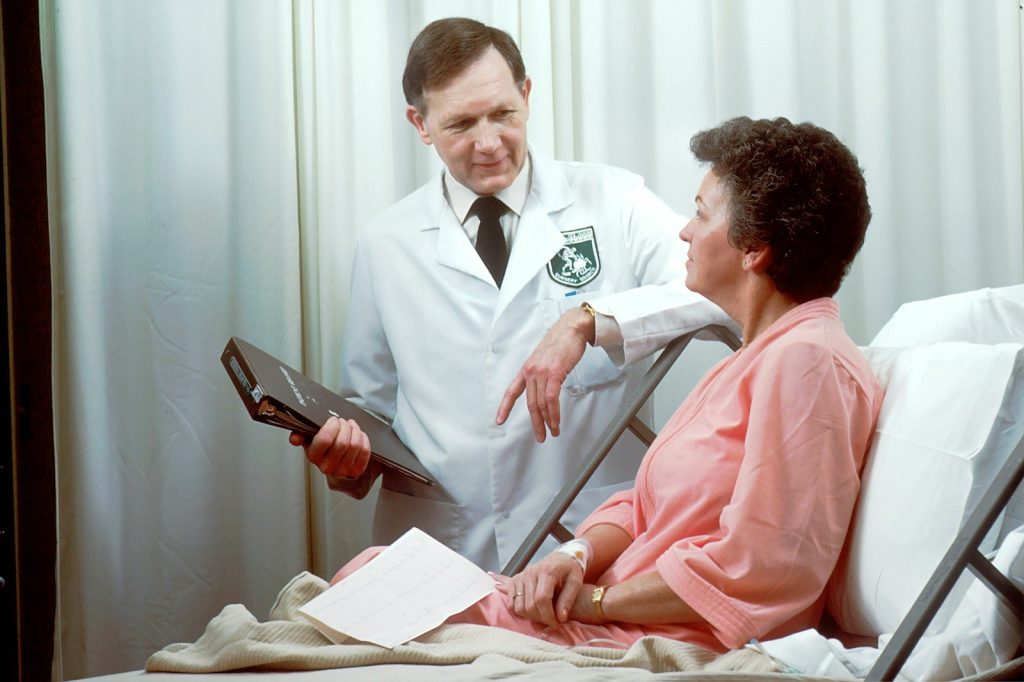
    She discusses the importance of true empathy, something that can’t be substituted by a robot. “If you are receiving a cancer diagnosis, goodness forbid, an AI bot might have found or detected that rogue cell, but you certainly don’t want that bot talking to you or giving you that diagnosis. You want someone with kindness, empathy, and to hold your hand and literally say, ‘We’ve got a plan. We’re going to execute on it.’”

    man in white button up shirt holding black tablet computer
    A doctor consults with his patient. Photo credit: Unsplash

    Wurwand gives other examples, as well, essentially suggesting “high touch” can be applied anywhere, including tech jobs. “Whether you’re working in retail, whether you’re working in an industry that is full of technology, what we can bring as humans that makes the workplace, that business, that space kind, empathetic, that you feel seen, you feel heard, that you matter, that somebody knows a little bit about your life so that you can chat and talk.

    A new social contract

    Kay brings up the insightful point that many, especially younger people in today’s society, feel threatened and disillusioned. “Many felt there was this kind of social contract, where you get educated, you pay an enormous amount of money to go to a university or tertiary education, and then you come out and actually there aren’t jobs because the jobs have been taken.”

    She also points out the frustration some might feel from having been told if they’d only learned to “code” they’d be fine. They then entered the workforce to find out lots of those jobs have been taken over, as well. Kay asks, “What do you say to the graduate who has a degree in accounting or coding?”

    Wurwand reiterates that “high touch” is still important, even in accounting or coding jobs. “You’re not gonna compete with a robot. We don’t have those same skills. We don’t have that ‘code’ in our head. You have everything else that is needed by other humans. So we have to take the strength and move with it.”

    She points out that we shouldn’t be so quick to label. “We shouldn’t box things into that’s ‘tech’ and this is ‘human.’ There has to be this connection.”

    Genuine empathy

    They both agree that those interpersonal skills—the ones that only human beings can truly have—must be nurtured in order to survive this AI flux. Wurwand gives the example: “Your first message of branding is that voice that answers the phone. And it doesn’t have to be in an office at a desk. It can be obviously remote. However, it has to be a double-down, delicious sort of person who sounds great and is kind and genuinely has empathy because we can hear or spot a fake in 30 seconds.”

    Of course, the idea of good customer service isn’t exactly new. But it seems extra important right now given it’s seemingly being forgotten by so many major corporations.

    In the article “9 Examples of High Touch,” for Simplicable, writer and IT tech John Spacey writes that it comes down to simply being human: “High touch is any business process that requires extensive human attention. These are typically areas where automation reduces the value of a process because humans add significant value to it.”

    Aside from the aforementioned client services, Spacey also discusses the importance of having “personalized attention with every customer.” This includes, of course, listening to their needs and tailoring the experience directly to them when possible.

  • Math researchers confirm ’20 year rule’ in fashion trends and it’s uncanny
    Photo credit: CanvaTwo women show fashion trends from different decades.

    Everything old is officially new again after mathematicians determined that trends tend to resurface “every 20 years or so.” So, while a de-cluttering organizer might tell you to pitch those low-rise skinny jeans, these researchers might say, not so fast!

    The team of mathematicians, led by Emma Zajdela at Northwestern University, took a look at well over 150 years of women’s clothing styles and determined that they could calculate trends resurfacing about every 20 years, calling it, “the 20-year rule.”

    20-year rule

    In an article for Popular Science, Andrew Paul writes, “Clothing trends come and go, but in some cases, they don’t stay away for too long. For decades, both the fashion industry and its devotees have referenced the so-called “20-year rule,” which suggests society is liable to see certain styles return at semi-regular intervals. However, without any hard data to back up the claim, that “rule” has long remained more of a hypothesis.”

    This is where the research comes in. Zajdela shares, “To our knowledge, this is the first time that someone developed such an extensive and precise database of fashion measures across more than a century.”

    The research

    Here’s how they did it. The Northwestern research team took a look at runway collections dating all the way back to 1869 and combined those trends with information from the commercial pattern archive. Explained on their site, “The Commercial Pattern Archive (CoPA) at the University of Rhode Island is both an extensive collection of commercially produced paper sewing patterns and a unique scholarly database used by costumers, fashion designers, museum professionals, scholars, and vintage aficionados the world over.”

    @swagbloke

    The 20 year rule. Trends are so accurately cyclical and you dont even realise. #swag #fashiontrends

    ♬ original sound – swagbloke

    What they then were able to do is measure waistlines, pant legs, skirt length, etc., to determine the formula. Paul writes that the study found the pendulum is always swinging. “Basically, the fashion industry is constantly fluctuating between originality and tradition. Once a clothing style is too popular, designers begin changing their new apparel just enough to stand out while still remaining desirable to potential wearers.”

    Fashion is evolving

    Plenty of Redditors have weighed in on the topic. On a thread entitled “Fashion stopped evolving 20 years ago…what do you think?”

    A commenter proves that perhaps we’re about to shift trends. “Yes and no. 20 years ago was the last signature defining aspects of fashion that characterized it, but otherwise no. Fashion is still evolving as normal, we just haven’t hit a point where we get a shift that makes past fashion seem alien, and we shouldn’t expect it to happen anytime soon. No one walks around in a Victorian wardrobe today, and Victorians wouldn’t walk in ours. People keep craving a shift that makes the fashion landscape itself change, which simply isn’t going to happen.”

    This person shares, in part, that indeed everything comes back in style. “There’s been actual change though, with tons of ebb and flow. The 90’s / early 00’s was really influenced by the 60’s & 70’s as well. 2010’s felt very 80’s with their own twist. I feel like we’re in the 60’s again (as in what people actually wore in the 60’s, not the media), with clean girl, beige, minimalism, whatever. But if you follow trends, you’ll see there’s been a lot of pushback against that now, especially since fashion is political. Give it a few years and we’ll be in the 70’s / 80’s. That whole (The) Devil Wears Prada speech about fashion trickling down is true.”

  • 14 English words students learn differently if their teacher is American vs. British
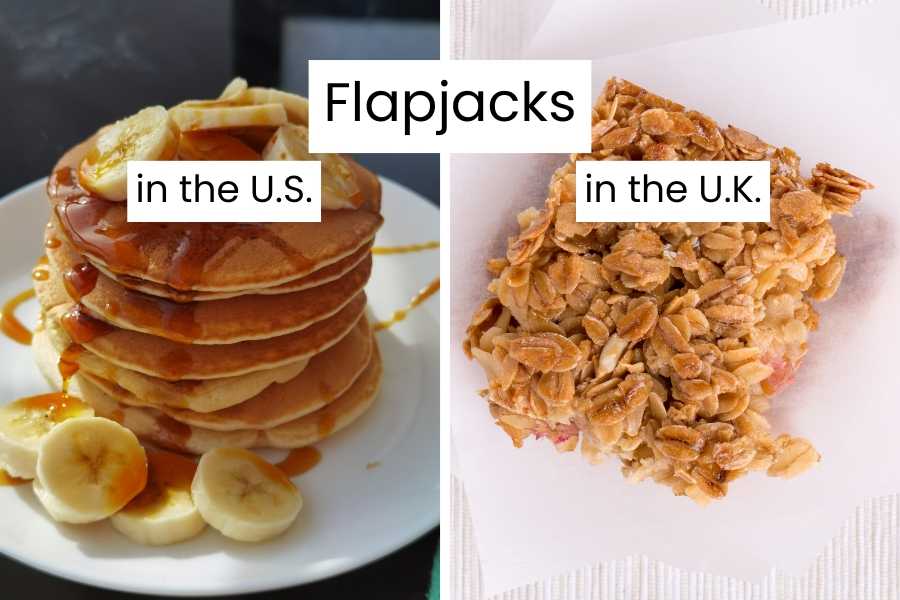
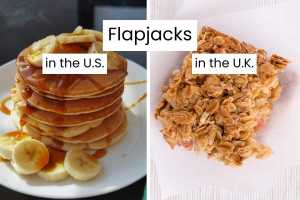
    Photo credit: CanvaFlapjacks in the U.S. are something totally different than flapjacks in the U.K.

    Even though Americans and British people technically speak the same language, there are some major differences in our English vernacular. For instance, if you were to give someone from the United States and someone from England this prompt:

    Draw a kid in a jumper eating chips, biscuits, and flapjacks while watching football.

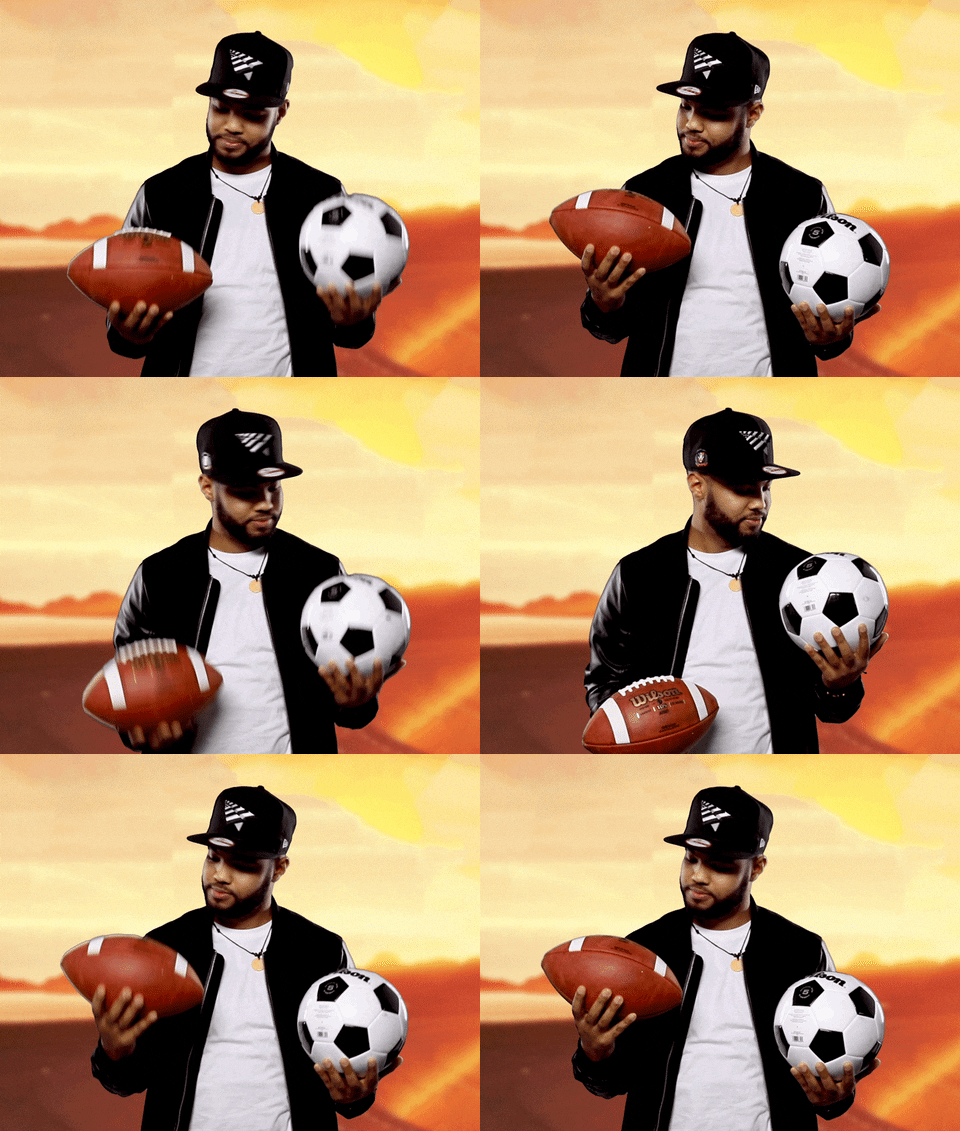
    You would end up with two very different drawings. The words jumper, chips, biscuits, flapjacks, and football all have completely different meanings in American English vs. British English. Most of us know the football vs. soccer difference, but the others may be unfamiliar.

    football, soccer, american english, british english, sports
    Football is soccer, except when it’s football. Giphy

    Words in the same language having different meanings based on geography can be confusing for English language learners, especially when they’re learning how to order food in a restaurant. Here are some differences just with foods alone:

    Chips

    In the U.S., chips means potato chips. As in Lay’s, Ruffles, etc. In the U.K., those are called “crisps,” while chips means french fries. Hence fish and chips meaning fish and fries, not fish and Ruffles.

    Biscuits

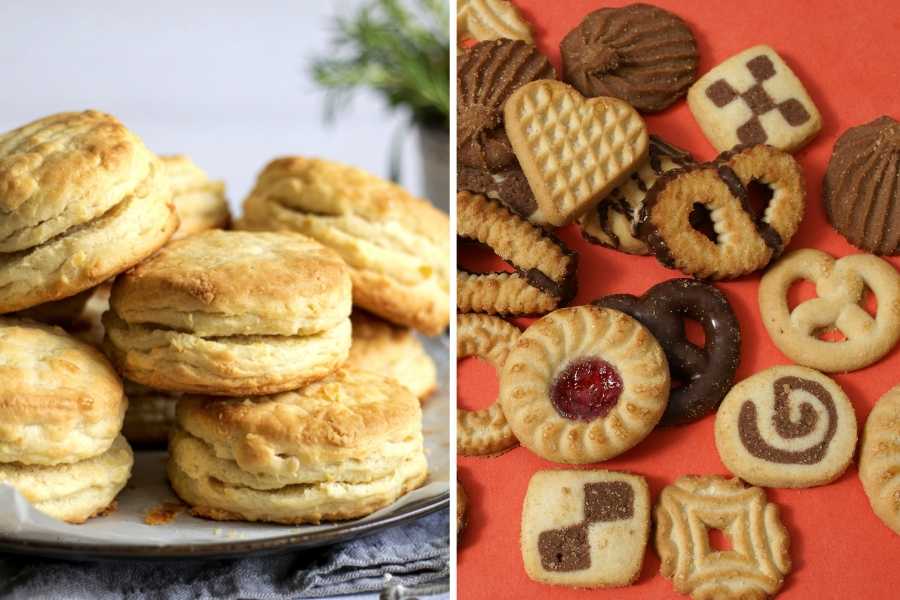
    When Americans talk about biscuits, we’re talking about fluffy, flaky baked balls of dough smothered in butter and served with either soups or meat and mashed potatoes, generally. Buttermilk biscuits are an American staple. Not so in the U.K. where a biscuit simply means “cookie.” What we call a biscuit, they call a scone. We have scones in the U.S., too, but our definition is generally more limited to the triangular, sweet kind. British scones also cover what we think of as biscuits.

    biscuits, cookies, british english, american english, english vernacular

    Biscuits in the U.S. vs. biscuits in the U.K. Photo credit: Canva

    Flapjacks

    A flapjack in the U.S. is synonymous with pancake—the breakfast staple. A flapjack in the U.K. is a baked oat bar, almost like a granola bar.

    Pudding

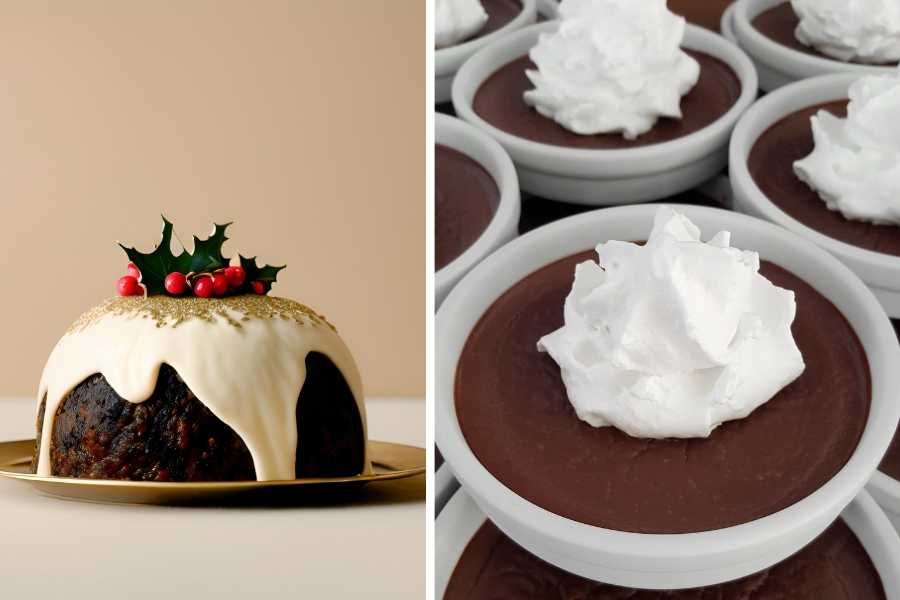
    If you order a sticky toffee pudding in the U.K. and expect to get a custard-like substance, you’d be disappointed. Pudding is a general term for a dessert in the U.K., whereas it specifically means a custard dessert in the U.S.

    pudding, dessert, british english, american english, english vernacular

    Pudding in the U.K. vs. pudding in the U.S. Photo credit: Canva

    There’s also the opposite issue, where we use different words for the same foods as opposed to the same words for different foods. In the U.K., a zucchini is a courgette, an eggplant is an aubergine, cilantro is coriander, a grilled cheese sandwich is a toastie, and Jell-O is jelly.

    Clothing also can be confusing for folks learning English from an American vs. a Brit. Here are some words:

    Jumper vs. Sweater

    In the U.K., a jumper is what we call a sweater. In the U.S. a jumper is kind of like a mix between overalls and a dress—a sleeveless garment generally worn over something else.

    Pants vs. Underpants vs. Trousers

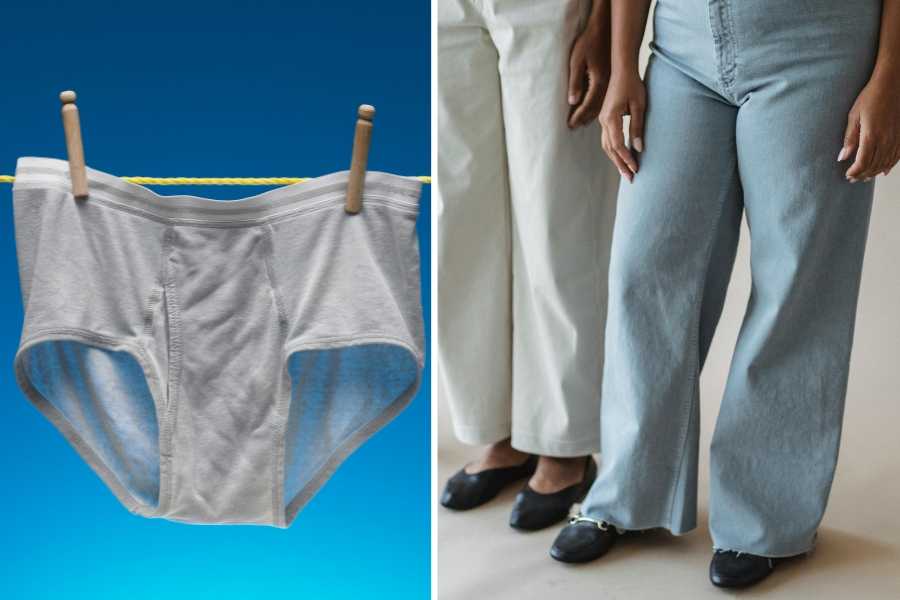
    What Americans call pants, folks in the U.K. call trousers. (Americans know the word trousers, but we don’t use it much.)

     pants, underpants, british english, american english, english vernacular

    Pants in the U.K. vs. pants in the U.S. Photo credit: Canva

    Vest vs. Waistcoat vs. Undershirt

    This one is super counterintuitive for Americans. A “vest” in the U.K. is an undershirt, like a thin t-shirt or tank top. What Americans think of as a vest, the Brits call a waistcoat.

    Braces vs. Suspenders

    This one is also counterintuitive for Americans. For us, braces are either the orthodontia that straightens our teeth or a supportive apparatus that stabilizes a body part (a leg brace, wrist brace, etc.). But braces in the U.K. has another meaning, which is what we call suspenders. In the U.K., suspenders don’t hold up pants—those are braces—but they do hold up stockings, which isn’t the way we use that word.

    Bonnet and Boot

    A bonnet is a head covering in both the U.S. and the U.K., but the Brits also use the word for the hood of a car. Boots are shoes that go above the ankle in both countries, but a boot is also the trunk of a car in the U.K.

    That’s not the end of the list of words that differ between American English and British English, but it’s a good start. For folks learning English as a second language, it’s at least good to know that some things you learn will really depend on where your teacher is from so you don’t end up disappointed when you order pudding or biscuits at a restaurant and get something totally different.

    This article originally appeared last year. It has been updated.

People Skills

Skincare mogul says her ‘high touch’ theory will be the most important job-saving skill in the age of AI

Culture

Math researchers confirm ’20 year rule’ in fashion trends and it’s uncanny

Skills

14 English words students learn differently if their teacher is American vs. British

Modern Families

51-year-old empty nester who struggled to declutter her house shares 8 tips that finally worked