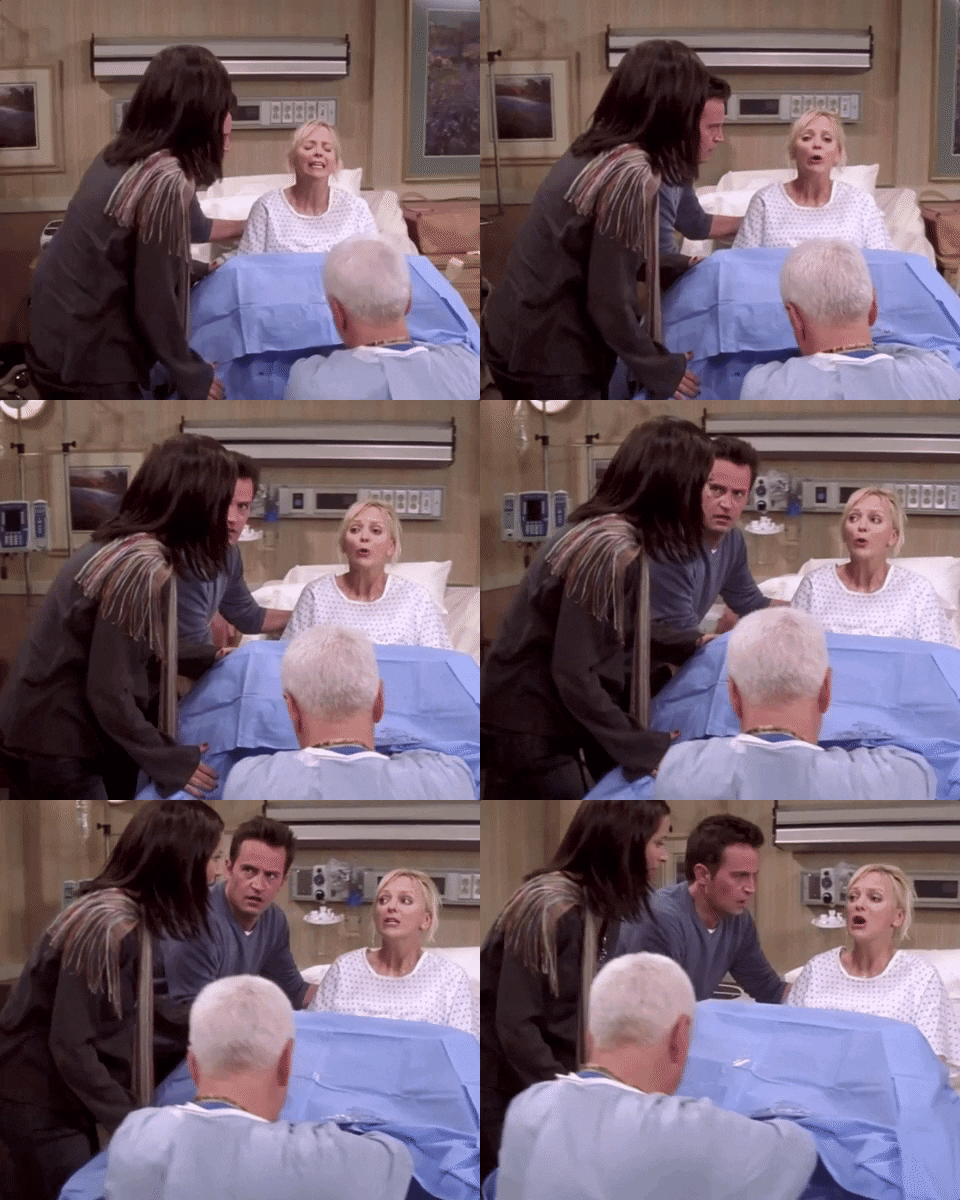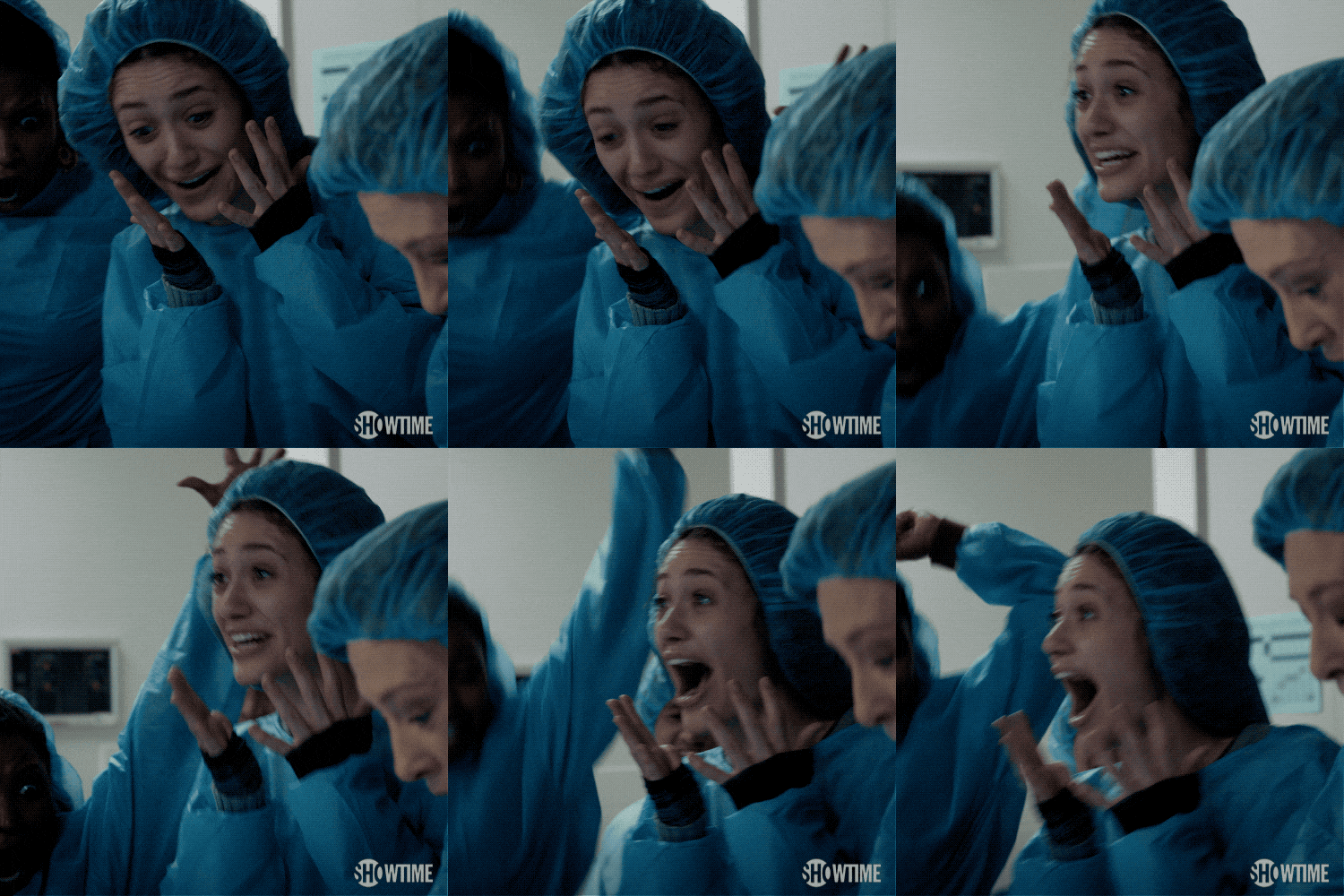
Moms explain the rarely discussed dissociative post birth phenomenon called 'the labor pause'
"When you just had a baby but you're too busy dissociating to enjoy the moment."

The dissociation that can happen post-birth may have a name
Bringing a baby into the world is an experience you just don't understand until you've done it yourself. There are no current words available that could accurately describe the emotional, physical and mental state of growing and birthing a child. Many people have tried to explain to new expectant moms what the process is like but words often fall short.
This failure of accurate descriptive words isn't the only reason explaining the child birthing process feels impossible. Every person's experience with birth is completely different than the next persons. There are similarities, of course, and those are the things we hang onto as "normal" but everything isn't always discussed. "The labor pause" is a common phenomenon that is rarely talked about and difficult to explain.
When a new mom posted a video of her directly after giving birth appearing dazed, writing in text overlay, "when you just had a baby but you're too busy dissociating to enjoy the moment," a prenatal educator steps in to explain. The educator runs MamaShakti Prenatal and she shares that the phenomenon the mother is experiencing is called "the labor pause."
"Immediately following the birth some women have described feeling shocked and a little disconnected from reality, whilst others have described feeling wide awake, alert and euphoric," the Practice Issue says.
While there doesn't appear to be an official name for the moments of dissociation some mothers feel right after birth, the prenatal educator calls the post-birth condition, the labor pause. Parents flock to the comments to attempt to explain what this labor pause feels like and why it happens. Some of the answers are amusing and some make this moment after birth make so much sense.
"Your brain is resetting, it's deleting how bad delivery hurt so you will do it again," someone jokes. Another mom emphatically agrees with this hypothesis, writing, "I remember the whole time thinking… there’s no way I’m doing this again, this is literal torture and then somehow a few months post partum I remember it hurting but can’t exactly “remember” if that makes sense… oh.. and want to do it again."

One mom explains, "Its crazy because you go from the most excruciating and terrifying experience (mostly for your first) to basically feeling fine, 10 pounds lighter, and then suddenly theres another human in the room. To feel that much pain for so long and then BAM everything is fine. It is super weird."
"In this mind state while she is mentally adjusting and trying to make sense of the ordeal and yes, trauma, if anyone were to try to take that baby right then, she would probably freak out and become a literal mama bear. She would mentally regress to "protect at any cost" because in this moment, she's just going by instinct, like an animal. Not saying this in any derogatory way, just stating a fact, she's not mentally aware of anything, her brain is reconciling and so it's, in this moment, reverting to a humans base instincts. Id, ego and i can't remember the last one," another woman analyzes the new mom in the video.
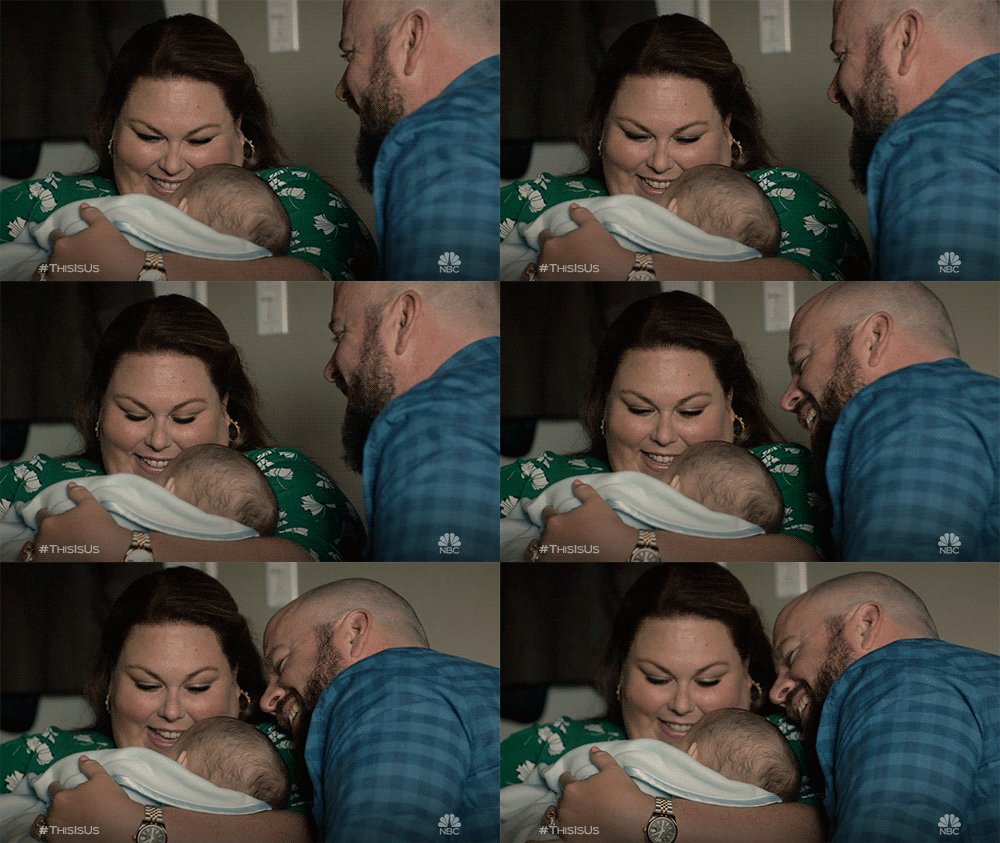
A doctor in the comments explains, "It’s common. Form of shock. Best thing to do is ask the patient to recognize objects in the room, such as do you see that cup next to the sink or notice the color of the wall, or see the socket. Do not ask what she wants or draw attention to the child. Motherhood will kick her right in the a** and they will be inseparable."
"I repeatedly screamed "HOW DID THAT HAPPEN!!!!" For what felt like a minimum of 30 seconds immediately after my child was born. My THIRD child. It wasn't even my first rodeo, I knew full well how that happened. Crazy hormonal/ psychological experience to push a baby out," another laughs.

"I had no idea this was a common thing. Right after I pushed my son out I couldn’t look yet, I needed to breathe and then I felt bad for not crying and being overly emotional. I thought I didn’t have a connection or something. That’s the furthest thing from the truth. This boy never ever leaves my side and he is part of my soul," one mom shares.
The labor pause doesn't happen to everyone but it's a very common experience, even if the birth is via cesarean section. There seems to be something about the quick transition from one body to two separate humans that does something to your brain. Maybe your brain is deleting the painful experience or maybe it's digesting everything that took place. Either way, feeling like you're not really there for a few minutes after giving birth is completely normal and has no impact how much you love your new little one.

- Expectant moms are finding out about an unspoken 'stench' and are asking for a refund ›
- Mom sparks passionate debate after saying she would choose her own life over child’s during birth ›
- Teacher uses a balloon and ping pong ball to explain childbirth in viral TikTok video ›
- Women share unfiltered stories of what birth feels like - Upworthy ›


A woman is getting angry at her coworker.via
A man with tape over his mouth.via
A husband is angry with his wife. via 
a man sitting at a desk with his head on his arms Photo by
Can a warm cup of tea help you sleep better? If you believe it, then yes. Photo by 
Three women sit on a blanket in the park. 
Two women engaging in a pleasant conversation inside a coffee shop
Two men engaging in a peaceful disagreement.
Resurfaced video of French skier's groin incident has people giving the announcer a gold medal
"The boys took a beating on that one."
Downhill skiing is a sport rife with injuries, but not usually this kind.
A good commentator can make all the difference when watching sports, even when an event goes smoothly. But it's when something goes wrong that great announcers rise to the top. There's no better example of a great announcer in a surprise moment than when French skier Yannick Bertrand took a gate to the groin in a 2007 super-G race.
Competitive skiers fly down runs at incredible speeds, often exceeding 60 mph. Hitting something hard at that speed would definitely hurt, but hitting something hard with a particularly sensitive part of your body would be excruciating. So when Bertrand slammed right into a gate family-jewels-first, his high-pitched scream was unsurprising. What was surprising was the perfect commentary that immediately followed.
This is a clip you really just have to see and hear to fully appreciate:
- YouTube youtu.be
It's unclear who the announcer is, even after multiple Google inquiries, which is unfortunate because that gentleman deserves a medal. The commentary gets better with each repeated viewing, with highlights like:
"The gate the groin for Yannick Bertrand, and you could hear it. And if you're a man, you could feel it."
"Oh, the Frenchman. Oh-ho, monsieurrrrrr."
"The boys took a beating on that one."
"That guy needs a hug."
"Those are the moments that change your life if you're a man, I tell you what."
"When you crash through a gate, when you do it at high rate of speed, it's gonna hurt and it's going to leave a mark in most cases. And in this particular case, not the area where you want to leave a mark."
Imagine watching a man take a hit to the privates at 60 mph and having to make impromptu commentary straddling the line between professionalism and acknowledging the universal reality of what just happened. There are certain things you can't say on network television that you might feel compelled to say. There's a visceral element to this scenario that could easily be taken too far in the commentary, and the inherent humor element could be seen as insensitive and offensive if not handled just right.
The announcer nailed it. 10/10. No notes.
The clip frequently resurfaces during the Winter Olympic Games, though the incident didn't happen during an Olympic event. Yannick Bertrand was competing at the FIS World Cup super-G race in Kvitfjell, Norway in 2007, when the unfortunate accident occurred. Bertrand had competed at the Turin Olympics the year before, however, coming in 24th in the downhill and super-G events.
As painful as the gate to the groin clearly as, Bertrand did not appear to suffer any damage that kept him from the sport. In fact, he continued competing in international downhill and super-G races until 2014.
According to a 2018 study, Alpine skiing is a notoriously dangerous sport with a reported injury rate of 36.7 per 100 World Cup athletes per season. Of course, it's the knees and not the coin purse that are the most common casualty of ski racing, which we saw clearly in U.S. skier Lindsey Vonn's harrowing experiences at the 2026 Olympics. Vonn was competing with a torn ACL and ended up being helicoptered off of the mountain after an ugly crash that did additional damage to her legs, requiring multiple surgeries (though what caused the crash was reportedly unrelated to her ACL tear). Still, she says she has no regrets.
As Bertrand's return to the slopes shows, the risk of injury doesn't stop those who live for the thrill of victory, even when the agony of defeat hits them right in the rocks.