

Lesbian couple answers the most common questions they get from strangers
Yes, they are both the "real" mom.

Moms Allie and Sam Conway answer the questions the commonly get a lesbian parents
Despite society having made a lot of progress when it comes to same-sex relationships and alternative families, it’s not so commonplace that many queer parents are still presented with questions about their lifestyle from straight people.
And while queer parents probably (rightfully) grow tired of answering certain questions day in and day out, having open conversation helps break through the lack of understanding which causes stigma and misconceptions in the first place. In a now-viral video shared to their Instagram, lesbian moms Allie and Sam Conway answer commonly asked questions they get as a queer married couple with twins.
Of course, they started with the age-old question:
“Who’s the real mom?”
Though people by and large are able to differentiate biological connection from emotional connection (like with adoptive parents or step-parents to take on an active role in their step children’s lives), this is still a question that same-sex parents face regularly. And it’s a fairly harmful one at that, as it implicitly undermines the non-biological parent’s role in the family.
So, to Sam’s point: “We’re both the mom.”
Allie also told Upworthy that the usual response to this answer is "oh my gosh! That’s amazing!" Which makes her—and us—"smile so much."
Next up:
“Who’s the dad?”
To which they replied: “there isn’t a dad.”
This is also a question fused with negative connotation, as it suggests a father figure is necessary for raising well-adjusted kids. But research shows that kids born to same-sex parents fare just as well as the children of straight couples, indicating that what’s really necessary for a child’s development is two healthy, loving parents. That’s it.
Okay, this next one actually had an answer that surprised some folks:
“Who carried them?”
Though Sam wanted to be the one to get pregnant, Allie agreed to try after Sam’s “long fertility journey” of three IUI’s, three embryo transfers and multiple chemical pregnancies with one miscarriage.
However, the couple used Sam’s eggs, and Sam did the breastfeeding.
How the heck did that happen, you might wonder. Don’t worry, you’re not alone. So did lots of viewers. Sam underwent induced lactation, which tricks the body into thinking it’s pregnant and producing breast milk—it’s something often utilized by adoptive mothers.Lastly, a fun one:
“What do the kids call you?”
“Mummy and other mummy,” Sam quipped. “We’re rotating all day,” Allie added.
Without proper understanding, stigma persists. That’s how myths like “queer parents turn their children gay” or “children of two-mother families are more likely to be bullied” continue. And while it’s certainly not the responsibility of parents like Allie and Sam to educate folks on the realities of queer parenting, it’s great that they do offer genuine insight.
And thankfully, they are usually met with positive reactions from people, Allie tells Upworthy. Which only further encourages them to answer more question and offer glimpses into "different types of families."
At the end of the day, families are made up of people who love and support one another. Everything else is just window dressing.
Check out even more heartwarming family content from Allie and Sam on Instagram.
This article originally appeared last year.
- My family of 5 traveled the U.S. for nearly a year, and it cost us less than staying home ›
- Mom lives the dream: quietly quitting household chores to see if her family notices ›
- Guys, If A Girl Says She's A Lesbian, Do You Know The Best Way To Hit On Her? ›
- Lesbian couple answers the most frequent questions they get from strangers about having a baby - Upworthy ›


 A woman is getting angry at her coworker.via
  A man with tape over his mouth.via
  A husband is angry with his wife. via
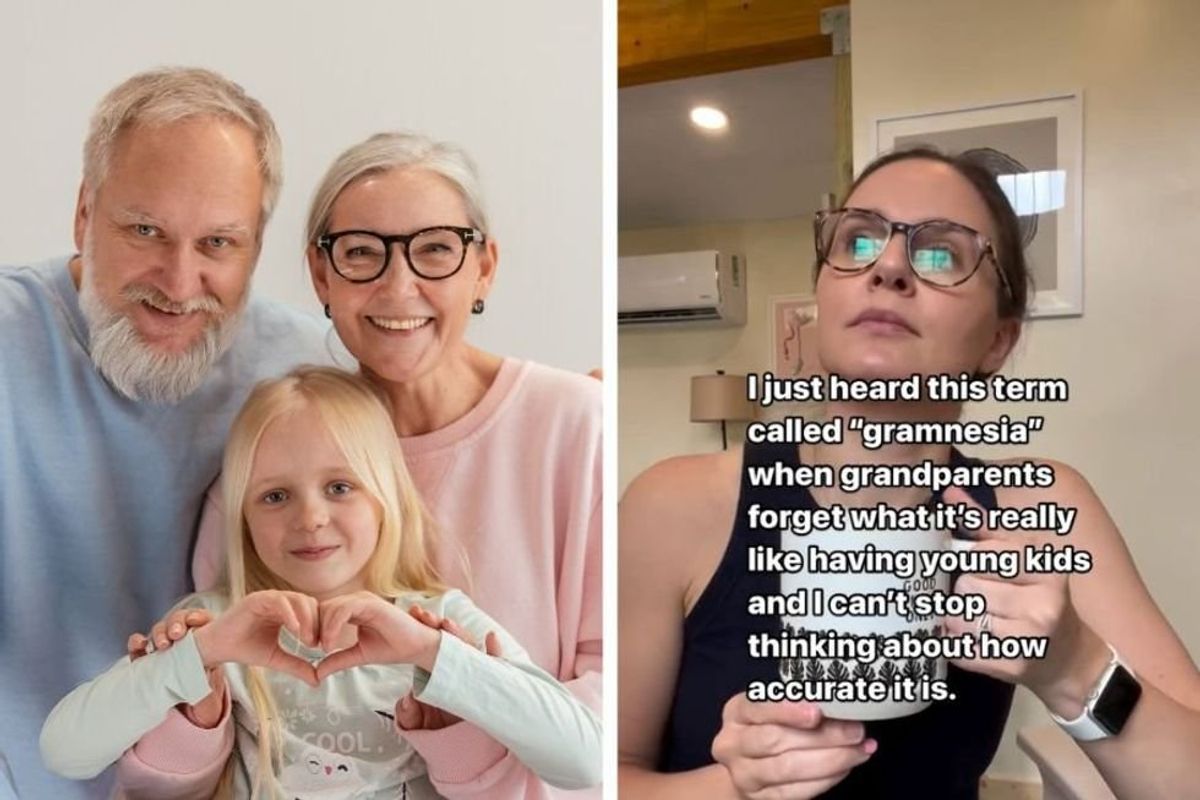
 Some Boomer grandparents are being called out for "gramnesia".
 A woman gets a tattoo.
 Boy playing on the computer.