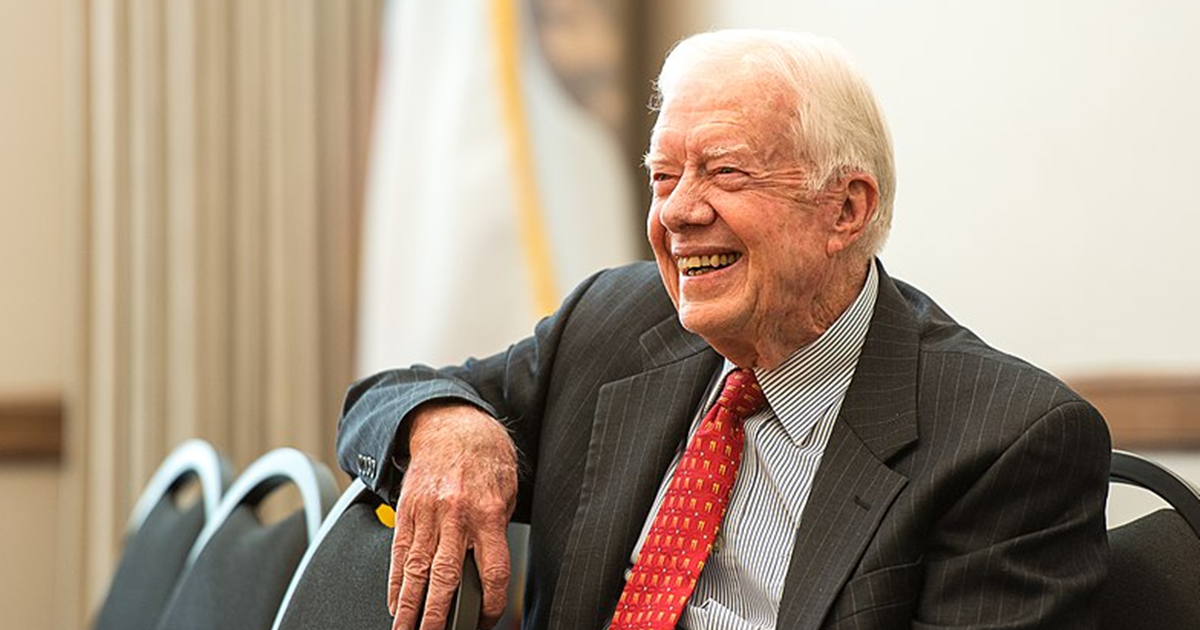
Jimmy Carter shares four ways Americans can save democracy in a powerful January 6 op-ed

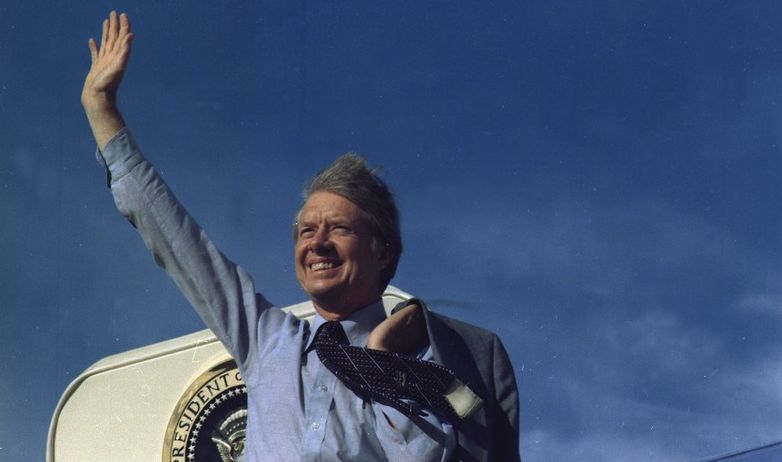
Jimmy Carter at the Commonwealth Club in California, 2013.
It’s been a year since the January 6 insurrection at the Capitol Building and it’s clear that America has failed to learn the lessons of the uprising. The attack on the Capitol left five dead and defaced a monument to the greatest gift that humankind has bestowed upon itself, democracy.
It was a prime example of the damage that has been done to this country by opportunists on the right who promoted the false narrative that the 2020 election was stolen.
The riot showed what people in power put at risk when they spread misinformation and cast doubt on the democratic process. Surely, this horrific example would have caused people in power—whether in Washington, the media, or America’s religious institutions—to cool down the rhetoric and restore faith in democracy.
But sadly, it hasn’t.
A new NRR Ipsos poll found that two-thirds of GOP voters, and just over one-third of all voters, still believe the “Big Lie.”
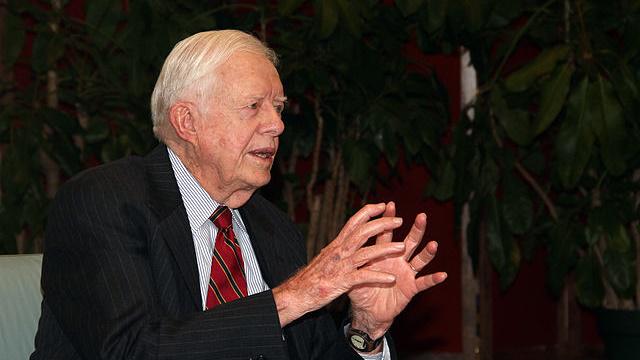
On the one-year anniversary of the attack, former president Jimmy Carter wrote an op-ed for The New York Times to warn America of the danger of promoting the “Big Lie” and how it can lead to the downfall of our “precious democracy.” But he didn’t just sound the alarm, he also provided four practical steps on which Americans of all political stripes can reverse course and improve our collective faith in vital institutions.
Carter opens “I Fear for Our Democracy” by lamenting the fact the uprising hasn’t been taken seriously enough.
“There followed a brief hope that the insurrection would shock the nation into addressing the toxic polarization that threatens our democracy,” Carter writes. “However, one year on, promoters of the lie that the election was stolen have taken over one political party and stoked distrust in our electoral systems.”
Carter has a real fear that Americans may lose democracy altogether.
“I now fear that what we have fought so hard to achieve globally—the right to free, fair elections, unhindered by strongman politicians who seek nothing more than to grow their own power—has become dangerously fragile at home,” Carter writes.
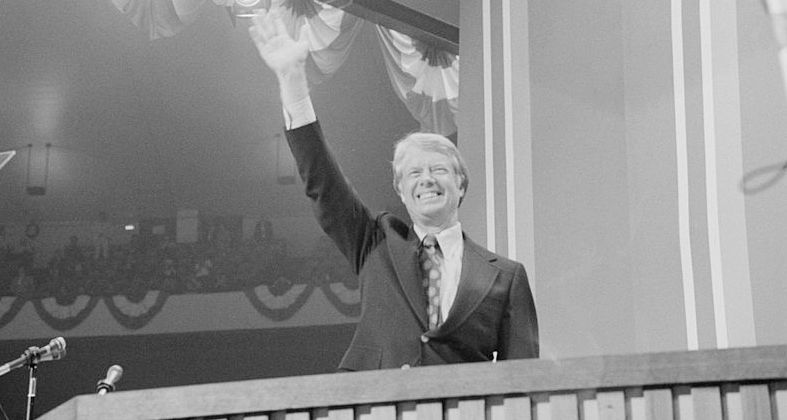
The former president has a long history of promoting democracy abroad and understands its power to transform a nation.
“After I left the White House and founded the Carter Center, we worked to promote free, fair and orderly elections across the globe,” Carter writes. “I led dozens of election observation missions in Africa, Latin America and Asia, starting with Panama in 1989, where I put a simple question to administrators: ‘Are you honest officials or thieves?’”
Ever the pragmatic politician, Carter laid out four ways that Americans can work together, regardless of party, to undo the damage done to the democratic process over the last few years.
1. Gather around common values.
2. Reform the election system.
"Second, we must push for reforms that ensure the security and accessibility of our elections and ensure public confidence in the accuracy of results.”
3. Be about more than politics.
"Third, we must resist the polarization that is reshaping our identities around politics. We must focus on a few core truths: that we are all human, we are all Americans and we have common hopes for our communities and our country to thrive.”
4. Fight disinformation.
"Lastly, the spread of disinformation, especially on social media, must be addressed.”
In the op-ed, Carter refrains from speculating on what would happen in America if its citizens completely lost all faith in the democratic process. But it's not hard to imagine it would quickly lead to the decay of every institution that upholds the fragile framework for freedom and civility.
“Our great nation now teeters on the brink of a widening abyss,” Carter warns in his final paragraph. “Without immediate action, we are at genuine risk of civil conflict and losing our precious democracy. Americans must set aside differences and work together before it is too late.”
You can read the entire op-ed at The New York Times.


Millennial mom struggles to organize her son's room.Image via Canva/fotostorm
Boomer grandparents have a video call with grandkids.Image via Canva/Tima Miroshnichenko


Information from the NICABM website regarding the "Window of Tolerance."Photo Credit: The National Institute for the Clinical Application of Behavioral Medicine
Waves cycle in the ocean. Photo by
Gen Xers and Millennials share 17 of the strangest things their Baby Boomer parents do
"My mom writes her emails in MS Word, then attaches the Word document to the email."
A Baby Boomer couple.
Generational fights have raged since the dawn of time, and a recent spat between Millennials and Baby Boomers is no exception. Baby Boomers, who raised Millennials, accuse the younger generation of being entitled and irresponsible with money. At the same time, Millennials accuse Boomers of having it easier economically while making it harder for those who came after them.
Where is Gen X in the battle? Probably off in the corner somewhere, saying, "Whatever." Aside from the generational sniping, there are some things the older generation does that are just plain baffling to younger people. Whether it's outdated worldviews, a refusal to adapt to modern technology, or a lack of self-awareness, Baby Boomers can do some strange things.
To help the younger folks get over their frustrations with parents from the "Me Generation," a Redditor asked: "What is the most Boomer thing your parents still do?" The stories were pretty funny and relatable, showing that almost everyone with parents over 60 is dealing with the same thing.
Here are 17 of the "strangest" things people's Baby Boomer parents do:
1. Phones on full blast
"Play iPhone slot machine games at full volume in the doctor’s office."
"My dad pretty much exclusively has his phone on speaker, and just walks around in public talking with it at max volume (and talking really loud himself). I’m like 'Dad, the entire supermarket doesn’t want to listen to you, and Uncle Jim complains about how often you have to pee.'"
2. Still using checkbooks
"My mom balances her checkbook every week. They still have a landline."
"And she probably has way more money than you will until she dies!"
3. Email issues
"My mom writes her emails in MS Word, then attaches the Word document to the email."
"Like the email is just the virtual envelope for the digital letter."
4. Restaurant jokes
"All those little restaurant comments.
'Wow, they'll let anyone in here!' when seeing a friend at said restaurant.
'Thanks for having us, not everyone will' to the waiter at the end of the meal.
'As you can see, it was terrible' when the staff takes away the clearly entirely eaten plate.
'You're going to have me floating away in a minute' when more water is put into their glass"
5. Always have to mention race
"Constantly mentioning the race or ethnicity of everyone she mentions. Never with any negative connotation or comment, but usually, there is no reason for it to be relevant to the conversation."
"My Jewish mother will always whisper the word 'black' in case anyone hears her: 'So the nice black man at the hardware store helped me find the right garden hose.'"
6. Googling their Google
"Typing Google on Google before they Google the thing they’re looking for."
"In the Google search bar, they type Google? Lol."
7. Getting a job is a cinch
"Believing you can walk into a business and hand in a resume. If you have a college degree in any field, they'll hire you."
"Just physically hand over your resume to HR or the hiring manager. You'll make a mark and get hired!! Call the office and ask to speak to HR/Hiring Manager."
Any Millennial who argued with their Boomer parents about how hard it is to land a good job should feel vindicated by a 2022 study, which found that most older Millennials didn't secure good jobs until their early 30s, while most Boomers did so in their 20s. "To secure a good job, young adults need to acquire more education and high-quality work experience than was necessary for previous generations," the researchers wrote.
8. Why are they together?
"Stay married forever while they behave like neither one of them can stand each other."
"I'm on the other side of that. After my mom passed, my dad now acts like their marriage was picture perfect and they were the love of each other's lives, even though they couldn't stand each other for at the very least 40 of the 54 years they were married."
9. Collectables or hoarding?
"Think their 'collectibles' are truly valuable."
"My mom insists her Hummels are going to put my kids through college!"
"Mine are the Thomas Kincade paintings. She has a Victorian glass piece that might actually be worth something, but those damn paintings are the real investment."
10. Can you grab the mail?
"Ask me to bring in the mail when they go away for more than 24 hours."
"My parents think everybody is standing at the door waiting for the mailman every day, and don’t believe me when I tell them that some people go days without checking their mail. They think everybody is waiting for the mailman every day because 'somebody might send them a check.' Like, really?"
11. Zero responsibility
"'Well, I guess I was just a bad father.' Yeah. That attitude of anti-responsibility is exactly why 3 out of 4 of your children don't talk to you."
"Ha! Have the same dad, do we?"
12. Comment on people's appearance
"Comment on EVERYBODY’s body/appearance/weight. The first thing my dad does after not seeing me for a year is poke me in the gut and tell me how fat I am."
13. Boomer panic is real
"Literally throwing their hands up in a panic when they don't understand something. Where did they learn that?"
"Or just saying 'well, I don't know', especially when that comes right after you explaining it and showing them how to do something, with them nodding along and asking relevant questions all the way through."
In a video by YourTango, editor Brian Sundholm tried to explain Boomer panic in an empathetic way: "Most of us nowadays know the importance of recognizing and feeling our emotions." Sundholm then quoted therapist Mitzi Bachman, who explained that when people struggle to express their emotions, it can result in an "unhinged" reaction.
14. Annoying Facebook posts
"Post nonsensical rants on Facebook for other boomers to like, share, and comment. Often these rants are political, but not always. Basically cringe-fest."
"Most people won't do it, but share this post if you believe in god and freedom."
"I do NOT give Facebook permission to use my photos and personal information!"
15. Dinner pushers
"While we're eating breakfast. What do you want to do for supper?"
"Can't we enjoy this meal without worrying about the next?"
16. They print everything
"My boomer in-laws print EVERYTHING! The number of times I have said, 'quit wasting ink, email it to me, or text me the link. Or just text me the schedule, don't print it out.' GPS on their phones? Nope...print a map."
"Boomers and their paper man. My dad has finally started using the internet, but he still prints everything he likes. Like he'll see a boat listing on Craigslist and print the entire page, including a massive color photo of it, and he's definitely not going to be buying it either. He's got a stack of papers that is the internet that sits by his recliner. He just sits there with Fox News on (though it's usually muted for some reason, that's a plus) and looks at his papers."
17. Flirting with servers
"My dad is 77 still flirts with the young waitresses. It's f**king weird for everyone."
"He thinks he is in cute old man territory, but he is not."