Researchers hacked 5 people's brains so they could see a new and impossible color
The new color 'olo' is neat, but the technique behind it could be groundbreaking.

Only five people in the world have seen the mysterious color "Olo"
Color is one of the great joys of being alive. The brilliant blue sky, the green grass, the exotic pinks and purples and teals in coral or tropical fish. Soaking it all in is truly a feast for the eyes, and some studies even show that certain colors can trigger specific emotions in people. Orange may evoke feelings of joy, and red may conjure feelings of love, while blue may have a calming effect.
One of the most interesting things about colors, though, is that they are finite. Though the world is full of undiscovered plants, creatures, and even elements, the entire color spectrum is known and documented. Due to the nature of light in our universe and how it reflects off of physical objects, all perceived color must be created by some combination of the primary colors (blue, green, and red — yes, green, not yellow!). There are essentially unlimited combinations, but they all exist on a known spectrum — different hues and shades of pink or emerald or orange.
However, a team of researchers recently decided to push the limits of human perception. They "hacked" participants' retinas to allow them to see an impossible color.
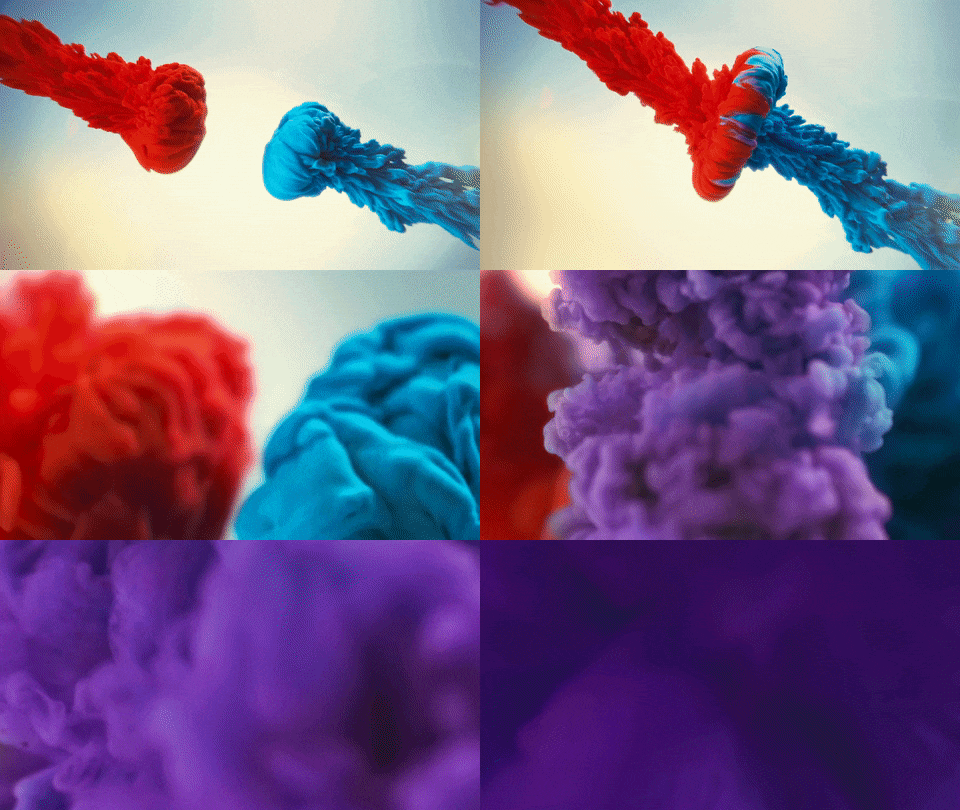
Scientists from the University of California, Berkeley, developed a new technique called "Oz," which would allow them to activate specific cones in the retina. Cones are light-sensitive cells that respond to different wavelengths of light. When the three types of cones are activated in different ways, our brains perceive colors.
One fascinating bit of background is that the "M" cone, which typically responds strongest to green (Medium wavelength), can not naturally be activated without also activating the Long and Short cones. So even the purest green on the planet would also, to a smaller degree, stimulate the parts of our eyes that are mostly correlated with red and blue.
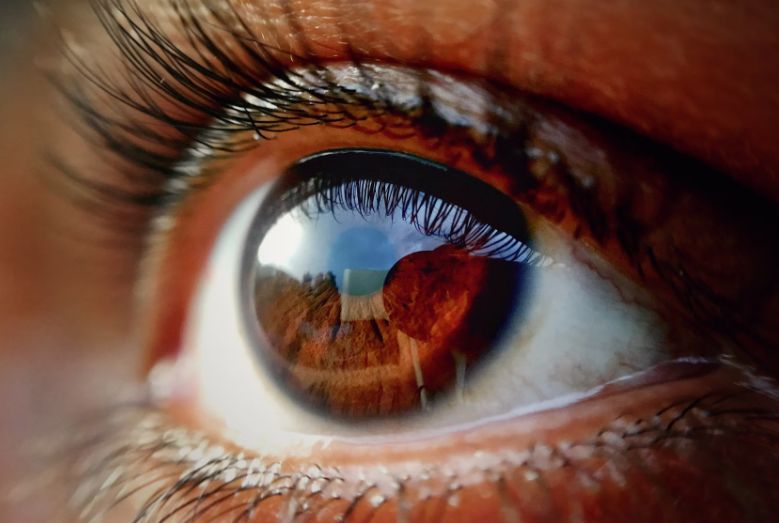
The team wanted to find out what would happen if they could isolate and activate only the M, or green, cone using the new technique.
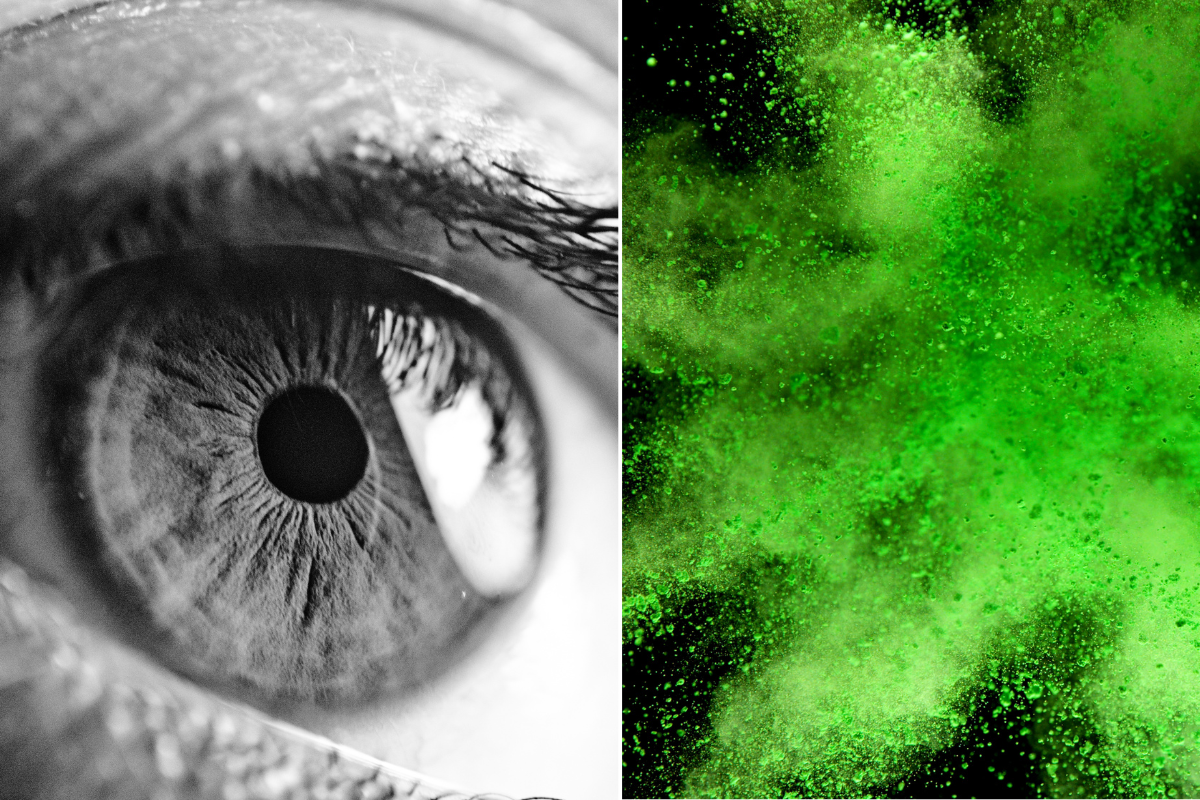
The result? The five participants reported seeing an absolutely unreal, brilliant shade of green like nothing they had ever experienced. Imagine a bright green laser cranked up to the highest saturation and brilliance possible, the purest and brightest green your brain could possibly comprehend. Participants noted that a bright green laser pointed looked "pale" in comparison to the new color.
The name of the new, impossible color? Olo, or 010 (indicated zero stimulation of the L and S cones and full stimulation of the M cones).
- YouTubewww.youtube.com
It's fair to wonder, if olo is impossible and can never naturally exist without manual stimulation of the retinal cones, what's the point of the experiment?
The introduction of a "new color" is certainly interesting and makes for a good headline, but the real value of this study lies in the future applications of the Oz technique.
The research team hopes that the detailed retinal maps they have developed, along with their ability to stimulate specific rods and cones in the eye in any combination, will enable major breakthroughs in the study and treatment of various visual impairments.
For example, Oz could one day cure color blindness or unlock new treatments for cataracts or glaucoma. It could even play a role down the line in curing certain types of blindness. Isn't it wild how our understanding of how our eyes perceive color tells us so much?
But those days are a long way off, for now. In the meantime, only five people in the world have experienced the brilliance of olo, and the rest of us will just have to imagine it.
- Bob Ross once shared the joy of painting to a colorblind viewer using only black and white ›
- Red, yellow and blue aren't actually primary colors, according to updated color wheel ›
- Recently discovered sketches underneath a Leonardo da Vinci painting give us insight into his process ›
- People are rebelling against Pantone's 2026 'Color of the Year' by choosing their own color instead - Upworthy ›


a man sitting at a desk with his head on his arms Photo by
Can a warm cup of tea help you sleep better? If you believe it, then yes. Photo by 
A woman is getting angry at her coworker.via
A man with tape over his mouth.via
A husband is angry with his wife. via 
Three women sit on a blanket in the park. 
Two women engaging in a pleasant conversation inside a coffee shop
Two men engaging in a peaceful disagreement.
Resurfaced video of French skier's groin incident has people giving the announcer a gold medal
"The boys took a beating on that one."
Downhill skiing is a sport rife with injuries, but not usually this kind.
A good commentator can make all the difference when watching sports, even when an event goes smoothly. But it's when something goes wrong that great announcers rise to the top. There's no better example of a great announcer in a surprise moment than when French skier Yannick Bertrand took a gate to the groin in a 2007 super-G race.
Competitive skiers fly down runs at incredible speeds, often exceeding 60 mph. Hitting something hard at that speed would definitely hurt, but hitting something hard with a particularly sensitive part of your body would be excruciating. So when Bertrand slammed right into a gate family-jewels-first, his high-pitched scream was unsurprising. What was surprising was the perfect commentary that immediately followed.
This is a clip you really just have to see and hear to fully appreciate:
- YouTube youtu.be
It's unclear who the announcer is, even after multiple Google inquiries, which is unfortunate because that gentleman deserves a medal. The commentary gets better with each repeated viewing, with highlights like:
"The gate the groin for Yannick Bertrand, and you could hear it. And if you're a man, you could feel it."
"Oh, the Frenchman. Oh-ho, monsieurrrrrr."
"The boys took a beating on that one."
"That guy needs a hug."
"Those are the moments that change your life if you're a man, I tell you what."
"When you crash through a gate, when you do it at high rate of speed, it's gonna hurt and it's going to leave a mark in most cases. And in this particular case, not the area where you want to leave a mark."
Imagine watching a man take a hit to the privates at 60 mph and having to make impromptu commentary straddling the line between professionalism and acknowledging the universal reality of what just happened. There are certain things you can't say on network television that you might feel compelled to say. There's a visceral element to this scenario that could easily be taken too far in the commentary, and the inherent humor element could be seen as insensitive and offensive if not handled just right.
The announcer nailed it. 10/10. No notes.
The clip frequently resurfaces during the Winter Olympic Games, though the incident didn't happen during an Olympic event. Yannick Bertrand was competing at the FIS World Cup super-G race in Kvitfjell, Norway in 2007, when the unfortunate accident occurred. Bertrand had competed at the Turin Olympics the year before, however, coming in 24th in the downhill and super-G events.
As painful as the gate to the groin clearly as, Bertrand did not appear to suffer any damage that kept him from the sport. In fact, he continued competing in international downhill and super-G races until 2014.
According to a 2018 study, Alpine skiing is a notoriously dangerous sport with a reported injury rate of 36.7 per 100 World Cup athletes per season. Of course, it's the knees and not the coin purse that are the most common casualty of ski racing, which we saw clearly in U.S. skier Lindsey Vonn's harrowing experiences at the 2026 Olympics. Vonn was competing with a torn ACL and ended up being helicoptered off of the mountain after an ugly crash that did additional damage to her legs, requiring multiple surgeries (though what caused the crash was reportedly unrelated to her ACL tear). Still, she says she has no regrets.
As Bertrand's return to the slopes shows, the risk of injury doesn't stop those who live for the thrill of victory, even when the agony of defeat hits them right in the rocks.