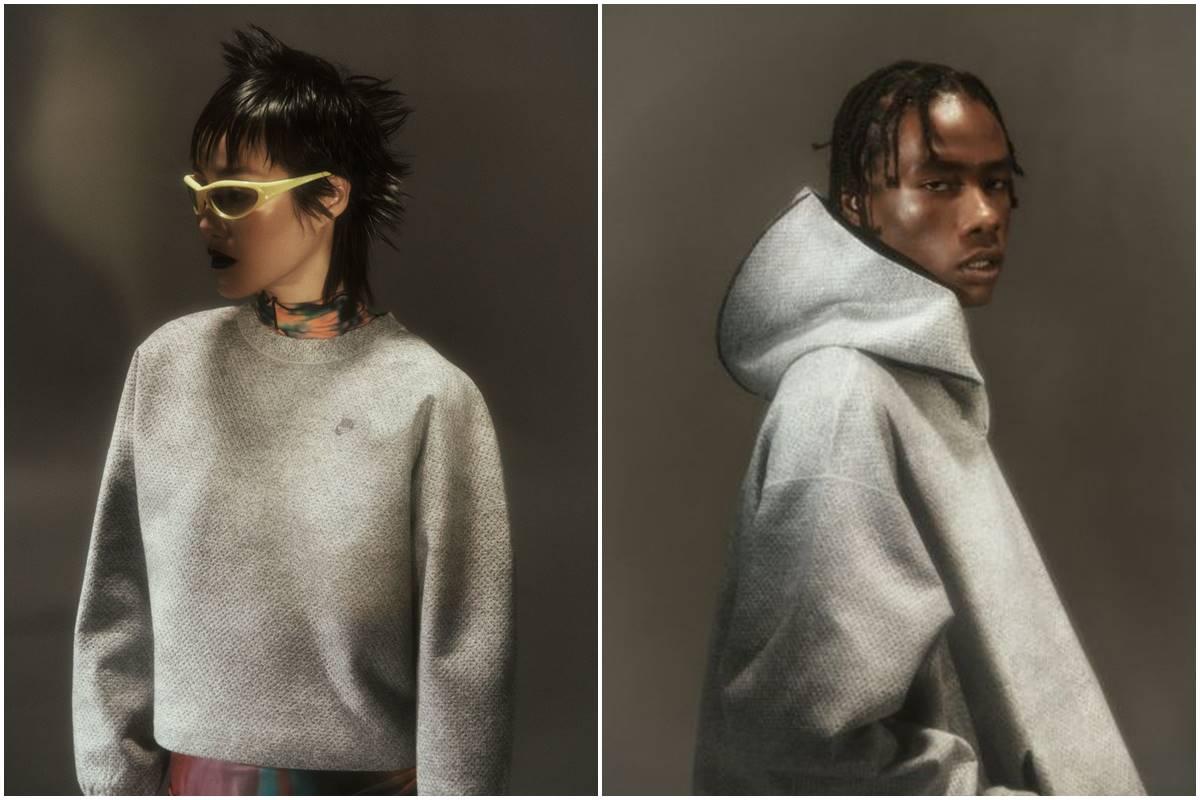
Nike continues to pave the way toward a cleaner, better world for athletes and sport with Forward
Nike’s culture of innovation has done it again.

Nike's Forward hoodie
As one of the world’s largest sports brands, Nike is in a unique position to play a significant role in creating a more sustainable world. Nike has taken on this monumental responsibility by relentlessly pursuing its waste-reducing Move to Zero policy. The company's ultimate goal is zero carbon and zero waste, all in an effort to help protect the future of sport.
“Athletes around the world are telling us that climate change is impacting them and their ability to perform at their best,” Seana Hannah, VP Sustainable Innovation, NIKE, Inc., said in a statement shared with Upworthy. “As part of our commitment to serve the athletes by offering more sustainable options and meeting our bold, science-based impact targets, we’re introducing a material innovation that can be adapted to different lifestyle and performance purposes.”
Over five years of research went into the development of Nike Forward and the company believes the positive environmental effects will be well worth the wait.
The all-new Nike Forward platform is the brand’s latest advancement in over 30 years of sustainability-minded innovations, and the most significant Nike apparel innovation since Dri-Fit.The proprietary technology is based on engineering innovations that deliver big results.
In short, Nike hacked existing needle punching machinery to connect multiple thin layers by entangling them together to make a new, uncompromising performance-ready textile.
The total of Forward’s innovations reduces carbon output by an average of 75% compared to traditional Nike fleece. This is achieved using 70% recycled content by weight, solution-dyed fibers rather than traditional dye methods and the lower material basis weight of Forward. In plain language, the process is much simpler than traditional knit or woven processes, drastically reducing the number of resources needed to create the material.
But Forward isn’t just about reducing environmental impact during the manufacturing process. For the launch pieces, the brand also considered the end of its garments’ lives by removing metal zippers and aglets so they’re easier to recycle.
“Sustainability sits at the foundation of Nike’s business, and we believe circularity is the future of sustainability, “John Donahoe, CEO, NIKE, Inc. said in a statement.
The sustainability of the Forward platform has the potential to significantly reduce the company’s carbon footprint for years to come. In keeping with Nike’s goals, Forward looks to “make the world better for athletes” while also being a superior product that “makes athletes better.”
Forward’s multiple thin-layer construction makes for warm and lightweight garments, and the flexibility of the platform will allow Nike to create a custom experience for athletes where materials can be adjusted to meet their unique needs.
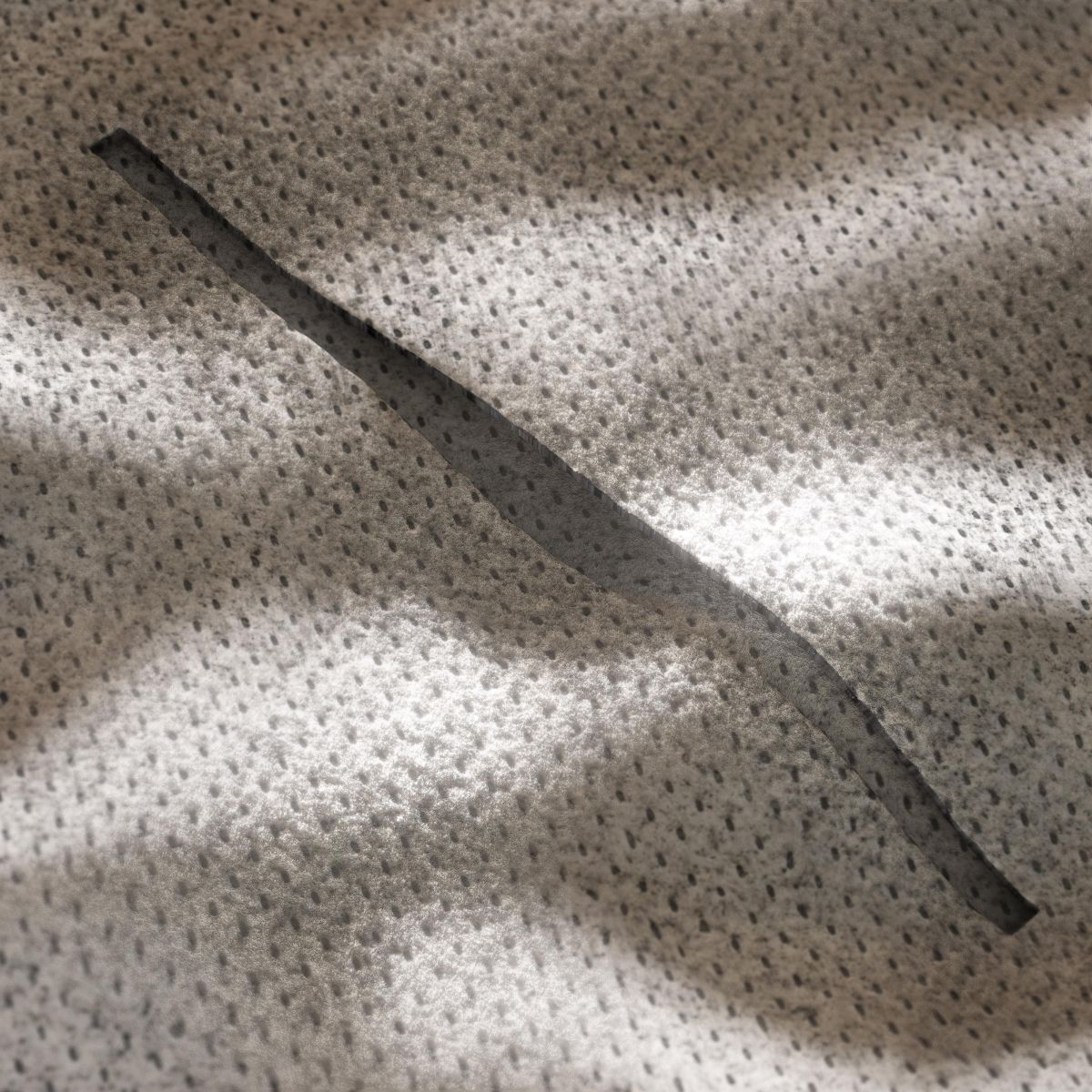
The first Forward garment that athletes across the world will be able to experience is an iconic grey hoodie, as Nike calls it, “the uniform of sport and style around the globe.” The Forward hoodie is manufactured using zero water in the dyeing and finishing processes. The company believes it’s a rare product where sustainability doesn’t come with sacrifices in comfort, style, or performance.
The hoodie is just the start of the Forward movement for Nike. "Today, it's a hoodie. Tomorrow, it could be anything,” Aaron Heiser, VP of global apparel product merchandising, said in a video produced by Nike.
The hoodie will help introduce the world to Nike’s latest revolution that it hopes will make an impact that will be felt for years to come.
For Nike, it’s just the latest advancement in the brand’s culture of innovation that underscores its commitment to taking action in creating a better world.
“We believe this platform has the potential to reset the way we think about material and apparel,” Aaron Heiser, Nike’s VP of global apparel product merchandising, said in a statement. “This is the biggest Nike apparel innovation since Dri-Fit 30 years ago and has huge potential to transform the industry in the way that Air and Flyknit did for Nike footwear.”
Nike Forward will launch in North America on September 29, 2022. Shop the collection at nike.com/nikeforward.

- Unable to tie shoes, a 16-year-old with cerebral palsy wrote to Nike ... ›
- Nike celebrates its 50th anniversary with more innovations - Upworthy ›
- Why it matters Nike is putting trans athlete Chris Mosier front and ... ›
- This online course will teach you everything you need to know about sustainable living - Upworthy ›
- Nike employee goes from intern to CEO in 30 years - Upworthy ›
- A student accidentally created a rechargeable battery that she says could last 400 years - Upworthy ›


a man sitting at a desk with his head on his arms Photo by
Can a warm cup of tea help you sleep better? If you believe it, then yes. Photo by 
A woman is getting angry at her coworker.via
A man with tape over his mouth.via
A husband is angry with his wife. via 
Three women sit on a blanket in the park. 
Two women engaging in a pleasant conversation inside a coffee shop
Two men engaging in a peaceful disagreement.
Resurfaced video of French skier's groin incident has people giving the announcer a gold medal
"The boys took a beating on that one."
Downhill skiing is a sport rife with injuries, but not usually this kind.
A good commentator can make all the difference when watching sports, even when an event goes smoothly. But it's when something goes wrong that great announcers rise to the top. There's no better example of a great announcer in a surprise moment than when French skier Yannick Bertrand took a gate to the groin in a 2007 super-G race.
Competitive skiers fly down runs at incredible speeds, often exceeding 60 mph. Hitting something hard at that speed would definitely hurt, but hitting something hard with a particularly sensitive part of your body would be excruciating. So when Bertrand slammed right into a gate family-jewels-first, his high-pitched scream was unsurprising. What was surprising was the perfect commentary that immediately followed.
This is a clip you really just have to see and hear to fully appreciate:
- YouTube youtu.be
It's unclear who the announcer is, even after multiple Google inquiries, which is unfortunate because that gentleman deserves a medal. The commentary gets better with each repeated viewing, with highlights like:
"The gate the groin for Yannick Bertrand, and you could hear it. And if you're a man, you could feel it."
"Oh, the Frenchman. Oh-ho, monsieurrrrrr."
"The boys took a beating on that one."
"That guy needs a hug."
"Those are the moments that change your life if you're a man, I tell you what."
"When you crash through a gate, when you do it at high rate of speed, it's gonna hurt and it's going to leave a mark in most cases. And in this particular case, not the area where you want to leave a mark."
Imagine watching a man take a hit to the privates at 60 mph and having to make impromptu commentary straddling the line between professionalism and acknowledging the universal reality of what just happened. There are certain things you can't say on network television that you might feel compelled to say. There's a visceral element to this scenario that could easily be taken too far in the commentary, and the inherent humor element could be seen as insensitive and offensive if not handled just right.
The announcer nailed it. 10/10. No notes.
The clip frequently resurfaces during the Winter Olympic Games, though the incident didn't happen during an Olympic event. Yannick Bertrand was competing at the FIS World Cup super-G race in Kvitfjell, Norway in 2007, when the unfortunate accident occurred. Bertrand had competed at the Turin Olympics the year before, however, coming in 24th in the downhill and super-G events.
As painful as the gate to the groin clearly as, Bertrand did not appear to suffer any damage that kept him from the sport. In fact, he continued competing in international downhill and super-G races until 2014.
According to a 2018 study, Alpine skiing is a notoriously dangerous sport with a reported injury rate of 36.7 per 100 World Cup athletes per season. Of course, it's the knees and not the coin purse that are the most common casualty of ski racing, which we saw clearly in U.S. skier Lindsey Vonn's harrowing experiences at the 2026 Olympics. Vonn was competing with a torn ACL and ended up being helicoptered off of the mountain after an ugly crash that did additional damage to her legs, requiring multiple surgeries (though what caused the crash was reportedly unrelated to her ACL tear). Still, she says she has no regrets.
As Bertrand's return to the slopes shows, the risk of injury doesn't stop those who live for the thrill of victory, even when the agony of defeat hits them right in the rocks.