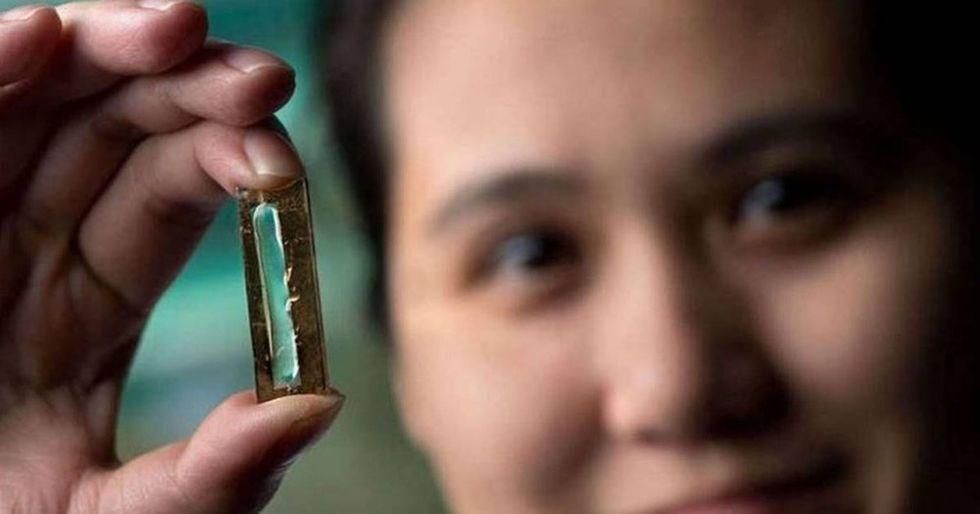
A quote widely attributed to the Roman philosopher Seneca says, “Luck happens when preparation meets opportunity.” In 2016, a doctoral candidate at the University of California Irvine proved that this is indeed the truth.
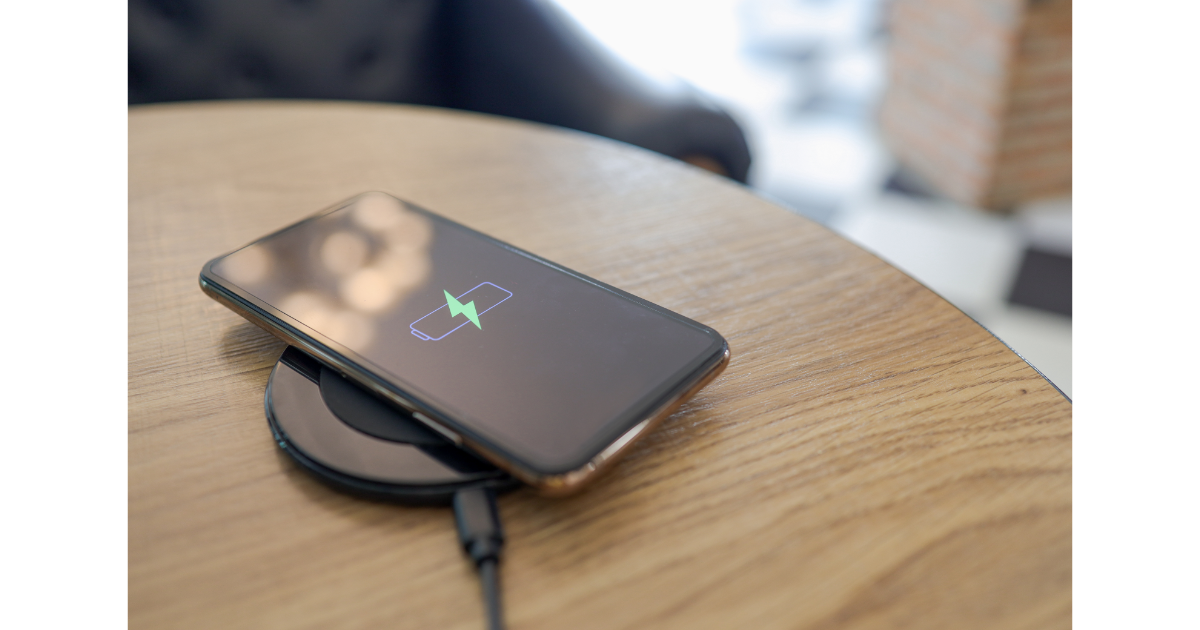
Nine years ago, Mya Le Thai, PhD was playing around in the lab when she made a colossal discovery that could lead to a rechargeable battery—that could last up to 400 years. That means longer-lasting appliances, laptops, smartphones, cars and so much more, plus fewer lithium ion batteries piling up in landfills.
A team of researchers at UCI had been experimenting with nanowires for potential use in batteries, but found that, over time, the thin fragile wires would break down and crack after too many charging cycles. A charge cycle is when a battery goes from completely full to completely empty and back to full again.
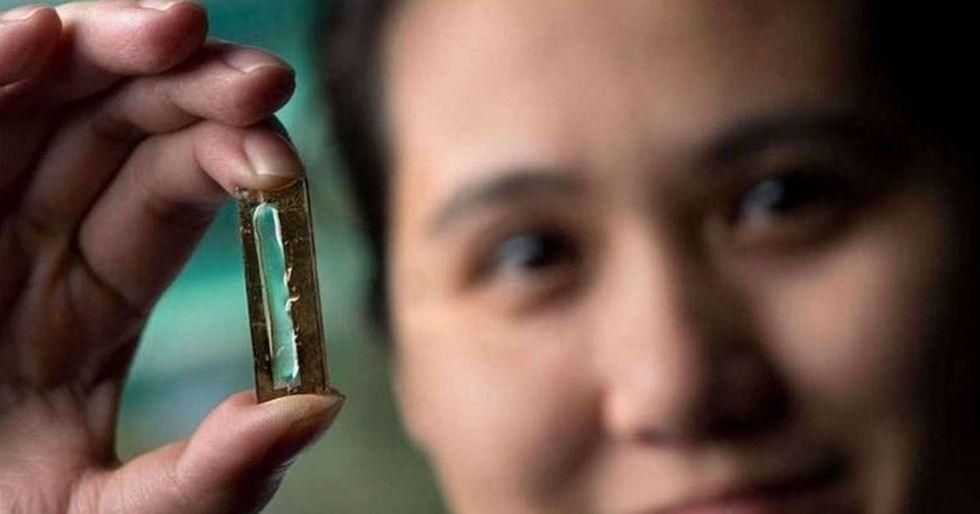
But one day on a whim, Thai coated a set of gold nanowires in manganese dioxide and a Plexiglas-like electrolyte gel.
“She started to cycle these gel capacitors, and that’s when we got the surprise,” said Reginald Penner, chair of the university’s chemistry department. “She said, ‘this thing has been cycling 10,000 cycles and it’s still going.’ She came back a few days later and said ‘it’s been cycling for 30,000 cycles.’ That kept going on for a month.”
This discovery is mind-blowing because the average laptop battery lasts 300 to 500 charge cycles. The nanobattery developed at UCI made it though 200,000 cycles in three months. That would extend the life of the average laptop battery by about 400 years. The rest of the device would have probably gone kaput decades before the battery, but the implications for a battery that lasts hundreds of years are pretty startling.
“Mya was playing around, and she coated this whole thing with a very thin gel layer and started to cycle it,” Penner added. “She discovered that just by using this gel, she could cycle it hundreds of thousands of times without losing any capacity.”
“That was crazy,” he added, “because these things typically die in dramatic fashion after 5,000 or 6,000 or 7,000 cycles at most. ””The big picture is that there may be a very simple way to stabilize nanowires of the type that we studied. If this turns out to be generally true, it would be a great advance for the community.”
Not bad for just fooling around in the laboratory!

Since her discovery, Mya Le Thai earned her PhD and has gone on to a successful career as the Principal Scientist with the Enevate Corporation, a company set “to develop innovative battery technologies that accelerate adoption of electrified mobility,” according to their website.
She has also filed patents for her various inventions, the most recent of which being “Cells with blocking devices for delayed heat propagation” in July 2025. Her full list of patents can be found on Justia.
This article originally appeared eight years ago. It has been updated.