upworthy
Add Upworthy to your Google News feed.
Google News Button
Humor

TikTokker has hilarious solution to Joe Jonas "misogyny" accusations: "Pay off my car loan."

Her tongue in cheek video makes a great point about expectations for young moms.

Joe Jonas; Sophie Turner; Joe Jonas divorce; Joe Jonas misogyny; Sophie Turner divorce

TikTokker offers to clean ups Joe Jonas' PR by him paying off her car

Even if you've been living in a time capsule and think Hanson is the newest boyband on the block, you've likely still heard about Joe Jonas and Sophie Turner's divorce. Jonas has been in the public eye since the age of 15 as part of his band he shares with his brothers, aptly named Jonas Brothers. And Turner catapulted to fame playing Sansa Stark on the massive hit show "Game of Thrones" when she was also just 15.

Throughout their relationship the two worked hard to keep things extremely private and positive, so these stories portraying Turner as a party girl absent mom and Jonas as super-dad were shocking.

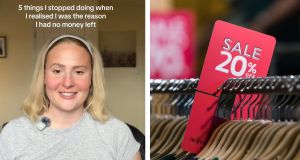
Enter Robin Rambles, a TikTokker and huge Jonas Brothers fan. She noticed the discrepancy in coverage, Jonas's slow response time and fans insisting the pop star is misogynist. The makings of a PR nightmare, and Robin has a solution. Giving Jonas the opportunity to pay off her car.


I mean it's really a small ask when you think about it. He's a millionaire with a PR problem and she's a hundred-aire every couple of weeks on payday. Jonas paying off her car would be good PR for him and a smart financial decision for her. Win-win. I'm personally rooting for Robin in this divorce, which is why Upworthy talked to her to find out more about what prompted this hilarious plea.

"It was a mixture of things that prompted the actual video. Like I had just paid my car payment and I had also just gone to a Jonas Brothers concert last week and the price of the ticket was very similar to the price of my car payment," Robin laughs. "And I was like, you know what, Joe should pay this for me. Like 'you owe me. I sat through a pitchy concert.'"

"I was like, 'I'm mad about patriarchy, I'm mad about rich people being rich, I'm mad about paying for my car payment.' It was a beautiful storm of just me...being mad."

In fact, after the original story that prompted the misogyny claims was published, Robin and her friend seriously contemplated going to the Jonas Brothers' concert dressed as Sansa Stark. That would've taken trolling someone to a new level, likely a hilarious level for everyone but Jonas.

Since she's such a long time big fan of the boyband, Robin settled on simply asking Jonas the small favor of paying off her car loan in exchange for positive headlines. Honestly, it seems like a sweet deal being that she says there's only about $11K left on her loan and according to Robin, he's likely paying over $10K for his PR firm.

Either way, divorces are painful no matter who you are, so maybe Jonas will come across Robin's video and at the very least get a good laugh out of it. Bonus points and guaranteed character redeeming headlines if he actually follows through on paying off her car.

Watch Robin's amusing PR offer below:

@robinrambles

dear Joe Jonas,

the great depression; Florence Thompson; Mona Lisa of the Great Depression; Mona Lisa; the depression; depression era
Photo by Dorothea Lange via Library of Congress
The woman from the famous Great Depression photo didn't know about her fame for 40 years.

It's one of the most iconic and haunting photos of all time, up there with the likes of Hindenburg, The Falling Soldier, Burning Monk, Napalm Girl, and many others. It's called simply Migrant Mother, and it paints a better picture of the time in which it was taken than any book or interview possibly could.

Nearly everyone across the globe knows Florence Owens Thompson's face from newspapers, magazines, and history books. The young, destitute mother was the face of The Great Depression, her worried, suntanned face looking absolutely defeated as several of her children took comfort by resting on her thin frame. Thompson put a human face and emotion behind the very real struggle of the era, but she wasn't even aware of her role in helping to bring awareness to the effects of the Great Depression on families.


It turns out that Dorothea Lange, the photographer responsible for capturing the worry-stricken mother in the now-famous photo, told Thompson that the photos wouldn't be published.

Of course, they subsequently were published in the San Francisco News. At the time the photo was taken, Thompson was supposedly only taking respite at the migrant campsite with her seven children after the family car broke down near the campsite. The photo was taken in March 1936 in Nipomo, California when Lange was concluding a month's long photography excursion documenting migrant farm labor.

the great depression; Florence Thompson; Mona Lisa of the Great Depression; Mona Lisa; the depression; depression era Worried mother and children during the Great Depression era. Photo by Dorthea Lange via Library of Congress

"Migrant worker" was a term that meant something quite different than it does today. It was primarily used in the 30s to describe poverty-stricken Americans who moved from town to town harvesting the crops for farmers.

The pay was abysmal and not enough to sustain a family, but harvesting was what Thompson knew as she was born and raised in "Indian Territory," (now Oklahoma) on a farm. Her father was Choctaw and her mother was white. After the death of her husband, Thompson supported her children the best way she knew how: working long hours in the field.

"I'd hit that cotton field before daylight and stay out there until it got so dark I couldn't see," Thompson told NBC in 1979 a few years before her death.

the great depression; Florence Thompson; Mona Lisa of the Great Depression; Mona Lisa; the depression; depression era A mother reflects with her children during the Great Depression. Photo by Dorthea Lange via Library of Congress

When talking about meeting Thompson, Lange wrote in her article titled "The Assignment I'll Never Forget: Migrant Mother," which appeared in Popular Photography, Feb. 1960, "I saw and approached the hungry and desperate mother, as if drawn by a magnet. I do not remember how I explained my presence or my camera to her, but I do remember she asked me no questions. I made five exposures, working closer and closer from the same direction. I did not ask her name or her history. She told me her age, that she was thirty-two. She said that they had been living on frozen vegetables from the surrounding fields, and birds that the children killed."

Lange goes on to surmise that Thompson cooperated because on some level she knew the photos would help, though from Thompson's account she had no idea the photos would make it to print. Without her knowledge, Thompson became known as "The Dustbowl Mona Lisa," which didn't translate into money in the poor family's pocket.

In fact, according to a history buff who goes by @baewatch86 on TikTok, Thompson didn't find out she was famous until 40 years later after a journalist tracked her down in 1978 to ask how she felt about being a famous face of the depression.

@baewatch86

Florence Thompson, American Motherhood. #fyppppppppppppppppppppppp #historytok #americanhistory #migrantmother #thegreatdepression #dorthealange #womenshistory

It turns out Thompson wished her photo had never been taken since she never received any funds for her likeness being used. Baewatch explains, "because Dorothea Lange's work was funded by the federal government this photo was considered public domain and therefore Mrs. Florence and her family are not entitled to the royalties."

While the photo didn't provide direct financial compensation for Thompson, the "virality" of it helped to feed migrant farm workers. "When these photos were published, it immediately caught people's attention. The federal government sent food and other resources to those migrant camps to help the people that were there that were starving, they needed resources and this is the catalyst. This photo was the catalyst to the government intercepting and providing aid to people," Baewatch shares.

- YouTube www.youtube.com

As for Lange, Migrant Mother was not her only influential photograph of the Great Depression. She captured many moving images of farmers who had been devastated by the Dust Bowl and were forced into a migrant lifestyle.

"Broke, baby sick, and car trouble!" is just one of her many incredible photos from the same year, 1937.

She also did tremendous work covering Japanese internment in the 1940s, and was eventually inducted into the International Photography Hall of Fame and Museum and the National Women's Hall of Fame.

the great depression; Florence Thompson; Mona Lisa of the Great Depression; Mona Lisa; the depression; depression era Families on the move suffered enormous hardships during The Great Depression.Photo by Dorthea Lange via Library of Congress

Thompson did find some semblance of financial comfort later in life when she married a man named George Thompson, who would be her third husband. In total, she had 10 children. When Thompson's health declined with age, people rallied around to help pay her medical bills citing the importance of the 1936 photo in their own lives. The "Migrant Mother" passed away in 1983, just over a week after her 80th birthday. She was buried in California.

"Florence Leona Thompson, Migrant Mother. A legend of the strength of American motherhood," her gravestone reads.

Friendship

World-famous 'mindreader' reveals 5-second hack for remembering people's names

Hint: Your visual memory is the strongest form of memory you have. Use it.

microphone, man, mike, names, remembering names

A simple trick to memorize names just requires a little imagination.

The longer you live, the more people you meet and the more names you have to learn and try to remember. It's an ironic truth, considering how our capacity to memorize seems to dwindle the older we get, so it's handy to have some tips and tricks for remembering people's names, especially when you're meeting a bunch of new people at once.

Derren Brown is one of the most famous mentalists in the world, so he knows a thing or two about people. Mentalists are a special breed of magician who focus on tricks and illusions of the mind. They do things like hypnosis, mind-reading, and impossible predictions. There's trickery involved, of course, but mentalists are also masters at reading people and have to employ advanced memory techniques to keep track of information they learn during their shows.


- YouTube youtu.be

In an interview with Big Think, Brown revealed some of his favorite memory hacks, including his 'party trick' to never forget a person's name.

The secret is to create a link between the part of your brain that stores information, like names, and the visual part of your brain that is more easily accessed. Visual memory has also been found to be substantially stronger and more detailed than auditory and other kinds of memories, so what you want to do is get the visual part of your brain involved in remembering!

"You find a link between the person's name and something about their appearance, what they're wearing, their face, their hair, something," Brown says. "You find a link with something that they're wearing, so if they're called Mike and they've got big black hair, you think, 'Oh that's like a microphone,' so I can imagine like a big microphone walking around, or if they've got a stripy T-shirt on, you imagine a microphone with those stripes going around it.

name, memory, mentlalist, remembering names, meeting people Who Are You Name GIF by NETFLIX Giphy

"And it's the same process later on in the evening, you see them, you look at the stripes, and you go, 'Oh, that's Mike. Oh yeah, that's Mike. The hair, why am I thinking the hair is like a big microphone? Oh yes, of course, they're called Mike.'"

Microphone Mike! Any sort of alliteration based on a physical characteristic will work. Stripey Steve, Tall Tim, Green Gene. The more interesting and unique, the better you'll remember.

If this sounds a little bit like Michael Scott's mnemonic devices from The Office, well, they're not far off. He applies in a pretty strange and convoluted way: "Baldy. Your head is bald. It is hairless. It is shiny. It is reflective, like a mirror. M. Your name is Mark." But ultimately, he was on to something. If you watched the show, you know that Michael Scott never forgot a name!

michael scott, the office, names, remembering names, learning names Season 5 Nbc GIF by The Office Giphy

There is one catch with the technique: You have to actually listen and pay attention when someone tells you their name!

"So, you do have to listen, that's the first thing when they say the name," Brown says. "Normally, the very moment where someone is giving you their name, you're just caught up in a whole lot of social anxiety anyway, you don't even hear it, so you have to listen."

Using someone's name when you talk to them has tons of benefits. It conveys respect, friendliness, and intimacy. When you're on the receiving end, and someone you've just met uses your name, it just feels good! It feels like it matters to them that they met you. Just don't overdo it. Repeating someone's name every other sentence comes across as disingenuous and salesy. A good rule of thumb is to repeat their name immediately after learning it ("Nice to meet you, Jim") and upon saying goodbye. The rest of the memory work should happen in your head to avoid creeping them out!

"And then at the end [of the party] you get to go around and say goodbye to everybody by name, and everyone thinks you're very charming and clever," Brown quips.

It's definitely worth a try.

Pop Culture

In an iconic 1975 clip, a teenage Michael Jackson stuns Cher during hypnotic robot dance duet

The clip marks a turning point in Michael Jackson's iconic public persona.

jacksons, michael jackson, robot dance, Cher, 1970s TV

Cher and The Jackson 5 doing the robot dance.

One of the most distinctive aspects of Michael Jackson's mega-stardom was that he grew up almost entirely in the public eye. He began performing with his brothers at age five and remained a significant figure in American pop culture until he died in 2009.

He burst onto the scene as a child with an incredibly soulful voice. He became an electrifying performer as a teen before rocketing to superstardom at 20 with the release of his first solo album, 1979's Off the Wall. One of the pivotal moments when the public witnessed this transformation came in 1975, when 16-year-old Michael performed with his brothers, The Jackson 5, on The Cher Show.


The Jackson 5 and Cher performed a medley of the band's biggest hits, including "I Want You Back," "I'll Be There," and "Never Can Say Goodbye." But the most memorable moment came when Michael and his brothers broke into the robot dance during "Dancing Machine," and Cher did her best to keep up.

The Jackson 5 and Cher do the robot dance

It's fun watching Cher try to fall in line with the Jacksons, while Michael absolutely kills it, gyrating like an animatronic on hyperdrive during his solo.

- YouTube www.youtube.com

The Jackson 5 may have helped bring the robot dance into the public consciousness by incorporating it into performances of their 1973 hit "Dancing Machine." But it traces back to mechanical "mannequin" dances from the early days of film. In the 1960s, Robin Shields, a popular mime, performed as a robot on late-night talk shows. By the 1970s, dancers had set those moves to music on shows such as Soul Train.

- YouTube www.youtube.com

In a 2003 interview, Cher said she had to learn the moves on the fly from the Jacksons.

"Think of how hard it was for me to learn to do that, and the guys just knew how to do it. I've been working all day, and they just came on and said, 'Okay, sure, this is how you do it,'" Cher recalled. "I had a lot of fun on that show. It was a lot of work, but I had a lot of fun. You know, and I got to work with some great people."

What's also notable about the performance is that Michael's voice had changed, and he sang in a deeper register than he had as a child a few years earlier.

Things changed for Cher and the Jacksons in 1976

By the following year, things had changed for both The Jackson 5 and Cher. Cher reunited with her ex-husband, Sonny Bono, for The Sonny and Cher Show, which ran until 1977. In 1976, The Jackson 5 left Motown Records for Epic Records and changed their name to The Jacksons. Jermaine Jackson temporarily left the group to pursue a solo career, and he was replaced by his brother, Randy.

Here's The Jackson 5's complete performance on The Cher Show from March 16, 1975:

- YouTube www.youtube.com

Joy

Adults share their parents' most laugh-out-loud 'gramnesia' moments, and it's so relatable

"Sometimes I wonder if my parents have ever actually met a child."

gramnesia, gramnesia moment, boomer parents, boomer grandparents, gen x parenting, millennial parenting, family, family humor

If only raising kids was this easy.

"Gramnesia" is a term coined by Gen Xers and Millennials to poke fun at the way their parents seem to suddenly forget how truly difficult it is to raise young children once they've entered their grandparent era.

This leads to some pretty perplexing memories, like zero tantrums and no issues with sugar, all of which the now-adult children don't remember, because it didn't quite happen that way.


Recently, a woman named Ally Glasgow (@allyglasgow) shared a perfect example of this sometimes mind-boggling phenomenon, explaining how she and her mom had entirely different memories of potty training.

"[My mom] said, 'All of you were potty trained by two. All four girls.' And I'm like... I just don't feel like we were... I mean maybe?" Glasgow says in a TikTok video.

An even bigger "gramnesia" moment came while Glasgow was driving her mom to the airport, when she suggested that Glasgow "instill into your kids that when they wake up, they shouldn't talk until a certain time."

Perplexed, Glasgow asked, "Mom, what do you mean they don't talk?" Her mom finally acquiesced, adding, "Maybe they could whisper."

As though any parent in all of history has ever successfully instilled a rule like that. Maybe in Victorian times, but still. Do we really want to go back to that in this instance?

Glasgow's video inspired others to share their own equally funny "gramnesia" moments in an act of lighthearted solidarity:

"My mom has completely made up an entirely different childhood in her head lmao and when I call her out she gets SO MAD."

"Sometimes I wonder if my parents have ever actually met a child."

"My son has eczema and my mom says none of her kids ever had it but I literally have had eczema my entire life 😂"

"My mom says I was speaking sentences by 9 months old. No I was not. There's no way."

"My parents both SWEAR that I was sleeping through the night at 3 weeks old and didn't need to wake up to feed or anything. So like okay you starved me???"

"My mom comments on my kids eating unhealthy as if I didn't grow up eating cereal, ramen, frozen meals, etc every single day because she didn't cook for us, like what?"

"My parents swear I was walking at 6 months old. Once I had kids I was like there is no physical way that is possible. They still swear it happened."

"My MIL had four boys and she tried to convince me that they didn't make much noise. lol okay 👌🏽"

"My mom said 'kids need routine and structure' to me once but we were homeschooled and only did school when she felt like it."

"My mom said my sisters and I never snacked 🙄"

"My mom claims we never threw tantrums. Huh?! I remember throwing tantrums 😂"

"I can't remember details from when my kids were babies…and they are currently 3. You're telling me our parents remember tiny details from 35 years ago?!"

Bottom line: "gramnesia" is very real and, apparently, very universal. But maybe, in this instance, we can give grandparents some slack. Parenting is hard no matter what generation you hail from. Who knows? Many of us might also use rose-colored glasses as a coping mechanism at some point.

pet, pet owners, veterinarian, euthanasia, dog

It's hard to know when it's time to say goodbye to a beloved pet.

When we bring a new pet into the family, the last thing we want to think about is saying our final goodbyes to them. But life expectancies being what they are means the vast majority of pet owners will have to let go of their furry family members at some point. Either old age or terminal illness will force difficult decisions about when "it's time" for a dog or a cat, and determining if or when to euthanize can feel like an impossible choice.

Popular foster dog mom Isabel Klee found herself in a position of having to make that choice with a foster dog she had only been caring for for a short time. Zero came to her as a 12-year-old dog with medical and behavioral issues, and when it became clear that medical treatment and loads of love weren't enough to keep him from suffering, Klee decided the kindest course of action was to give Zero a loving family to hold him as he crossed "the rainbow bridge."


@simonsits

Two days ago, as our final act of love, Zero officially became part of our family ❤️ @Muddy Paws Rescue @Animal Care Centers of NYC

Klee received a lot of understanding and empathy, but also some criticism for putting Zero down, which prompted some discussion on the topic of when and how to determine when euthanasia is the right choice.

Euthanasia literally means "good death," though people often use other terminology like "putting down" or "putting to sleep" to describe the process of conscientiously ending an animal's life to save them from suffering. Our pets don't have the cognitive abilities to understand why they are experiencing pain or confusion and they don't have the ability to tell us what they are experiencing. So how do we know when it's time to make the choice to give them a painless end?

We asked veterinarians and people who work with end-of-life care for animals to weigh in.

pet, pet owners, veterinarian, euthanasia, dog Animals aren't able to tell us exactly how they are feeling.Photo credit: Canva

Prioritize the pet's quality of life

Dr. Bethany Hsia is a veterinarian and co-founder of CodaPet, a network of vets offering compassionate in-home euthanasia. She tells Upworthy that the primary consideration should always be a pet's quality of life and offers a "quality of life scale" to help owners objectively assess various aspects of their pet's daily life, such as pain, hunger, hydration, hygiene, happiness, and mobility.

Hsia says vets often see owners waiting until the animal is in severe pain or distress before deciding to euthanize, often due to emotional attachment. "Veterinarians are trained to guide owners toward the most humane decision without directly imposing it," she says, offering five approaches vets might use to help empower and support owners to arrive at the decision themselves, rather than feeling pressured:

1. First of all, a vet might say, "How many good days would you say your pet has had this week compared to bad days?" or "When the bad days start to outnumber the good days, that's often a sign that their quality of life is significantly impacted.”

2. Second, a vet may emphasize pain management limitations by saying, "We've tried increasing the pain medication, but it doesn't seem to be providing lasting relief anymore, and we're reaching the maximum safe dosage" or "At this point, any further increase in medication would likely cause more side effects than benefits.”

3. Third, a vet may highlight basic needs by saying, "Is he still eating and drinking adequately on his own?" or "Are you finding it increasingly difficult to keep him clean and comfortable?”

4. Fourth, a vet might describe the next phase of a disease by saying, “Given the progression of cancer, we anticipate that his condition will continue to worsen, and he will likely experience more discomfort in the coming weeks.”

5. Finally, a vet may discuss the "Gift of Euthanasia." While not directly saying it is time, a vet might gently introduce the concept of euthanasia as a final act of kindness. The most compassionate thing we can do for our pets is to prevent them from experiencing further pain and suffering.

pet, pet owners, veterinarian, euthanasia, cat Vets often share clues that "it's time."Photo credit: Canva

Don't wait for their worst day

Dr. Elizabeth Benson, veterinarian and founder of Paws into Grace, a Southern California-based company that specializes in end-of-life pet care, says that vets also help by ruling out things that are treatable. "For example, if a pet is vomiting and having anorexia, rule out pancreatitis or simple gastroenteritis," she says. "These are treatable diseases that can affect older pets. These diseases are very different from cancer that can present with the same clinical symptoms.”

"If I have a diagnosis and we know that something isn't treatable, then it goes into quality of life,” says Dr. Benson. “Is their physical health deteriorating and not responding to care? Is their social emotional health compromised? Are they in pain? Are there red flags that can have an acute crisis and we should intervene to prevent suffering? All of these things should be considered when deciding if it’s time.”

“Many times, we have pet parents who cancel their euthanasia appointment because they think the pet is recovering one day, only to later have an emergency situation where the pet is suffering and actively dying in their presence, unassisted by a veterinarian,” adds Dr. Benson. “As hard as it is to make the decision to euthanize a pet during this time, we encourage owners to let their pets be at peace while they are having a good day in order to minimize suffering and avoid an emergency.”

pet, pet owners, veterinarian, euthanasia, dog A little early is better than too late.Photo credit: Canva

Don't overemphasize eating or not eating

"Many owners become reluctant to euthanize their pet because they are still eating," says Dr. Ray Spragley of Zen Dog Veterinary Care. "Eating is necessary for survival and most pet's will eat unless they are very nauseous or extremely weak. If their pet cannot walk and is in pain but still eating their quality of life is not good. Owners should think about their pet's pain levels, overall independence, and ability to partake in things they enjoy. In many pets they will not have overt disease but due to age related decline they may have cognitive dysfunction (Dementia). If mentally they are not able to process what is going on around them and are confused that also constitutes a poor quality of life. Signs of pain pet owners should look for are excessive panting, shivering, sensitivity to touch, and aggression."

As a companion animal death doula, Kate LaSala, owner of Rescued By Training LLC shares similar advice:

"When assessing quality of life, it’s not just 'is he still eating?' Quality of life isn’t just about physical health but whether the animal still enjoys daily activities. Can they eat, drink, move and interact with family and their environment in a meaningful way? Are there things that still bring joy to them every day? Are they having more good days than bad days?

It can also help to understand the difference between pain and suffering when making end-of-life decisions. Pain can often be managed but suffering is not only physical but psychological.

I coach clients to look for behavior changes, like a pet that is confused, anxious, chronically uncomfortable, or unable to perform basic functions like breathing, walking, moving, eating, grooming, or relieving themselves. Even if their pain is 'under control' they are likely suffering if they cannot perform basic functions without struggling or assistance."

- YouTube www.youtube.com

Start thinking about end-of-life details early

Lisa Franzetta is also an animal end-of-life doula and a doctor of acupuncture and integrative medicine who treats animals at a holistic veterinary practice in the San Francisco Bay Area. She recommends pet owners pay attention to the signs their animal is well and happy before they decline:

"Ideally, I encourage companion animal guardians to start the process of end-of-life decision making before their animal is very sick, if they have this opportunity. If pet parents tell me their animal is feeling great–I ask them to describe how their animal shows them this. Are they eating their favorite food with gusto? Enjoying their daily walks? Seeking out snuggles and playtime?

By having these mental notes about our animals at their happiest, it can be easier to track when, closer to end-of-life, our beloved animals are no longer able to experience their greatest joys.

Conversely, if a pet parent relays that they think their animal is uncomfortable, stressed, or otherwise not thriving, I ask for details about how they show this. Does a dog who always loved walks now refuse to get out of bed? Does a formerly social cat now hide under the bed much of the day? I will also ask if their animal seems to have more good days than bad days, and help them see when there might be a shift occurring, if an ailing pet is now having more bad days than good ones.

Similarly, if the medication or treatment required to sustain an animal’s life is very stressful for the animal and/or their guardian, I like to share that this is also a quality of life factor worthy of consideration. For instance, if veterinary treatment requires frequent vet visits which are terrifying to a very anxious dog; or if a cat who formerly followed you around your home now hides from you to avoid daily medications–these factors are very reasonable to consider as part of assessing your animal’s quality of life."

Ultimately, end-of-life decisions boil down to what is kindest and most humane for our pet companions. Experts agree that quality of life is key, and that erring on the side of too early is better than too late. As hard as it is to let them go, a peaceful, painless passing is often the best gift we can give to thank our animal family members for the joy and love they shared with us throughout their lives.