upworthy
Add Upworthy to your Google News feed.
Google News Button
Modern Families

Parents who had kids over 35 share the complex truths about being 'old' moms and dads

"I've been called their grandmother a handful of times now, but I find it hilarious."

geriatric pregnancy, old parent, older parent, parents over 35, having kids older
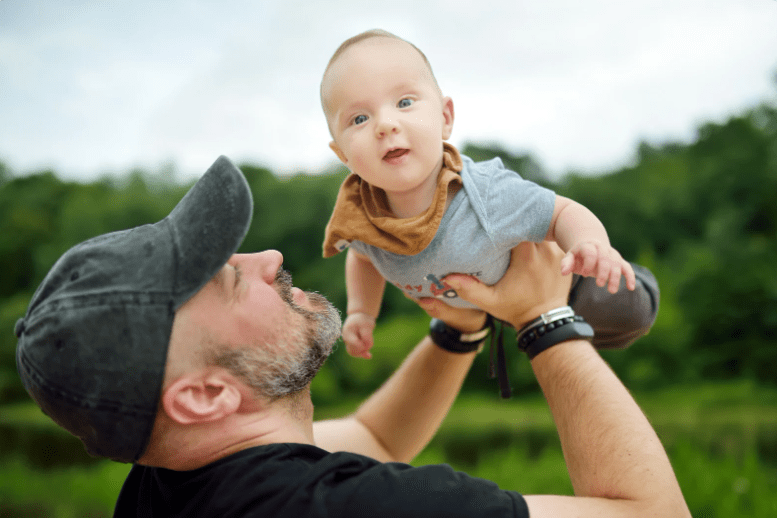
Image via Canva

People who had kids over 35 share their experience being 'older' parents.

More Americans are becoming parents at older ages. According to the Centers for Disease Control and Prevention (CDC), the average age for women in the United States who have their first child is 27.5 years old. In another study from the National Center for Health Statistics (NCHS), between 1990 and 2023, the fertility rate for women ages 35 to 39 increased 71%,. For women ages 40 to 44, the rate increased 127%.

Yet, having kids after 35 is a unique experience. In a Reddit forum, member @rainybitcoin posed the question: "Parents who were over 35 when your kids were born—how is it now?" They went on to add, "What was it like being the 'old mom' or 'old dad' (or were you?) and what is it like now your kids are older?"

Parents who had kids later in life offered their firsthand experience and advice on what it's really like. These are 15 of the most honest (and real) responses.

having kids, becoming parents, parenthood, having a kid, parenting Tired Episode 2 GIF by Friends Giphy

"I had mine at 40/42. Now they are in their 20s and everything is fine. I still have strength to help them move into new flats or whatever. Only problem I had was in primary school when collecting my son and his friend shouted to him: 'Your grandad is here'." —@Key-Interaction-6281

"I had my kids the same age you did. Mine are all still under 10. I've been called their grandmother a handful of times now, but I find it hilarious. I turn 49 later this year, and my youngest just finished kindergarten." —@Strawberrywaffles001

grandma, grandmother,  mom, mother, motherhood Mood Grandma GIF Giphy

"I feel like a salmon that went upstream, spawned and is now so tired I'm happy to drift back downstream while my body decomposes. Maybe a bear will eat me if I'm lucky." —@spiteful-vengeance

"It worked out very well. He is 20 now and in college and I just retired at 65. And it’s been such a wonderful part of my life. I think my wife feels the same way." —@No-Savings7821

"38 and 42 when kids were born, 48 now, kids are 6 and 11. It's kind of heavenly. I sometimes wonder if I’m actually in heaven." —@Guitar-Nutt

"My daughter was born just in time to help us celebrate our 20th wedding anniversary. I was 40, my husband 42. Other than my husband once being mistaken for her grandfather while on a walk in Yosemite, our age was never an issue. I look younger than I am and my daughter definitely kept me active. I was the go to mom who took her and her friends to amusement parks and concerts. My husband and I took her on many vacations. By the time she was born, we were settled in our careers and financially able to provide her with experiences she wouldn’t have had when we were young. Today she is 32, happily married and thriving. We talk every day and have a great mother/daughter relationship. If I had it to do over again, I wouldn’t change a thing." —@OPMom21

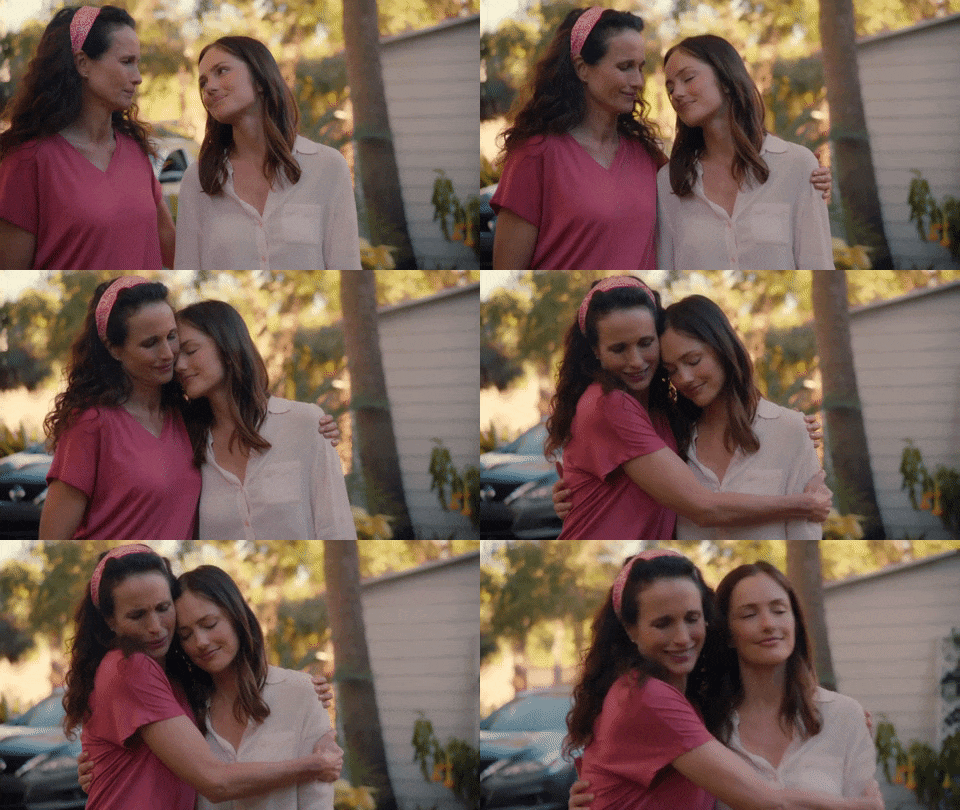
mom, daughter, hugging, motherhood, mother minka kelly love GIF by Hallmark Channel Giphy

"I was 39 and 42 when my kids were born; and I'm now 66 and they are 27 and 24. We were ten years older than the other parents in our childbirth class and our baby group. But my kids went to a preschool where there were lots of older parents -- I was probably the mean age of the moms there. It was in a community (Evanston, IL, suburb of Chicago) with lots of older parents. I was more of any outlier as my kids grew older, because we tended to be older than many of the parents. I used to joke that I didn't look old I actually was old. Or sometimes people thought I was younger because of the ages of my kids. One of the other parents told me Now most of the friends I grew up with are grandparents, even though none of their kids had kids young. I have a good relationship with both of my kids -- although it was strained at times when they were teens, particularly my eldest. I work hard at getting, staying healthy so I can be around for them for a long time. My own mom died when she was 50 and I was 20, so I've already made it past that frightening point on both sides of it. I didn't want my kids to be motherless children until they were well into adulthood. I'm not sure what else you want to know. I have two nieces who both had kids when they were older than 35 in San Francisco, which, I just read has the oldest mothers in the country. They are fine about it." —@here_and_there_their

"I certainly was not ‘the old mom’ because like my peers, I got my career going first before having kids after 35 and then when my kids went to school, the other parents were also in their early 40s. We were all well educated and professional and so our kids attended a private school where younger parents would have been unusual." —@leatclowns

tired, exhausted, no energy, sleepy, exhaustion Tired The Middle GIF by ABC Network Giphy

"Here I am, ready to burst the "everything is amazing" bubble! ...Although I don't fit the brief 100%... I had my youngest at 34. But close enough? It's horrible compared to the kids I had in my early and mid 20s! I am healthy. I am fit and active. But there is NO comparison to how much more energy I had ~10 years ago! Please don't get me wrong! I love all of em to bits! All of them were planned and so very much wanted! But I have so much less energy, so much less patience,...like, there really are no words to describe it! The worst though, is when it comes to injuries. Since I am, and always was, very active - injuries do happen from time to time. That's just the way things go, when you're running, skiing, horse riding, biking,...,...In my 20s, that would be a sprain, some bruises or such... but now? I was out 6 weeks (!!!!) due to a stupid tumble in the snow! It wasn't even a bad fall! My body just isn't as flexible anymore, my reflexes aren't as fast anymore. I feel so sorry for my youngest, who will never meet the super active, high energy, up for anything person, that I was for my older two. I'm sorry folks, but there's a reason professional athletes mostly retire in their 30s. It's because your physical abilities start to decline. Even for professionals!" —@Alone_Lemon

"I’m 48(m) my wife too, we have 11, 7, and nearly 3 year old. We are in the thick of it with trying to raise 3 kids, prime of careers, but yet worrying about saving for retirement at exactly the same time as saving for college. Don’t have time to feel old or tired, it’s all go around this place. The mostly grey haired wrinkly face guy I catch a glimpse of sometimes reminds me of our age, but luckily I spend more time looking at my much younger looking wife than myself. She on the other hand has the raw end of the deal. :)"—@ Realist1976

passport, passport stamp, travel, traveling, international travel Border Patrol Europe GIF Giphy

"I'm male - I was 41 when my daughter was born and 43 when my son was born. I was living in a big urban city, so 'older parents' weren't that uncommon. When I talk to younger people about having kids my advice is always the same: Have them when you are young. There is a biological reason a 25-year-old can stay up late and still get up for work in the morning. It's not for nightclubbing. It's for parenting infants & small children. By the time I was 18 my parents were in their mid-40s. They could still travel together and live life. You will feel you will never have enough money or enough time to have kids. So if you are in a relationship and want to have them, then have them." —@StoreSearcher1234

"I had a easy time when I had my daughter at 19 yrs old. Not that easy when I had 2 sons back to back at 36 and 37. Everything was harder especially recovery. I had C Sections with all and i was running around and cleaning house when I got home with daughter. With sons it took weeks to recover. But I have to say the boys got easier as they got older and I’m proud to say we all lived thru it!" —@debbiedo2019

"I do not know anyone who intentionally had kids before 35. We’re all doing great lol. However, my friends who had kids before 35 struggled with financial and relationship insecurity…" —@AdmirableCrab60

old, getting old, older, feeling old, old age Aging Season 9 GIF by Friends Giphy

"I was 40, everyone around me has had kids about the same age so socially it’s not a big deal, but personally I feel old and tired." —@strumthebuilding

"I'm probably never going to meet my grandchildren. Other than that, things are pretty good, I still see both of my kids every week." —@blinkyknilb

ups, ups driver, delivery driver, ups deliveries, cookout, family, food, hospitality, kindness
Relaxed008/YouTube
UPS driver invited to family's cookout.

UPS drivers are always on the grind delivering packages around the clock—even on holidays. And one family took notice of the hard-working UPS driver in their neighborhood who had his nose to the grindstone as they enjoyed a cookout together. Rather than simply let him pass by, they decided to flag him down and extend an invite to join them in a move that proved community and hospitality are still alive and well.

TikToker @1fanto shared a touching video with his followers from Easter weekend where his family invited a UPS driver making rounds in their neighborhood to come to their cookout and 'make a plate.'


"Everybody family around here 😭," he captioned the video. "Everybody invited to the cookout.😂"

@1fanto

Everybody family around here 😭 #easter #cookout #wherethefunction

In the video, the UPS driver is seen standing in the family's driveway, and a group of cookout attendees warmly welcome him to join them. The uncle of @1fanto says to the driver, "You've been working hard all day man, you can go on in there!" He calls out for a woman named Stephanie to "take care of him!"

The UPS driver walks up the driveway, and they encourage him to go inside and get his fill as he enters the garage. After securing a plate of food and a drink, the driver walks back outside to mingle with guests, shaking hands with the uncle who invited him.

"You good?" the uncle asks, and the driver responds, "Yeah I'm good. They hooked me up. Thank you so much. Appreciate y'all for inviting me out." On his way back to his truck, the uncle encourages the driver to invite other workers to stop by as well.

- YouTube www.youtube.com

In a follow up video, @1fanto explained more about how the invite went down. He shares that the UPS driver was driving by the family's house on the Saturday before Easter, and at the time the family was enjoying a big fish fry cookout together. His uncle flagged the driver down, and he pulled over.

He shares that his uncle told the driver, "Go inside and get you a plate!" The driver asked him, "Are you sure?" But he reassured him, adding that the family made sure to ask the driver what he wanted and didn't want on his plate to "make sure he was good and got everything he needed".

"I saw it had a positive impact. That's what my family do. That's not something that we just do for social media," @1fanto shared. "That's something that we do on a regular basis that doesn't just happen when the camera's on. It happens when the camera's off, too. We're all equal. We all bleed the same."

ups, ups truck, united parcel service, ups delivery, ups deliveries, ups driver A UPS truck with package deliveries.Image via Wikipedia

Viewers had lots of positive things to say in the comment section.

"I am a UPS driver and that makes our day. People showing love to us"

"Your family represents the best of America🫶🏼 Your uncle is now all of our uncle."

"Working the holidays suck. But they made that man’s entire day. Love it."

"I love when people are nice for no reason. You’re so real ♥️thank you for being so kind."

"Being a delivery driver is grueling, often thankless work. It's awesome to see a family that remembers those hardworking folks are essential parts of our communities."

This article appeared last year. It has been updated.

grocery list, handwritten, note, phone, grocery shopping, list making, productivity, productivity hacks
Photo credit: Canva

Phone or handwritten grocery list? The great debate ensues.

Going to the grocery store without a list is just asking for trouble. It's an easy way to overspend, forget things, and wind up buying too much junk and not enough nutritional foods. The question isn't List or No List; it's, which kind of list writer are you?

Are you the type of person who always writes grocery lists by hand? Perhaps on the back of a receipt, in a special notebook, or on an index card? Do you insist on this method, even though you’re the only one in the store unfurling paper like an ancient scroll while everyone has their heads down, tapping away at their phones?


Lists are undoubtedly important. In a poll, research revealed that the average British adult writes an average of three to-do lists a week—which, in some cases, can add up to 9,766 lists in a lifetime.

“Evidently, we all rely on lists for one aspect of life or another,” commented Shahbaz Khan from STABILO, a high-quality pen and pencil company.

But when it comes to the actual list-making, does the method in which you create it really matter? Apparently, yes. And your choice, handwritten or digital, can say a lot about your personality.

If you prefer handwriting your grocery list, you’re likely…

To have a mind that operates like a filing cabinet

In 2024, two professors at the Norwegian University of Science and Technology, Dr. Audrey L.H. Van der Meer and F.R. (Ruud) Van der Weel, found that handwriting activates more elaborate and widespread brain connectivity patterns compared to typing. They suggest that the physical act of moving your hand while writing creates spatial and temporal patterns in the brain that promote learning.

In a similar study, Japanese researchers found that participants who wrote calendar events by hand on paper showed increased brain activity—particularly in memory regions—compared to those who recorded the same information on smartphones. The hand writers also recalled the information 25% faster than those who typed.

Writing by hand triggers extra neural activity in regions tied to learning and memory. So, no matter how messy your handwriting might be, that grocery list might also be giving your memory a little work-out.

TEDx speaker Katie McLeary says writing by hand has tons of mental benefits, like the ability to "improve your focus, elevate your thinking, deliver the 'sticky factor' to retain new learning."

- YouTube www.youtube.com

To be naturally conscientious and understand the secret to success

Conscientiousness isn't the same as self-control or self-restraint—rather, it refers to a person's tendency to be organized, reliable, goal-directed, and self-disciplined. It's no surprise, then, that those who score highly in conscientiousness tend to be successful: they aim for high-profile outcomes and have the ability to develop well-thought-out plans to accomplish their goals.

It's easy to see the correlation to handwriting here. Handwriting is slower, more laborious, and requires thinking ahead. It takes patience and intentionality to do it well.

Comfortable getting tactile

Nothing quite compares to writing with your perfect pen. (By the way, what's yours? A Pilot G2-2? Uni-ball Vision Elite? Or perhaps something fancy, like the $65 Squire Classic Pen from Baronfig?) It's a complete sensory experience as your pen glides across paper. This physical connection helps create a deeper engagement with the task at hand.

In fact, some people find writing on real paper to be a soothing ASMR activity. Videos of people writing their grocery lists are popular on YouTube—really!

- YouTube www.youtube.com

To not buy on impulse

Yanliu Huang and Zhen Yang from the LeBow College of Business at Drexel University examined how handwritten shopping lists differ from digital ones. Their research showed that people who write lists on paper tend to make more planned purchases and fewer impulse buys.

However, there are a few downsides to a handwritten grocery list…

Let's face it: sometimes you can't read your own handwriting. When rushing, you might scribble illegibly, forget items, or leave the paper at home entirely. (Pro tip for forgetful hand-writers: snap a photo of your list before heading out, just in case.)

Paper lists are also cumbersome to update on the go. Picture this—you've just remembered you need onions while backing out of the driveway, but now you're scrambling for a pen. Don't do this. Plus, paper lists make it difficult to coordinate shopping with other people.

If you’d rather quickly type your grocery list on your phone, you're probably...

In a poll of 2,000 people in the United Kingdom, researchers found that when it comes to list-making, only 40% use their phones, while 63% write on notepads and 24% use sticky notes. So congrats—you're right in the middle!

grocery list, handwritten, note, phone, grocery shopping, list making, productivity, productivity hacks Lists made on a phone are fast, efficient, fluid, and easy to share with others in your household. Photo by freestocks on Unsplash

Extremely efficient and organized

Your phone is a miracle list-maker: people who use digital lists value practicality over sentimentality—they appreciate the power of automatic sorting, expense tracking, and integrated coupon features. These lists can be updated instantly and accessed from almost any device, making them the most efficient, streamlined option.

Digital lists are also far easier to edit without making a mess.

Someone who uses data to make decisions

Beyond expense tracking, many apps provide nutritional data, meal planning suggestions, and inventory management—helping you make smarter, healthier food choices. You're not just shopping anymore; you're strategically planning your nutrition.

Collaborating with someone in the kitchen

The beauty of a digital list is that it can be shared with others in real time, allowing multiple people to add items seamlessly. This eliminates miscommunications and duplicate purchases while reducing paper waste and promoting environmentally friendly habits.

The digital life has its downsides, too…

Taking a break from your phone can be refreshing, but keeping your grocery list there means more screen time—potentially leading to digital fatigue or distractions from notifications and other apps. There's also the practical concern: what if your phone dies, you lose internet connection, or your service drops out while shopping?

Grocery shopping can be such a treat. Whether you use digital lists, handwritten scribbles, or memory tricks to track what you need, there's no wrong approach. The “best” way to write a grocery list depends on you: your personal preferences, your lifestyle, and what works for your routine. Ask yourself, “What will make me feel the most organized and calm?” Then let your grocery list lead the way.

This article originally appeared last year. It has been updated.

likable, likable person, likable people, conversation, conversation tips

Likable people say these things during conversations to build better relationships.

Making friends and developing deeper, stronger relationships starts with good conversation. Sometimes that means small talk at work, while other times it's the kind of conversation that really takes off at a party.

Some people are naturals when it comes to easy, flowing conversation—especially highly likable people, who tend to attract others and often hold the key to mastering genuine conversation. From their gestures to the way they articulate questions, there's a lot others can learn from them.


Communication experts who spoke to Upworthy say there are 10 things highly likable people do during conversations to build stronger relationships.

- YouTube www.youtube.com

1. They listen without distraction

Listeners often make the best conversationalists.

"That means not looking at your phone or scanning around the room to see who you want to talk to next," says Kerri Garbis, CEO and founder of Ovation Communication. "Focus on the person in front of you only. Make eye contact. This fosters a relationship because when you are fully present, it signals respect, interest, and helps others feel valued versus like they are competing for your attention."

2. They collect data

Being inquisitive about what people need during conversations is key to building stronger relationships.

"If you take a moment to ask your colleague or even friend, 'What are you worried about? What's the biggest concern facing you right now?' you can get great data on how you can help them - in a way that taps into something urgent and top of mind for them," says Kate Mason, PhD, an executive communications coach and author of Powerfully Likeable: A Woman's Guide to Effective Communication. "They'll remember your thoughtfulness and the actions you took."

3. They balance the conversation

Highly likable people never make it all about themselves.

"Sometimes conversations can be 'lopsided' where it's more about the other person than about you," says Rob Volpe, a communication expert and author of Tell Me More About That: Solving the Empathy Crisis One Conversation at a Time. "While that can be okay, you aren't there to be their therapist. Sometimes the context and topic may make it off balance, but if it continues and you aren't feeling seen yourself, feel free to say something like 'I'd love to share my thoughts on this' or 'May I share something I'm dealing with at the moment?'"

4. They mirror their conversation partner

Taking cues from body language can foster deeper relationships.

"It's a subtle way to make someone comfortable because they recognize themself in your actions," says Jennifer Anderson, a communication expert who works with entrepreneurs. "Your energy should match the energy of your counterpart. Think relaxing-in-lounge-chair energy vs. about-to-deliver-a-presentation energy. Those are two very different conversations. If you paired them up, there's definitely about to be some awkwardness."

- YouTube www.youtube.com

5. They skip pre-planned questions

While coming to conversations prepared with questions may help you feel less anxious, highly likable people usually don't use them.

"Often people have questions in their back pocket, like about the weather or sports, but the most likeable people in the room are those who can be present in conversations and ask follow-ups based on what someone is talking about," Garbis says. "This builds a relationship by making conversations feel relational and not transactional."

6. They are self-aware

Highly likable people are masters of self-awareness, especially during conversations.

"Self-awareness of your judgment is key to building relationships," Volpe says. "We all carry biases which can block our view of the person standing in front of us. When you catch yourself being judgmental, have some grace with yourself and get curious about the other person as well as where your judgment is coming from. This clears one of the biggest obstacles to having empathy with others."

7. They respond with affirmation

Highly likable people make others feel seen and heard.

"No matter what is coming out of the person's mouth, make it clear that you're not judging or competing with them," Garbis notes. "If they say: 'I went skiing this weekend,' don't jump in and say that you also went skiing. Say something like, 'Wow, that sounds exciting, tell me more about that.' You can respond with validating statements like: 'That makes sense, or I can see why you're so good at that, or I can see why that matters to you.' This reduces defensiveness and nervousness, and it makes people feel safe to be themselves and creates relationships faster."

@justaskjefferson

it’s been great catching up! #communicationtips #communicationskills

8. They remain calm

Bringing a sense of calm rather than chaos to a conversation can put everyone at ease.

"Calm is the most powerful communication flex you can do," Mason says. "If you can stay calm, especially in a heated conversation, you actually end up looking trustworthy, reliable and unruffled - all very powerful things to be remembered for."

9. They remember names

Highly likable people personalize conversations by using the other person's name.

"Never ever tell people you are terrible at remembering names," Garbis explains. "This will tank the conversation because it signals you don't matter, nothing you say matters, and that you aren't worth remembering. It makes a person mentally check out of the conversation. Use good tricks like repeating a person's name at the beginning and again at the end. If you forgot by the end, say something like, 'It was so fun to hear about your skiing adventure. By the way, I'm Kerri, it was so nice to meet you, and can you remind me of your name? I don't want to forget it?' They'll be so grateful you repeated your name too!"

10. They use humor where they can

Finally, highly likable people make sure to infuse conversations with laughter.

"It's a great connector," Anderson notes. "Don't try to be a standup comic, just find the lighthearted observations and details that you can share in conversations. Humor is never a weapon; judgy and mean-spirited comments convey weakness, not confidence. You'll risk alienating your conversation partner if you come in with a full roast of your friends or coworkers. If all else fails, everyone loves a Dad Joke."

self-care, what is self-care, mental health, affording self-care, wellness culture

Self-care is not what we've be taught one therapist explains.

Let's talk about it: Self-care. It's something that has been co-opted by wellness influencers and gurus that somehow (and all-too-often) involves spending money on something luxurious. Self-care is often associated with things like pedicures, vacations, and hour-long spa massages, but according to Dr. Raquel Martin, we've been doing self-care all wrong.

In July 2024, Martin, a licensed psychologist, uploaded a video to her Instagram explaining what self-care is truly supposed to be. Spoiler alert? It's not meant to be indulgent. At least, indulgence shouldn't be an all-the-time expectation of self-care. Martin acknowledges that the wellness industry has monetized and conflated self-care with self-indulgence, and she explains that having self-care promoted as something indulgent isolates people who cannot afford those activities.


What's the difference between self-care and self-indulgence?

The psychological toll for conflating self-care with self-indulgence can get dangerously high. In the 2020 Psychology Today article, "Why Does Self-Care Sometimes Feel So Hard?", author and licensed psychologist Alicia H. Clark Psy.D notes that "indulgence stops being self-care when you feel guilty or unhappy with yourself, and this threshold is different for everyone." She goes on to say that "one person's self-caring indulgence can be another's gateway to self-harm, depending on your relationship with the activity, your capacity for moderation, and the reality of its consequences."

This makes wellness influencers who tout a heavily indulgent, "treat yo' self" ideology of self-care all the more dangerous. Self-care is not one-size-fits-all, and for those who struggle with self-discipline and moderation, a self-care mindset can do more harm than good.

self-care, what is self-care, mental health, affording self-care, wellness culture A woman ejoying a realxing bath.Photo credit: Canva


So, what is self-care actually? How is it achieved? And is it always supposed to feel good? Dr. Martin goes on to share how she practices self-care, and what she lays out was surprising her viewers. According to Martin, "Self-care is not responding to every call and, if I do not have the bandwidth to have the conversation, stating that I don't have the bandwidth to have the conversation." She also notes that she says "No" to things she doesn't want to do, sets a financial budget, and does not drink caffeine after 4 p.m.

Dr. Matin adds that sometimes practicing self-care downright sucks. "Sometimes self-care sucks. It sucks not buying that item that I know I'm gonna want, but I need to have some discipline to buy it later," she admits. "It sucks saying no things because I know it's past my bedtime and I know it's going to make me feel crappy the next day. It sucks making choices for myself sometimes that I know will be difficult for others."

Saying 'No' is a form of self-care

These things might seem a little boring compared to indulgent self-care, but one thing is clear: they are actually good for Martin's body, health, and overall wellness.

Much of what Martin listed are things a lot of people don't consider as self-care, but in actuality, self-care is defined simply by taking care of one's self. This means practicing self-care is getting in a few minutes of exercise a day, drinking more water, or spending time with friends. You don't have to spend money to care for yourself.


massage, self care, man having massage, relaxed man, massage table, A man getting a massage.Photo credit: Canva


Commenters were shocked and thankful for Martin's clarification on what self-care is actually supposed to be:

"Love this list!! As a massage therapist, I have to call out the misconception that massage is indulgent. I'm always telling my patients that self-care is more than a bath. I will be sharing this list with my patients. I'm also trying to make massage more accessible," one person writes.

"Thank you for this post. I’m internalizing your advice to see how I can apply. You resonated with my thoughts on so many levels. However, you also provided some clarity and food for thought/fuel for action," another says.

"I really appreciate what you said about pallet cleansers! Sometimes I get frustrated with myself because I'm not able to read and consume and learn about all the issues different people are facing. It's really important to me to learn about those things, not just for awareness, but also so I can do something about it. But self care is so important throughout that, like leaving my phone in the other room, or watching my comfort shows like you said. I often read kids books or TV because of how horrible the world is right now, and I need something extremely wholesome to balance it out. Also, workshop? I'm not sure what that means but I like learning from you. Thanks," another viewer shares.

So, maybe it's time to collectively ditch those indulgent expectations of self-care and really take a look at ways we can actually care for ourselves instead.

This article originally appeared last year. It has been updated.

fly-tippers, illegal dumping, stuart baldwin, karma, uk news

An angry farmer and some illegally-dumped tires.

In 2020, a farmer outside of Liverpool, England, served up one of the most beautiful helpings of karma the world has ever seen, and people are still talking about it.

The saga began when Stuart Baldwin, then 56, visited his 2,500-acre farm and found that someone had dumped tires on his property—over 400 of them. Stuart and his family own SED Services Ltd, a recycling company that turns green waste into usable materials like compost.


Stuart was no stranger to illegal dumpers, or fly-tippers, as they call them in the UK, but this was unheard of, and he had to do something about it. So, he set up a security camera on his property to see if he could catch the guy.

security camera, farm, surveillance, fly-tippers, camera Desperate times...Canva Photos

"I was getting so angry with people fly-tipping on my land, it was time to do something about it, to take matters in our own hands. We put a camera up in the bushes and we caught the man who did it on the camera,” Stuart told the Manchester Evening News. “My daughter put a picture on Facebook and we found out who it was. He actually came forward,” he continued.

tires, illegal dumping, tires in field, used tires, waste A heap of tires in a field. Canva Photos

Being a gentleman, Stuart found out where the man lived and gave him days to come to his farm and pick up the tires. “He came down and he said he was going to move them, so I gave him the benefit of the doubt and a couple of days breathing–but he never moved them. I thought he must have forgot, so I took them back to remind him,” he told The Daily Mail.

In a video that later went viral, Stuart and his team loaded up all 421 tires onto a truck and then dumped them in front of the man’s house. Footage shows the tires rolling all over the front of the man’s house and bouncing into the street. “We have come to my land at Haydock, and somebody has put these tires here overnight. Luckily, we found out who has forgotten them, so we are going to take them back to the person who put them here, thank you,” Stuart says in the video.

- YouTube youtu.be

“We wish no harm to him or any property hence why we placed them in his garden without causing any damage, we just want to prove a point that you can't just go around fly-tipping wherever you want as it isn’t fair,” Stuart said. "I was so angry when I saw the tyres and I'm a big believer in karma—karma has got him here."

The act of perfect retribution done in the most fair way possible is a great message, and that’s probably why the story is still popular after all this time. The moral of the story is simple: take care of your own garbage; don’t make someone have to do it for you. If so, you may not like how he handles business.

"Nobody likes a fly-tipper. We've been inundated with congratulations since the video went online,” Stuart told the Manchester Evening News. "The response has been amazing, it's gone the right way for us."

This article originally appeared last year.