It's time to rethink the term 'geriatric pregnancy' as more women wait to have children
Women are having children well past 40 but are considered "geriatric" after 35.

Rethinking the term 'geriatric pregnancy' as more women wait for kids
In more recent decades, women have started to delay having children or decide to not have them at all. Society has been taught that women must have children when they're in their 20s because that's when fertility is highest. Unfortunately it's true that fertility declines as women age, but pregnancy is still possible up until menopause.
Even if someone previously didn't want children, with technology they have the option to change their minds much later in life. Many women have taken to the idea of having more life and career experience before brining about children. But the language around pregnancy in women over 35 is still pretty offensive.
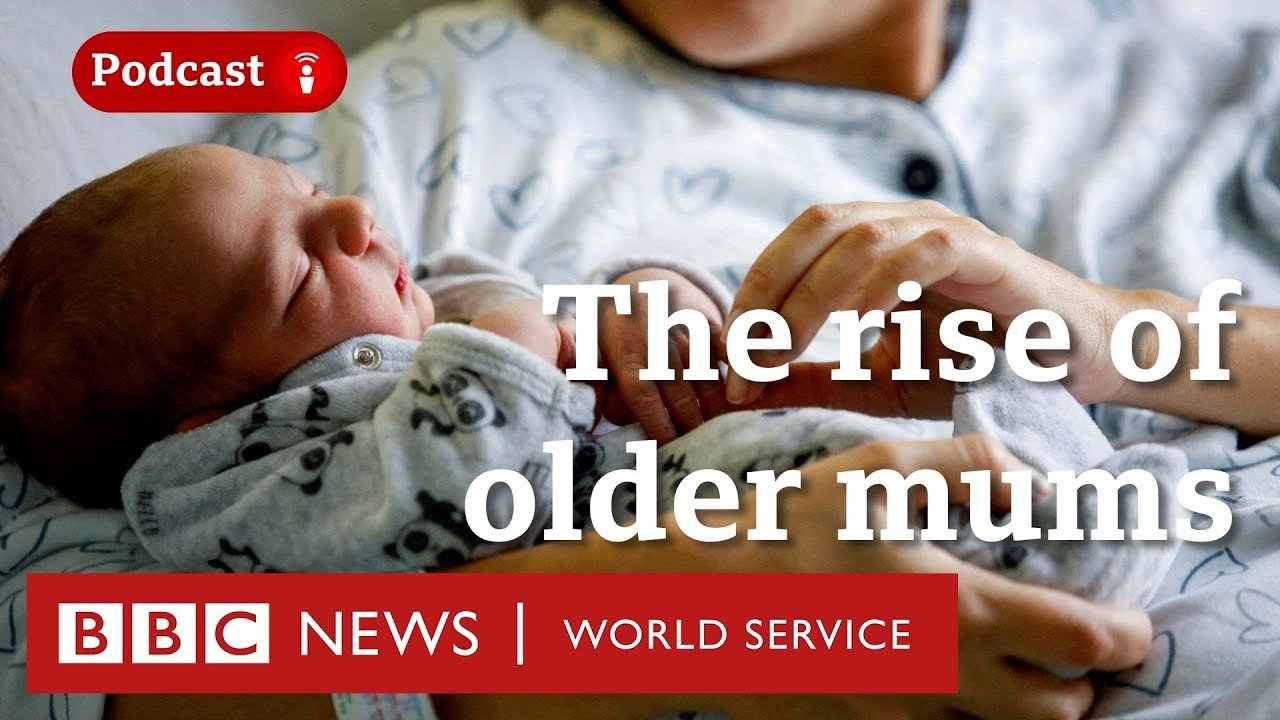
This now more common phenomenon of waiting until later in life to have children is medically called a geriatric pregnancy, though some doctors sugar coat it by calling it "advanced maternal age." Neither of these terms feels indicative of a warm feeling you're expected to experience while growing a child. BBC's The Global Story podcast blows through some pretty unfortunate misconceptions and truths about pregnancy after 35 in an interview with the Head of Reproductive Science and Sociology Group, UCL.
The two women co-hosting the podcast are both moms who waited to have children after the magic number. While having a baby after 35 is considered geriatric, some women are having babies into their 70s. Dr. Ssali says, "last week we successfully delivered this lady who was 70 years of age of twins, a boy and a girl. Previously we had treated her with IVF, again the same process, three years ago and she conceived and delivered a baby girl."
Of course choosing to have a baby in your 70s is well outside the normal age for childbearing, 35-50 isn't since many of these women are still capable of natural pregnancy without intervention. A woman's fertility decreases with age but it doesn't go down to zero until after menopause has fully set in. If it were impossible to conceive there wouldn't be a term called, "menopause baby," which simply means someone became pregnant during their perimenopausal phase.
Professor Joyce Harper, the head of reproductive science and sociology explains, that while women's eggs lose fertility over the years, the uterus never does. This is why IVF using donated eggs for older hopeful parents can be successful. The trend of later in life babies isn't one to soon end as the age a woman births her first child increases by one year every decade.
"The average age [for first time moms] globally is 28," Stephanie Hegarty, BBC Population Correspondent says. "60 years ago the average age was 22 and every decade it's gone up globally by about a year."
Hegarty expands on the thought by adding people can continue to have babies as they get older. But when it comes to why people are choosing to have children later in life, economics plays a big part in whether people decide to have children or not. Raising a child is expensive and the cost of living has only gotten more exorbitant while wages have stayed largely the same. The experts on the podcast also said girls and women becoming more educated has pushed desires for motherhood to later years.
It's certainly something to consider when it comes to terminology. If the trend of increasing average age for women delivering their first child continues, then in another few decades, 35 will be the average age. Will we still be calling it geriatric pregnancy or advanced maternal age, then? Maybe a language change is in order before we reach that stage.

- Here are the ways your body changes when you’re pregnant that nobody talks about ›
- Dad-to-be straps watermelon to his belly to experience what his pregnant wife goes through ›
- Her neighbors kept giving pregnancy updates through her doorbell cam. Watch til the end. ›
- Man wonders if he's 'dumb' for wanting kids at 38 - Upworthy ›
- Woman didn't know she was pregnant until she gave birth - Upworthy ›
- Moms share their symptoms of pregnancy related heart failure - Upworthy ›
- Parents over 35 share what it's really like having kids later in life - Upworthy ›
- 12 older moms share what it's really like to have a baby between the ages of 38-43 - Upworthy ›


A Generation Jones teenager poses in her room.Image via Wikmedia Commons
An office kitchen.via
An angry man eating spaghetti.via 


An Irish woman went to the doctor for a routine eye exam. She left with bright neon green eyes.
It's not easy seeing green.
Did she get superpowers?
Going to the eye doctor can be a hassle and a pain. It's not just the routine issues and inconveniences that come along when making a doctor appointment, but sometimes the various devices being used to check your eyes' health feel invasive and uncomfortable. But at least at the end of the appointment, most of us don't look like we're turning into The Incredible Hulk. That wasn't the case for one Irish woman.
Photographer Margerita B. Wargola was just going in for a routine eye exam at the hospital but ended up leaving with her eyes a shocking, bright neon green.
At the doctor's office, the nurse practitioner was prepping Wargola for a test with a machine that Wargola had experienced before. Before the test started, Wargola presumed the nurse had dropped some saline into her eyes, as they were feeling dry. After she blinked, everything went yellow.
Wargola and the nurse initially panicked. Neither knew what was going on as Wargola suddenly had yellow vision and radioactive-looking green eyes. After the initial shock, both realized the issue: the nurse forgot to ask Wargola to remove her contact lenses before putting contrast drops in her eyes for the exam. Wargola and the nurse quickly removed the lenses from her eyes and washed them thoroughly with saline. Fortunately, Wargola's eyes were unharmed. Unfortunately, her contacts were permanently stained and she didn't bring a spare pair.
- YouTube youtube.com
Since she has poor vision, Wargola was forced to drive herself home after the eye exam wearing the neon-green contact lenses that make her look like a member of the Green Lantern Corps. She couldn't help but laugh at her predicament and recorded a video explaining it all on social media. Since then, her video has sparked a couple Reddit threads and collected a bunch of comments on Instagram:
“But the REAL question is: do you now have X-Ray vision?”
“You can just say you're a superhero.”
“I would make a few stops on the way home just to freak some people out!”
“I would have lived it up! Grab a coffee, do grocery shopping, walk around a shopping center.”
“This one would pair well with that girl who ate something with turmeric with her invisalign on and walked around Paris smiling at people with seemingly BRIGHT YELLOW TEETH.”
“I would save those for fancy special occasions! WOW!”
“Every time I'd stop I'd turn slowly and stare at the person in the car next to me.”
“Keep them. Tell people what to do. They’ll do your bidding.”
In a follow-up Instagram video, Wargola showed her followers that she was safe at home with normal eyes, showing that the damaged contact lenses were so stained that they turned the saline solution in her contacts case into a bright Gatorade yellow. She wasn't mad at the nurse and, in fact, plans on keeping the lenses to wear on St. Patrick's Day or some other special occasion.
While no harm was done and a good laugh was had, it's still best for doctors, nurses, and patients alike to double-check and ask or tell if contact lenses are being worn before each eye test. If not, there might be more than ultra-green eyes to worry about.