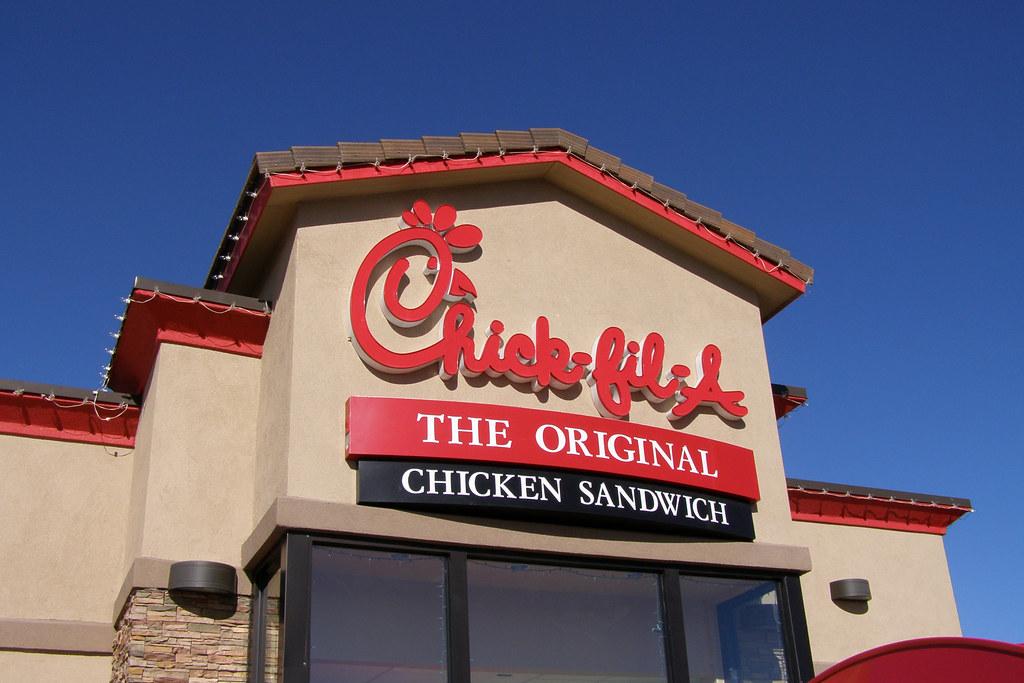
A Chick-fil-A restaurant is trying a 3-day work week and the results are undeniable
Reduced work weeks have been a proven success for 9-to-5 jobs, but it looks like the restaurant industry might also be due for a revamp.

Longer hours, but more days off.
Four-day work weeks have become increasingly more mainstream in corporate business settings. With productivity levels remaining the same—at times, even increasing—and with employees less subject to burnout, the appeal is palpable.
However, many restaurant workers do not have 9-to-5 schedules. “They’re literally working 70 hours a week, week in and week out,” reflected Chick-fil-A operator Justin Lindsey in an interview with QSR Magazine. His store in Miami had achieved top sales, but usually at the expense of the staff, who would even joke about going home to collapse after a shift.
In an effort to “do better,” Lindsey came up with an unconventional solution: a three-day work week.
Rather than cutting hours, Chick-fil-A employees would have a week’s worth of hours condensed into a set of three 13- to 14-hour shifts (keeping in mind that Chick-fil-A is closed on Sundays). While Chick-fil-A is not without its questionable business practices, the fast-food restaurant chain's experimental approach to work schedules that might make an overall positive impact. This could potentially help workers arrange consistent childcare, work on other projects and have more time to simply do what needs to be done in their life outside of a job.
Though those might seem like extremely long shifts, they are actually not all that different from a normal day. “It’s rare, especially for a leader, even in a five-day week, to work less than 10 hours a day,” Lindsey told QSR. “So if you gave [employees] the option, I think a lot of them would say, ‘oh yeah, I can suck it up a few more hours if you really only let me work three days.’”
This Chick-fil-A is implementing a “3 Day Work Week” where employees work three, 12 hour shifts.
— 𝓔𝓵 𝓟𝓪𝓽𝓻ó𝓷 (@ZBankEnt) October 29, 2021
They make $17/hr, while remaining full time and rotate weekends. pic.twitter.com/BAx4Tx10Ke
Aware that the long-term logistics might not be feasible—the aforementioned long hours, plus challenges in time-off requests—Lindsey was candid with his team from the get-go that this was “uncharted territory,” and that things would be figured out as they go.
So far, the transparency and people-first attitude has paid off. Not only has the Miami store achieved top-earning status and received a flood of 400 applicants, there’s been a 100% retention rate at the management level. But for Lindsey, it was never really about that. “Truly, from the bottom of my heart, I’m doing this because I think it’s the right thing to do,” he said.
Even more so than reducing work days, it’s giving people the power of choice that has made a positive difference. Workplace burnout is caused in part by the feeling of having little-to-no control while trying to balance adhering to a company’s bottom line and spending time with family and loved ones, maintaining physical and emotional wellness, or working on fulfilling projects. The result is emotional exhaustion, which unsurprisingly doesn't lead to much productivity.
The impressive results that Lindsey and his Chick-fil-A team have accomplished, along with that of other companies exploring shorter work weeks, offer a bit of uplifting news against headlines of “quiet-quitting/firing” and “The Great Resignation,” and hopefully pave the way forward to a healthier relationship with work on a global level. For an industry that is particularly notorious for providing low wages, poor working conditions and little respect to even the most loyal of employees, it's nice to see that some restaurant managers are attempting to move in a more compassionate direction.
Good things happen when employees are treated as human beings, plain and simple.






A woman is getting angry at her coworker.via
A man with tape over his mouth.via
A husband is angry with his wife. via 
a man sitting at a desk with his head on his arms Photo by
Can a warm cup of tea help you sleep better? If you believe it, then yes. Photo by 
Three women sit on a blanket in the park. 
Two women engaging in a pleasant conversation inside a coffee shop
Two men engaging in a peaceful disagreement.
Resurfaced video of French skier's groin incident has people giving the announcer a gold medal
"The boys took a beating on that one."
Downhill skiing is a sport rife with injuries, but not usually this kind.
A good commentator can make all the difference when watching sports, even when an event goes smoothly. But it's when something goes wrong that great announcers rise to the top, and there's no better example of a great announcer in a surprise moment than when French skier Yannick Bertrand took a gate to the groin in a 2007 super-G race.
Competitive skiers fly down runs at incredible speeds, often exceeding 60 mph. Hitting something hard at that speed would definitely hurt, but hitting something hard with a particularly sensitive part of your body would be excruciating. So when Bertrand slammed right into a gate family-jewels-first, his high-pitched scream was unsurprising. What was surprising was the perfect commentary that immediately followed.
This is a clip you really just have to see and hear to fully appreciate:
- YouTube youtu.be
It's unclear who the announcer is, even after multiple Google inquiries, which is unfortunate because that gentleman deserves a medal. The commentary gets better with each repeated viewing, with highlights like:
"The gate the groin for Yannick Bertrand, and you could hear it. And if you're a man, you could feel it."
"Oh, the Frenchman. Oh-ho, monsieurrrrrr."
"The boys took a beating on that one."
"That guy needs a hug."
"Those are the moments that change your life if you're a man, I tell you what."
"When you crash through a gate, when you do it at high rate of speed, it's gonna hurt and it's going to leave a mark in most cases. And in this particular case, not the area where you want to leave a mark."
Imagine watching a man take a hit to the privates at 60 mph and having to make impromptu commentary, straddling the line between professionalism and acknowledging the universally understood reality of what just happened. There are certain things you can't say on network television that you might feel compelled to say. There's a visceral element to this scenario that could easily be taken too far in the commentary, and the inherent humor element could be seen as insenstive and offensive if not handled just right.
The announcer nailed it. 10/10. No notes.
The clip frequently resurfaces during the Winter Olympic Games, though the incident didn't happen during an Olympic event. Yannick Bertrand was competing at the FIS World Cup super-G race in Kvitfjell, Norway in 2007, when the unfortunate accident occurred. Bertrand had competed at the Turin Olympics the year before, however, coming in 24th in the downhill and super-G events.
As painful as the gate to the groin clearly as, Bertrand did not appear to suffer any damage that kept him from the sport. In fact, he continued competing in international downhill and super-G races until 2014.
Alpine skiing is a notoriously dangerous sport, with a reported injury rate of 36.7 per 100 World Cup athletes per season, according to a 2018 study. Of course, it's the knees and not the coin purse that are the most common casualty of ski racing, which we saw clearly in U.S. skiier Lindsey Vonn's harrowing experiences at the 2026 Olympics. Vonn was competing with a torn ACL and ended up being helicoptered off of the mountain after an ugly crash that did additional damage to her legs, requiring multiple surgeries (though what caused the crash was reportedly unrelated to her ACL tear). Still, she says she has no regrets.
As Bertrand's return to the slopes shows, the risk of injury doesn't stop those who live for the thrill of victory, even when the agony of defeat hits them right in the rocks.