



upworthy
Add Upworthy to your Google News feed.
Google News Button
Modern Families

Millenials share their boomer parents’ 15 quirky (and frustrating) habits they just don't get

"They act jealous of us traveling but refuse to go anywhere."

boomers, millenials, generations

Boomer parents who don't like to travel, but say they do.

When it comes to intergenerational conflict, you never hear too much about Gen Z having a hard time with Generation X or the silent generation having beef with the baby boomers. However, there seems to be some problem where baby boomers and millennials just can’t get on the same page.

Maybe it’s because millennials were raised during the technological revolution and have to help their boomer parents log into Netflix. There’s also a political divide: Millennials are a reliable liberal voting bloc, whereas boomers are the target demographic for Fox News. Both generations also have differing views on parenting, with boomers favoring an authoritative style over the millennials' gentler approach.

A Redditor asked Xennials, older millennials, and younger Gen Xers born between 1977 and 1983 to share some quirks of their boomer parents, and they created a fun list of habits that can be both endearing and frustrating. The users shared that millennials are frustrated with their parents' abilities to use technology but are touched when they send them a greeting card.


Of course, it is reductive to reduce generations into a series of stereotypes, whether it’s millennials or baby boomers. But, for many, hearing that they aren’t the only person who gets frustrated with their boomer parents can be pretty cathartic and make them feel less alone.

Here are 15 boomer parent quirks that Millenials just don’t understand.

1. They save everything

"They save EVERYTHING (containers, jars, boxes, etc.) just in case they might be able to use it for something later. I feel like this habit was handed down from our grandparents' Great Depression upbringing."

"Absolutely! Shopping bags, empty yogurt containers, boxes that some product came in…..although I love me a 'good box!' I have all my iPhone boxes for no reason."

person using laptop attach to vehicle near green leaf plant during daytime Photo by Brina Blum on Unsplash

2. Scary texts

"Will text something foreboding like 'we need to talk;' then turns out she forgot a recipe."

"My dad will text me 'You need to call me right now' when it’s nothing. And not tell me major life events until well after the fact. Like my aunt had a heart attack and I found out a week later from her son. (And my dad did know.)"


3. Stranger death toll

"My mom is ALWAYS telling me about dead people I’ve never met. I really do not care. I know that sounds awful, but I don’t have it in me to be sad for everyone on the planet when they pass."

“You remember my friend Carol? Her aunt had that above-ground swimming pool in her backyard. We swam in it a couple times one summer when you were about 9. Anyway, Carol’s mom just lost her brother-in-law. They were very close. Thought you’d want to know.”

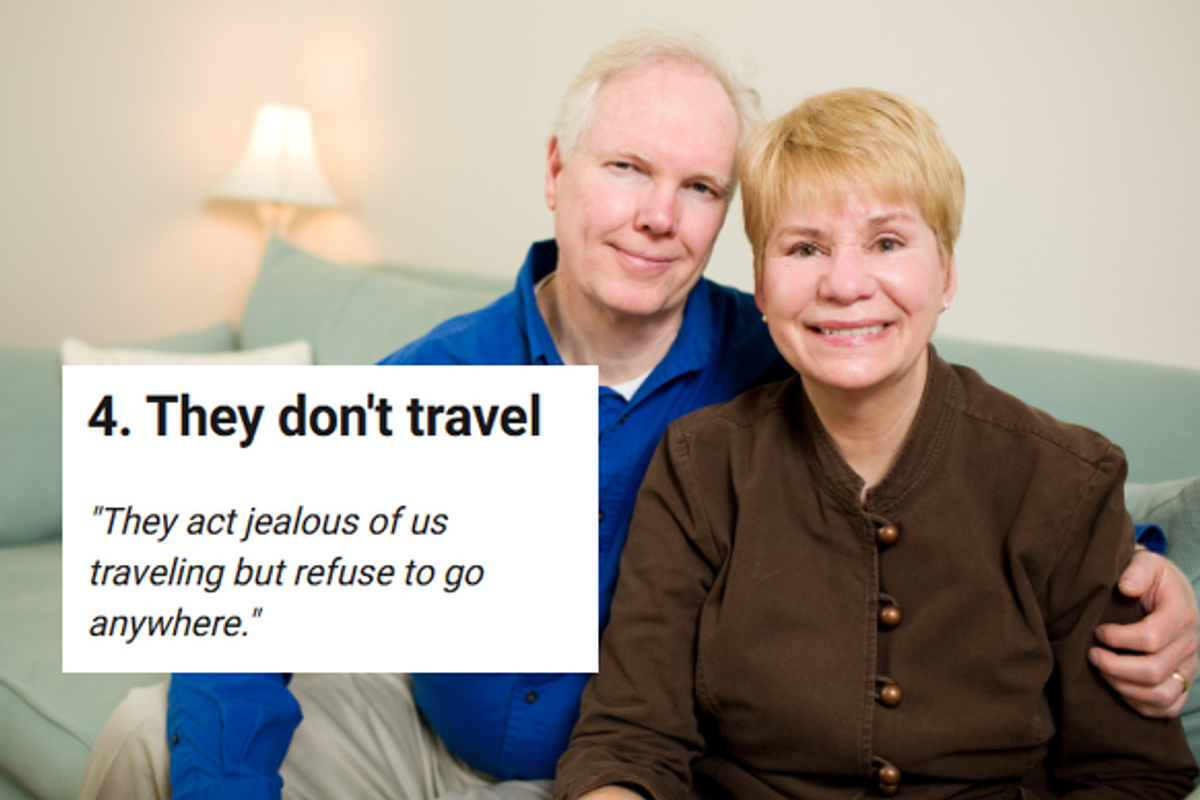
4. They don't travel

"They act jealous of us traveling but refuse to go anywhere."

"Ooh good one. Mine act jealous of anything we do/buy that they can't solely because they can't get out of their own way and actually make things happen."


man and woman sitting on blue sofa Photo by Gift Habeshaw on Unsplash

5. They print everything

"My Boomer FIL prints out EVERYTHING from his computer. I understand printing out instructions or recipes to help remember but do you really need a file cabinet full of forwarded emails from friends and sale adverts from 5 years ago? Oh well, at least he keeps it organized. Also, both TVs in the house run 24/7 playing reruns of 'CSI: Who Gives a Sh*t Anymore?'"

"I'm not on Facebook, but my dad is. Last year, he made a celebratory post on my birthday and all his church friends liked and commented on it. He printed up the post and all of the comments, stapled it into a little book, and MAILED me the printed Facebook comments..."


6. 'From, dad' texts

"My dad sends text messages with, 'From, Dad' at the end of them. It cracks me up every time. He also states who he is every time he calls me."

7. Irrational fears

"One quirk my dad had was that he was deathly afraid of the house burning down. Not from the standpoint of the danger of fire but when he was growing up, if your house burnt down, you were basically homeless and destitute. My mom is much more level headed about it. She always told my dad, that is why we have homeowners insurance."

A man in a hard hat inspects an electrical box man in brown and white plaid dress shirt and yellow hard hat holding black and orange Photo by Emmanuel Ikwuegbu on Unsplash

8. Expired food

"My mother-in-law doesn't throw out expired food. She has food in her pantry that is several years past their expiration dates. Same with condiments in her fridge. You just can't trust any of the food she has on hand because more than likely than not it's way expired. When we have brought this up, that she needs to throw some stuff out, she insists it's absolutely fine. It's not. "

"My grandmother is the same way. Once, she opened her refrigerator, and there was a jar of pickles with mold floating on the surface of the liquid. I pointed it out, and she said it was still good. She would just scoop the mold out at a later time. She has an incredibly strong stomach and immune system."


9. Smartphone addiction

"You always hear a kids 'these kids always on their damn phones.' But when it comes to phone addiction, boomers are far worse."

"My mom drives five hours to see us, then spends the whole time texting people from her church or looking at Facebook."

"I once sat in their living room for over an hour before they decided to put their phones down and speak to me, only to phub me and pick them right back up."

10. Rigid gender roles

"My dad still clings to the traditional division of 'men's/women's work.' He'll fix a car, do any outside work, clean out a clogged drain. Cooking? If it's any more complicated than making coffee or calling in a pizza, he can't/won't. I don't think he even grills anymore. Laundry? Hell no. Taking care of small children? He'll play with them but that's it."

A man stands over an open hood of a green car man in blue top fixing green car during daytime Photo by Elvis Bekmanis on Unsplash

11. The TV is constantly on

"In-laws leave the TV on for all waking hours. And FIL gets irritated if someone talks over the episode of MASH or Walker, Texas Ranger, that he's already seen 50 times. Like clenching his teeth and stomping the floor."

"TV on 24/7. Constantly flipping between some version of Law and Order, HGTV, and Guy Fieri. Asking me 'did you see that commercial where…' No mom. I don’t have cable. I don’t see commercials. All of the time."


12. They are always right

"My dad...he's has to be right about everything and doesn't know what to do if you beat him to the point on something. He once was giving me a recipe that required cinnamon, cardamon, and clove and told me just to use Pumpkin Pie Spice! It's the greatest thing! 'Dad, I don't need to. I have all those spices on hand (I bake)' But...no! You have to use this. 'No, I don't. I don't need to buy something that I already have" It happens all the time."

"My parents are always right and they are not impressed about anything."

13. Obsessed with the weather

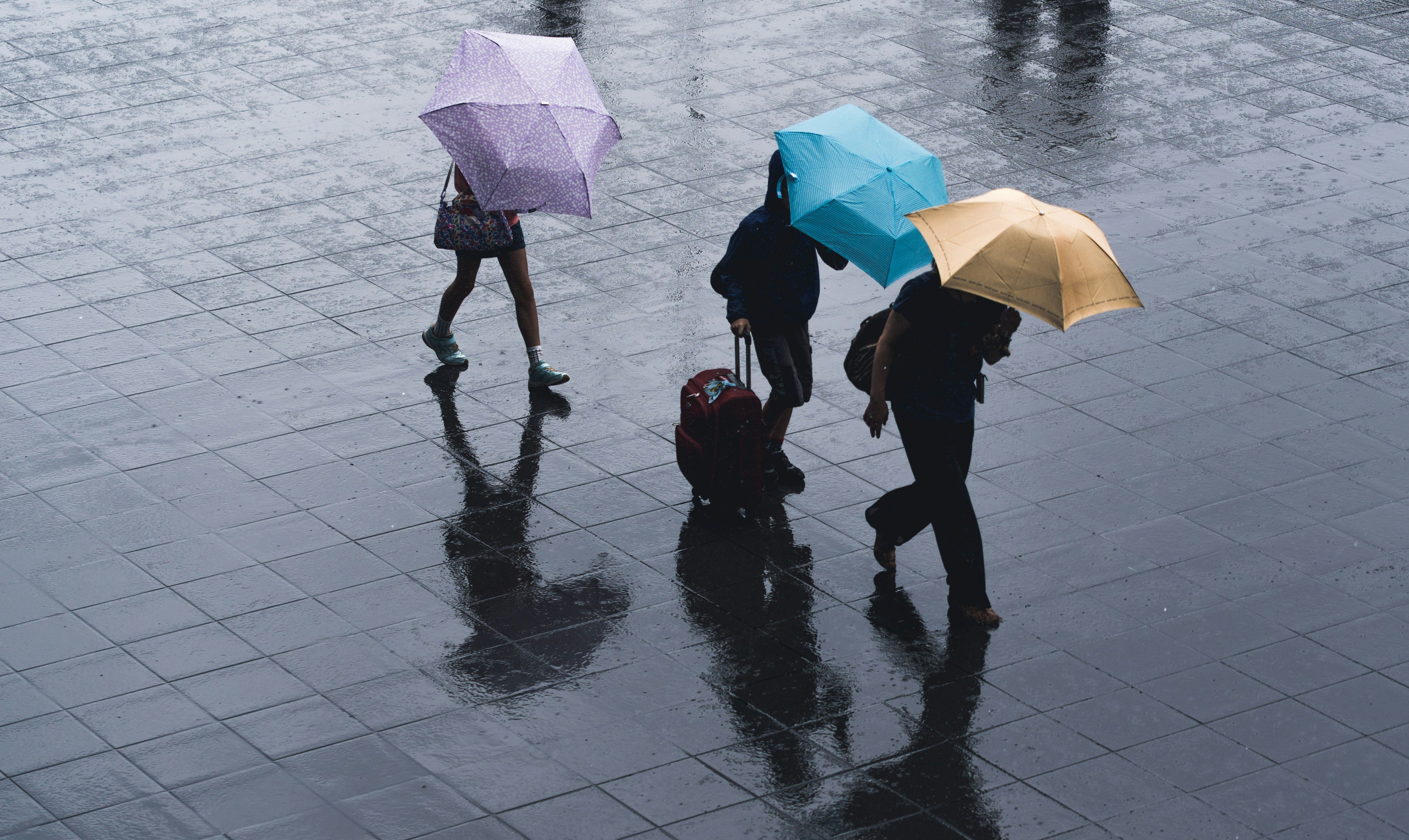
"Yes, my dad should have been a meteorologist. He used to have a weather alert radio that would sound off in the middle of the night and he would watch the weather channel constantly. We all had to quiet down when your local weather forecast on the 8's came on. He gets really excited about severe weather like when we might get thunderstorms or a tornado."

Three people with umbrellas walk in the rain selective color photography of three person holding umbrellas under the rain Photo by Ryoji Iwata on Unsplash

14. One more thing

"Without fail, every time I'm leaving my mother's house and backing down the driveway, she comes back out of her house and stops me to say something else, even though we'd just spoken."

15. Mail stress

"My mom has an anxiety attack during the entire journey of a package or piece of mail she dispatched to me. No, she doesn’t know how to track. She will not rest until she knows that a package has arrived or a nominal check has been cashed. She calls when she is thinking about sending something, when she sent it, when it’s en route, and when it’s expected to arrive. God forbid it’s late. And if I don’t issue a prompt thank you, she will guilt me."

This story originally appeared in January.
From Your Site Articles
Joy

People from around the globe share 15 signs that someone is obviously an American

"An Italian told me that Americans walk confidently in the wrong direction."

tourists, american tourists, us tourists, vacation, american style

Americans on vacation.

One of the fun things about traveling to different countries is that you not only get to learn about other cultures, but you also learn some things about your own. Americans who travel abroad often learn that people around the world appreciate them for being open, friendly, and good at spreading hope and optimism.

On the other hand, people in other countries can often tell when an American is coming from a mile away because they speak loudly, whether indoors or outdoors. Americans also have a very peculiar body language and are known to lean on things when they have to stand for an extended period.


A Reddit user posed a question in the AskReddit subforum to learn more about how Americans stand out abroad: What's an "obvious" sign that someone is American? The post received more than 35,000 responses, with an overwhelming number of commenters noting that Americans are all smiles and love to make small talk, something most people appreciate.

According to Redditors, here are 15 "obvious" signs that someone is American:

1. They have a unique confidence

"An Italian told me that Americans walk confidently in the wrong direction."

"Been taught to walk fast, and look worried.. People think you know what you're doing."

2. They're friendly

"I worked as a cashier in a tourist place in Paris, I always recognised Americans because they were kinda friendly to me and they always left tips."

"I guess there are worse things than friendly and generous."


3. Time = distance

"If someone asks how far away something is, an American will tell how you long it takes to get there as opposed to a physical distance."

"It actually pisses off some Americans to give a distance in miles, unless they're calculating gas mileage. In some places, you have to give with and without traffic options. I think it's more valuable info in time than in distance."

4. Grinning at strangers

"The gentle grins you give to strangers if you make eye contact with them as you pass by, at least in the Midwest. was not well received in Germany."

"I dated a European man here in the US. When we walked together, every time I made eye contact with someone on our path I would smile at them, and they would always smile back. Boyfriend was so confused at all these strangers smiling at me. Kept asking if I knew all these people. It was hilarious."


5. They like personal space

"How much personal space they give themselves. Americans like at LEAST an arm's length."

"We're conditioned to fill spaces evenly. I noticed when i worked delivery, spending lots of quality time on elevators that for every new person that enters, everybody shuffles to even things out. Similar thing plays out in social gatherings and bars. Not sure if that's universal or not, but I find it interesting. I think the size of our personal bubbles is because our spaces are generally much larger because we've got the space (heh) to build bigger buildings, sidewalks, roads etc. Might also explain why we're louder. Used to filling larger spaces with volume."

Body language expert Joe Navarro says that among Americans, the social zone for acquaintances and casual interactions is four to 12 feet, while family and close friends stand 1.5 to four feet apart. The intimate zone, for those closest to us, ranges from the skin to about 18 inches.


6. They lean

"According to the CIA, when training to be a spy, you have to unlearn how to lean. Americans tend to lean on things when standing still."

All of this is true, according to Jonna Mendez, the former chief of disguise at the CIA, who has shared some of her tips and tricks for making Americans seem more European. "So we would de-Americanize you," Mendez told NPR. "They think that we are slouchy, a little sloppy. And they think that they can almost see that in our demeanor on the street because they stand up straight. They don't lean on things."


7. They don't have an indoor voice

"I've lived in America for 25 years, and it still irritates me that instead of lowering their voices in restaurants so everyone can hear, Americans just scream over each other and make their restaurants as loud as clubs."

"For some reason, my otherwise smart and wonderful American friends will speak in the same volume, diction, and speed regardless of any outside factor unless specifically asked."

8. Dessert for breakfast

"In my homestay in London, I was told that I was 'so American' for enjoying a piece of cake for breakfast (not frosted cake, but like a nuts and dried fruit spiced coffeecake kind of thing). Apparently, that's exclusively for like a 4 pm snack, and breakfast is more of a savory meal."

"A lot of American breakfast items in my mind are desserts (pancakes, muffins, waffles, etc.). It doesn't mean I won't eat them, but it's kinda weird to do so."

9. They wear their clothes differently

"A British man once told me he knew I was American because I was wearing a baseball cap backwards."

"An Italian told me they could tell I was American because I wore my sunglasses on the top of my head when I wasn't using them."


10. Exposed soles

"While visiting Turkey, I was told that I looked American because I was sitting with one leg across the other, and the bottom of my shoe was exposed. Apparently, it's rude idk."

"In a lot of places outside of the US, showing the bottom of your shoe is rude."

11. Tactical gear

"Tactical sunglasses."

"I'm in the US, and virtually anything marketed towards men has the word 'tactical' in front of it."

12. They love small talk

"I'm from California (though a smallish town), and we wave to neighbors on our road, even if we haven't met, and start conversations in the grocery line with people if the opportunity presents itself. Also, smiling and saying hello to someone you happen to walk by and make eye contact with is quite normal. We are a social species, it would be so weird not to be friendly, even to strangers, for me, and I'm not even that social of a person."

"What really gets me to it is not that Americans do small talk constantly, but the fact that they are so good and fast at it. I mean, I say 'yeah, it's hot,' and they reply with some interesting fact or make a connection to their hometown. I feel less of myself after this. They must have some small talk class in school or some sh*t."

13. They like to point

"I've always observed my US friends like to point at stuff while walking and say what it is…. We were out walking around Amsterdam recently and they were like 'hey look it's a smoke shop'…. 'Oh look a sex shop'…. 'Oh hey, it's a prostitute' …. 'Look at the canal'…. 'Wow it's another prostitute'….. 'another canal' etc etc. It was like watching Netflix with Audio Descriptions turned on."

"You know that little voice inside your head, your internal monologue? Americans seem to monologue their thoughts."


14. Optimism and enthusiasm

"Dunno in all context, but Americans in Europe stand out with their ceaseless optimism and enthusiasm."

"I'm reminded a lot of Ted Lasso. Everyone I know (all Americans) loves the show. I wonder what kind of European fan base it has."

"Americans are so positive and have such a thirst for life. It sickens me."

15. They eat while walking

"When I lived in Europe, people said only Americans eat while walking. I'd be eating a bagel or something on the way to work or class, and multiple people asked if I was American lol."

"Jay Leno said on Top Gear, I think it was, that Americans are also the only people who eat while driving. I don't do this, but I constantly see people who do, haha, especially in LA, where people spend a lot of time in their cars."

Mister Rogers, Fred Rogers, PBS, Mister Rogers' Neighborhood, Make-Believe Neighborhood, children, learning

Henrietta Pussycat, Fred Rogers, X the Owl

It's not especially unique to state how extraordinarily lovely and special Fred Rogers was. He was a gentle, thoughtful man who seemed to want to make the world a little bit better every day. And it wasn't just the years on his PBS show Mister Rogers' Neighborhood or the magical make-believe lands he built for kids (and quite frankly) their parents. He worked extensively to study the minds of children so he could help them feel heard, all while simultaneously advocating for them in educational spaces.

In addition to being a beloved TV figure, he was a champion for entire families and he put his expertise to good use. A recent interview clip from the Television Academy making the rounds proves that he was not only unbelievably kind, but that his humility seemed to know no bounds.


In the clip, Rogers is asked how he wants to be remembered.

At first pensive, Rogers starts by sharing a story about another famous celebrity (whose name he omitted), who had asked, "Do you think I'll be remembered?" Rogers thoughtfully responds with, "I'm sorry that he had such misgivings about that, you know?"

As for himself, the legacy he wanted was simple: "I'd just like to be remembered for being a compassionate human being. Who happened to be fortunate enough to be born at a time that there was this fabulous thing called television that could allow me to use all the talents that I'd been given."

The video has so far garnered over 2,000 lovely comments. One person writes, "Mere seconds into this video and I'm already crying. I just adored him. I didn't have other kids to interact with until I went to kindergarten, so I'm pretty sure he was my first friend."

Another shares quite simply, "A good man. A good human. That's how I'll always remember Mr. Rogers."

Another, commenting on the hardships of today's world, had a positive spin—perhaps not unlike how Mister Rogers himself would have framed it: "He would be so disappointed in the world right now... but he'd still show up, slip into his house shoes, a comfortable cardigan, and walk us through emotionally processing the negative spaces, finding the helpers, and reminding us that we're all in this together. I miss him."

The clip was a part of a longer interview wherein Rogers discusses his childhood, his family, and how the "land of make-believe" came about on his popular PBS show, among many other fascinating revelations.

Fred Rogers shares stories about his life. www.youtube.com, FOUNDATION Interviews, Television Academy

He shares the importance of inspiring others by actually caring about what you're teaching: "When I was a senior in high school, a friend of mine taught me to fly in a little Piper Cub. And he was so enthusiastic about flying, I know that's why I wanted to learn. The best teacher in the world is someone who loves what he or she does. And just loves it in front of you."

He explains how he carried this idea over to Mister Rogers' Neighborhood, saying, "And that's what I like to do with the neighborhood. I love to have guests and just create a whole smorgasbord of ways for the children to choose. I mean, some child might choose painting. Some child might choose playing the cello. But there are so many ways of saying who we are and how we feel. Ways that don't hurt anybody. And it seems to me that that's a great gift. Well, television can do that all the time!"

Fred Rogers discusses "The Neighborhood of Make-Believe" in an interview with the Television Academy. www.youtube.com, FOUNDATION Interviews, Television Academy

He digs a bit deeper into the majestic make-believe land and what he drew from to create it: "King Friday thought it would be nice to have a wife. And so Queen Sarah came along. Her name was Sarah Saturday. And it gave us a chance to have a wedding on the neighborhood. It gave us a chance to have the birth of a child. To deal with that. And there was Harriet Elizabeth Cow. And Sarah, of course, was the first name of my wife. My wife's name was Sarah Joanne. So of course she would be the queen."

robert frost, poet robert frost, robert frost poem, robert frost poems, writer robert frost
Images via Wikipedia

American poet Robert Frost as a young man in 1910 and again in 1949.

Poet Robert Frost created inspiring poems that are beloved around the world. Frost was known for his simple yet deep style of poetry, and, although he didn't publish his first book until he was 40, he went on to earn four Pulitzer Prizes.

He created a body of work that continues to touch people. Yet, like many great artists, Frost struggled with his mental health throughout his life. (Frost was born in 1874 and died in 1963.) William & Mary English Professor and Frost biographer Henry Hart found that many of Frost's relatives struggled with schizophrenia as well as depression.


"Throughout his life, he struggled to fit in. His education was irregular, routinely disrupted when Frost dropped out after suffering attacks of anxiety and depression that expressed themselves in various physical ailments," notes the National Endowment for the Humanities (NEH).

- YouTube www.youtube.com

Frost experienced many hardships during his life, beginning at a young age. His father William Prescott Frost, Jr., died when he was just 11 years old. His sister Jeanie would later suffer from mental illness, and died in a mental hospital.

Frost would go on to marry his high school girlfriend, Elinor White, in 1895. The couple had six children, a blessing that came with loads of tragedy.

"Four of Frost’s six children died before he did, including Carol, the son who committed suicide. Frost’s daughter Irma suffered mental problems that required hospitalization, and Elinor battled anxiety, too. She died of heart failure in 1938," according to the NEH. "Frost’s own bouts of depression brought physical and mental anguish. 'Cast your eye back over my family luck, and perhaps you will wonder if I haven’t had pretty near enough,' he lamented at one point."

- YouTube www.youtube.com

His wife Elinor was diagnosed with breast cancer in 1937, and died in 1938 from heart disease. "She had been the unspoken half of everything I ever wrote," Frost said. He would go on to live 26 more years without her.

Through these challenges, Frost developed resilience and perseverance. One of his most famous quotes describes his advice on how he pushed through:

"In three words I can sum up everything I've learned about life: it goes on."

The quote is reported to come from a September 1954 interview with journalist Ray Josephs for This Week Magazine. During the interview, Josephs asks Frost, "In all your years and all your travels, what do you think is the most important thing you’ve learned about life?"

- YouTube www.youtube.com

From there, Frost shared his wise insights.

"He paused a moment, then with the twinkle sparkling under those brambly eyebrows he replied: 'In three words, I can sum up everything I’ve learned about life. It goes on. In all the confusions of today, with all our troubles . . . with politicians and people slinging the word fear around, all of us become discouraged . . . tempted to say this is the end, the finish. But life — it goes on. It always has. It always will. Don’t forget that.'"

Frost died at age 88 in 1963 and was buried in Bennington, Vermont, next to his wife Elinor. Honest about life's struggles to the end, Frost's gravestone reads: "I had a lover's quarrel with the world."

dark showering, dark shower, better sleep, nighttime routine, how to fall asleep faster

Dark showering may be a helpful nighttime routine for better sleep.

Showering at night, rather than in the morning, has been shown to improve sleep quality. (Plus, showering at night can say a lot about your personality.)

Hopping in the shower at the end of the day can help prep your body for sleep. But one way to enhance your nighttime shower experience for even better sleep is to cut the lights and try "dark showering."


Showering in the dark is a recent health trend on TikTok that many people claim helps them fall asleep faster and wake up feeling more rested. But are those claims really true? Here's what you need to know.

@emgillyy

As a mom who’s husband works 24/7 & no family close I’m always finding ways to reset my nervous system so I can show up & be the best mom I can be. #sahmlife #sahmsoftiktok #motherhoodunfiltered #momhacks #motherhood #motherhoodunplugged #momlife


What is dark showering?

"Dark showering is when you take a shower in little to no light, which can be done by turning off overhead lights, using a dim lamp, candlelight, or just showering adjacent to darkness," Dr. Daniella Marchetti, a clinical psychologist specializing in behavioral sleep medicine at Rise Science, tells Upworthy. "The idea behind the trend is to reduce bright light exposure in the evening while also pairing a calming, predictable routine with conditions that are more aligned with the body's natural wind-down process before bed."

And the effects of dark showering may indeed lead to better sleep. There are three mechanisms at play:

Light exposure

By keeping the lights on during your nighttime shower, you may be losing out on some big melatonin benefits.

"Bright light in the evening, especially overhead or blue spectrum light, can suppress melatonin release and delay sleep onset," Marchetti explains. "Showering in low light supports melatonin release, which may help the brain stay in 'night mode' instead of shifting into alertness through bright light exposure."

Temperature regulation

Showering at night can also prep the body to start cooling down—a natural part of the sleep process.

"A warm shower can promote sleep by triggering a drop in core body temperature afterward, which is a natural signal the body uses for sleep onset," Marchetti adds. "This effect is modest but well supported in the research."

Nervous system cues

A dim, quiet shower can help the nervous system downshift just in time for sleep.

"It acts as a consistent wind-down activity that signals safety and predictability," Marchetti says. "That can reduce cognitive and physiological arousal, which are two major barriers to falling asleep."

dark showering, dark shower, shower in the dark, showering in the dark, showering at night A woman takes a dark shower.Photo credit: Canva

Dark showering may also have mental health and mood benefits.

"For some people, dark showering can feel grounding or soothing, especially at the end of an overstimulating day. It reduces the amount of sensory input we get by having less light and fewer visual cues," Marchetti explains. "Getting enough sensory rest has the potential to lower mental load and quiet racing thoughts, which often interfere with sleep. Dark showering can also encourage mindfulness, which can be helpful for people who struggle with nighttime rumination or anxiety."

With promising outcomes, dark showering may be a helpful trick for some people seeking better sleep. But Marchetti adds that it may not work for everyone, especially those with chronic insomnia.

"If someone is struggling with ongoing insomnia, the solution usually isn't adding another ritual," she says. "It may be a question of addressing sleep timing, arousal, and the relationship they've developed with sleep. Sometimes adding more 'sleep rules' can increase the pressure we have to get 'good sleep' and backfires. Doing Cognitive Behavioral Therapy for Insomnia (CBT-I) with a trusted sleep provider can help you address all those areas, as CBT-I is the gold standard treatment for insomnia (yes, even above sleeping pills!)."

high school, school, millennials, nostalgia, 2000s, 2000s nostalgia, 2001, 9/11, teenagers, adults
Peter Taylor/Flickr & Taber Andrew/Flickr

A video of high school in 2001 has Millennial adults wishing they could go back to a simpler time.

Although hard to measure, nostalgia certainly feels to be close to an all-time high. Millennials, in particular, are one of the key drivers of nostalgia, with 14% preferring to think about the past rather than the future, according to market research firm GWI. Even younger Gen Zers are extremely nostalgic for what they view as a simpler time.

We live in a highly divisive and chaotic era, so it's no wonder that people in the Millennial age bracket—late 20s to early 40s— look back fondly at the "before times," notably, the early 2000s.


A recently unearthed clip of the last day of high school in 2001 has millennials feeling all kinds of emotions.

In the viral video, a student films a few brief interactions on his last day at the unnamed school, with classmates wishing each other well and offering cheery goodbyes. He even runs into a few other students filming on their own comically gigantic cameras, predating modern camera phones by about a decade.

Though the dialogue and interactions are simple and sometimes hard to hear in the old footage, you really get a visceral sense of being there from the grainy clips. If you lived it, you can still smell the school cafeteria and feel the painted stone walls in the hallway. These 48 seconds are a perfect encapsulation of what it was like to be a graduating high school senior in 2001.

- YouTube www.youtube.com

The clip racked up over 3 million views on YouTube. Here are the 5 things that stood out to millennials who lived through this period themselves the most.

1. Teenagers looked different back then.

Teen style in the 2000s was extremely casual, with most of the girls in the footage wearing tank tops and jeans while the boys wore short-sleeve button downs or t-shirts. (Okay, the one exception might be the guy wearing the sideways Adidas visor with matching track suit.) But otherwise, commenters were struck by how normal everyone looked.

"Kids looked happier, healthier, and more stylish 24 years ago"

"Girls looked so normal, it's almost weird to see them like that, they weren't with that much of make-up and they looked very friendly"

Several viewers pointed out how, pre-social media, teenagers weren't under nearly as much pressure to look perfect compared to their favorite celebrities and influencers at all times. Of course, '90s and 2000s beauty standards were incredibly brutal, especially for women, but the pressure wasn't as ever-present and it was still OK to wear a t-shirt to school instead of "looksmaxxing."

2. Millennials pointed out how refreshingly awkward and camera shy a lot of the students seem to be.

Several students in the clip seem to go out of their way to not to be captured on film, and there are cheesy smiles and waves galore. In 2001, there were no TikTok dances, and, in fact, selfies didn't even exist yet. Most people had no idea how to behave in front of a camera. The innocence is so endearing.

"We used to dodge cameras, remember?!" one commenter wrote.

"Look how they shy away from the camera, its so natural, so beautiful."

"Having grown up in this era, I honestly forgot that people are sometimes shy about being on camera. It seems like everyone these days must be the main character, especially with a camera or phone around."

The lack of awkwardness in modern teens is a common source of commentary and comedy on social media.

@karsonrheamorrow

How time is so fast. #teenagersthenvsnow #thegooddays #teenagers #early2000s #teenagersscarethelivingshitoutofme #2000s #timesflies #millinials #90sbabies #90skids #90sthrowback #millennial ##90smusic

3. It could just be because the video is from the last day of school, but the teenagers in the clips definitely have a joyful brightness about them.

"Anyone else notice how genuinely happy and soulful they are…?" someone wrote.

"Look at how happy and interactive everyone was. These weren't good times, they were great times."

"Everyone looked so happy, healthy, and very 'in the moment'."

"It’s hard to put my finger on, but there was a unique spirit and lightness everyone had the"

"Listen to how we talked and treated each other back then 'I’m gonna miss you' 'I love you', I feel like we treated each other so much better back then. We weren’t perfect and we had our demons, but it felt like the sun shined differently in the 90’s"

Yes, there is some nostalgic fawning coloring some of the comments, but the data doesn't lie. Teens and young adults today have been shown to suffer more depression and anxiety, with happiness for 13 to 18-year-olds peaking in the early 2000s.

4. Crucially, the video is an amazing snapshot of a pre-9/11 society. The world would change forever just a few short months after it was filmed.

Anyone who was there can remember exactly where they were when news broke of the planes hitting the Twin Towers on September 11, 2001. What we didn't know at the time was how fundamentally everything would change after that day. Politics became sharply more divisive, the country went to war, and travel and the economy were altered forever.

Sobering clips of students sitting in class and learning about the tragedy have been going around social media for years.

The clip of the final day of high school in 2001 from a few months prior has struck so many viewers as one of the last moments untainted by what would ultimately happen.

5. So many commenters admitted they would do almost anything to go back.

High school wasn't kind to everyone, of course. Even through our rose-colored glasses of the time, we can remember there was bullying, racism, and cruelty. But almost all Millennials yearn for a time that was, if nothing else, simpler.

Many commenters quoted Andy Bernard from The Office as they looked back on a time where they probably couldn't wait to grow up and see what else life had in store for them: "I wish there was a way to know you're in the good old days before you've actually left them."