Once a refugee seeking safety in the U.S., Anita Omary is using what she learned to help others thrive.
Even in divided times, small acts of friendship help create vibrant communities where everyone feels safe.
In March 2023, after months of preparation and paperwork, Anita Omary arrived in the United States from her native Afghanistan to build a better life. Once she arrived in Connecticut, however, the experience was anything but easy.
“When I first arrived, everything felt so strange—the weather, the environment, the people,” Omary recalled. Omary had not only left behind her extended family and friends in Afghanistan, she left her career managing child protective cases and supporting refugee communities behind as well. Even more challenging, Anita was five months pregnant at the time, and because her husband was unable to obtain a travel visa, she found herself having to navigate a new language, a different culture, and an unfamiliar country entirely on her own.
“I went through a period of deep disappointment and depression, where I wasn’t able to do much for myself,” Omary said.
Then something incredible happened: Omary met a woman who would become her close friend, offering support that would change her experience as a refugee—and ultimately the trajectory of her entire life.
Understanding the journey
Like Anita Omary, tens of thousands of people come to the United States each year seeking safety from war, political violence, religious persecution, and other threats. Yet escaping danger, unfortunately, is only the first challenge. Once here, immigrant and refugee families must deal with the loss of displacement, while at the same time facing language barriers, adapting to a new culture, and sometimes even facing social stigma and anti-immigrant biases.
Welcoming immigrant and refugee neighbors strengthens the nation and benefits everyone—and according to Anita Omary, small, simple acts of human kindness can make the greatest difference in helping them feel safe, valued, and truly at home.
A warm welcome

Dee and Omary's son, Osman
Anita Omary was receiving prenatal checkups at a woman’s health center in West Haven when she met Dee, a nurse.
“She immediately recognized that I was new, and that I was struggling,” Omary said. “From that moment on, she became my support system.”
Dee started checking in on Omary throughout her pregnancy, both inside the clinic and out.
“She would call me and ask am I okay, am I eating, am I healthy,” Omary said. “She helped me with things I didn’t even realize I needed, like getting an air conditioner for my small, hot room.”
Soon, Dee was helping Omary apply for jobs and taking her on driving lessons every weekend. With her help, Omary landed a job, passed her road test on the first attempt, and even enrolled at the University of New Haven to pursue her master’s degree. Dee and Omary became like family. After Omary’s son, Osman, was born, Dee spent five days in the hospital at her side, bringing her halal food and brushing her hair in the same way Omary’s mother used to. When Omary’s postpartum pain became too great for her to lift Osman’s car seat, Dee accompanied her to his doctor’s appointments and carried the baby for her.
“Her support truly changed my life,” Omary said. “Her motivation, compassion, and support gave me hope. It gave me a sense of stability and confidence. I didn’t feel alone, because of her.”
More than that, the experience gave Omary a new resolve to help other people.
“That experience has deeply shaped the way I give back,” she said. “I want to be that source of encouragement and support for others that my friend was for me.”
Extending the welcome

Omary and Dee at the Martin Luther King, Jr. Vision Awards ceremony at the University of New Haven.
Omary is now flourishing. She currently works as a career development specialist as she continues her Master’s degree. She also, as a member of the Refugee Storytellers Collective, helps advocate for refugee and immigrant families by connecting them with resources—and teaches local communities how to best welcome newcomers.
“Welcoming new families today has many challenges,” Omary said. “One major barrier is access to English classes. Many newcomers, especially those who have just arrived, often put their names on long wait lists and for months there are no available spots.” For women with children, the lack of available childcare makes attending English classes, or working outside the home, especially difficult.
Omary stresses that sometimes small, everyday acts of kindness can make the biggest difference to immigrant and refugee families.
“Welcome is not about big gestures, but about small, consistent acts of care that remind you that you belong,” Omary said. Receiving a compliment on her dress or her son from a stranger in the grocery store was incredibly uplifting during her early days as a newcomer, and Omary remembers how even the smallest gestures of kindness gave her hope that she could thrive and build a new life here.
“I built my new life, but I didn’t do it alone,” Omary said. “Community and kindness were my greatest strengths.”
Are you in? Click here to join the Refugee Advocacy Lab and sign the #WeWillWelcome pledge and complete one small act of welcome in your community. Together, with small, meaningful steps, we can build communities where everyone feels safe.
This article is part of Upworthy’s “The Threads Between U.S.” series that highlights what we have in common thanks to the generous support from the Levi Strauss Foundation, whose grantmaking is committed to creating a culture of belonging.


A woman is getting angry at her coworker.via
A man with tape over his mouth.via
A husband is angry with his wife. via 
Car salesmen have the worst reputation of all. Photo by
Some very strong-willed people have been talked into buying a new car they weren't ready for. Photo by 
Mom hugging crying daughter
Dad kissing child on cheek
Mom comforting daughter
Working the polls or assisting with elections is a great side hustle.
12 non-threatening leadership strategies for women
We mustn't hurt a man's feelings.
Men and the feels.
Note: This an excerpt is from Sarah Cooper's book, How to Be Successful Without Hurting Men's Feelings.
In this fast-paced business world, female leaders need to make sure they're not perceived as pushy, aggressive, or competent.
One way to do that is to alter your leadership style to account for the fragile male ego.
Should men accept powerful women and not feel threatened by them? Yes. Is that asking too much?
IS IT?
Sorry, I didn't mean to get aggressive there. Anyhoo, here are twelve non-threatening leadership strategies for women.
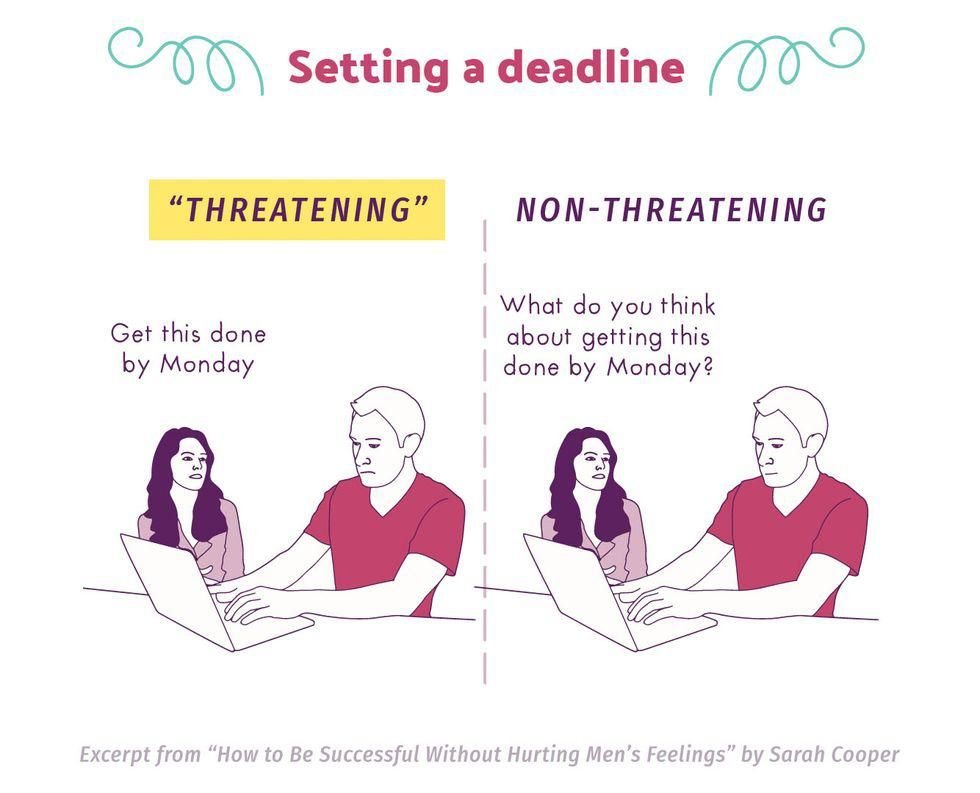
Encourage.
With permission from Sarah Cooper.
When setting a deadline, ask your coworker what he thinks of doing something, instead of just asking him to get it done. This makes him feel less like you're telling him what to do and more like you care about his opinions.
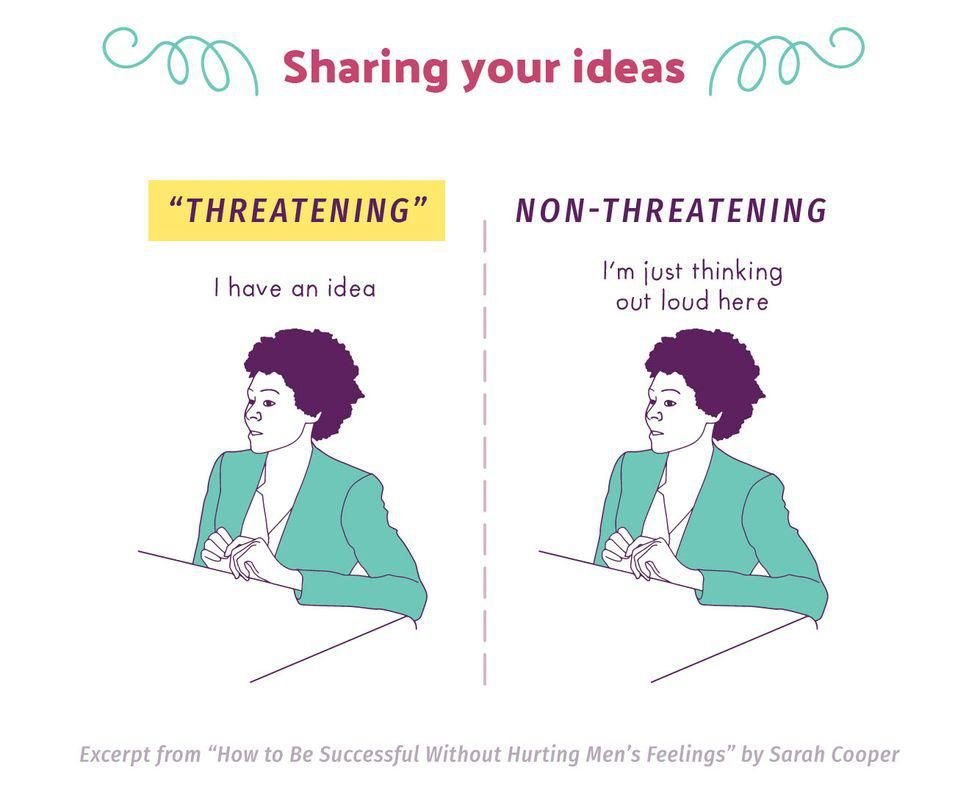
Sharing ideas.
With permission from Sarah Cooper.
When sharing your ideas, overconfidence is a killer. You don't want your male coworkers to think you're getting all uppity. Instead, downplay your ideas as just "thinking out loud," "throwing something out there," or sharing something "dumb," "random," or "crazy."
Email requests.
With permission from Sarah Cooper.
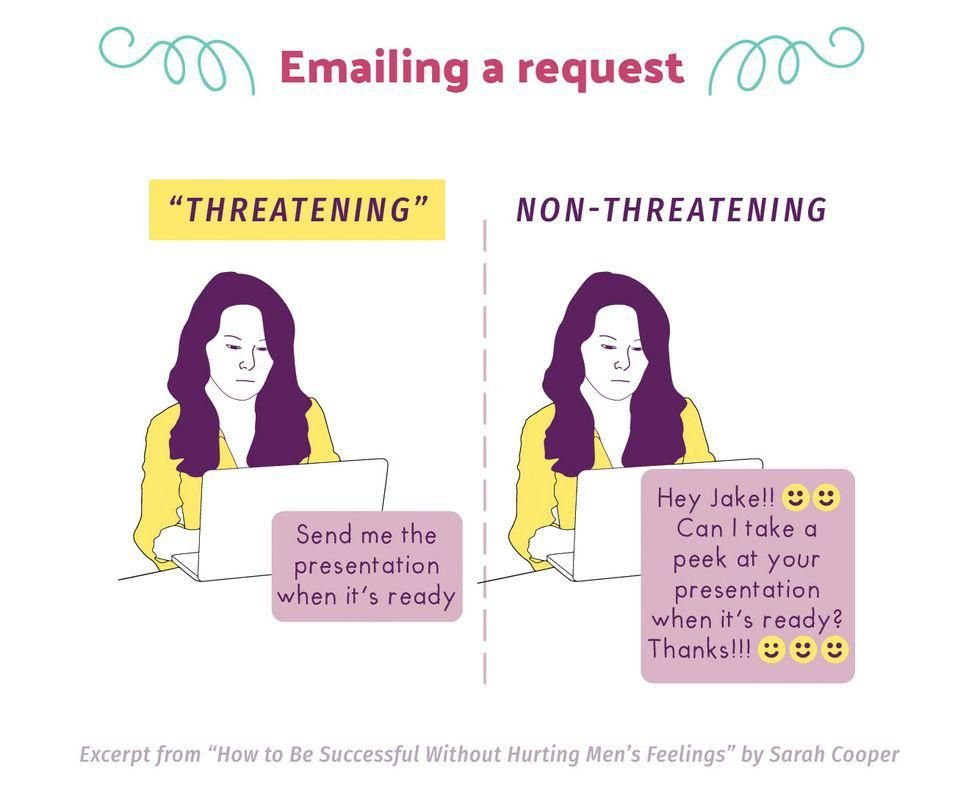
Pepper your emails with exclamation marks and emojis so you don't come across as too clear or direct. Your lack of efficient communication will make you seem more approachable.
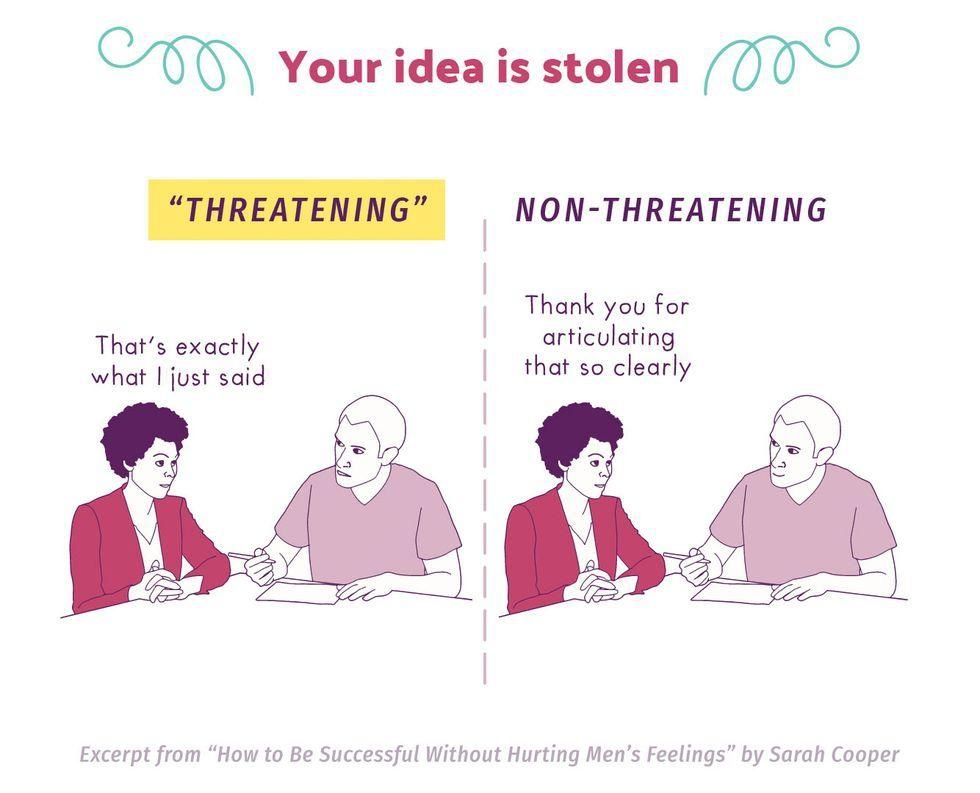
Idea sharing.
With permission from Sarah Cooper.
If a male coworker steals your idea in a meeting, thank him for it. Give him kudos for how he explained your idea so clearly. And let's face it, no one might've ever heard it if he hadn't repeated it.
Sexism.
With permission from Sarah Cooper.
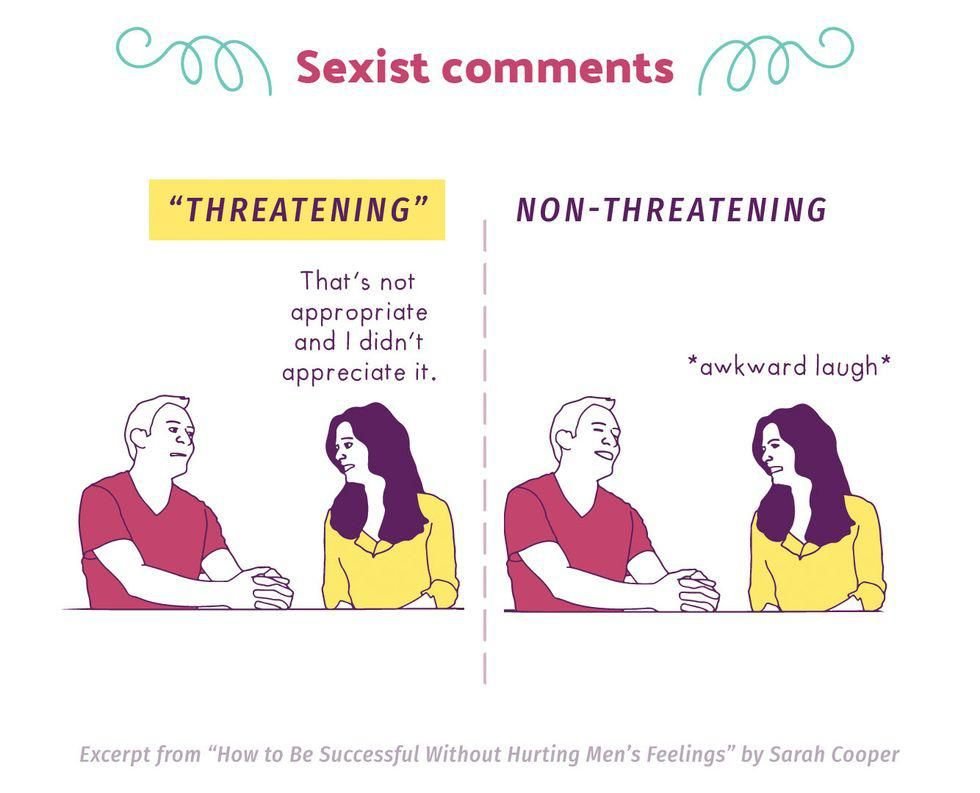
When you hear a sexist comment, the awkward laugh is key. Practice your awkward laugh at home, with your friends and family, and in the mirror. Make sure you sound truly delighted even as your soul is dying inside.
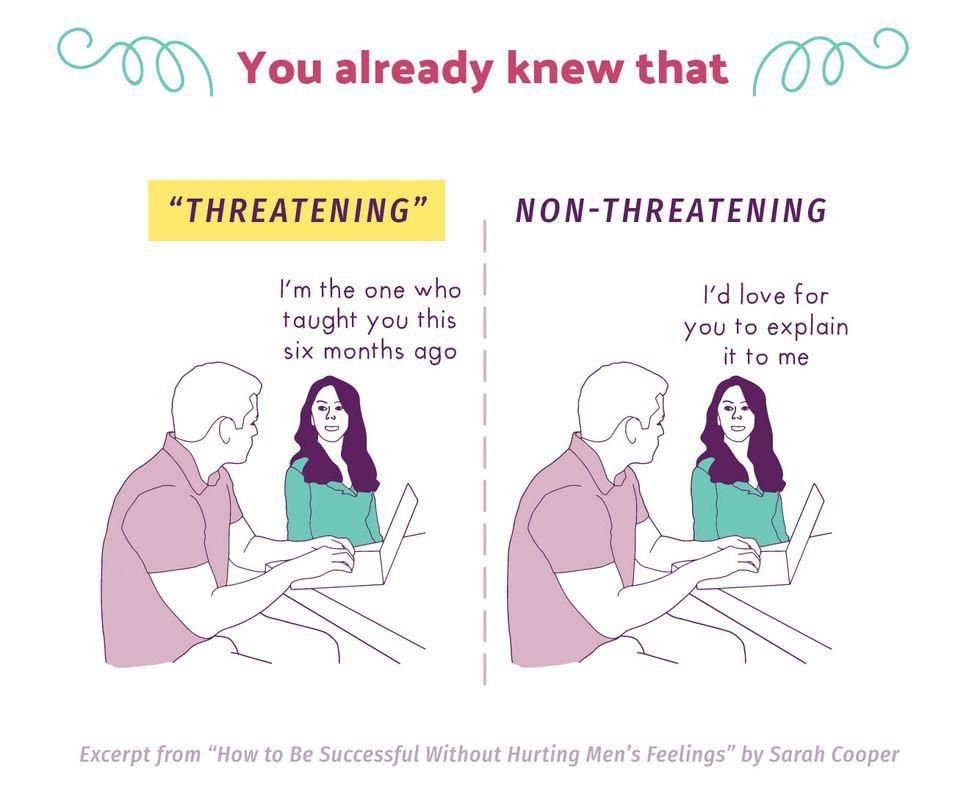
Mansplain.
With permission from Sarah Cooper.
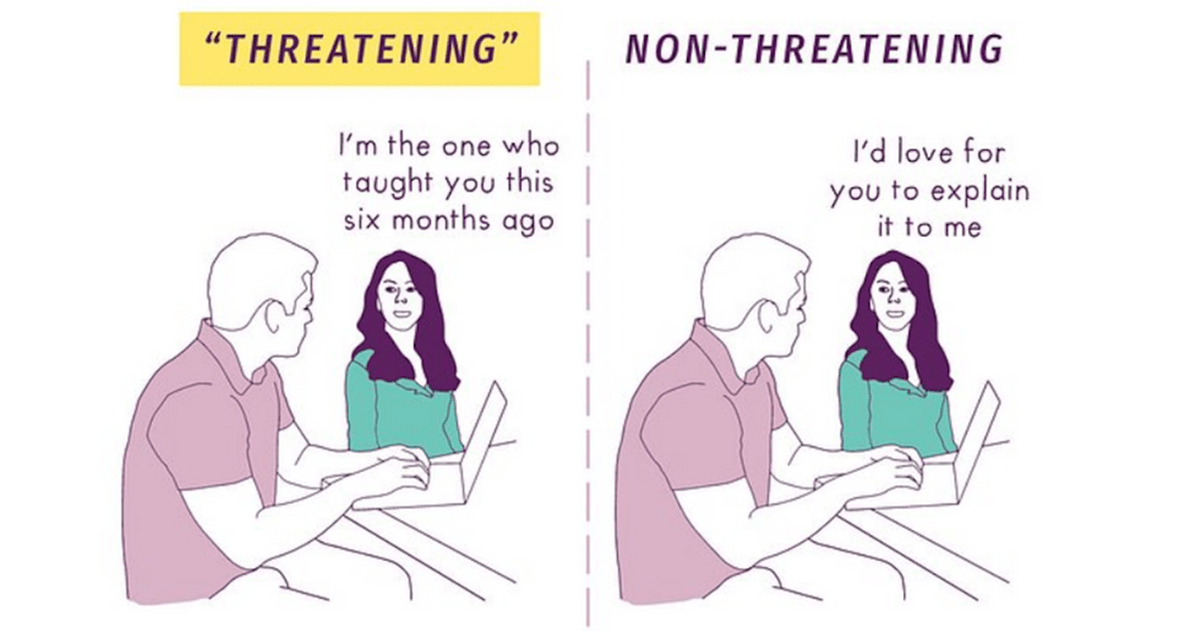
Men love explaining things. But when he's explaining something and you already know that, it might be tempting to say, "I already know that." Instead, have him explain it to you over and over again. It will make him feel useful and will give you some time to think about how to avoid him in the future.
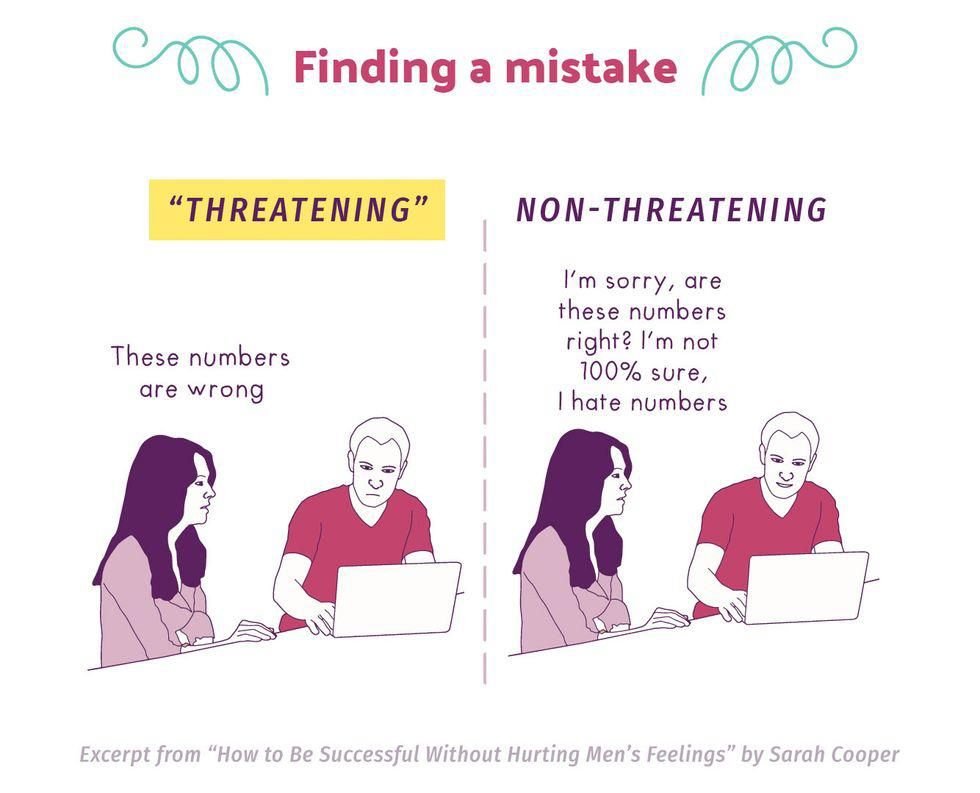
Mistakes.
With permission from Sarah Cooper.
Pointing out a mistake is always risky so it's important to always apologize for noticing the mistake and then make sure that no one thinks you're too sure about it. People will appreciate your "hey what do I know?!" sensibilities.
Promotions.
With permission from Sarah Cooper.
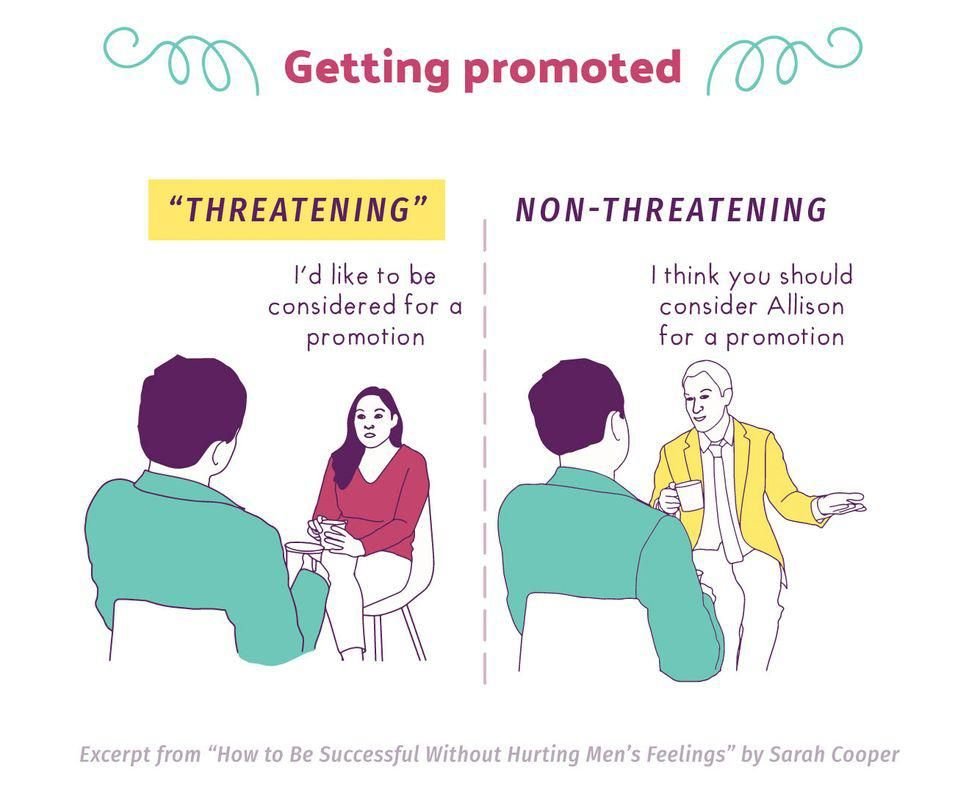
Asking your manager for a promotion could make you seem power- hungry, opportunistic, and transparent. Instead, ask a male coworker to vouch for you. Have your coworker tell your manager you'd be great for the role even though you don't really want it. This will make you more likely to actually get that promotion.
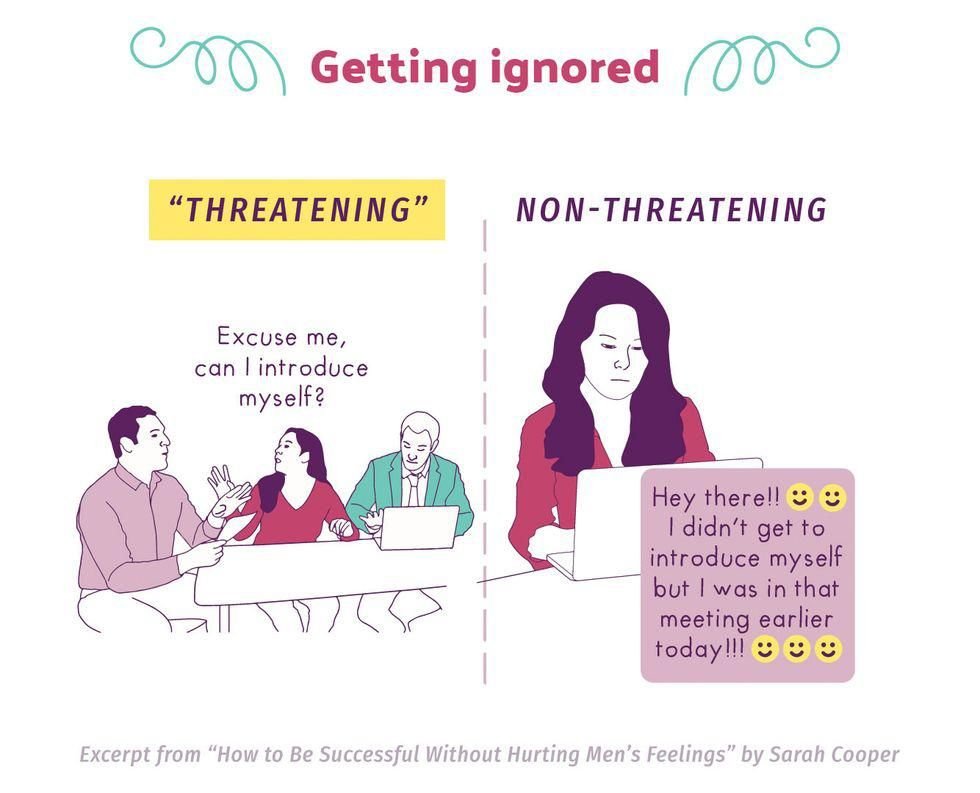
Rude.
With permission from Sarah Cooper.
Sometimes not everyone is properly introduced at the start of a meeting. Don't take it personally even if it happens to you all the time, and certainly don't stop the meeting from moving forward to introduce yourself. Sending a quick note afterward is the best way to introduce yourself without seeming too self-important.
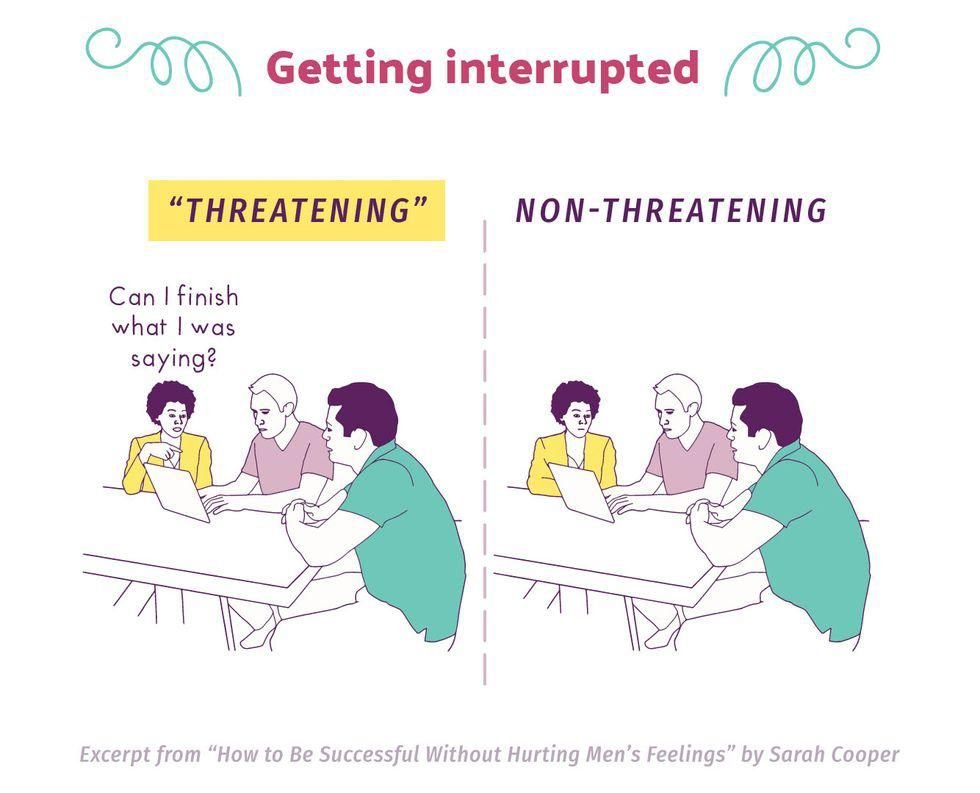
Interruptions.
With permission from Sarah Cooper.
When you get interrupted, you might be tempted to just continue talking or even ask if you can finish what you were saying. This is treacherous territory. Instead, simply stop talking. The path of least resistance is silence.
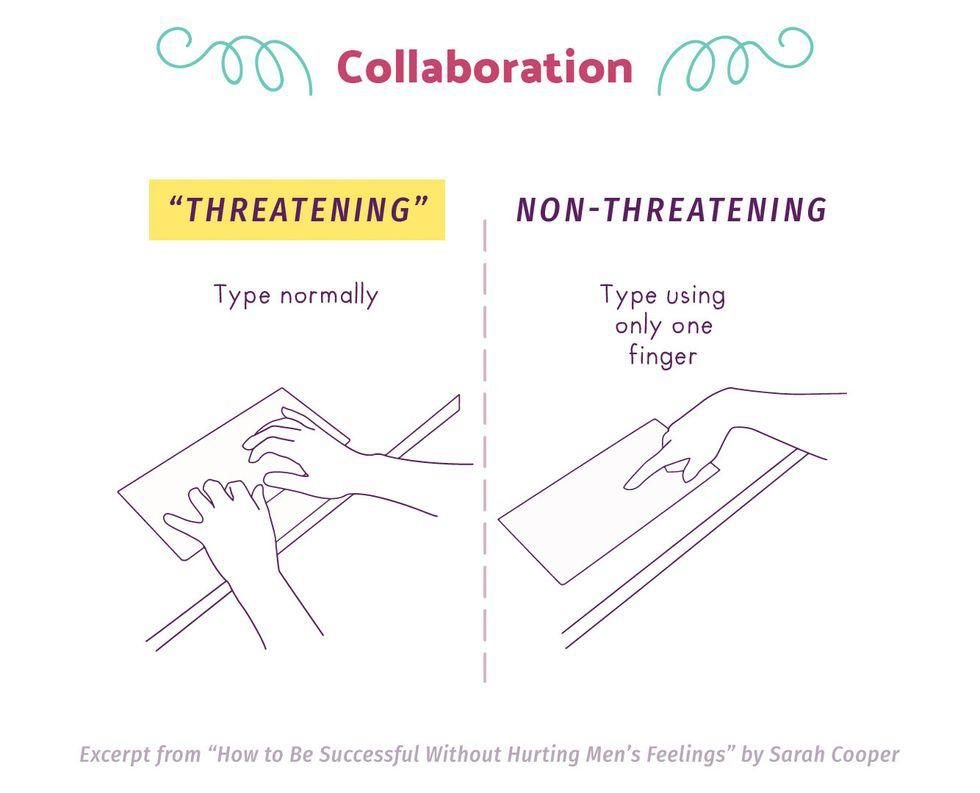
Collaboration.
With permission from Sarah Cooper.
When collaborating with a man, type using only one finger. Skill and speed are very off-putting.
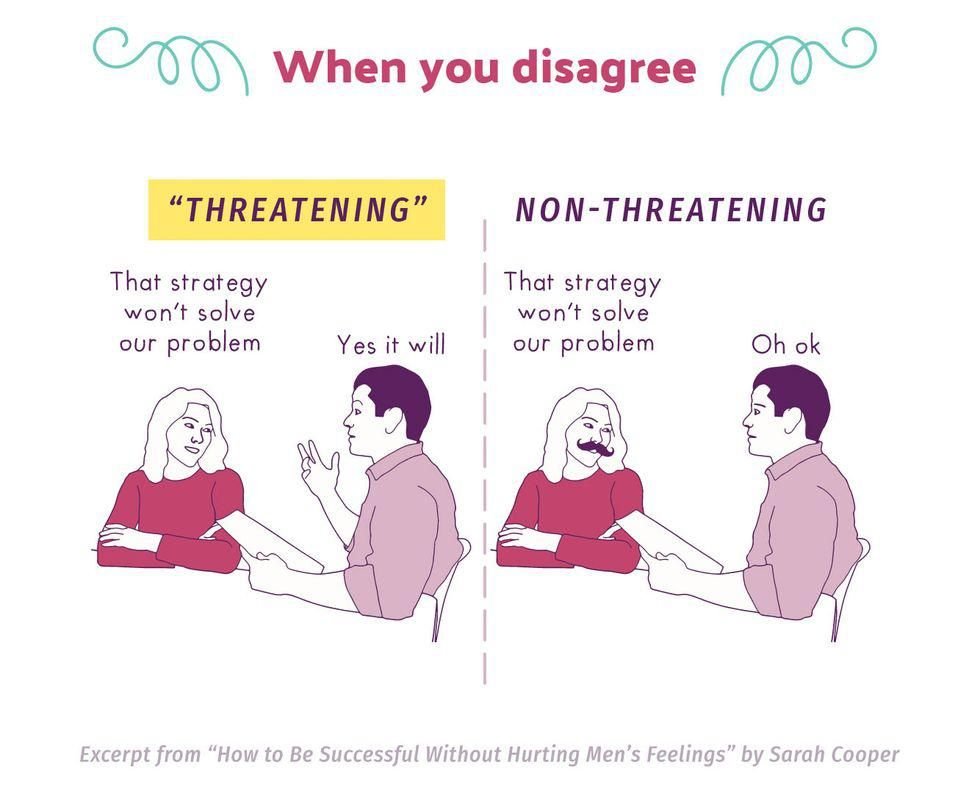
Disagreements.
With permission from Sarah Cooper.
When all else fails, wear a mustache so everyone sees you as more man-like. This will cancel out any need to change your leadership style. In fact, you may even get a quick promotion!

In conclusion...
With permission from Sarah Cooper.
Many women have discovered the secret power of non-threatening leadership. We call it a "secret power" because no one else actually knows about it. We keep our power hidden within ourselves so that it doesn't frighten and intimidate others. That's what makes us the true unsung heroes of the corporate world.
About the Author: Sarah Cooper
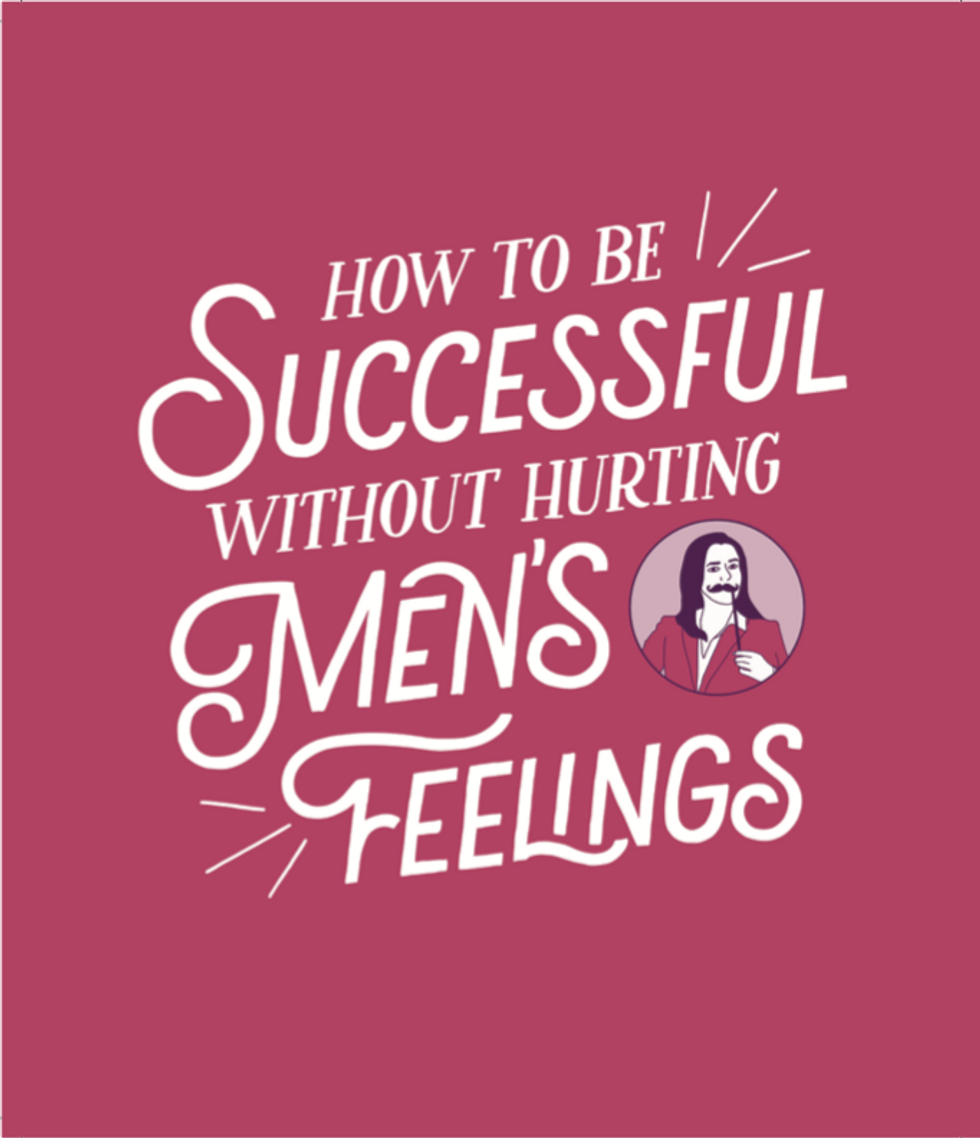
Sarah Cooper is a writer, comedian, and author of 100 Tricks to Appear Smart in Meetings. Her new book, How to Be Successful Without Hurting Men's Feelings, is out now.
The comedic book cover.
With permission from Sarah Cooper.
A satirical take on what it's like to be a woman in the workplace, Cooper draws from her experience as a former executive in the world of tech (she's a former Googler and Yahooer). You can get the book here.
This article was originally published on 3.25.19