upworthy
Add Upworthy to your Google News feed.
Google News Button
Joy

7 things Black people want their well-meaning white friends to know

"You, white friend, need to speak up and say something when I can't."

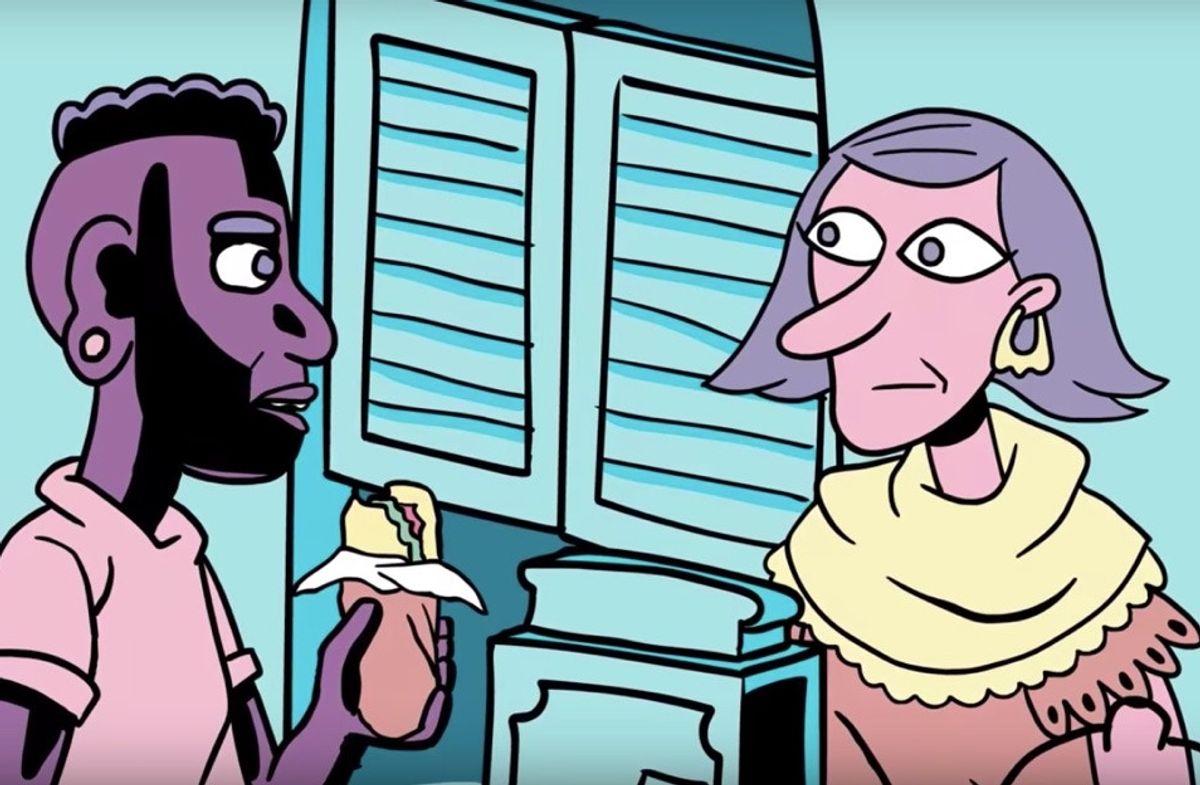
comic of a Black man holding a sandwich speaking to a white woman

Growing up black in a white neighborhood.

I grew up Black in a very white neighborhood in a very white city in a very white state.

As such, I am a lot of people's only Black friend.

Being the only Black friend is a gift and a curse. I am Black and I love having friends. But I am also, at any given moment, expected to be a translator, an ambassador, a history teacher, and/or a walking, talking invitation into "I am not racist" territory. It's a lot to handle. See what I mean about that curse?

So when I saw the animated short-film "Your Black Friend," I felt so seen. Clearly, I am not alone.
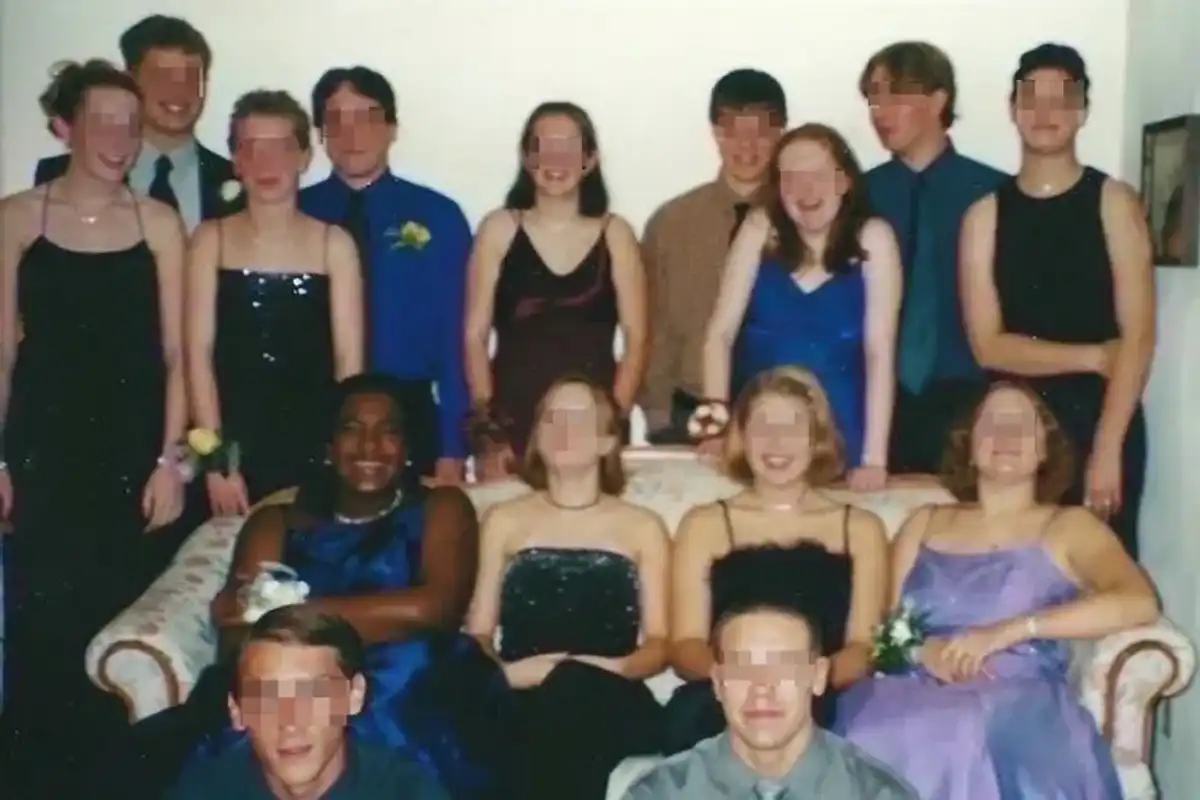
group of teens taking a photo before a dance. all eyes are pixelated except the author's

Don't get me wrong, my friends are awesome, just very white. Here are me and a few of my pixelated pals before a high school dance in the early 2000s.

Photo courtesy of the author.

The film, which was written, designed, and narrated by Ben Passmore and is based on his mini-comic of the same name, is a brilliant, refreshing way to examine whiteness and racism. The comic and animated short are an open-letter from "your Black friend" to you, their well-meaning white friend, about bias, alienation, and what it means to be a good ally and friend.

It's funny, honest, and heartbreaking in equal measure. And speaking from personal experience, it captures the experience of being a Black friend to white people pretty much perfectly.

So if you're a "woke" friend and ally, here are some things your Black friend wants you to know.

1. You're going to have to get uncomfortable.
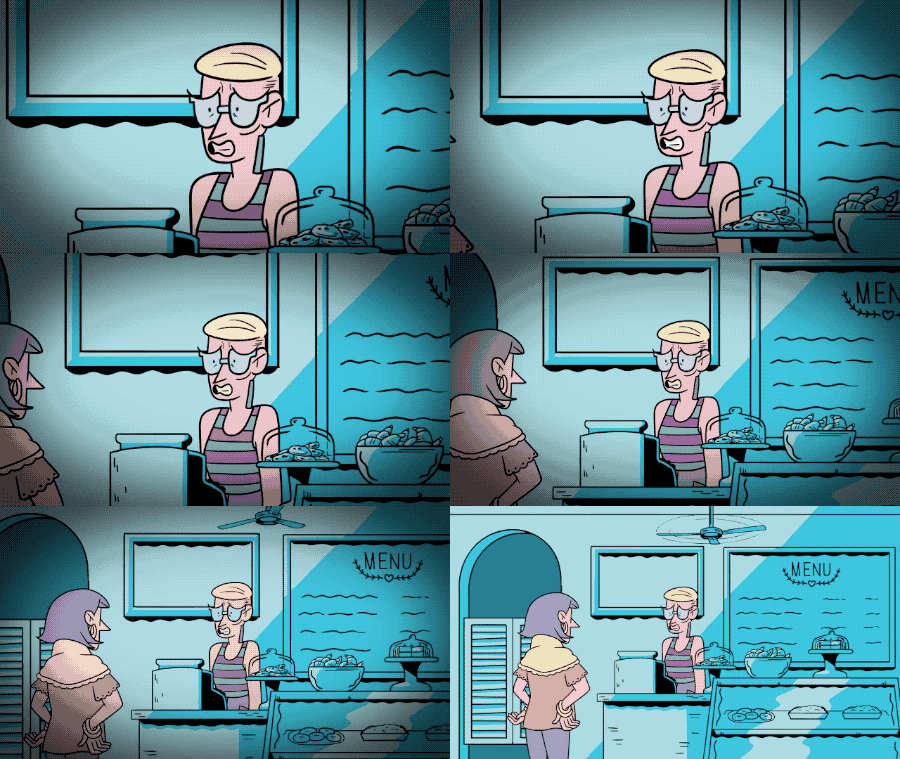
illustration of a white barista looking uncomfortable in front of a customer

Animation depicting a racist joke that creates an awkward and upsetting space.

Silver Sprocket/YouTube

It could be something as obvious and upsetting as a racist joke. Or something as "benign" as your aunt suggesting you cross the street when she sees a group of Black kids walking by. But either way, if you want to be a good friend and a real ally, you're going to have to speak up. You're going to have to have those tough conversations with people you care about.

It's not easy to confront strangers or people you love, but if you don't do it, you are part of the problem. Sitting out isn't an option. No one said being an ally is easy.

2. "Your Black friend would like to say something to the racist lady, but doesn't want to appear to be that 'angry Black man.'"
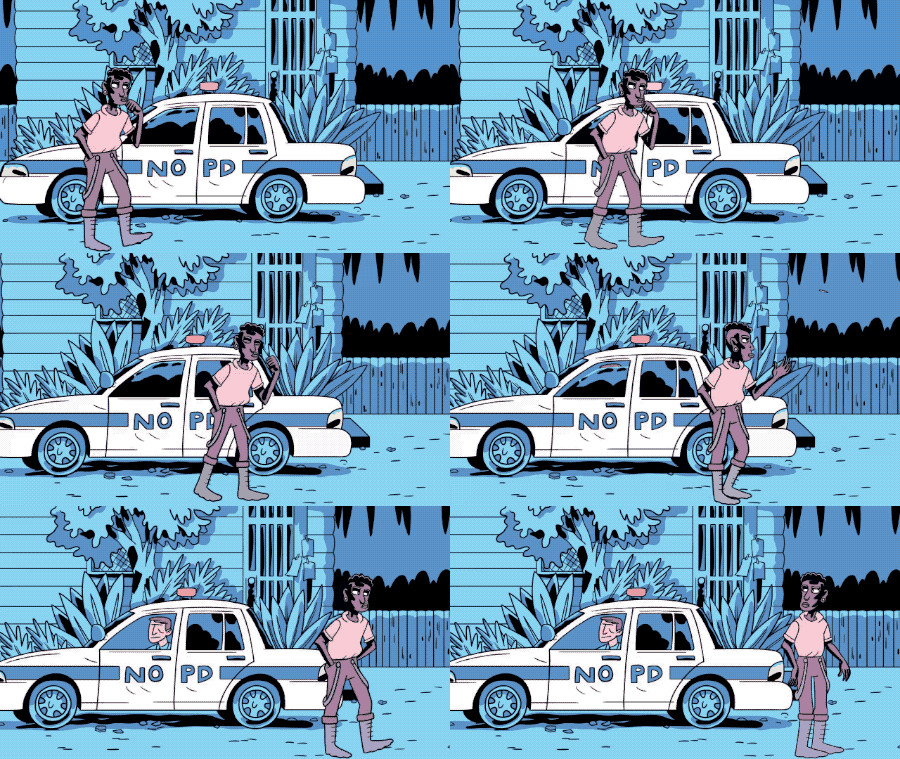
illustration of Black man walking by police car, littering, and the sirens going off

Biased situations that play out uncomfortably true.

Silver Sprocket/YouTube

"He knows this type of person expects that from him, and he will lose before he begins," Passmore says.

Black people can't always react or respond the way we want to. When I am followed in a department store, pulled over for no reason, or stared at while picking up dinner at the fancy grocery store, I can't stop what I'm doing and yell, "YES, I AM BLACK. NO, I AM NOT A CRIMINAL YOU SMALL-MINDED, BIASED ASSHOLES." Trust me, I want to. But especially when police are involved, I have to be calm, respectful, and obedient.

That's where you come in. You, white friend, need to speak up and say something when I can't. If you are not at risk, nor considered a threat, you have a certain amount of privilege in these situations. Use it to demand answers, speak to supervisors, or if things really get dicey, pull out your phone and hit record.

3. We are constantly monitoring our surroundings and adjusting our clothes, hair, speed, and speech to maintain white comfort.
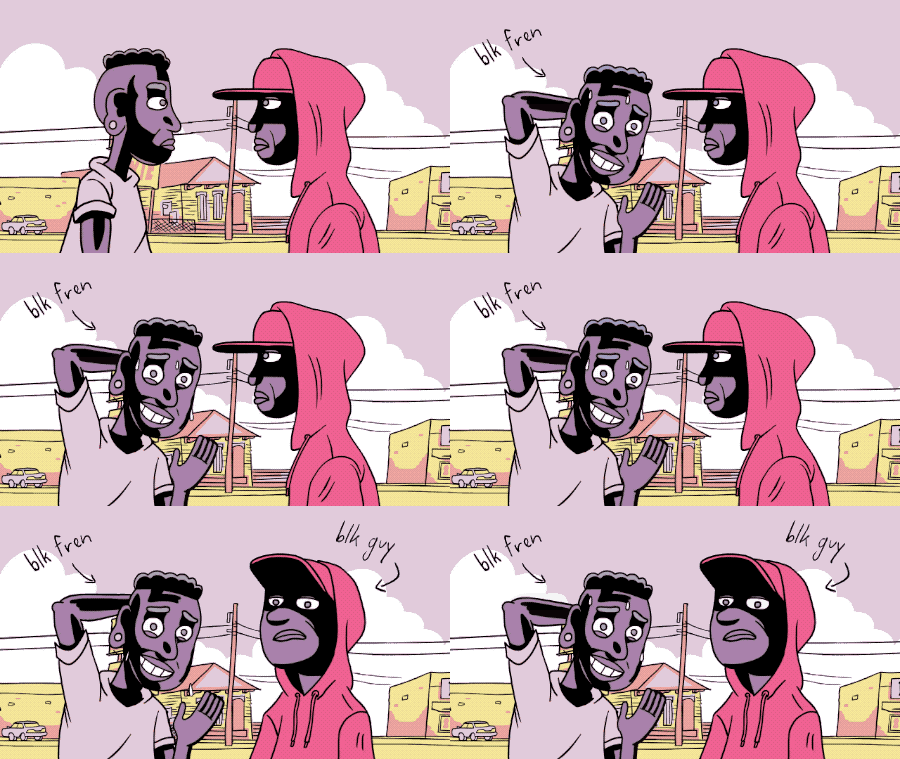
illustration of two Black men talking; one looks anxious and one looks nonplussed

Friends may not realize the challenges in avoiding unwarranted confrontation.

Silver Sprocket/YouTube

We don't like it, but one small choice—like deciding whether or not to wear a hood, or the speed at which we reach into our glove box—can be the difference between life and death.

When I am in a parking garage and walking behind a white woman, I intentionally cough or walk a little louder so she turns and notices me.

Why? Because when I don't, that same white woman will often clutch her purse and occasionally let out an audible gasp as I pass her. This is something my white friends likely don't realize I have to do. Some of them may even be the pearl-clutchers in the parking lot.

But to maintain white comfort and to avoid having the cops called on us, we often have to tamp down clothes, modify our speech and volume, even do our hair differently. We have to have "the talk" with our kids about how the world sees them, and how to act in order to make sure they come home alive.

No, it's not fair. No, we don't like it. But so long as this country and its institutions are built on a solid foundation of white supremacy, it's a grim reality. You need to know that, and take it up with your fellow white people about how to dismantle it.

4. "Your Black friend wishes you'd play more than Beyoncé. There are more Black performers than Beyoncé."
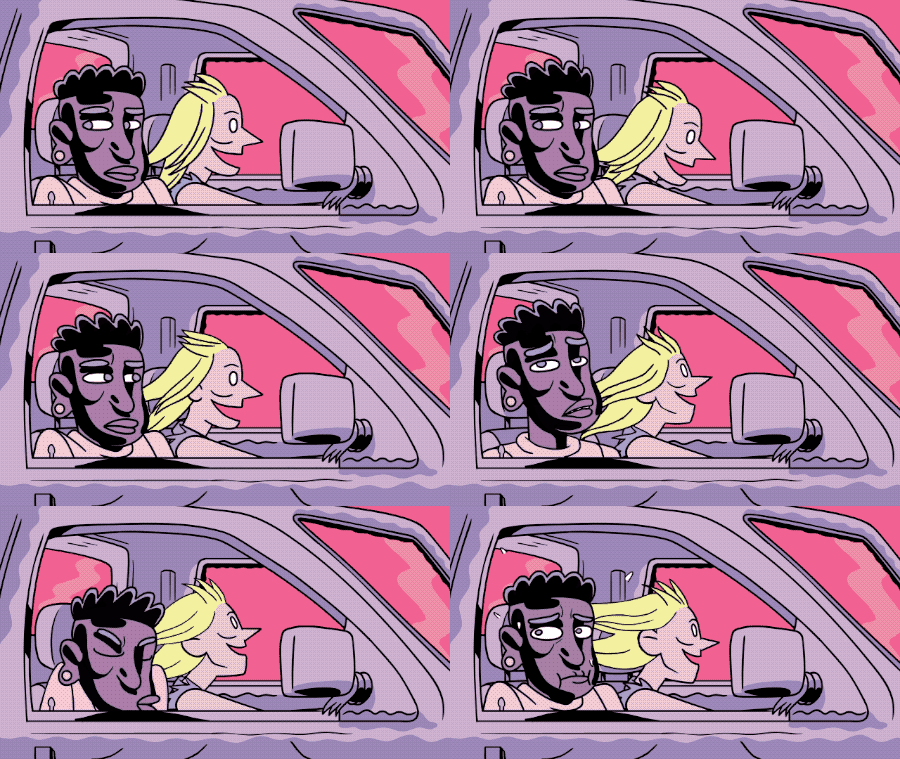
comig gif of a Black man looking uncomfortable in the car with a white friend

Taste isn't only derived from race and culture.

Silver Sprocket/YouTube

Lemonade was awesome. There is no denying it. And yes, I love seeing her iconic looks on Instagram too. But there is more to Black music and Black art than Beyoncé. Dip a toe outside your comfort zone and try new new artists and genres you may not be familiar with. Go listen, see it, and experience it for yourself.

And while we're here, you can't say the n-word when you sing along. Nope. You just can't.

5. Speaking of which, performative Blackness is really uncomfortable.
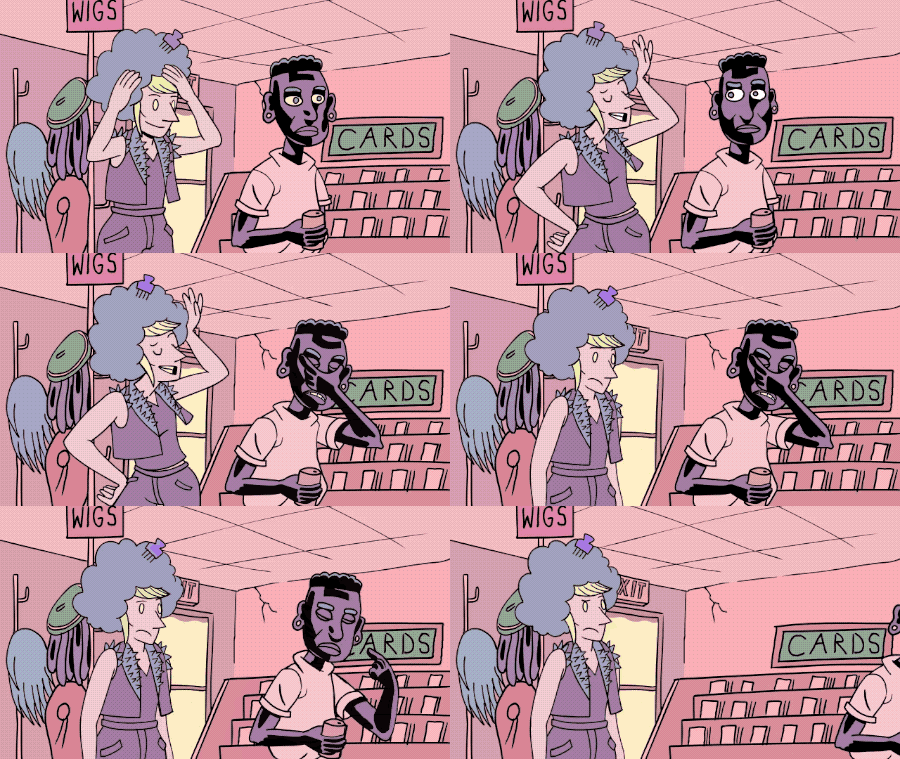
comic of a white woman wearing an afro wig to the chagrin of their Black friend

Sometimes jokes and misguided appreciation is hurtful.

Silver Sprocket/YouTube

When you wear that braided wig on Halloween, or use your "blaccent" when you're around me or other Black people, it hurts. It's not cute or charming, and it definitely doesn't make you seem cool.

Our culture and heritage are not costumes you can slide on and off at your convenience. We don't get to be Black only when it suits us. Neither do you.

6. "Your Black friend feels like a man without a country."

illustration of man walking up to a storefront that says "Hot Po-Boys"

Can we enjoy each others company without pointing out our differences?

Silver Sprocket/YouTube

Having white friends and seeming to "fit in" with the majority can feel really alienating. You can feel too "white" for Black people, and too "Black" for white people when all you want to do is find people to eat pizza with. As Passmore wrote, "He is lost in this contradiction, and held responsible for it."

7. We would love it if we could stop talking about our anxiety and frustrations regarding racism. But right now, that's impossible.

Our concerns are urgent and real. We're getting subpar health care. We're disenfranchised. We're over-policed. We're thrown in jail. We're killed by people sworn to protect us. It's exhausting, but we have to keep talking about it. So do you.

We can't be expected to dismantle white supremacy on our own.

Our white friends and allies need to step up and gather their people. Have the tough conversations. Speak up when you see racism, discrimination, and microaggressions. The time to talk about it is done. Be about it, or find yourself a new Black friend.

Watch "Your Black Friend" in full and check out Passmore's book, Your Black Friend And Other Strangers.


This article was written by Erin Canty and originally published on seven years ago.

dance, motherhood, mommy daughter dance, mother daughter relationship, parenting, wholesome
Umi4ika/Youtube

Svetlana Putintseva with her daughter Masha.

In 2005 at only 18 years old, Russian rhythmic gymnast Svetlana Putintseva became a world champion, after which she retired and eventually became a mom. Then, in 2011, Putintseva came out of retirement for one special Gala performance.

Little did anyone know that her then two-year-old daughter named Masha would be the key to making that performance so special.


As the story goes, the young child refused to leave her side that night. But rather than stopping the performance, Putintseva did what so many incredible moms do: she masterfully held space for two different identities.

As we see in the video below, Putintseva simply brought Masha onto the dance floor and incorporated her into the routine—holding and comforting her at times, performing impressive moves while she ran around at others…letting it all become a lively, endearing interaction rather than a rote routine. It became something really touching:

Watch:

Now, a bit of fact-checking as this video has once again started going viral. Despite what many captions say, Putintseva‘s daughter was likely always a planned part of the performance (the tiny leotard is a bit of a giveaway). But that doesn’t really take away from the message behind it: motherhood weaves another soul into one's identity, forever. And one of the biggest lessons it teaches is how to hold someone else steady, all while becoming ourselves.

Every day, moms are engaging in a similar type of “dance”: navigating through the world while guiding and nurturing their little ones. It probably doesn't always feel quite as graceful as what Putintseva put out, and, yet, it is just as beautiful.

dance, motherhood, mommy daughter dance, mother daughter relationship, parenting, wholesome A mother hugging her daughter.Photo credit: Canva

Maybe so many thought it was an improvised moment because improvising is a very real parent superpower. That’s certainly the takeaway we get from some of these lovely comments:

“You cannot control life but you can learn to dance with it. 🤍”

"This is beyond beautiful. 🥲"

“If this isn't a metaphor for motherhood. We improvise so much.”

“A mother’s unconditional love 🥹❤️ She just made my whole month.”

“I do this sometimes while deejaying. My daughter comes up so I hit the slicer and let her chop it up. A few chops and she is happy and goes about her business. 🥰”

“I can see my daughter doing this to me soon whenever I get up on stage on perform. She already stares long and hard at me whenever I am onnstage singing. She doesn't take her eyes off me. Sure she would be running up to stand with me when she starts walking 😂😂 i look forward to it tho”

“Sobbing 😭😭😭😭 As a dancer who hasn’t performed since having a kid, this inspires me in so many ways 🥹🥹 So beautiful and it’s clear that she admires her mom so much 🥰”

- YouTube www.youtube.com

Though not much is written on Putintseva following this performance, one blog post says that Masha has followed in her footsteps by getting into rhythmic gymnastics. Maybe it all started with this one performance. ❤️

sonder, feelings, life, humanity, human connection, psychology, beauty, mortality, universe

You might experience sonder when you look out a plane window or pass by an apartment building.

In the 1998 film The Truman Show, Jim Carrey's character gradually discovers that his entire life is a lie. The world around him is a television set, and everyone he knows—his friends, family, even his wife—are paid actors. He is the main character, and the entire universe of the show revolves around him.

Though most of us have never genuinely wondered whether we're living in an elaborate production like Truman (well, some have), it can sometimes feel that way. After all, in our own minds, we are the main characters of our own lives. Everyone else becomes a supporting character. When they're "off-screen," we can't say for certain what they're doing, and we tend to think about them only in terms of how their actions might affect us.


That's why the beautiful feeling known as "sonder" can be so profound. It's the strange sensation you get when staring out the window of an airplane, looking at the cars moving along the highway below, and realizing that each dot of light represents a vehicle with a human being inside it—maybe even an entire family. They're all on their way somewhere, perhaps to meet other people who are also living full, rich, complex lives you will never know about. Then, in the blink of an eye, they're gone forever, in a sense.

You might feel this when walking by an apartment building and gazing at the shadows moving behind lit windows, or at an airport, where you wonder where people are going and what their stories might be.

sonder, feelings, life, humanity, human connection, psychology, beauty, mortality, universe There are entire, rich, complex lives happening in those lit windows. Photo by Shalev Cohen on Unsplash

Sonder, explains content creator, software engineer, and writer Felecia Freely, is the sudden "realization that each random passerby is the main character of their own story, living a life just as vivid and complex as your own, while you are just an extra in the background."

Freely explains it beautifully in a now-viral Instagram reel:

"Imagine how big and all-encompassing your experience of your life is. And then imagine that every single person in traffic with you also has that. So does every person in the grocery store. And every person in the world."

It's a breathtaking realization. Of course, we all know this to be true in our minds, but sonder is when that understanding hits you in your body and becomes more than knowledge—it becomes a profound feeling.

Freely's video has received hundreds of thousands of views. Many commenters were surprised to learn there was an actual word for this hyper-specific feeling:

"OMFG THERES A WORD FOR THIS?! i've always wondered."

"I get it in traffic a lot. Just like, where are they all going"

"I get this feeling at the airport"

"Sonder happens when I go for drives down lonely roads in the middle of nowhere where I've never been & see a little house w/ cars & lites on. I wonder what they're like & what's goin on in their lives"

The term was coined around 2012 by writer John Koenig for his project, The Dictionary of Obscure Sorrows.

He writes that it comes from the French word sonder, which means "to plumb the depths." The term began as a neologism, an invented word meant to describe a universal feeling and fill a gap in the English language. But it has since caught on in wider usage and even appears in Merriam-Webster.

Some people describe sonder as a melancholy or even overwhelming feeling—of course, it does have a pretty sorrowful origin. Others, however, have learned to embrace it when it comes.

- YouTube www.youtube.com

Mitchell M. Handelsman writes for Psychology Today that he does not view sonder as a negative emotion. Quite the contrary:

"Sonder becomes even more important as I teach students who are different from me. Most of my students are different on at least some of almost every conceivable dimension—age (this difference grows every year!), gender, ambitions, test performance, grades, place of birth, religion, height, writing ability, intellectual prowess, political beliefs, academic experiences, hair color, sexual preference, family background, etc. Appreciating students' lives as rich, complex, and important may set the stage for greater understanding, relating, and learning."

Appreciating and leaning into feelings of sonder can help us grow our empathy for one another.

One commenter summed it up beautifully: "This used to terrify me but it now soothes me deeply and helps round out my compassion and wonder at the world."

Another said: "Honestly everyone says that this is a depressing reality, but I kinda feel comfort in it. The fact that every person you see all has their own lives means that there is always something good happening in the world, no matter how miserable it seems sometimes."

cats; pets; cat lovers; cat parents; cats on counters; cat butts, pets, animals, humor, funny, science

Do cat buttholes touch every surface they sit on? Science answers.

Cat owners are a special breed. Sometimes when dealing with feline friends, they have unique questions that even Google can't seem to answer. This is probably the sole reason cat forums exist, but in 2021, one kid who needed a 6th grade science project decided to skip the cat forums for answers and instead use the scientific method. Kaeden Henry, then a sixth grader, bravely pondered a question few (if any) have been brave enough to ask: do cat buttholes touch every surface they sit on?

Since cats do whatever the heck they want, training them not to jump on kitchen counters is a feat even Hercules struggles to complete. These fierce felines don't care if you're cooking dinner or trying to get comfy in bed. If they want to sit somewhere, they're going to do it. The thought of cat butts on that expensive Serta pillow designed to feel like you're sleeping on a cloud can gross people out, but thanks to Kaeden, you no longer have to wonder if the butthole itself is also making contact.


cats; pets; cat lovers; cat parents; cats on counters; cat butts, pets, animals, humor, funny, science The scientific method as it was meant to be used. Courtesy of Kerry Hyde

The curious sixth grader was homeschooled and well-versed in the scientific method thanks to his mother's PhD in animal behavior with a concentration in feline behavior. And, since they own cats, the science experiment was pretty straightforward (and directly impactful).

The experiment

To complete the experiment, Henry and his mom, Kerry Hyde, bought non-toxic lipstick and applied it to each of their cat's anuses. Then, the cats were given commands.

cats; pets; cat lovers; cat parents; cats on counters; cat butts, pets, animals, humor, funny, science What are you planning on doing with that lipstick?Courtesy of Kerry Hyde

"Non-toxic lipstick was applied to their bum-bums, they were then given a series of commands (sit, wait, lie down, and jump up. Side note: Both cats have been trained since kittenhood with a variety of commands, they also know how to high-five, spin around, and speak.), they were compensated with lots of praise, pets, and their favorite treats, and the lipstick was removed with a baby wipe once we collected our data in just under 10 minutes," Hyde wrote in a Facebook post.

The results? Turns out that, no, cat buttholes do not touch every surface cats sit on

Now, let's all take a collective sigh of relief while we go over the details. Kaeden's experiment covered long-haired, short-haired, and medium-haired cats (if your cat is hairless, you better stock up on Clorox wipes just in case).


"His results and general findings: Long and medium haired cat’s buttholes made NO contact with soft or hard surfaces at all. Short haired cats made NO contact on hard surfaces. But we did see evidence of a slight smear on the soft bedding surface. Conclusion, if you have a short haired cat and they may be lying on a pile of laundry, an unmade bed, or other soft uneven surface, then their butthole MAY touch those surfaces!" Hyde shares.

Now every curious cat owner can rest easy knowing that, as long as their cat has hair, their bare bottom balloon knot is not touching the majority of surfaces in their home.

Huzzah, science!

cats; pets; cat lovers; cat parents; cats on counters; cat butts, pets, animals, humor, funny, science You want me to sit on that?Courtesy of Kerry Hyde

The amusing experiment caught the Internet's attention. People laughed and commented, with one person writing, "This is probably the most useful information I’ve learned from a science fair project."

"Good to know!...I can now eat my sandwich left on the counter with confidence!" another writes.

cats; pets; cat lovers; cat parents; cats on counters; cat butts, pets, animals, humor, funny, science High five for an A+! Courtesy of Kerry Hyde

"A+++!!! Whew!! I am very grateful for your sciencing on this subject. My fears from walking in on my cat sitting on my laptop keyboard and subsequently being grossed out and cleaning furiously in a hyper-ocd manner have been somewhat allayed and now maybe I won’t have to use QUIIITE so many wipes." someone chimes in.

"Finally.. Someone answers the important questions!!"

The best part of the story? Even with her Ph.D. in animal behavior, specializing in feline behavior, Kerry learned something new. The power of science!

This article originally appeared last year. It has been updated.

discussion, debate, disagreement, conversation, communication, curiosity

How do you get someone to open their minds to another perspective?

The diversity of humanity means people won't always see eye to eye, and psychology tells us that people tend to double down when their views are challenged. When people are so deeply entrenched in their own perspectives they're refusing to entertain other viewpoints, what do we do?

Frequently, what we do falls into the "understandable but ineffective" category. When we disagree with someone because their opinion is based on falsehoods or inaccurate information, we may try to pound them with facts and statistics. Unfortunately, research shows that generally doesn't work. We might try to find different ways to explain our stance using logic and reasoning, but that rarely makes a dent, either. So often, we're left wondering how on Earth this person arrived at their perspective, especially if they reject facts and logic.


According to Stanford researchers, turning that wondering into an actual question might be the key.

discussion, debate, disagreement, conversation, communication, curiosity Questions are more effective than facts when it comes to disagreements.Photo credit: Canva

The power of "Tell me more."

Two studies examined how expressing interest in someone's view and asking them to elaborate on why they hold their opinion affected both parties engaged in a debate. They found that asking questions like, "Could you tell me more about that?” and ‘‘Why do you think that?" made the other person "view their debate counterpart more positively, behave more open-mindedly, and form more favorable inferences about other proponents of the counterpart’s views." Additionally, adding an expression of interest, such as, ‘‘But I was interested in what you’re saying. Can you tell me more about how come you think that?” not only made the counterpart more open to other viewpoints, but the questioner themselves developed more favorable attitudes toward the opposing viewpoint.

In other words, genuinely striving to understand another person's perspective by being curious and asking them to say more about how they came to their conclusions may help bridge seemingly insurmountable divides.

discussion, debate, disagreement, conversation, communication, curiosity Asking people to elaborate leads to more open-mindedness.Photo credit: Canva

Stanford isn't alone in these findings. A series of studies at the University of Haifa also found that high-quality listening helped lower people's prejudices, and that when people perceive a listener to be responsive, they tend to be more open-minded. Additionally, the perception that their attitude is the correct and valid one is reduced.

Why curiosity works

In some sense, these results may seem counterintuitive. We may assume that asking someone to elaborate on what they believe and why they believe it might just further entrench them in their views and opinions. But that's not what the research shows.

Dartmouth cognitive scientist Thalia Wheatley studies the role of curiosity in relationships and has found that being curious can help create consensus where there wasn't any before.

“[Curiosity] really creates common ground across brains, just by virtue of having the intellectual humility to say, ‘OK, I thought it was like this, but what do you think?’ And being willing to change your mind,” she said, according to the John Templeton Foundation.

discussion, debate, disagreement, conversation, communication, curiosity Curiosity can help people get closer to consensus. Photo credit: Canva

Of course, there may be certain opinions and perspectives that are too abhorrent or inhumane to entertain with curious questions, so it's not like "tell me more" is always the solution to an intractable divide. But even those with whom we vehemently disagree or those whose views we find offensive may respond to curiosity with more open-mindedness and willingness to change their view than if we simply argue with them. And isn't that the whole point?

Sometimes what's effective doesn't always line up with our emotional reactions to a disagreement, so engaging with curiosity might take some practice. It may also require us to rethink what formats for public discourse are the most impactful. Is ranting in a TikTok video or a tweet conducive to this shift in how we engage others? Is one-on-one or small group, in-person discussion a better forum for curious engagement? These are important things to consider if our goal is not to merely state our case and make our voice heard but to actually help open people's minds and remain open-minded in our own lives as well.

Learning

Gen Z job seekers are bringing their parents to interviews. A career coach explains the new trend.

77 percent of Gen Z job applicants surveyed admit to bringing a parent to the interview.

Gen Z; Gen Z jobs; job seeking; job hunting; unemployment; Gen Z bringing parents; parents at interviews

A woman being interviewed for a job.

The stress of job hunting crosses generational lines, but Gen Z is doing things a bit differently. Most of Gen Z is either just entering adulthood or has been there for some time. They are the first generation not to grow up with many analog developmental milestones, such as answering a house phone or asking strangers for help reading a map. These are all things that help develop social skills that can be used in other settings.

A recent survey from Resumetemplates.com reveals a shocking trend. According to the resume-building website, of the 1,000 job seekers aged 18-23 surveyed, "77% say they have brought a parent to a job interview when they were job searching. About 13% say they always did, and 24% say they often did."


The idea of bringing a parent to an interview may seem laughably outrageous to older generations, but there are a few things to consider before the giggling sets in. Young adults have long relied on their parents for guidance as they enter the adult world, and this is true of every generation. Parents are often called on for help with locating first apartments, learning how to turn on utilities, figuring out health insurance plans, and more.

Gen Z; Gen Z jobs; job seeking; job hunting; unemployment; Gen Z bringing parents; parents at interviews A business meeting in a modern office setting.Photo credit: Canva

Expecting parents or a trusted adult to help with new life milestones isn't unheard of, but having a parent attend a job interview seems to baffle experts.

Julia Toothacre, chief career strategist at Resumetemplates.com, tells CBS Miami, "I can't imagine that most employers are happy about it. I think that it really shows a lack of maturity in the kids, in the Gen Zers that are doing this." Toothacre added that while some smaller organizations may not see an issue with it, she does not believe it is the norm.

In response to the survey, Bryan Golod, an award-winning job search coach, sees the results differently. Rather than piling on or dunking on a generation still trying to figure out adulthood, he offers a logical explanation for the phenomenon.

In a LinkedIn post, Golod shares:

"The internet is roasting this generation for lacking independence. But here's what everyone's missing: This isn't a Gen Z problem. It's a symptom of a broken system that never taught anyone how interviews actually work. Most professionals (regardless of age) have no idea how to interview effectively. I've worked with 50-year-olds who couldn't land a single offer after 30 interviews. I've coached VPs of HR who could help others but couldn't help themselves. Interview skills aren't taught in school, at work, or by parents. They're learned through trial, error, and usually a lot of rejection. The real issue isn't Gen Z bringing parents to interviews."

The job search coach explains that employers often no longer train managers on how to conduct interviews or what to look for when interviewing candidates. He also notes that many job seekers expect their experience and competence to speak for themselves, but that does not always translate well in an interview setting. Golod encourages people to ask themselves if they know how to predictably turn interviews into job offers before mocking Gen Z adults.

Gen Z; Gen Z jobs; job seeking; job hunting; unemployment; Gen Z bringing parents; parents at interviews A successful meeting with a warm handshake.Photo credit: Canva

"Most don't. And that's not their fault… Nobody taught them. Interview skills are learnable. The professionals landing multiple offers with significant salary increases? They learned the rules of the game," Golod explains.

He adds that what truly matters in interviews is "not your credentials. Not your resume. Not even your qualifications. It's your ability to connect on a personal level and create a memorable experience. People bring you in based on data. They hire you based on emotion."

Maybe some Gen Zers are doing it wrong by traditional standards, but just like riding a bike, unless someone takes the time to teach you, you will never truly learn. Otherwise, you are left with scraped knees and bruises while you try to teach yourself.