Christmas shopping is the main event of the holiday season, and for Gen Xers (those born between 1965-1980), hitting the local mall to get gifts was the ultimate experience.
Back in the 1980s, malls were filled with people hustling and bustling at the holidays, and during Christmastime, malls were decorated to the nines with over-the-top holiday decor to welcome shoppers.
On Reddit, Gen Xers got nostalgic about Christmas shopping at the mall during the ’80s. One Gen Xer noted, “I’m sorry for those of you who never got to experience the joy of a mall during Christmas in the 1980s. It was a magical time.”
Gen Xers described the overall ambiance and how malls today can’t compare. “Every store in the mall was open. The center hall was stuffed with kiosks and the occasional new car. Every square inch was fully decked out for Christmas. Now our mall looks like a setting for a horror movie,” one commented.
A fellow Gen Xer added, “I remember Christmas shopping all afternoon, grabbing dinner, and then waiting in line to see Rocky IV, all at the mall. Malls were so alive back then. It didn’t even feel like Christmas until you had seen the beautifully decorated, bustling shopping mall.”
Gen Xers agreed that department stores really went all-out. “Marshall Field’s and Carson Pirie Scott (Carson’s) in Chicago had Christmas window displays and the decorations inside FELT like Christmas. Trees, garlands, ornaments covered the store. They also sold hot chocolate inside. We went nearly every year when I was a kid. Streets were crowded and if a window was really good, it almost had a line,” one shared.
Stores themselves were also different. “I just miss being able to buy stuff and they would put it in a gift box with tissue paper. I’m not even talking about the gift wrap counter. Just any store if you said it was a gift, would box it for you,” another Gen Xer noted.
Others discussed what it was like to battle the crowds. “I remember early to mid 80s, the mall was packed shoulder-to-shoulder with shoppers during the holidays – especially after 5pm to when the mall closed at 9pm,” one Gen Xer wrote.
Another noted, “I remember not even being able to get in the mall because every parking space was full and the traffic at every red light was backed up for half a mile. Then you get to the Food Court and everything is packed. You’re standing in a 15 person deep line for a piece of pizza, if you’re lucky. Most of the time my parents were like, ‘we’ll just eat when we get out of here’.”
Although some Gen Xers prefer online shopping these days, many still miss Christmas at the mall. “I love being able to shop via the internet… But I will be damned if I don’t miss the Christmas decors and all the people walking around just enjoying their consumerism being on full display. It was super fun as a kid to run in between all the shops,” one shared.
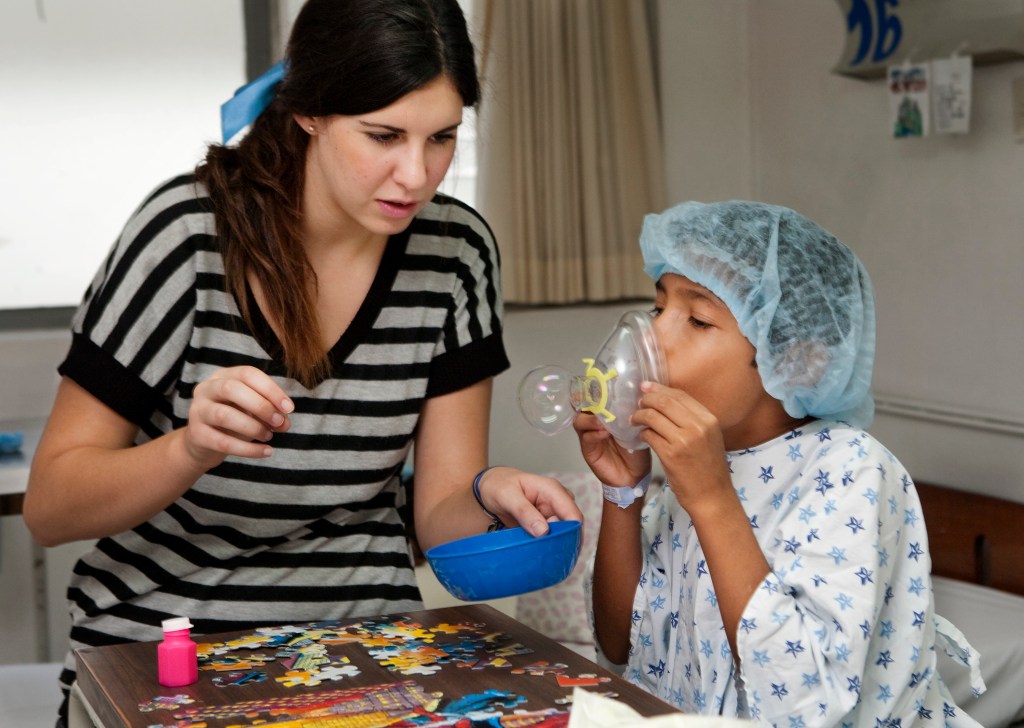
An Operation Smile volunteer reverses an oxygen mask so a child with a cleft condition can blow a bubble for the first time in Guadalajara, Mexico. (Operation Smile Photos)
For thousands of children born with cleft conditions, Operation Smile provides simple, playful tools—like bubbles—to strengthen the skills they need to speak and thrive.
While a bottle of bubbles might seem out of place in a hospital setting, you might be surprised to learn that, for thousands of children around the world born with cleft lip and palate, they can be a helpful tool in comprehensive cleft care. Lilia, who was born with cleft lip and palate in 2020, is one of the many patients who received this care.
As a toddler, Lilia underwent two surgeries to treat cleft lip and palate with Operation Smile’s surgical program in Puebla, Mexico. Because of Operation Smile’s comprehensive care, it wasn’t long before her personality transformed: Lilia went from a quiet and withdrawn toddler to an exuberant, curious explorer, babbling, expressing herself with a variety of sounds, and engaging with others like any child her age.
Lilia is now a healthy five-year-old, with the same cheerful attitude and boundless energy. Her progress is the result of care at every level, from surgery to speech therapy to ongoing support at home—but it’s also evidence that small, sustained interventions throughout it all can make a meaningful difference.
Lilia at age 1, before surgery, and at age 5, 4 years post-surgery
Cleft Conditions: A Global Problem
Since 1982, Operation Smile has provided cleft lip and cleft palate surgeries to more than 500,000 patients worldwide with the help of generous volunteers and donors. Cleft conditions are congenital conditions, meaning they are present at birth. With cleft lip and palate, the lip or the roof of the mouth do not form fully during fetal development. Cleft conditions put children at risk for malnutrition and poor weight gain, since their facial structure can make feeding challenging. But cleft conditions can have an enormous social impact as well: Common difficulties with speech can leave kids socially isolated and unable to meet the same developmental milestones as their peers.
Surgery is a vital step in treating cleft conditions, but it’s also just one part of a much larger solution. Organizations like Operation Smile emphasize the importance of multi-disciplinary teams that provide comprehensive, long-term care to patients across many years. This approach, which includes oral care, speech therapy, nutritional support, and psychosocial care, not only aids in physical recovery from surgery but also helps children develop the skills and confidence to eat easily, speak clearly, and engage in everyday life. This ensures that each patient receives the full range of support they need to thrive.
Marie, 11 months, with her mother at Operation Smile Madagascar before her cleft surgery (Operation Smile Photos)
A Playful (and Powerful) Solution
Throughout a patient’s care, simple tools like bubbles can play a meaningful role from start to finish.
Immediately before surgery, children are often in a new and unfamiliar environment far from home, some of them experiencing a hospital setting for the first time. When care providers or loved ones blow bubbles, it’s a simple yet effective technique: Not only are the children soothed and distracted, the bubbles also help create a sense of joy and playfulness that eases their anxiety.
Milagros Rojas, a volunteer speech therapist in Peru, using bubbles in a screening with a patient. (Operation Smile Photos)
In speech therapy, bubbles can take on an even more important role. Blowing bubbles requires controlled airflow, as well as the ability to form a rounded “O” shape with the lips, which are skills that children with cleft conditions may struggle to develop. Practicing these skills with bubbles allows children to gently strengthen their facial muscles, improve breath control, and support the motor skills needed for speech development. Beyond that, blowing bubbles can help kids connect with their parents or providers in a way that’s playful, comforting, and accessible even for very young patients.
Finally, bubbles often follow patients with cleft conditions home in the “smile bags” that each patient receives when the surgical procedure is finished. Smile bags, which help continue speech therapy outside of the hospital setting, can contain language enrichment booklets, a mirror, oxygen tubing, and bubbles. While regular practice with motor skills can help with physical recovery, small acts of play help as well, giving kids space to simply enjoy themselves and join in on what peers are able to do.
Bubbles at Home and Beyond
Today, because of Operation Smile’s dedication to comprehensive cleft care, Lilia is now able to make friends and speak clearly, all things that could have been difficult or impossible before. Instead of a childhood defined by limitation, Lilia—and others around the world—can look forward to a childhood filled with joy, learning, discovery, friends, and new possibilities.
CTA: Lilia’s life was changed for the better with the care she received through Operation Smile. Find out how you can make an impact in other children’s lives by visiting operationsmile.org today.
NBA legend Michael Jordan is known as one of the most ruthless competitors ever to step foot on a basketball court. But he also understands that success isn’t everything, and that it all works toward fulfilling a greater life purpose. “To be successful, you have to be selfish, or else you never achieve. And once you reach your highest level, you have to be unselfish. Stay reachable. Stay in touch,” he once said.
Jordan recently showed that he has never forgotten where he came from by reconnecting with Ms. Etta, the transportation coordinator at Emsley A. Laney High School where he graduated 45 years ago. Ms. Etta was a hospice patient at Lower Cape Fear LifeCare in Jordan’s hometown. In her final days, she couldn’t stop talking about Jordan, who was one of her favorite students. Her biggest wish was to hug him one last time.
Jordan reaches out to a beloved high school teacher in her final days
Administrators at LifeCare tried to reach out to Jordan, but they never heard back. Then, on May 12th while at home, Wendy, a LifeCare social worker, received a call from an unknown number. It was Jordan: “Is this Ms. Etta?” he asked. Wendy then drove over to Ms. Etta’s bedside, and they set up a video call with Jordan.
“They laughed, reminisced, picked at each other, and shared a moment that brought tears to everyone in the room,” LifeCare wrote in the caption of an Instagram post showing Ms. Etta and Jordan smiling and talking together. “A memory her family will carry with them forever.”
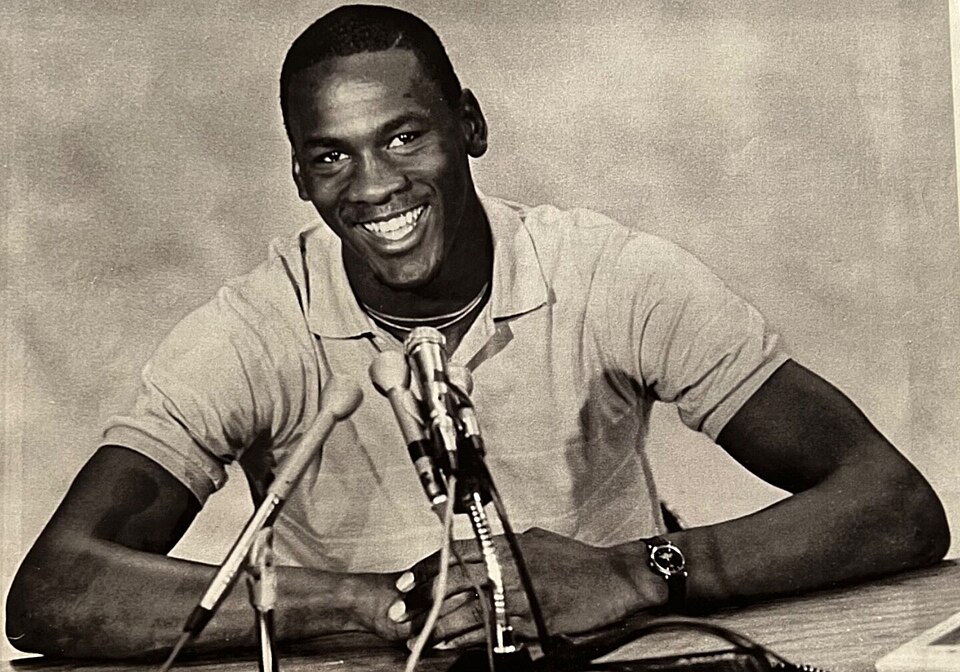
High school plays a big role in Jordan’s legend. He graduated from the school in 1981, but as a sophomore in 1979, Jordan was “cut” from the varsity basketball team. Jordan has always said this was the catalyst for his becoming one of the greatest pro athletes the world has ever seen. However, at that time, sophomores rarely played on varsity teams. Jordan was sent to Junior Varsity because the team needed taller players.
Jordan has clearly gotten over the slight, and, in 2019, he donated $1.1 million to Laney as part of an agreed-upon deal between Jordan, the school, and Nike for the 2013 sales of Jordan’s special Laney 5 sneakers.
“Mike decided that he wanted to take care of Laney High School,” Laney Athletic Director Fred Lynch said, according toWECT. “With him and his attorneys wanting to make sure that it would go entirely to Laney High School. So, Mike is still the man.” Half of the money went to the athletic department, while the other half was used at the school’s discretion. “It’s a very good thing. It’s a blessing to give that much money to a school,” Laney student Dariius Dutton said. “It means a lot to me because I love Laney, I love my school. And I think it will help a lot.”
One can have all the success in the world, but without gratitude, it’s as empty as never having achieved anything in the first place. For Jordan to reach out to someone who helped him as a child in their final days shows that, although he may have reached incredible heights as an athlete, he never forgot those who helped him get off the ground.
Picture this: A city neighborhood has exploded in population, from a few hundred people to more than 3,000 residents in just a few years. With a new $450 million soccer stadium being built nearby, experts expect that population to rise to more than 9,000.
And yet, there are glaring gaps in the community. With no neighborhood school, library, or community center, people have few local public spaces to gather. And with a stark lack of grocery stores and restaurants, residents have found themselves living in a “food desert.”
Artist’s rendering of the front of Alchemist Public Market. Photo courtesy of Alchemist CDC
A vibrant public space that serves as an incubator for new food businesses
The first-of-its-kind public market will include a corner store that accepts WIC and CalFresh (California’s SNAP benefits program) and sells grocery staples and products from local makers. People will be able to connect at the market’s eating areas, co-working space, inclusive playground, and weekly farmers market.
But APM will also provide opportunities for up-and-coming food entrepreneurs. The space will be home to eight small incubator restaurants in a shared food court, as well as a shared-use commissary kitchen that can support dozens of independent food vendors.
Shannin Stein, Alchemist’s director of advancement, tells Upworthy that one goal of the market is to make sure people living and working in the neighborhood aren’t left out of the economic conversation as hundreds of millions of dollars are invested in the surrounding area. That goal aligns with Alchemist CDC’s long-time support of food entrepreneurs from underserved populations.
Helping food entrepreneurs get their businesses off the ground
Alchemist CDC has multiple programs that help support burgeoning food businesses, and APM will serve as an extension of that support.
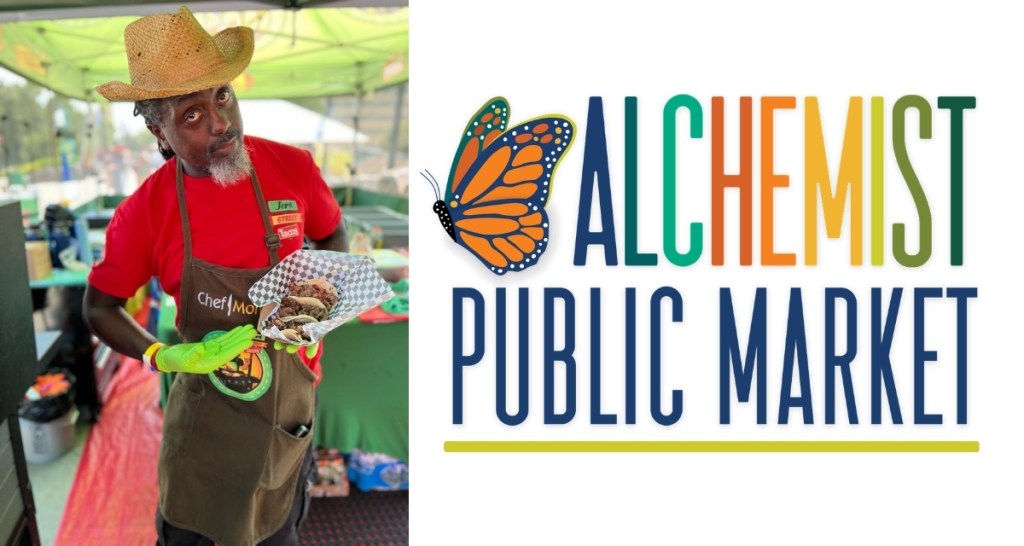
Nikki Gaddis-Chester, owner of Jerk Street Tacos, has been part of the Alchemist Kitchen Incubator Program (AKIP) for the past two years and looks forward to having a space at APM. She tells Upworthy that mentorship from Alchemist has “significantly transformed” her business journey.
“This vibrant community has not only supported the growth of our small mobile food business, but has also equipped us with essential tools for developing and sustaining our menu,” she said.
Jessica Brown, founder of Latin Caribbean culinary brand Caribe Azul, tells Upworthy that APM will be “a powerful opportunity for entrepreneurs who have the creativity, culinary experience, and drive to start a business but may not yet have the structure, knowledge, or support to build a strong foundation.”
“I came into the program with a clear concept for my Latin Caribbean cuisine, but building a business can feel isolating when you are managing so many parts on your own, from operations to marketing and promotion,” she said. “What I experienced through Alchemist felt like opening a gate to a portal I did not realize I had access to, but that was always there. It helped me recognize the strengths I already had while giving me the structure to apply them with confidence.”
An all-electric campus that fosters community around food
The APM project aims to connect people to local agriculture and food businesses while also meeting the goal of environmental sustainability.
“APM is being built as a state-of-the-art, all-electric, sustainably designed campus that reflects Sacramento’s leadership in environmental innovation, investment in local food systems, and community-centered economic development,” Stein said. “We want this to be a place where neighborhood residents, visitors to Sacramento, and anyone who loves food and community feel welcome and connected.”
So-called “third places,” where people can meet up outside of home or work, play an important role in building community culture. Sam Greenlee, CEO of Alchemist, describes how local residents will be able to use the space:
“Alchemist Public Market will serve as a heart for this emerging community. At APM, people can walk over to buy their grocery staples, and that includes people who depend on EBT and WIC nutrition benefits. Community elders can read the paper and chat over a great cup of coffee. Parents of young kids can meet up to enjoy delicious food while their kids have fun in the play area. Co-workers can go out to lunch and find enough variety to make everyone happy. Teens can come by after school, get a snack, and check out ping pong paddles or a basketball to play in the park next door. Families can meet their neighbors at the weekly farmers’ market, listen to local musicians during dinner, and celebrate after Sacramento Republic FC matches.”
A community gathering space that serves as an engine of economic growth
Alchemist Public Market broke ground in April 2026 with bipartisan support and significant public funding secured. Sacramento Mayor Kevin McCarty and Congresswoman Doris Matsui attended the groundbreaking.
“Alchemist Public Market will drive economic growth, support public health, and transform a vacant space into a community center, increasing food access for the immediate neighborhood and fostering economic growth that will ripple across Sacramento,” McCarty told Upworthy. “We were proud to support Alchemist CDC’s Farmers’ Market access program and look forward to this all-electric market.”
Greenlee concurs on the importance of the market as a driver of the local economy. “APM is going to be an economic development engine at the heart of our region for decades to come,” he said, “launching new businesses that represent the diversity of our communities, filling vacant storefronts, hiring neighbors, paying local taxes, and altogether making Sacramento a more vibrant place to live.”
The challenges of nonprofit projects in tough economic times
Of course, like most nonprofit organizations, Alchemist has had to play whack-a-mole with challenges since the market’s inception. The economic woes we’ve all experienced in recent years have taken a toll on the project and its organizers as they navigate the ever-evolving world of government funding, manage cash flow timing, and deal with dramatic increases in building material costs.
“Community-based organizations are often expected to solve deeply complex social and economic challenges, but without the same incentives, flexibility, or financial backing commonly available to traditional for-profit development projects,” Stein said. “It can create a difficult dynamic where nonprofits are asked to prove success long before receiving the level of investment needed to fully realize that success.”
Though construction has already begun, the project faces an immediate need for a bridge loan to move forward as red tape ties up funding disbursements. However, Alchemist is determined to bring the market and all it has to offer to life.
“This project’s existence is the story of numerous almost-insurmountable challenges, and the tenacity to find a way through each one,” Greenlee said. “Early on, many people understandably thought the project was a bit pie in the sky; a great idea that seemed unlikely to become reality. As a non-profit, we have always faced challenges funding the next step of the project…But at every step in the process, we have demonstrated our commitment to see this project through, and we have found people stepping up to help us through each and every obstacle.”
You can find updates on Alchemist Public Market here and learn more about what Alchemist CDC does here.
Everyone has bad days, even world class athletes. Any number of circumstances can cause someone who’s been training their entire life to simply miss the moment; be it physical, mental, or just plain bad luck.
It happened to Simone Biles when she got the the “twisties” and became disoriented in the air during what should have been a pinnacle moment in her Olympic career. It happened to golfer Greg Norman when he squandered an unprecedented six-stroke lead at the 1996 Masters in a stunning collapse.
The best athletes, and people, aren’t defined by perfection, however. They’re defined by what they do after they fail.
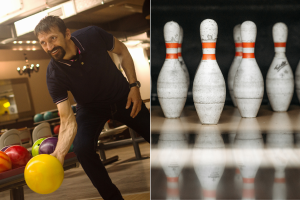
Bowler Tom Daugherty puts on one of the worst performances of all time
Bowling, while not a premier sport in the minds of most viewers, comes with a ton of pressure. It’s a highly technical sport where being just a millimeter or a fraction of a second off in your technique can be disastrous.
Tom Daugherty found this out firsthand in what has became a legendary game…but not legendary for the reasons he’d like.
In 2011, Daugherty faced off with Mike Koiveniemi in a semifinal match of the PBA Tournament of Champions. The event was televised, and the pressure was high. Luck, however, was not on Daugherty’s side that day. He rolled his way into every conceivable bad split you could possibly imagine.
The round was a nightmare, and Daugherty found himself facing his final shot of the night with a score under 100. His opponent, meanwhile, finished with a 299—nearly a perfect game. For reference, a 70-100 is roughly an achievable score for people who only bowl a few times per year and are not trained at all in form and technique. Yikes.
When Daugherty’s last shot connected, it put his final score at 100 exactly: triple digits. He reacted by running around and high-fiving the crowd, determined not to let himself get down.
His 199-point loss is one of the worst margins in professional bowling history, and his score of 100 is the lowest that’s ever been televised.
Daugherty did not let the humiliation define him, and came back stronger
Through it all, Tom Daugherty kept an impressive sense of humor about what could have been the greatest failure of his career, to date.
As the third place winner in the tournament, he won $50,000. He joked that he was excited to have won “$500 per pin.”
Later, he was quoted as saying: “That 100 game was the best thing that ever happened to me. I have no problem with it. No one would remember me if I hadn’t bowled that game.”
The positive attitude served him well. The very next year, he returned to another PBA tournament—this time the Bowlers Journal Scorpion Championship at the World Series of Bowling in Las Vegas—in his first televised performance since the infamous “100 game.”
Since then, he’s gone on to have a fantastic career that features four PBA Tour titles, including one major title at the 2021 PBA World Championship.
In 2026, he even got a rematch against his opponent from the famed 100-game—and beat him.
Athletes like Daugherty give us a good blueprint for how to deal with failure
Anyone who performs at the highest level of their chosen endeavor is going to fail and suffer setbacks. We can learn a lot from how they pick themselves back up afterwards.
Kevin Chapman, PhD, clinical psychologist and founder of The Kentucky Center for Anxiety and Related Disorder, writes: “People who have a high standard for themselves understand that failure is part of the journey towards growth and success. On the other hand, people who are perfectionistic view failure as unacceptable, which is actually very limiting. When you view failure as just another part of the process, then significant learning can occur as a result. You fix it and then move forward.”
It would be easy for anyone to implode after a performance like Daugherty’s. The way he handled the epic loss with humility and humor, though, no doubt helped him get in the right mindset for next time. He was able to learn where things had gone wrong for him in 2011 and come back a far better bowler the very next year when he won it all.
Generation X is often known, or at least broadly categorized, as the middle child of generations. So many of us kept our heads down as we latch-keyed ourselves into empty homes to make Pop Tarts for dinner. Sure, we sometimes side-eyed our elders, but when we were criticized, our “Who cares?” response exemplified the cynical, proverbial shrug heard all through the ’70s, ’80s, and early ’90s.
It’s almost a rite of passage for a generation to be besmirched by those who came before them. But when an older man went on a TikTok rant about Millennials and Gen Z in 2019, many of them didn’t take it especially well. The term “OK boomer,” though coined years earlier, went viral.
Gen X version of ‘Okay, Boomer’
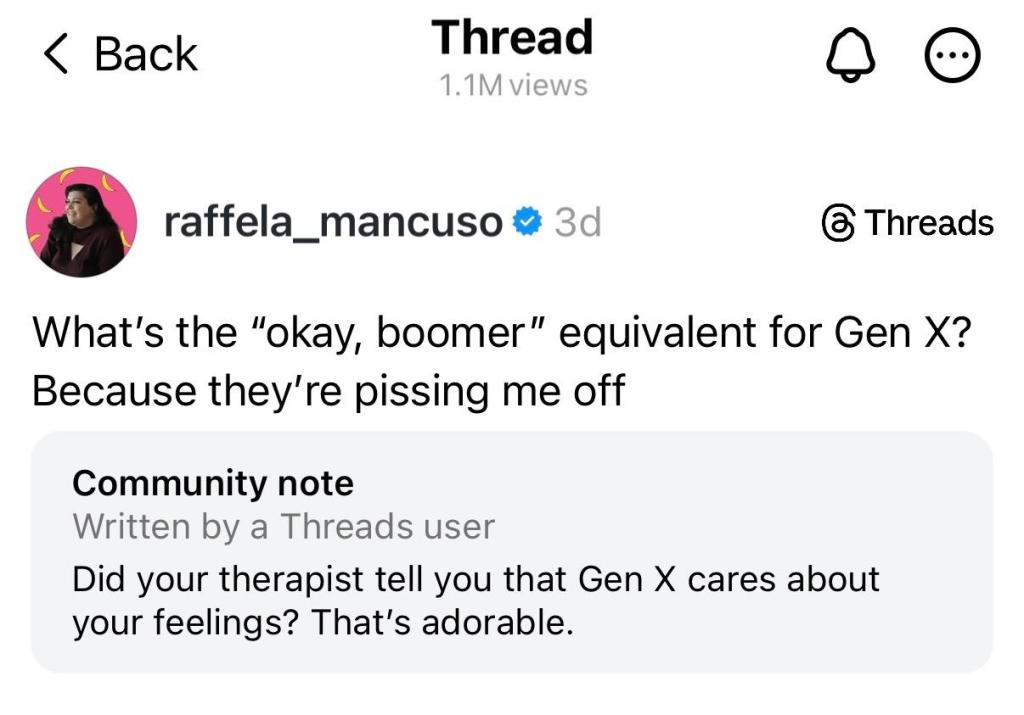
Entrepreneur and mental health advocate Rafella Mancuso seems to have had it with Gen X. In recent post on Threads, Mancuso wanted to know what one might say to an X-er that was the equivalent of “OK boomer.” They wrote, “What’s the ‘Okay, boomer’ equivalent for Gen X? Because they’re p—ing me off.” What they perhaps didn’t anticipate in the responses was an entire generation that’s known for not caring, caring just enough to share their thoughts.
The query received nearly 12,000 comments in just four days. In fact, one person even took the time to write a “community note,” and they didn’t hold back: “Did your therapist tell you that Gen X cares about your feelings? That’s adorable.”
“Sounds like a ‘you’ problem,” someone else comments. This one works on two levels: An apt Gen-X response to the OP’s question, and our version of “OK, boomer” back in the day.
This Threader didn’t hold back, writing in part: “We’re latchkey kids who grew up with the Cold War, asbestos ceilings, and landlines. We have 0 fks to give about who is pissed off at us because we used them all up in the ’80s worrying about quicksand and the Bermuda Triangle. Now…share your phone number so we can prank call you.”
We don’t care
Another tried to gently explain to the OP why they shouldn’t bother messing with us. “The thing about boomers is they get mad when you say ‘OK boomer,’ so that is satisfying to you. Gen X has zero Fs to give…So my advice is to say whatever makes you feel better because we truly, I promise you, don’t care.”
“Oh no, a random person on the Internet is mad at an entire generation for some unknown reasons. I guess I’ll just listen to the entire Nevermind album and not cry myself to sleep,” wrote another.
This person seems pleased with the thousands of answersL “Checks comments. Sees my fellow Gen X-ers already have it covered. Nods and scrolls on.”
One person notes that Gen X doesn’t need memes to be snappy. “Gen X doesn’t crowdsource insults. We freestyle them.”
And lastly, a Threader decided to use the king of Gen X dialogue, quoting the great John Hughes film The Breakfast Club: “The correct response is: Does Barry Manilow know that you raid his wardrobe?”
Dr. Richard Harris is an associate professor at Southeastern University in Lakeland, Florida. He’s also the first white pastor in the 140-plus-year history of Good Hope Missionary Baptist, a historically Black church in Bartow, Florida. However, if you met him in the late ‘70s, you would have no idea his life would take such a turn. From the age of 16 to 20, he was a member of the Ku Klux Klan, and for the final two years, he served as the youngest Grand Dragon north of the Mason-Dixon Line.
Harris was a lonely child in elementary school and was bullied by his classmates. In the late 1960s, when desegregation began at his Indiana school, Harris decided to take out his frustrations on the new students.
Harris is indoctrinated into the Ku Klux Klan
“I got to sixth grade, and all of a sudden my school has changed,” Harris told the Herald-Tribune in 2021. “It was the first time I had ever spoken to a person of color … they’re in my school. I looked at the African-Americans in my school, and I realized that they were displaced. I thought, ‘Maybe I could be the bully for once.’ And that’s exactly what I did.”
Harris’ behavior caught the attention of the KKK, who indoctrinated him into their violent hate group by offering family and protection. He was groomed to be a leader in the organization and, after just two years in 1976, he became the Grand Dragon, the highest-ranking member of the Indiana KKK.
In a recent interview with LADBible, Harris shared how he was able to get out of the terrorist organization. It began with a life-changing realization: the Klan was lying to him. After learning one of his guards was plotting to kill him, he realized he needed better protection. So, he turned to God.
“I didn’t know what to do. And in my 20-year-old mind at that time, all I could think of was, ‘I need better security,’” he told LADBible. So, he began reading the gospels and came to the story of the Samaritan woman. He realized that the Klan had completely changed the message to be one of division rather than acceptance.
Harris realized he was being lied to by the Klan
“The whole point of the Samaritan woman at the well story was Jesus accepted Samaritans, race mixers,” he said. “And he loved them, and they believed in him. That’s when the light bulb went on. ‘The Klan has been lying to me. They’ve been twisting the scriptures.”
Harris then called the Imperial Wizard and quit the KKK. “We’re gonna let you out. We’re gonna let you live. If you keep your mouth shut,” he was told with a gun pressed to his head.
Harris then did a complete 180 and began working for racial justice. In 2012, he documented his time in the KKK in his award-winning book, One Nation Under Curse, and would go on to serve as a senior pastor in the Free Methodist Church for 31 years in churches in Illinois, Indiana, and Florida.
“I changed,” he said in a 2023 TEDx Talk in which he explained his transformation from racist to antiracist and discussed his R.A.C.E. framework. “I’m not that guy anymore, thank God. But I know that I caused pain and hurt to so many that today, my life’s purpose is to help others radically reduce racial bias.”
They say the best way to understand another person is to walk a mile in their shoes. If you ask most women, though, they’ll tell you to forget about the shoes. They’ve got much bigger problems they wish men could understand.
Imagine how different the world would be if cis-gendered men had the ability to give birth, for example? Would Roe v. Wade have been controversially overturned in 2022, thus ushering in some truly draconian abortion policies, restrictions, and near total bans in various states? If men needed access to abortions, would they be available on-demand? Would we live in a country without mandatory paid maternity leave? How much more affordable would childcare be? Would there be a tax on period products? Overall, how would we treat people experiencing period pain?
Well, in 2021, a few men decided to see what life was like for people who have periods in a funny but enlightening video that went viral on TikTok. In fact, the video started a trend that’s still going strong today.
So some men actually tried it out
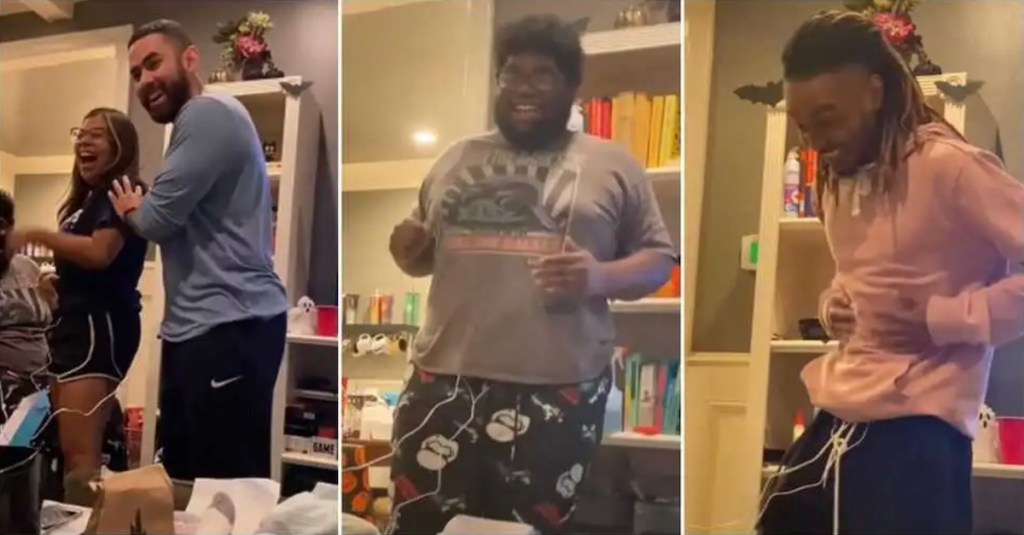
In a video posted by Benz Trap House that has millions of views, a group of guys tried a period simulator to experience what menstrual cramps really feel like. Period simulators are essentially the same as labor simulators. They’re called transcutaneous electrical nerve stimulation (TENS) machines that are designed to relieve pain. But when turned up a notch, they can create intense, debilitating discomfort.
The group took a semi-scientific approach to the experiment with a woman acting as a control subject. At the beginning of the video, she attaches the simulator to her abdomen and turns it up to ten, the highest setting. In the clip, the group looks impressed as she endures the extreme setting without showing any discomfort.
When the first guy tried the simulator, he was shocked by the discomfort. “Is it supposed to hurt like that?” the second guy says before erupting in nervous laughter.
The third guy said that he felt the pain all the way down to his knee caps.
The men’s description of the pain certainly seems to indicate that the simulator machine is pretty accurate. According to Mayo Clinic, menstrual cramps are a “throbbing or cramping pain” that radiates to the lower back and thighs. The pain itself, during actual menstruation not simulated by electrical charges, is caused by repeated contractions of the uterus as it sheds its lining.
The cramps can be much worse for women and menstruating people with certain conditions. In fact, they can be debilitating and excruciating. Despite all this, women are expected to just soldier on as if nothing’s happening. In many male-dominated spaces, pain or other difficulties associated with periods are not considered a valid excuse for needing a day off, taking a break, or even going to the bathroom!
The side by side comparison says everything
At one point in the video, the period simulator is attached to a woman and a man at the same time. When the device is turned on, the guy is in extreme pain while the woman stands still, claiming the feelings created by the machine are “not even as bad as a cramp.”
“Yeah, my cramps hurt worse than this,” she added.
See, this is exactly what they mean when they say women have a higher pain tolerance than men. Scientifically, that claim may be dubious, but when it comes to this specific kind of reproductive discomfort, women are far more used to sucking it up.
The comments from women said it all
A lot of people who menstruate felt validated after seeing the guys experience their first period.
“‘You feel that in your back, boi?’ every month, friend,” one commenter said.
One of the most popular comments said: “I’m convinced if men could get pregnant they’d have abortion clinics on every corner and paid maternity leave the whole pregnancy.”
Another commenter pointed out that women have to go through an entire day in pain without a break. “When he said ‘it’s stabbing me what do I do?’ You go to work, clean the house and continue on bb,” they wrote.
“Please this needs to be added to every high school health class … cause some guys really don’t understand the pain” another user added.
This comment took reality up a notch, writing, “Let’s add headaches. And period poops. And bloating. And the feeling of blood leaving you. And the nausea,” she wrote.
If only there were a machine that could simulate all that!
It remains a good thing that this lighthearted video went viral because it’ll give some people newfound respect for the pain that people who have periods go through. Some who watched the video thought that period simulators should be mandatory in sex ed classes.
Imagine how different the world would be if everyone experienced menstrual pain just once in their life.
This article originally appeared five years ago. It has been updated.
Mozart was known for his musical talent at a young age, playing the harpsichord at age four and writing original compositions at age five. So perhaps it’s fitting that a video of five-year-old piano prodigy Alberto Cartuccia Cingolani playing Mozart has gone viral as people marvel at his musical abilities.
Alberto’s legs couldn’t even reach the pedals, but that didn’t stop his little hands from flying expertly over the keys as incredible music pours out of the piano at the 10th International Musical Competition “Città di Penne” in Italy in 2022. Even if you’ve seen young musicians play impressively, it’s hard not to have your jaw drop. Sometimes a kid comes along who just clearly has a gift.
Of course, that gift has been helped along by two professional musician parents, but no amount of teaching can create an ability like this.
How this all got started during lockdown
Alberto first started playing in 2020 in the early months of the COVID-19 pandemic. Italy was one of the first countries to experience a serious lockdown, and Alberto’s mother used the opportunity to start teaching her son to play piano. Alessia Cingolani and her husband Simone Cartuccia are both music conservatory graduates, and mom Alessia told Italian entertainment website Contra-taque that she and her husband recognized Alberto’s talent immediately.
She said that although Alberto spends a lot of time at the piano, he also has plenty of time for school and play and television, like a normal kid.
There’s genuinely nothing “normal” about this kid’s piano playing, though. Watch him playing a piece by Edvard Grieg in front of a crowd in Italy at age five:
Wow, right? There are countless adults who took years of piano lessons and never got to that level of playing.
“He has a remarkable flair for the piano,” she said. Um, yeah. Clearly.
Some commenters expressed some concern for the boy based on his seriousness and what looks like dark circles under his eyes in the competition video, but if you check out other videos of Alberto playing at home, he is more relaxed. In interviews, his mother has made it clear that they prioritize normal childhood activities.
Now watch him at age eight with an orchestra
Alberto also plays with other musicians. Watch him playing Haydn along with a small orchestra at age eight in 2025:
Where musical ability comes from continues to be somewhat of a mystery, and experts frequently debate how much is due to nature and how much is due to nurture. Some argue that anyone can develop musical skills with enough practice and a supportive environment, but sometimes a kid clearly displays an innate musical sensibility that defies explanation. Some children are just genuine prodigies, and Alberto certainly seems to fit that bill. Can’t wait to see what kind of musical future awaits him.
This article originally appeared four years ago and has been updated.
Gen Zers joke that their parents were born in the 1900s as a way to teasingly make it seem like their parents are much older than they actually are. But the kids coming up behind them are either really good at sarcasm or they actually believe the 80s were more like the 1780s.
A 7th grade teacher asked her class full of Gen Alphas what they thought the worst part of the 80s was, and no one was prepared for their answers.
When most people think about the 80s, they think of big hair teased and sprayed to the gods. Bright colors, roller skates, and people walking around with giant boomboxes on their shoulders (as if everyone wanted to hear their music choices) are also at the top of the list for things that represent the 80s. But when thinking of the worst part of that decade, the lack of things like GPS, cell phones, and search engines would probably be at the top of that list.
Retro vibes with bold colors and music! #80sFashion Photo credit: Canva
Their answers were not what anyone expected
Gen Alpha has other ideas about the worst part of the 80s. If you lived through that decade, you may want to remove your hat so you can scratch your head. The teacher who goes by Meliciousmo on social media uploaded the prompt and her students’ answers on TikTok, giving viewers a chuckle.
One kid answers the prompt with, “No electricity. No good food.” It’s starting out pretty questionably, but let’s give him the benefit of the doubt by assuming his family watches a lot of Little House on the Prairie and his centuries are mixed up. The next kid’s response will probably nail it.
Well, maybe not. Through a few spelling errors, the response explains that the worst part about the 80s is that they didn’t have cars. Yes, this sweet summer child surmised that life was tough because cars didn’t exist, so walking everywhere or riding a horse and buggy was imperative. Obviously, this is false, because there were cars in the 80s. They had seatbelts in them for decoration, and kids would slide across the backseat when their dad turned a corner too fast as their mom reflexively extended a stiff arm to stop them from flying out of the car.
Clearly, some of the students were exposed to either 80s movies or TV shows because a couple of answers were spot on. One student wrote that running out of hairspray was the worst thing about the 80s, while another said, “People listening to other people’s phone calls.” Yikes. They’re right. There were no cell phones, so there were no Bluetooth devices, so everyone was privy to your private conversation. Another child said nothing was bad about the 80s because “they had cool clothes, music, people, and hair.” Those are big facts, kid.
But other suggestions included having to walk through rivers because of the lack of buses. (And for what it’s worth, “the Cold War” is actually a pretty accurate answer.)
The viewers had thoughts about this too
One person writes, “There’s[sic] like 3 kids who know the 1980s are not the same as the 1780s. LOL.”
Another laughs, “Gosh I’m still tired from walking through all the rivers to school.”
Someone else thinks the generational gap between parents has something to do with it, “Some of these are spot on…some think we’re over 100 years old! You can tell who has Gen X parents and who has Millennial parents!”
Book It pizza party anyone? (Or was that the 90s?) Either way, someone is proposing that iconic classic, writing, “Ok so some good ones, shoulder pads, people listening in to phone calls and hair spary[sic] are all legit. Give those kids a classic 80s pizza paety[sic]!! As for WW2, no tv, cars, and the great depression. Well those kids need a new history book lol.”
Another person adds a pressure that only those who were adults in the 80s could appreciate, saying, “I didn’t even grow up in the 80s and I KNOW it was writing a check at the grocery store with four people behind you and the person behind you had a full belt. The pressure must have been CRIPPLING.”
This article originally appeared last year. It has been updated.