Dove is challenging beauty standards by banning the world 'normal' from all of its products
via Unilever

How many TV ads have you seen pitching shampoo "for normal to oily hair" or lotion "for normal skin"? Probably more than you can count. The problem is when it comes to beauty products, the term "normal" has always seemed to be code for "white."

For decades, this white-normative labeling has sent a subtle, but damaging message to people of color by casting them as abnormal. It also reinforces notions of white supremacy by heralding white people as the measuring stick for all humanity.

That's why Unilever, the London-based company that owns Dove, Vaseline, Axe, and Sunsilk beauty products is banning the term from their products and advertising. The move comes after the company conducted a 10,000-person study across nine countries, including the United States, the United Kingdom, Brazil, China, India, Indonesia, Nigeria, Saudi Arabia, and South Africa.
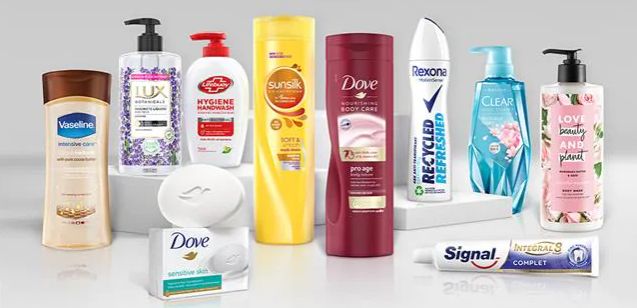

via Unilever

According to a Unilever press release the poll found that "More than half of people (56%) think that the beauty and personal care industry can make people feel excluded."

It also revealed that "Seven in ten people agree that using the word 'normal' on product packaging and advertising has a negative impact."

"The decision to remove 'normal' is one of many steps that we are taking to challenge narrow beauty ideals, as we work towards helping to end discrimination and advocating for a more inclusive vision of beauty," Unilever said in its release. "It comes as global research into people's experiences of the beauty industry reveals that using 'normal' to describe hair or skin makes most people feel excluded."

The announcement was accompanied by a video that explains how many of the norms we've been conditioned to accept — especially those surrounding masculinity, beauty, health, animal rights, pollution, and sexuality — are really quite the opposite.

"We won't accept a world where any of this is normal," the ads says.

The company wants to reposition its messaging so it focuses on what the product does rather than who it's for.

"Unilever has made the most progress with hair products, where 'normal' was removed or repositioned and replaced it with descriptions that highlight the benefit of the product," a company representative told The Washington Post. "We want to communicate what a product does — not who it is for — without the manufactured description of 'normal.' For example, we'll explain that a product will replenish moisture or help to meet specific needs."

A company representative says Unilever has over 200 products with the word "normal" on the label. It has already started the removal process and hopes to be completed by March 2022.

Ateh Jewel, an advisory board member of the British Beauty Council, told The New York Times the changes were "completely necessary" after the Black Lives Matter demonstrations last year.

"Saying the word 'normal' has been used to set you apart," Jewel said. "I am normal. My dark skin is normal. My juicy West African curvy body is normal. Everything about me is normal."


Courtesy of CeraVe
True

"I love being a nurse because I have the honor of connecting with my patients during some of their best and some of their worst days and making a difference in their lives is among the most rewarding things that I can do in my own life" - Tenesia Richards, RN

From ushering new life into the world to holding the hand of a patient as they take their last breath, nurses are everyday heroes that deserve our respect and appreciation.

To give back to this community that is always giving so selflessly to others, CeraVe® put out a call to nurses to share their stories for a chance to be featured in Heroes Behind the Masks, a digital content series shining a light on nurses who go above and beyond to provide safe and quality care to patients and their communities.

First up: Tenesia Richards, a labor and delivery nurse working in New York City who, in addition to her regular job, started a community outreach program in a homeless shelter that houses expectant mothers for up to one year postpartum.

Tenesia | Heroes Behind the Masks presented by CeraVe www.youtube.com

Upon learning at a conference that black mothers in the U.S. die at three to four times the rate of white mothers, one of the widest of all racial disparities in women's health, Richards decided to take further action to help her community. She, along with a handful of fellow nurses, volunteered to provide antepartum, childbirth and postpartum education to the women living at the shelter. Additionally, they looked for other ways to boost the spirits of the residents, like throwing baby showers and bringing in guest speakers. When COVID-19 hit and in-person gatherings were no longer possible, Richards and her team found creative workarounds and created holiday care packages for the mothers instead.

Keep Reading Show less

The fasting period of Ramadan observed by Muslims around the world is a both an individual and communal observance. For the individual, it's a time to grow closer to God through sacrifice and detachment from physical desires. For the community, it's a time to gather in joy and fellowship at sunset, breaking bread together after abstaining from food and drink since sunrise.

The COVID-19 pandemic has limited group gatherings in many countries, putting a damper on the communal part of Ramadan. But for one community in Barcelona, Spain, a different faith has stepped up to make the after sunset meal, known as Iftar, as safe as possible for the Muslim community.

According to Reuters, Father Peio Sanchez, Santa Anna's rector, has opened the doors of the Catholic church's open-air cloisters to local Muslims to use for breaking the Ramadan fast. He sees the different faiths coming together as a symbol of civic coexistence.

Keep Reading Show less
Courtesy of CeraVe
True

"I love being a nurse because I have the honor of connecting with my patients during some of their best and some of their worst days and making a difference in their lives is among the most rewarding things that I can do in my own life" - Tenesia Richards, RN

From ushering new life into the world to holding the hand of a patient as they take their last breath, nurses are everyday heroes that deserve our respect and appreciation.

To give back to this community that is always giving so selflessly to others, CeraVe® put out a call to nurses to share their stories for a chance to be featured in Heroes Behind the Masks, a digital content series shining a light on nurses who go above and beyond to provide safe and quality care to patients and their communities.

First up: Tenesia Richards, a labor and delivery nurse working in New York City who, in addition to her regular job, started a community outreach program in a homeless shelter that houses expectant mothers for up to one year postpartum.

Tenesia | Heroes Behind the Masks presented by CeraVe www.youtube.com

Upon learning at a conference that black mothers in the U.S. die at three to four times the rate of white mothers, one of the widest of all racial disparities in women's health, Richards decided to take further action to help her community. She, along with a handful of fellow nurses, volunteered to provide antepartum, childbirth and postpartum education to the women living at the shelter. Additionally, they looked for other ways to boost the spirits of the residents, like throwing baby showers and bringing in guest speakers. When COVID-19 hit and in-person gatherings were no longer possible, Richards and her team found creative workarounds and created holiday care packages for the mothers instead.

Keep Reading Show less