
upworthy
Add Upworthy to your Google News feed.
Google News Button
Education

Turns out, the hamburger is as rich in history as it is in flavor

Savor these juicy facts about one of the world's most iconic foods.

history, food, hamburger, inventors, community
Canva

Delicious history.

True
Red Robin

It's something so simple, yet something so good — two tasty buns around mouthwatering meat.

Yes, it's true: Hamburgers are wonderful. But what exactly makes them so wonderful? With so many parts and so many variations, it’s hard to know precisely why this dietary delight has become such an iconic part of our culture.

Over the centuries — yes, centuries — the hamburger has evolved from an umami underdog to a ubiquitous food staple all across the globe. And at the center of that strange journey is some surprising insight into humanity itself (and also a tasty meat patty).

Here are seven fascinating facts from across the years and continents that will make you appreciate the burger for more than just its taste.


1. The hamburger was invented in New Haven, Connecticut.

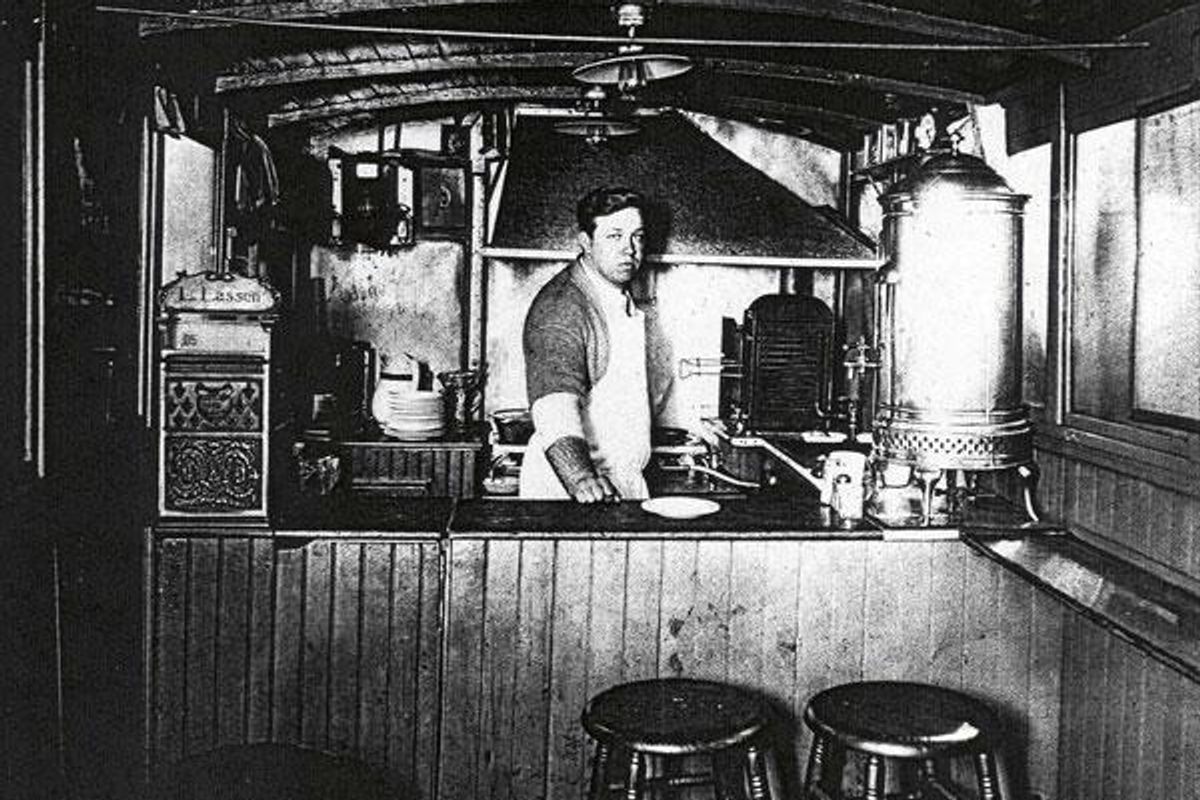
It was 1900 when Danish immigrant Louis Lassen first took the trimmings from his trademark steak sandwiches (which he also helped pioneer), packed them into patties, and placed them between two slices of toast from his sandwich wagon. The family still runs Louis’ Lunch Shop on Crown Street today and still serves the sandwiches on toast with no option for ketchup.

As someone who was born and raised in New Haven, I can assure you that this is 100% unequivocal truth. Even the U.S. Library of Congress has it on record!
sandwich, trademark, mobile food, health

Louis Lassen stands at the counter of the Lunch Wagon in New Haven, Connecticut.

Image via Wikimedia Commons.

2. Unless it was not invented in New Haven at all.

Perhaps it was Fletcher Davis of Athens, Texas, that actually invented it. He supposedly started cookin’ up those patties in the late 1880s, then brought his treat to the 1904 World’s Fair in St. Louis, where it gained global attention.

Or it could have been Charles and Frank Menches of Hamburg, New York, who ran out of sausage at a fair in 1885, so they packed together ground beef with coffee, brown sugar, and other brown spices to mask what was otherwise considered “lower class” meat.

Some people even give credit to Charlie Nagreen of Seymour, Wisconsin, who began serving flattened meatballs on bread in 1885, even though that’s pretty clearly a “meatball sandwich” and not a “hamburger.”

Maybe it all began at root beer-maker Oscar Weber Bilby’s Fourth of July party in 1891, right in Oklahoma — the heartland of America.

As you can see, there's some question as to which of the 50 states can actually claim credit for this distinctly American delicacy. Unfortunately, people didn’t keep very clear records of these things back then, so it’s kind of hard to determine which one was the real pioneer.

national landmarks, state law, America, culinary

A large statue commemorates the lover for a burger.

Photo (cropped) by WIMHARTER/Wikimedia Commons.

3. But we do know that the first record of a hamburger-like recipe was from 1758.

"The Art of Cookery made Plain and Easy" by Hannah Glasse — the most popular cookbook in England for more than a century — was well-known in the American colonies too.

The cookbook was updated many times after its initial publication in 1747, but it was the 1758 edition that first made mention of a “hamburg sausage” — a combination of ground beef and spices that was cured and then served roasted on a single piece of toast.
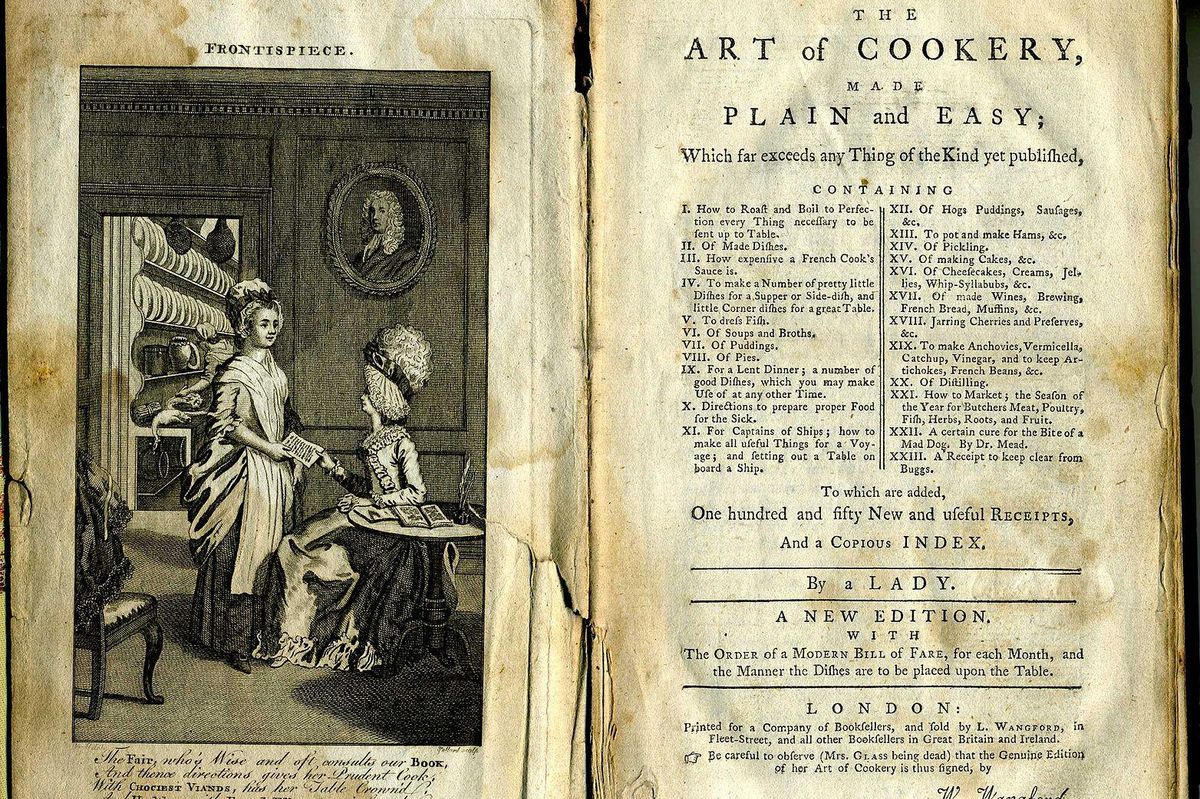
recipe, hamburgers, history, documents

Everybody benefits with a cookbook.

Image (cropped) via W. Wangford/Wikimedia Commons.

4. The hamburg sausage wan't quite a sandwich. But neither was the "hamburg steak," another cousin of the burger.

Obviously, the question of “what defines a sandwich” has resulted in much debate. But one thing we can all agree on is that it requires some kind of casing in order to qualify as a “sandwich” ... right?

While Glasse’s hamburg sausage could have arguably been an open-faced sandwich, the popular hamburg steak was definitely not a sandwich. The German dish gained popularity in the 18th century and comprised of, um, well, a patty of ground beef packed together — sometimes with spices or onions or egg — and then cooked and served. Which, come to think of it, does sound a lot like a hamburger without the bun.

(Some would argue that a hamburger without a bun is not technically a hamburger, but that's a philosophical discussion for another time.)
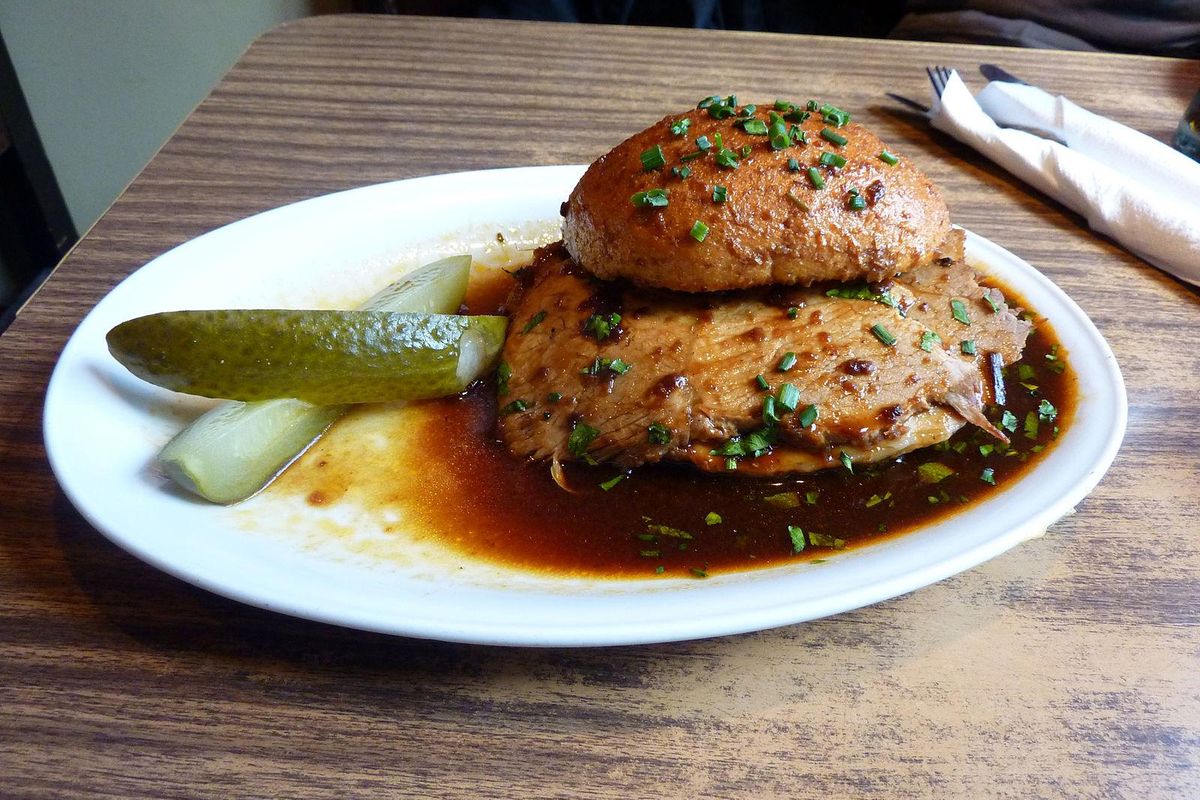
middle east, cuisine, world views, studies

That doesn't look like the burgers I know.

Photo (cropped) by 1971Marcus/Wikimedia Commons.

5. Come to think of it, no one’s really sure who invented the sandwich either.

This may not sound like an important part of hamburger history, but bear with me. You’ll see how it connects.

Credit often goes to John Montagu, the fourth Earl of Sandwich, who allegedly needed some way to contain his food so that he could continue playing cards with his friends without making a mess or needing utensils.

But he was hardly the first to think of such a thing — Hillel the Elder was known for eating flatbread sandwiches as far back as the first century, and of course, many Middle Eastern and Eurasian cultures made use of the pita to contain all kinds of tasty treats, including — wait for it — minced meats.

Now do you see where this is going?
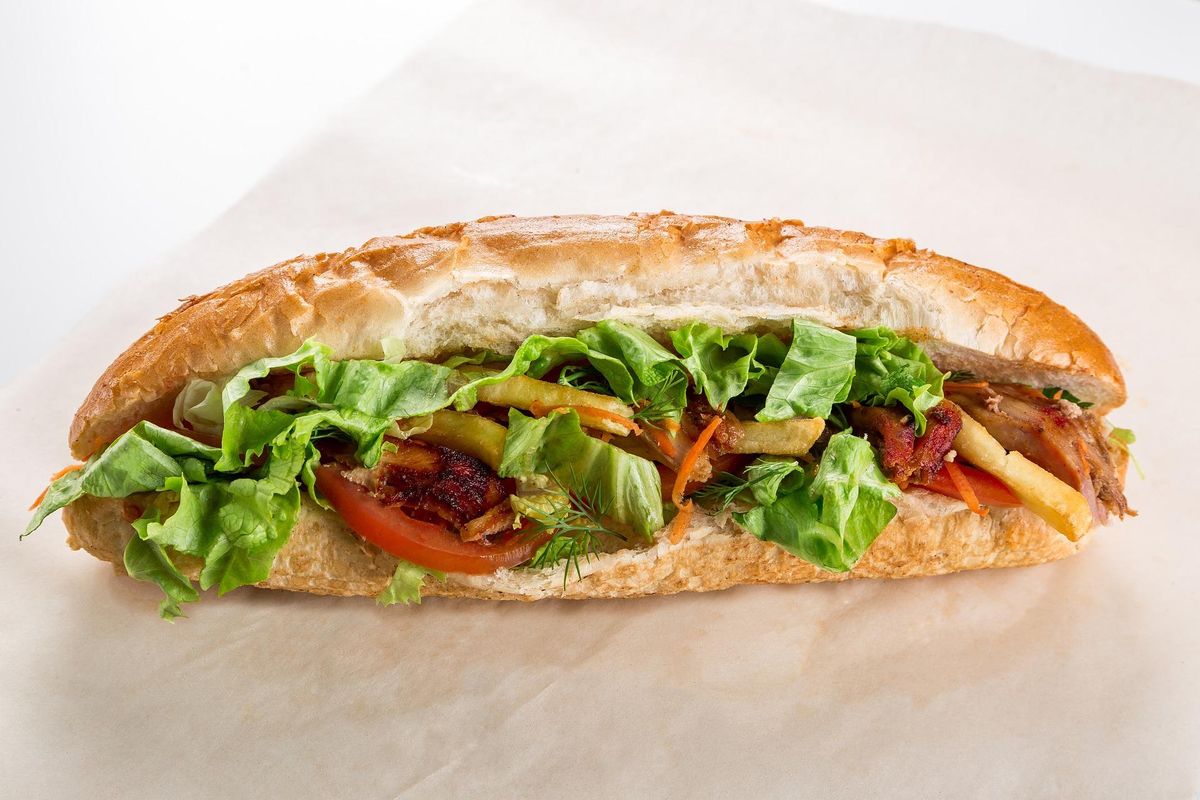
art, food, historical data, research, marketing

There are many components to this flatbread burger.

Image via Pixabay.

6. That’s right: The hamburger goes all the way back to Genghis Khan. (Sort of.)

Look, there’s a lot of world to conquer, OK? And when you were part of Khan’s Golden Horde, you didn’t have a lot of time to stop and eat between invading 2/3 of the planet. Khan’s soldiers would sometimes stay on horseback for days at a time, which wasn’t really conducive to eating soup either.

They found a way around the problem by thinly slicing meat and packing it together into portable patties that could be taken on the road and eaten as needed. Sometimes they were boiled, sometimes cured ahead of time, and more often than not, they were just eaten raw (but, contrary to popular belief, they were not placed under their saddles and cooked by butt-heat friction).

historical figures, art, Mongolia, war

A statue for the likeness of the historical Genhis Khan.

Image from Pixabay.

In one part of the world, this minced meat may have evolved into kebabs, which of course were then contained in the aforementioned pitas. Genghis’s grandson Kublai Khan is believed to have passed this raw meaty snack on to the Russians, who called it “steak tartare,” reportedly after their name for the Turco-Mongol peoples.

It would only be a matter of time before Russians shared the recipe with Germans, who gave it a twist of their own and turned it into hamburg steaks.

7. But the absolute oldest reference to a burger-like food comes from fourth-century Rome.

The ancient Roman Empire contributed a great many things to the modern world — including, believe it or not, fast food in the form of the ready-to-go thermopholia markets (literally “a place where something hot is sold”). According to a fourth-century cookbook, some of these thermopholia sold a packed patty known as Isica Omentata, which was made from minced meat, pine nuts, fish sauce, wine, and other spices. You can even find some modernized recipes and make your own Roman patties the next time you’re in the mood for a gladiator match!

cookbooks, Roman Empire, history, nutrition

The Roman Empire created some unique architecture.

Photo by Jebulon/Wikimedia Commons.

The hamburger’s globe-trotting history shows us exactly why people around the world love those meaty buns.

(Besides the fact they’re delicious, I mean.)

The real power of the burger is much more primal than that. Bread and meat are dietary staples of every culture since pretty much the dawn of civilization as we know it. It only makes sense to bring them together in such a simple way. And as technologies continued to evolve, of course we’d use them to perfect this quintessential combination, which would, in turn, give rise to the modern burger as we know it.
sculpture, diets, fast food, farming

A representation of a hamburger with cheese.

Image via Pixabay.

That’s why the hamburger’s winding journey from Rome to Mongolia to Russia to Germany and, finally, to the United States is such a telling story: It shows how separate cultures have so much in common across time and space. In that regard, it almost doesn't matter who was first to slap that patty on a bun or what inspired them do it — because the impulse was intrinsically human. Which means, yes, the hamburger has the power to unite us all, no matter where we come from, like one big global barbecue.

But also, they're delicious.

This article originally appeared on 03.22.18

black lab, dog walker, dog walker near me, dog walker ap, neighbors, good news, pets, feel good news

black lab (left. Handwritten letter (right)

If you've lived your whole life with a dog, a home has to feel pretty empty without one. Your heart has to feel like there's something missing as well. When Jack McCrossan, originally from Scotland, moved to Bristol, England with his three friends, they were bummed out to learn that their landlord didn't allow dogs.

So when they saw a beautiful black Sheprador (a German Sheppard Lab mix) in their neighbor's window, they knew that had to become buddies with her. They wrote the dog's owner, Sarah Tolman, a letter asking to arrange a play date with the dog. "If you ever need someone to walk him/her, we will gladly do so," they wrote.


"If you ever get bored (we know you never will, but we can dream), we are more than happy to look after him/her. If you want to come over and bring him/her to brighten our day, you are more than welcome. If you want to walk past our balcony windows so we can see him/her, please do," the letter continued.

"We hope this doesn't come too strong, but our landlord won't allow pets, and we've all grown up with animals. The adult life is a struggle without one," they wrote. "Yours sincerely, The boys from number 23," the letter concluded.

Soon after, the boys in 23 received a response from the dog herself, Stevie Ticks, accepting the offer. However, it may have been written by her human, Sarah Tolman. In the letter, Stevie shares a bit about herself, saying she's two years and four months old, was adopted in Cyprus, and that she's "very friendly and full of beans." (The boys shouldn't worry about a gassy hound, in England, "full of beans" means lively.)

"I love meeting new people and it would be great if we can be friends. I must warn you that the price of my friendship is 5 x ball throws a day and belly scratches whenever I demand them," the letter continued. A few days later, the boys got to meet Stevie.

"Meeting Stevie was great!" McCrossan told Buzzfeed. "She was definitely as energetic as described. We got to take her for a walk and she wouldn't stop running!"

Tolman thought the boys' letter was a fantastic gesture in an era where, quote often, neighbors are strangers. "In a day and age where people don't really know or speak to their neighbors, it was really nice for them to break down that barrier," she said. After the story went viral, she saw it as an opportunity for people to share their love of dogs with the world. "My mother and I are amazed at all the love we've received from around the world these past few days," Tolman wrote as Stevie. "If you have a doggo in your life, share that love with those around you."

A lot has changed since this story first warmed hearts around the globe. The boys have since moved away, but as of September 2024, Stevie is around 8 years old and still living her best life. Recently, she even made it to the doggie wall of fame at her local coffee shop.

In the years since this story first went viral, pet-sharing and neighbor dog borrowing have actually become more common, especially in cities where landlords restrict pets. Several platforms (like BorrowMyDoggy) and community groups now exist to pair dog owners with trusted neighbors who want occasional playtime, walks, or dog-sitting without having to own a pet. It’s a small but growing trend that reflects how deeply animal companionship is needed—even for people who can’t adopt a dog full-time. In many apartment buildings, these kinds of informal arrangements help reduce loneliness, build community, and give non-owners the emotional benefits of living with pets.

Just goes to show the power of a dog's love…even if that dog isn't your own.

This article originally appeared six years ago.

wine, fine wine, restaurant, fine dining, funny, humor, kindness, restaurants, server, waiters
Canva Photos, Hawksmoor Manchester

An unwitting server accidentally gave away a nearly $6000 bottle of wine

No one likes when it happens, but everyone makes a mistake at one time or another. Some are small, and others are...not so small, especially when they happen at work. There’s nothing worse than that sinking feeling that comes when you realize you have to fess up to your manager. Next comes the uncertainty over whether you’ll keep your job or not. And if your mistake happens to be one that costs your company money, let alone a significant amount of it? The stress is unimaginable.

In 2019, a server at the Hawksmoor Manchester steakhouse and cocktail bar in England went through that very experience. She accidentally served a customer a £4500 ($5,750) bottle of Chateau le Pin Pomerol 2001 instead of the £260 ($33) Bordeaux they ordered.


wince, ouch, oof, cringe, gif denzel washington cringe GIF Giphy

Yikes. I think we all felt that collective wince just now.

The server didn't realize the mistake right away. It wasn't until later that a manager clocked the switch, leaving the poor waiter absolutely mortified. After all, it's (hopefully!) not every day that a server makes a $5,700 mistake. The few that do rarely end up keeping their jobs.

wine, red wine, wine glass, vintage wine, fine wine, fine dining, funny restaurant stories You have to wonder if normal people can even tell if they're drinking a $6,000 bottle of wineCanva Photos.

However, the server’s manager decided to handle the situation with grace and humor, posting a lighthearted message on X (formerly Twitter).

"To the customer who accidentally got given a bottle of Chateau le Pin Pomerol 2001, which is £4500 on our menu, last night - hope you enjoyed your evening! To the member of staff who accidentally gave it away, chin up! One-off mistakes happen and we love you anyway," they wrote.

The manager even went a step further and excused the mistake by saying the bottles “look pretty similar.”

The post went mega viral, racking up nearly 53,000 Likes on Twitter/X. Commenters praised management and ownership for letting the server off the hook for an honest mistake.

"As someone who works in hospitality, bless you for being understanding and not flying off the handle at the poor lad/lass."

"Now that’s a good employer! Mistakes do happen, sadly some employees aren’t as forgiving and only see the value of what was lost. I’m certain your understanding and forgiving manner towards the member of your staff will win you more customers!"

"This is such a great way to deal with a member of staff who has made a genuine mistake - great to read about it, well done to the management team & a lot of leaders could learn a thing or two from this story. Thanks for sharing the story."

Working in any kind of customer service, especially food service, is brutally difficult and under-appreciated. These kinds of employees absolutely deserve some grace, so it's heartwarming to see them finally get some.

Other users teased that if this was the kind of service they could expect from the restaurant, they'd be making a reservation ASAP.

"How can I book a table?" someone joked.

Hawksmoor founder Will Beckett later clarified the story to BBC News saying that the server had been working with a manager from another location because it was a busy night. The manager accidentally grabbed the wrong bottle and the customer apparently didn’t notice the mistake. (Sure they didn't.)

wine, red whine, fine dining, restuarant, cheers Love Wine Cheers GIF by Zonte's Footstep Giphy

Beckett said the server is “brilliant,” but he’s still going to “tease her for this when she stops being so mortified.”

Some users questioned the very nature of a nearly $6,000 bottle of wine. To be fair, reviews of the vintage call it "perfection," "luxury," and a "thrilling experience." Still, it can be hard for people to wrap their minds around such extravagance.

"Is no-one else disgusted by the fact that a restaurant charges £4,500 for a bottle of wine in the first place? No wine is worth that much; it's pure & excessive extravagance for the sake of it & I find it vile," a user commented.

Beckett followed up in another post adding that, while the wine was expensive, the restaurant has raised over £1 million ($1.3 million) for the Wood Street Mission children's charity.

This article originally appeared six years ago.

predators, forensics, crime, women, awareness
via Екатерина Шумских/Pexels, Vladimir Konoplev/Pexels and Teona Swift/Pexels

Three women walking down city streets.

A forensics student named Alexandria recently shared vital information on TikTok that all women should know. She detailed the specific signs male predators are looking for when they choose a victim.

Her video is based on a 2013 study entitled “Psychopathy and Victim Selection: The Use of Gait as a Cue to Vulnerability.” For the study, researchers interviewed violent criminals in prison and asked them the type of women they’d be most likely to victimize.


The study found that the criminals all agreed that how the woman walked was a deciding factor.

“What the selected women all had in common was the way that they walked and how they generally held themselves in public,” Alexandria says in the video she later deleted but has been shared broadly across the platform.

@_alf_90_

How to walk for your safety! #women #safety #tips #walking #kidnapping #murder #attacks #fyp

“The selected women all had a similar ‘awkwardness’ to the way that they walked and carried themselves,” she continued. “The first part of the woman had a gait that was a little bit too small for their body, which resulted in smaller steps, slower speed and their arms more typically to their sides, or crossed, as well as their heads being down and not really taking in their general surroundings, which indicated three different things to these potential attackers.”

The woman’s body language signaled to attackers that she was fearful and anxious and because her head was down, she'd be easier to surprise. Alex then described the second type of woman the criminals said they’d target.

“On the other hand, the other part of the women that were selected had a gait that seemed a bit too big for their body and their arms tended to flail to the sides and seemed just overly awkward,” Alexandria continued.

The woman with the bigger gait signaled to potential attackers that she may be clumsy and won’t put up a good fight. “Because their arms were out and flailing to the side, it left the lower body open to, again, come around and grab them,” she said.

women, walking, predators, crime, body language Women walking down a street.Image via Canva Photos.

The video was helpful because Alexandria also discussed the types of women the attackers wouldn’t pursue. Alex says these women “walked with a gait that tended to be more natural to their body.” She adds they moved at the same pace as those in the immediate area, with their shoulders back and chins up and asserting a general sense of confidence.

“Essentially, the women that were not selected gave off an energy that said, ‘Don’t mess with me. I will put up a good fight.’ And that’s why they weren’t selected,” Alex said. “I know that it sounds silly, but something as simple as the way you walk or the way that you carry yourself in public could determine the likelihood that you become a target of a predator.”

According to the Center for Violence Prevention and Self Defense Training, detecting vulnerability is the biggest factor in who predators choose to victimize. Confusion, isolation, appearing insecure, unaware, unassertive, or distracted all play a part in who predators target, but being aware of these factors can increase safety considerably. They also note that access plays a part in being targeted, stating that, "Attackers tend to target people positioned near entrances, exits, or secluded areas where they can quickly grab and escape without arousing suspicion."

woman, crime, predator, safety, awareness Woman aware of her surroundings in a parking garage. Image via Canva Photos.

Alexandria concluded her video by sharing an acronym that can help prevent women from being victimized while in public: STAAR.

S(tride): Walk with a natural stride to your body with steps that are not too far apart or short.

T(all): Stand tall. Keep your shoulders back and your chin up. Assert a natural confidence and dominance to those around you.

A(rms): Swing your arms naturally by your sides, avoiding keeping them too close to your body or flailing out of your natural range of motion.

A(wareness): Stay aware of your surroundings. Take notice if something feels or looks off.

R(elax): Stay cool, calm, and collected and don’t indicate to a potential attacker that you feel or see something is wrong.


This article originally appeared last year. It has been updated.

swimming pool, pool safety, toddler swimming, drowning, rescue, hero

A 3-year-old saved his friend from a backyard swimming pool.

Swimming pools can provide endless hours of fun in the sun, but they can also be extremely dangerous for young children who haven't learned to swim. According to the World Health Organization, around 300,000 people die from drowning each year, and about a quarter of those drowning victims are children under age 5.

In 2020, at a residence in Itaperuna, a city north of Rio de Janeiro, a harrowing scene unfolded in a backyard swimming pool. According to the Daily Mail, Henrique, a 3-year-old child of a worker on the property, snuck away from his parents' supervision and wandered over to the pool. Security camera footage shows the young boy and fellow 3-year-old, Arthur de Oliveira, sitting next to the pool when Henrique reaches for an inflatable floaty and falls into the water.


A frantic Arthur looks around for help, but there is no one to be found. For 10 seconds, Henqriue struggles to keep his head above water, until Arthur bravely extends his hand and pulls the boy up. If Arthur didn't have the strength, he could have fallen in the pool and both boys could have drowned.

Luckily, Arthur's strength held up and he pulled the boy to safety."This video serves as an alert for those who have a pool at home and children," wrote Arthur's mom, Poliana Console de Oliveira on her Facebook page. "Thank God the ending is happy, because God sent the land under my care, my son, my little Arthur, a true hero! Real life hero, my pride."

- YouTube www.youtube.com

"Arthur saved his friend's life," she added. Arthur hopes to be a police officer one day, so after the local police department learned of his bravery, it sent him a new basketball and a whole lot of candy. The boy was also given a certificate and a trophy that said, "From a hero to a hero."

While Arthur's heroism is worthy of recognition, it's also important to know how to avoid these kinds of near-tragedies. Safekids.org recommends these tips for watching kids when there's a body of water around:

  1. Watch kids when they are in or around water. Keep young children and weak swimmers within arm’s reach of an adult. Make sure more experienced swimmers are with a partner every time.
  2. Choose a Water Watcher. When there are several adults present, choose one to be responsible for watching children in or near the water for a certain period of time, such as 15 minutes. After 15 minutes, select another adult to be the Water Watcher.
  3. Avoid distractions when your child is in or around water. Drowning is often silent and can occur in less than five minutes, so it is important to give your child all of your attention. Put away phones, books and magazines.

And for pool safety specifically, Safekids.org makes these recommendations:

  1. Install fences around home pools. A pool fence should surround all sides of the pool and be at least four feet tall with self-closing and self-latching gates.
  2. Be aware of pool drains. Teach your child not to or swim near pool drains or suction outlets. Visit Pool Safely to learn more about available resources to keep kids safe around pool drains.
  3. Empty kids’ pools immediately after use. Store them upside down and out of children’s reach.

This article originally appeared five years ago.

target, girl's clothes, meghan mayer, modesty, age-appropriate clothes
via Target and Mike Mozart/Flickr

A controversial dress being sold at Target.

Everywhere you go, there seems to be a constant war between children’s clothing retailers who want to push the boundaries of modesty and parents who push back, saying they are sexualizing children. On top of that, when young girls believe they are supposed to wear clothes that are tight-fitting and revealing, it's very damaging to their self-esteem and body image. So what is a parent to do?

“I think it’s one thing that the girls’ clothes are very fitted and small, and it’s another that they’re in such direct contrast to what you find on the boys’ side, and those two things send a pretty strong message about what they’re supposed to look like, dressed to be slim and to be fit,” Sharon Choksi, a mom of two and founder of the clothing line, Girls Will Be, told CNN.


The topic came up again recently when Meghan Mayer, a mother of 2 and a 7th-grade school teacher, posted a video on TikTok about a dress she saw at Target that received over 1.6 million views. Meghan was reacting to a smock-style patterned dress with balloon sleeves that appeared modest at first glance. But after closer examination, it has holes on the waist on both sides, revealing the girl’s midriff and possibly more.


“My oldest daughter and I are at Target, and there’s some cute spring stuff,” Mayer started the video. "I am a little bit more conservative when it comes to my kids’ clothing, so maybe I’m overreacting, but let me know what you think of these dresses.”

She added that the dress may be okay for a 12-year-old but was inappropriate for a 6- or 7-year-old. Mayer asked her followers what they thought of the dress. “Like I said, I know I’m a little bit more conservative. I don’t usually even let my girls wear bikinis, but maybe I’m overreacting, I don’t know. Thoughts?”

For reference, she then showed the sizes of the dresses to show they were for kids, and then revealed the holes in the sides. “Look at these little slits on the sides of these dresses, right at the hips on all these dresses,” she said.

Most people commenting on the video thought the dress was a bit much for such a young girl to wear and that it was inappropriate for someone that age to expose themselves.

target, target aisle, big box retail, target pov, shopping Walking down the aisle in a target.via Mike Mozart/Flickr

"You're not overreacting. You're parenting properly," Paper Bound Greetings wrote. "No, no. There is no reason for those holes to be there. They should have pockets! Not holes!" Anna wrote. "I think retailers are trying to mature our kids too fast. I agree with mom!" HollyMoore730 commented.

But some people thought that that dress was acceptable and Mayer was overreacting.

"Unpopular opinion, I think they’re cute," Dr. Robinson wrote. "When I was a kid in the ‘70s I wore halter tops and tube tops; they were not seen as big deals. I don’t think this is scandalous," Kimberly Falkowsi added. "Overreacting. Both my girls have the blue and white, you can’t even tell much. It’s not that big of a hole. The dresses are so cute," LolitaKHalessi commented.

"Fun fact… you don’t have to buy it, Bethany wrote. "Idk I think it’s cute and that everyone just making it weird when it really isn’t," Wisdomdeals added. "Nothing wrong with the dress. It’s sold out in my area. Luckily if you don’t like it or think it’s inappropriate, you don’t buy it for your child," Maddison commented.


target, retail store, target front, target doors, target location The front of a Target.via Mike Mozart/Flickr

Some commenters told Mayer that she should buy the dress and have her daughter wear a shirt beneath it so it doesn’t show skin. However, Mayer believes that it would support Target in making questionable kids' clothing.

"No, I'm not going to buy it and have them wear a tank top with it, because then that's showing Target that it's OK," she told Today.com. "And over time, the cutout will get bigger and bigger."

This article originally appeared last year. It has been updated.