

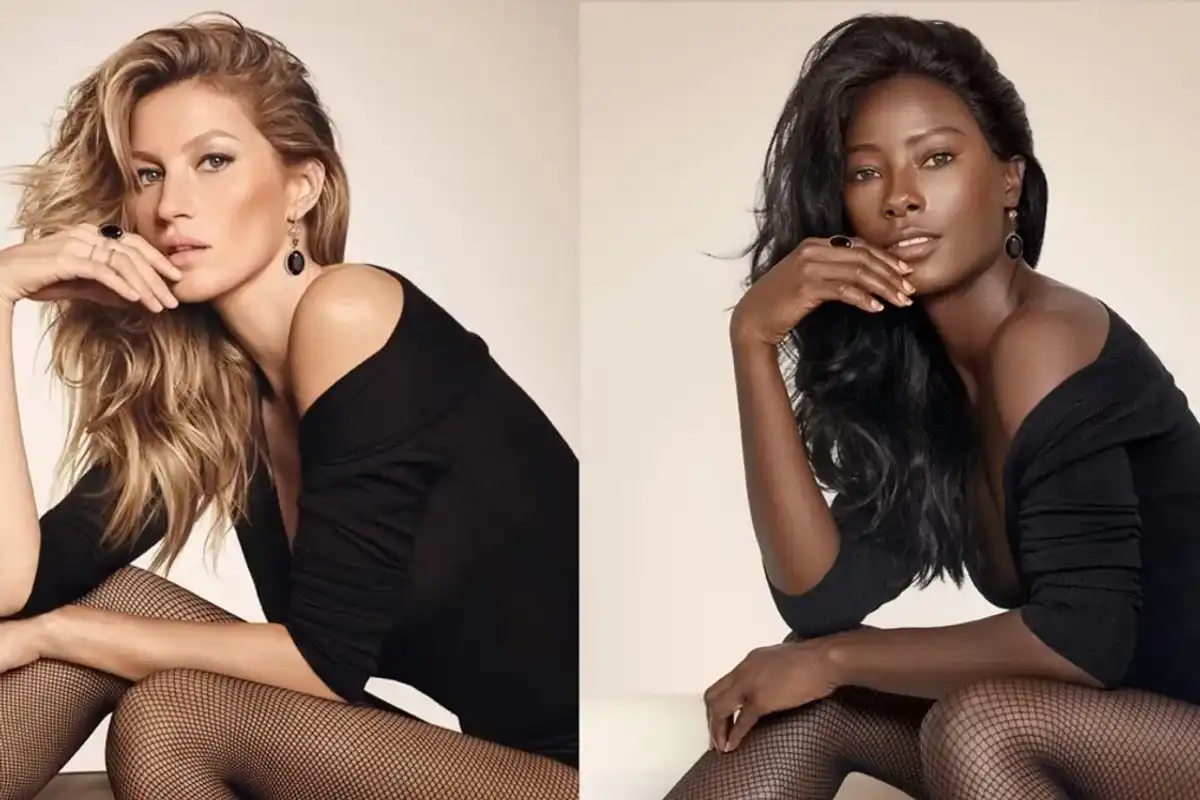
A classic pose.
From a young age, Deddeh Howard was enthralled by fashion and its role in culture. Unfortunately, she was never really able to see herself in it.
"Something that always bothered me when you see these amazing images [was] that very rarely you ever see a black woman on them," Howard, who grew up in West Africa but now resides in Los Angeles, wrote at her blog, Secret of DD.
"Black girls are almost invisible," she wrote.
So Howard created "Black Mirror," a photo series in which she re-creates famous photos with herself in place of models like Kendall Jenner, Gigi Hadid, Gisele Bundchen, and others.
Howard's partner, Raffael Dickreuter, shot the series. As its title suggests, it holds a "black mirror" up to the fashion world. The project's goal is both to make people notice the lack of diversity in the fashion world and to provide inspiration to other non-white models.
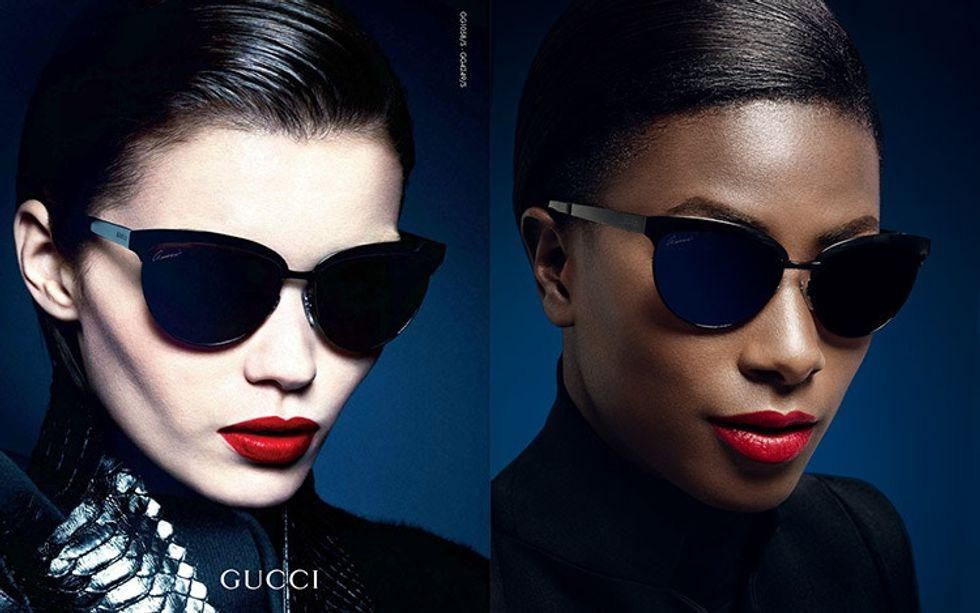
The shades of Gucci.
All photos by Raffael Dickreuter, used with permission.
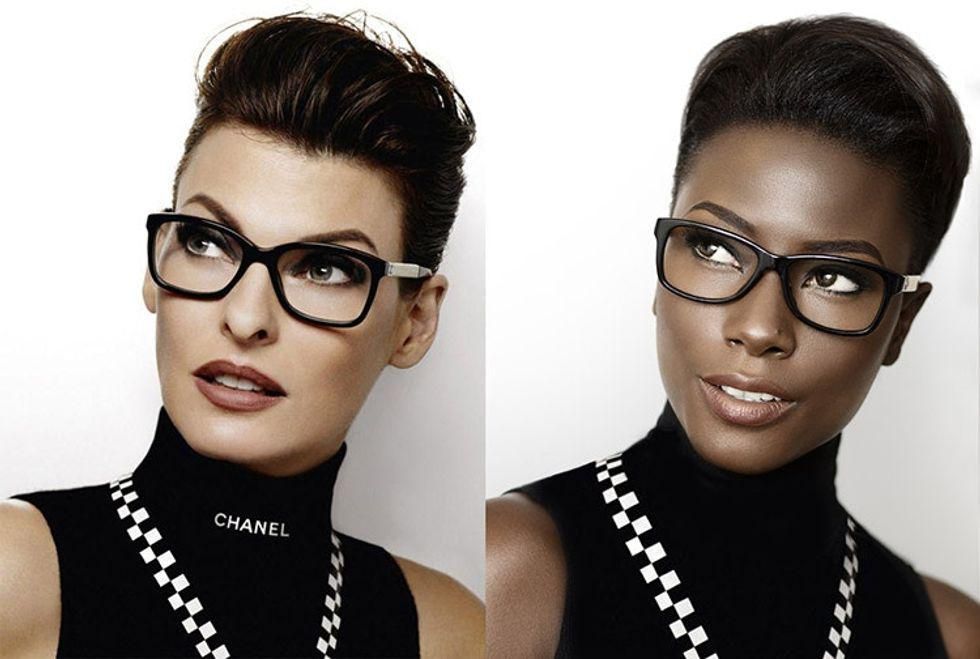
Glasses make you wiser.
All photos by Raffael Dickreuter, used with permission.
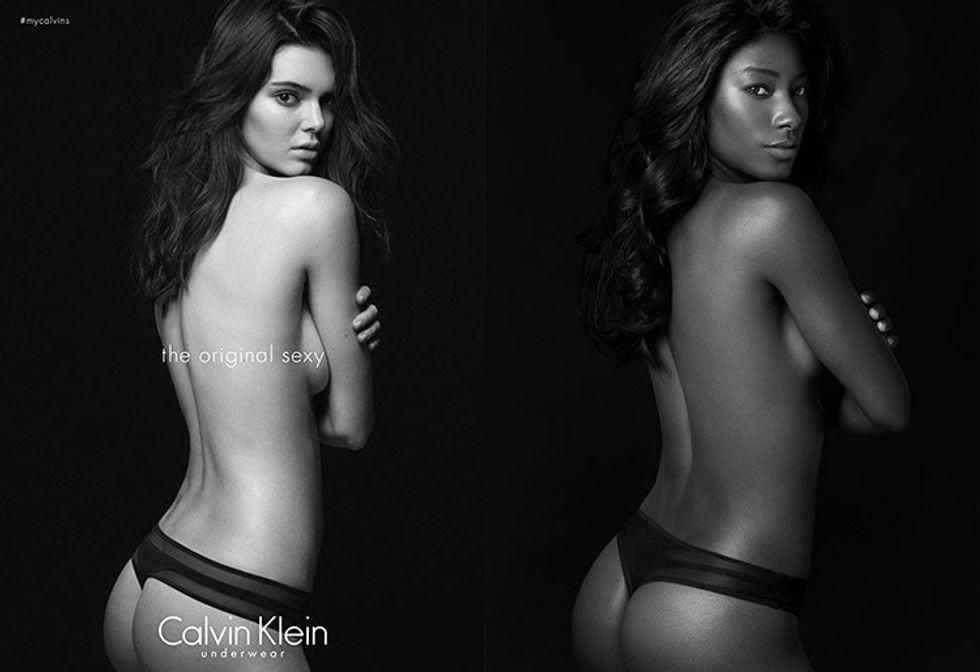
The original sexy.
All photos by Raffael Dickreuter, used with permission.
Of the models featured on the fall 2016 runways, 75% were white. There's a major need for a diversity boost.
Sometimes, that lack of diversity can be downright embarrassing. Earlier this year, one fashion show featured models walking to Beyoncé's "Formation," a song Essence described as a "wholly and undeniable a tribute to Blackness — particularly Black girl power." The problem: The show didn't feature a single non-white model.
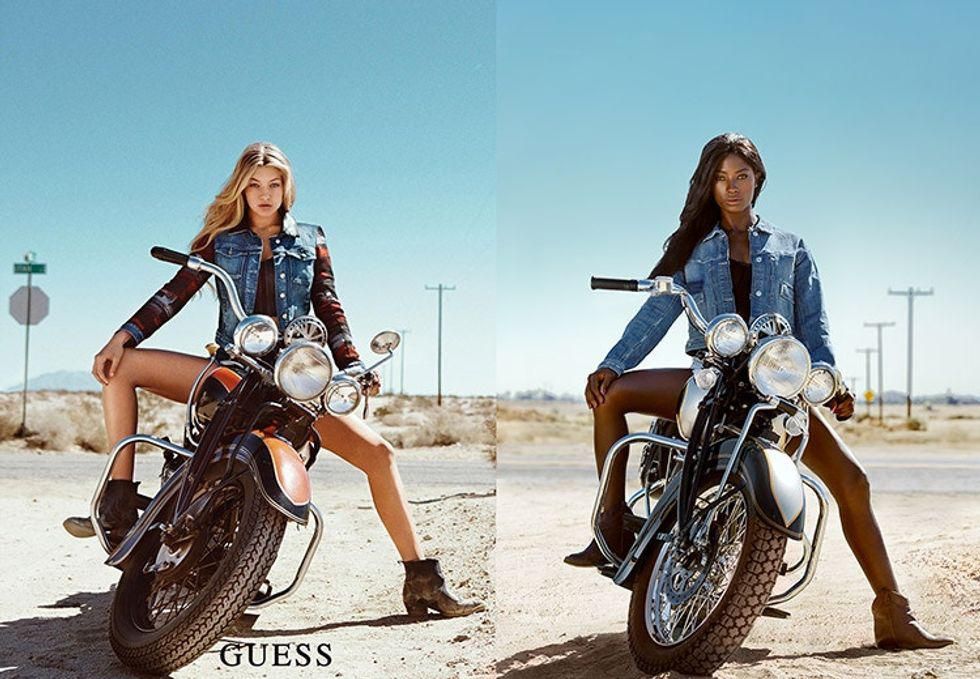
Guess who rides motorcycles.
All photos by Raffael Dickreuter, used with permission.
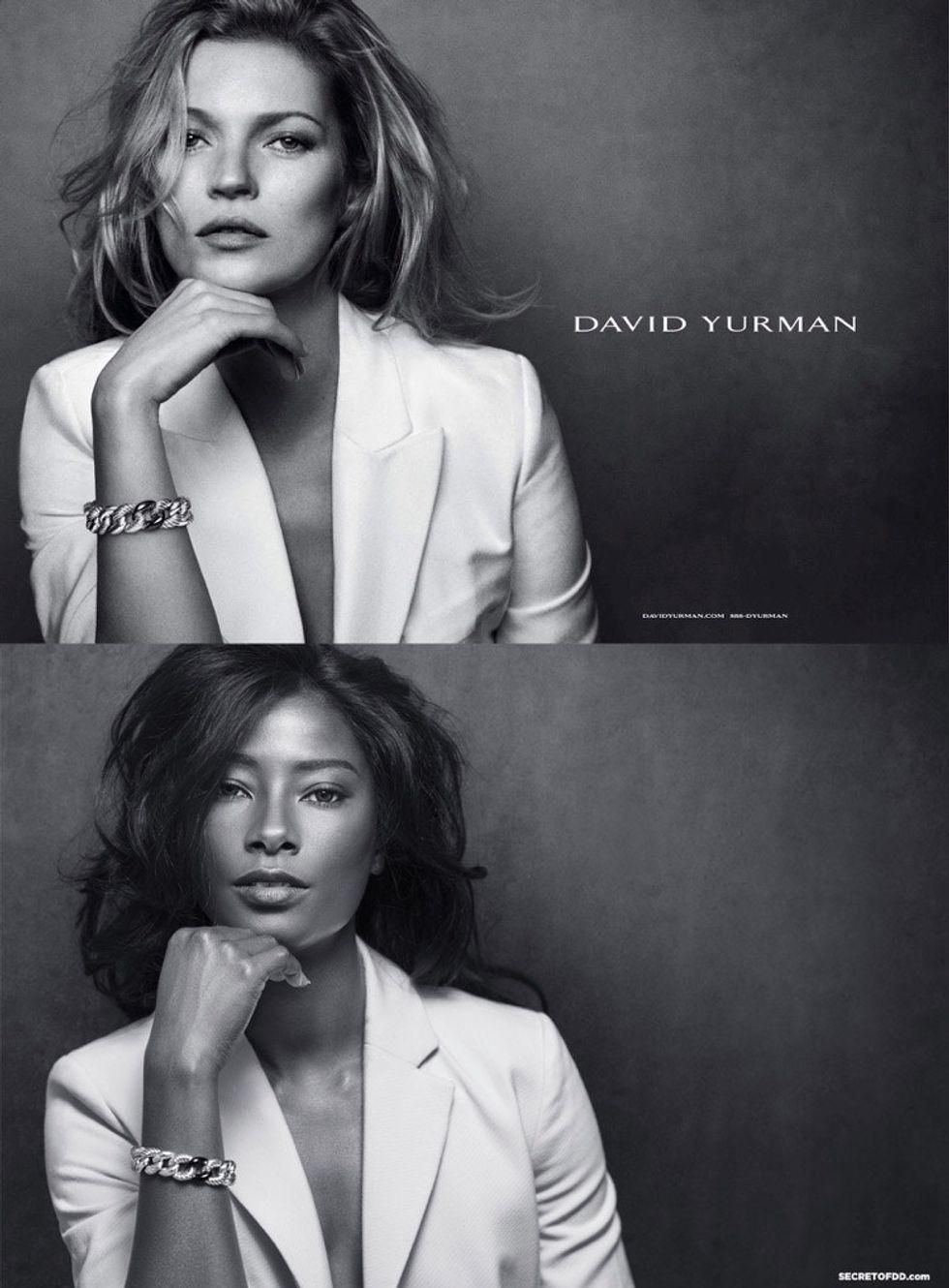
Classy and feminine.
All photos by Raffael Dickreuter, used with permission.
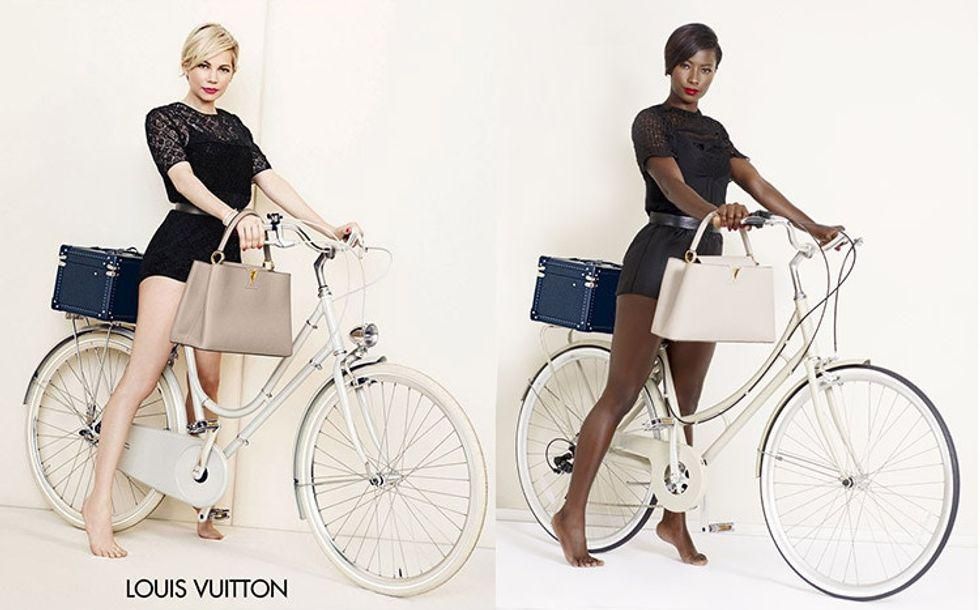
A bike ride with expensive accessories.
All photos by Raffael Dickreuter, used with permission.
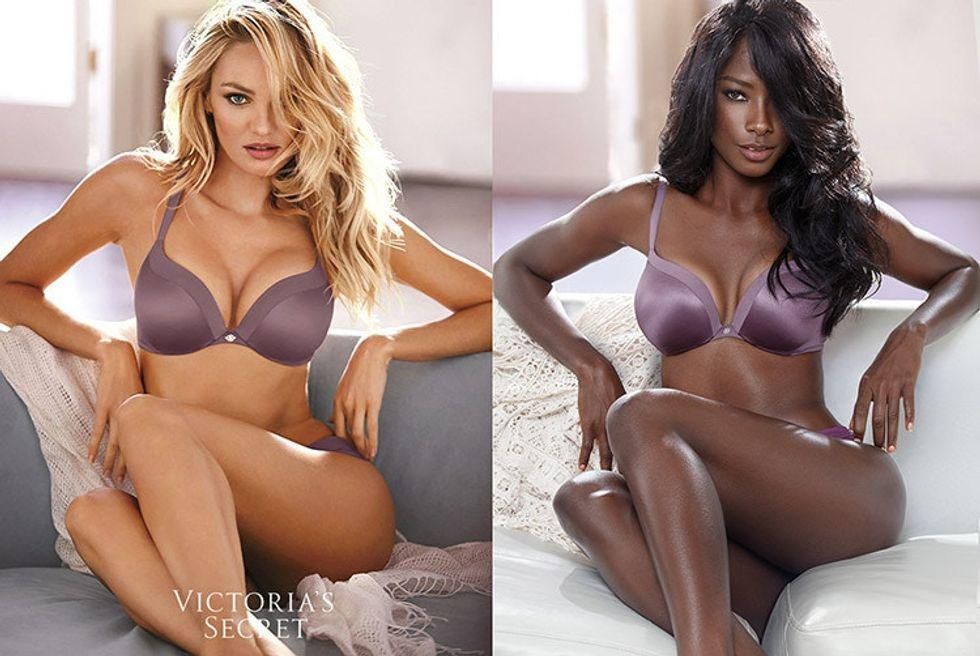
The lingerie pose.
All photos by Raffael Dickreuter, used with permission.
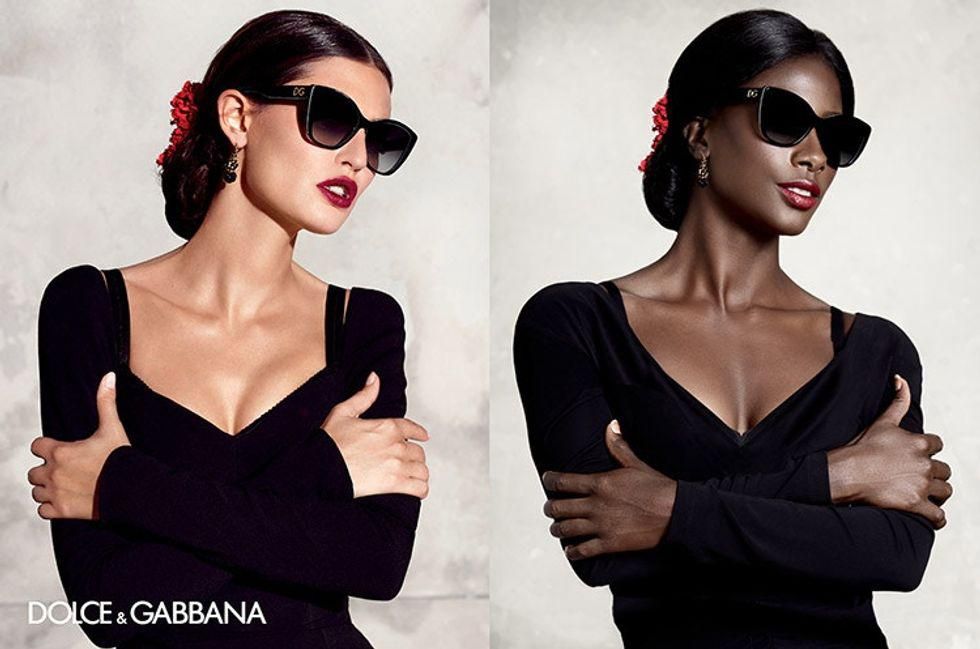
Thinking "Breakfast at Tiffanys” maybe?
All photos by Raffael Dickreuter, used with permission.
Diversity, representation, and visibility play key roles in shaping ambition and self-acceptance in the real world.
It's important to be able to see yourself in the world, and it's important to know that someone who looks like you can succeed.
"The next generation can only get inspired and reach for the stars themselves if they believe they can do it too," Howard wrote on her blog. "For that reason diversity in ad campaigns is in my opinion much more important than you might think."
This article originally appeared on 12.08.16
- Victoria's Secret responds to viral song that's critical of how it caters to body stereotypes ›
- Some say this model is fat. She gives such a perfect response that ... ›
- Woman shares hilarious reactions to unboxing a $825 luxury Chanel advent calendar - Upworthy ›
- Michigan school Parade of Nations celebrates student diversity - Upworthy ›
- She's not a plus-size model; she's a model. And she's in the Sports Illustrated swimsuit edition. - Upworthy ›



 a man sitting at a desk with his head on his arms Photo by
  Can a warm cup of tea help you sleep better? If you believe it, then yes. Photo by
 A woman is getting angry at her coworker.via
  A man with tape over his mouth.via
  A husband is angry with his wife. via
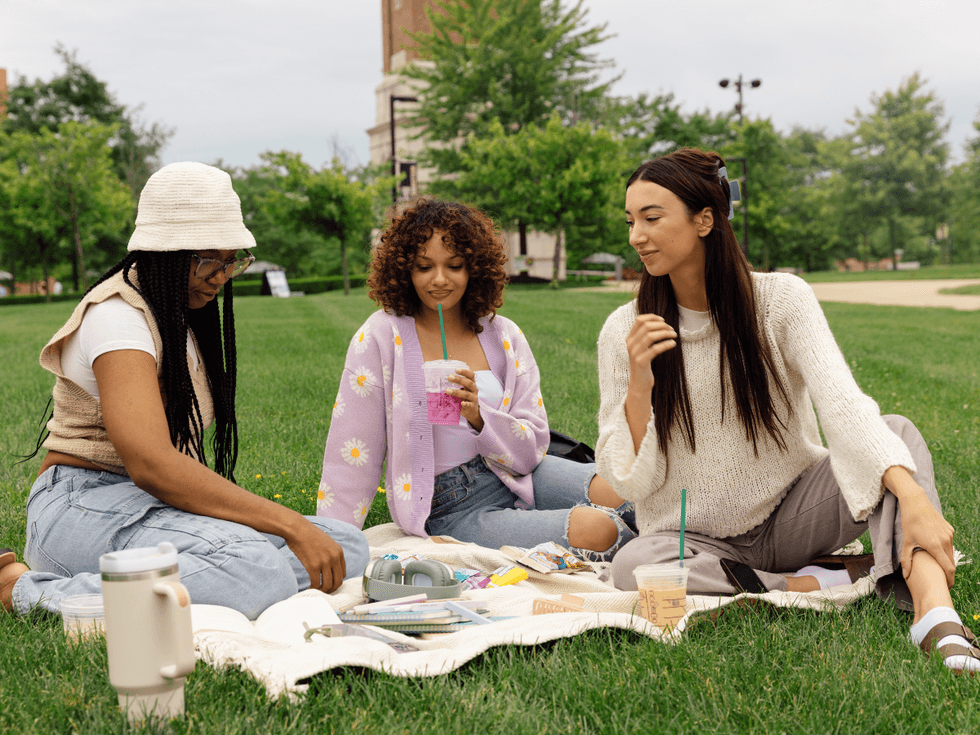 Three women sit on a blanket in the park.
 Two women engaging in a pleasant conversation inside a coffee shop
 Two men engaging in a peaceful disagreement.
Resurfaced video of French skier's groin incident has people giving the announcer a gold medal
"The boys took a beating on that one."
Downhill skiing is a sport rife with injuries, but not usually this kind.
A good commentator can make all the difference when watching sports, even when an event goes smoothly. But it's when something goes wrong that great announcers rise to the top. There's no better example of a great announcer in a surprise moment than when French skier Yannick Bertrand took a gate to the groin in a 2007 super-G race.
Competitive skiers fly down runs at incredible speeds, often exceeding 60 mph. Hitting something hard at that speed would definitely hurt, but hitting something hard with a particularly sensitive part of your body would be excruciating. So when Bertrand slammed right into a gate family-jewels-first, his high-pitched scream was unsurprising. What was surprising was the perfect commentary that immediately followed.
This is a clip you really just have to see and hear to fully appreciate:
- YouTube youtu.be
It's unclear who the announcer is, even after multiple Google inquiries, which is unfortunate because that gentleman deserves a medal. The commentary gets better with each repeated viewing, with highlights like:
"The gate the groin for Yannick Bertrand, and you could hear it. And if you're a man, you could feel it."
"Oh, the Frenchman. Oh-ho, monsieurrrrrr."
"The boys took a beating on that one."
"That guy needs a hug."
"Those are the moments that change your life if you're a man, I tell you what."
"When you crash through a gate, when you do it at high rate of speed, it's gonna hurt and it's going to leave a mark in most cases. And in this particular case, not the area where you want to leave a mark."
Imagine watching a man take a hit to the privates at 60 mph and having to make impromptu commentary straddling the line between professionalism and acknowledging the universal reality of what just happened. There are certain things you can't say on network television that you might feel compelled to say. There's a visceral element to this scenario that could easily be taken too far in the commentary, and the inherent humor element could be seen as insensitive and offensive if not handled just right.
The announcer nailed it. 10/10. No notes.
The clip frequently resurfaces during the Winter Olympic Games, though the incident didn't happen during an Olympic event. Yannick Bertrand was competing at the FIS World Cup super-G race in Kvitfjell, Norway in 2007, when the unfortunate accident occurred. Bertrand had competed at the Turin Olympics the year before, however, coming in 24th in the downhill and super-G events.
As painful as the gate to the groin clearly as, Bertrand did not appear to suffer any damage that kept him from the sport. In fact, he continued competing in international downhill and super-G races until 2014.
According to a 2018 study, Alpine skiing is a notoriously dangerous sport with a reported injury rate of 36.7 per 100 World Cup athletes per season. Of course, it's the knees and not the coin purse that are the most common casualty of ski racing, which we saw clearly in U.S. skier Lindsey Vonn's harrowing experiences at the 2026 Olympics. Vonn was competing with a torn ACL and ended up being helicoptered off of the mountain after an ugly crash that did additional damage to her legs, requiring multiple surgeries (though what caused the crash was reportedly unrelated to her ACL tear). Still, she says she has no regrets.
As Bertrand's return to the slopes shows, the risk of injury doesn't stop those who live for the thrill of victory, even when the agony of defeat hits them right in the rocks.