upworthy
Add Upworthy to your Google News feed.
Google News Button
Family

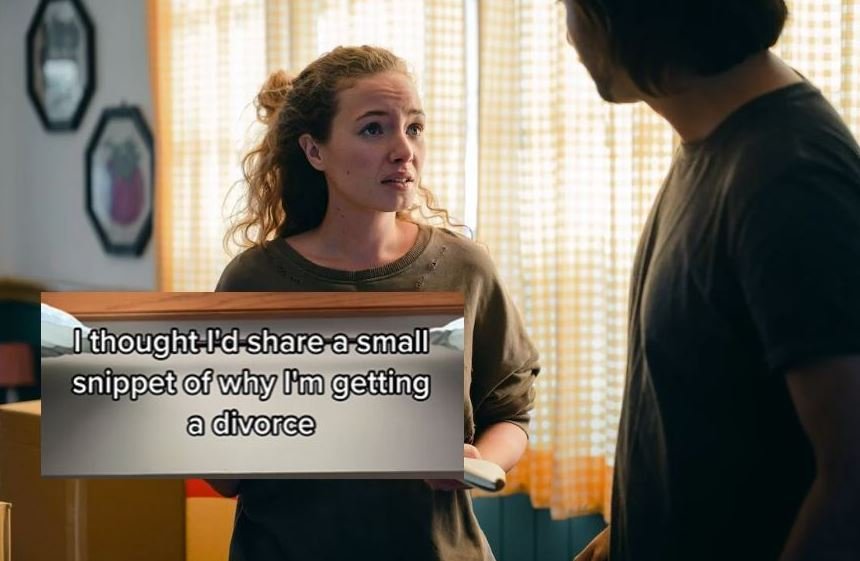
'Why women leave’: Wife who 'does everything' shares why she left her husband who did nothing

This is a common story in many households.

divorce, tiktok, why couples divorce

A woman is upset with her husband and wants to leave him.

There are a few big reasons why 70% of divorces in the United States among heterosexual couples are filed by women. Women have more economic opportunities than in decades past and are better positioned to care for themselves and their children without a husband’s income.

Another big reason is that even though the world has become much more egalitarian than in the past, women still bear the brunt of most of the emotional labor in the home. Gilza Fort-Martinez, a Florida, US-based licensed couples’ therapist, told the BBC that men are socialized to have lower emotional intelligence than women, leaving their wives to do most of the emotional labor.

Secondly, studies show that women still do most of the domestic work in the home, so many are pulling double duty for their households.

A TikTokker with two children (@thesoontobeexwife) shared why she decided to leave her husband of two decades and her story recounts a common theme: She did all the work and her husband did little but complain.

The video, entitled “Why women leave,” has received over 2 million views.

@thesoontobeexwife

Y’all I laughed when I realized he truly does treat me better now then when he was trying to be in a marriage with me. How is this better?? How did I ever think before was ok?? #toxicrelationship #divorce #mentalloadofmotherhood #divorcetok #divorceisanoption #chooseyou #mentalhealth #mentalload #fyp #mentalload #emotionallabor

“So for the men out there who watch this, which frankly I kind of hope there aren’t any, you have an idea maybe what not to do,” she starts the video. “Yesterday, I go to work all day, go pick up one kid from school, go grocery shopping, go pick up the other kid from school, come home. Kids need a snack–make the snack. Kids want to play outside – we play outside.”

Her husband then comes home after attending a volunteer program, which she didn’t want him to join, and the self-centeredness begins. “So he gets home, he eats the entire carton of blueberries I just purchased for the children’s lunch and asks me what’s for dinner. I tell him I don’t know because the kids had a late snack and they’re not hungry yet,” she says in the video.

She then explains how the last time he cooked, which was a rare event, he nearly punched a hole in the wall because he forgot an ingredient. Their previous home had multiple holes in the walls. Dr. Gail Saltz, a psychiatrist and host of the Power of Different podcast, says that when punch walls it’s a sign that they haven’t “learned to deal with anger in a reasonable way.”

“Anyway, finally one kid is hungry,” the TikTokker continues. “So I offered to make pancakes because they’re quick and easy and it’s late. He sees the pancake batter and sees that there’s wheat flour in it and starts complaining. Says he won’t eat them. Now I am a grown adult making pancakes for my children who I am trying to feed nutritionally balanced meals. So yes, there’s wheat flour in the pancake mix.”

Then her husband says he’s not doing the dishes because he didn’t eat any pancakes. “Friends, the only thing this man does around this house is dishes occasionally. If I cook, he usually does the dishes. I cook most nights. But here’s the thing. That’s all he does. I do everything else. Everything. Everything.”

She then listed all of the household duties she handles.

“I cook, I clean the bathrooms, I make the lunches, I make the breakfasts, I mow the lawn, I do kids’ bedtime. I literally do everything and he does dishes once a day, maybe,” she says.

@thesoontobeexwife

I HAVE OFFICIALLY FILED FOR DIVORCE 🎉 #divorce #divorcetok #toxicrelationship #divorceisanoption #fyp #mentalhealth #chooseyou #iamenough #iwillnotbeafraid #mentalloadofmotherhood #emotionallabor

The video received over 8700 comments and most of them were words of support for the TikTokker who would go on to file for divorce from her husband.

"The amount of women I’ve heard say that their male partners are only teaching how to be completely independent of them, theirs going to be so many lonely men out there," Gwen wrote. "I was married to someone just like this for over 35 years. You will be so happy when you get away from him," BeckyButters wrote.

"The way you will no longer be walking on eggshells in your own home is an amazing feeling. You got this!" Barf Simpson added.


This article originally appeared two years ago.

generation jones, gen jones, gen jonesers, girls in 1970s, 1970s, teens 1970s
Image via Wikimedia Commons

Generation Jones is the microgeneration of people born from 1954 to 1965.

Generational labels have become cultural identifiers. These include Baby Boomers, Gen X, Millennials, Gen Z and Gen Alpha. And each of these generations is defined by its unique characteristics, personalities and experiences that set them apart from other generations.

But in-between these generational categories are "microgenerations", who straddle the generation before and after them. For example, "Xennial" is the microgeneration name for those who fall on the cusp of Gen X and Millennials.


And there is also a microgeneration between Baby Boomers and Gen X called Generation Jones, which is made up of people born from 1954 to 1965. But what exactly differentiates Gen Jones from the Boomers and Gen Xers that flank it?

- YouTube www.youtube.com

What is Generation Jones?

"Generation Jones" was coined by writer, television producer and social commentator Jonathan Pontell to describe the decade of Americans who grew up in the '60s and '70s. As Pontell wrote of Gen Jonesers in Politico:

"We fill the space between Woodstock and Lollapalooza, between the Paris student riots and the anti-globalisation protests, and between Dylan going electric and Nirvana going unplugged. Jonesers have a unique identity separate from Boomers and GenXers. An avalanche of attitudinal and behavioural data corroborates this distinction."

Pontell describes Jonesers as "practical idealists" who were "forged in the fires of social upheaval while too young to play a part." They are the younger siblings of the boomer civil rights and anti-war activists who grew up witnessing and being moved by the passion of those movements but were met with a fatigued culture by the time they themselves came of age. Sometimes, they're described as the cool older siblings of Gen X. Unlike their older boomer counterparts, most Jonesers were not raised by WWII veteran fathers and were too young to be drafted into Vietnam, leaving them in between on military experience.

How did Generation Jones get its name?

generation jones, gen jones, gen jones teen, generation jones teenager, what is generation jones A Generation Jones teenager poses in her room.Image via Wikmedia Commons

Gen Jones gets its name from the competitive "keeping up with the Joneses" spirit that spawned during their populous birth years, but also from the term "jonesin'," meaning an intense craving, that they coined—a drug reference but also a reflection of the yearning to make a difference that their "unrequited idealism" left them with. According to Pontell, their competitiveness and identity as a "generation aching to act" may make Jonesers particularly effective leaders:

"What makes us Jonesers also makes us uniquely positioned to bring about a new era in international affairs. Our practical idealism was created by witnessing the often unrealistic idealism of the 1960s. And we weren’t engaged in that era’s ideological battles; we were children playing with toys while boomers argued over issues. Our non-ideological pragmatism allows us to resolve intra-boomer skirmishes and to bridge that volatile Boomer-GenXer divide. We can lead."

@grownupdish

Are you Generation Jones? Definitive Guide to Generation Jones https://grownupdish.com/the-definitive-guide-to-generation-jones/ #greenscreen #generationjones #babyboomer #generationx #GenX #over50 #over60 #1970s #midlife #middleage #midlifewomen #grownupdish #over50tiktok #over60women #over60tiktok #over60club

However, generations aren't just calculated by birth year but by a person's cultural reality. Some on the cusp may find themselves identifying more with one generation than the other, such as being culturally more Gen X than boomer. And, of course, not everyone fits into whatever generality they happened to be born into, so stereotyping someone based on their birth year isn't a wise practice. Knowing about these microgenerational differences, however, can help us understand certain sociological realities better as well as help people feel like they have a "home" in the generational discourse.

As many Gen Jonesers have commented, it's nice to "find your people" when you haven't felt like you've fit into the generation you fall into by age. Perhaps in our fast-paced, ever-shifting, interconnected world where culture shifts so swiftly, we need to break generations into 10 year increments instead of 20 to 30 to give everyone a generation that better suits their sensibilities.

This article originally appeared two years ago. It has been updated.

mind hack, psychology, mental health, motivation, therapy

Be the main character in your life.

A lot of the time, life can be boring. There's lots of waiting and wondering, and the mundane every-day chores can demotivate you, making you really feel the drudgery of it all. If only life were as interesting as a TV show. Wouldn't that make a big difference? For one person, doing just that changed their attitude and outlook on life for the better.

On Reddit, a poster shared that once they started treating life as if they were on a television show, they started feeling more excited to participate in the everyday and even began accomplishing more. They start each day with an episode title and end the "episode" by going to sleep. They claimed to be more excited each day to "unfold the cliffhanger I had of yesterday's episode," and would look back on their "season" (week) feeling prouder and "cooler" about their life. "This is the one time that being delusional actually helped me."


@mel.bot

All I got really #fyp #foryoupage #tiktok #dancingaroundthekitchen #romanticizeyourlife

Many commenters brought up how this reframing of life and other similar tricks worked out for them, too:

“Honestly, same! Sometimes when I’m stuck, I imagine I’m in a movie and the audience is screaming at the screen and I think, what are they yelling at me to do that’s so obvious to them? Helps with indecision or hard decisions.”

“I did this a lot as a kid. It made life feel exciting for sure.”

"Framing your day as an episode is genius because it turns the boring parts into plot development instead of just stuff you have to get through…My show would be a lot of filler episodes where the main character is on the couch with his dog but honestly those are the best episodes of any series anyway.”

“Sometimes, when I need to really lock in at work. I'll put earbuds in, put on some music, and imagine watching myself work like it's a dramatic montage in a movie. I don’t know why but it helps.”

“I started treating cooking like I was hosting a show.”

“I actually love this. It is a clean trick to beat boredom and procrastination. Giving the day a title and a clean ending makes you act like the main character instead of a background extra. I might steal it.”

“I kinda do this, I try to romanticize my life by saying oh I’m just the main character of my movie. I go through the struggles I’m going through only because it's the climax of the movie, and it’ll resolve eventually.”

This isn't the first time someone stumbled upon this type of mind hack. Licensed therapists who spoke to Upworthy weighed in on the mental reframing and discussed its effectiveness.

- YouTube youtube.com

"In many ways, viewing your life as a T.V. show is just a cognitive reframe, which can be helpful when overcoming hurdles," said therapist Jerred England. "On T.V., we expect the main character to face challenges and then overcome them as they reach their goal. In many ways, that's life, too. We don't watch programs where the main character has a victim mentality, is defeated, and then lies around at home for a week. Having a mindset that expects and overcomes challenges can be truly helpful—after all, life hands us plenty of them!"

"Thinking this way can give someone a nudge out of passivity," said narrative therapist Claudia Johnson. "Rather than waiting to feel motivated, they start living 'as if' their choices matter to a bigger arc. That can foster curiosity, openness to new experiences, and tolerance of short-term discomfort."

"It can also provide some psychic distance," Johnson added. "By thinking of your life as a movie during anxious times, rejection or failure feels like part of a plot rather than evidence against your self-worth."

While both therapists said that this reframing can be helpful, it can become harmful if taken too literally.

"Believing you are the main character can lead to performing life instead of being present in it. You start going through life instead of living it by curating experiences that look meaningful on the surface," said Johnson.

"One of the dangers is that you'll start basing your worth on whether you're excited or productive. Real life isn't a movie—it's full of mundane stretches where you're just maintaining the pace," she explained. "These 'everyday' chapters are vital but never make it into the highlight reel."

"I would caution that in T.V., we like to have drama, enemies, and constant challenges. If you find too much of that in your life, you might stay in a bad situation too long," concluded England. "If your friends tell you that your life is a T.V. show, you might consider changing your work or relationships. After all, most of us wouldn't actually like to live in The Truman Show."

Pop Culture

People rally behind an older woman who refused to train her 25-year-old replacement

"They expected me to teach her the job they said I wasn't good enough for."

ageism, workplace ageism, workplace violations, hr, negotiating severance package, exit strategy, hiring, jobs

An older employee refused two train her replacement who was "fresh out of grad school."

When an older employee was asked to train a 25-year-old to do the same job she'd been doing for as long as the young recruit had been alive, she had some choice words. And it became a vital lesson in not getting exploited.

The TikTok creator, who goes by The Unobsolete (@theunobsolete) centers her content around helping people “fight age bias” in the workplace. She explained how she had been “passed over” for a promotion that she had rightfully earned over the past two-and-a-half decades and was instead expected to train someone “fresh out of grad school” who presumably would then do the job for a fraction of the price.


“They expected me to teach her the job they said I wasn’t good enough for.”

The Unobsolete didn’t entertain pleasantries as she flat-out said “no.”

@theunobsolete watched 25-year-old get my promotion then ask me to train her. I said no. Not sorry. Not maybe. Just no. She shocked. Manager furious. HR email about team player. Don’t care. They passed me over for promotion I earned. Gave it to someone with zero experience. Expected me to teach her job they said I wasn’t good enough for. Train my replacement? Pay me. Want 25 years knowledge? Triple salary consulting rates. Want me to smile while you humiliate me? Wrong person. Not your free training program. Not making cheap hire look competent. Not handing over everything so you can pay her half. They said unprofessional. I said appropriately compensated or not sharing. They said not supporting team. I said team didn’t support me. Silence. Second you stop being useful they stop caring. Stop pretending you owe them anything.#promotions #over50 #notateamplayer #genx #isaidno ♬ original sound - The Unobsolete

"I'm not your free training program," she explained. "Want me to smile while you humiliate me? Wrong person." Furthermore, she noted that if she were going to move forward with the training, she would be expecting “triple salary consulting rates” as payment.

While she got reprimanded by HR for not “being a team player,” she maintained her stance that she deserved to be “fairly compensated for her expertise” or she wasn’t sharing it.

"They said [I was] not supporting [the] team. I said [the] team didn’t support me."

She then concluded the video with a word of caution to other folks who might find themselves in similar situations:

"The second you stop being useful, they stop pretending to care. So stop pretending you owe them anything."

With over four million views, the video certainly resonated. People flooded the comments agreeing how real ageism is in the workplace, and commended The Unobsolete for standing her ground.

"Can't be a team player for a team that played you," one person said.

Quite a few shared their own horror stories. One person recalled, "They hired 6 people to replace me and the work I was doing & wanted me to train them. Nope."

Another said, “I was laid off from a job and they said they’d be fine, because I wrote a literal manual on how to do everything for when I was on vacation. First thing I threw in the trash cleaning out my office. They emailed a few days later, asking where it was. I told them.”

In subsequent videos, The Unobsolete shared that while she didn’t get fired outright (for obvious legal reasons), the company had less direct ways of phasing her out. First, a meeting was held to discuss her "attitude.” Then, she was excluded from company functions and given less work. Eventually, she was called into another meeting and told the company's culture might not be a "good fit" for her.

@theunobsolete UPDATE: Refused to train replacement. What happened next I expected. Two days later meeting with manager and HR. My attitude. Not that they passed me over or wanted free labor. My attitude refusing exploitation. They said not collaborative poor leadership need team players. I said you passed me over want free training punish boundaries that’s control not collaboration. Silence. Not willing develop staff maybe not culture fit. I said right. Culture exploiting experience isn’t my fit. Ready for compensation talk? No? Back to my job. Didn’t fire me. Can’t. Lawsuit risk. Instead stopped including meetings gave projects away documented everything performance issues. Managed out playbook. I documented everything back. Every email meeting project. Knew exactly what they were doing. #promotions #isaidno #refused# #over45 #corporatetiktok ♬ original sound - The Unobsolete


"I agree," The Unobsolete apparently said in the meeting. "A culture that exploits experience isn't a fit for me."

Still, she didn’t back down and asked what the severance package she would receive for leaving. Unsurprisingly, that offer started off low with two weeks' worth of pay. The Unobsolete told them she expected six months of pay with full benefits through the end of the year, plus a neutral reference letter, and a release stating that they wouldn’t contest her unemployment.

When the manager said her demands were “unreasonable,” The Unobsolete replied, “So is asking me to train my replacement for free.”

@theunobsolete UPDATE PART 3: Refused train replacement. How it ended. Three weeks managed out documented retaliation. Manager and HR called me in. Don’t think right fit anymore. Best we part ways.#refusedtotrain #notateamplayer #isaidno #over50 #corporatetiktok ♬ original sound - The Unobsolete

“I’ve never been prouder of someone I don’t know,” one viewer wrote.

Thankfully, this story has a happy ending. The Unobsolete got her demands met, and with that six months of pay, she was able to build what she “actually wanted.” Furthermore, she learned that not long after she left, the 25-year-old quit the job and the company was left scrambling to fill the position. Talk about karmic justice.

“Turns out, I wasn’t obsolete after all. I was just undervalued. There’s a difference.”

Now, she’s taking what she’s learned to help other experienced professionals protect themselves against being taken advantage of.

“They’re counting on you being afraid…stop being what they’re counting on.”

That’s useful advice for anyone, no matter what age they are.

teenage boy, teenage girl, conversation, meeting people, talking
Photo credit:Canva/Photos

A teenage girl and boy having a nice chat.

You’re standing in line at the grocery store and you see someone cute. You’d like to strike up a conversation without it being awkward...but that feels kinda nerve-wracking, right? Or maybe you’re standing around at a party and see someone you’d like to get to know, and want to approach them in a way that doesn’t feel uncomfortable. That probably feels a little scary, too.

The good news is that with a few easy tricks, you can improve your communication skills and feel confident approaching anyone.


According to years of psychological research, several principles can help make striking up conversations with strangers easier. The great thing is that they all work best when approached in a casual, effortless way.

1. Comment on the environment

Let’s say you’re at a party in someone’s living room. You can comment on physical objects: “Gee, this guy sure has a lot of books.” Or maybe you’re at a party where everyone brought food: “The food smells great. What are you grabbing first?” You can also comment on people’s behavior: “Is it me, or is everyone really well dressed tonight?”

This works because of the Joint Attention Effect, which says that when two people pay attention to the same thing at the same time, they create a common point of reference. This shared focus can immediately make people feel closer, even in social situations.

man and woman, wine, social skills, conversation

2. Make a playful comment

People will usually respond when you make a playful or unexpected comment, as long as it isn’t threatening. For example, if the person you want to talk to is holding a cocktail, you might joke, “That drink looks serious.” If you’re stuck in a long line: “Do you know why we’re here? I almost forgot why we’re in line—it’s been so long.” Or if you’re at a child’s birthday party and spot another parent you’d like to talk to: “Be honest, how tired of Little Caesars’ pizza are you?”

This works because of the Benign Violations Theory, which suggests that when someone violates a social norm in a non-threatening way, it makes people laugh and activates bonding mechanisms. It signals to your new friend that you’re playful and friendly, and when they laugh at your joke, it shows that you share similar values.

man and woman, people laughing, sitting on couch, good company, jokes

3. Ask their opinion

Another effortless way to engage someone you don’t know is to ask their opinion. For example, if you’re in the produce section at the supermarket, you might ask, “Do these peaches look good to you?” Or if you’re at a party and bring up a pop culture moment most people watched: “So, was Bad Bunny great at the Super Bowl, or is he overrated?”

This works because of what’s known as Cognitive Ease: people are more likely to respond to questions that are easy to process. Asking someone for their subjective opinion is non-threatening, and it’s easy for them to come up with an answer that makes them feel comfortable. Plus, if social media has taught us anything, it’s that everyone loves to share their opinions.

drinks, bar, socializing, man and woman, party

Next step: Pivot and ask questions

Given that all of these strategies are psychologically designed to elicit a response, even from someone you’ve never met, you have a strong chance of sparking a conversation. The key is to widen the exchange once you get that response by asking two more questions. In fact, a Harvard University study found that one of the easiest ways to be likable is to start a conversation with a question and then follow up with two more.

“We identify a robust and consistent relationship between question-asking and liking,” the study's authors wrote. “People who ask more questions, particularly follow-up questions, are better liked by their conversation partners.”

These three psychological rules show that it doesn’t take a Herculean effort to coax a stranger into having a conversation. All you have to do is make an effortless invitation by tapping into the environment you share with them, make a playful joke, or ask their opinion. Then ask a few questions, listen, and there’s a good chance you’ve made a new friend.

Jim Henson interviewing with Muppets is a delightful reminder of his magical genius

Even adults would forget that his characters weren't actually alive.

jim henson, muppets, puppets, puppeteering, the muppet show
Public domain

Jim Henson with some of his Muppets

Few individuals have had an impact on the childhoods of millions and the imaginations of people of all ages like Jim Henson. From Sesame Street to The Muppet Show to The Dark Crystal and Labyrinth, Gen Xers grew up with Henson's magic being a familiar and comforting presence. And to this day, over three decades after his death, the characters he created are still household names.

For those of us who were raised on Big Bird, Bert and Ernie, Kermit, and Miss Piggy, Henson's creatures feel as real as any living, breathing performer from our childhoods. But it's not just because we were kids when we were introduced to them. Even adults who met the Muppets found themselves transported into Henson's imaginary world, and after seeing interviews of the puppeteer with his creatures, it's easy to see why.


Watch:

Henson didn't even pretend to not be controlling Kermit. He didn't bother with ventriloquism. And yet, Kermit feels truly alive and separate from the person animating him. It almost feels surreal. Or perhaps just...real.

Henson's characters even convinced film crew members

Both guests and crew members alike found themselves pulled into Henson's world, even while fully understanding that the puppets were being controlled by people. The crew would sometimes move the boom mic to a puppet instead of the puppeteer. Directors would sometimes give stage directions directly to the Muppet instead of the human animating it. Dick Cavett, who interviewed Henson with his Muppets, said, “No matter how much you know about this, it’s completely convincing.”

Even when a Muppet would explain the fact that the person was speaking to a puppet, it still seemed like a sentient being. Case in point:

(This may be the one time you see Henson swear, but in context, it's brilliantly wholesome.)

@guygilchrist

My old boss’s last public performance as Rowlf.🐶🙏🏻 . . #jimhenson #jimhensonscartoonist #themuppets #fyp #foryoupage


Frank Oz shared what it was like to work with Henson

Of course, Henson didn't work alone. Bringing his characters to life in all the ways he envisioned took the work of many people, but none were more aligned with Henson himself than his partner-in-puppetry, Frank Oz. Oz was the Miss Piggy to Henson's Kermit, the Bert to his Ernie, the Animal to his Dr. Teeth.

Oz started working with Henson when he was just 19 years old, and for 27 years the duo created unforgettable magic together. It wasn't just the puppets. It was the voices, the comedic timing, the way they could make you laugh in one moment and well up with tears in the next. Their creatures entertained us but also taught us about being human, which was a truly remarkable feat.

Oz shared what it was like to work with Henson with Gene Shalit after Henson's death in 1990:

- YouTube www.youtube.com

Like Fred Rogers, Jim Henson is remembered for being a distinctly decent person in addition to his creative work. He brought the ancient art of puppetry into the modern world, touching every generation in his lifetime and after in a way that remains unmatched. As the tribute song "A Boy and His Frog" by Tom Smith says:

"They say, 'Oh that's foam and a wire, attached to a green velvet sleeve. Anyone can do that.' Well, that's true, I suppose, but who else can make them believe?" (Grab a tissue before listening to this song, Henson lovers. It's a doozy.)

- YouTube youtu.be

How his legacy lives on

Henson’s children, Lisa, Cheryl, Brian, John, and Heather, have carried on his work by running the Jim Henson Company and Jim Henson Foundation, performing themselves, and continuing to advocate for the art of puppetry. They've also kept Jim Henson's Creature Shop running, creating puppets, animatronics, and even digital puppetry. The shop designed and built the full-size animatronic puppets for the 2023 Five Nights at Freddy's movie and works on television, commercial, and themed projects as well.

In 2024, renowned director Ron Howard released a documentary about Henson's life and work, Jim Henson: Idea Man, which can be found on Disney +.

- YouTube www.youtube.com