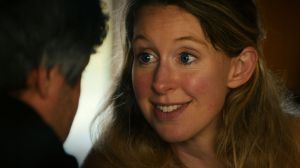
This Lady Wants You To Know That There’s More Than One Way To Work Hard In America
You know how car commercials are all “Look at your life! Look at your choices, American!”? I always wanna yell back: “Why do you care? You’re a car!” Well, this ad made me want to yell something different. And maybe do a little celebratory fist pump, too.
Commercials gotta do their commercial thing, but if they use their HUGE platform to lift up the great work of some great Americans like the gal above, color me intrigued.
The woman in this commercial is Pashon Murray and she’s a real person doing real work in Detroit with Detroit Dirt. They make compost for farms so Detroit can make itself an even happier place for people to live. Cities can be complicated organisms, and they require creative awesomeness like Ms. Murray’s, so here’s to her. And here’s to brands interested in the life and choices of some really cool people. If cars care about that, I *might* be OK with it.
A single door can open up a world of endless possibilities. For homeowners, the front door of their house is a gateway to financial stability, job security, and better health. Yet for many, that door remains closed. Due to the rising costs of housing, 1 in 3 people around the world wake up without the security of safe, affordable housing.
Since 1976, Habitat for Humanity has made it their mission to unlock and open the door to opportunity for families everywhere, and their efforts have paid off in a big way. Through their work over the past 50 years, more than 65 million people have gained access to new or improved housing, and the movement continues to gain momentum. Since 2011 alone, Habitat for Humanity has expanded access to affordable housing by a hundredfold.
A world where everyone has access to a decent home is becoming a reality, but there’s still much to do. As they celebrate 50 years of building, Habitat for Humanity is inviting people of all backgrounds and talents to be part of what comes next through Let’s Open the Door, a global campaign that builds on this momentum and encourages people everywhere to help expand access to safe, affordable housing for those who need it most. Here’s how the foundation to a better world starts with housing, and how everyone can pitch in to make it happen.
Volunteers raise a wall for the framework of a new home during the first day of building at Habitat for Humanity’s 2025 Carter Work Project.
Globally, almost 3 billion people, including 1 in 6 U.S. families, struggle with high costs and other challenges related to housing. A crisis in itself, this also creates larger problems that affect families and communities in unexpected ways. People who lack affordable, stable housing are also more likely to experience financial hardship in other areas of their lives, since a larger share of their income often goes toward rent, utilities, and frequent moves. They are also more likely to experience health problems due to chronic stress or environmental factors, such as mold. Housing insecurity also goes hand-in-hand with unstable employment, since people may need to move further from their jobs or switch jobs altogether to offset the cost of housing.
Affordable homeownership creates a stable foundation for families to thrive, reducing stress and increasing the likelihood for good health and stable employment. Habitat for Humanity builds and repairs homes with individual families, but it also strengthens entire communities as well. The MicroBuild® Initiative, for example, strengthens communities by increasing access to loans for low-income families seeking to build or repair their homes. Habitat ReStore locations provide affordable appliances and building materials to local communities, in addition to creating job and volunteer opportunities that support neighborhood growth.
Marsha and her son pose for a photo while building their future home with Southern Crescent Habitat for Humanity in Georgia.
Everyone can play a part in the fight for housing equity and the pursuit of a better world. Over the past 50 years, Habitat for Humanity has become a leader in global housing thanks to an engaged network of volunteers—but you don’t need to be skilled with a hammer to make a meaningful impact. Building an equitable future means calling on a wide range of people and talents.
Here’s how you can get involved in the global housing movement:
Speaking up on social media about the growing housing crisis
Volunteering on a Habitat for Humanity build in your local community
Travel and build with Habitat in the U.S. or in one of 60+ countries where we work around the globe
Join the Let’s Open the Door movement and, when you donate, you can create your own personalized door
Every action, big and small, drives a global movement toward a better future. A safe home unlocks opportunity for families and communities alike, but it’s volunteers and other supporters, working together with a shared vision, who can open the door for everyone.
“Based on those circumstances, I think it’s appropriate that I dismiss this case.” Judge Frank Caprio after hearing why a man ran a red light to reach his pregnant wife.
“Because I’m bald,” Lucardi said. “So, making sense with my face.”
Caprio teased that maybe the sun’s glare on his bald head caused him to miss the light. But the mood shifted completely when Lucardi explained what actually happened.
A pregnant woman makes a phone call. Photo credit: Canva
Lucardi worked as a Lyft driver to support his family. The day he ran the red light, his pregnant wife called him while he was stopped at a signal. She was bleeding. She was having a miscarriage. This was their fifth loss.
“When she called me, she told me she was bleeding and she was pregnant at the time, and I shut down the app, and I was trying to rush to go be with her because she was by herself in the house,” Lucardi explained. He thought he was catching a yellow light but realized later it had already turned red. His wife eventually recovered, but they lost their baby that day.
The courtroom went quiet.
“Based on those circumstances, I think it’s appropriate that I dismiss this case,” Caprio said. He asked about Lucardi’s family, and Lucardi shared that it had been a difficult time. He’d been taking steps to help his wife heal from the trauma of multiple pregnancy losses.
“Our thoughts are with you and your family. Good luck to you. The case is dismissed,” Caprio told him.
The episode, titled “The Pain of Losing a Child,” captured something that doesn’t always show up in courtrooms: the ability to see the human being behind the violation. This wasn’t about letting someone off the hook for breaking a rule. It was about recognizing that sometimes life puts people in impossible situations where following every rule to the letter stops making sense.
Caprio has built a reputation for this kind of compassion. In another episode called “Homeless and Hungry,” he met a homeless autistic woman whose car had been booted with ten violations. She’d just secured a job and was living in her car. She asked for a lenient payment plan. Instead, Caprio covered $300 of her $400 fine through the Filomena Fund and gave her a month to pay the remaining $100. When he learned she was eating only one meal a day, he made sure she left the court with enough money to buy food.
These moments show what’s possible when the justice system makes room for understanding alongside enforcement. Lucardi left that courtroom without a fine, but probably with something more valuable: the knowledge that someone in a position of power had listened to his story and responded with humanity instead of just procedure.
Julie Silverman had been coughing for years. Not the kind of cough that goes away with some rest and cough syrup, but a persistent, worsening cough that no doctor seemed able to explain or fix. As she shared on NPR’s Hidden Brain podcast in the “My Unsung Hero” segment, the experience of being dismissed by the healthcare system over and over again was exhausting.
“I had, at this point, gotten kind of dismissive about it because I had been dismissed by so many doctors as, ‘There’s nothing wrong, you’re not responding to our treatments, we’ll try something else,’” Silverman recalled.
But one person refused to dismiss her: a nurse practitioner named Alison.
A nurse checks the vitals of a patient. Photo credit: Canva
Alison worked at one of the clinics Silverman visited regularly, and unlike the doctors who had cycled through various unsuccessful treatments, Alison kept paying attention. She was perplexed by the cough and made it her mission to track Silverman’s condition over time.
During one of Silverman’s weekly appointments, Alison noticed something concerning. Silverman’s symptoms had gotten worse. Her voice was hoarse, she was breathless and wheezing, and the coughing was more severe than before.
“She was just adamant something was wrong with my airway,” Silverman said.
Alison immediately pushed one of the physicians at the clinic to perform a scope of Silverman’s trachea. The procedure involved inserting a small camera through her nose and down the back of her throat to look for blockages.
“I could just tell by their faces something was not right,” Silverman remembered.
The scope revealed what years of doctor visits had missed. Silverman had idiopathic subglottic stenosis, a rare condition that affects about one in 400,000 people. Scar tissue had been building up at the top of her trachea, and her airway was 75% blocked. That’s why she’d been coughing. That’s why nothing had worked. And if it had gone untreated much longer, it would have been fatal.
“This is a very serious condition and fatal if not treated because your airway completely closes,” Silverman explained.
The diagnosis finally gave Silverman what she needed: the right information to find the right specialist who could actually treat her condition. She’s now doing well, spending her time volunteering at her local hospital, riding her bike, hiking, skiing, and enjoying time with friends and family.
But she hasn’t forgotten what Alison did for her.
“Had Alison not picked up on the fact that she was sure something else was wrong and gotten this physician to look in my throat, I don’t know what would have happened,” Silverman said. “It was her persistence and diligence and her listening to me and taking me seriously that got my diagnosis in a timely enough fashion to do something about it. So, for these reasons, Alison is my unsung hero.”
Our healthcare system is increasingly driven by rapid diagnoses and technology, but sometimes what saves a life is just simple human attention. Someone who listens, keeps watching, and refuses to dismiss what they’re seeing even when everyone else has moved on.
“I had to cut my hair out because of you!” Singer Natalie Jane’s reaction when her childhood bully showed up at her concert with flowers and an apology.
What she didn’t expect was a sign that would stop her mid-performance.
“What does that sign say?” Jane asked into the mic, squinting to make out the words in the dark theater. The camera panned to reveal a big white sign with a simple question: “Do you remember me from 2nd grade?”
Curious, Jane responded, “I can’t see. Who are you?”
The fan flipped the sign over. The back read: “I put gum in your hair.”
Jane let out a shriek. “Benji! I hate you!”
The crowd erupted. The camera found Benji in the audience, and Jane wasn’t done. “I had to cut my hair out because of you,” she yelled, pointing straight at him.
Benji’s response was simple and sincere: “You were in town. I had to come by and say I’m sorry for many years ago.”
Then, from somewhere in the crowd, a bouquet of roses appeared. The audience went wild. Someone handed the flowers to Jane, and her face lit up with a mix of nostalgia, surprise, and what looked like genuine forgiveness.
“Benji, you are forgiven. Thank you. I love you,” she said into the mic. “Shout out, Benji!”
She galloped across the stage, whipping her long blonde hair around (the hair that Benji once put gum in, apparently), and continued the show.
Jane posted the moment on Instagram on March 28, and people immediately started imagining it as the plot of a future rom-com. The comments were full of people joking about wedding invitations and asking if this was staged (it doesn’t appear to be).
But beyond the rom-com potential, there’s something genuinely touching about someone tracking down a person they wronged as a child and making the effort to apologize decades later. Benji could have just stayed home. Instead, he showed up to her concert, made himself vulnerable in front of hundreds of people, and gave her something most of us never get: actual closure on a childhood hurt.
Jane walked off that stage a little more healed than when she walked on. And honestly? That’s probably the best kind of encore.
“Yep, he saved my life.” A Massachusetts basketball coach on the rival coach who grabbed an AED and shocked him back after cardiac arrest on the court.
Ian Haffer, the coach from the opposing Belmont team, saw it happen. He didn’t hesitate. He yelled for someone to get an AED (automated external defibrillator), ran over to Poirier, and started cutting off his shirt.
Parents in the stands watched in shock as Haffer, who had medical training, got the AED hooked up and delivered the shock. A parent named Reed Bundy called 911. Paramedics arrived minutes later and rushed Poirier to the hospital, where he was treated for cardiac arrest in the ICU.
Haffer had been coaching in Belmont for years, but he’d never faced anything like this. “I was unsure about what was going to happen,” he told WAGMTV. “However, I knew I had to act as fast as I could.”
On the court, they were rivals. Off the court, Poirier now credits Haffer with giving him a second chance at life. When asked about it later, he got emotional and choked up.
“Yep, he saved my life,” Poirier said.
A high school basketball coach watches his players. Photo credit: Canva
Poirier was still in the hospital awaiting further testing when he gave that interview, still processing what had happened. The whole thing, from collapse to shock to ambulance, probably took less than ten minutes. But those ten minutes were the difference between walking out of that gym and not walking out at all.
Haffer didn’t think about the game. He didn’t think about the scoreboard or the fact that Poirier was technically his opponent that day. He just saw someone who needed help and moved.
The world can feel so wondrously big when we’re kids, to the point where even the smallest excursions can feel like a grand adventure. Even, say, a walk to grandma’s house next door.
That was certainly the case for Missy Lanning’s sweet two-year-old daughter. And thanks to modern-day technology, we all got to go along for the adorable ride! In a previous clip posted to her TikTok, Lanning explains that her little one walks alone to Grandma’s (aka Mimi’s) house, which is on the same plot of land.
Naturally, when someone suggested that Lanning put a microphone on her daughter for the next solo journey, Lanning did one better and strapped a full-blown camera on her. A delightful (and loooooong) journey filled with giant blue skies, friendly farm creatures, and wholesome Little House on the Prairie vibes ensued.
So cute, right? Especially hearing her say “chitens” instead of chickens. And the fact that she’s wearing a Little Red Riding Hood-esque cloak ON HER WAY TO GRANDMA’S? Chef’s kiss.
Down in the comments, people were floored at getting to see the full scope of a trip like that when seen through the eyes of a small child.
“Her POV is giving she travelled for 40 days and 40 nights.”
“She’s gonna grow up to tell her kids how you made her through mountains and snow storms to get to Mimi’s.”
“Her POV is making me realize how huge the world must seem to kids! I’ve never considered this before.”
“‘The road was long and treacherous, it was many days. But we had pet friends along the way.”
“She left on Sunday and got there on Monday.”
“From her POV it was like hiking the Appalachian Trail.”
We might not ever technically be able to turn back the clock and return to a time when the world was this vast, but children help us remember that feeling when we just sit back and watch them experience it for the first time.
This article originally appeared 5 months ago. It has been updated.
It’s safe to say that most veterinarians go into animal medicine because they love animals and want to help them. But in the day-to-day business of doing exams, treating various medical conditions, and helping pet owners through agonizing decisions about their companions’ end-of-life care, the pure joy of simply loving on an animal can get lost.
But as one vet demonstrates, veterinary care sometimes means providing some personal cuddle comfort. Dr. Kris Vine, DVM, a veterinarian in Las Vegas, was captured giving a new patient, a scared Chihuahua-Dachshund mix, some affection and reassurance in the middle of his exam.
Watch the moment that won the internet
“My new patient was scared to get his vaccines so I had to give him some lov’n between each one,” Dr. Vine wrote. “He did good.”
The doggo puts his paws up on Vine’s chest and nuzzles his little face into him, and we can see by the tail between his legs that the poor thing is terrified. But he finds comfort in Vine’s soothing strokes. “I’m not only their doctor, but their safe space as well,” Vine tells Upworthy.
Vine’s hope is to make the animals in his care as comfortable as possible, and people are loving seeing his genuine, patient compassion for the frightened pup.
“Perfect example of real compassion a person has inside of them both for himself and his job,” wrote one person. “So touching.”
“Omg why can’t all vets AND groomers be like this?!!! ,” wrote another. “I dropped my last groomer cause I didn’t like the tone she used with my baby.”
“It is good to receive love ❤️ to help get through our fears ❤️ ,” shared another.
It’s so true. Lots of animals are afraid to go to the vet, especially if they associate it with something painful or negative. Having a caring, compassionate vet who goes out of their way to provide comfort to a frightened furry friend can make a big difference in how an animal feels about vet visits.
To be fair, vet visits can be scary. Plenty of humans have anxiety about going to the doctor even when we fully understand why we need to go. For an animal, it’s just an unfamiliar place with strange smells and harsh lighting where someone pokes and prods them without their consent. Many pets have to be put into a carrier and ride in the car to go to the vet, which may cause them stress. Vets can do a lot to ease an animal’s fears, but owners can do even more at home beforehand to prepare their pet for a vet visit.
5 ways to make vet visits less stressful
PetLife Animal Hospital recommends these steps to help animals feel more at ease about going to the vet:
1. Make Car Rides Positive
If your pet only goes in the car to visit the vet, they may associate car rides with fear. Take them on short, enjoyable rides and reward them with praise or treats afterward to help break the negative association.
2.Turn the Carrier into a Comfort Zone
Keep the pet carrier out at home—not just when it’s time to leave. Line it with soft blankets, place treats inside, and let your pet explore it at their own pace. This turns the carrier into a familiar, safe space.
3. Schedule “Happy Visits”
Stop by your local vet office or animal hospital just to say hello! Let your pet meet the team, get a treat, and leave. No needles. No exams. Just good vibes and friendly faces.
4. Stay Calm and Confident
Your pet looks to you for cues. If you’re calm and positive, it helps them feel safe. Use a cheerful voice, avoid rushing, and reassure them with gentle touches.
5. Talk to Your Vet About Extra Help
Some pets need a little more support. Ask about calming sprays, anxiety-reducing supplements, or even prescription options if needed.
Vet visits can be stressful, but there are steps to make them easier for everyone. Photo credit: Canva
Making sure our pets get the medical and emotional care they need is an important part of pet ownership. Finding a caring vet is a big part of fulfilling those responsibilities, so thanks to Dr. Vine for setting such a beautiful example.
The invention of sewing and knitting machines changed the way we acquire clothing, and the skills people used to possess have largely gone by the wayside. If we get a hole in a sock nowadays, we toss it and replace it. Most of us have no idea how to darn a sock or fix a hole in any knit fabric. Unfortunately, it’s far easier for us to replace than to repair.
But there are still some among us who do have the skills to repair clothing in a way that makes it look like the rip, tear or hole never happened, and to watch them do it is mesmerizing.
Videos of people stitching holes in knit sweaters have gone viral on social media with millions of views on simple, 2-minute demonstrations. Why? Well, you just have to see it in action.
One video begins by showing a hole in a light pink knit sweater. Using a needle, yarn and a tiny latch hook device, the person demonstrates how to fill the hole to make it look as if it never existed in the first place. Putting a patch over a hole is one thing, but this is something akin to magic.
Wow, right?
Another video begins by showing a hole in a gray knit sweater, but this time a yellow yarn is used to patch the hole so you can see clearly what was done. It looks so simple, but you really do have to know what you’re doing to make this magic work.
What we’re witnessing here is a combo of knowledge and experience in the fiber arts, of course, but what it looks like is sheer sorcery or some kind of really complicated calculus problem. Who figured out how to do this? And why is it so satisfying to watch?
The internet is completely hypnotized
“I watched this whole video and I still don’t know how you did that,” shared one commenter. (Right?!)
“Hey that was pretty neat,” wrote another. “Can you do the ozone layer next?” (Ha.)
“I could watch it a hundred times and still not be able to do this,” wrote another. (Uh, same.)
“My toxic trait is thinking I can do this 😂😂😂,” shared another. (Maybe after watching it two hundred times.)
Many people found it oddly soothing to watch, perhaps because seeing something being fixed is indeed satisfying and perhaps because it harkens back to a simpler time when people spent their evenings doing things like this around the fire.
The music helps, too. This video demonstrates three different ways to mend sweater holes and the piano practically lulls you into a meditative state while you watch. Is this fiber arts therapy for those of us who don’t sew or knit or crochet? Maybe so. Whatever works, right?
We’ve all been there. We’ve discovered the perfect Airbnb, maybe a little cottage in the mountains, or a condo with stunning beach views. And the price is right in our budget. Hallelujah! Then, unfortunately, when we get to the booking page we realize our total cost is far higher than expected. Why? It’s the dreading cleaning fee.
Airbnb defines its notorious cleaning fee as a “one-time charge” set by the host that helps them arrange anything from carpet shampoo to replenishing supplies to hiring an outside cleaning service, all in the name of ensuring guests have a “clean and tidy space.”
One host decided to try something different
But as many frustrated Airbnb customers will tell you, this feature is viewed as more of a nuisance than a convenience. According to NerdWallet, the general price for a cleaning fee is around $75, but can vary greatly between listings, with some units having cleaning fees that are higher than the nightly rate (all while sometimes still being asked to do certain chores before checking out). And often none of these fees show up in the total price until right before the booking confirmation, leaving many travelers feeling confused and taken advantage of. It’s certainly a case of sticker shock if you’re used to staying in hotels.
However, some hosts are now opting to build cleaning fees into the overall price of their listings, mimicking the strategy of traditional hotels.
Rachel Boice runs two Airbnb properties in Georgia with her husband Parker—one being this fancy glass plane tiny house (seen below) that promises a perfect glamping experience.
Like most Airbnb hosts, the Boice’s listing originally showed a nightly rate and separate cleaning fee. According to her interview with Insider, the original prices broke down to $89 nightly, and $40 for the cleaning fee.
But after noticing the negative response the separate fee got from potential customers, Rachel told Insider that she began charging a nightly rate that included the cleaning fee, totaling to $129 a night.
It’s a marketing strategy that more and more hosts are attempting in order to generate more bookings (people do love feeling like they’re getting a great deal) but Boice argued that the trend will also become more mainstream since the current Airbnb model “doesn’t feel honest.” Which is funny, because if anything listing the cleaning charge is more transparent! But users tend to feel duped because they can’t see the full price when they’re browsing the listings.
“We stay in Airbnbs a lot. I pretty much always pay a cleaning fee,” Boice told Insider. “You’re like: ‘Why am I paying all of this money? This should just be built in for the cost.’”
Since combining costs, Rachel began noticing another unexpected perk beyond customer satisfaction: guests actually left her property cleaner than before they were charged a cleaning fee.
Her hypothesis was that they assumed she would be handling the cleaning herself.
“I guess they’re thinking, ‘I’m not paying someone to clean this, so I’ll leave it clean,’” she said.
This discovery echoes a similar anecdote given by another Airbnb host, who told NerdWallet guests who knew they were paying a cleaning fee would “sometimes leave the place looking like it’s been lived in and uncleaned for months.” So, it appears to be that being more transparent and lumping all fees into one overall price makes for a happier (and more considerate) customer.
The psychology behind why it works
This phenomenon has been studied by economists across many different fields. A blueberry farmer once considered charging customers for grazing on blueberries as they walked until an economist told him paying the fee would just encourage people to eat even more. Daycares who charge parents fees for picking their kids up late often find the fee increases the number of late parents instead of decreasing it.
It comes down to the “cost” of a decision. If you pay the same cleaning fee no matter what condition you leave the property in, a lot of people will find it’s just not worth their time to tidy up after themselves. When the cost of leaving the place filthy is more nebulous, or human (forcing another person to do it), people are more willing to help out.
These days, it’s hard to not be embittered by deceptive junk fees, which can seem to appear anywhere without warning. These can include surprise overdraft charges, surcharges on credit cards and the never convenient “convenience charge” when purchasing event tickets. Junk fees are so rampant that certain measures are being taken to try to eliminate them outright in favor of more honest business approaches.
And now, the rules are changing for everyone
Speaking of a more honest approach, Airbnb has gone even further since 2022. As of April 2025, Airbnb eliminated the opt-in toggle entirely and made total price display, including all mandatory fees before taxes, the automatic global default for all users. The change was driven partly by the FTC’s Junk Fees Rule, which took effect May 12, 2025, requiring short-term rental platforms to clearly display the full price upfront.
As for Boice, business is booming. After her story went viral on TikTok, she decided to expand her property business with another glass house.
Users were thrilled, especially ones who live in Georgia, within shouting distance of her properties. And after all the viral exposure, she’s still not charging cleaning fees. Although, there’s not much she can do about those pesky “Airbnb service fees.” Oh well. You can’t win ’em all.
This article originally appeared three years ago. It has been updated.