
A story about two pairs of boots illustrates how rich people get richer in ways poor people can't
It’s got nothing to do with bootstraps.
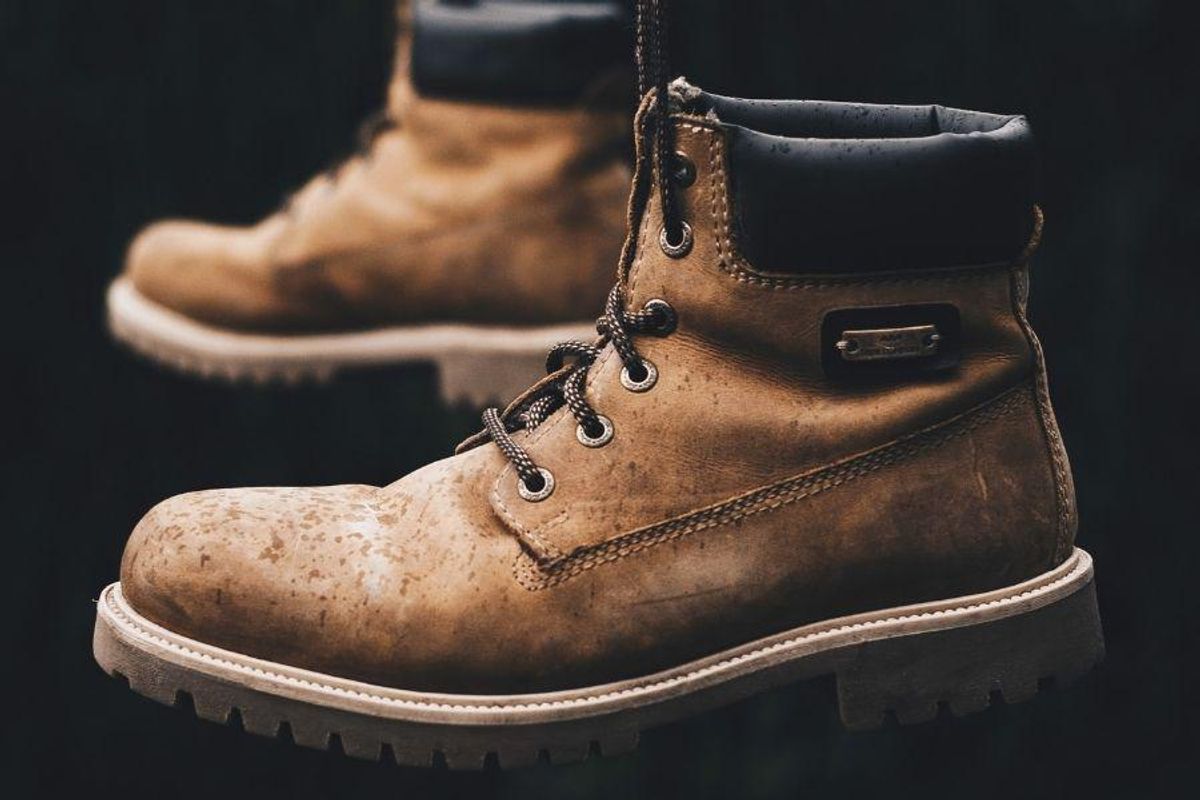
The Sam Vimes "Boots" Theory of Socioeconomic Unfairness explains one way the rich get richer.
Any time conversations about wealth and poverty come up, people inevitably start talking about boots. The standard phrase that comes up is "pull yourself up by your bootstraps," which is usually shorthand for "work harder and don't ask for or expect help." (The fact that the phrase was originally used sarcastically because pulling oneself up by one's bootstraps is literally, physically impossible is rarely acknowledged, but c'est la vie.)
The idea that people who build wealth do so because they individually work harder than poor people is baked into the American consciousness and wrapped up in the ideal of the American dream. A different take on boots and building wealth, however, paints a more accurate picture of what it takes to get out of poverty.
Author Terry Pratchett is no longer with us, but his writing lives on and is occasionally shared on his official social media accounts. Recently, his Twitter page shared the "Sam Vimes 'Boots' Theory of Socioeconomic Unfairness" from Pratchett's 1993 book "Men At Arms." This boots theory explains that one reason the rich are able to get richer is because they are able to spend less money.
If that sounds confusing, read on:
Pratchett wrote:
"The reason that the rich were so rich, Vimes reasoned, was because they managed to spend less money.
Take boots, for example. He earned thirty-eight dollars a month plus allowances. A really good pair of leather boots cost fifty dollars. But an affordable pair of boots, which were sort of OK for a season or two and then leaked like hell when the cardboard gave out, cost about ten dollars. Those were the kind of boots Vimes always bought, and wore until the soles were so thin that he could tell where he was in Ankh-Morpork on a foggy night by the feel of the cobbles.
But the thing was that good boots lasted for years and years. A man who could afford fifty dollars had a pair of boots that’d still be keeping his feet dry in ten years’ time, while the poor man who could only afford cheap boots would have spent a hundred dollars on boots in the same time and would still have wet feet."
In other words, people who have the money to spend a little more upfront often end up spending less in the long run. A $50 pair of boots that last five years essentially cost you $10 a year. But if you can only afford $10 upfront for a pair of boots that last six months, that's what you buy—and you end up paying twice as much over a five-year period.
There are so many areas in which this principle applies when you're poor. Buying in bulk saves you money over the long run, but you have to be able to afford the bulk cost up front. A reliable car that doesn't require regular repairs will cost more than a beater, but if the beater is all you can afford, that's what you're stuck with. You'll likely spend the same or more over time than if you'd bought a newer/higher quality car, but without the capital (or the credit rating) to begin with, you don't have much choice.
People who can afford larger down payments pay lower interest rates, saving them money both immediately and in the long run. People who can afford to buy more can spend more with credit cards, pay off the balances, build up good credit and qualify for lower interest rate loans.
There are lots of good financial decisions and strategies one can utilize if one has the ability to build up some cash. But if you are living paycheck to paycheck, you can't.
Climbing the financial ladder requires getting to the bottom rung first. Those who started off anywhere on the ladder can make all kinds of pronouncements about how to climb it—good, sound advice that really does work if you're already on the ladder. But for people living in poverty, the bottom rung is just out of reach, and the walls you have to climb to get to it are slippery. It's expensive to be poor.
When people talk about how hard it is to climb out of poverty, this is a big part of what they mean. Ladder-climbing advice is useless if you can't actually get to the ladder. And yet, far too many people decry offering people assistance that might help them reach the ladder so they can start taking advantage of all that great financial advice. Why? Perhaps because they were born somewhere on the ladder—even if it was the bottom rung—and aren't aware that there are people for whom the ladder is out of reach. Or perhaps they're unaware of how expensive it is to be poor and how the costs of poverty keep people stuck in the pit. Hopefully, this theory will help more people understand and sympathize with the reality of being poor.
Money makes money, but having money also saves you money. The more money you have, the more wealth you're able to build not only because you have extra money to save, but also because you buy higher quality things that last, therefore spending less in the long run. (There's also the reality that the uber-wealthy will pay $5,000 for shoes they'll only wear a few times, but that's a whole other kind of boots story.)
Thanks, Terry Pratchett, for the simple explanation.
This story originally appeared two years ago.
- America's wealth gap gets summed up in this guy's friend list ... ›
- Abigail Disney reveals the 5 secrets the super-rich teach their trust ... ›
- People are sharing what it was like encountering insanely rich kids ... ›
- Things the rich have ruined for everyone - Upworthy ›
- Frustrated mom lives paycheck to paycheck - Upworthy ›
- People share things that have gotten too expensive to afford - Upworthy ›
- Mom ignites debate after buying 7-year-old daughter high heels - Upworthy ›
- Why every American should be poor at least once - Upworthy ›
- People shared their experiences encountering insanely rich kids for the first time - Upworthy ›
- 15 of the wildest things average folks have witnessed at uber-rich people events - Upworthy ›
- Discover the '30/30 rule': Shopaholics' secret to saving - Upworthy ›



 Dirty dishes left on a tableCanva
 Gif of overwhelmed waitress via