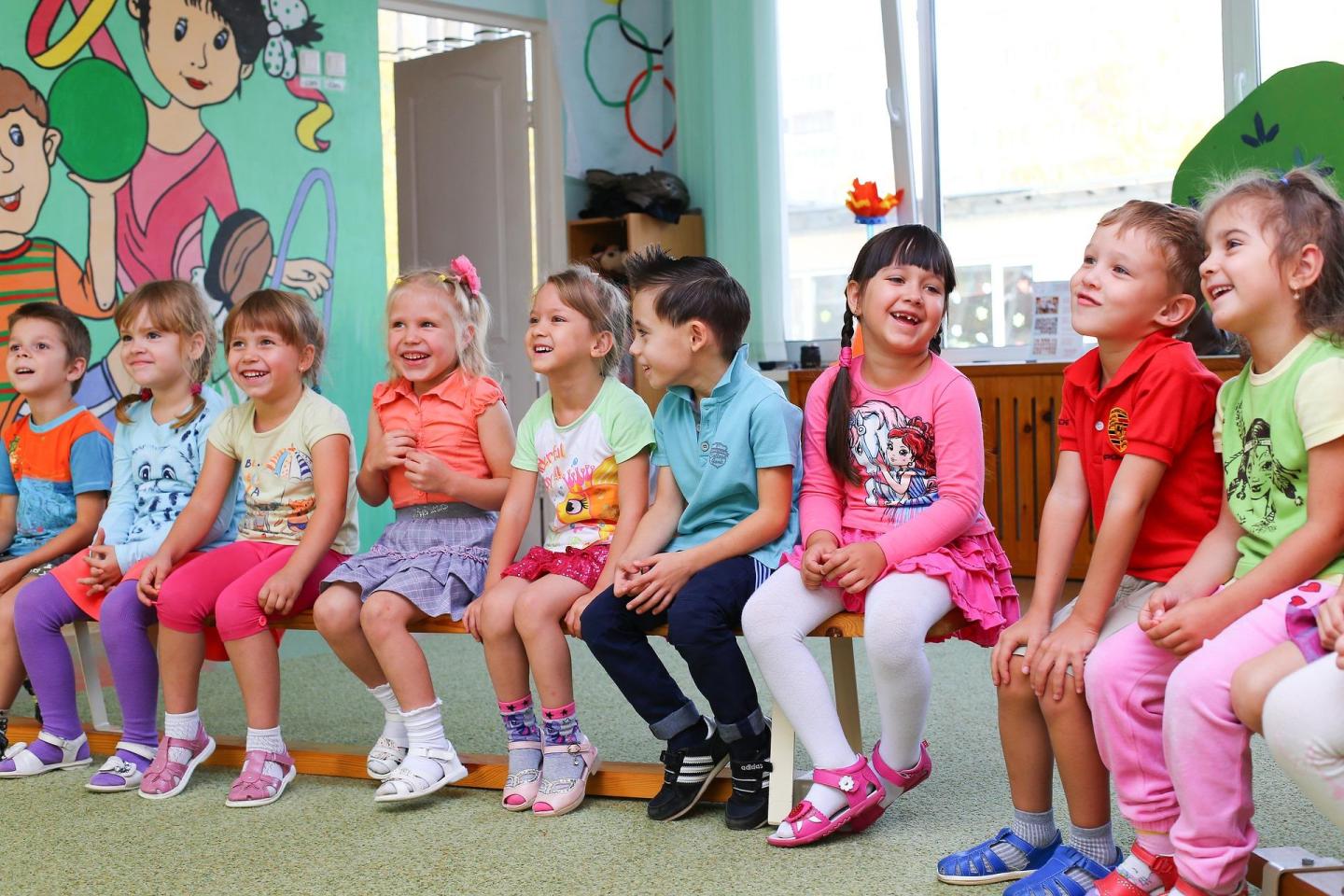
Researchers studied kindergarteners’ behavior and followed up 19 years later. Here are the findings.

Every parent wants to see their kid get good grades in school. But now we know social success is just as important.

kindergarten, behavioral research, grades, testing
Big smiles in class at kindergarten.Photo credit: Image from Pixabay.

Every parent wants to see their kid get good grades in school. But now we know social success is just as important. From an early age, we’re led to believe our grades and test scores are the key to everything — namely, going to college, getting a job, and finding that glittery path to lifelong happiness and prosperity.

It can be a little stressful. But a study showed that when children learn to interact effectively with their peers and control their emotions, it can have an enormous impact on how their adult lives take shape. And according to the study, kids should be spending more time on these skills in school.

Nope, it’s not hippie nonsense. It’s science.

Kindergarten teachers evaluated the kids with a portion of something called the Social Competence Scale by rating statements like “The child is good at understanding other’s feelings” on a handy “Not at all/A little/Moderately well/Well/Very well” scale.

The research team used these responses to give each kid a “social competency score,” which they then stored in what I assume was a manila folder somewhere for 19 years, or until each kid was 25. At that point, they gathered some basic information about the now-grown-ups and did some fancy statistical stuff to see whether their early social skills held any predictive value.

Here’s what they found.

1. Those good test scores we covet? They still matter, but maybe not for the reasons we thought.

Back To School GIF by IFC – Find & Share on GIPHY
Traditional thinking says that if a kid gets good grades and test scores, he or she must be really smart, right? After all, there is a proven correlation between having a better GPA in high school and making more money later in life.

But what that test score doesn’t tell you is how many times a kid worked with a study partner to crack a tough problem, or went to the teacher for extra help, or resisted the urge to watch TV instead of preparing for a test.

The researchers behind this project wrote, “Success in school involves both social-emotional and cognitive skills, because social interactions, attention, and self-control affect readiness for learning.”

That’s a fancy way of saying that while some kids may just be flat-out brilliant, most of them need more than just smarts to succeed. Maybe it wouldn’t hurt spending a little more time in school teaching kids about the social half of the equation.

2. Skills like sharing and cooperating pay off later in life.

Adam Sandler Pee GIF – Find & Share on GIPHY

We know we need to look beyond GPA and state-mandated testing to figure out which kids are on the right path. That’s why the researchers zeroed in so heavily on that social competency score.

What they found probably isn’t too surprising: Kids who related well to their peers, handled their emotions better, and were good at resolving problems went on to have more successful lives.

What’s surprising is just how strong the correlation was.

An increase of a single point in social competency score showed a child would be 54% more likely to earn a high school diploma, twice as likely to graduate with a college degree, and 46% more likely to have a stable, full-time job at age 25.

The kids who were always stealing toys, breaking things, and having meltdowns? More likely to have run-ins with the law and substance abuse problems.

The study couldn’t say for sure that strong or poor social skills directly cause any of these things. But we can say for sure that eating too much glue during arts and crafts definitely doesn’t help.

3. Social behaviors can be learned and unlearned — meaning it’s never too late to change.

The researchers called some of these pro-social behaviors like sharing and cooperating “malleable,” or changeable.

Let’s face it: Some kids are just never going to be rocket scientists. Turns out there are physical differences in our brains that make learning easier for some people than others. But settling disputes with peers? That’s something kids (and adults) can always continue to improve on.

And guess what? For a lot of kids, these behaviors come from their parents. The more you’re able to demonstrate positive social traits like warmth and empathy, the better off your kids will be.

So can we all agree to stop yelling at people when they take the parking spot we wanted?

But what does it all mean?

This study has definite limitations, which its researchers happily admit. While it did its best to control for as many environmental factors as possible, it ultimately leans pretty heavily on whether a teacher thought a kid was just “good” or “very good” at a given trait.

Still, the 19-year study paints a pretty clear picture: Pro-social behavior matters, even at a young age. And because it can be learned, it’s a great “target for prevention or intervention efforts.”

The bottom line? We need to do more than just teach kids information. We need to invest in teaching them how to relate to others and how to handle the things they’re feeling inside.

Ignoring social skills in our curricula could have huge ramifications for our kids down the road.


This article originally appeared nine years ago.

  • Parents experiment with 4 p.m. dinners and are blown away by the results
    A family happily eating dinner.Photo credit: Canva
    ,

    Parents experiment with 4 p.m. dinners and are blown away by the results

    “The most underrated hack for a smoother evening.” 

    Can having an early family dinner really be the key ingredient to a smooth evening? According to one family, the answer is a resolute yes. 

    In a now-viral Instagram reel, a mom of two named Lexi Poer films her husband, Jordan, making their kiddos a delicious meal—set to be served at 4 p.m. on the dot, apparently.

    4 p.m. dinners: The ultimate energy boost

    Poer told Newsweek that when dinner was typically served at the more conventional time of 6:30 or 7 p.m., her two daughters would have “meltdowns,” leaving her feeling like “we were failing at something that was supposed to be the centerpiece of family connection.”

    dinner for kids, health eating, parenting
    Screenshot

    However, after accidentally serving dinner early one day and noticing a huge difference, the couple wondered what might happen if the change became a permanent routine. The rest is history. Now, she calls 4 p.m. dinners “the most underrated hack for a smoother evening.”

    Why it works

    In her caption, Poer explains why she thinks it works.

    For one, kids “walk through the door starving.” When given a proper meal, they’re less likely to need a snack and have the energy to do their homework and extracurricular activities.

    Second, it leaves more time for “winding down” with showers, books, and simply “being” without having to do anything.

    dinner, school, parents
    Screenshot

    Poer has noticed that both of these factors have led to her two daughters being “genuinely nicer.” “A well-fed kid is a completely different kid,” she said.

    Earlier dinners have spared the couple from standing over a stove when the entire household is, as she put it, “overstimulated and hangry.” Everybody wins.

    In the comments, other parents agreed that early dinners were transformative

    “We’ve started doing this for the last 8 months. It’s definitely a game changer and takes off tension to ease into bedtime.”

    “We’ve been doing 430p dinners since our little one was 1 (she’s now almost 4) and it’s been the best. Dinner and then time to still go out to the beach or skate park before coming home for bath and bed. Bellies full and a cleaner home.”

    “This is so funny, we automatically do this anyway and then find we’re not hungry at 6-7 pm. It works well!”

    “Yes! I served dinner at 4 pm for years. The kids just couldn’t hold on any longer. A lot of meltdowns quelled due to changing the time of dinner (they got off the bus at 4-4:30)”

    early dinner, family, kids
    Screenshot

    Of course, even Poer acknowledged that for many working parents, this simply isn’t feasible—especially when the goal is to eat together as a family. Even her own household doesn’t do it every day. The fact that society generally doesn’t support a lifestyle where families can do this sort of thing, no matter how beneficial it may be, is a separate conversation. Still, the principle behind her idea remains: to experiment with “getting ahead of the hunger spiral,” as she told Newsweek.

    It works even if that means serving dinner a few minutes before your normal time. You can certainly reconsider a 6 or 7 p.m. dinner if the only reason you’re doing it is because it seems “normal” or traditional. One size doesn’t have to fit all, so by all means, do whatever brings a bit more peace to your home.

  • Toddler uses lawyer-like logic to make the case for taking candy from strangers
    A child thinking and holding his chin. Photo credit: Canva
    ,

    Toddler uses lawyer-like logic to make the case for taking candy from strangers

    His mom’s attempts to teach “stranger danger” backfired.

    Teaching children about “stranger danger” is a tough paradox. On one hand, you want your child to be comfortable and friendly around others—after all, a lot of folks we end up calling friends started out as strangers. On the other hand, they need to be careful not to interact with those who may seek to harm them.

    An easier lesson to teach is not to take candy from strangers. You can be friendly with some strangers, but never take candy from them under any circumstances.

    A young child on TikTok named Hudson, the son of pediatrician Megan Hall, is going viral for the lawyer-like way he responds when his mother tells him to stop taking candy from strangers. His logic: If you know someone’s name, they aren’t a stranger.

    @hall_fam_

    Long video but trying to teach my #toddler about taking #candy from strangers at the park. #toddlersoftiktok #fyp #funny

    ♬ original sound – Hall Fam

    It all began when Hudson took a gummy candy from a child at the park and put it in his mouth. “You can’t keep taking snacks from strangers at the park,” Hall told her son. But Hudson wanted a clearer definition of what “stranger” actually meant. “There are no strangers here,” Hudson calmly responded, adding that he knew the name of the child who gave him the candy.

    Then Hudson tried to flip the script on his mother, questioning the very nature of what it means to be a stranger. “Are you a stranger?” he asked his mom, who gave a prompt no. “But my dad tries to be a stranger to me,” Hudson said, ending the debate.

    gummy candy, gummy bears, candy, red gummy bear, yellow gummy bear
    Three gummy bears. Photo credit: Canva

    Hudson is friends with everyone when he’s at the park

    Based on what Hall told People, it looks like she’ll be having this debate for quite some time—and may need to take extra-special care at the park.

    “He has always been a really friendly and social child who genuinely believes everyone is—or should be—his friend,” she told People. “We jokingly refer to him as the mayor because he likes to talk to everyone, anywhere we go.”

    A commenter wrote, “His logic he met them, exchanged names, and played w the kids = no longer strangers.”

    “He’s about to be real confused on the rules come Halloween,” another added.

    Another loved his nonchalant nature: “The fact that he’s still tasting every ingredient in the candy while you’re warning him.”

    kids in park, kids on playground, happy kids, playing kids, children at park, kids on bridge
    Kids playing at the park. Photo credit: Canva

    How should parents discuss stranger danger with their children?

    “The phrase ‘stranger danger’ can be misleading. While it’s true that we need to teach our children to be cautious around people they don’t know, the reality is that not all strangers are harmful. Labeling all unfamiliar people as dangerous can create unnecessary fear and confusion,” Nature Therapy, a family therapy practice based in Illinois, wrote on its blog. “Statistically, most child abuse cases involve someone the child already knows. This is where the concept of ‘tricky people’ becomes more effective. It shifts the focus from fearing all strangers to identifying behaviors that are inappropriate or unsafe, regardless of whether the person is a stranger or someone familiar.”

    The debate may have been about the nuances of stranger danger, but it’s also a great example of how open-minded and kind-hearted young kids can be.

    “Children are innocent, hate is taught,” Hall said. “Children see the best in people and never think anyone would do something to harm them, and I wish this were true.”

  • She “nagged” her husband about the car seat. Moments later, he called her from a crash.
    A baby strapped into the car seatPhoto credit: Canva
    ,

    She “nagged” her husband about the car seat. Moments later, he called her from a crash.

    She calls it her “annoying nagging mom voice” and it’s a real life-saver.

    On her first day back at work after maternity leave, Rebecca Tafaro Boyer wasn’t ready to be apart from her 3-month-old. She asked her husband David to send her hourly updates on how baby William was doing without her.

    David was a good sport about it. He texted throughout the day, including a photo of William buckled into his Britax car seat as they headed out to Walgreens. Rebecca looked at the photo and immediately texted back. The straps were too loose. The chest clip was too low. “And because I know my husband,” she later wrote on Facebook, “I’m sure that he laughed at me and rolled his eyes before tightening the car seat and fixing the chest clip.”

    Fifteen minutes later, her phone rang.

    “Honey, we had a car wreck. We are fine, but the car is going to be totaled.”

    Less than three miles from their Memphis home, another driver had pulled into traffic to turn left and David hadn’t had time to stop. He hit the front passenger side door at nearly 50 miles per hour. David ended up on crutches with three shattered bones in his foot and three dislocated toes. The car was a total loss.

    William didn’t even wake up.

    “My precious little bundle of joy was so well restrained in his car seat THAT HE DIDN’T EVEN WAKE UP,” Boyer wrote. “Even with the impact of the two cars, William only received a minor jolt — so insignificant that he was able to continue on with his nap, and then spend the next two hours flirting with nurses in the Le Bonheur ED.”

    Boyer posted the story on Facebook at a friend’s request, expecting it to stay within her circle. She was stunned when it was shared more than 45,000 times. She told TODAY that her goal was simple: car seats save lives, and the difference between a properly secured infant and a loosely buckled one can be the difference between a nap and a tragedy.

    “I truly believe that the reason my family is at home sitting on the couch with a pair of crutches instead of down at the hospital is because of my annoying nagging mom voice,” she wrote.

    When readers identified the Britax BSafe 35 as the seat that protected William, the company reached out to offer a free replacement — once a car seat has been in a crash, it can’t be used again. Boyer and David had already replaced it through insurance, so she asked Britax to donate a seat to the Forrest Spence Fund, a Memphis nonprofit that helps families of critically ill children with everyday needs. Their original seat went to the NICU at Le Bonheur Children’s Hospital to be used in car seat safety education for new parents.

    As for David: “My husband says, ‘I’m never going to live this down, am I?’” Boyer said, laughing.

    He is correct.

    This article originally appeared four years ago.

  • Historian debunks the notion that grief in ‘Hamnet’ was portrayed unrealistically for the time
    Were medieval parents less attached to their children?Photo credit: Living History by Dr Julia Martins/YouTube

    The majority of parents today have never known the pain of losing a child. Sadly, that was not the case throughout history. Before the 20th century, many parents could expect one or more of their children to die before reaching adulthood, usually due to infectious disease.

    As in the book it was based on, the film adaptation of Hamnet centers on parental grief. Even if you haven’t seen the movie, there’s a good chance you’ve seen the tear-streaked aftermath of others who have.

    Jessie Buckley’s Oscar-winning performance as a grieving mother wrecked audiences far and wide. Her improvised, guttural scream after her child’s death went straight to the heart. Her calling the scream “ancient” couldn’t feel more accurate.

    @screenplayed

    Jessie Buckley talks about this moment in Hamnet wasn’t in the script. It came up on the day. Buckley is nominated for an Academy Award for her performance. What do you think of the film? 🎥 #hamnet #jessiebuckley #academyawards #oscars #filmtok

    ♬ original sound – Screenplayed

    However, some people have questioned whether the film’s intense portrayal of grief is realistic for the time period. Naturally, we would expect a child’s death to devastate a parent today. But was that the case historically? Did parents mourn the loss of a child as hard or as long when nearly half of children died? Would knowing you were likely to lose a child, or multiple children, make their deaths easier to handle?

    The idea that parents hundreds of years ago weren’t as emotionally attached to their kids isn’t new, even in academic circles. Dr. Julia Martins, a historian, explored the debate in a YouTube video titled “Did They Love Their Children? The History of Grief.”

    It began with French historian Philippe Ariès, who published a book in 1960 about childhood through the centuries.

    “Ariès argued that the concept of childhood as a distinct, protected phase of life is a modern invention that only emerged around the 17th century,” Martins said. “Children were understood as mini adults and, from the time they were around seven, they mixed with the adult world. He suggested that, because of the incredibly high infant mortality, parents were forced to be emotionally distant and not get too attached to their children, who might not live to see their first birthday. This indifference would be a defense mechanism. Expecting to lose half the children you had would make you not as emotionally invested in them.”

    In his 1977 book The Family, Sex and Marriage in England 1500–1800, historian Lawrence Stone also posited that colder, more pragmatic family relationships were the norm. In his assessment, the affectionate, loving bonds we associate with family today developed late in our history.

    However, by the 1980s, historians began to question this idea. Martins pointed out that Ariès relied on paintings from the past to draw his conclusions.

    For her 1983 book Forgotten Children, historian Linda Pollock focused her research on diaries and autobiographies from the 16th to 19th centuries. She argued that parents have always had intense love for their children and felt a deep sense of loss when they died.

    Martins’ own examination of the historical record has led her to the same conclusion. The difference, she suggested, lies in how parents coped with the pain of losing a child.

    “We forget how deeply religious early modern Europe was,” Martins said. “Could this indifference be religious resignation, instead of lack of affection? In a world where people understood death as God’s will, parents might console themselves thinking things like ‘The Lord gave, and the Lord has taken away.’ That doesn’t mean they weren’t grieving, but rather that they were focusing on the child being in heaven and accepting God’s will. Ariès interpreted this as a lack of feeling. But you could argue that this was a coping strategy for deep pain. The grief was real; the cultural script for expressing it was different.”

    And of course, grief is and has always been an individual experience. Even in Hamnet, the parents express their grief differently, despite losing the same child.

    People in the comments on Martins’ video reiterated how historical artifacts demonstrate expressions of parental grief:

    “Sometimes I find myself thinking of the skull of the ancient Greek child with the crown of painted ceramic flowers on her head. Someone loved that child to the point that they couldn’t bear the thought of those flowers wilting.”

    “Whenever I hear the claim that people didn’t grieve their children, I think of the ancient graves we find where children are so carefully prepared for burial, with a toy (obviously made by hand, so carrying a time cost and not quickly replaceable) buried with them. That doesn’t seem like the actions of a parent who doesn’t care.”

    “My favorite example about children always being children are ancient Egyptian ‘hot wheels’: toys shaped like a tiny chariot or wagon with wheels on it, and holes to put a string through… I can’t erase the mental image I got of an ancient Egyptian child thousands of years ago running around lugging A TOY CAR around, forgetting or breaking it and crying to parents, or being happy about getting a new one as a holiday gift, nothing really changed.”

    “Cicero was inconsolable when his daughter Tullia died. Julius Caesar, who had also lost his daughter Julia, his only child, wrote to him to offer sympathy. They had a whole correspondence on grief. Cicero built a temple (lost today) to the memory of his daughter. The idea that parents from the past did not care is ludicrous.”

    “It always felt to me so strange to figure that people in the past ‘wouldn’t care so much’ for their kids because a lot of children died. Two things can be true at the same time. People surely knew that lots of people died in a very early age AND that doesn’t diminish any kind of bond or attachment. Ironically, it’s this theory itself that IS detached (from reality): humans are social creatures!”

  • ‘Old soul’ kid chooses his own name, then cracks himself up for a full minute
    A child with glasses laughing.Photo credit: Canva

    Donna Whelan describes her young son, Jacob, as an “old soul,” and well over a million people on social media seem to agree. She shares many adorable clips of him online, but one recent video of Jacob choosing his own name might just take the cake.

    In a clip from Donna’s Instagram page, she begins to ask Jacob a question: “Right, if you could choose a name for yourself…” She doesn’t even have a chance to finish before he confidently answers, “Roberto,” playing with a small lock of hair behind his ear. Just as quickly, he bursts into laughter and can’t seem to stop. “Didn’t even finish the sentence, and I gave ya an answer. Roberto!”

    Donna asks, “Do you like that name?” It’s now time for Jacob to get serious. “Yeah. Roberto is my favorite name.” He puts his hands into a pyramid, not unlike a politician or a TED Talk speaker. “When you think of… say Roberto slowly, though. Ro-bert-to. Ro-ber-toe. Rubber toe.” The laughing fit continues, his cheeks turning pink beneath his thick glasses.

    “Why does that name make you laugh so much?” Donna asks. Jacob immediately dissolves into giggles once again. “It’s just a funny name! Rubber toe!” It’s clear he’s not mocking it in any way, but simply delighted by his quick reaction and the joke.

    The laugh is truly infectious. Nearly 75,000 likes and over 3,500 comments (and counting) just heap love onto this child.

    One commenter says, “His little laugh gets me every time.” Another adds, “I actually laughed out loud too when he said ROBERTO😂😂 We never know what he’s going to say next.”

    And of course, a few “Robertos” chime in. “My name is Roberto,” one person says. “What’s so funny about being called Roberto? 😂” Another commenter adds, “Ya gotta say it slowly, though. Then it’s funny, haha.”

    Another Instagrammer shares that their son wanted to change his name when he was young: “My son wanted to change his name to Fun because he just wanted to have fun. His name is Benjamin or Ben. We call him Funjamin or Fun to this day, and he’s 29 years old!”

    This isn’t uncommon. In a piece I wrote for Upworthy a few months ago, I explored a popular parenting Reddit thread where people discussed their kids choosing new names, or even wanting to reinvent themselves.

    “For what it’s worth, I wanted to change my name a million times growing up,” one person confessed. “First, I wanted Dawn, then Angel, and lord knows what after that. I’m sure I went by Lilith during high school for a moment. My parents were so blasé about it. I never did change my name.”

    Another joked, “My son went by Spider-Man for almost a year at age 4. He’s 23 now and happy with his given name.”

    As for Jacob and his mom, who have more than 4 million followers on social media, they continue to delight the Internet with little Jacob-isms. In another popular clip, Jacob shares that he has “had about a million lives.” When Donna asks, “Would you like me to be your mum in every life?” Jacob slyly smiles, nods, and gives a resounding “Yes.”

    In a book by Donna and Jacob, The World According to Jacob: Hilarious Words of Wisdom From a Little Old Soul, they reveal that “Jacob has captured millions of hearts around the world with his infectious sense of humour, his fun, and his cheeky smile.”

  • The 1 mistake grandparents who don’t see their grandkids enough make with their daughter-in-law
    Maria DeLorenzo discusses the MIL/DIL dynamic. Photo credit: @mommom.maria/Instagram

    A grandmother’s candid take on family dynamics is getting people talking, and for many, nodding in agreement. After noticing a recurring question from frustrated grandparents online, one woman decided to address a sensitive topic head-on: why grandchildren often seem to spend more time with their mother’s side of the family.

    In a recent Instagram reel, Maria DeLorenzo, 59, responded to a wave of comments, particularly from mothers-in-law (MIL), wondering how to “counteract” what feels like an uneven relationship. Her answer was simple but eye-opening.

    “Kids live their lives in proximity to their parents,” she said, implying that they’re often closer to their mother. As a result, if grandparents on the father’s side don’t try to “cultivate” a relationship with the mom, aka the daughter-in-law (DIL), they may have fewer opportunities to see their grandchildren as a consequence.

    “It’s not rocket science,” she added. “That’s all there is to it…so choose.”

    That opinion is shared by Cheryl Groskopf, a holistic therapist at Evolution to Healing.

    “It’s important to understand that grandparent relationships usually grow out of the parent relationship first,” Groskopf said. “A child’s primary sense of safety runs through their parent—especially early on. So if a mother feels supported, respected, and emotionally safe with a grandparent…the most effective mindset shift is understanding that connection with the grandchild comes through connection with the parent.”

    Video sparks thoughtful debate

    The Instagram video drew more than 100,000 views and sparked a thoughtful discussion in the comments.

    Many parents shared personal experiences that supported DeLorenzo’s perspective. However, others felt it was an “outdated” view of MIL/DIL dynamics and argued that both the DIL and the son share responsibility for cultivating closeness.

    Even Groskopf agreed that “DILs can also be intentional about creating space for connection. Many grandparents are trying to figure out what their role is in a new family system. Small gestures like sharing updates, inviting them into moments with the child, and acknowledging their excitement about being a grandparent can go a long way toward building safe and supportive relationships.”

    No matter how you slice it, effort and intention from all sides seem to be necessary ingredients for building relationships.

    What a grandparent can do to build a relationship

    Here are some helpful ideas, courtesy of certified parent coach Sari Goodman

    1. Ask the parents, “How can I help?” and then follow through.
    2. Show up without judgment. Your grandkids may not be raised the way you would raise them, but it’s best to keep that to yourself.
    3. Show up with compliments. Notice something the parents do well and share the observation. When the grandkids do something brilliant, adorable, or sweet, point it out.
    4. Follow the rules the parents have established. If, for example, the children aren’t allowed to have sugar, don’t give it to them.
    5. Compliment the DIL’s parents. Did they bring the grandchildren a clever toy? Tell them. Do they have a method for getting the grandchildren into the car calmly? Say you want to learn from them.

    What a DIL can do to cultivate a relationship

    @heyjanellemarie

    Getting On the Same Page ✅ Honestly regardless of age, both parties should always be coming to any relationship with the intention and expextation for mutual respect. But noting that just because a Daughter-In-Law or future daughter-in-law isn’t a child and is in fact a grown person may help guide the approach you take as a parent of an adult or MIL. #relationshipbuilding #healthyrelationships #inlawrelationships #toxicmil #toxicdil #toxicinlaws #mutualrespect #mutualbenefit #opencommunication #effectivecommunication

    ♬ original sound – Janelle Marie

    Here are some helpful ideas from Goodman:

    1. Ask for help. Grandparents want to feel needed. Raising kids is hard. It’s a win-win.
    2. Ask grandparents for their opinion once in a while.
    3. Ask grandparents how things were done when you were a child.
    4. Be clear about the rules and policies you have established for your family.
    5. If the grandparents are babysitting, be sure to show them where the drinks and snacks are.
    6. If the grandparents are babysitting over a mealtime, have a meal prepared for them to eat.
    7. Compliment their grandparenting skills.

    Bottom line: all relationships take work. And very often, whether it’s with grandparents or within friendship circles, that effort pays off exponentially.

  • Mom took her teenage son to the ER, and the doctor seriously doubted their relationship
    A young mom with her kids in the ER.Photo credit: Coffe4LifeSage/TikTok

    Sage Pasch’s unique family situation has attracted a lot of attention recently. The 20-something mother of 2 shared a 6-second TikTok video on September 29 that has been viewed over 48 million times because it shows how hard it can be for young moms to be taken seriously.

    In the video, the young-looking Pasch took her son Nick to the ER after he injured his leg at school. But when the family got to the hospital, the doctor couldn’t believe Pasch was his mother.

    “POV, we’re at the ER, and the doctor didn’t believe I was the parent,” she captioned the post.

    Pasch and her fiancé , Luke Faircloth, adopted the teen in 2022 after his parents tragically died two years apart. “Nick was already spending so much time with us, so it made sense that we would continue raising him,” Pasch told Today.com.

    The couple has two sons together, including toddler Laith, and is now a family of five.

    Pasch says that people are often taken aback by her family when they are out in public. “Everybody gets a little confused because my fiancé and I are definitely younger to have a teenager,” she said. “It can be very frustrating.”

    It may be hard for the young parents to be taken seriously, but their story has made a lot of people in a similar situation feel seen. “Omg, I feel this. I took my son to the ER, and they asked for the guardian. Yes, hi, that’s me,” Brittany wrote in the comments. “Meee with my teenager at a parent-teacher conference. They think I’m her older sister and say we need to talk with your parents,” KatMonroy added.

    This article originally appeared last year.

Nature

Vet delivers best response after being told it’s ‘disgusting’ to let cats on the furniture

Kids

Toddler uses lawyer-like logic to make the case for taking candy from strangers

Wholesome

‘You better than that’: Door camera shows woman stopping package thief with tough love

Culture

Ethan Hawke beautifully explains why AI art can’t replace imperfect human creativity