'Normal and natural': Scientists admit the animal kingdom is a lot gayer than they thought
It's “widespread and natural in the animal kingdom.”

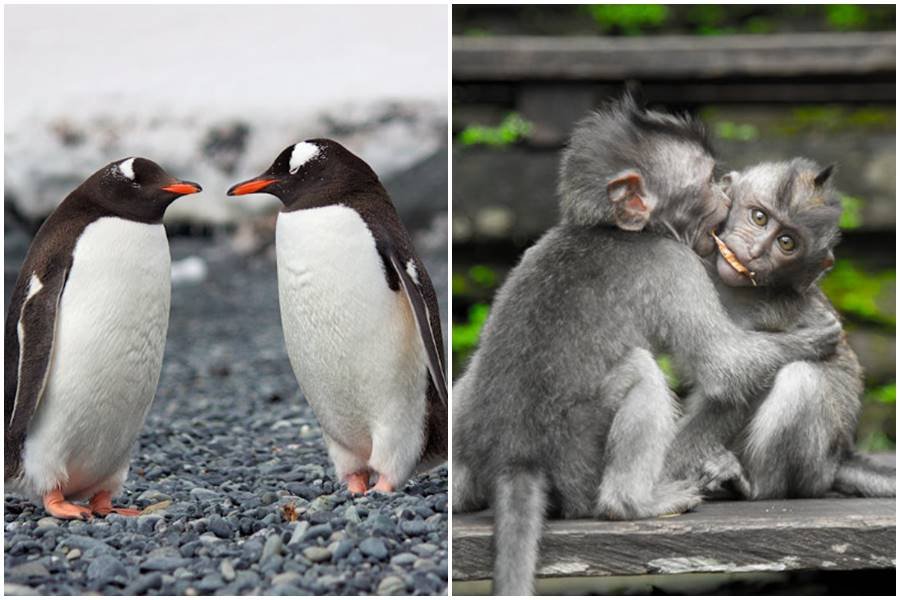
Some adorable penguins and monkeys.
LGBTQ people have faced discrimination around the globe for centuries. A big reason is that non-heterosexual relationships have been seen as unnatural by both church and state. LGBTQ people have either been seen as acting against the will of God for rejecting the traditional family structure or, nature, for engaging in sexual activity that doesn’t result in reproduction.
However, science has slowly been striking down the idea that homosexuality is unnatural by proving that it’s seen across countless species, from bonobo monkeys to black swans to fruit flies. A landmark 2019 research paper found that over 1500 species of animals exhibit homosexual behavior.
However, now it appears that the paper wildly underestimated the amount of homosexual activity happening in nature.
A new report published on June 20, 2024, in the journal PLOSOne shows that same-sex sexual behavior in the animal kingdom is much more prevalent than previously documented. The big reason is that researchers have been underreporting their observations.
The study surveyed 65 experts and 77% said that they had observed same-sex sexual behavior in the species they studied. However, only 48% reported collecting data on the observations and only 18% published their findings.
“Many respondents reported that their lack of recording data or publishing on SSSB [same-sex sexual behavior] was due to a perception that it was very rare,” Karyn Anderson, a PhD candidate in evolutionary anthropology at the Univerity of Texas, who led the study, told CNN. “When looked at on a broader scale, we found instead that it was very commonly observed by our survey participants.”
Anderson adds that homosexuality is, in fact, “widespread and natural in the animal kingdom.”
The news doesn’t surprise Josh Davis, author of “A Little Gay Natural History,” a book that examines the diversity of sexual behavior in the natural world.
“Whilst it has only been officially recorded in around 1,500 species, this figure is likely a massive underestimate,” he told IFL Science. “This is because it can be found in pretty much every branch of the evolutionary tree, from beetles and butterflies to turtles and squirrels, so the idea that it is limited to just a few hundred species out of the 2.13 million described to date is incredibly unlikely.”
“There’s a growing suggestion it’s normal and natural to almost every species,” he added. “It’s probably more rare to be a purely heterosexual species.”
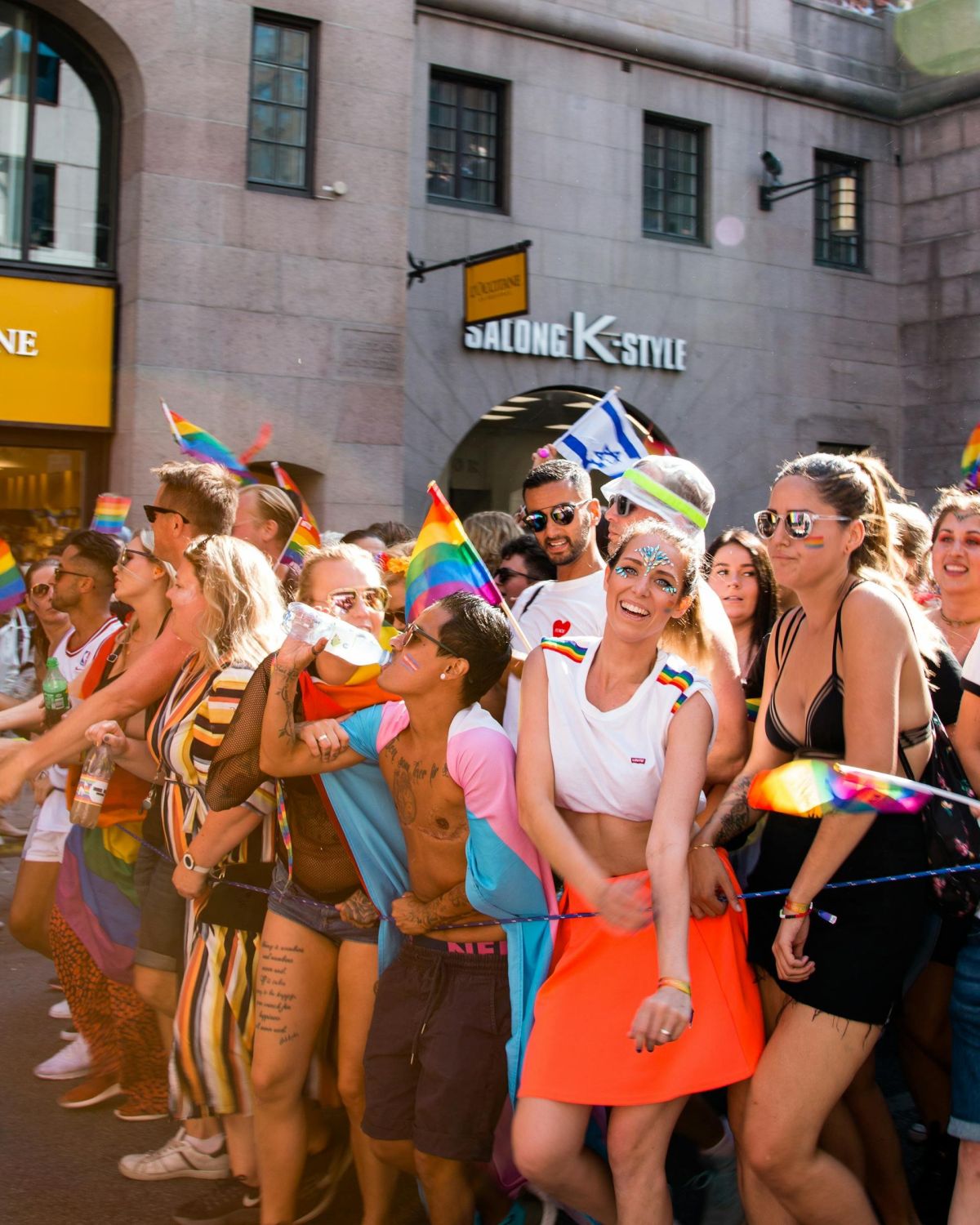
People enjoying a pride parade.
At first, it may seem as though same-sex sexual behavior runs counter to evolution. If animals reproduce through heterosexual intercourse, why do some still have same-sex relations?
Researchers believe that homosexuality may have evolved in humans because individuals with a degree of same-sex attraction benefit from greater social integration, mobility, and stronger social bonds. So, there is a survival benefit to participating in same-sex sexual behavior.
These developments are further proof that humans and the rest of the animal kingdom have never been exclusively heterosexual and those that have same-sex relations are as natural as those who do not. It seems the more we learn about the science of sexuality, the more we realize that Lady Gaga was right on the mark when she wrote “Born This Way.”



A Generation Jones teenager poses in her room.Image via Wikmedia Commons
An office kitchen.via
An angry man eating spaghetti.via 


An Irish woman went to the doctor for a routine eye exam. She left with bright neon green eyes.
It's not easy seeing green.
Did she get superpowers?
Going to the eye doctor can be a hassle and a pain. It's not just the routine issues and inconveniences that come along when making a doctor appointment, but sometimes the various devices being used to check your eyes' health feel invasive and uncomfortable. But at least at the end of the appointment, most of us don't look like we're turning into The Incredible Hulk. That wasn't the case for one Irish woman.
Photographer Margerita B. Wargola was just going in for a routine eye exam at the hospital but ended up leaving with her eyes a shocking, bright neon green.
At the doctor's office, the nurse practitioner was prepping Wargola for a test with a machine that Wargola had experienced before. Before the test started, Wargola presumed the nurse had dropped some saline into her eyes, as they were feeling dry. After she blinked, everything went yellow.
Wargola and the nurse initially panicked. Neither knew what was going on as Wargola suddenly had yellow vision and radioactive-looking green eyes. After the initial shock, both realized the issue: the nurse forgot to ask Wargola to remove her contact lenses before putting contrast drops in her eyes for the exam. Wargola and the nurse quickly removed the lenses from her eyes and washed them thoroughly with saline. Fortunately, Wargola's eyes were unharmed. Unfortunately, her contacts were permanently stained and she didn't bring a spare pair.
- YouTube youtube.com
Since she has poor vision, Wargola was forced to drive herself home after the eye exam wearing the neon-green contact lenses that make her look like a member of the Green Lantern Corps. She couldn't help but laugh at her predicament and recorded a video explaining it all on social media. Since then, her video has sparked a couple Reddit threads and collected a bunch of comments on Instagram:
“But the REAL question is: do you now have X-Ray vision?”
“You can just say you're a superhero.”
“I would make a few stops on the way home just to freak some people out!”
“I would have lived it up! Grab a coffee, do grocery shopping, walk around a shopping center.”
“This one would pair well with that girl who ate something with turmeric with her invisalign on and walked around Paris smiling at people with seemingly BRIGHT YELLOW TEETH.”
“I would save those for fancy special occasions! WOW!”
“Every time I'd stop I'd turn slowly and stare at the person in the car next to me.”
“Keep them. Tell people what to do. They’ll do your bidding.”
In a follow-up Instagram video, Wargola showed her followers that she was safe at home with normal eyes, showing that the damaged contact lenses were so stained that they turned the saline solution in her contacts case into a bright Gatorade yellow. She wasn't mad at the nurse and, in fact, plans on keeping the lenses to wear on St. Patrick's Day or some other special occasion.
While no harm was done and a good laugh was had, it's still best for doctors, nurses, and patients alike to double-check and ask or tell if contact lenses are being worn before each eye test. If not, there might be more than ultra-green eyes to worry about.