The CDC says 6% of COVID deaths are only from COVID. Doctors explain what that really means.

As seemingly happens every week during the pandemic, misinformation has been floating around about some statistics the CDC shared on its website. This time, it stems from a now-removed tweet that President Trump retweeted from a QAnon follower (yup), which claims that the CDC "quietly" added some data to their website to clarify that only 6% of COVID-19 deaths were a result of COVID alone, whereas 94% of them included other "serious illnesses" as causes of death.

The tweet used this statistic to make it seem that COVID had really only killed around 9,000 people. That's not at all what it means.

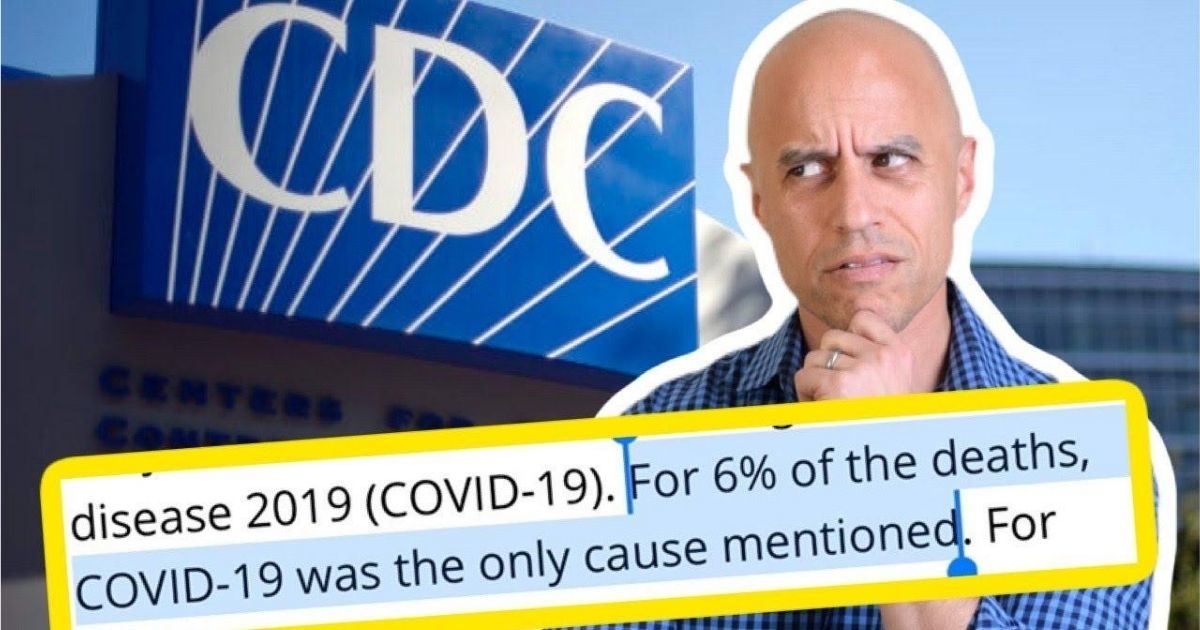
First of all here's what the CDC website actually states: "For 6% of the deaths, COVID-19 was the only cause mentioned. For deaths with conditions or causes in addition to COVID-19, on average, there were 2.6 additional conditions or causes per death."

Many experts have weighed in on the confusion to set the record straight.


Dr. Zubin Damania is a hospitalist (a dedicated in-patient physician who works exclusively in a hospital) who also has his own show where he discusses all things medical. One of his hallmarks is trying to separate politics from medical fact, which theoretically should make him a refreshing source no matter where you land on the political spectrum.

He explains in a video how death certificates are filled out and why "additional conditions or causes" doesn't in any way negate a death from COVID-19. Basically, this data doesn't tell us anything we didn't already know, but the political spin to make it sound like this information is some kind of bombshell is simply not sound science.

As Dr. Damania points out, you can make all the arguments against lockdowns or express your opinion that the economic sacrifices don't outweigh the cost in lives or whatever without misrepresenting the science and the facts.

That CDC 6% COVID Death Rate, Explained www.youtube.com

If you prefer to read a news article about why the 6% statistic doesn't mean what some people are saying it means, here's a thorough article that explains the whole thing.

If you prefer the brevity of a TikTok, here you go:

@dr.noc BEWARE the armchair epidemiologists and their misguided theories. ##covid19 ##science ##coronavirus ##medicine ##nursing ##outrage
♬ original sound - dr.noc

Here's a Facebook post from an epidemiologist:

And how about a Twitter thread from an oncologist and editor of a cancer journal, who surely knows a thing or two about death statistics? He summed it up perhaps more succinctly than anyone.

"600,000 die of cancer each year. 95% likely have comorbidities. Doesn't mean cancer was not the cause of their death."

Bottom line, COVID-19 has killed more than 180,000 Americans. Just like with every other death from disease, other comorbidities are listed on death certificates. You can look at the WHO instructions for how to list causes of death with COVID-19 here. (Scroll down to page 3 to see a death certificate filled out correctly, in which COVID-19 led to acute respiratory distress and pneumonia, and how all three are listed.) Nothing about these stats is new or shocking information.

Wear your mask, keep your distance, wash your hands, and carry on.
Every day, people are being amazing in large and small ways. When headlines get you down, you need a little boost of humanity's awesomeness to remind you that things aren't as bleak as they can seem. Here are 10 of this week's best examples of people being awesome.

1. Felix Gretarsson, the man who received the world's first full double arm and shoulder transplant, is making incredible progress.

Doctors expected might have feeling near his elbows after a year. It's been less than six months, and he's already able to move his bicep voluntarily and has feeling as far down as his forearms. Read his amazing story here.

Felix Gretarsson/Instagram


2. Rudy Willingham is making the world a little more delightful with perfectly placed stickers and paper cutouts.

How fun is this?


3. Sarah Cunningham shares how she started giving #FreeMomHugs to people in the LGBTQIA+ community and launched a movement.

Many LGBTQIA+ people aren't embraced by their families when they come out. Sarah Cunningham's warm heart offers a beacon of love and hope for Pride month.

Keep Reading Show less

Every day, people are being amazing in large and small ways. When headlines get you down, you need a little boost of humanity's awesomeness to remind you that things aren't as bleak as they can seem. Here are 10 of this week's best examples of people being awesome.

1. Felix Gretarsson, the man who received the world's first full double arm and shoulder transplant, is making incredible progress.

Doctors expected might have feeling near his elbows after a year. It's been less than six months, and he's already able to move his bicep voluntarily and has feeling as far down as his forearms. Read his amazing story here.

Felix Gretarsson/Instagram


2. Rudy Willingham is making the world a little more delightful with perfectly placed stickers and paper cutouts.

How fun is this?


3. Sarah Cunningham shares how she started giving #FreeMomHugs to people in the LGBTQIA+ community and launched a movement.

Many LGBTQIA+ people aren't embraced by their families when they come out. Sarah Cunningham's warm heart offers a beacon of love and hope for Pride month.

Keep Reading Show less
Courtesy of CAMFED/Eliza Powell
True

Alice Saisha was raised in the Luapula Province of Zambia with 10 brothers and sisters. She always had big dreams for when she grew up. However, she almost didn't achieve them. "I nearly had to drop out of school because of poverty," she says. She also almost became a child bride to a much older man.

"If CAMFED did not step in, my story would have been different."

CAMFED is a pan-African movement revolutionizing and supporting girls' education — which is exactly what it did for Saisha. Not only did she finish school with their support, she also got her undergraduate degree in Sociology and her Master's degree in Development Studies. She's currently looking to get her Ph.D.

And she didn't stop there. "All of the knowledge I obtained was applied right in the community where I grew up," she explains. Saisha is a trainer and facilitator in leadership and enterprise, financial education and psychosocial counseling — and an activist, philanthropist and advocate of women's rights.

"We speak out for the voiceless, create leaders along the way, and amplify the importance of children's welfare in school and at home."

Today, Saisha is a CAMFED ambassador, using her education to benefit her community and make sure that other girls, just like her, find a way out of poverty through education. Her work creates a bridge between the young women, children, youths and all the existing opportunities, information, and aid they can access. She provides mentorship and financial aid to those in need. "I come up with innovative ways to reach out to other young women or girls through media, calls, and one-on-one or group meetings," she explains. "To share knowledge, use my experience and give room to lend a listening ear whenever need be."

"I am very passionate about seeing women progress in all areas of life."

Without a doubt, she says her life story helps drive her work, not only because it is the motivation behind what she does, but also because it helps her relate to the girls she supports. Saisha is currently supporting 11 orphans and vulnerable children by directly funding their education. She is also fostering two of the children. "[They] come from similar backgrounds," she says. "They were at the verge of dropping out due to early marriage." She met them during her volunteer work in district communities and noticed a reflection of her own experiences. "I instantly connected with them and I believed they had brighter futures."

"Seeing them transform is priceless, and hearing them dream big is so touching. Their achievements speak to it all."

Courtesy of CAMFED/Eliza Powell

Saisha is one of Tory Burch's Empowered Women this year. The donation she receives as a nominee is being awarded to CAMFED — the very organization that helped get her where she is today.

"I want girls to be heard. It does not matter where they are in the world, what race they were born into or the type of background they came from," Saisha says. "Girls should be supported to escape unsafe environments. They need to always have a safe space which allows them to grow, and to nurture the great visions they possess."

To learn more about Tory Burch and Upworthy's Empowered Women program visit https://www.toryburch.com/empoweredwomen/. Nominate an inspiring woman in your community today.