Alabama is turning to TikTok to help convince returning students to get vaccinated

Alabama ranks as the last state in the nation in COVID-19 vaccine rates, but one high school principal in Birmingham is doing everything he can to combat that.
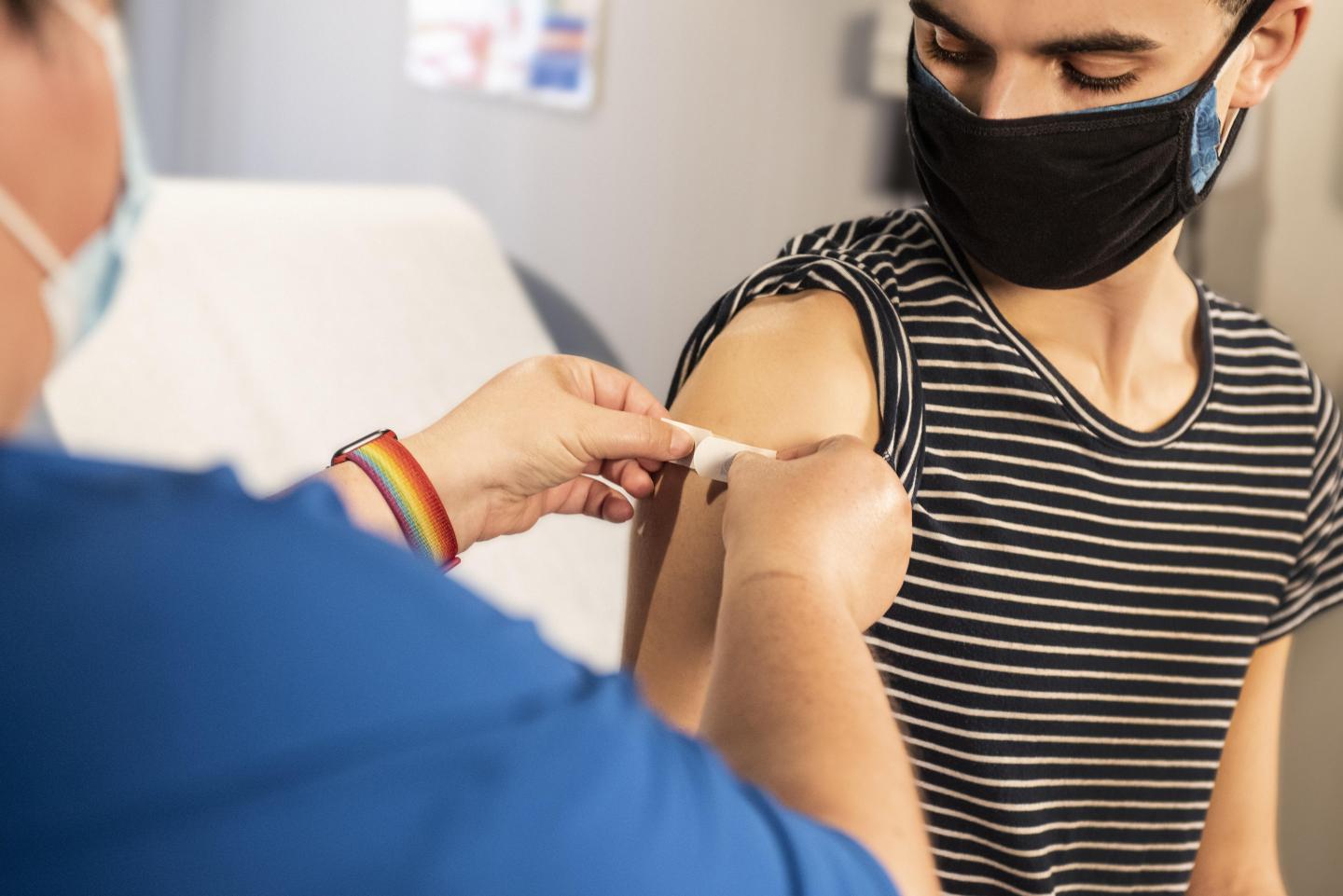
Between February and June Principal of A.H Parker High School, Darrell Hudson, partnered with The University of Alabama at Birmingham to launch a vaccine site.
"It was a great opportunity to launch the site. We've always been more than a school in the community," Hudson tells Upworthy. "We feel good when any of our scholars decide to take the vaccine," he says. But, he adds that the number of students who're vaccinated is still quite low.
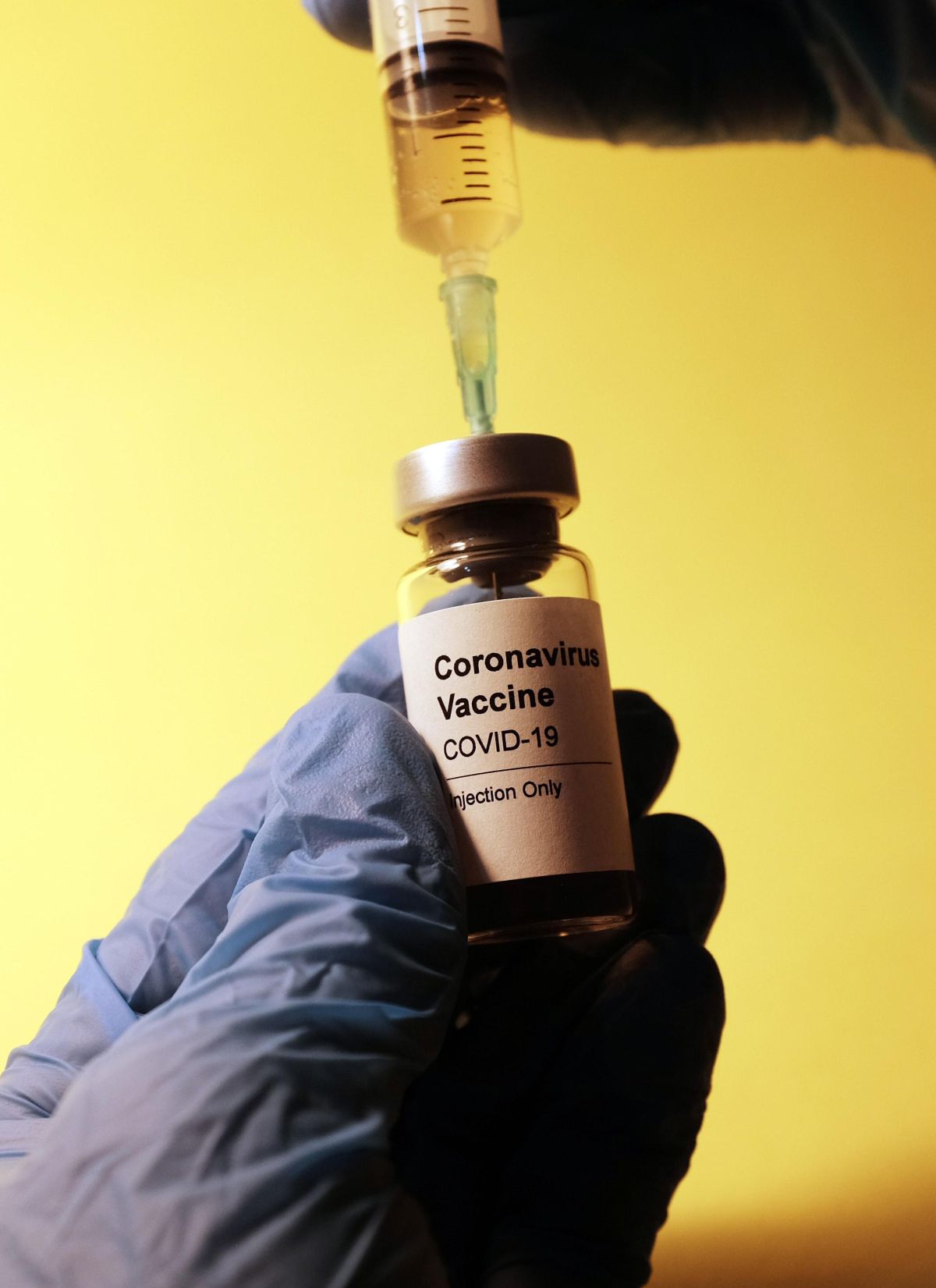
To keep the momentum going, two weeks before students returned to campus, Hudson and Parker High joined others in the Birmingham City Schools, in a social media campaign championed by the Alabama Department of Public Health (ADPH). A TikTok contest was launched for young people ages 13 to 29. Videos are themed "This is why I got vaccinated.," and on August 13, a panel of judges will announce four winners who will each be awarded a $250 Visa gift card.
The ADPH is hoping campaigns such as the TikTok contest will move the needle in getting the young vaccinated. Hudson says the students at Parker are excited about the contest.
"We've got some very creative scholars here and I can't wait to see what they come up with," Hudson says.
ADPH Assistant Health Officer Dr. Karen Landers told CNN's Jake Tapper that it's Alabamians between the ages of 12 and 49 who are the most adamant about not getting the vaccine.
"That's really where our problem is, reaching people who perceive that they're younger, they're healthier and therefore they don't need the vaccine, or continuing to buy into misinformation," Landers said.
Hudson told CNN that although most of his students are already vaccinated, some remain hesitant.
"We tried to educate them, but I've learned the best thing is to let them talk with the nurses," he said. "Let them talk with the scientists from a scientific standpoint."
"We have had some to come around," he added. "We do have some that are on the fence. And we have some that are pretty adamant about not going to take the vaccine, but we do try to educate our scholars. We've had this conversation with parents and guardians as well…But like I say, I think one of the best methods has been to let them talk with the nurses and individuals who have been doing this for a while, to give the pros and cons."

According to the Centers for Disease Control and Prevention, fewer than half of all Americans age 18 to 39 are fully vaccinated, compared with more than two-thirds of those over 50. And about 58 percent of those ages 12 through 17 have yet to receive a shot at all -- even though the Pfizer COVID-19 vaccine is authorized for most people age 12 and older.
On August 1, the White House enlisted a plethora of more than 50 Twitch streamers, YouTubers, and TikTokers with enormous online audiences to help push a pro-vaccine message and get jabs into the arms of young people.
According to a 2018 study by the marketing agency MuseFind, young people are more likely to trust their favorite social media influencer than a traditional celebrity.
"I know I won't stop until all my followers are safe and vaccinated," White House TikTok creator, Ellie Zeiler, 17, from Escondido, California told The New York Times.
- Alabama city council member fought against mandatory masks. Now ... ›
- Alabama doctor reveals that all but one of her recent COVID patients ... ›
- Yoga has been banned in Alabama public schools since 1993. How ... ›


A woman is getting angry at her coworker.via
A man with tape over his mouth.via
A husband is angry with his wife. via 
a man sitting at a desk with his head on his arms Photo by
Can a warm cup of tea help you sleep better? If you believe it, then yes. Photo by 
Three women sit on a blanket in the park. 
Two women engaging in a pleasant conversation inside a coffee shop
Two men engaging in a peaceful disagreement.
Resurfaced video of French skier's groin incident has people giving the announcer a gold medal
"The boys took a beating on that one."
Downhill skiing is a sport rife with injuries, but not usually this kind.
A good commentator can make all the difference when watching sports, even when an event goes smoothly. But it's when something goes wrong that great announcers rise to the top. There's no better example of a great announcer in a surprise moment than when French skier Yannick Bertrand took a gate to the groin in a 2007 super-G race.
Competitive skiers fly down runs at incredible speeds, often exceeding 60 mph. Hitting something hard at that speed would definitely hurt, but hitting something hard with a particularly sensitive part of your body would be excruciating. So when Bertrand slammed right into a gate family-jewels-first, his high-pitched scream was unsurprising. What was surprising was the perfect commentary that immediately followed.
This is a clip you really just have to see and hear to fully appreciate:
- YouTube youtu.be
It's unclear who the announcer is, even after multiple Google inquiries, which is unfortunate because that gentleman deserves a medal. The commentary gets better with each repeated viewing, with highlights like:
"The gate the groin for Yannick Bertrand, and you could hear it. And if you're a man, you could feel it."
"Oh, the Frenchman. Oh-ho, monsieurrrrrr."
"The boys took a beating on that one."
"That guy needs a hug."
"Those are the moments that change your life if you're a man, I tell you what."
"When you crash through a gate, when you do it at high rate of speed, it's gonna hurt and it's going to leave a mark in most cases. And in this particular case, not the area where you want to leave a mark."
Imagine watching a man take a hit to the privates at 60 mph and having to make impromptu commentary straddling the line between professionalism and acknowledging the universal reality of what just happened. There are certain things you can't say on network television that you might feel compelled to say. There's a visceral element to this scenario that could easily be taken too far in the commentary, and the inherent humor element could be seen as insensitive and offensive if not handled just right.
The announcer nailed it. 10/10. No notes.
The clip frequently resurfaces during the Winter Olympic Games, though the incident didn't happen during an Olympic event. Yannick Bertrand was competing at the FIS World Cup super-G race in Kvitfjell, Norway in 2007, when the unfortunate accident occurred. Bertrand had competed at the Turin Olympics the year before, however, coming in 24th in the downhill and super-G events.
As painful as the gate to the groin clearly as, Bertrand did not appear to suffer any damage that kept him from the sport. In fact, he continued competing in international downhill and super-G races until 2014.
According to a 2018 study, Alpine skiing is a notoriously dangerous sport with a reported injury rate of 36.7 per 100 World Cup athletes per season. Of course, it's the knees and not the coin purse that are the most common casualty of ski racing, which we saw clearly in U.S. skier Lindsey Vonn's harrowing experiences at the 2026 Olympics. Vonn was competing with a torn ACL and ended up being helicoptered off of the mountain after an ugly crash that did additional damage to her legs, requiring multiple surgeries (though what caused the crash was reportedly unrelated to her ACL tear). Still, she says she has no regrets.
As Bertrand's return to the slopes shows, the risk of injury doesn't stop those who live for the thrill of victory, even when the agony of defeat hits them right in the rocks.