upworthy
Add Upworthy to your Google News feed.
Google News Button
Parenting

A mother's letter on the passing of her young daughter is a must-read on grief, love and loss

Havi Lev Goldstein left a lifetime of memories in just over two years.

A mother's letter on the passing of her young daughter is a must-read on grief, love and loss

Upworthy is sharing this letter from Myra Sack on the anniversary of the passing of her daughter Havi Lev Goldstein. Loss affects everyone differently and nothing can prepare us for the loss of a young child. But as this letter beautifully demonstrates, grief is not something to be ignored or denied. We hope the honest words and feelings shared below can help you or someone you know who is processing grief of their own. The original letter appeared on 1.20.22. It begins below:


Dear Beauty,

Time is crawling to January 20th, the one-year anniversary of the day you took your final breath on my chest in our bed. We had a dance party the night before. Your posse came over. Aunts, uncles, grandparents, closest friends, and your loving nanny Tia. We sat in the warm kitchen with music on and passed you from one set of arms to another. Everyone wanted one last dance with you. We didn’t mess around with only slow songs. You danced to Havana and Danza Kuduro, too. Somehow, you mustered the energy to sway and rock with each of us, despite not having had anything to eat or drink for six days. That night, January 19th, we laughed and cried and sang and danced. And we held each other. We let our snot and our tears rest on each other’s shoulders; we didn’t wipe any of them away. We ate ice cream after dinner, as we do every night. And on this night, we rubbed a little bit of fresh mint chocolate chip against your lips. Maybe you’d taste the sweetness.

Reggaeton and country music. Blueberry pancakes and ice cream. Deep, long sobs and outbursts of real, raw laughter. Conversations about what our relationships mean to each other and why we are on this earth.


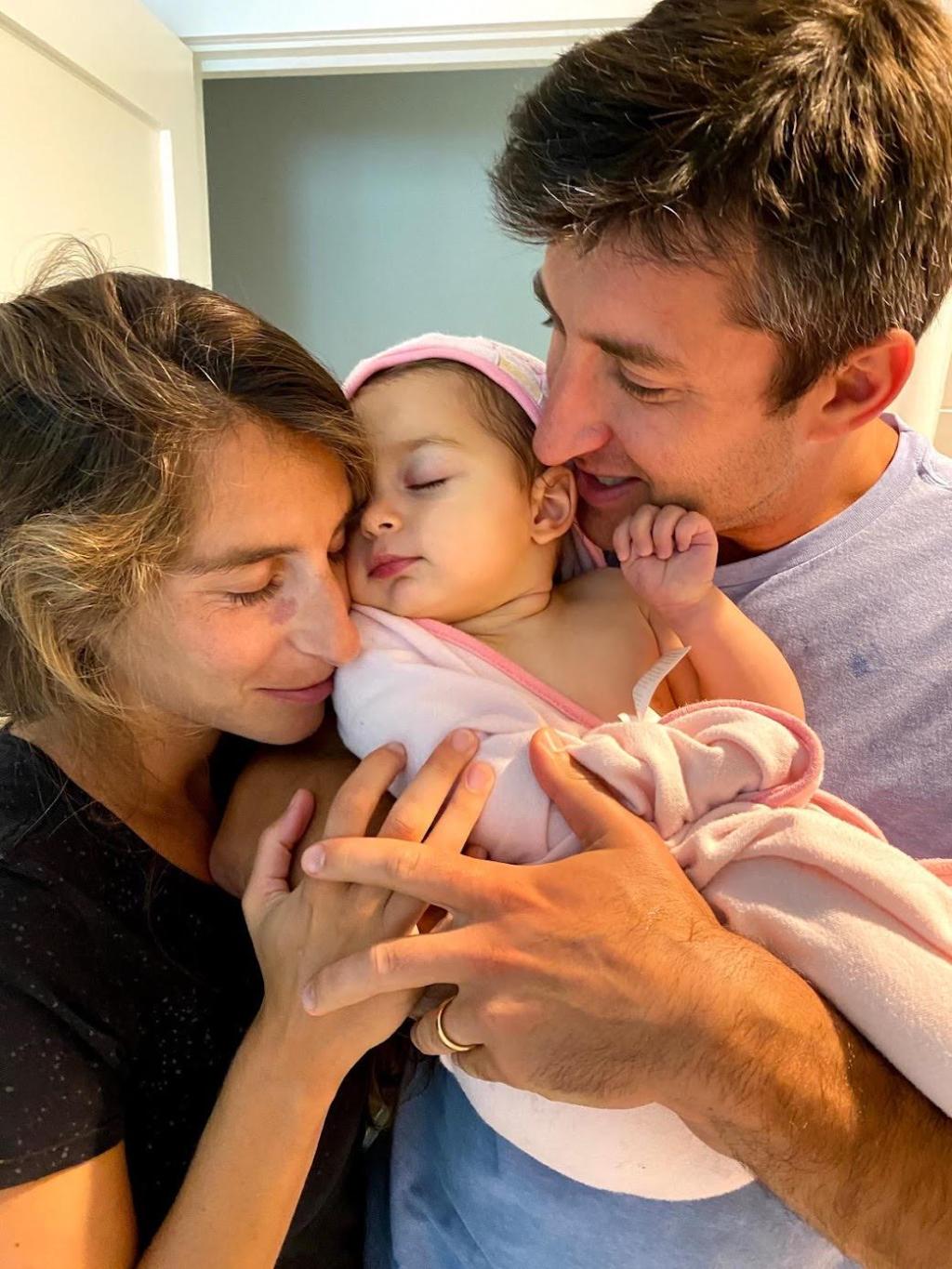
This is grief in our home.

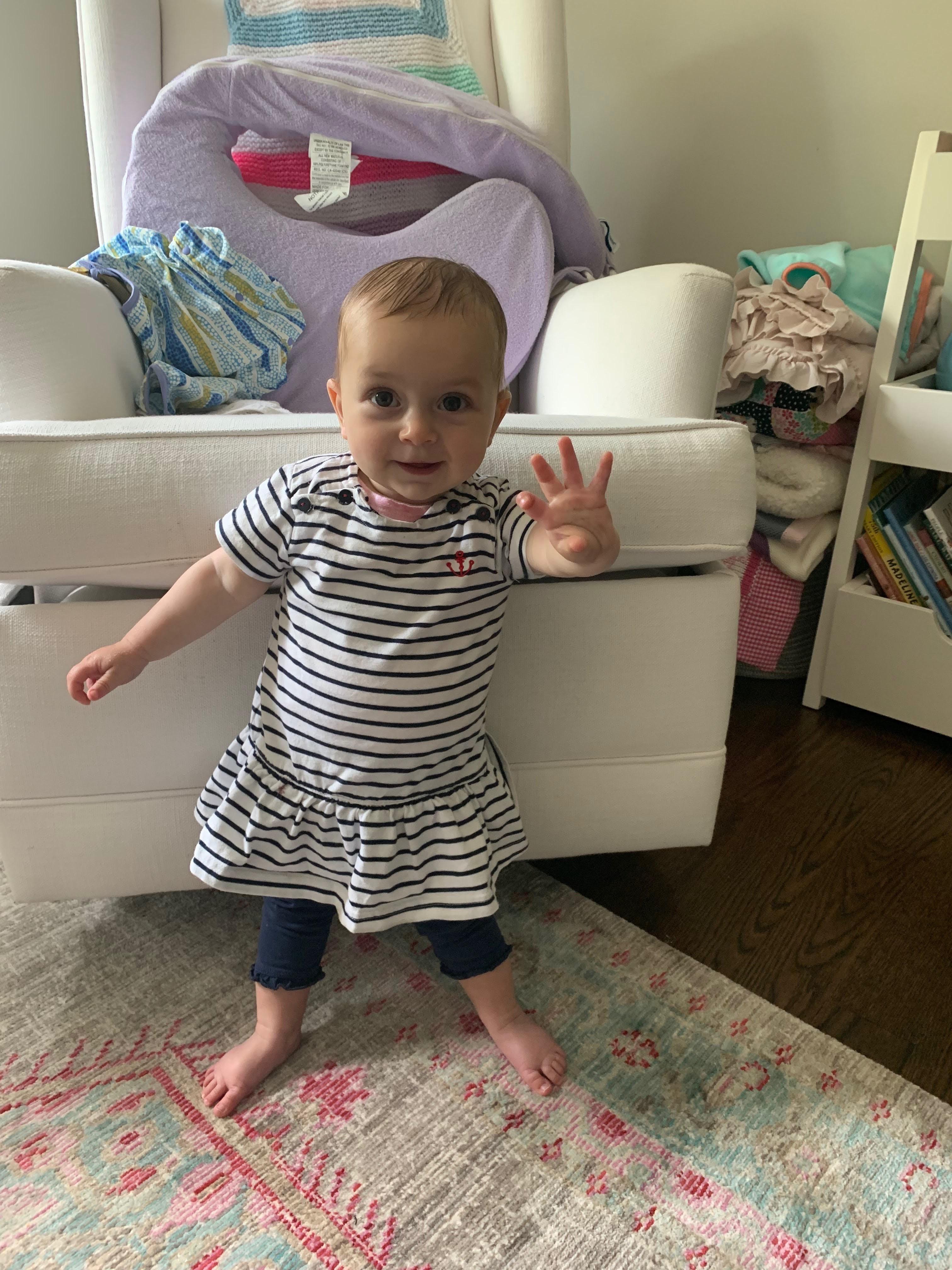
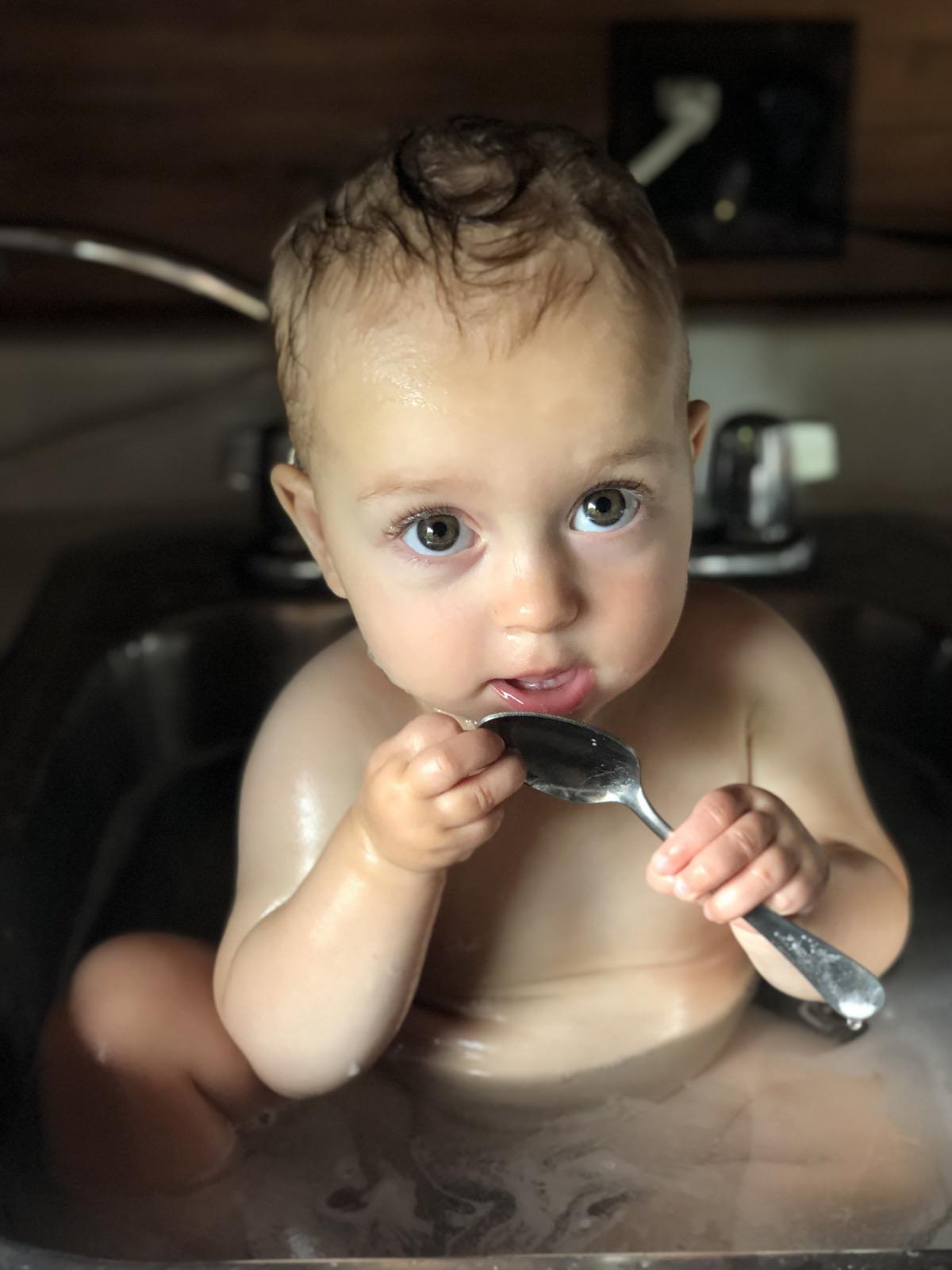
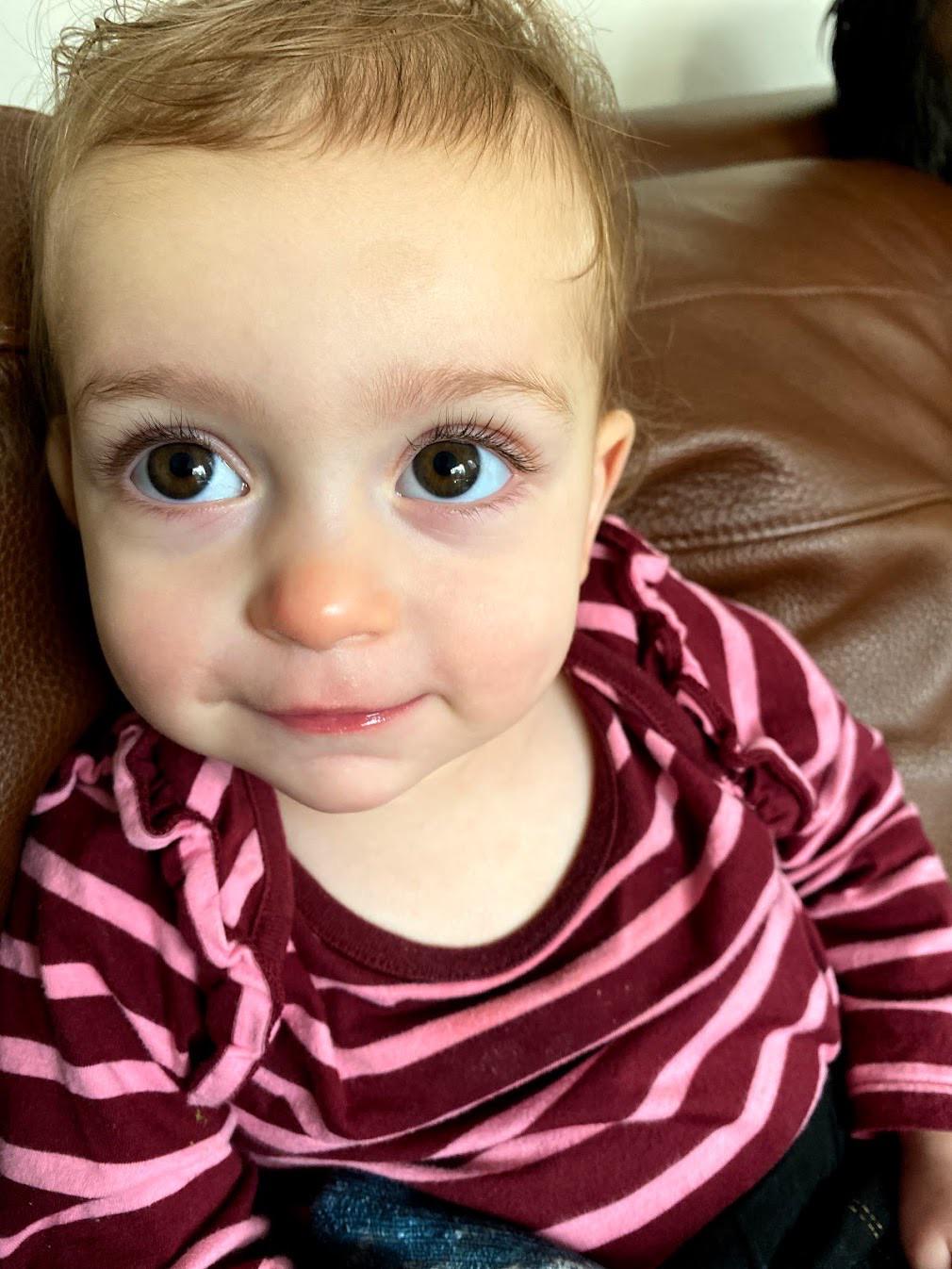
We lost our first-born daughter, Havi Lev Goldstein, on January 20th, 2021, at 9:04am. She died peacefully in our bed, in our arms. She died from a cruel disease called Tay-Sachs, that strips your mind and body of every function over 12-18 months. Havi was two years, four months and sixteen days old when she died.

My husband, Matt Goldstein, and I underwent preconception genetic testing for Tay-Sachs disease. We are both Ashkenazi Jewish, a population that has a higher risk for having a mutation in the gene that causes Tay-Sachs. We took our genetic testing very seriously. My testing results came back showing that I was a carrier; Matt’s results said he was not. Given the autosomal recessive nature of the disease, both parents need to be carriers for the fetus to be at risk of inheriting the disease. Months later, we were pregnant with our first child.

Tragically, Matt received the wrong test, and his carrier status was mis-reported. Matt was in fact, a carrier for Tay-Sachs. 15 months into her life, we learned that our daughter, Havi, was now a victim of this fatal, progressive neurodegenerative disease. In an instant, we were transformed from being not only first-time parents, but now first-time parents of a dying child.
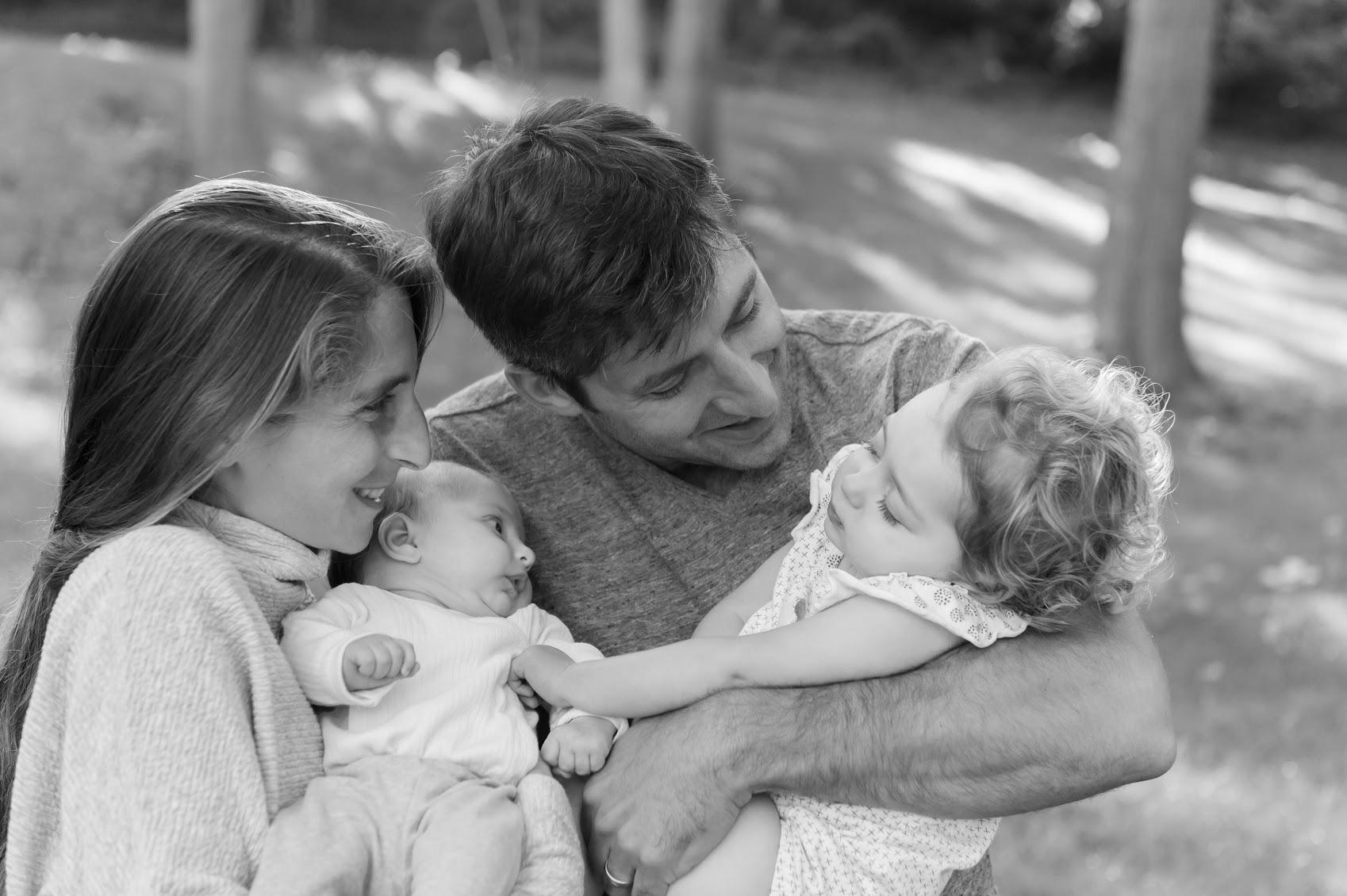
From the date of Havi’s diagnosis, December 17th, 2019, to her death on January 20th, 2021, we followed her lead. She never spoke a word, never walked a single step. But she communicated powerfully through smiles and tears, through the brightness of her eyes and the back-and-forth movements of her head. She loved, deeply. And when you closed your eyes and listened closely, her voice was clear.

Havi taught us that life can be even more beautiful and painful than we ever imagined. And when we live at the edge of that deepest beauty and deepest pain, then everything—our hearts, our world view, our community—will deepen and expand.

We honored Havi’s life every Friday night with family and friends in a celebration that we called Shabbirthday. The word is a combination of Shabbat and Birthday. Havi’s favorite food, the only food that she ever crawled toward, was challah, the braided Jewish bread that we eat every Shabbat. And we knew that her birthdays would be limited to two. That was not enough. We wanted more. So we threw Havi 57 Shabbirthdays before she died. Balloons, cakes, beach walks, fancy dinners, always a challah, and beautiful songs and prayers. We didn’t pretend to be happy on these Shabbirthdays. We weren’t. We were heart broken. We didn’t throw parties to distract or numb the pain. We found moments of beauty and celebration embedded in and between our deepest pain. We knew we needed the love and support of our closest people right there with us, too. And we treated every moment as sacred, not scary. As holy, not superficial.

This is grief in our home.
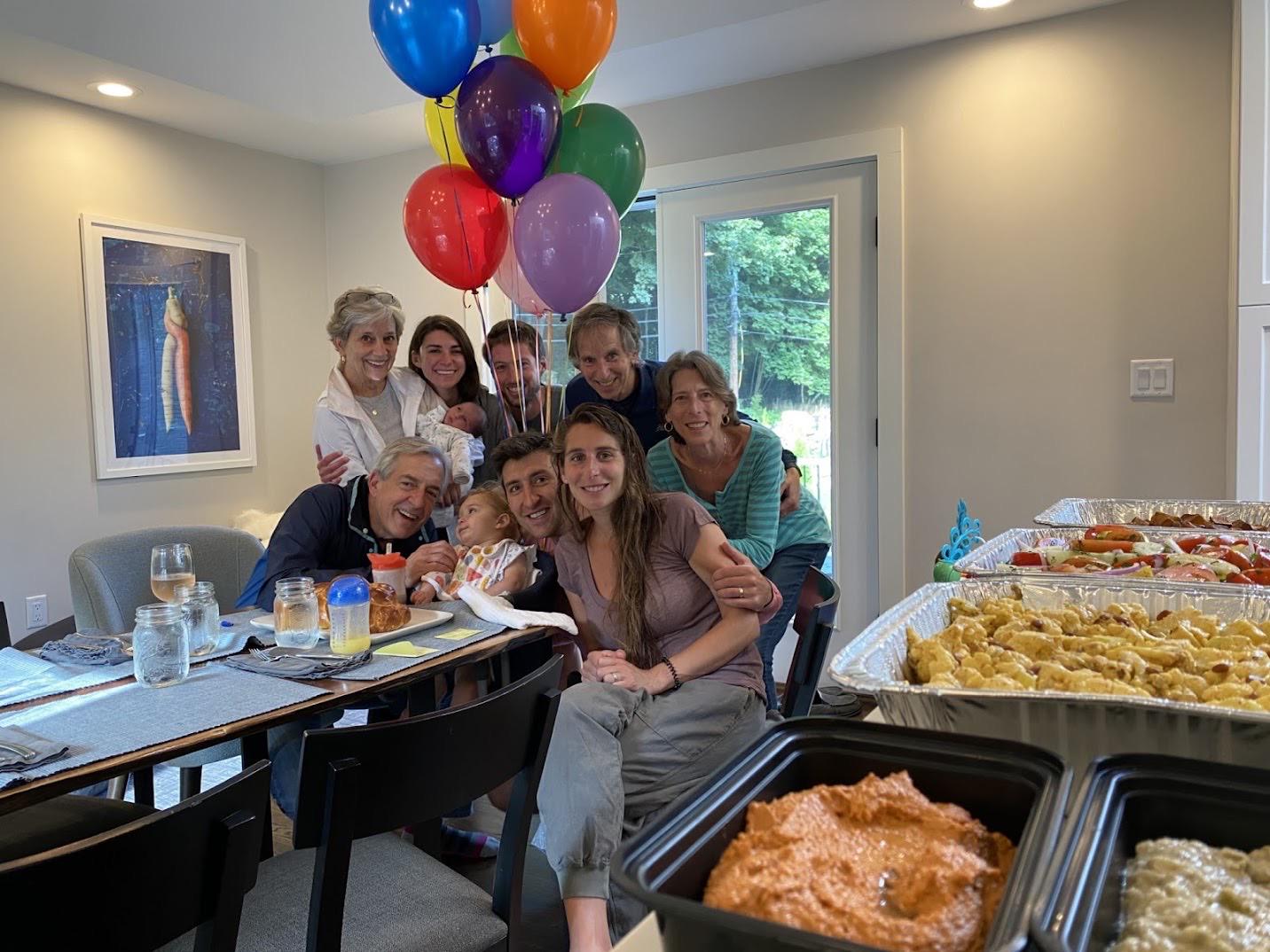
Since Havi’s death, we continue to honor Shabbirthdays every Friday. Now, we read poems, listen to Cole Swindell’s, ‘You Should Be Here’, and close our eyes tightly to try and recall the feeling of her wrapped tightly in our arms. Sometimes it’s hard to breathe. Sometimes I don’t want to open my eyes at the end of the song. And sometimes, I feel okay. Sometimes I can even smile through the song and cuddle with our beautiful younger daughter, Kaia. Whatever the feelings are, however the anguish of grief is manifesting, I pay attention.

Havi’s story is for anyone who has lost the person they love most in this world; for anyone who has watched someone they love lose their beloved; or for anyone who has yet to be touched by their own tragic loss and is open to learning about what it might feel like for them one day.

For me, Havi’s death is not a one-time event. It happens over and over again every moment she is not where she is supposed to be: Picking out a mismatched set of clothes that look adorable anyway; walking into preschool with her little hand gripping my index finger; pausing between the slides and the swings for a few bites of fig bar at the playground; playing with her little sister who looks up in admiration at her god given best friend. The losses are layered and constant. And they will accrue, every day, and on every missed milestone until the day I die. I’m not sure people understand that about losing a young child.
I think that the only way to be okay is to keep inviting our dead into those spaces, to keep them present in those moments where they should be. And not in a delusional way, either. Only in a way that helps us to create new memories and experiences with them since their life on this earth was so tragically short. Relationships don’t have to end when the physical ends. We don’t need to relegate them to the margins. As our therapist, Dr. Joanne Cacciatore puts it: We keep them right in the front row. From that place, they can participate actively in the life they were meant to have. And we can be proud to include them in it. And they can continue to encourage us to live a life of fullness and in service to others.

Even after only one year on this earth without Havi, my relationship with her has undergone profound and deepening changes. In the same way that relationships in the world of the living require immense attention and constant adjustments, so too, do our relationships with our dead. There are moments when I can still feel the touch of Hav’s softest cheeks against mine and there are also moments when I feel far away from her. There are times when I can hear her voice in my head and in my heart and times when the silence is everywhere even though I’m begging for her to show up.

A lot of this journey is a solitary one but it’s made so much easier when other people in our lives keep Havi present. This looks like so many beautiful things: Havi’s name written in the sand; outfits in the color purple; beautiful sunsets over mountains filled with wild flowers; a glass raised ‘To Hav’ before dinner begins; photographs on a bookshelf; text messages on important dates; acts of kindness in the spirit of a beautiful little girl. We do not need to ‘move on’ and we never will. We want to be joined in existing in the space where love and pain coexist for that is the space where we are closest to Hav. We, we all, can be changed forever by the power of loss. Falling into its embrace can make us more powerful, more productive, more alive, and more human. But that growth is ours to discover and cannot be rushed, or forced.

I wish we were kinder to grieving people. I wish we understood that grief is not scary. Losing Havi is the worst possible thing I could have ever imagined as a new mother. It is tragic and unnatural. But what is natural is to want to keep her close to us, to want to make her proud, to want to make the world better in her name, to want other people to know and love her. Those are all natural, quite beautiful, instincts that keep grieving people feeling like they can be okay and maybe even that they can become bigger and better versions of themselves.

I know my relationship with grief, and with Havi, is going to change many more times in my lifetime. I only hope that there will be more safe places to inhabit my suffering when it does.

Children are not supposed to die before their parents. But they do. And they do in this country, they do in all of our neighborhoods. And there are thousands of children, and their parents, who deserve a dance party filled with deep soulful sobs, uncontrollable laughter, and the rhythm of the music keeping us all on our feet for one more day. Most importantly, they deserve to be remembered.
This article originally appeared on 1.20.22
old letter, 1959, tony trapani, letter, secret letters, love letter, love stories, dads, fatherhood, father and son, parents, parenting
via SHVETS production/Pexels and Suzy Hazelwood/Pexels
Tony Trapani discovers a letter his wife hid from him since 1959.

Writing a letter is truly a lost art form, and many young people will never know the joy of it. You had to choose your words carefully and say everything you wanted to say. Once you sent it off, there was no way to be sure it was delivered. No way to know if it had been opened or read. You couldn't take it back or send it again. You just put it in the mailbox and hoped for the best. It was excruciating and magical all at the same time.

One story of a letter never delivered has captured the hearts of readers everywhere. A heart-warming local news story gone viral for the best reasons.


Tony Trapani and his wife were married for 50 years despite the heartache of being unable to have children. "She wanted children,” Trapani told Fox 17. "She couldn't have any. She tried and tried." Even though they endured the pain of infertility, Tony's love for his wife never wavered and he cherished every moment they spent together.

letter, secret letters, love letter, love stories, dads, fatherhood, father and son, parents, parenting Tony Trapani received the most important letter of his life, but he didn't see it for 50 years Photo by Álvaro Serrano on Unsplash

After his wife passed away when Tony was 81 years old, he undertook the heartbreaking task of sorting out all of her belongings. In particular was a mountain of papers stuffed into filing cabinets. Trapani diligently went through every single one.

That’s when he stumbled upon a carefully concealed letter in a filing cabinet hidden for over half a century.

The letter was addressed to Tony and dated March 1959, but this was the first time he had seen it. His wife must have opened it, read it and hid it from him. The letter came from Shirley Childress, a woman Tony had once been close with before his marriage. She reached out, reminiscing about their past and revealing a secret that would change Tony's world forever.

"Dear Tony, I bet you are surprised to hear from me after so many years. I was just thinking about you tonight like so many other nights. But I thought I would write you and find out how you are," the letter reads. "Tony, please don't be angry or surprised to hear this. I have a little boy. He is five-years- old now - grey eyes and beautiful black hair. What I am trying to say Tony is he is your son."


"Please, Tony if you can find it in your heart to forgive me, please come and see him," Shirley wrote in the letter. "Every day he asks me where is his daddy and believe me Tony I can't even answer him anymore. I would be forever grateful to you if you would just see him. ... I'll close now hoping and praying you will answer. P.S. His name is Samuel Duane."

Now, Tony faced the fact that he had a son that would be around 60 years old and he set out to find him.

For over a year, Trapani’s sister tried to track down the mysterious Samuel Duane Childress, until she finally contacted his wife, Donna.

Tony and Samuel met in January 2015 and he felt like a new dad. After meeting his father, Samuel said his mother told him she sent the letter, but Tony never responded. "Why my wife didn't tell me," said Trapani, "I don't know. She wanted children. She couldn't have any. She tried and tried."

It's easy to understand why it may have been hard for Trapani's late wife, Dolly, to pass along that sort of news. Though we'll never know what exactly must have been in her heart and mind when she hid the letter all those years ago.

"I always asked my mom, I said, 'Well what does he look like?'' Samuel said. "She said, 'Well, go look in the mirror."

The two met and caught up on a lifetime of memories with the understanding that they could never change the past. "Just to know him now is so important to me. It's going to fill that void," Samuel said.

But just to be sure, Tony took a paternity test to ensure they were father and son. Stunning everyone involved, the test came back negative. Tony was not the father.


letter, secret letters, love letter, love stories, dads, fatherhood, father and son, parents, parenting Tony and Samuel didn't waste time thinking about what might have been if he'd seen the letter earlier. Photo by Ire Photocreative on Unsplash

The news upset Tony and Samuel, but they still had a unique bond. They shared a relationship with Samuel’s mother and both have been on an incredibly wild ride after Tony found the mysterious letter.

“They're keeping that bond,” Donna said. “That paper doesn't mean anything to him. That bond has been made—and we're going to move on from here.”

Tony Trapani passed away in 2017, leaving him just two short years to connect with the man he once believed to be his son. If he'd seen the letter earlier, maybe they would have had more time. But that's all in the past, and by all accounts the men treasured the time they got together, and the relationship that they did have — not the one they wished for.

This article originally appeared earlier this year. It has been updated.

Movies

Julie Andrews said she literally could "feel the evil" when visiting the Von Trapp house

The story behind the movie might be more interesting than the movie itself.

Julie Andrews, Sound of Music, World War 2, Nazis, Germany, Third Reich, movies, musicals
Image via Wikicommons

Julie Andrews in The Sound of Music

Sometimes the story behind the movie is more interesting than the story in the movie.

In her autobiography, Home Work, Julie Andrews shared some of her experiences filming The Sound of Music. Andrews spoke with BuzzFeed News about her book, revealing her thoughts on the actual von Trapp family house. The movie musical, which is based on a section of the real-life Maria von Trapp's book, The Story of the Trapp Family Singers, was shot in a Hollywood studio.


The classic scene of Julie Andrews spinning in a meadow was shot in Bavaria, and the exteriors of the von Trapp house were filmed at a different house entirely.


- YouTube www.youtube.com


Andrews did visit the von Trapp house in Salzburg, Austria later on in her life.

"It wasn't until much later that I happened to visit the real villa where they actually lived," she told BuzzFeed News. During her visit, Andrews said she could "feel the evil that once permeated those walls." The evil Andrews refers to is, of course, the Nazis. "Because after they fled the country, which they had to do, as in the film, [Heinrich] Himmler took over that villa, and the atrocities there were just terrible," she continued.

The story behind the von Trapp house is much darker than what's touched on in the splashy Hollywood musical. The actual von Trapp family lived in the house from 1923 until they fled Austria in 1938. In 1938, the Nazis annexed Austria, making life hard for the singing family. Georg von Trapp refused to fly the Nazi flag on his house, and declined a request to sing at Hilter's birthday party. There was fear their neighbors would spy on them and their children would become brainwashed by Nazi politics. Even though the family was offered fame, they decided to stay true to their principals and leave Austria.

Julie Andrews, The Sound of Music, musicals, Germany, World War 2, Nazi Germany, Von Trapp Christopher Plummer and Julie Andrews on location in Salzburg, 1964 upload.wikimedia.org

Not one year later, the house was occupied by Nazis. Heinrich Himmler used the house as his summer residence until 1945.

Himmler was the second most powerful man of the Third Reich. Himmler set up and ran the Nazi concentration camps. The house was surrounded by armed guards and barbed wires. A barracks for the SS was built in the garden. Himmler also built the white wall around the house using slave labor. After the wall was completed, he had those who constructed the wall shot. Very monstrous.

Now, the von Trapp house is a more peaceful place. In 1947, the property was purchased from the von Trapp family by the Missionaries of the Precious Blood. In 2008, it opened to the public as a hotel.


- YouTube www.youtube.com

While the house has a heavy history, the previous residents of the property took satisfaction in knowing the von Trapps resisted the Nazi party. "What Himmler did here is a heavy weight on the house," Precious Blood Fr. Andreas Hasenburger, the rector of the Kolleg St. Josef, told the National Catholic Reporter. "But we are also proud to live in the von Trapp house, the house of the man who said no to the Führer."

It takes a lot of guts to stand up for what you believe in, especially when you're pressured to forfeit your integrity. Knowing that the family gave up their life to stay true to their principals makes The Sound of Music so much better.

This article originally appeared five years ago.

time, neil degrasse tyson, time flies, perception of time. clock, science,

A clock and Neil deGrasse Tyson.

When you’re a kid, time passes a lot more slowly than when you’re an adult. At the age of seven, summer seems to go on forever, and the wait from New Year’s Day to Christmas feels like a decade. As an adult, time seems to go faster and faster until one weekend you’re putting up your Christmas lights though you swear you just took ‘em down a month ago.

Why does time seem to speed up as we get older? Astrophysicist Neil deGrasse Tyson recently explained the phenomenon in a video posted to Instagram. He also offered tips on how to slow the passage of time as you age. DeGrasse Tyson is one of the most popular science communicators in the world and the host of 2014's Cosmos: A Spacetime Odyssey and 2020’s Cosmos: Possible Worlds.


Why does time appear to speed up as we get older?


“When you're young, everything is new. Your brain is constantly recording fresh memories, and the more memory your brain stores, the longer the experience feels. But then something changes. As you get older, routines take over. Your brain stops saving so much detail. It switches to autopilot because everything feels familiar and predictable,” deGrasse Tyson explains. “And when your brain stores fewer new memories, your perception of time compresses. That's why childhood feels long, and adulthood feels like a blur.”


Steve Taylor, PhD, author of many best-selling books including Time Expansion Experience, The Leap, and Spiritual ScienceThe Leap, and Spiritual Science, agrees with deGrasse Tyson.

“This is mainly because, as children, we have so many new experiences, and so process a massive amount of perceptual information,” Taylor writes at Psychology Today. “Children also have an unfiltered and intense perception of the world, which makes their surroundings appear more vivid. However, as we get older, we have progressively fewer new experiences. Equally importantly, our perception of the world becomes more automatic. We grow progressively desensitized to our surroundings. As a result, we gradually absorb less information, which means time passes more quickly. Time is less stretched with information.”

How do we make time slow down?

There’s something a little depressing about the idea that time speeds up as we age because we have fallen into predictable routines. The good news is that we can break this cycle by changing our habits and having new experiences. The more novel information we can process and the less routine our lives become, the slower time will move.

DeGrasse Tyson believes that with some change in our behaviors, we can get back to longer summers and Christmases that aren’t perpetually around the corner.

“You can actually slow time down again. Do something unfamiliar,” deGrasse Tysons says. "Travel somewhere new. Break a routine you've repeated for years. Learn a skill your brain hasn't mapped yet. Because the more new memories your brain forms, the slower time feels as it passes. So if life feels like it's accelerating, it's not your age. It's your brain, and you can reboot it.”

mother in law, toxic mil, toxic mother in law, wedding, wedding dress, wedding horror stories
@amypennza/X

This is many a bride's worst nightmare.

While there are certainly plenty of wonderful mothers-in-law out there, there's a reason the stereotypical image of a controlling, jealous, overbearing MIL exists. Sometimes difficult MIL relationships simply stem from misunderstandings and a lack of open conversation. Others delve into more shadowy aspects, like unspoken fears of being replaced or abandoned. Either way, these insecurities manifest themselves in various ways, both passive aggressive and, well, aggressive aggressive.

For romance author Amy Pennza, her wild MIL story, which took place at her wedding, no less, seems to fall into its own bizarre category entirely. Sure, this is not the first time we've heard of an MIL upstaging the bride, but this is kind of next-level. Apparently, Pennza's mother-in-law committed one of the most common wedding sins of all: she showed up on the big day in white dress looking straight from David's Bridal.


It has to be seen to be believed, and luckily, Pennza posted receipts:


All of Twitter ground to a halt as people awaited the deets.


It amassed thousands of retweets as Pennza's adoring public speculated about how this tale could have ended.


After a bit more begging, Pennza finally returned to Twitter to bless us all with the full story — and it's kind of surprising. Here it is, slightly condensed:

So, a couple people have asked for the story behind The Dress. Sorry for the delay! I have four kids (yes, I married him) on summer break, so my permanent state of being is "frazzled." I called my daughter "mom" the other day. I didn't know what my mother-in-law planned to wear. I didn't think to ask.

The morning of the wedding, all the women in the bridal party cram into a tiny room in the church. You know, body glitter and hairspray everywhere. Fifteen coats of mascara. Putting napkins under your pits so you don't sweat on your dress. She walks in. I see it.don't remember much about the day. Most people say their wedding is a blur, and that's true for me, too. But I know I said this: 'You... You could be the bride..."'

Later, my sister (matron of honor) said she didn't pull me aside and talk about it because she hoped I was too distracted to notice. My college roommate (bridesmaid) said the same thing. But secretly, they both spent the reception looking at me, then each other, then MIL, then me, then the cop the venue made us hire—hoping I didn't go for his taser. I'm happy to report the wedding unfolded without bloodshed, or anyone being shoved into the champagne fountain.

Then the story goes on and you realize Pennza might be the most understanding person alive:

Here's the thing: My mother-in-law is extremely frugal. And I don't mean she just enjoys a good bargain. To understand her, you have to know where she comes from. She grew up in extreme poverty. As a child, she used to sneak into the kitchen and eat match heads. That's a pica craving, and kids do it when they're malnourished.When you grow up with nothing, it stays with you. Forever, I think. No matter how much money you earn, there's always that little fear in the back of your mind that someone might take it all away.

But her upbringing didn't make her hard. Or cruel. Or selfish. However, she's a bargain hunter to the bone. Her money saving strategies are legend—and often hilarious. At family gatherings, we amuse ourselves telling stories of crazy shit she's done to save money...So when she spotted The Dress at an incredible bargain, she couldn't turn it down. If you ask her now, she says she feels terrible about it. Although, she also told me, 'I think I've still got it. We should raffle it off.'


She's frugal. But she's also incredibly generous. When my twins were newborns, she drove across town every night, slept on the sofa, and did three feedings. For two babies. Every night for months.She regularly shows up at my house with bags of new clothes for the kids. (Because she's a kick ass bargain hunter.) When I got my first job, she hemmed all my work pants because I can't sew for shit. And because she was proud of me. She never misses a band concert, sports event, talent show, science fair...you name it. She'd walk over hot coals for her grandchildren. She gives them everything. Because, you know, she grew up with nothing.

So, yeah, the wedding dress was a shock. But it gave me a pretty funny memory. No one who attended has ever forgotten it. And, you have to admit, weddings can be forgettable. Sure, she wore a wedding dress to my wedding. But she has more than made up for it since. When I told her about this getting a lot of attention, and said I worried it might hurt her feelings, she waved it off. 'Whatever makes me famous.'"


So Pennza's MIL bought the dress because it was a bargain, and Pennza accepted that. Very nice of her, as many of us might have wondered whether there were any, I don't know, non-bridal dresses on sale somewhere in the world. But sure, okay. Lots of feelings were felt. Pretty much everyone agreed Pennza is a champ for seeing things this way.

But also just FYI: if this happens to you, it's okay to be furious.

puppy, german shepard, dogs, stop lights, cute videos, fun dog videos
via Celina Romera / Facebook

A man introducing his dog at a red light.

When you see someone jump out of their car at a red light to talk with another motorist, usually it's bad news. Most of the time, it's the moment when road rage gets personal. However, 26-year-old Celina Romera caught a video of probably one of the most adorable red-light interactions between motorists on December 15, 2019, in Tampa, Florida.

In the video, an unidentified man pops out of his car at a stoplight with a darling puppy in his hand. In the other car, a big German Shepherd pops his head out, and the two dogs exchange kisses. "I JUST WITNESSED THE PUREST THING EVER," Romera wrote on Facebook. After the light changes, the man with the puppy gently walks back to the car. In the video, Romera can be heard saying, "It's okay, man. Take your time."


- YouTube www.youtube.com

The element that makes this video super sweet is that, at first, it appears to be a road rage video we're far too accustomed to seeing on social media. But then there's an adorable twist. "For a second there, I thought I was watching another road rage video but then I saw the little puppy and my heart melted," a commenter wrote on Facebook. "This is super great! A man introducing his puppy and another dog. We need more people just like you. Stay safe," Maryann wrote. "Why can't more people be this nice and compassionate?" Mary added.

One could imagine the dogs barking at each other before the video began. Then, the puppy's owner thought it was okay for the two dogs to meet. But the introduction could only be as long as the red light. The American Kennel Club says that barking between dogs is a pretty crude way to communicate. However, it is part of a host of messages that dogs send to one another.

german shepard, dogs, happy dog, dog in grass, smiling dog A German Shepard relaxing in grass.via Canva/Photos

"The combination of barking, body language, and approach-avoidance behavior gives away the fearful dog's motivation, even to us relatively uneducated body-language readers," the Club says on its blog. It adds that it's important for the dog owners to determine if the dogs are comfortable with one another before they get close. If not, the interaction could turn violent.

But, in this scenario, it would be hard to believe the big German Shepherd would be intimidated by the cute little pup.

The American Kennel Club says that German Shepherds are among the best helpers and family members that a human can have because their defining attribute is character. The German Shepherd is loyal, courageous, confident, and can learn many tasks. They make great partners for law enforcement because they will gladly put their lives on the line for those they love.

german shpard, dogs, happy dog, dog in grass, smiling dog, german shepard puppy A German Shepard puppy taking a breather.via Canva/Photos

The original video Romera posted has been shared over 120,000 times.

The heartwarming video reminds us that nothing can bring two strangers and millions of Facebook viewers together quite like dogs. Also, when somebody hops out of their car at a red light, it might not necessarily be road rage, but a sweet doggie introduction.

This article originally appeared six years ago.