upworthy
Add Upworthy to your Google News feed.
Google News Button
Art

The Pope gave what might be the most beautiful defense of movies ever in unexpected speech

In the age of algorithms and AI, the local cinema is more important than ever.

the pope, pope leo, pope leo XOV, movies, film, filmmakers, art, movie theaters, culture, art, algorithms, netflix

The Pope, of all people, just gave the most beautiful and unexpected speech on the power of original films.

The film industry is, undeniably, having a rough time. Theories abound as to why the total box office numbers in the U.S. and Canada have yet to return to pre-COVID numbers after completely bottoming out during the lockdowns of 2020. Affordability plays a role—a lot of families can no longer justify the rising costs of seeing films in theaters. And then there's the streaming piece. Many of us really enjoy watching movies on Netflix and Amazon Prime from the comfort of our own couch or bed, so why bother going to a theater?

But there's something powerful about watching movies in a theater that can never truly be recreated at home. There's a concept called "collective effervescence"—it explains why you can listen to the same song 1,000 times, but when you hear it performed live alongside tens of thousands of people all singing along, it can move you to tears. It also explains why the laughs, the frights, and the poignant moments of films hit so much harder when you experience them in a theater full of strangers.

Recently, Pope Leo XIV (yes, the Pope, of all people) urged all of us not to give up hope in a stunningly beautiful speech that reminds us of the power of original films, and the importance of experiencing them they way they were meant to be experienced: together.
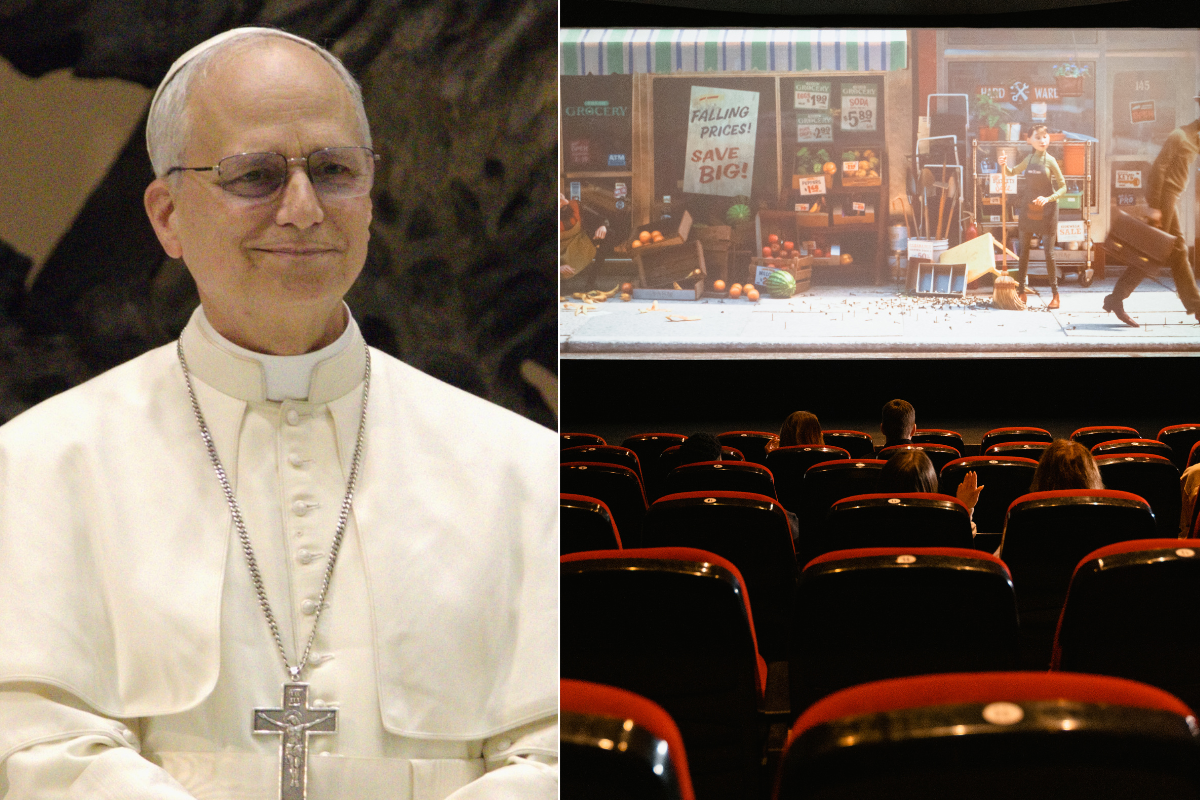
the pope, pope leo, pope leo XOV, movies, film, filmmakers, art, movie theaters, culture, art, algorithms, netflix Pope Leo XIV is a new breed of Pope.By Edgar Beltrán / The Pillar - Wikimedia Commons

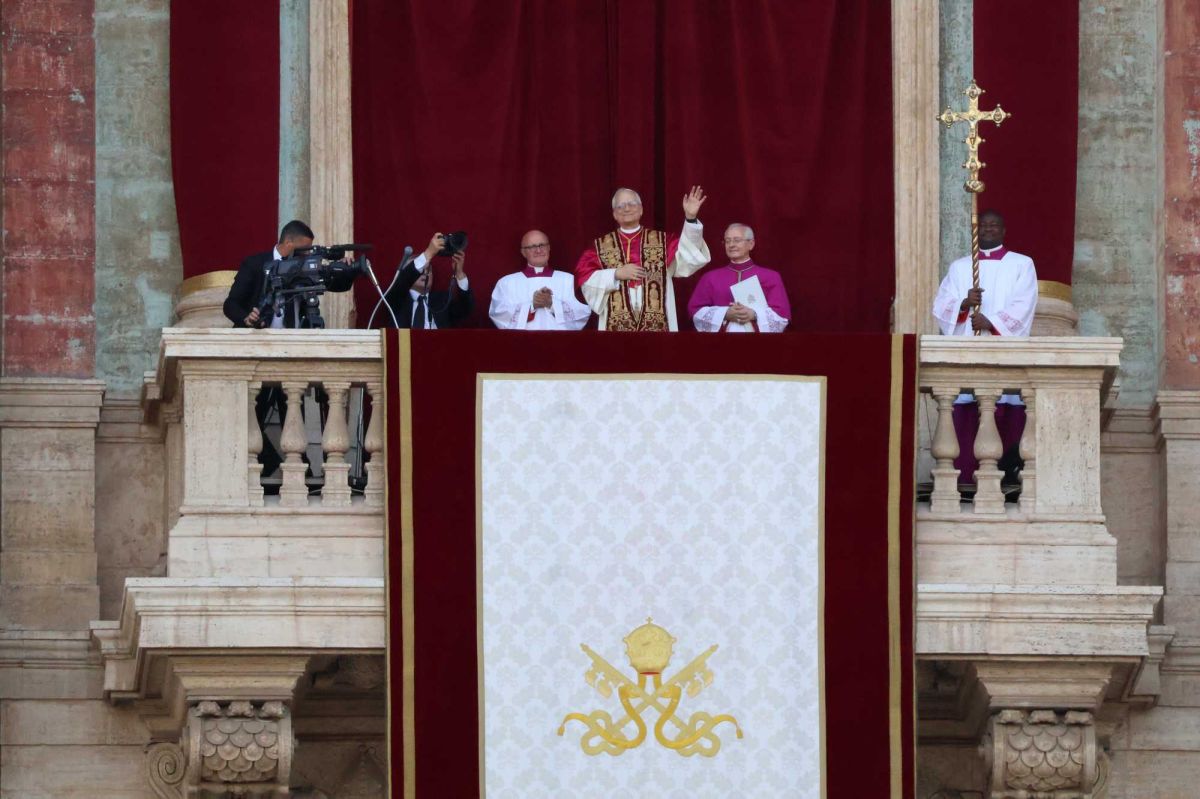
He invited many of the biggest names in Hollywood to the Vatican, according to Deadline, and spoke in great detail about why we need movies more than ever. Not simply movies and shows we watch from the comforts of home, but challenging, original pieces of art that we consume in the theaters with others in our community.

On why we need movies, especially during dark times:

"I also express my gratitude for what cinema represents: a popular art in the noblest sense, intended for and accessible to all. It is wonderful to see that when the magic light of cinema illuminates the darkness, it simultaneously ignites the eyes of the soul. Indeed, cinema combines what appears to be mere entertainment with the narrative of the human person’s spiritual adventure. One of cinema’s most valuable contributions is helping audiences consider their own lives, look at the complexity of their experiences with new eyes and examine the world as if for the first time. In doing so, they rediscover a portion of the hope that is essential for humanity to live to the fullest. I find comfort in the thought that cinema is not just moving pictures; it sets hope in motion.

Entering a cinema is like crossing a threshold. In the darkness and silence, vision becomes sharper, the heart opens up, and the mind becomes receptive to things not yet imagined."

On what separates movies from other forms of screen-based entertainment:

"Through your productions, you connect with people who are looking for entertainment, as well as those who carry within their hearts a sense of restlessness and are looking for meaning, justice and beauty. We live in an age where digital screens are always on. There is a constant flow of information.

However, cinema is much more than just a screen; it is an intersection of desires, memories and questions. It is a sensory journey in which light pierces the darkness and words meet silence. As the plot unfolds, our mind is educated, our imagination broadens, and even pain can find new meaning."

On why we still, and always will, need local movie theaters:

"Cultural facilities, such as cinemas and theaters, are the beating hearts of our communities because they contribute to making them more human. If a city is alive, it is thanks in part to its cultural spaces. We must inhabit these spaces and build relationships within them, day after day.

Nonetheless, cinemas are experiencing a troubling decline, with many being removed from cities and neighborhoods. More than a few people are saying that the art of cinema and the cinematic experience are in danger. I urge institutions not to give up but to cooperate in affirming the social and cultural value of this activity."

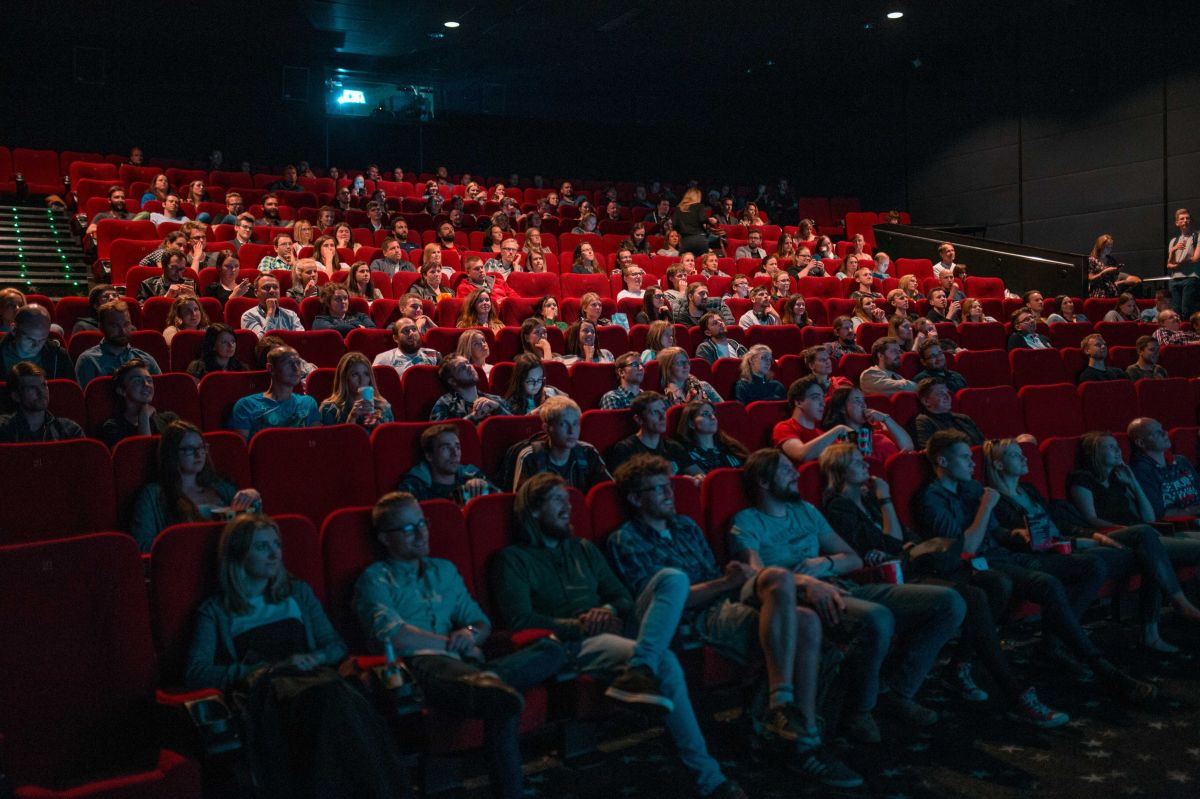
the pope, pope leo, pope leo XOV, movies, film, filmmakers, art, movie theaters, culture, art, algorithms, netflix Don't let movie theaters die off. Photo by Krists Luhaers on Unsplash

On the conundrum of creating art in a world driven by algorithms:

"The logic of algorithms tends to repeat what “works,” but art opens up what is possible. Not everything has to be immediate or predictable. Defend slowness when it serves a purpose, silence when it speaks and difference when evocative. Beauty is not just a means of escape; it is, above all, an invocation. When cinema is authentic, it does not merely console but challenges. It articulates the questions that dwell within us and sometimes even provokes tears that we did not know we needed to express.

In the present era, there is a need for witnesses of hope, beauty and truth. You can fulfill this role through your artistic work. Good cinema and those who create and star in it have the power to recover the authenticity of imagery in order to safeguard and promote human dignity.

Do not be afraid to confront the world’s wounds. Violence, poverty, exile, loneliness, addiction and forgotten wars are issues that need to be acknowledged and narrated. Good cinema does not exploit pain; it recognizes and explores it. This is what all the great directors have done. Giving voice to the complex, contradictory and sometimes dark feelings that dwell in the human heart is an act of love. Art must not shy away from the mystery of frailty; it must engage with it and know how to remain before it. Without being didactic, authentically artistic forms of cinema possess the capacity to educate the audience’s gaze."

It's not the first time powerful voices have spoken up on the importance of the movie theater and the original films that populate it.

In 2020, filmmaker Christopher Nolan shared his hope that we wouldn't lose the community theater forever, saying: "These are places of joyful mingling where workers serve up stories and treats to the crowds that come to enjoy an evening out with friends and family. As a filmmaker, my work can never be complete without those workers and the audiences they welcome.”

Director Sean Baker used his Oscar acceptance speech in March of 2025 to make a rousing case: "Where did we fall in love with the movies? At the movie theater. Watching a film in the theater with an audience is an experience. We can laugh together, cry together, scream and fight together. And in a time in which the world can feel very divided, this is more important than ever. Movie theaters, especially independently owned theaters, are struggling and it's up to us to support them. ... If we don't reserve this trend [of theaters shutting down], we'll lose a vital part of our culture."

He also urged filmmakers to keep making movies "for the big screen."

- YouTube www.youtube.com

The last piece of his argument is critical. Us regular folks need to support filmmakers and theaters by continuing to show up, but it's contingent on Hollywood making films that are worthy of the big screen (and our hard-earned money).

Pope Leo explained it beautifully: There's nothing wrong with easy-to-watch and enjoy films crafted based on algorithmic data—they can offer comfort and entertainment, while being affordable and accessible for those times we can't make it to the theater.

But we shouldn't let streaming films replace the movie-going experience. Original films that challenge and move us are incredibly important in divided times. They bring us together, whether its by celebrating the best of humanity, or by holding up a mirror to the worst.

Rechna Varma writes for MovieMaker: "If the phenomenon of Barbenheimer (2023) and Glicked (2024) showed us anything, it’s that when filmmakers dare to challenge, innovate, and create, audiences will show up in force. Let’s make it the rule, not the exception."

If The Pope deemed it worthy to take a break from deliberating issues of global faith and morality in order to discuss his favorite films, it's safe to say that the topic is more important than we may give it credit for.

boomer grandparents, boomer grandparent, millennial parents, millennial parent, grandkids
Image via Canva/PeopleImages

Boomer grandparents are excessively gifting their grandkids, and Millennial parents have had enough.

Millennial parents and Boomer grandparents don't always see eye to eye on parenting and grandparenting. Now, Millennial parents are uniting on a nightmare Boomer grandparenting trend that sees them "excessively gifting" their grandkids with tons of both new and old *unwanted* stuff during visits.

Ohio mom Rose Grady (@nps.in.a.pod) shared her "Boomer grandparent" experience in a funny and relatable video. "Just a millennial mom watching her boomer parents bring three full loads of 'treasures' into her home," she wrote in the overlay.


Grady can be seen looking out the window of her home at her Boomer mom and dad carrying bags and boxes up her driveway after several visits. The distressed and contemplative look on Grady's is speaking to plenty of Millennial moms.

@nps.in.a.pod

Today's "treasure" highlight was the mobile that hung in my nursery... #boomerparents #boomers #boomersbelike #millennialsoftiktok #millenialmom #motherdaughter

Grady captioned the video, "Today's 'treasure' highlight was the mobile that hung in my nursery..."

The humorous video resonated with with fellow Millennial parents. "Straight to the trash when they leave," one viewer commented. Another added, "I always say 'if you don’t want it in yours, we don’t want it in ours' 😂."

Even more Millennial parents have shared and discussed their situations with Boomer grandparents buying their kids too much stuff on Reddit. "Both my mother and my MIL love buying and sending toys, books, clothes, etc. I don't want to be ungrateful but we just don't need it and don't have the space. I have brought this up politely in 'we are all out of drawers for that' but it hasn't slowed things down," one explained. "I think part of the issue is that the grandparents live in different cities and vacation a lot. They don't get to see our daughter much so they buy stuff instead."

Another Millennial parent shared, "While the intention is very kind behind these, all the grandparents are very aware that we do not need, nor wish to receive these gifts in such an excessive volume - as it creates a daily struggle to store and accommodate in our home. I struggle to keep on top of tidying as it is, and this is a massive added challenge."

millennial parents, millennial parent, millennial mom, kids room, organize Millennial mom struggles to organize her son's room.Image via Canva/fotostorm

How to talk to Boomer grandparents about gifts

So, why are Boomer grandparents excessively gifting? "Boomer grandparents may be the first grandparent generation to have accumulated the substantial discretionary funds that enables them to spend money on their grandchildren," Sari Goodman, a Certified Parent Educator and founder of Parental Edge, tells Upworthy. "These grandparents probably grew up with grandparents who didn’t have that kind of money and so they may be excited to give their grandchildren the things they didn’t get."

Goodman suggests that Millennial parents first discuss with them the "why" behind the gifting. "What comes before setting a boundary to limit over-the-top gift-giving is delving into the reasons grandparents are buying so much," she explains. "Coming from a place of compassion and understanding makes it possible to come up with mutually beneficial solutions."

- YouTube www.youtube.com

She recommends that Millennial parents sit down with their Boomer parents to learn more. "Did they grow up without many toys and clothes and are fulfilling a dream? Ask them about the values they learned as children (hard work, perseverance, the power of delayed gratification) and how they can pass on these lessons to the grandchildren," she suggests.

She adds that another reason may be that Boomer grandparents live far away and want their grandchildren to feel a connection with them. "Set up a regular FaceTime or Zoom meeting. Rehearse with the kids so they have something to say and suggest a topic for the grandparents," says Goodman. "Or send snail mail. Kids love getting mail. The grandparents can send postcards from where they live and explain some of the special sites."

boomer grandparents, boomer grandparenting, video chat, video call, grandkids Boomer grandparents have a video call with grandkids.Image via Canva/Tima Miroshnichenko

Finally, Goodman adds that for some grandparents, this may be is the only way they know how to show their love. Millennial parents could ask if they would be open to other ideas. "Parents can set up an activity for grandparents and kids to do when they come over—a jigsaw puzzle, art activity, board game, magic tricks," she says. "Arrange for the grandchildren to teach the grandparents something their phones can do or introduce them to an app they might like."

This article originally appeared last September

shoes, cheap shoes, fast fashion, fast fashion brands, sustainable fashion, economy, shrinklfation, money, sustainable shoes

Remember things being built to last?

Unfortunately, most Americans are well aware of shrinkflation, where food companies reduce the sizes of their products while the price remains the same at the grocery store. You see this in fast food restaurants when you pick up a burger and feel like your hand has grown a few inches, and at the supermarket when you buy a box of cookies, it weighs less than it did a few weeks ago. Companies use this strategy when they think you’ll be less likely to notice a dip in quantity than a hike in the price.

We see something similar in the world of retail, particularly fast fashion. Fast fashion offers cheaper garments made from low-quality materials that last about as long as the trend does, so people can throw them away and buy the next hot thing. This can be a real problem because fast fashion harms the environment and leads to exploitative labor practices. And the tough part is—even for the most conscious of consumer, it's hard to escape from.


Here's a prime example of what this looks like in the real world. A few months ago, a TikTokker named Tom (@SideMoneyTom), popular for making videos about consumer products, went viral for a video where he called out shoe manufacturers for dropping their quality while keeping prices high. “So many of you guys want to shoot the messenger, but look, it's not my fault shoes are made out of Styrofoam and oil now,” Tom says in a TikTok with over 528,000 views. “It's literally every shoe you look at now. It's not even just the cheap ones. I can find hundred dollar plus pairs of shoes all day long with glue squeezing out of their Styrofoam cracks.”

@sidemoneytom

Replying to @Oscar Magaña shoes are done #fyp #shoes #foryou

Tom notes that recently, shoes have been made with foam soles instead of rubber. Both have pros and cons. Foam is a little more comfortable, but rubber lasts a lot longer. Rubber shoes keep shape and support over time and are much more durable. Conversely, foam shoes compress over time, losing their support and comfort. When companies sell cheaper shoes that wear out more quickly, they make much more money because you must keep replacing them.

In the video, Tom adds that many companies that used to have shoes made with rubber heels, such as Carhartt and Timberland, have switched to foam. This is an interesting choice for brands that pride themselves on selling durable products.

Cora Harrington, a writer and lingerie expert, says that companies aren't entirely to blame. Americans don’t want to pay higher prices. “People don’t exactly want to pay more for all that stuff,” Harrington told Vox. "So what has to happen if everything is more expensive and the customers still want to pay the same price, something has to be cut and that’s often going to be the quality of the garment.”

“There is an entire generation of consumers at this point that doesn’t actually know what high-quality clothing feels like and looks like,” Harrington continues. “It gets easier, I think, for consumers to just not know any better.”

@sidemoneytom

Replying to @donkles #shoes #fyp #sketchers #nike

Many commenters have noticed the decline in shoe quality and praised Tom for pointing it out. "I am so happy I’m not the only one who is baffled by shoes being made of styrofoam and then being upcharged for them," one commenter wrote. "When shoes started being named some version of 'Air Light Cloud float,' my thought was it was because they went from quality rubber to cheap foam and less materials,” another commenter added.

Tom believes the decline in shoe quality is an example of a more significant trend affecting American consumers' products: quality is decreasing while prices remain the same. “The quality of everything is going to hell, and the prices are going up," Tom concludes his video. "The problem is, so many of us have just become used to it that we keep buying it, and we basically allow them to dumb down the quality of everything. Everything in our lives. These shoes are just the tip of the iceberg. Start thinking about it in your life. What are you gonna allow to be garbage quality?"

This article originally appeared in March. It has been updated.

the great depression; Florence Thompson; Mona Lisa of the Great Depression; Mona Lisa; the depression; depression era
Photo by Dorothea Lange via Library of Congress
The woman from the famous Great Depression photo didn't know about her fame for 40 years.

It's one of the most iconic and haunting photos of all time, up there with the likes of Hindenburg, The Falling Soldier, Burning Monk, Napalm Girl, and many others. It's called simply Migrant Mother, and it paints a better picture of the time in which it was taken than any book or interview possibly could.

Nearly everyone across the globe knows Florence Owens Thompson's face from newspapers, magazines, and history books. The young, destitute mother was the face of The Great Depression, her worried, suntanned face looking absolutely defeated as several of her children took comfort by resting on her thin frame. Thompson put a human face and emotion behind the very real struggle of the era, but she wasn't even aware of her role in helping to bring awareness to the effects of the Great Depression on families.


It turns out that Dorothea Lange, the photographer responsible for capturing the worry-stricken mother in the now-famous photo, told Thompson that the photos wouldn't be published.

Of course, they subsequently were published in the San Francisco News. At the time the photo was taken, Thompson was supposedly only taking respite at the migrant campsite with her seven children after the family car broke down near the campsite. The photo was taken in March 1936 in Nipomo, California when Lange was concluding a month's long photography excursion documenting migrant farm labor.

the great depression; Florence Thompson; Mona Lisa of the Great Depression; Mona Lisa; the depression; depression era Worried mother and children during the Great Depression era. Photo by Dorthea Lange via Library of Congress

"Migrant worker" was a term that meant something quite different than it does today. It was primarily used in the 30s to describe poverty-stricken Americans who moved from town to town harvesting the crops for farmers.

The pay was abysmal and not enough to sustain a family, but harvesting was what Thompson knew as she was born and raised in "Indian Territory," (now Oklahoma) on a farm. Her father was Choctaw and her mother was white. After the death of her husband, Thompson supported her children the best way she knew how: working long hours in the field.

"I'd hit that cotton field before daylight and stay out there until it got so dark I couldn't see," Thompson told NBC in 1979 a few years before her death.

the great depression; Florence Thompson; Mona Lisa of the Great Depression; Mona Lisa; the depression; depression era A mother reflects with her children during the Great Depression. Photo by Dorthea Lange via Library of Congress

When talking about meeting Thompson, Lange wrote in her article titled "The Assignment I'll Never Forget: Migrant Mother," which appeared in Popular Photography, Feb. 1960, "I saw and approached the hungry and desperate mother, as if drawn by a magnet. I do not remember how I explained my presence or my camera to her, but I do remember she asked me no questions. I made five exposures, working closer and closer from the same direction. I did not ask her name or her history. She told me her age, that she was thirty-two. She said that they had been living on frozen vegetables from the surrounding fields, and birds that the children killed."

Lange goes on to surmise that Thompson cooperated because on some level she knew the photos would help, though from Thompson's account she had no idea the photos would make it to print. Without her knowledge, Thompson became known as "The Dustbowl Mona Lisa," which didn't translate into money in the poor family's pocket.

In fact, according to a history buff who goes by @baewatch86 on TikTok, Thompson didn't find out she was famous until 40 years later after a journalist tracked her down in 1978 to ask how she felt about being a famous face of the depression.

@baewatch86

Florence Thompson, American Motherhood. #fyppppppppppppppppppppppp #historytok #americanhistory #migrantmother #thegreatdepression #dorthealange #womenshistory

It turns out Thompson wished her photo had never been taken since she never received any funds for her likeness being used. Baewatch explains, "because Dorothea Lange's work was funded by the federal government this photo was considered public domain and therefore Mrs. Florence and her family are not entitled to the royalties."

While the photo didn't provide direct financial compensation for Thompson, the "virality" of it helped to feed migrant farm workers. "When these photos were published, it immediately caught people's attention. The federal government sent food and other resources to those migrant camps to help the people that were there that were starving, they needed resources and this is the catalyst. This photo was the catalyst to the government intercepting and providing aid to people," Baewatch shares.

- YouTube www.youtube.com

As for Lange, Migrant Mother was not her only influential photograph of the Great Depression. She captured many moving images of farmers who had been devastated by the Dust Bowl and were forced into a migrant lifestyle.

"Broke, baby sick, and car trouble!" is just one of her many incredible photos from the same year, 1937.

She also did tremendous work covering Japanese internment in the 1940s, and was eventually inducted into the International Photography Hall of Fame and Museum and the National Women's Hall of Fame.

the great depression; Florence Thompson; Mona Lisa of the Great Depression; Mona Lisa; the depression; depression era Families on the move suffered enormous hardships during The Great Depression.Photo by Dorthea Lange via Library of Congress

Thompson did find some semblance of financial comfort later in life when she married a man named George Thompson, who would be her third husband. In total, she had 10 children. When Thompson's health declined with age, people rallied around to help pay her medical bills citing the importance of the 1936 photo in their own lives. The "Migrant Mother" passed away in 1983, just over a week after her 80th birthday. She was buried in California.

"Florence Leona Thompson, Migrant Mother. A legend of the strength of American motherhood," her gravestone reads.

stay at home mom, sahm, stay at home dad, sahd, kids, family, marriage, gender roles, good dads, ups driver, ups
via J.R. Minton (used with permission)

A Texas UPS driver has a strong opinion on stay-at-home moms.

J.R. Minton, a 33-year-old UPS driver from the Dallas, Texas, area, recently ruffled some feathers with a viral TikTok video titled “SAHMs Listen up!” that begins with him asking, “I mean, how entitled could you be?” At first, Minton appears to fail to appreciate the enormous amount of emotional, mental, and physical labor that stay-at-home moms provide.

“I truly cannot imagine the amount of arrogance you must have to sit there and complain when you are so privileged to have a person who is willing to provide such a carefree life for you,” Minton continues. “Let’s get real! What do you do all day? Your spouse is taking care of everything so you can take care of one thing. How complicated could it be: all you do is go to work?”


At this point, legions of stay-at-home mothers and those who love them considered trucking themselves to Dallas to find this unappreciative UPS driver. However, it was soon apparent that Minton was referring to himself.

“For 10 hours a day, you get to live the life of a single, childless, carefree man because your wife was willing to take the financial risk of allowing you to be successful in your career while she takes care of everything else,” he continues. “She provides childcare services, home cleaning services, medical services, food services, scheduling services, and a list that goes on and on. And you provide... a paycheck? And you have the nerve to call yourself the provider! What is it going to take for you to realize that, bro, everything you have in your life is because of a stay-at-home mom.”

The commenters on the video breathed sighs of relief and then praised Minton, a father of 4, for publicly appreciating his wife’s work.

"My sleeves were rolled up, earrings were off, hair tied up.... I was so ready...." one commenter joked. "I thought I landed in enemy territory for a min..." another added. "You have just made me realize after all these years that *I* am the freaking provider and that feels amazing,” a stay-at-home mother wrote.

People appreciate Minton’s post because he praised stay-at-home mothers and placed his wife’s work above his, which he characterized as merely bringing home a paycheck. Minton has one job, delivering packages, but as he noted, his wife is an expert in over five different professions. In a world where stay-at-home moms are fighting to be seen as equals to their working spouses, Minton places them on a pedestal and owes his “carefree life” to them.

stay at home mom, sahm, stay at home dad, sahd, kids, family, marriage, gender roles, good dads, ups driver, ups A couple cooking in the kitchen with a cat sitting on the table beside chopped ingredients.Photo credit: Canva

"Married life, with children, is bound to be chaotic," Minton told Upworthy. "It’s bound to have its ups and downs; It’s made me question myself a thousand times. However, the marriage my wife and I share has given me the space to find peace."

Minton may be sharing an opinion we don't hear often enough, but he doesn't think he's the only one who thinks that way. "The last thing I am is rare or unique. There’s nothing special about the way that I feel or the things that I say. I have the same thoughts, feelings, frustrations and problems that any other husband or father might be struggling with," he told Upworthy. "The only difference that might be apparent is how I choose to react to the same situations any other man might encounter."

This post isn’t the first time Minton has pulled the bait and switch on his followers. Last year, he made a video where he appeared to take pride in the fact that he never “helps” his wife with chores.

The twist in this video was that he doesn’t “help” his wife with chores because they are also his responsibility. "Because I do what I am supposed to do as a father and a husband. I cook. I clean. I do the laundry. I take care of the kids. I can't help my wife do those things because they are my job, too,” he reveals.

He then urged men to change their perspectives on how they view stay-at-home moms. “Change the way you speak, change the way you think, and grow the f*** up and be a man," he added.

Minton is an equal partner to his wife because he wants to treat his wife and family differently from how he was raised. “Pretty much everything about my parenting style is in spite of what I saw when I was growing up,” he told Today.com.

It's wonderful to see someone like Minton breaking the generational cycles. What makes it even better is that he wants to teach others to do the same.

This article originally appeared in January 2025.

words, overused words, therapy speak, 2025 slang, filler words, retired phrases, ask reddit, 2026 slang,

No one is gonna miss '6 7.'

It’s pretty customary for humans to collectively latch on to certain words or phrases for a time, only to grow tired of them once the trendiness wears off. That’s by and large how we get generational slang in the first place. One man’s “rad” is another man’s “bussin.” The linguistic circle of life, as it were. `

But the rapidity of social media has certainly seemed to make this turnover move at the speed of light, hasn’t it? It takes a fraction of the time for words to get overused, misused, change meaning, and lose meaning altogether.


That’s probably why when someone on Reddit asked, “What overused word or phrase needs to be retired in 2026?” there was no shortage of passionate answers. From warped psychology terms to nonsensical Gen Alpha brainrot words, people delivered.

Keep scrolling for our favorites.

Sensational journalism words

1. ’Slammed’ by the news.”

2. “Also while we're at it, ‘bombshell,’ ‘destroyed,’ ‘meltdown,’ and ‘disaster.’"

3. “Blasted. Clap back.”

“Those are telltale signs that what you're about to read is heavily biased and was written to evoke emotions instead of giving just the facts so it's basically trash.

Therapy speak

4. “Gaslighting. People love to use this term wrong. It doesn't mean ‘lying,’ it means ‘manipulating somebody into believing they're crazy.’ That involves lying, but they're not the same thing. Also every term invented to get around TikTok censors. ‘Unaliving,’ ‘graped,’etc.”

5. “Calling anyone who does anything slightly annoying a narcissist.”

6. “Similarly, anytime someone feels just a little proud of themselves for something and/or compliments themselves, it's ‘ego.’ Not hating and constantly putting yourself down isn't ego. It's healthy.”

7. “Trauma.You don’t have trauma from the Starbucks barista mispronouncing your name, Djoeffreigh. And if you do, I am not interested in hearing about it.”


Aggressively passive-aggressive phrases


8. "People who use ‘the ick,’ ironically enough, give me the ick. Now I've given it to myself.”

9. “Thank you for your attention to this matter.”

10. “Louder for the people in the back.”

11. “‘Let that sink in.’ ‘Read that again but slowly.’ ‘I don’t know who needs to hear this, but…’”

12. "‘Just saying’ after being very aggressive.”


Social media buzzwords and phrases that have been run into the ground

13. '''Let's normalize this.' please no.”

14. “Tell me you’re Y without saying it.”

15. “I’m begging people to stop saying’"its giving.’"

16. “I’m literally obsessed”

17. “X lives rent free.”

18. “That’s iconic, she’s iconic, they’re iconic.”

19. “Today years old”


Weird, cutesy parenting terms

20. "Boy mom"

21. “I also hate ‘littles."


Words that do not mean what people think they mean

22. “'Underrated'. Sick of seeing ‘OMG! This band/singer/guitarist/drummer is so underrated’ when they're clearly millionaires from the musical success they've enjoyed for years.”

23. “‘My truth.’ I like this one because it lets me know the next words out of their mouth are going to be bullshit.”

24. “According to AI.”


Phrases that kids today use that all us olds hate

25. “The grandkids are slowing down on 6 7 (FINALLY), and I haven’t heard them say ‘sigma’ for a while, so HOPEFULLY those are both going away forever!!

26. “‘Lowkey’ we’ve run it into the ground.”

“The new ‘literally.”

“Omg it's low key every second word my teen says.”

And finally…


Words that have lost their original meaning due to overuse

27. "‘Absolute game changer .’ I do product reviews, and I want to smack people for this one. Everything is a ‘game changer’ or a ‘holy grail.’ Bullshit, it is. That 5 star game changer is usually an overpriced piece of crap lol.”