

HBO's 'The Gilded Age' tells the untold—but very real—history of the Black elite
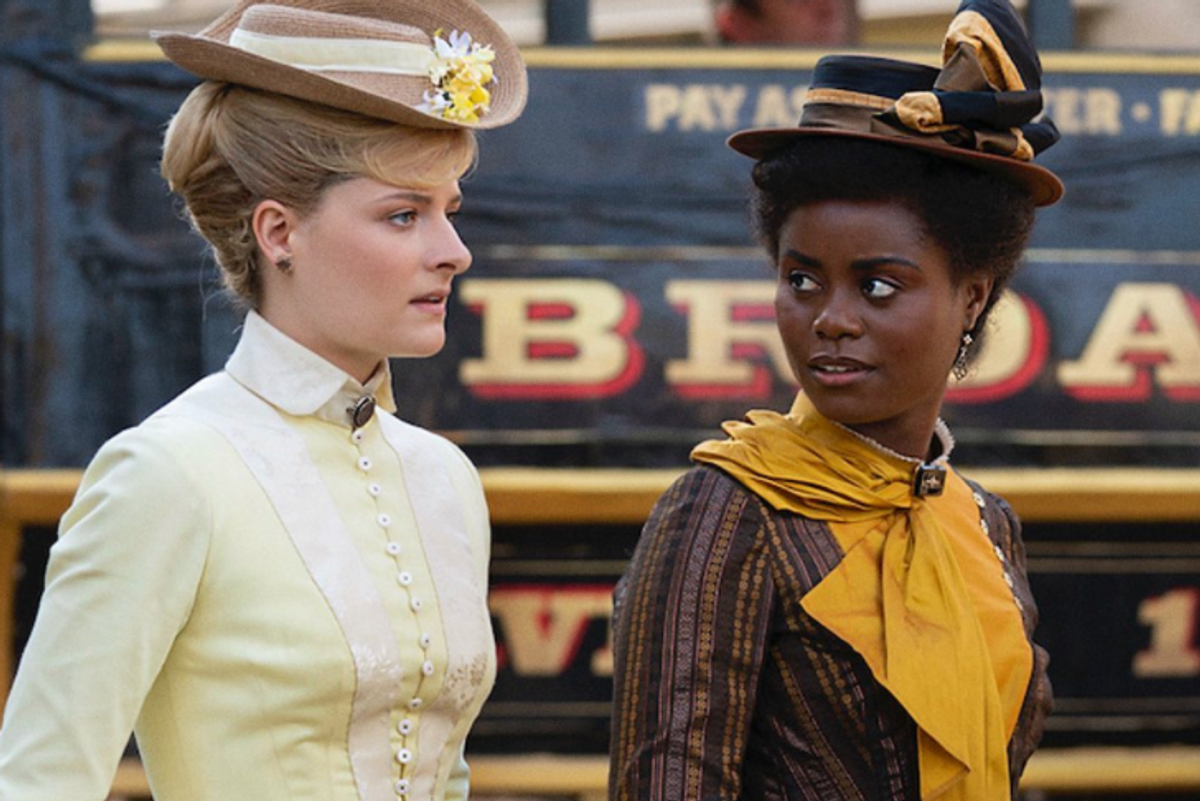
“Downton Abbey” fans have been rejoicing over Julian Fellowes’ newest historical drama “The Gilded Age.” Instead of London at the beginning of the 20th century, audiences are transported to (the truly new) New York of 1882, where aristocrats Agnes van Rhijn and Ada Brook reside.
Despite the different backdrops, “The Gilded Age” has much of the same aspects as its predecessor: conflict between the ways of old and new, weighty scrambles up the social ladder and, of course, the rich emotional narratives of the privileged class.
But “The Gilded Age” does offer something that “Downton Abbey” does not, and it’s a piece of history rarely portrayed or taught, yet real and important all the same: the story of the Black elite.
Young white woman Marian Brook (played by Louisa Jacobson) is surprised when she shows up to the home of her new friend Peggy Scott (played by Denée Brown), hoping to offer her a “gift” of old used shoes. Marian quickly realizes the error of her bias. Her Black friend, daughter to wealthy and educated parents, living in an opulent home with her own staff, had want for nothing. Certainly not worn out shoes.
This picture of Black excellence–where Black men and women enjoy money and influence—rarely makes an appearance in film and television, and in general is an overlooked aspect of history. In an interview with The New York Times, "The Gilded Age"’s historical consultant Erica Armstrong Dunbar pointed out, “What does the average person know about the Black elite in New York in the 1880s? The answer is very little if anything.”
As someone who grew up not even knowing about Tulsa and Black Wall Street until well into my twenties, and still knowing very little beyond that, I’d have to agree.
Julian Fellowes aims to remedy that in his depiction of the Scott family, and considers it a duty of artistic integrity. In an interview with The Columbian, he shared “I wanted very much to make ‘The Gilded Age’ distinctively American. And I didn’t believe I could do that without having a Black narrative and a Black family alongside the others. It just didn’t feel right to, actually.”
And it seems that Fellowes has done his due diligence, not only consulting with with Dunbar, but in co-creating the show with Black writer Sonja Warfield, as well as reading books like “Black Gotham,” which traces author Carla Peterson’s family history in the prosperous, upper-class Black communities of New York. According to The Columbian, the character of Peggy is even inspired by multiple real life trailblazers of the time, including Ida B. Wells (NAACP founder), Julia C. Collins (America’s first cited published Black female author) and Susan McKinney Steward (New York’s first Black female doctor).
Historical dramas featuring affluent, high-class Black characters are so rare, even Broadway legend Audra McDonald, who plays Peggy’s mother Donna Scott, was shocked to discover her role didn’t “perpetuate the tired old stereotype.”
On The Grio’s podcast “Acting Up,” McDonald shared how “people forget that during Reconstruction, with the constitutional amendments and emancipation and the end of slavery and giving Black men the right to vote and hold office, a lot of formerly enslaved people made big strides very quickly. Blacks had their own communities in Brooklyn and what was called ‘the Tenderloin’ at the time. They needed to have businesses to serve their own communities, and so that’s how you ended up with Black pharmacists and dentists and doctors and undertakers and lawyers and all of that. We needed all these things to serve our own communities — our own thriving communities, and there was a social structure that existed within that.”
Once she read the script, McDonald was thrilled to illuminate this often hidden world, “with all of its intricacies and all of its mess.”
Intricate, indeed. And interesting, to boot. As well as a really amazing example of what can happen when empowering conversations of representation are had. I can only imagine how much more nuanced our understanding of history (Black history, in particular) would be, had families like the Scotts been a regular part of the curriculum. But thankfully, we have creators like Fellowes, who understand that historical fiction, when told authentically, can embody the spirit of those untold stories, shaping our minds and hearts here in the present.
- 17 stunning photos of black Victorians show how history really ... ›
- Who Wants To Play "Black Monopoly"? - Upworthy ›
- Black women are now America's most educated group. - Upworthy ›
- The story of Doris "Dorie" Miller during WWII - Upworthy ›
- 10 Black women bought first-class airplane tickets, and it revealed a lot about race in the U.S. - Upworthy ›
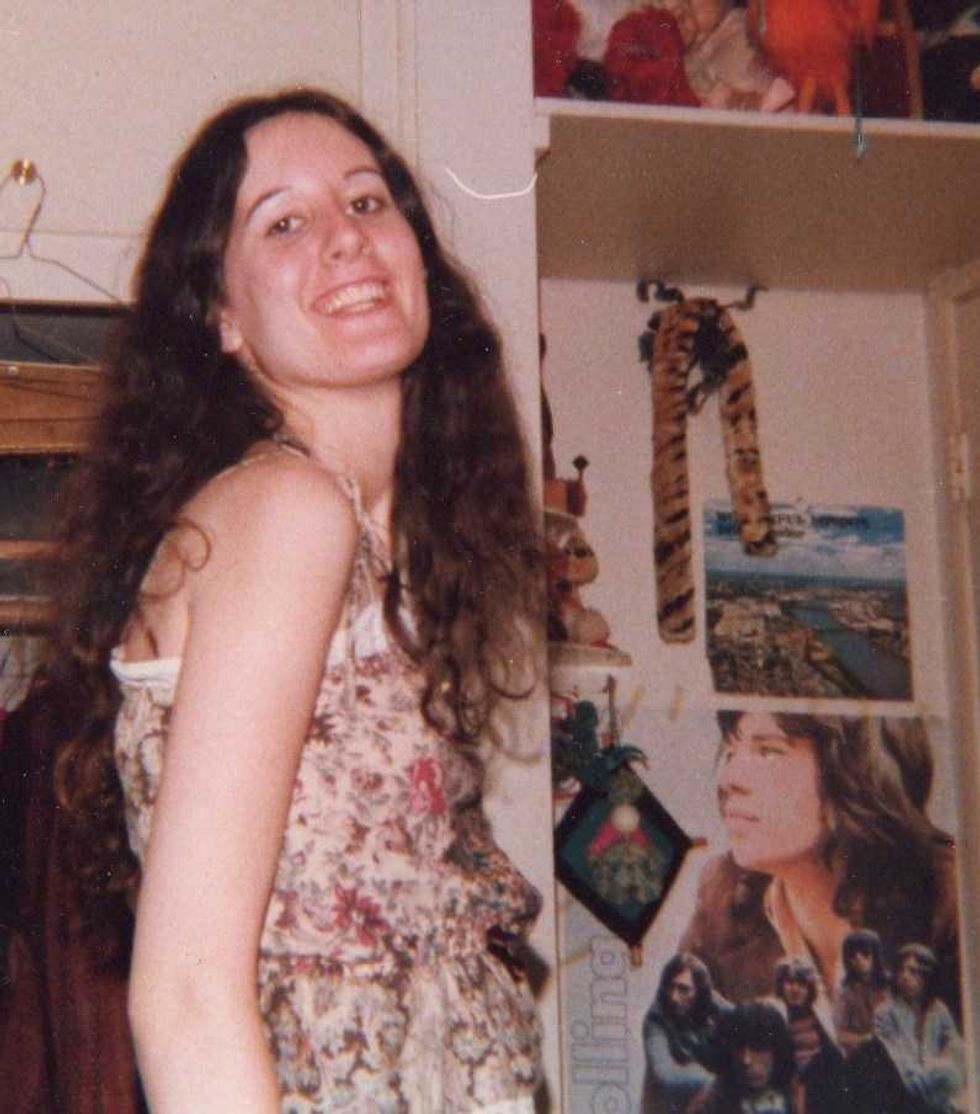 A Generation Jones teenager poses in her room.Image via Wikmedia Commons
 An office kitchen.via
  An angry man eating spaghetti.via



An Irish woman went to the doctor for a routine eye exam. She left with bright neon green eyes.
It's not easy seeing green.
Did she get superpowers?
Going to the eye doctor can be a hassle and a pain. It's not just the routine issues and inconveniences that come along when making a doctor appointment, but sometimes the various devices being used to check your eyes' health feel invasive and uncomfortable. But at least at the end of the appointment, most of us don't look like we're turning into The Incredible Hulk. That wasn't the case for one Irish woman.
Photographer Margerita B. Wargola was just going in for a routine eye exam at the hospital but ended up leaving with her eyes a shocking, bright neon green.
At the doctor's office, the nurse practitioner was prepping Wargola for a test with a machine that Wargola had experienced before. Before the test started, Wargola presumed the nurse had dropped some saline into her eyes, as they were feeling dry. After she blinked, everything went yellow.
Wargola and the nurse initially panicked. Neither knew what was going on as Wargola suddenly had yellow vision and radioactive-looking green eyes. After the initial shock, both realized the issue: the nurse forgot to ask Wargola to remove her contact lenses before putting contrast drops in her eyes for the exam. Wargola and the nurse quickly removed the lenses from her eyes and washed them thoroughly with saline. Fortunately, Wargola's eyes were unharmed. Unfortunately, her contacts were permanently stained and she didn't bring a spare pair.
- YouTube youtube.com
Since she has poor vision, Wargola was forced to drive herself home after the eye exam wearing the neon-green contact lenses that make her look like a member of the Green Lantern Corps. She couldn't help but laugh at her predicament and recorded a video explaining it all on social media. Since then, her video has sparked a couple Reddit threads and collected a bunch of comments on Instagram:
“But the REAL question is: do you now have X-Ray vision?”
“You can just say you're a superhero.”
“I would make a few stops on the way home just to freak some people out!”
“I would have lived it up! Grab a coffee, do grocery shopping, walk around a shopping center.”
“This one would pair well with that girl who ate something with turmeric with her invisalign on and walked around Paris smiling at people with seemingly BRIGHT YELLOW TEETH.”
“I would save those for fancy special occasions! WOW!”
“Every time I'd stop I'd turn slowly and stare at the person in the car next to me.”
“Keep them. Tell people what to do. They’ll do your bidding.”
In a follow-up Instagram video, Wargola showed her followers that she was safe at home with normal eyes, showing that the damaged contact lenses were so stained that they turned the saline solution in her contacts case into a bright Gatorade yellow. She wasn't mad at the nurse and, in fact, plans on keeping the lenses to wear on St. Patrick's Day or some other special occasion.
While no harm was done and a good laugh was had, it's still best for doctors, nurses, and patients alike to double-check and ask or tell if contact lenses are being worn before each eye test. If not, there might be more than ultra-green eyes to worry about.