Language is so fun. Though English has technically existed for well over a thousand years, today’s modern version of the language is nearly unrecognizable from its roots in Old and Middle English. Over time, words and phrases evolve and transform in both pronunciation and meaning. New words are created, and many older words die out.
Some antiquated words, however, manage to survive the passage of time even if they’re not regularly used in everyday conversation or writing. How can they hold on without ever actually being used? By being “fossilized.”
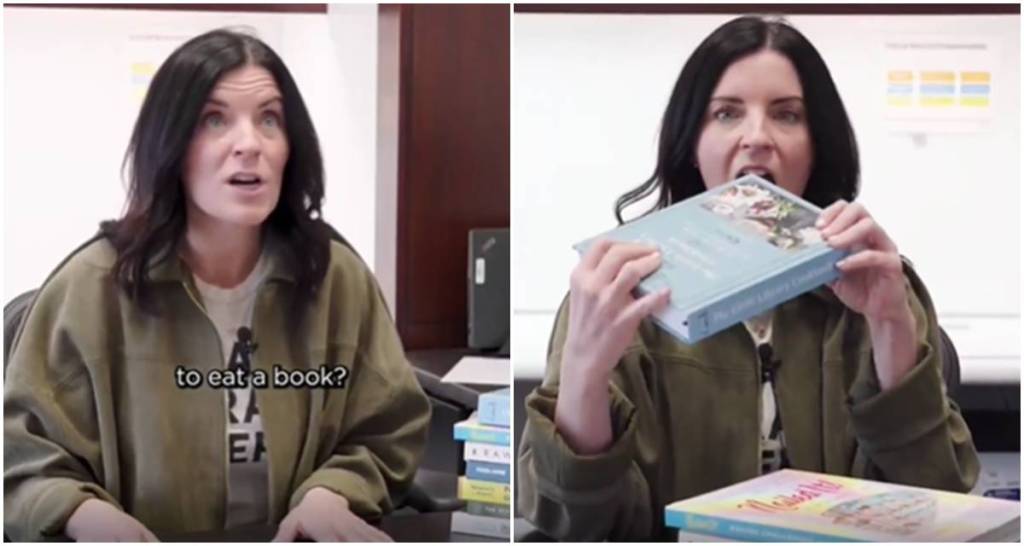
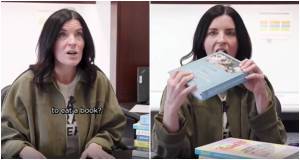
“A fossil word is a word that appears primarily in the context of a specific phrase. Words can become fossilized either because they grow antiquated or because they’re replaced by other words in common speech. But the phrase in which they appear remains,” says author and etymologist Jess Zafarris in a TikTok video:
This definition makes the term “Fossil Words” make perfect sense. Imagine an ancient bone or tooth that, instead of withering away in the open air, gets embedded into rock and soil and is thus preserved. Similarly, we use many of these extremely old and outdated words regularly, but in the context of these idioms and phrases even though we likely have little idea what they mean on their own or where they come from.
Here are a few of the most common and fascinating fossil words:
1. Ado – as in, “Without further ado.“
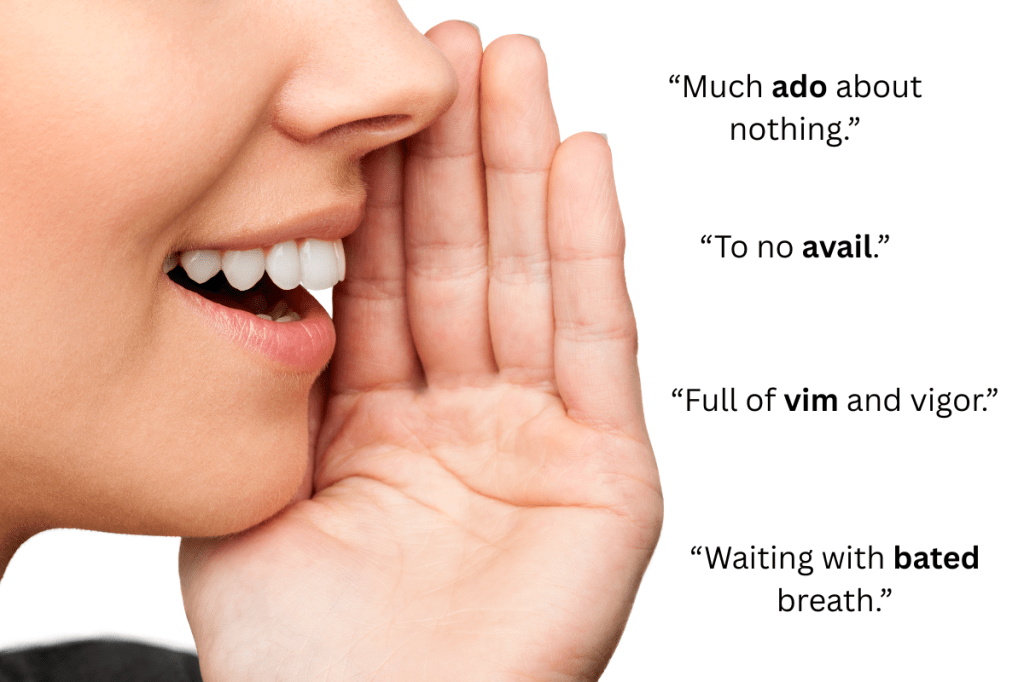
“Ado” is a Middle English word from the 1200s meaning “fuss, bustle, or activity.” It’s rarely used outside of this specific phrase or in the title of the Shakespeare play Much Ado About Nothing.
2. Bate – as in, “With bated breath”
“Bate” (not bait) is another 800-year-old Middle English word that’s a shortening of the word “abate” which means to suppress or diminish.
3. Vicarious – as in, “Living vicariously”
Zafarris says “vicarious” has been fossilized multiple times. Originally of Latin origin, “vicariously” initially was used to describe dying, mostly in the case of “Jesus dying vicariously for humanity’s sins.” Later, the phrase “living vicariously” became popularized. You can do other things vicariously, of course, but it’s pretty rare to hear the word outside of this phrase.
4. Figment – as in, “A figment of your imagination”
This word comes from Middle English in the 15th century and refers to something “made up,” or “a fable.” You might hear of something being a “figment” of someone’s mind, psyche, dreams, or imagination, but rarely anything else.
5. Avail – as in, “To no avail”
“Avail” is an old one, tracing back to the 14th century. It means “advantage toward attainment of a goal or purpose.” The verb form sometimes circulates, as in “to avail yourself of” meaning “to take advantage of.”
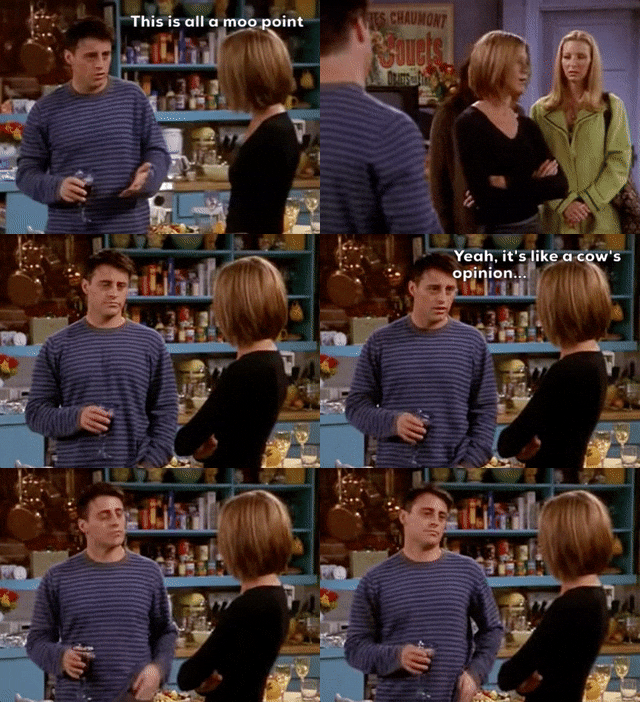
6. Moot – as in, “A moot point”
You guessed it: more Middle English. “Moot” actually has a fairly specific origin, which Merriam-Webster explains: “The adjective moot followed a few centuries behind the noun moot, which comes from mōt, an Old English word meaning ‘assembly.’ Originally, moot referred to an Anglo-Saxon deliberative assembly that met primarily for the administration of justice. By the 16th century, functioning judicial moots had diminished, the only remnant being moot courts, academic mock courts in which law students could try hypothetical cases for practice.”
These days, points and arguments are often the only things that can be moot, or not worthy of further discussion.
7. Petard – as in, “Hoisted by your own petard”
You can blame Shakespeare (again) for this catchy idiom, which few people know the true meaning of. In the strictest sense, a “petard” is a firework or explosive. Merriam-Webster breaks down the idiom’s origin from Hamlet: “‘For ’tis the sport to have the enginer / Hoist with his own petar.’ Hoist in this case is the past participle of the verb hoise, meaning ‘to lift or raise,’ and petar(d) refers to an explosive device used in siege warfare. Hamlet uses the example of the engineer (the person who sets the explosive device) being blown into the air by his own device as a metaphor for those who schemed against him being undone by their own schemes.”
8. Lam – as in, “On the lam”
“Lam” came about in the 1500s to describe a sudden or hurried escape, usually from law enforcement. You’ll rarely hear the word outside the phrase “on the lam,” although it’s sometimes used as a verb: “Lam it,” meaning “to flee quickly.”
9. Shebang – as in, “The whole shebang”
“Shebang” is much more recent compared to many of the words on this list, first being used in the late 1800s according to Merriam-Webster. It means “everything involved in what is under consideration,” which makes the phrase the “whole shebang,” a little bit… redundant. That’s probably why you rarely hear about only “part of the shebang.”
10. Vim – as in, “Vim and vigor”
“Vim” is simply an outdated word for having high energy and enthusiasm. It’s rare, but not unheard of, to see it used without being attached to “vigor” as well.
11. Wreak – as in, “Wreak havoc”
“Wreak” is an extremely old (12th century) word meaning “to cause or bring about,” but what’s brought about is almost always bad. You can wreak havoc, destruction, chaos, and not much else. That’s because its etymological origins are tied to ideas of anger and vengeance.
12. Fro – as in, “To and fro”
Old English meaning back or away, and not, as is commonly believed, “from.”
13. Bide – as in, “Bide your time”
“Bide” comes from Middle English meaning “to stay, linger, wait expectantly, hope for, undergo.” Technically, there are other things you can bide, but time is by far the most common these days.
14. Beck – as in, “At your beck and call”
“Beck,” of course, is closely related to the more modern “beckon,” which is a hand signal or nod used to get someone’s attention or draw them closer to you. Beckon is still used but “beck” is pretty much extinct outside of this fossilized form.
15. Amok – as in, “Run amok”
We might say, “The kids are running amok in the house!” these days, but in the 1600s “amok” had a much more specific, and violent, meaning. According to Merriam-Webster, a person (usually a man) afflicted with “amok” would…”Attack bystanders in a frenzy, killing everyone in sight until he collapsed or was himself killed.”
Fossil words also include a subcategory of words that aren’t really words at all, but have evolved and morphed only within the context of a specific phrase. For example:
16. Tarnation – as in, “What in tarnation?!”
“Tarnation” is not really a proper word that exists outside of this specific usage. Etymologists say it originated in the 1700s as an alternation of “darnation” combined with “tarnal,” which was a mild profanity at the time.
17. Druthers – as in, “If I had my druthers…”
How about this one: “I’d rather…” -> “I’d ruther” -> “Druther”… A word created out of dialect, “Druthers” refers to the thing you’d rather, or ruther, have.
18. Caboodle – as in, “The whole kit and caboodle”
“Boodle” is an old word of Dutch origin meaning “a crowd, lot, bunch, or bundle.” The ca- or ka- in front of boodle was likely added for fun alliteration (to go with “kit” ) when the phrase became widely adopted in the 1800s.
19. Nother – as in, “A whole nother”
“Nother” is not actually a word in the common, modern sense. The word “another” was split into two parts, with “whole” inserted in the middle, for emphasis in the 19th century—similar to something like fan-freaking-tastic, which is known as a tmesis.
Another fun fact: Sometimes fossilized words get confused for their more modern derivatives and variations. For example, the expression is “champing at the bit,” but people often write it as “chomping.” This is known as an eggcorn.
Now you know that when using these everyday idioms, even if they’ve become overused and cliche, you’re actually helping to keep a part of English history alive. Well done!