upworthy
Add Upworthy to your Google News feed.
Google News Button
Family

Man lists 8 not fun, but very important things you need to start doing as an adult.

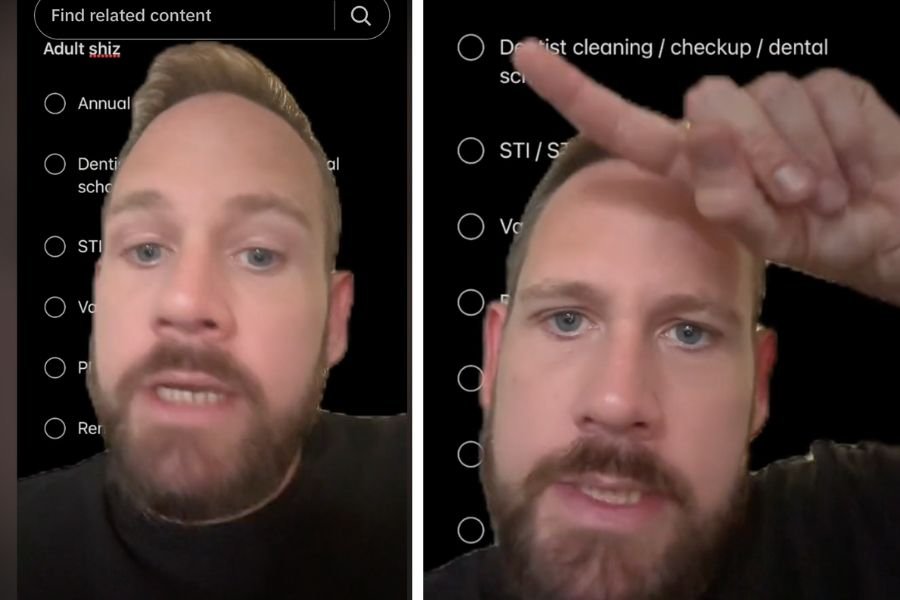
"Welcome to being an adult. Maybe you weren't told this by your parents, but this is through my trial and error."

adulthood, life hacks, life advice
@johnfluenzer/TikTok

8 things you should be doing as an adult. Spoiler alert—none of them are fun.

Who among us hasn’t come into full adulthood wishing they had known certain things that could have made life so so so much easier in the long run? Choices that, if made, ultimately would have been much better for our well-being…not to mention our wallets.

But then again that is all part of growing older and (hopefully) wiser. However there is something to be said about getting advice from those who’ve been there, rather than learning the hard way every single time.

Thankfully, a man who goes by @johnfluenzer on TikTok has a great list of things young people should start doing once they become adults. Are any of his suggestions fun, cool or trendy? Not at all. But they are most definitely accurate. Just ask any 30+-year-olds who wished they had done at least four of these things.

John started off by saying, “welcome to being an adult. Maybe you weren't told this by your parents, but this is through my trial and error."

Listed below are the eight vital things to maintaining a healthy adulthood, that most of us have no idea about until well into adulthood.

1. Getting an annual doctor visit.

annual checkup

young woman visiting her doctor

Canva

This is the bare minimum amount of visits one should be making, according to John. He recommended more if you “have more medical concerns.”

2. Dental visits. For a yearly cleaning at the very least.

dentist near me

Woman at the dentist

Canva

"Keep in mind that a $300 cavity can turn into a $1,500 root canal, which can then turn into a $2,000 crown on top of the $1,500 you just paid, so it's better to just pay the $300 or whatever it is for a cavity, and just get it sorted,” he explained.

As someone with this exact experience (ignored a cavity because she didn't want to pay $300, only to pay $1500 years later, even with insurance) I can ruefully confirm.

…as can others, judging by the comments sections to John’s video.

“I didn’t go to the dentist for 8 years and now I need a root canal. Learn from my mistakes people,” one person wrote.

Seriously, no amount of flossing and avoiding sugar can make up for a professional cleaning and checkup, folks.

Last note on this subject—John mentioned that if you couldn’t afford to go to a dentist, to check for nearby dental schools that can often perform necessary procedures at a fraction of the cost.

Though he specifically mentioned dental schools in Canada, that is also an option in America. Things I wish I had known as a 20-year-old…

3. Next up, John suggested that if you are sexually active, to get checked for STDs/STIs.
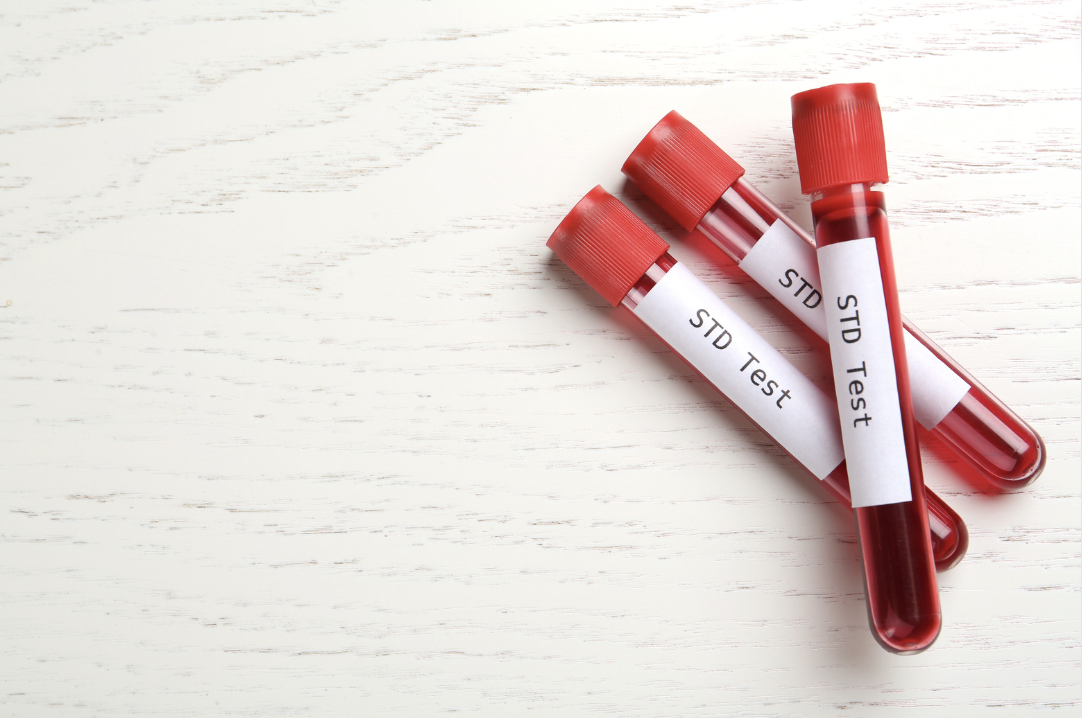
std check, std clinic

an image of STD tests

Canva

“If you're uncomfortable with your GP, or you don't have a GP, go to a sexual health clinic…. Just go get tested — it's better to know,” he said.

4. Get vaccines. “Be up on your vaccines, not just your flu shot."

vaccine near me

A man having just got a vaccine.

Canva

"We're talking Hep A/Hep B, and also if you're under 25, get your Gardasil 9. It's three shots. It prevents the cancer-causing HPV,” he explained.

And while he mostly discussed the free health care options found in Canada, HPV vaccines are covered by most insurances in the US. Plus there are other potentially free/low cost resources, such as the Vaccines for Children (VFC) program for those under 19.

5. Then get a PEP, aka Post-exposure prophylaxis, if you had a “risky sexual encounter” and are worried about having contracted HIV.

pep near me

Image of pills

Canva

For this one, time really is of the essence. The sooner a PEP is taken, the more effective it is at preventing HIV, and must be taken within 72 hours of possible exposure to HIV.

Gotta say…list time 3-5 seem particularly important, as many young people are not given thorough sex education.

6. Rent. Everyone’s favorite.

rent prices, apartment near me

Image of a piggy back with a reminder to pay rent.

Canva

John explains that especially in a housing crisis, “your rent should be the first thing you take care of every month."

"It comes before everything. Now maybe if you have kids and they need to eat, of course, that's important," he added. "But a roof over their head is way more important and you do not want to give landlords any excuse to have you evicted. Pay your rent and pay it on time."

7. Hold onto that cellphone as long as possible.

cheap cellphone, lowering cellphone bill

Woman holding a cellphone

Canva

“I know we all want the new cell phones.Keep your phone as long as possible, OK?" he said. "I don't care if it's any iPhone 10, iPhone 8, keep it for as long as possible. Especially if you're under no contract—you have so much freedom.”

Instead of getting a new phone, John suggested switching providers every month to get special deals and save “$40–50 bucks a month,” which, as we all know, really adds up.

8. Only have one streaming subscription a month.
netflix, hbo, showtime, hulu

There's not need to have more than one streaming service at a time.

Canva

This one was admittedly “controversial,” John shared, but in his point of view, it’s a no brainer.

“You don't need Netflix, Disney, Hulu, whatever... you don't need them all the same month. January do Netflix, cancel. February do Hulu... All of these different apps, they let you save watchlists, right, like 'My List.' And if you cancel your subscription and you restart it two months later, your list is still there. So just save stuff, only pay for it once a month, and try to save some money,” he suggested.

What a wake up call, right? But other hardened adults couldn’t help but agree with John.

“This is very good advice, can confirm (unfortunately) as a fellow adult lol,” one person wrote.

Others appreciated how he took the time to share this list to help younger people avoid some pretty disheartening setbacks.

“I love people like you so much, just her to help others in life. People like you are so important because you didn’t have to make this video but you did.”

You can’t always trust what you hear on TikTok, but John’s advice is sound. What most life hacks seem to have in common, other than a healthy blend of common sense and 20/20 hindsight, is that it puts some form of security at the forefront—not necessarily instant gratification. Fun is so important, but as anyone with experience will tell you, peace of mind is priceless.

Watch the full video below:

@johnfluenzer #greenscreen Here is my list if things you jeed to start doing once you’re an adult! I know its not fun bit I wish someone had told me when I was younger. #genz #genalpha #adultingishard ♬ original sound - John

This article originally appeared on 12.10.23

guitar, learning a skill, neuroscience, music, exposure, passive exposure, gardening

A woman learning how to play guitar.

Learning a new skill, such as playing an instrument, gardening, or picking up a new language, takes a lot of time and practice, whether that means scale training, learning about native plants, or using flashcards to memorize new words. To improve through practice, you have to perform the task repeatedly and receive feedback so you know whether you’re doing it correctly. Is my pitch correct? Did my geraniums bloom? Is my pronunciation understandable?

However, a new study by researchers at the Institute of Neuroscience at the University of Oregon shows that you can speed up these processes by adding a third element to practice and feedback: passive exposure. The good news is that passive exposure requires minimal effort and is enjoyable.


"Active learning of a... task requires both expending effort to perform the task and having access to feedback about task performance," the study authors explained. "Passive exposure to sensory stimuli, on the other hand, is relatively effortless and does not require feedback about performance."


woman reading, woman book, young woman, studying, new skills A woman reading a book.via Canva/Photos

How to pick up new skills faster?

So, if you’re learning to play the blues on guitar, listen to plenty of Howlin’ Wolf or Robert Johnson throughout the day. If you’re learning to cook, keep the Food Network on TV in the background to absorb some great culinary advice. Learning to garden? Take the time to notice the flora and fauna in your neighborhood or make frequent trips to your local botanical garden.

If you’re learning a new language, watch plenty of TV and films in the language you are learning. The scientists add that auditory learning is especially helpful, so listen to plenty of audiobooks or podcasts on the subject you’re learning about.

But, of course, you also have to be actively learning the skill as well by practicing your guitar for the recommended hours each day or by taking a class in languages. Passive exposure won't do the work for you, but it's a fantastic way to pick up things more quickly. Further, passive exposure keeps the new skill you're learning top-of-mind, so you're probably more likely to actively practice it.

What is passive exposure?

Researchers discovered the tremendous benefits of passive exposure after studying a group of mice. They trained them to find water by using various sounds to give positive or negative feedback, like playing a game of “hot or cold.” Some mice were passively exposed to these sounds when they weren't looking for water. Those who received this additional passive exposure and those who received active training learned to find the water reward more quickly.

gardening, woman gardening, gardening shears, leaning gardening, weeds A woman tending to her garden.via Canva/Photos


“Our results suggest that, in mice and in humans, a given performance threshold can be achieved with relatively less effort by combining low-effort passive exposure with active training,” James Murray, a neuroscientist who led the study, told University of Oregon News. “This insight could be helpful for humans learning an instrument or a second language, though more work will be needed to better understand how this applies to more complex tasks and how to optimize training schedules that combine passive exposure with active training.”

The one drawback to this study was that it was conducted on mice, not humans. However, recent studies on humans have found similar results, such as in sports. If you visualize yourself excelling at the sport or mentally rehearse a practice routine, it can positively affect your actual performance. Showing, once again, that when it comes to picking up a new skill, exposure is key.

The great news about the story is that, in addition to giving people a new way to approach learning, it’s an excuse for us to enjoy the things we love even more. If you enjoy listening to blues music so much that you decided to learn for yourself, it’s another reason to make it an even more significant part of your life.

- YouTube www.youtube.com

This article originally appeared last year.

Joy

Woman's silly typo in a philosophical post is bringing thousands of people unexpected, pure joy

Sometimes one tiny error can shift the entire meaning of a sentence.

typos, grammar, errors, writing, texting, comma
Photo credit: Canva

Left: A woman typing on a laptop. Right: A closeup of the word "Grammar."

Sometimes one tiny error can shift the entire meaning of a sentence. Perhaps someone tries to sign off an email with "Take care," but instead writes "Cake care," leaving you wondering whether you somehow missed receiving a delicious pastry (or, more importantly, the instructions on how to "care" for it).

For Threads user Maureenmzobe, merely adding a single letter turned what could have been a profound question into a ridiculous one. They asked, "You are in a comma, you wake up it's 2040. What are you Googling first?"


Threads, punctuation, spelling, commas, coma, typos A person on Threads makes a typo.Photo credit: Threads/@maureenmzobe

Obviously, the OP meant to write "coma" (we're assuming), but the happy accident led to more than 3,100 hilarious responses. As you might guess, many of those answers are punctuation-related.

One Threader joked, "Better than waking up in a colon, I suppose."

Another added a much more poetic answer:

"I woke up with a comma,
felt a pause in my head,
tripped over a semicolon
before getting out of bed.
I googled an apostrophe,
ate breakfast with a dash,
spilled tea on a question mark,
now my kitchen's an exclamation crash.
I spoke in quotation marks,
whispered softly in italics,
shouted once in capital letters
when my thumb remained static.
My words ran on like a sentence
that clearly should have stopped,
but I missed the full stop,
so the meaning was sort of lost."

This commenter had further questions: "Am I in an Oxford comma, or just a regular comma? Context matters here."

Of course, one Threader had to point out the obvious:

"First, I'd Google: 'difference between comma and coma — and how long I've apparently been unconscious.' Because if I've been in a comma since 2025, I'm less worried about the future and more concerned about who punctuated my life so aggressively.
Did I pause…
take a breath…
or has existence just been one long, unnecessary clause?
Either way, I'm searching for: 'how to end a 15-year comma — semicolon acceptable?'"

And some answers were just funny: "At least be grateful you didn't come to a full stop."

This person included a little wordplay: "I came here for the commas and they did not disaperiod."

The truth, of course, is these tiny flubs can happen to anyone. In a Reddit post titled "Funniest typos/mistakes you've caught yourself making?" the OP admits, "So, we're all human and we're not perfect. We all make typos and errors every now and again, and some of them can change the meaning of a sentence entirely. What's your funniest one?"

They go on to describe their most embarrassing editorial mistake: "I'm currently editing a chapter, and instead of 'Shannon's eyes went wide and she slid away a few inches,' I wrote 'Shannon's eyes went wide and slid away a few inches.' It's one pronoun. And yet without it, her eyes slide off her face. It made me giggle."

The post received 85 comments, most of them from people sharing their own unfortunate typos.

A Redditor shared, "I tried to type 'memento' one time and ended up getting autocorrected to 'Meme and toad' for some odd reason. Looking back I probably threw in a space on accident." Luckily, this person truly enjoyed the outcome: "Meme and Toad are the best of friends."

Popular

I showed my Gen Z kids 'Dead Poets Society' and their angry reactions to it floored me

"Inspiring" apparently means different things to Gen X and Gen Z.

Robin Williams in Dead Poets Society, gen x and gen z differences

Robin Williams played inspiring English teacher John Keating in "Dead Poets Society."

As a Gen X parent of Gen Z teens and young adults, I'm used to cringing at things from 80s and 90s movies that haven't aged well. However, a beloved film from my youth that I thought they'd love, "Dead Poets Society," sparked some unexpectedly negative responses in my kids, shining a spotlight on generational differences I didn't even know existed.

I probably watched "Dead Poets Society" a dozen or more times as a teen and young adult, always finding it aesthetically beautiful, tragically sad, and profoundly inspiring. That film was one of the reasons I decided to become an English teacher, inspired as I was by Robin Williams' portrayal of the passionately unconventional English teacher, John Keating.


The way Mr. Keating shared his love of beauty and poetry with a class of high school boys at a stuffy prep school, encouraging them to "seize the day" and "suck all the marrow out of life," hit me right in my idealistic youthful heart. And when those boys stood up on their desks for him at the end of the film, defying the headmaster who held their futures in his hands? What a moving moment of triumph and support.

My Gen Z kids, however, saw the ending differently. They did love the feel of the film, which I expected with its warm, cozy, comforting vibe (at least up until the last 20 minutes or so). They loved Mr. Keating, because how can you not? But when the movie ended, I was taken aback hearing "That was terrible!" and "Why would you traumatize me like that?" before they also admitted, "But it was so gooood!"

- YouTube youtu.be

The traumatize part I actually get—I'd forgotten just how incredibly heavy the film gets all of a sudden. (A caveat I feel the need to add here: Gen Z uses the word "traumatize" not in a clinical sense but as an exaggerative term for being hit unexpectedly by something sad or disturbing. They know they weren't literally traumatized by the movie.)

But in discussing it further, I discovered three main generational differences that impacted my kids' "Dead Poets Society" viewing experience and what they took away from it.

1) Gen Z sees inspiring change through a systemic lens, not an individual one

The first thing my 20-year-old said when the credits rolled was, "What? That's terrible! Nothing changed! He got fired and the school is still run by a bunch of stodgy old white men forcing everyone to conform!" My immediate response was, "Yeah, but he changed those boys' individual lives, didn't he? He helped broaden their minds and see the world differently."

 o captain my captain, dead poets society Individual impact isn't as inspiring to Gen Z as it was to Gen X. Giphy

I realized that Gen X youth valued individuals going against the old, outdated system and doing their own thing, whereas Gen Z values the dismantling of the system itself. For Gen X, Mr. Keating and the boys taking a stand was inspiring, but the fact that it didn't actually change anything outside of their own individual experiences stuck like a needle in my Gen Z kids' craw.

2) Gen Z isn't accustomed to being blindsided by tragic storylines with no warning

To be fair, I did tell them there was "a sad part" before the movie started. But I'd forgotten how deeply devastating the last part of the movie was, so my daughter's "Why would you do that to me?!" was somewhat warranted. "I thought maybe a dog would die or something!" she said. No one really expected one of the main characters to die by suicide and the beloved teacher protagonist to be blamed for his death, but I'd somehow minimized the tragedy of it all in my memory so my "sad part" warning was a little insufficient.

But also to be fair, Gen X youth never got any such warnings—we were just blindsided by tragic plot twists all the time. As kids, we cheered on Atreyu trying to save his horse from the swamp in "The Neverending Story" only to watch him drown. Adults showed us "Watership Down" thinking it would be a cute little animated film about bunnies. We were slapped in the face by the tragic child death in "My Girl," which was marketed as a sweet coming of age movie.

Gen Z was raised in the era of trigger warnings and trauma-informed practices, while Gen X kids watched a teacher die on live TV in our classrooms with zero follow-up on how we were processing it. Those differences became apparent real quick at the end of this movie.


3) Gen Z fixates on boundary-crossing behavior that Gen X either overlooked or saw as more nuanced

The other reaction I wasn't expecting was the utter disdain my girls showed for Knox Overstreet, the sweet-but-over-eager character who fell for the football player's cheerleader girlfriend. His boundary-crossing attempts to woo her were always cringe, but for Gen X, cringe behavior in the name of love was generally either overlooked, tolerated, or sometimes even celebrated. (Standing on a girl's lawn in the middle of the night holding a full-volume stereo over your head was peak romance for Gen X, remember.) For Gen Z, the only thing worse than cringe is predatory behavior, which Knox's obsessiveness and pushiness could arguably be seen as. My own young Gen X lens saw Knox and said, "That's a bit much, dude. Take it down a notch or three." My Gen Z daughters' lens said, "That guy's a total creepo. She needs to run far the other way."

run, red flag behavior Gen Z is much more black and white about behaviors than previous generations. Giphy Red Flag Run GIF by BuzzFeed

On one hand, I was proud of them for recognizing red flag behaviors and calling them out. On the other hand, I saw how little room there is for nuance in their perceptions, which was…interesting.

To be clear, I don't think my Gen Z kids' reactions to "Dead Poets Society" are wrong; they're just different than mine were at their age. We're usually on the same page when it comes to these kinds of analyses, so seeing them have a drastically different reaction to something I loved at their age was really something. Now I'm wondering what other favorite movies from my youth I should show them to see if they view those differently as well—hopefully without "traumatizing" them too much with the experience.

This article originally appeared in January.

Immigration

2,000 people sing directly to ICE agents in Minneapolis, beautifully imploring them to come together

The "singing resistance" choir shows the power of incorporating art into peaceful protests.

singing resistance, singing protest, ice protest, minneapolis, non-violent resistance

The "singing resistance" is growing in Minneapolis and beyond.

From the night the Sons of Liberty dumped hundreds of chests of tea into Boston Harbor in 1773, Americans have protested government policies and actions they disagree with in various ways. Some have staged peaceful sit-ins, while others have rioted in rage. Millions have marched to make their voices heard, carrying signs and chanting slogans that express their displeasure with what's happening in their country.

But occasionally, a unique form of protest stands out. Several weeks into the ICE operation in Minneapolis, in which the federal government sent 2,000+ agents and officers to carry out "the largest immigration operation ever," and which has led to disruptions at schools, conflict between federal agents and the community, and the killing of U.S. citizens, thousands of Minnesota residents have taken to the streets in protest. Among them is a growing band of singers who, instead of calling out the government with shouting and chants, are calling in the federal agents with songs and signs, inviting them to join the resistance.


It's a different approach to take, tapping into the humanity of individual agents instead of confronting the government as a whole. But 2,000 people have added their voices to the "singing resistance," forming a massive choir. They gather at a church to practice their songs, then take their message to the places where ICE agents are staying, singing:

We walk the same ground

We've been torn apart

Put down your weapons

And sing your part


The effect of combining the arts with our constitutional right to peacefully assemble is powerful, and the signs the singing resisters are holding are, too: "Please ICE agents. Join Us." "Love > Fear," "Choose Humanity. Quit ICE." "Stop the Violence." "We Are Family." "Be the hero that walks away." "The time is always right to do what is right." "You, too, are here to love and be loved."

The Singing Resistance Instagram account shared the heart of the message the singers hope to send to ICE agents, imploring them to quit their jobs and join "the side of love and humanity":

"Under federal occupation, Minneapolis has been going through immense pain, rage, and grief. But when they come at us with violence, we fight back with love. We still have space in our hearts for ICE agents who are willing to walk away from the path of violence and take accountability for harm they’ve caused. We paid ICE agents a visit today to call them home."

Another song they sang says:

It’s okay to change your mind
Show us your courage
Leave this behind
It’s okay to change your mind
And you can join us
Join us here anytime

The idea of inviting agents and officers to join a resistance movement isn't without precedent. Singing resistance organizers shared that they were inspired by the Otpor! civil resistance that helped overthrow Serbian dictator Slobodan Milosevic in 2000. Otpor! members would chant, "You may not join us today, but you can join us tomorrow," when they were arrested by the police. Ultimately, when hundreds of thousands marched on Belgrade, most of the police and military joined the opposition and refused to follow Milosevic's orders to fire on the protesters.

According to an Ipsos poll conducted on January 30 and 31, 2026, a full 62 percent of U.S. adults feel ICE’s actions go too far, compared to 13 percent who think they don't go far enough and 23 percent who said it was about right. That disapproval is four points higher than the week before, indicating that the ICE operations are unpopular with Americans, even those who normally support the Trump administration's policies.

People from all over the United States shared words of encouragement for the choir, expressing how moved they are by the singing resistance:

"I love how the singing is both dissent/resistance and it feeds hope and replenishes energy. It is so soul-nourishing. I’d love to be a part of this! Sending my love and care to you all from Maryland as a MN born and raised woman. Sing on!!!"

"I think the music resistance is very effective and moving. Thank you for all your fine efforts from way over here in upstate New York. Thank you for standing up for all of us in the country."

"We are one chord, beautiful beautiful voices thank you so much for sharing Minnesota. I’m a musician and singer here in Eugene, Or, and when I hear hundreds of you singing like that, I cannot tell you how healing it is for me how powerful and indeed how brave."

"I have a song in my heart again! After weeks of crying crying in despair, thank you for singing us into a hopeful future of healing, reconciliation, and RESISTANCE❤️

"This is more revolutionary than so many know."

"Prince left his legacy forever. Minneapolis strong."

"This reminds me of Estonia's singing revolution and I'm here for it. ❤️❤️"

The Singing Resistance account has shared a toolkit and songbook and organized a virtual training on how to organize a local singing resistance choir for those interested in doing something similar.

The right to peacefully assemble and voice our disagreement with our government is guaranteed in the Constitution, and there are many creative ways to do it. When people are singing in harmony in the street, it not only gets attention, but it's hard to criticize or confront that kind of peaceful protest. (Imagine the optics of trying to break up a peacefully singing crowd.) Will the choir's earworms calling to their humanity really make a difference with any ICE agents in Minneapolis? Time will tell. In the meantime, people around the world are hearing them loud and clear and joining the harmonious chorus of non-violent resistance.

social skills, michael baker, conversation tips, small talk, small talk tips, social science, how to be social, making friends

Two men having a conversation

You probably heard plenty of people say they hate small talk. You might even consider yourself someone who loathes it. One of the most common arguments against small talk is that it’s “superficial,” energy draining, and doesn’t foster a real human connection.

Well, according to British etiquette enthusiast and content creator on all things conversation-related (not to mention author) Michael Baker, “You don’t hate small talk. You’re just terrible at it.”


In an Instagram post, Baker argued that those who see small talk as “beneath them” are failing to see it as a “test” (for compatibility, connection, shared values, etc.), which will inevitably lead to getting “left out.”

He then gave five tips to help folks shift that mindset and make small talk work for them. Honestly, even those who aren’t adamantly against small talk might find themselves guilty of some of these mistakes and could benefit from making these tweaks.

five, five fingers, five tips, man, advice, help Young man holds up his hand to show five.Photo credit: Canva

#1 Avoid answering questions too literally

Perhaps in an attempt to be authentic, or to avoid taking up all the oxygen in the room, people might use responses that are accurate and succinct, but not exactly conversational. This doesn’t give the other person anything to “bounce off of,” which is what’s really being asked for.

To remedy this, Baker suggests to always give a real response plus a “hook.” He gave the example of saying “Mostly work, but I’m trying to teach myself how to play guitar. Chaos!” when asked, “What have you been up to?” rather than saying “Not much, just working.”

#2 Don’t ask questions like it’s a job interview

Baker says ask “open-ended, low-stakes” questions like “what’s keeping you busy outside of work?” to invite a sense of “play.” Conversely, asking things like “where are you from?” invites a sense of formality, pressuring people to “perform.”

social skills, michael baker, conversation tips, small talk, small talk tips, social science, how to be social, making friends Two women having a conversation at a coffee shop. Photo credit: Canva

#3 Allow depth to come in naturally

Since the thought of shallow conversation might seem uncomfortable, those who are small talk-averse might find themselves immediately asking overarching existential questions like, “What drives you?” Baker argues that one must trust that “shallow comes before depth,” and must be used as a “warm-up act.” Otherwise, people are put on the spot unnecessarily, which obviously doesn't foster connection.

#4 Initiate conversation instead of only speaking when spoken to

What may seem like “politeness” can come across as unapproachable. The good thing is: this is an opportunity for some “low-pressure,” even “lightly self-deprecating” observations. Baker used the example of saying, “That snack table’s dangerously close to me.”

#5 Treat small talk as the “main event”

social skills, michael baker, conversation tips, small talk, small talk tips, social science, how to be social, making friends Two women talking as the leave a yoga classPhoto credit: Canva

This might be the biggest tip of all. Here, Baker reminds us that for the majority of human interaction, small talk is the way in, and therefore should be “respected.” Virtually no one is going to say, “Let’s network,” but odds are they’ll easily comment on the weather. It’s our job to learn what they’re really saying with this mundane phrase.

Because, at the end of the day, “if you keep waiting for ‘real’ conversation, you’ll miss all the real opportunities,” Baker writes.

After reading these tips, you very well might still loathe the idea of small talk, which is totally fine. It doesn’t have to be for everyone, nor should it. But what Baker really presents here is a way to reflect on whether or not our attitudes are preventing us from making valuable connections. If we suspect that might be the case, then it could be worth experimenting with some of these tools.

If you’d like even more tips, Baker has a guide aptly titled Let’s Not Make It Weird, which you can check out here.