upworthy
Add Upworthy to your Google News feed.
Google News Button
Popular

6 alternatives to saying 'let me know if you need anything' to someone in crisis

If someone is drowning, you don't wait for them to ask for help. You just take action.

woman crying with her hand on a rainy window

People going through major struggles don't always know what they need or how to ask for help.

When we see someone dealing with the loss of a loved one or some other major life crisis, it's instinctual for many of us to ask how we can help. Often, the conversation looks something like this:

Us: I am SO sorry you're going through this. What can I do to help?

Person in crisis: I honestly don't know right now.

Us: Okay…well…you let me know if you need anything—anything at all.

Person in crisis: Okay, thank you.

Us: I mean it. Don't hesitate to ask. I'm happy to help with whatever you need.

And then…crickets. The person never reaches out to take you up on the offer.

Was it that they didn't really need any help, this person going through a major life crisis? Unlikely. As sincere as our offer may have been, the problem may be that we didn't really offer them what they actually needed.

One of those needs is to not have to make decisions. Another is to not have to directly ask for help.

When a person is in a state of crisis, they can feel like they're drowning. They might be disoriented and fatigued, and doing anything other than keeping their head above water long enough to breathe can feel like too much.

If someone is drowning, you don't ask them what you can do to help or wait for them to ask. Youjust take action.

Here are some specific ways you can take action to help someone who you know needs help but isn't able or willing to ask for it:

1. Make them food

It may be tempting to ask if you can make them a meal and wait for them to say yes or no, but don't. Simply ask if they or anyone in their household has any dietary restrictions, and then start shopping and cooking.

Meals that can be popped in the refrigerator or freezer and then directly into the oven or microwave are going to be your best bets. Include cooking or reheating instructions if it's not obvious. Disposable aluminum trays are great for homemade freezer-to-oven meals and can be found at just about any grocery store. Casseroles. Stir fried rices. Soups. Comfort foods.

If you don't cook, you can buy them gift cards to local restaurants that deliver, or give them a DoorDash or UberEats gift certificate (large enough to cover the delivery, service fees and tip as well, which combined can be as much as a meal sometimes).

lasagna in the oven

Easy-prep meals people can throw in the oven are great.

Photo by Milada Vigerova on Unsplash

Even better—organize a meal train

If you want to make it a community-wide effort and no one else has done so yet, set up a "meal train," where different people sign up for different days to bring meals to spread out the food help over time. There are several free websites you can use for this purpose, including Give In Kind, Meal Train, and Take Them a Meal. These sites make it super easy for anyone with the personalized link to sign up for a meal.
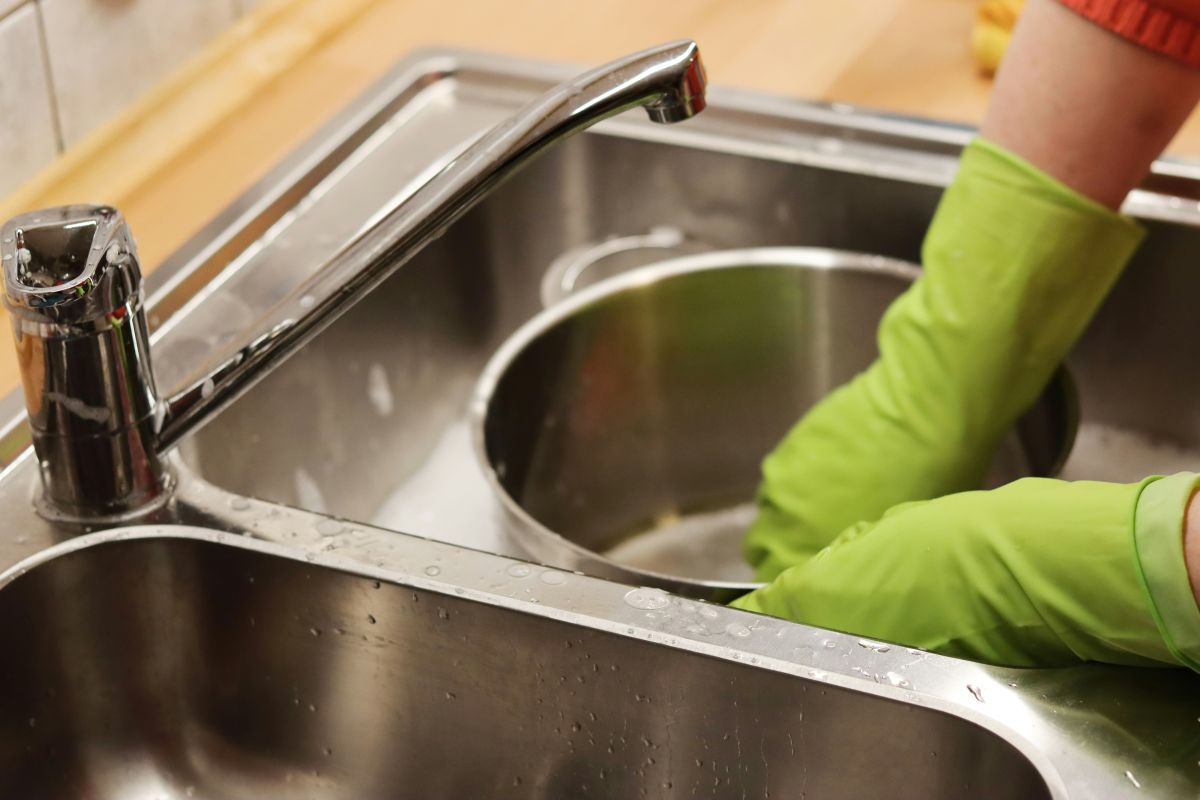
someone scrubbing a pot in a kitchen sink

There are always dishes to wash.

Photo by Marek Studzinski on Unsplash

2. Clean their kitchen and/or bathrooms

Kitchens are always in use, and keeping up with dishes, especially in a house full of people, is a challenge even under normal circumstances. Same with keeping the refrigerator cleaned out. Same with cleaning the bathroom.

Rather than asking if they want it done, as many people won't want to say yes even if they would appreciate the help, try saying something like, "I want to come and make sure your kitchen is ready for you to make food whenever you want to and that your bathroom is a clean space for you to escape to whenever you feel like it. Is Tuesday or Wednesday at 1:00 better for you?"

The fewer complex decisions a person in crisis has to make the better, so saying, "Is this or that better?" rather than offering open-ended possibilities can be helpful.
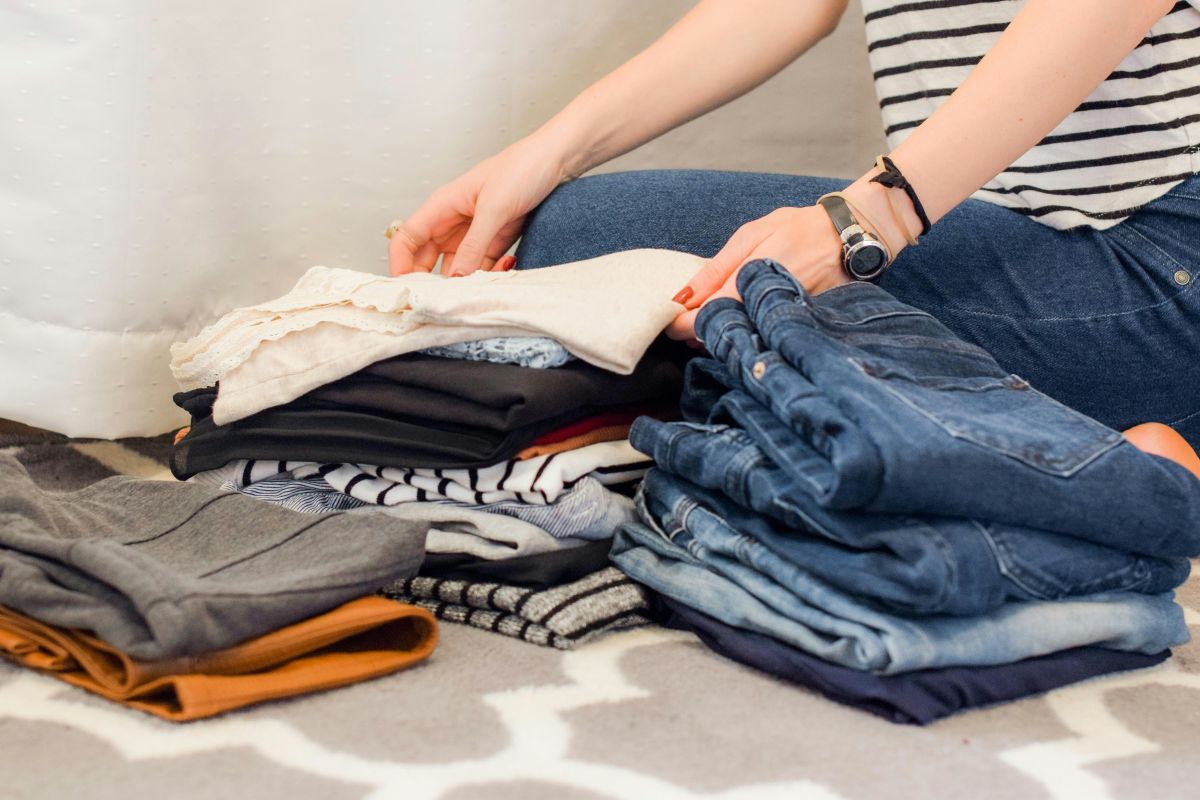
woman folding clothes

There is always laundry to fold, too.

Photo by Marek Studzinski on Unsplash

3. Do laundry

Offer to sit and chat with them, let them vent if they need to…and fold their laundry while you're at it.

Are they the kind of people who might be embarrassed by you seeing or handling their underclothes? Fine. Wash, dry and fold towels or bedsheets instead. Just keep the laundry moving for them.

And if it doesn't feel appropriate or desirable for you to do their laundry at their house, you can offer a pick-up laundry service, either yourself or an actual hired service. Tell the person to put bags or bins of laundry at the door and you (or the service) will come pick it up and bring it back clean and folded the next day. That's a great way to be of service without feeling like you're intruding.

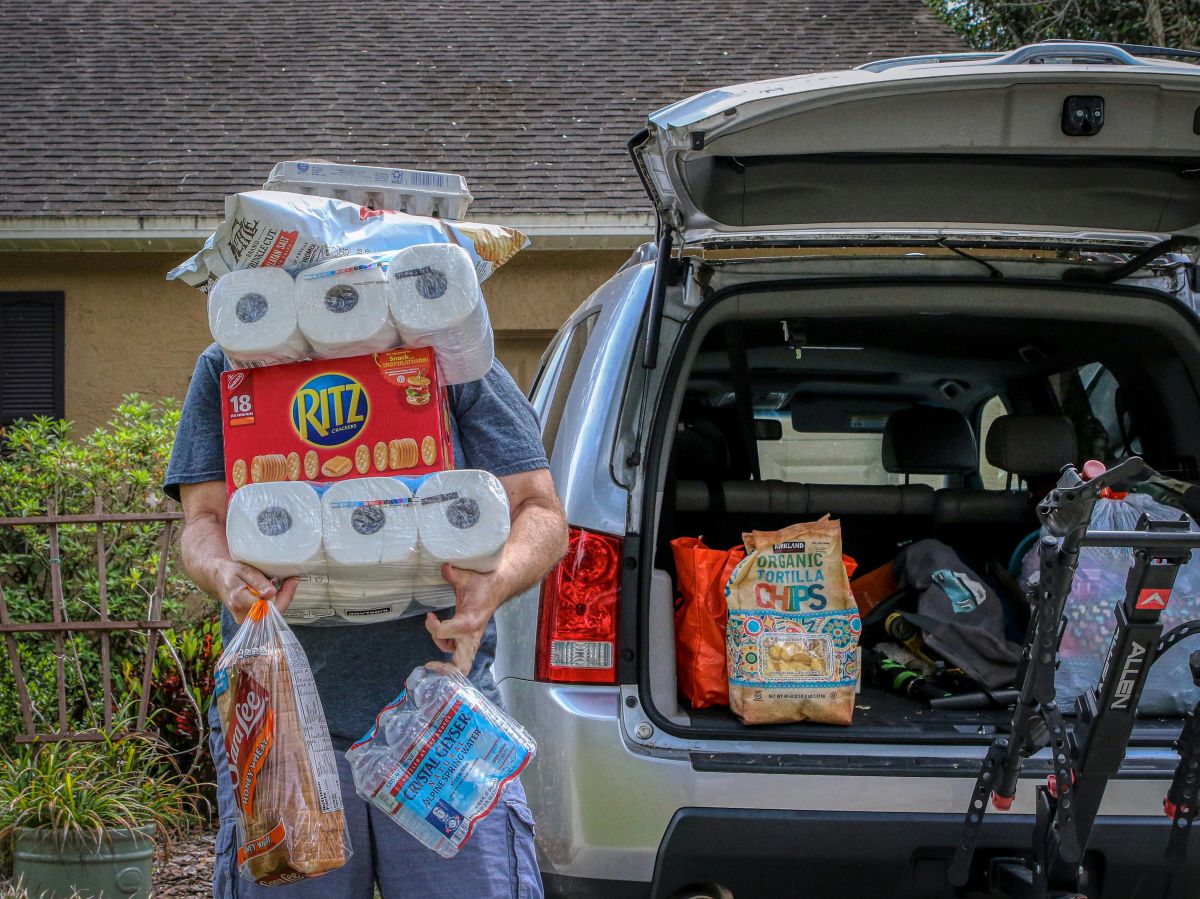
man pulling food and toilet paper out of the car

Offer to pick stuff up when you're on a grocery run.

Photo by Marek Studzinski on Unsplash

4. Run errands for them

"Hey, I'm heading out to the store, what can I grab you while I'm there?" is always a welcome phone call or text. Let them know when you're going to be running your own errands and see if there's anything they need dropped at the post office, picked up from the pharmacy, or anything else.

You can also offer to run errands with them. "Hey, I've got some errands to run. Do you want to join me?" They may have no desire to leave the house, or they may desperately want to leave the house, so be prepared for either answer, but the offer is solid. Even just not having to drive might be a relief if they have things they need to pick up or drop off places.

woman holding hands with a small child as they walk

Caring for someone's kids is one of the most helpful things you can do.

Photo by Kelli McClintock on Unsplash

5. Provide childcare

If the person is a parent, taking their kid(s) out for a chunk of the day can be a big help. Caring for yourself is hard when you're going through a difficult time, and the energy a person might use to actually do that often gets usurped by caring for others. Obviously, parents can't just neglect their children, so anything you can do to relieve them of that responsibility for a while is gold.

Offering to take the kids to do something fun—a day at the park, ice skating, etc. is even better. A parent knowing their kid is safe, occupied, and happy is its own form of relief.

6. Ask what they're struggling with and focus your help there

While all of these practical household things are helpful, there might be some people who find comfort or solace in doing those things themselves. If that's the case, talk with them about what their immediate needs are and what they're having a hard time dealing with. Then focus your energies there. "What can I do to help?" may not be as effective a question as "What are you having a hard time doing right now?" They may not know what kind of help they need, but they probably know how they're struggling.

One person might be lonely and just want some company. Another person might need a creative outlet or a mindless distraction or something physical like going for a walk or a hike. Someone else might have pets they need help caring for, a garden that needs tending, or the oil changed in their car. Someone might even need a person to serve as a shield or buffer between them and all the people coming to offer their condolences.

Note that many of these things are basic life maintenance stuff—those are often the things that get hard for people when they're dealing with the emotional and logistical stuff surrounding whatever they're going through, and they're often the easiest things other people can do for them. A time of crisis is not a normal time, so normal etiquette, such as asking if you can or should do something rather than just letting them know you're going to do it, doesn't always apply.

If there's a specific thing with specific tasks, such as planning a funeral, that might be a good opportunity to ask how you can help. But people deep in the throes of grief or struggle often need someone to take the reins on basic things without being asked to. Again, there's a good chance they feel like they're drowning, so don't wait for an invitation. Just grab the life preserver, put it around them and do whatever needs to be done to get them to shore.

Note: This advice is especially relevant now as Californians struggle with the Wildfire Crisis. In light of many losing their homes, possessions, and loved ones, knowing how to help and what to do might be even more difficult. Check out our Community Resource Guide for ways to offer aid and relief to those impacted.


This article originally appeared last year.

Once a refugee seeking safety in the U.S., Anita Omary is using what she learned to help others thrive.
Pictured here: Anita Omary; her son, Osman; and Omary’s close friends
True

In March 2023, after months of preparation and paperwork, Anita Omary arrived in the United States from her native Afghanistan to build a better life. Once she arrived in Connecticut, however, the experience was anything but easy.

“When I first arrived, everything felt so strange—the weather, the environment, the people,” Omary recalled. Omary had not only left behind her extended family and friends in Afghanistan, she left her career managing child protective cases and supporting refugee communities behind as well. Even more challenging, Anita was five months pregnant at the time, and because her husband was unable to obtain a travel visa, she found herself having to navigate a new language, a different culture, and an unfamiliar country entirely on her own.


“I went through a period of deep disappointment and depression, where I wasn’t able to do much for myself,” Omary said.

Then something incredible happened: Omary met a woman who would become her close friend, offering support that would change her experience as a refugee—and ultimately the trajectory of her entire life.

Understanding the journey

Like Anita Omary, tens of thousands of people come to the United States each year seeking safety from war, political violence, religious persecution, and other threats. Yet escaping danger, unfortunately, is only the first challenge. Once here, immigrant and refugee families must deal with the loss of displacement, while at the same time facing language barriers, adapting to a new culture, and sometimes even facing social stigma and anti-immigrant biases.

Welcoming immigrant and refugee neighbors strengthens the nation and benefits everyone—and according to Anita Omary, small, simple acts of human kindness can make the greatest difference in helping them feel safe, valued, and truly at home.

A warm welcome

Dee and Omary's son, Osman

Anita Omary was receiving prenatal checkups at a woman’s health center in West Haven when she met Dee, a nurse.

“She immediately recognized that I was new, and that I was struggling,” Omary said. “From that moment on, she became my support system.”

Dee started checking in on Omary throughout her pregnancy, both inside the clinic and out.

“She would call me and ask am I okay, am I eating, am I healthy,” Omary said. “She helped me with things I didn’t even realize I needed, like getting an air conditioner for my small, hot room.”

Soon, Dee was helping Omary apply for jobs and taking her on driving lessons every weekend. With her help, Omary landed a job, passed her road test on the first attempt, and even enrolled at the University of New Haven to pursue her master’s degree. Dee and Omary became like family. After Omary’s son, Osman, was born, Dee spent five days in the hospital at her side, bringing her halal food and brushing her hair in the same way Omary’s mother used to. When Omary’s postpartum pain became too great for her to lift Osman’s car seat, Dee accompanied her to his doctor’s appointments and carried the baby for her.

“Her support truly changed my life,” Omary said. “Her motivation, compassion, and support gave me hope. It gave me a sense of stability and confidence. I didn’t feel alone, because of her.”

More than that, the experience gave Omary a new resolve to help other people.

“That experience has deeply shaped the way I give back,” she said. “I want to be that source of encouragement and support for others that my friend was for me.”

Extending the welcome

Omary and Dee at the Martin Luther King, Jr. Vision Awards ceremony at the University of New Haven.

Omary is now flourishing. She currently works as a career development specialist as she continues her Master’s degree. She also, as a member of the Refugee Storytellers Collective, helps advocate for refugee and immigrant families by connecting them with resources—and teaches local communities how to best welcome newcomers.

“Welcoming new families today has many challenges,” Omary said. “One major barrier is access to English classes. Many newcomers, especially those who have just arrived, often put their names on long wait lists and for months there are no available spots.” For women with children, the lack of available childcare makes attending English classes, or working outside the home, especially difficult.

Omary stresses that sometimes small, everyday acts of kindness can make the biggest difference to immigrant and refugee families.

“Welcome is not about big gestures, but about small, consistent acts of care that remind you that you belong,” Omary said. Receiving a compliment on her dress or her son from a stranger in the grocery store was incredibly uplifting during her early days as a newcomer, and Omary remembers how even the smallest gestures of kindness gave her hope that she could thrive and build a new life here.

“I built my new life, but I didn’t do it alone,” Omary said. “Community and kindness were my greatest strengths.”

Are you in? Click here to join the Refugee Advocacy Lab and sign the #WeWillWelcome pledge and complete one small act of welcome in your community. Together, with small, meaningful steps, we can build communities where everyone feels safe.

This article is part of Upworthy’s “The Threads Between U.S.” series that highlights what we have in common thanks to the generous support from the Levi Strauss Foundation, whose grantmaking is committed to creating a culture of belonging.

Education

How embracing the 'Empty Boat Theory' can help you keep anger and anxiety in check

The classic Taoist parable has found new life on TikTok, but its core message stays the same.

empty boat theory, taoism, buddhism, psychology, mindset, anger, anxiety, self help, mindfulness

Ancient wisdom for the modern day.

We all have moments where it feels like the world is against us. When we assume people are thinking negatively about us, we act accordingly by becoming angry or anxious. Once that mindset latches on, it can be tough to let go.

But one simple Taoist parable-turned-viral-TikTok-hack offers a gentle yet powerful reminder that we are not the main character in everyone’s story.


What is the “Empty Boat Theory”?

@sean.of.the.living The “empty boat” theory has me brain spinning lately. This is a brain hack to staying in a happier mindset. #advice #emptyboat #lifehack ♬ original sound - sean.of.the.living

Think of it as a thought experiment. Imagine yourself on a boat in the middle of a lake, as another boat drifts towards you, threatening to knock right into you. The closer this incoming vessel gets, the angrier you become.

Then, at the last second, you steer your boat out from the path of collision, only to notice that the other boat is empty. What this really puts into perspective, as TikToker @sean.of.the.living put it, is “There was never anybody to be angry with in the first place.”

“That’s life, isn’t it?” he said. “We assume everything’s about us. ‘They’re just doing that to screw me, to piss me off.’”

“Most of the time, nobody’s thinking about you.”

The Empty Boat Parable

@aliabdaal The Empty Boat: A Lesson in Letting Go A man gets furious when another boat crashes into him, shouting and ready to fight. But when the fog clears, he sees the boat is empty. No one was steering, no harm was intended. His anger disappears. Most frustrations in life are just empty boats. People are dealing with their own struggles, not trying to hurt you. Next time you feel anger rising, ask yourself – am I just reacting to an empty boat?
♬ original sound - Ali Abdaal

However, long before it was a viral brain hack on TikTok, this story taught how much self-inflicted suffering comes simply from the stories we tell ourselves about other people's attitudes towards us.

As the parable goes, a young monk (or simply a young man, depending on which version you read) hops onto a boat in hopes of finding a quiet spot to meditate. Suddenly, he is bumped by another boat. Furious, the monk opens his eyes and lashes out at the person responsible for disrupting his flow. There is, however, no one to blame. The boat is empty. Knowing there's now no one to be mad at, truly, the man's anger instantly dissipates.

The core message is that sometimes a bump is just a bump. We need not assume malicious intent, and would be better equipped to handle life’s collision with grace if we didn’t.

The Spotlight Effect

Bringing it into therapy-speak, the Empty Boat Theory/Parable also relates to the spotlight effect, which is the tendency to wrongly believe that others are mentally scrutinizing us when, in fact, they are likely not thinking about us at all.

This bias is a symptom of egocentrism. You don’t have to be a full-blown narcissist to be egocentric. We all, from time to time, consider ourselves to be the center of the universe in some way. It’s part of being an individual! But without mindfulness, we can let our egos overestimate how many eyes are actually on us at any given time, which only leads to a lot of unnecessary anxiety.

Whether you wanna call it a brain hack, ancient wisdom, or a psychological principle, we could all benefit from reminding ourselves to really pick our battles. Easier said than done in today’s world, but vital nonetheless. Here's to hoping that being aware of all the empty boats out there will lead to smoother sailing for everyone.

And if you're wondering just who’s to blame for letting that rogue boat out to wreak havoc on the water…? Well, that’s a different conversation.

This article originally appeared last year.
death, dying, hospice, fear of dying, hospice nurse, mortality, aging, seniors, spirituality, visions, visioning

A nurse explains how 'visioning' 3-4 weeks before death works.

A new video by a hospice nurse offers a compelling reason for people to feel comfortable facing the unknown. Julie McFadden, a hospice nurse, shares that when her patients are nearing death, they often have comforting visions. McFadden posts videos helping to demystify the dying process and bring comfort to people with a loved one in hospice care, or who may be dying themselves. Her profile reads, "Helping understand death to live better and die better." McFadden is also the author of the bestselling book, “Nothing to Fear.”

Hospice Nurse Julie has earned over half a million subscribers and has witnessed over a hundred deaths. In a recent video, she reveals that people are often comforted by friends and relatives who have passed away in their final days. She says that when people begin experiencing these visions, it’s a sign that they will be passing away within a few weeks. It's almost as if these loved ones are welcoming them to the other side.


"Here's one sign that someone is close to death that most people don't believe happens,” Julie begins the video.

A sign that someone is close to death

- YouTube youtu.be

"Usually, a few weeks to a month before someone dies, if they're on hospice, they will start seeing dead loved ones, dead relatives, dead pets. This happens so often that we actually put it in our educational packets that we give to patients and their families when they come on hospice so they aren't surprised or scared when it happens,” she continues.

The experience is called visioning; although no one knows how or why it happens, it’s common among all her patients. "We don't know why it happens, but we see it in definitely more than half of our patients," she continues.

People often believe that the visions are caused by a lack of oxygen to the brain. However, Julie says that isn’t true. “Because when it does happen, most people are alert and oriented and are at least a month from death, so they don't have low oxygen," she said.

Visioning is always a comforting experience


death, dying, hospice, fear of dying, hospice nurse, mortality, aging, seniors, spirituality, visions, visioning A terminally ill woman in her hospital bed. via Canva/Photos


It often involves relatives who 'come from the other side' to let them know everything will be okay and encourage them to let go and pass away. People also experience being taken on journeys with loved ones or having sensory experiences from the past, such as smelling their grandmother's perfume or their father’s cigar.

These visitors can also appear in groups. Patients might report the room feeling 'crowded', like they are being joined by many people at once. The interesting thing is that patients aren't afraid of the visions. In fact, they welcome them. They work towards making them feel comfortable as they transition out of life.

Medical professionals are unsure why visioning occurs

Christopher Kerr, the CEO of Hospice & Palliative Care, an organization that provides palliative care in Buffalo, New York, says that the relatives who often appear in these visions are those who protected and comforted the dying parent while they were alive. So, they may see a parent who nurtured them, but not one they feared.

Kerr has extensively studied the mysterious phenomena that occur when people die, but has no real explanation for why his patients experience visioning. “I have witnessed cases where what I was seeing was so profound, and the meaning for the patient was so clear and precise, that I almost felt like an intruder,” he told BBC Brazil. “And trying to decipher the etiology, the cause, seemed futile. I concluded that it was simply important to have reverence, that the fact that I could not explain the origin and process did not invalidate the experience for the patient.”

In a more in-depth video, Hospice Nurse Julie shares actual footage of a dying woman experiencing visioning. It's extremely powerful:

- YouTube www.youtube.com


It's comforting to know that for many, the final days of life may not be filled with pain and fear but instead with a sense of peace and joy. While we may never fully understand the reasons behind these mysterious visions, if they bring calm during such a daunting time, we can simply be grateful for their presence. They’re kind of like life, in general. In the end, we may not really know what it was all about, but we can be happy that it happened.

This article originally appeared last year. It has been updated.

Gen X; Gen X grandparents; absent grandparents; Gen X worst grandparents; Millennials; worst grandparents; Gen Z

Gen X designated the 'worst grandparents' by Millennials

Generation X, typically the children of Baby Boomers born between the years of 1965-1980 tend to have a complicated reputation depending on who you ask. Some view them as a feral generation never to be spoken of poorly without consequence, while others view them as innovators pushing us into the future. But in recent years, Gen Xers have been dubbed the "worst grandparents" by social media users.

This multi-year conversation started when a video went viral calling Gen X out for being "terrible" grandparents, claiming that they never want to help with grandchildren. It didn't take long before other Millennials piled on to air their own grievances about Gen X grandparents. Most people criticizing the "new grandparents" were genuinely perplexed as to how they did not want to be more involved in the lives of their grandchildren.


Gen X; Gen X grandparents; absent grandparents; Gen X worst grandparents; Millennials; worst grandparents; Gen Z Family baking fun in the kitchen.Photo credit: Canva

Kylie Muse reveals in a video that she felt neglected by her Gen X parents growing up, saying, "It's quite a common theme for Gen X parents to be neglectful in some capacity and it's just crazy to me how more of them haven't learned from the past 20 to 30 years, instead of these grandparents seeing their kids having kids as an opportunity to restore the health in their relationships with their kids by showing up and helping them during the hardest transition of their lives, they would rather double down and compromise their relationship with that next generation. All for the sake of hyper-individualism and pride."

@kylies.muse

Gen x grandparents and their beloved empty nest 🥴 just say you hate having a family 😭 #grandparents #grandparentsoftiktok

The critique coming from the younger generation is not lost on Gen X, and they started coming out in force to respond with such vigor you'd think John Hughes had just announced the re-release of The Breakfast Club. It would seem that some of the people complaining of the lack of involvement have not considered that Gen X could have valid reasons for not immediately jumping in to take on grandparenting in the way some expect. A man by the name of John S. Blake gives a candid look into why Gen X was neglected as children and, in turn, became hype-independent at an early age.

"As a Gen X who's been on this earth long enough to have some hindsight I can tell you this, being independent at a young age is not a flex, what it actually means is capitalism is so brutal that our parents were forced to neglect their own children to stay alive. My generation was struggling so much that we had to leave our children unattended in order to produce enough so that we could afford to exist," Blake says.

@blackfluidpoet

Replying to @ellens0061 #foryoupage #homealone #fyp #foryou

But perhaps one of the most heart wrenching explanations comes from an elder Millennial who goes by the name Amazing Dea. In response to another Millennial who asks about Gen X being let off the hook, Dea shares, "Being as though you look like you might be a younger Millennial, let me go ahead and enlighten you. Generation X and older Millennials had to live through more than just this pandemic. We had the crack epidemic, we had the AIDS epidemic and let me tell you something, it was scary as f***."

Dea went on to explain that there were apartment complexes burned due to high populations of people with AIDS living in them and how they would witness people go from being completely normal to being addicted to crack in a matter of weeks. It seems that depending on socioeconomic status, Gen Xers lived wildly different lives with the common theme being growing up entirely too fast at an extremely young age.

Gen X; Gen X grandparents; absent grandparents; Gen X worst grandparents; Millennials; worst grandparents; Gen Z Three generations smiling by the sea.Photo credit: Canva

Another person kindly breaks down the confusion over why Gen X isn't rising to the occasion of being award-winning grandparents. In response to the criticism she replies, "We grew up in a different time, first of all. A lot of us, meaning me, Gen X, I was raised by boomers. A lot of us did not get raised by our grandparents. We were like the feral kids, like by 7 and 9 years old we were actually babysitting our brothers and sisters, alright."

The woman explains further in the video that Gen X doesn't want to raise their grandchildren or simply be babysitters, that there's a difference between expecting grandparents to be involved and expecting them to be babysitters.

@that1crazy72

Let’s take it a step further. You share DNA with your grandkids they are part of you not everyone gets the privilege of being a grandparent so if you are one take that as a blessing #genxgrandparents

In many of the response videos shared by Gen Xers, they certainly seem to love their grandchildren and children alike, but there's a discrepancy in expectation. The consensus of the forgotten generation seems to be that they had adult responsibilities much too early, were exposed to adult life experiences at a young age, and were often left to their own devices for long periods of time while also being told that their voices didn't matter.

While the argument seems to be around their lack of involvement as grandparents, they appear to be saying that they want to enjoy the freedom they didn't have as children, while being valued as a person and not a babysitter. In many follow up videos, Gen Xers gushed over their grandchildren and how they loved when they were around. It's just that they draw the line at raising them. Maybe for some, their experiences with their own childhood isn't enough to move Gen X out of the "worst grandparents" category, but for others it provides much needed context.

This article originally appeared in June.

gen z, gen alpha, generations, generational differences, gen x, boomers, millennials, millennial parents, kids, teens
via Anna Shvets/Pexels

Adults are having a really hard time keeping up with the interests of Gen Z and Gen Alpha

When it comes to young people, every generation is different from the one that precedes it. It makes sense. Every group grows up in different economic, cultural, and technological circumstances, so of course they’re going to have different tastes and values. It’s also natural for younger generations to rebel against their parents and create their own unique identities.

These days, however, with the rapid changes in technology and culture spurred on by the Internet, some older people (Baby Boomers, Gen X) think the younger generations (Millennials, Gen Z, Gen Alpha) are downright confusing. Further, Gen Z and Gen Alpha were raised during the pandemic, the #MeToo movement, and the murder of George Floyd, which have had an enormous impact on how they see the world.


kids, generations, boomers, gen x, millennials, gen z, gen alpha A grandpa with his grandsons on their smartphones. Canva Photos

To help the older folks who may be confused by “kids these days” feel less alone, a Redditor named 5h0gKur4C4ndl posed a question to the AskReddit subforum, “What is something about the newer generations that you can't seem to understand?”

A lot of the responses were centered around the younger generations’ relationship to technology.

The older generations also seem concerned that younger kids are a lot more prudish than their parents, and should learn how to lighten up and have some fun—a big role reversal from previous generational wars.

Here are 15 things about the younger generations that older people just don’t understand.

1. Recording yourself crying

woman, young woman, crying, smartphone, recording yourself crying Young woman crying while holding her phone.Canva Photos

For many younger people, everything is "content." Even their most intimate and private moments.

"THIS IS THE ONE. I do not know how intense your desire for external validation has to be for you to be in the midst of crying and think 'Lights, camera, action baby let's make sure as many people see this as possible.'" — Thrillmouse

"People who record themselves crying are already weird but posting it on the internet is weirder. imagine clicking 'post' to every social media they have. do they seriously not look at what they're posting online?" — TryContent4093

2. Poor grammar

AI and automatic grammar checkers may be taking a toll on young people's ability to write for themselves.

"The emails I get from my students aged 18-25 are such a mess of incoherent garbage, I can't tell if they are lazy or if it's an actual literacy issue. And I'm barely older than they are so if this is a generational gap, it happened quickly!" — NefariousSalmander

"It's a block of text with no capitalization or punctuation. Imagine receiving 6 consecutive one-line texts at once. If you can figure out where the periods should go then you can make sense of it, but it's all texting abbreviations and slang. Something like, 'yo mr y u slow fixin my grade I trned in the lab last class my dad gonna take my phone lmk.'" — Ceesa

3. Learned helplessness

"I'm a middle school teacher. My kids will routinely claim they can't do anything and then shut down and do nothing. And then... It's easy and they do it. So basically it's the degree of learned helplessness. They know to ask when I go over, but if there are twenty kids and I get to them last, they will do nothing (no phones, nothing!) for twenty minutes and act surprised I'm irritated they didn't grab a damn pencil from the freeeee pencils on my desk. And then act surprised they're behind on the assignment!" — Scarletuba

4. The Internet is forever

Pro tip: Never participate in one of those TikTok "street interviews" after you've had a few drinks.

"The lack of understanding that things put on the internet are public forever." — Leading_Screen_4216

5. No self-confidence

boy, shy, teen, young person, hiding, self confidence Boy with his head in his hands.Canva Photos

"37-year-old attending college for the first time here. They have negative confidence. They barely speak above a mumble, especially when answering a question from the teacher. Most of them would rather die than talk to someone they're interested in. It's like 90% of them are cripplingly introverted." — Intelligent-Mud1437

6. They need attention

Social media "Influencer" and "YouTuber" are highly sought after career paths because of the fame and notoriety they bring.

"We were saying what we would do if we won the big lottery jackpot. The new 22-year-old hire said he’d become an influencer. Can you imagine winning a billion at 22 and that’s what you would do? Not start a business, travel the world, charity, sports, property… Learn something… but become an influencer… with a billion dollars. I mean, like, he’s gonna hire a marketing company to fabricate interest in his social media? He’s gonna spend money on stupid things to make people cringe or rage comment? With a billion dollars." — Covercall

7. Put your phone down

"Why do you want to watch 100% of a concert, that you paid good money for, through your phone lens?" — LeluWater

"I was yesterday in a Linkin Park cover band concert, a fuckin blast. There was that one guy, that spent every song recording HIS FACE 'singing' along. Not the band, his face. Please wake me up in 1995." — pls_tell_me

The older generations are right about this one. Recording an experience actively worsens your enjoyment of it in the moment.

8. Phone at the movies

"Why do they go to the movies only to scroll through their phone the entire time?" — IAmASurgeonDoctorHan

"My wife does this. Not at the theater, but we'll be watching a movie or TV show, and she'll be glued to her phone. Then when she looks up she doesn't get what's going on and we have to pause while I explain what just happened and why." — Project2R

Anyone who's fluent in smartphones can get caught up in this one. It's tough to get through a whole movie or show at home without checking your phone! We're all addicted.

9. Paranoia

"I’m in my forties and I manage a small group of people who are in their 20s to early thirties. What I notice most is how anxious and fearful they seem to be. Everyone is out to get them. I often get approached by subordinates who want me to do something about a colleague who is doing them wrong in some way. After I gather more information, it almost always is a case of poor assumption about someone else’s intentions, coupled with a desire to jump to the worst-case scenario. If I ask them a series of probing questions about other possible interpretations they often admit they didn’t consider those possibilities." — Reasonable_Human55

10. Putting on airs

"Comparison is the thief of joy." Only, young people who were raised on social media didn't get the memo.

"I don't understand why most of them want to look rich with expensive s**t and most of them act like they run businesses or something. They take pictures with cars that are not theirs for example. Dude chill, you're 16." — Honest_Math7760

"Because they are indoctrinated by social media that tells them they are a failed human if they don’t become a multi-millionaire entrepreneur." — Outrageous_Glove_467

11. The new Puritans

puritan, painting, gen z, values, morals "A Fair Puritan" by E. Percy Moran, 1897.Canva Photos

It's weird for Gen Xers and Millennials to be old enough to witness the cultural pendulum swinging back the other way in several key ways.

"This weird new Puritan wave they are riding on. We struggled for generations to free ourselves from oppressive dogmas, and now they are all-in on the whole: 'if you like anything even remotely non-wholesome, you should be arrested and burn in hell.' ... Constantly calling for bans on anything that upsets them, instead of learning how to avoid the things that upset them." — SleepyCera

"The prudishness is so weird to me. Hearing young people talk about body counts' and how you should be married with kids by the age of 25, or you’re past your prime is absolutely insane. Even my Christian grandparents weren’t as sexually conservative as this generation. The complete demonization of partying, drinking, and going out is weird too—like I can see being traumatized by fentanyl and the general lack of safety around drugs, but I did most of my socializing as a young person by going to concerts and nightlife events and meeting people, and they seem to just…not do anything social?" — Counterboudd

12. Can't handle stress

"The absolute lack of capacity to deal with any emotional stress or upheaval without turning into a gibbering mess. ...I had someone messing around in a lecture, playing with their phone and being disruptive. I stopped the lecture and told them to put it away and pay attention or leave. They looked SHOCKED to have been called out and sat there quietly for the next 10-15 minutes until suddenly going all 'deer in the headlights' when asked a question in relation to the topic and then running the full length of the lecture hall and out the room. I was informed the following day that the student had went to counseling services to complain that I had 'put unreasonable pressure on him by asking him questions in class, and set off his anxiety.'" — Indiana_Harris

13. White socks with sneakers

"How pulling up white socks with sneakers was the most unfashionable middle-aged American dad clothing in the entire world. To being fashionable." — Awkward_Moments

"Socks with sandals too. And mustaches. Kids today think dressing like a dorky dad thirty years ago is cool. I laugh at them all the time." — IDigRollingRockBeer

14. Watching video games

It is impossible for anyone over the age of 30 to understand "streamer" culture.

"Why they'd rather watch someone else play a video game than play it themselves. That was a punishment when I was a kid, not entertainment." — DeadDevilMonkey

15. External stimulation

kids, distracted, external stimulation, technology, young people Kids glued to their phones.Canva Photos

"Will never understand the constant need for external stimulation. I’m quite happy just to ponder my own thoughts. I love flying, because it gives me several hours to think on shit without distraction. Ask young people to put down their phone? It’s as if you asked them to chop off their left hand." — Midnight_Poet

Though older generations definitely have a lot of legitimate concerns about younger folks, much of the list was created in jest. In reality, there's a lot to like about Gen Z and Gen Alpha because they have a lot of fantastic qualities. For example, Gen Z is really driving change when it comes to work life balance. They refuse to make their career their whole life, thus avoiding getting sucked into the same trap as previous generations. They're also, as a group, much more inclusive. They can also be extremely creative and willing to take big risks to achieve their dreams and get ahead in an economy that's stacked against them.

So cheers to you, young people. We only tease because we love you.

This article originally appeared two years ago. It has been updated.

Pets

Shelter dog doesn't know what to do with her first toy but melts when offered affection

The stray pup's smelly, itchy skin condition didn't stop Rocky Kanaka from scooping the sweet girl into his arms.

shelter dog, rescue dog, rocky kanaka, pets, dogs, stray dog
Rocky Kanaka/YouTube (used with permission)

Katie had a rough start in life and clearly wasn't used to being loved.

If you're an animal lover and unfamiliar with Rocky Kanaka, you're in for a treat. Watching Kanaka sit with shelter dogs, helping them feel safe with humans through patient effort and palpable compassion, is always a hopeful experience in the end. But the beginning is often rough, as the dogs he meets with may have been through all manner of abuse and neglect.

When Kanaka first met Katie, a scruffy beige Australian Shepherd mix, he thought she was a senior dog. As it turned out, the shelter pup was only about a year old. She had just been found by a good samaritan as a stray, her fur and skin in terrible shape, her paws swollen, and her spirit muted. She didn't even want to look at Kanaka when he first entered the kennel to sit with her.


That all changed as he took the time to sit with her and earn her trust. Kanaka has gained a huge following on YouTube and his way with vulnerable dogs is truly inspiring. He brings his own home-baked treats and a huge amount of patience and compassion, helping abandoned animals learn that humans can be kind and caring companions.

- YouTube youtu.be

Katie is one of many dogs Kanaka has visited, and her behavior in the kennel showed him that she hadn't had much of a chance in her short life to learn how to be a dog.

"Introducing toys to Katie was its own adventure," Kanaka wrote. "I mean, you’d think a toy is just a toy, but for Katie, it was like I’d brought a puzzle from another planet. First up was the unicorn toy, all colorful and plush. To me, it screamed fun, but to Katie, it was a head-scratcher. She eyed it like it was going to come alive any second. Honestly, watching her try to figure it out was both heartwarming and a bit funny. It was a reminder that she hadn’t had the chance to just be a dog, to play without a care in the world."

He tried a squeaky toy, which she also didn't know what to do with and found overwhelming after a few squeaks. She took Kanaka's treats, but not immediately and not in the way a dog who understands the concept of treats would.

But throughout the video, the stray pup responded to Kanaka's affection and love by melting right into it. She even wanted to sit in his lap toward the end, but didn't seem to know how. Kanaka scooped her up, despite the foul smell her skin condition created, and it's clear that this pupper just loves being loved.

shelter dog, rescue dog, rocky kanaka, pets, dogs, stray dog Katie's skin condition made it hard to attract a rescuer. Courtesy of rockykanaka.com

It's hard for animals with obvious health issues, especially something as visible as a skin condition that makes them look and smell bad, to attract people looking to adopt. But by taking half an hour to get to know her, Kanaka helped us all look past all that and see Katie's sweet spirit shine through.

So many people fell head over heels for Katie through this video:

"OMG, The person who gets her will have the best dog as she is so obviously starved for affection and so willing to give it back ten fold."

"That dog doesn't have an aggressive bone in her body. She was instantly ready for you to pet her."

Her little tail wag broke my heart for what’s she’s been through but also lifted my spirits that she has a strength to survive and become a loved family member."

"It's shocking how neglected she looks but her desire to be loved is so strong. She's going to bring such joy to her forever home."

shelter dog, rescue dog, rocky kanaka, pets, dogs, stray dog Katie's potential for love is so clear. Couresty of rockykanaka.com

"I consider myself somewhat of a tough guy.... I'm from the streets, had a crazy hard life, i did 9 yrs in prison, seen it all, done it all and ain't scared of nothing... I'm telling you that because in spite all that, when i see videos like this, i start crying like a 5 yr old girl...Goes to show you that what life has done to them, we can relate, and we see it in animals that have been hurt by others and part if me wants to knock out someone that would hurt a dog or kitty like that. Animals bring out the love and compassion we've forgotten because we know they're teaching us what we definitely need to learn. What is truly considered, unconditional love...."

Not long after this video aired, Katie was rescued and will hopefully continue to get the tender care and kindness she deserves. Rocky Kanaka's work with dogs is both inspiring and informative, and he's succeeded in helping so many dogs find forever homes instead of languishing in shelters because they don't make the best first impression.

Kanaka has also started a dog rescue coffee farm in Southern California because, as he says, "Nothing's better than dogs and coffee." Isn't that the truth?

- YouTube youtu.be

You can read Katie's full story on Kanaka's website here. You can also follow Rocky Kanaka's channels on YouTube, TikTok and Instagram.

This article originally appeared two years ago. It has been updated.