upworthy
Add Upworthy to your Google News feed.
Google News Button
Democracy

12 real stories that show why ruthless immigration laws are the wrong move.

Immigration policies that rip families apart are a travesty.

12 real stories that show why ruthless immigration laws are the wrong move.


If there's ever been a particularly bad time to be an undocumented immigrant, it's right now.

President Donald Trump, who launched himself into the 2016 presidential race with his support for a multibillion-dollar border wall, has been cracking down on immigration as promised. In addition to tightening border security, he's pledged to remove 2 to 3 million undocumented immigrants "immediately." And he appears to be keeping his word.

Deportation is nothing new, but Trump's plans are unprecedented. Photo by Scott Olson/Getty Images.


It's a scary climate we're facing, but unfortunately, it's not just Trump and it's not just America. All over the world, people are more concerned with their countries' borders than seemingly ever before. Nations all over Europe, for example, are tightening up immigration rules and/or ramping up deportations themselves.

Amidst all the noise and rhetoric — every "radical Islamic terrorist" attack that gets waved about by politicians with something that eerily resembles pride, every horrific crime committed by white Americans that's met with deafening silence, every press conference faux pas — there are real people and real families being ripped apart in the name of patriotism.

Their stories are terrifying and heart-wrenching, but they're massively important.

1. A DREAMer gave a powerful speech about deportation. Moments later, she was arrested.

Daniela Vargas, who has lived in the U.S. since she was 7 years old, spoke at a news conference in Jackson, Mississippi, about the importance of the DREAM Act, which aims to help immigrant children who have lived in the U.S. for more than five years and graduated high school receive permanent legal status.

After the event, Vargas and a friend were pulled over and arrested by immigration agents.

2. A Sri Lankan student studying in North Wales was saved from deportation only by a last ditch effort hours before her flight.

Shiromini Satkunarajah, an electrical engineering student at Bangor University, was nearly sent back to Sri Lanka earlier this year. Despite having lived in the U.K. since she was 12 and being only three months shy of graduation, Satkunarajah was only allowed to stay after receiving an outpouring of community support.

3. A woman living in Great Britain was sent back to Singapore without being allowed to say goodbye to her husband and two children.

Irene Clennell had lived in the U.K. since 1988 but was abruptly sent back to Singapore after having her indefinite leave to remain revoked. Clennell is married and has two children with her husband but was not afforded the chance to see them one last time.

4. A mom living in Phoenix was sent back to Mexico. Her children would later face Trump as he addressed a joint session of Congress for the first time.

Guadalupe Garcia de Rayos' children were reportedly in attendance as Trump addressed Congress. Photo by Jim Lo Scalzo/AFP/Getty Images.

Guadalupe Garcia de Rayos was sent back to Mexico in January this year for having a criminal record. Her crime? Working under the table to provide for her young children.

5. A beloved restaurant manager in a deep-red town in Illinois was arrested, and now the community is reeling.

Most of the people in West Frankfort, Illinois, voted for Trump. They never thought anything would happen to Juan Carlos Hernandez Pacheco, the friendly restaurant manager who seemed have done at least one kind deed for everyone in the community. Now, he's been detained by ICE and is currently waiting to find out if he'll be sent back to Mexico.

6. A Kuwaiti man and father of two living in Ann Arbor, Michigan, on the other hand, was miraculously spared from deportation because it would cause his family too much hardship.

Yousef Ajin has lived in the United States for 18 years with his wife, with whom he has four children. He reportedly met with immigration officers frequently, but on Jan. 30, 2017, he was suddenly detained.

In February, a judge granted a deportation waiver in order to spare Ajin's family from hardship. Many other immigrants aren't so lucky.

7. One man was caught trying to cross the border and returned to Tijuana. He appears to have jumped to his death shortly after.

The man, Guadalupe Olivas Valencia, had reportedly worked in the U.S. before to provide for his family back home before being deported multiple times. Caught trying to enter the country once again, he seemingly decided jumping from a bridge was his only option.

8. A single mother in California was sent back to Mexico, leaving her two young children in peril.

Photo by Jose Cabezas/AFP/Getty Images.

On Feb. 7, María Robles-Rodríguez was nabbed by U.S. Border Patrol and sent back to Mexico, leaving her twin 18-year-old daughters to fend for themselves.

9. Gay men being deported from Britain to Afghanistan are being told to pretend they're straight.

The British government's advice to gay men being sent home to Afghanistan, where they can be freely persecuted for their sexual orientation? Just don't act gay and everything will be fine!

Seriously.

10. Jose Escobar was detained after a routine meeting with immigration officers. He's a husband and father of three.

Escobar, who has lived in the United States for 16 years, had a deportation scare a few years back but was told he'd be safe if he checked in with immigration agents every year. Only this year, an agent reportedly told his wife, "We're just doing what President Trump wants us to do with the new rules."

Escobar will likely soon be deported.

11. A Mexican man living in Idaho was deported. His wife and the mother of his children could be next.

Tomas Copado ran his own auto body shop in Idaho Falls until he was sent back to Mexico earlier this year. His wife, for the sake of their children, recently had her own deportation deferred.

For now.

12. Some undocumented immigrants may be deported to Mexico even if they're not from there.

Photo by John Moore/Getty Images.

According to several reports, the Department of Homeland Security plans to send anyone who crosses illegally over the southern border of the U.S. back to Mexico, even though they may be citizens of another country.

Needless to say, this is horrendous and possibly in violation of international law.
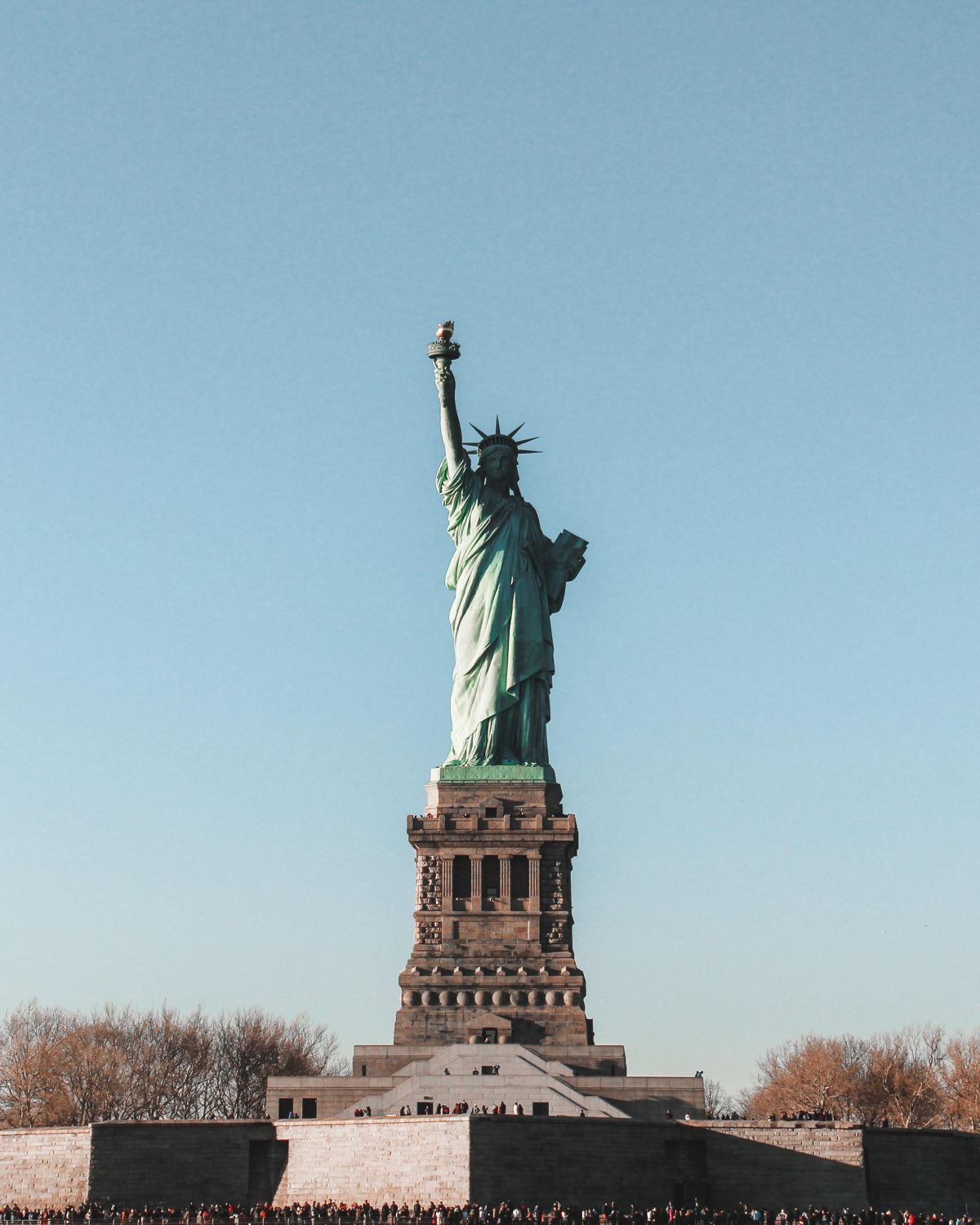
Statue of LibertyPhoto by Guzmán Barquín on Unsplash

Every modern nation needs smart, empathetic paths to citizenship. Any immigration policy that tramples on human rights and rips families apart is a travesty.

It's time to bust the narrative that foreigners primarily come to our country — or any country — to do harm. They come mostly to find opportunity, to escape persecution, or to be with family.

If we can't come to see them as human beings rather than inanimate outsiders, finding the money to pay for a giant wall will be the very least of our problems.


This article originally appeared on 03.02.17

boomer grandparents, boomer grandparent, millennial parents, millennial parent, grandkids
Image via Canva/PeopleImages

Boomer grandparents are excessively gifting their grandkids, and Millennial parents have had enough.

Millennial parents and Boomer grandparents don't always see eye to eye on parenting and grandparenting. Now, Millennial parents are uniting on a nightmare Boomer grandparenting trend that sees them "excessively gifting" their grandkids with tons of both new and old *unwanted* stuff during visits.

Ohio mom Rose Grady (@nps.in.a.pod) shared her "Boomer grandparent" experience in a funny and relatable video. "Just a millennial mom watching her boomer parents bring three full loads of 'treasures' into her home," she wrote in the overlay.


Grady can be seen looking out the window of her home at her Boomer mom and dad carrying bags and boxes up her driveway after several visits. The distressed and contemplative look on Grady's is speaking to plenty of Millennial moms.

@nps.in.a.pod

Today's "treasure" highlight was the mobile that hung in my nursery... #boomerparents #boomers #boomersbelike #millennialsoftiktok #millenialmom #motherdaughter

Grady captioned the video, "Today's 'treasure' highlight was the mobile that hung in my nursery..."

The humorous video resonated with with fellow Millennial parents. "Straight to the trash when they leave," one viewer commented. Another added, "I always say 'if you don’t want it in yours, we don’t want it in ours' 😂."

Even more Millennial parents have shared and discussed their situations with Boomer grandparents buying their kids too much stuff on Reddit. "Both my mother and my MIL love buying and sending toys, books, clothes, etc. I don't want to be ungrateful but we just don't need it and don't have the space. I have brought this up politely in 'we are all out of drawers for that' but it hasn't slowed things down," one explained. "I think part of the issue is that the grandparents live in different cities and vacation a lot. They don't get to see our daughter much so they buy stuff instead."

Another Millennial parent shared, "While the intention is very kind behind these, all the grandparents are very aware that we do not need, nor wish to receive these gifts in such an excessive volume - as it creates a daily struggle to store and accommodate in our home. I struggle to keep on top of tidying as it is, and this is a massive added challenge."

millennial parents, millennial parent, millennial mom, kids room, organize Millennial mom struggles to organize her son's room.Image via Canva/fotostorm

How to talk to Boomer grandparents about gifts

So, why are Boomer grandparents excessively gifting? "Boomer grandparents may be the first grandparent generation to have accumulated the substantial discretionary funds that enables them to spend money on their grandchildren," Sari Goodman, a Certified Parent Educator and founder of Parental Edge, tells Upworthy. "These grandparents probably grew up with grandparents who didn’t have that kind of money and so they may be excited to give their grandchildren the things they didn’t get."

Goodman suggests that Millennial parents first discuss with them the "why" behind the gifting. "What comes before setting a boundary to limit over-the-top gift-giving is delving into the reasons grandparents are buying so much," she explains. "Coming from a place of compassion and understanding makes it possible to come up with mutually beneficial solutions."

- YouTube www.youtube.com

She recommends that Millennial parents sit down with their Boomer parents to learn more. "Did they grow up without many toys and clothes and are fulfilling a dream? Ask them about the values they learned as children (hard work, perseverance, the power of delayed gratification) and how they can pass on these lessons to the grandchildren," she suggests.

She adds that another reason may be that Boomer grandparents live far away and want their grandchildren to feel a connection with them. "Set up a regular FaceTime or Zoom meeting. Rehearse with the kids so they have something to say and suggest a topic for the grandparents," says Goodman. "Or send snail mail. Kids love getting mail. The grandparents can send postcards from where they live and explain some of the special sites."

boomer grandparents, boomer grandparenting, video chat, video call, grandkids Boomer grandparents have a video call with grandkids.Image via Canva/Tima Miroshnichenko

Finally, Goodman adds that for some grandparents, this may be is the only way they know how to show their love. Millennial parents could ask if they would be open to other ideas. "Parents can set up an activity for grandparents and kids to do when they come over—a jigsaw puzzle, art activity, board game, magic tricks," she says. "Arrange for the grandchildren to teach the grandparents something their phones can do or introduce them to an app they might like."

This article originally appeared last September

Pop Culture

In 1969, the Monkees appeared on The Johnny Cash Show and played a stunning, original country song

"Nine Times Blue" is a jaw dropping intersection of craftsmanship and pure talent.

the monkees, nume times blue, monkees live, monkees country, johnny cash show

The Monkees perform on "The Johnny Cash Show."

The great debate about The Monkees is whether they were a real band or just a group of actors thrown together for a TV show. The answer is yes. They were actors cast to play an American version of The Beatles, and many of their early songs were written by big-time professional songwriters such as Tommy Boyce, Bobby Hart, Neil Diamond, Carole King, and Gerry Goffin.

However, The Monkees would pick up their own instruments, play on the 1967 Headquarters album, and perform as a live band on sold-out tours. After a resurgence in the '80s, the band enjoyed a lucrative career as a legacy act, with various members continuing to perform as The Monkees until Michael Nesmith died in 2021. Nesmith, originally a country singer from Dallas, Texas, wrote several of The Monkees' hits, including "Mary, Mary," "Papa Gene's Blues," "The Girl I Knew Somewhere," and "Listen to the Band," and was a driving force in the group being taken seriously as musicians.


By the summer of 1969, The Monkees' TV series was off the air, and the affable Peter Tork had exited the group, citing exhaustion. The remaining three soldiered on, performing on The Johnny Cash Show to promote their latest album, Instant Replay. The band chose to perform "Nine Times Blue," a country song written by Nesmith that he had demoed at the time but wouldn't be released until he recorded it as a solo artist in 1970.

The performance is a wonderful reminder that The Monkees were great comedic actors and accomplished musicians. Davy Jones and Micky Dolenz do a fantastic job singing harmonies on the chorus, while Nesmith plays some nice fills on his Gibson acoustic.

- YouTube www.youtube.com

Later in the show, The Monkees joined Cash for a performance of his 1966 novelty song, "Everybody Loves a Nut," which perfectly suited the band's comedic sensibilities. Two weeks after the release, Cash scored one of his biggest hits with "A Boy Named Sue," recorded live at San Quentin prison.

A few months later, Nesmith left The Monkees to pursue a country-rock career, first with the seminal group The First National Band, which scored a Top 40 hit with "Joanne" from the album Magnetic South.

- YouTube www.youtube.com

Although Nesmith's country-rock albums of the '70s were moderately successful, he was still overshadowed, as a musician, by The Monkees' towering success and subsequent downfall. In the '70s, it wasn't easy for Nesmith to get the respect he was due as a country artist. But in the years leading up to his death in 2021, Nesmith's work was reappraised, and he was seen as a brilliant songwriter who anticipated the rise of alt-country.

The Monkees hold a complicated place in rock 'n' roll history. While some see them as a prefabricated band assembled to cash in on The Beatles' success, others recognize them as talented musicians brought together under bizarre circumstances who forged their own path and created something fresh and innovative, only earning proper respect years later.

the great depression; Florence Thompson; Mona Lisa of the Great Depression; Mona Lisa; the depression; depression era
Photo by Dorothea Lange via Library of Congress
The woman from the famous Great Depression photo didn't know about her fame for 40 years.

It's one of the most iconic and haunting photos of all time, up there with the likes of Hindenburg, The Falling Soldier, Burning Monk, Napalm Girl, and many others. It's called simply Migrant Mother, and it paints a better picture of the time in which it was taken than any book or interview possibly could.

Nearly everyone across the globe knows Florence Owens Thompson's face from newspapers, magazines, and history books. The young, destitute mother was the face of The Great Depression, her worried, suntanned face looking absolutely defeated as several of her children took comfort by resting on her thin frame. Thompson put a human face and emotion behind the very real struggle of the era, but she wasn't even aware of her role in helping to bring awareness to the effects of the Great Depression on families.


It turns out that Dorothea Lange, the photographer responsible for capturing the worry-stricken mother in the now-famous photo, told Thompson that the photos wouldn't be published.

Of course, they subsequently were published in the San Francisco News. At the time the photo was taken, Thompson was supposedly only taking respite at the migrant campsite with her seven children after the family car broke down near the campsite. The photo was taken in March 1936 in Nipomo, California when Lange was concluding a month's long photography excursion documenting migrant farm labor.

the great depression; Florence Thompson; Mona Lisa of the Great Depression; Mona Lisa; the depression; depression era Worried mother and children during the Great Depression era. Photo by Dorthea Lange via Library of Congress

"Migrant worker" was a term that meant something quite different than it does today. It was primarily used in the 30s to describe poverty-stricken Americans who moved from town to town harvesting the crops for farmers.

The pay was abysmal and not enough to sustain a family, but harvesting was what Thompson knew as she was born and raised in "Indian Territory," (now Oklahoma) on a farm. Her father was Choctaw and her mother was white. After the death of her husband, Thompson supported her children the best way she knew how: working long hours in the field.

"I'd hit that cotton field before daylight and stay out there until it got so dark I couldn't see," Thompson told NBC in 1979 a few years before her death.

the great depression; Florence Thompson; Mona Lisa of the Great Depression; Mona Lisa; the depression; depression era A mother reflects with her children during the Great Depression. Photo by Dorthea Lange via Library of Congress

When talking about meeting Thompson, Lange wrote in her article titled "The Assignment I'll Never Forget: Migrant Mother," which appeared in Popular Photography, Feb. 1960, "I saw and approached the hungry and desperate mother, as if drawn by a magnet. I do not remember how I explained my presence or my camera to her, but I do remember she asked me no questions. I made five exposures, working closer and closer from the same direction. I did not ask her name or her history. She told me her age, that she was thirty-two. She said that they had been living on frozen vegetables from the surrounding fields, and birds that the children killed."

Lange goes on to surmise that Thompson cooperated because on some level she knew the photos would help, though from Thompson's account she had no idea the photos would make it to print. Without her knowledge, Thompson became known as "The Dustbowl Mona Lisa," which didn't translate into money in the poor family's pocket.

In fact, according to a history buff who goes by @baewatch86 on TikTok, Thompson didn't find out she was famous until 40 years later after a journalist tracked her down in 1978 to ask how she felt about being a famous face of the depression.

@baewatch86

Florence Thompson, American Motherhood. #fyppppppppppppppppppppppp #historytok #americanhistory #migrantmother #thegreatdepression #dorthealange #womenshistory

It turns out Thompson wished her photo had never been taken since she never received any funds for her likeness being used. Baewatch explains, "because Dorothea Lange's work was funded by the federal government this photo was considered public domain and therefore Mrs. Florence and her family are not entitled to the royalties."

While the photo didn't provide direct financial compensation for Thompson, the "virality" of it helped to feed migrant farm workers. "When these photos were published, it immediately caught people's attention. The federal government sent food and other resources to those migrant camps to help the people that were there that were starving, they needed resources and this is the catalyst. This photo was the catalyst to the government intercepting and providing aid to people," Baewatch shares.

- YouTube www.youtube.com

As for Lange, Migrant Mother was not her only influential photograph of the Great Depression. She captured many moving images of farmers who had been devastated by the Dust Bowl and were forced into a migrant lifestyle.

"Broke, baby sick, and car trouble!" is just one of her many incredible photos from the same year, 1937.

She also did tremendous work covering Japanese internment in the 1940s, and was eventually inducted into the International Photography Hall of Fame and Museum and the National Women's Hall of Fame.

the great depression; Florence Thompson; Mona Lisa of the Great Depression; Mona Lisa; the depression; depression era Families on the move suffered enormous hardships during The Great Depression.Photo by Dorthea Lange via Library of Congress

Thompson did find some semblance of financial comfort later in life when she married a man named George Thompson, who would be her third husband. In total, she had 10 children. When Thompson's health declined with age, people rallied around to help pay her medical bills citing the importance of the 1936 photo in their own lives. The "Migrant Mother" passed away in 1983, just over a week after her 80th birthday. She was buried in California.

"Florence Leona Thompson, Migrant Mother. A legend of the strength of American motherhood," her gravestone reads.

lifetime supply, prizes, surprises, funny stories, weird stories
Photo credit: Canva, Hasloo Group Production Studio (main image, cropped) / SkaHero42 from pixabay (text box)

People who've won "lifetime supplies" of products share what actually happened.

If you’ve ever seen a promotion or contest promising a "lifetime supply" of a product, you’ve probably been left with a few questions. How do they dole out this stuff? How much do you get at one time? And what happens if the company is sold? The specifics probably vary based on the fine print.

But one way to find out is to ask people who’ve actually won these massive prizes, as someone recently did online. The responses filled in some of the blanks, touching on how these products were delivered (in one case, by constructing an energy-drink "throne"), the hoops some folks were forced to jump through ("Lifetime ended up meaning one case every quarter, but only if I personally picked it up from whatever warehouse they were using that month"), and how much they actually enjoyed having an excess of one thing ("it feels less like a prize and more like the burritos are hunting me").


gif, kids, kenan and kel, money, one million, kenan and kel nicksplat GIF Giphy

One Redditor even found their freebies influencing a marriage proposal in a now-deleted post:

"The Charlie Bucket of donuts checking in here," they wrote. "I was lucky enough to find the Golden Donut, which landed me a lifetime supply of donuts from Stan’s Donuts. Stan’s had this contest where the first 100 people in line for a store grand opening got to open a box that contained a donut, one of which contained a golden donut which entitled that lucky winner (me) to a lifetime supply of donuts. I received a gift card loaded with about $600 in store credit that gets reloaded each year, so I can get a donut a day or spend it all at once and have a donut blowout extravaganza. Stan’s is great, not just the donuts but the people who work there as well. Shortly after winning I met a girl and ended up getting engaged. Stan’s helped me 'rig' a box for their next golden donut contest so that when my (now wife) opened her box it had a ring and a note that said 'You’ve won a lifetime supply of love and support.' Needless to say, she was disappointed it wasn’t the golden donut, but she said yes and settled for a golden ring (and my golden donut privileges)."

"They made me sign a clipboard like I was collecting evidence"

Lots of other responses were also food-related, but none of them were quite this sweet—and for some prize winners, the free stuff wound up feeling like a burden.

"I won a lifetime supply of frozen burritos from a regional grocery chain after my college roommate signed us up as a joke. Lifetime ended up meaning one case every quarter, but only if I personally picked it up from whatever warehouse they were using that month. One time it was two hours away and they made me sign a clipboard like I was collecting evidence. After a few years the brand got bought out, the burritos got worse, and the emails slowly turned into generic coupons. I still get a random case once in a while, but it feels less like a prize and more like the burritos are hunting me."

"When I was in college someone in my fraternity won a 'lifetime supply' of a new flavor of…energy drink. It was some weird coconut flavor and was f-—ing awful. A freight truck dropped off 365 cases that had 8 or 12 cans per case. The delivery people actually made a throne out of it to sit in and it took up almost the whole living room. However, like I already mentioned, it was absolute disgusting. Not a single person who tried it liked the taste so we had a hard time giving it all away. [I’m] pretty sure the contest was secretly a way to offload this horrible, failed flavor lol"

"My… idk, aunt in laws mom? Wife’s uncles wife’s mom, whatever you call that, won a lifetime supply of rice a roni. They gave it to her all at once and it filled every crevice of their house. They gave most of it away to neighbors and food shelters."

gif, the simpsons, lifetime supply, beer, funny season 6 GIF Giphy

"I lost interest after a few months"

Here are some of the other top comments, from no-strings-attached free queso to WD-40 with a curious definition of "lifetime."

"My parents won free queso for life at their favorite local Mexican restaurant. They got a cheese-wedge shaped squishy toy with the restaurant name and something like free queso printed on it. They can get one free order of queso per visit if they show their server the little cheese thing. They go once a week."

"I won free beer for life from a local brew pub. When I'm in the pub, all of my beers are free, but I can't take beer to go or anything. I've got a personal card that I show. I go about once a month. I'm tempted to go more, but also am aware of the health detriments of going more often."

"My parents Won a lifetime supply of diapers from pampers for me winning a baby race (yes its a real thing they just raced babies) i got 1st place but turned out the diapers were just for a year or 2 until i basically grew out them and it was a set amount like a crate still saved our poor family ton i bet."

"Won a lifetime supply of beer from my local liquor store. In reality, it meant that once a month I could go to the store and do one of those "build your own 6 pack" with the loose cans. It was cool at the time but I lost interest after a few months since I wasn't a huge drinker to begin with. I've moved, but I'm pretty sure the liquor store has since closed."

"I won a lifetime of small french fries from McDonalds. Limited 1 per visit. They gave me a little key ring tag to show the cashier each visit. The catch was, it was only valid at that single McD's location. Eventually I moved to another state, so I gave the key ring to a friend who still lived in the area."

"Grandfather won a lifetime supply of WD-40 once. It was four cans. My sister also won a lifetime supply of…ice cream bars. It was like two pallets all delivered at once. It was wild trying to give that away. No way did we have the freezer space or ability to eat this. Threw a bunch away."

So do companies have legal wiggle room on how they define "lifetime"? According to law firm Venable LLP, it really does come back to the disclaimer, explaining "how much it is, its retail value, when and how it will be delivered to the winner, and whether the winner must meet any requirements to receive the prize." They add that companies must adhere to the Federal Trade Commission’s "reasonable test," which, the law firm says, "requires a reasonable person to agree that the amount awarded would last an average individual for the time period stated." That leaves us with a crucial question: How many French fries is reasonable?

- YouTube www.youtube.com

Victorian Era; Romantic Period; pale portraits; beauty standards; unrealistic beauty standards; arsenic poisoning

Historians explain why everyone was so pale in Victorian portraits.

When people think of portraits from the Victorian era, the images that come to mind are usually women in tight corsets with extremely pale skin. Children were also very pale and often appeared to have dark circles under their eyes. But why? It's not because they had better sunscreen in the 1800s.

The reason many people who posed for those portraits were as white as bleached cotton sheets is multifaceted. Portraits from the Victorian era generally depict wealthy people, which is likely the reason for the over-the-top dresses and hairstyles. Sitting for a formal portrait was an expensive luxury that poor people couldn't afford. If they had been able to, we'd probably see a lot more color in the faces being captured.


In the 1800s, especially during the European Victorian era, paleness indicated status. The paler you were, the more money you were assumed to have, signaling higher social status. It was believed that tan skin meant you did some form of outdoor manual labor, something associated with poorer people. Paintings from that era often show women enjoying the outdoors in multilayered dresses, carrying parasols to shield their fair skin from the sun. This belief that paleness displayed high status became a dangerous obsession, according to historians.

Victorian Era; Romantic Period; pale portraits; beauty standards; unrealistic beauty standards; arsenic poisoning Vintage portraits of a woman and two children, showcasing elegant attire of their era.Photo credit: Canva

The Johnston Collection explains that the Romantic period marked a shift toward paleness and extreme thinness as the ultimate signs of wealth and beauty, writing, "many of the beauty icons of the day were depicted as skeletal thin with ghostly pale skin, glistening eyes, flushed cheeks and perpetually red lips." Those chasing this impossible beauty standard quickly noticed that contracting tuberculosis produced many of these highly sought-after features as the disease progressed.

"If a lady wasn't fortunate enough to suffer from such a glamorous illness, she could feign going into a decline – the desirable fragile look being simulated by drinking vinegar and dropping belladonna into the eyes," The Johnston Collection notes.

Belladonna is poisonous, but women of the era appeared unafraid to risk death for the privilege of being seen as beautiful. As the Romantic period faded, appearing sickly did not fall out of fashion. The Victorian era simply tied paleness to morality and social status, leading women to continue risking their lives to avoid being perceived as poor. Instead of trying to contract tuberculosis, women began ingesting arsenic, chalk, and even ground-up rocks to maintain a fair complexion.

Victorian Era; Romantic Period; pale portraits; beauty standards; unrealistic beauty standards; arsenic poisoning Three friends enjoy a lively music session indoors.Photo credit: Canva

History Facts shares:

"In 1851, a Swiss physician published a report in a medical journal about the 'toxicophagi,' a group of people in modern-day Austria who routinely consumed arsenic; they knew it was poison, but thought they could develop an immunity to it by starting with small doses and gradually increasing the intake. The report's author claimed that arsenic gave them great energy, sparkling eyes, and wonderful complexions, but noted that after long-term use, unsurprisingly, 'most arsenic eaters end with an inevitable infirmity of the body.'"

While there was some knowledge that consuming arsenic could be dangerous, it was still viewed as benign when used in other products. The chemical was used to create the color green in clothing, wallpaper, and other products. This led children to take on the same sickly look and eventually contributed to their deaths. Unintentionally, entire families were poisoned by their beautiful green wallpaper, dresses, baby blankets, and other household items.

It took one family losing multiple children to what doctors believed was diphtheria before a leading physician and a chemist teamed up to uncover why the children kept dying. After noticing the green wallpaper in the home, the doctor asked to perform an autopsy on the child who had recently died. The results of the tests changed how society treated the dangerous chemical.

If you ever find yourself gazing up at a portrait of a ghostly pale Victorian child or a wealthy Victorian woman, you'll know that arsenic is likely the reason. Ingesting deadly chemicals to keep up appearances is a practice that should probably stay lost to history.