Vincent van Gogh's The Starry Night is widely considered one of the most renowned paintings of all time, often uttered in the same breath as The Mona Lisa and The Last Supper by Leonardo da Vinci, as well as Edvard Munch's The Scream, among many others.
It has been discussed at length in both art history and pop culture, yet there are still plenty of mysteries for the casual fan to uncover about this incredible work of art.
The Starry Night was painted while van Gogh was voluntarily staying at the asylum of Saint-Paul-de-Mausole in Saint-Rémy-de-Provence, France. He checked himself in shortly after cutting off part of his own ear in late 1888 and famously painting his iconic Self-Portrait with Bandaged Ear. He continued to experience mental health challenges after the incident and sought help in May 1889.
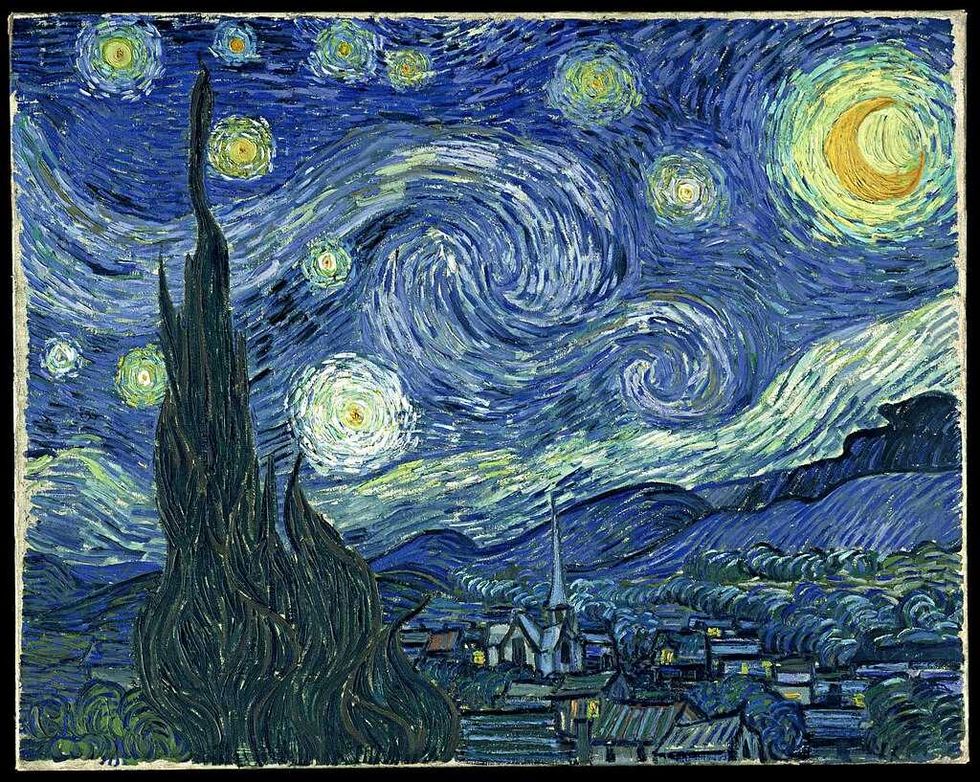
 "The Starry Night"Public domain/Wikimedia Commons
The Starry Night is van Gogh's interpretation of the view from his room at the asylum. The Van Gogh Gallery notes, "Van Gogh lived well in the hospital; he was allowed more freedoms than any of the other patients. If attended, he could leave the hospital grounds; he was allowed to paint, read, and withdraw into his own room. He was even given a studio."
He lived there for about a year and created countless works. Fascinatingly, he painted variations of the same view many times over in works that would go on to achieve only a fraction of The Starry Night's fame.
Here are five lesser-known van Gogh paintings from nearly the same perspective as The Starry Night:
1. Wheat Field with Cypresses (September 1889)
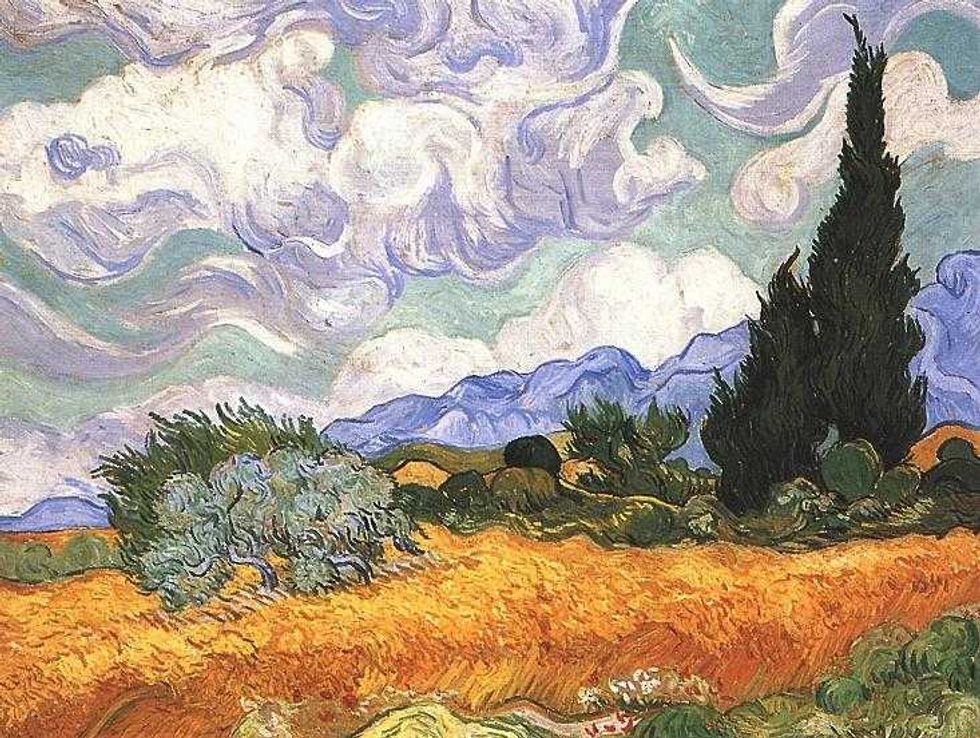
Wheat Field with Cypresses was painted several months after van Gogh completed The Starry Night. The two works closely resemble one another, from the unique shapes of the cypress trees to the contours of the mountain range and the swirling clouds. Notably, this piece is painted in a much lighter palette than the darker tones van Gogh used earlier that summer, which the Van Gogh Gallery links to his struggles with mental health at the time. An earlier version of Wheat Field with Cypresses was darker than the September version.
 "Wheat Field with Cypresses"Public domain/Wikimedia Commons
2. Mountainous Landscape Behind Saint-Paul Hospital (early 1889)
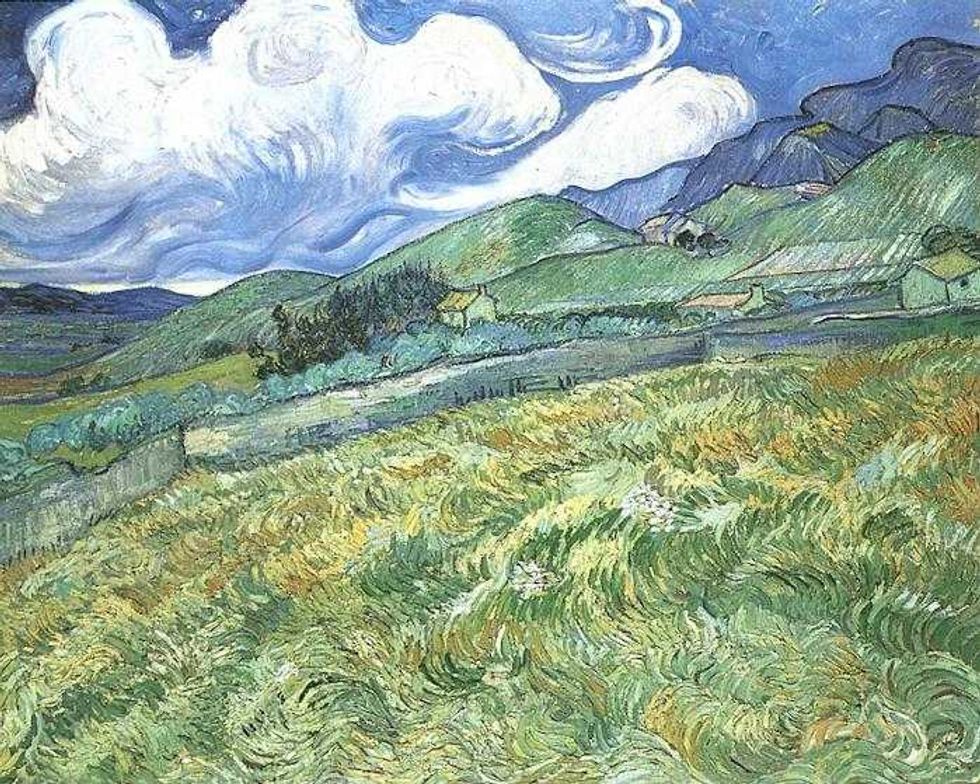
Mountainous Landscape Behind Saint-Paul Hospital is a precursor to The Starry Night, predating it by an unknown amount of time. The view, however, is nearly identical. The central rolling hill, which gives way to the oddly shaped mountain ridge, is a dead ringer for how the landscape appears in van Gogh's most famous work.
 "Mountainous Landscape Behind Saint-Paul Hospital"Public domain/Wikimedia Commons
3. At the Foot of the Mountains (June 1889)
This painting was completed shortly before van Gogh began The Starry Night and offers a slightly different perspective. The sky is relatively cloudless, but the mountains are as distinctive as ever. The same, or a very similar, small cottage at the center of the painting shows up repeatedly in van Gogh's works from Saint-Rémy.
 "At the Foot of the Mountains"Public domain/Wikimedia Commons
4. Wheat Field with Reaper and Sun (June 1889)
Here's a similar scene done closer to sunrise, casting a golden hue over the familiar landscape. Van Gogh would go on to paint the same reaper several more times. During this period, he repeatedly created studies of the same scenes and revisited them from multiple angles.
 "Wheat Field with Reaper and Sun"Public domain/Wikimedia Commons
5. Olive Trees with the Alpilles in the Background (June 1889)
What's fascinating about this one, besides showing an alternative perspective on the view from The Starry Night, is that it represents one of van Gogh's greatest achievements. In a letter to his brother, the artist admitted that he found olive trees "too beautiful for me to dare paint."
At the asylum, he had plenty of time on his hands and finally worked up the courage to give it a try.
"The olive trees are very characteristic, and I'm struggling to capture that," he wrote. "It's silver, sometimes more blue, sometimes greenish, bronzed, whitening on ground that is yellow, pink, purplish or orangeish to dull red ochre. But very difficult, very difficult."
 "Olive Trees with the Alpilles in the Background"Public domain/Wikimedia Commons
Seeing van Gogh's many attempts and perspectives during his stay at the asylum, and how his techniques and use of color evolved over time, is fascinating and adds texture and meaning to The Starry Night.
It's no wonder art lovers continue to make pilgrimages to Saint-Rémy to take in the views for themselves. Visitors can even tour van Gogh's room and look out the very same window on a guided visit. While some of the scenery has changed, the landscape is very much the same. It really gives you a whole new appreciation for how he captured the magic of the mountains and sky and created something that continues to move people more than 125 years later.








 A woman is getting angry at her coworker.via
  A man with tape over his mouth.via
  A husband is angry with his wife. via
 Many people make bucket lists of things they want in life.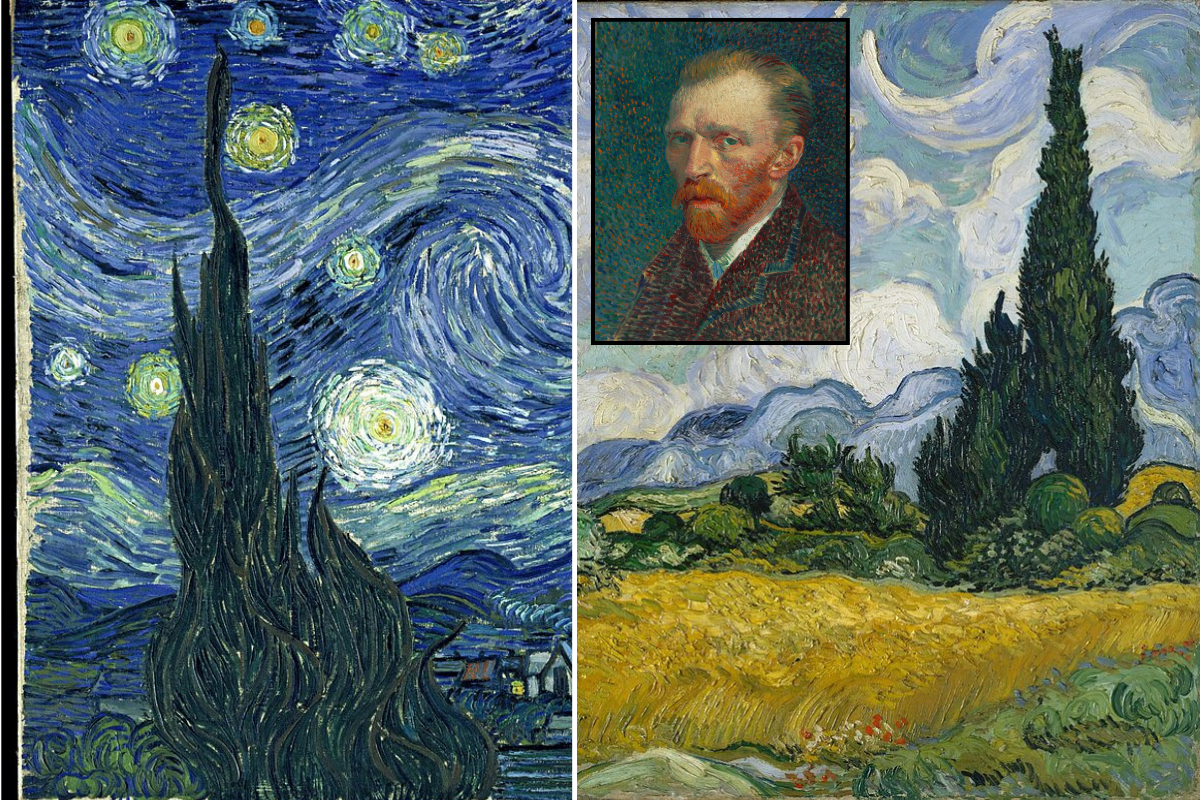
 "The Starry Night"Public domain/Wikimedia Commons
 "Wheat Field with Cypresses"Public domain/Wikimedia Commons
 "Mountainous Landscape Behind Saint-Paul Hospital"Public domain/Wikimedia Commons
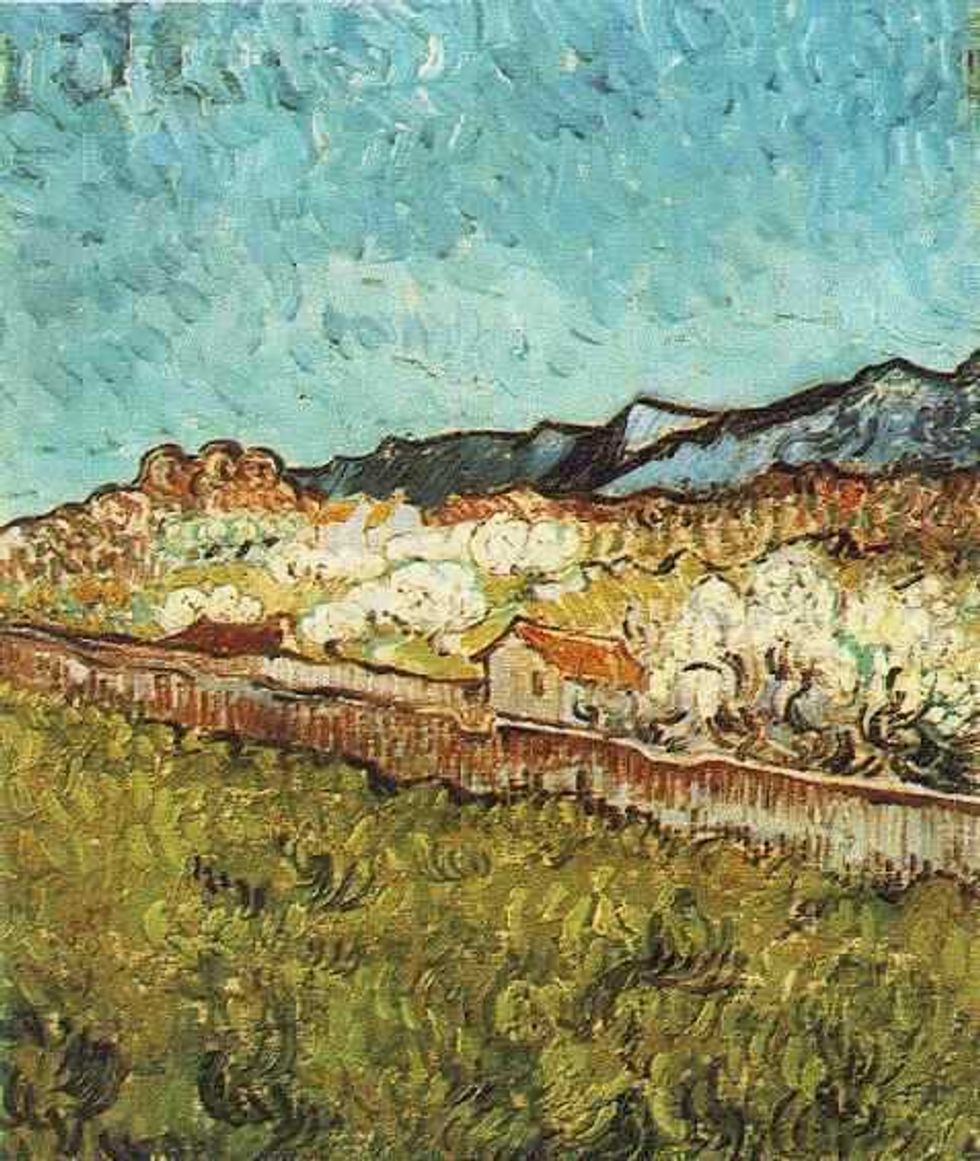 "At the Foot of the Mountains"Public domain/Wikimedia Commons
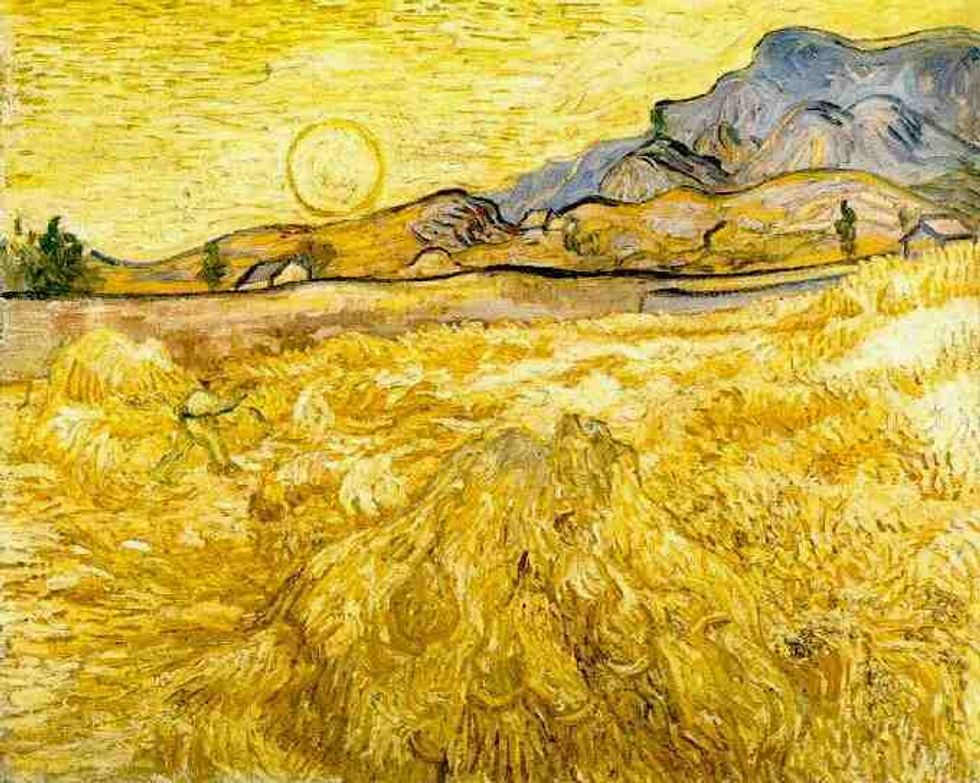 "Wheat Field with Reaper and Sun"Public domain/Wikimedia Commons
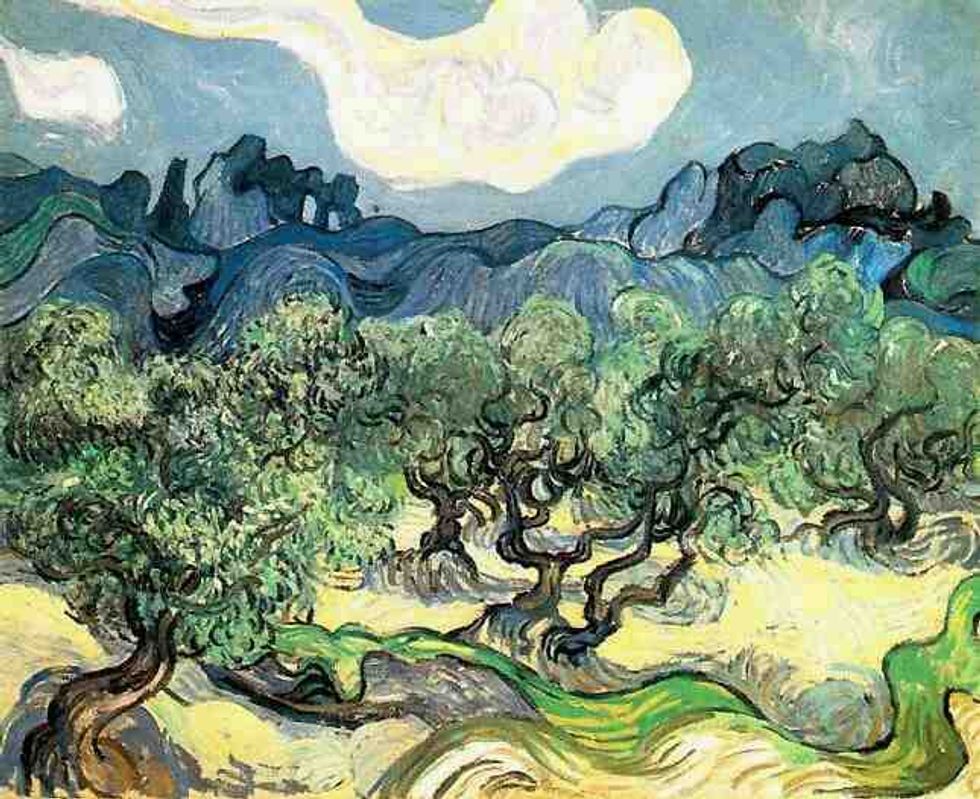 "Olive Trees with the Alpilles in the Background"Public domain/Wikimedia Commons