She smacked a guy who groped her at a club. His response exposed a double-standard that needs to end.
A brave woman in Sheffield, England stood up for herself on the floor of a dance club and not only was her reaction satisfying for many, it brought an ugly double-standard to light. Harriet Bowley, 21, was at an unnamed dance club when a man grabbed her somewhere around the waist. Bowley responded by turning…
A brave woman in Sheffield, England stood up for herself on the floor of a dance club and not only was her reaction satisfying for many, it brought an ugly double-standard to light.
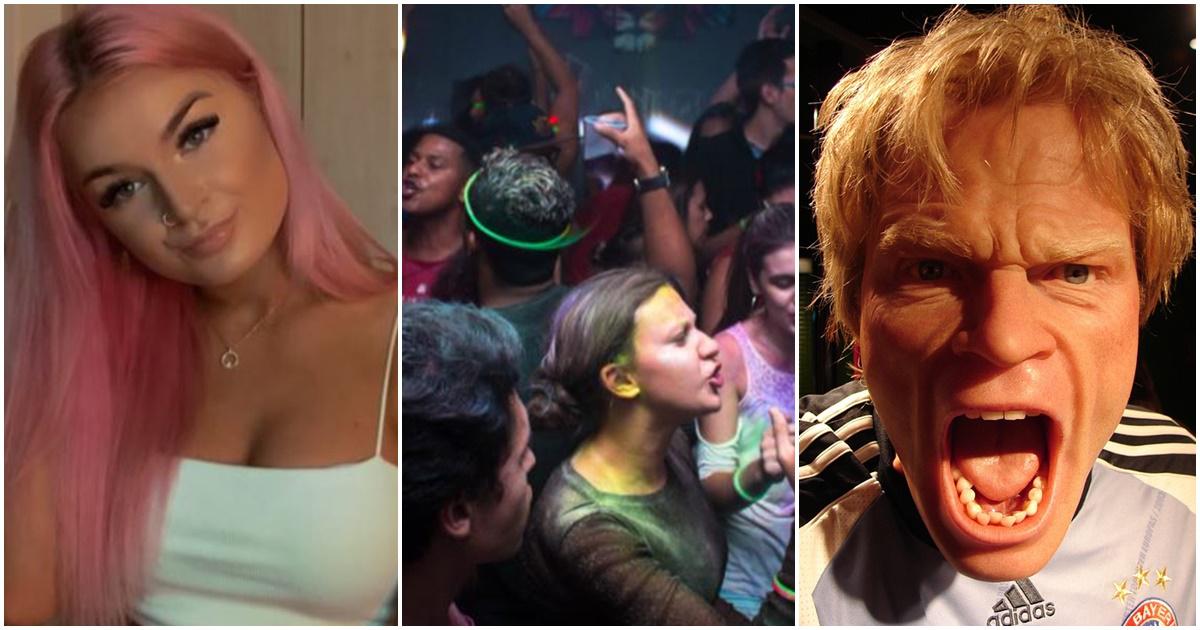
Harriet Bowley, 21, was at an unnamed dance club when a man grabbed her somewhere around the waist. Bowley responded by turning around and smacking the man who seemed “genuinely furious and shocked” that she would retaliate.
I smacked a lad last night who sexually assaulted me in the club, and he looked genuinely furious and shocked? Normalise girls standing up for themselves when they get groped wtf— ?harriet (@harribowley) August 7, 2021
It’s incredible the man was shocked that a woman would respond violently to being groped. Didn’t he understand that sexually assaulting her was an act of violence, too? Although she probably wasn’t physically hurt by his actions, the mental and emotional trauma of having a man touch you without consent is far more traumatizing than her response.
It’s also strange that he was “furious” that she retaliated. What did he expect?
It seems the man thought he was having some innocent fun and was awakened from his sexist fantasy by a slap in the face.

My sister is a police officer. Someone grabbed her bum in a club and she had his arm up behind his back in one move. Never seen anyone look so surprised. — hoodedpigwoman (@hoodedpigwoman) August 9, 2021
I taught my daughter anyone touches her slyly in crowded spaces to grab their wrist raise there hand in the arm and shout WHOES FILTHY HAND IS THIS! I also taught my son who to be a gentleman— Alba in Kernow 〓〓 (@DawnMcCollTR11) August 9, 2021
Honestly never understood this for years I've always stood up for myself in clubs and bars men are generally shocked when I don't take any shit I've have told bouncers when men have been disgusting before and they have been kicked out and banned. This needs to stop!— Georgia (@GeorgiaLiving90) August 9, 2021
We should always defend ourselves immediately and not keep putting up with it for years. Fight back and then report while he is still on the floor clutching his aching balls. — Paula $ (@PaulaDollar1) August 9, 2021
I must note that this post isn't celebrating violence in any way. The story simply illustrates how some men feel so entitled to women's bodies that they are genuinely shocked that one would have an aggressive reaction to being touched without consent.
These men were hiding behind the guise that groping is innocent fun and isn't serious enough to warrant a violent reaction.
This post calls attention to a serious problem that needs to be stopped immediately. Men need to learn that just because they're in a dance club where people are having drinks and dancing close together, that it doesn't give them permission to try to inappropriately touch someone.
Groping is sexual assault, case closed. There should be no excuse for it and it should be taken just as seriously as any other form of violence.
In March 2023, after months of preparation and paperwork, Anita Omary arrived in the United States from her native Afghanistan to build a better life. Once she arrived in Connecticut, however, the experience was anything but easy.
“When I first arrived, everything felt so strange—the weather, the environment, the people,” Omary recalled. Omary had not only left behind her extended family and friends in Afghanistan, she left her career managing child protective cases and supporting refugee communities behind as well. Even more challenging, Anita was five months pregnant at the time, and because her husband was unable to obtain a travel visa, she found herself having to navigate a new language, a different culture, and an unfamiliar country entirely on her own.
“I went through a period of deep disappointment and depression, where I wasn’t able to do much for myself,” Omary said.
Then something incredible happened: Omary met a woman who would become her close friend, offering support that would change her experience as a refugee—and ultimately the trajectory of her entire life.
Understanding the journey
Like Anita Omary, tens of thousands of people come to the United States each year seeking safety from war, political violence, religious persecution, and other threats. Yet escaping danger, unfortunately, is only the first challenge. Once here, immigrant and refugee families must deal with the loss of displacement, while at the same time facing language barriers, adapting to a new culture, and sometimes even facing social stigma and anti-immigrant biases.
Welcoming immigrant and refugee neighbors strengthens the nation and benefits everyone—and according to Anita Omary, small, simple acts of human kindness can make the greatest difference in helping them feel safe, valued, and truly at home.
A warm welcome
Dee and Omary's son, Osman
Anita Omary was receiving prenatal checkups at a woman’s health center in West Haven when she met Dee, a nurse.
“She immediately recognized that I was new, and that I was struggling,” Omary said. “From that moment on, she became my support system.”
Dee started checking in on Omary throughout her pregnancy, both inside the clinic and out.
“She would call me and ask am I okay, am I eating, am I healthy,” Omary said. “She helped me with things I didn’t even realize I needed, like getting an air conditioner for my small, hot room.”
Soon, Dee was helping Omary apply for jobs and taking her on driving lessons every weekend. With her help, Omary landed a job, passed her road test on the first attempt, and even enrolled at the University of New Haven to pursue her master’s degree. Dee and Omary became like family. After Omary’s son, Osman, was born, Dee spent five days in the hospital at her side, bringing her halal food and brushing her hair in the same way Omary’s mother used to. When Omary’s postpartum pain became too great for her to lift Osman’s car seat, Dee accompanied her to his doctor’s appointments and carried the baby for her.
“Her support truly changed my life,” Omary said. “Her motivation, compassion, and support gave me hope. It gave me a sense of stability and confidence. I didn’t feel alone, because of her.”
More than that, the experience gave Omary a new resolve to help other people.
“That experience has deeply shaped the way I give back,” she said. “I want to be that source of encouragement and support for others that my friend was for me.”
Extending the welcome
Omary and Dee at the Martin Luther King, Jr. Vision Awards ceremony at the University of New Haven.
Omary is now flourishing. She currently works as a career development specialist as she continues her Master’s degree. She also, as a member of the Refugee Storytellers Collective, helps advocate for refugee and immigrant families by connecting them with resources—and teaches local communities how to best welcome newcomers.
“Welcoming new families today has many challenges,” Omary said. “One major barrier is access to English classes. Many newcomers, especially those who have just arrived, often put their names on long wait lists and for months there are no available spots.” For women with children, the lack of available childcare makes attending English classes, or working outside the home, especially difficult.
Omary stresses that sometimes small, everyday acts of kindness can make the biggest difference to immigrant and refugee families.
“Welcome is not about big gestures, but about small, consistent acts of care that remind you that you belong,” Omary said. Receiving a compliment on her dress or her son from a stranger in the grocery store was incredibly uplifting during her early days as a newcomer, and Omary remembers how even the smallest gestures of kindness gave her hope that she could thrive and build a new life here.
“I built my new life, but I didn’t do it alone,” Omary said. “Community and kindness were my greatest strengths.”
Are you in? Click here to join the Refugee Advocacy Lab and sign the #WeWillWelcome pledge and complete one small act of welcome in your community. Together, with small, meaningful steps, we can build communities where everyone feels safe.
This article is part of Upworthy’s “The Threads Between U.S.” series that highlights what we have in common thanks to the generous support from the Levi Strauss Foundation, whose grantmaking is committed to creating a culture of belonging.
Growing up in the Bible Belt, almost everyone I knew was Christian—it was just part of the culture. Even if people never mentioned religion in casual conversation, there seemed to be an expectation that they’d show up in the pews, beaming brightly in their Sunday best. I was already kind of a spiritual outsider in my small town, attending the only Catholic Church around. But I really felt out of place on a deeper level—I was very confused about my faith, including whether I had one at all.
Somewhere around middle school, I remember asking questions to adults about the Bible, trying to drill down on things that puzzled me. In high school, I spent hours reading articles about other religions and belief systems. I found myself distracted, even disinterested, in the sermons. I begged my parents to let me sleep in on Sunday mornings. But any time I started to truly question, I felt a zap of guilt—one that I kept secret for years. I’d experience periodic flutters of rejuvenation, mostly because I wanted to fit in. (In one case, during college, I had a crush on a deeply religious girl and thought, “Maybe this life path makes the most sense.”)
“Coming out” as agnostic or atheist
When I met my future wife, who was confident in her atheism, I discovered I wasn’t alone in my lack of belief. Then came a less pleasant thought: “I have to tell my parents now.” It was a painful conversation that happened almost by accident, during an afternoon walk with my mom. She casually asked about my then-girlfriend’s religion, and I told her the truth: She didn’t have one—and, frankly, neither did I. There were insults and tears and awkward silences, and I wasn’t prepared to process it. But I also know, looking back, that my mom probably wasn’t either—even if I struggled to understand it, I know this wasn’t the image of her adult son that she’d always pictured. (Not having kids probably didn’t help either. Sorry, mom!) But these days, most of that tension has softened, and I feel self-actualized in a way I didn’t as an angsty college kid. Plus, I still have plenty of close religious friends! (Acceptance, ultimately, is a two-way street, and we don’t have to agree on everything.)
Looking back, though, I realize that “coming out” as agnostic (my preferred label, if forced to choose one) was a big deal, and I wish I had a do-over to consider the moment more consciously. It’s a tricky and complex road for anyone to navigate, especially if you want the recipient of this news to remain a part of your life. There are numerous factors to consider: the region, the particular faith, the broader cultural tolerance of non-religious beliefs, even the time period. (For example, according to a 2025 Pew Research Center report, “31% of U.S. adults said religion was gaining influence in American life,” marking the highest figure they’d seen in 15 years.) This isn’t a one-size-fits-all situation—everyone should approach their own tactfully, weigh the pros and cons, and potentially even consult with a professional. (Also, no one’s suggesting anyone should abandon their faith. Life is a journey, and beliefs can evolve.) Still, it’s interesting to read about other people’s experiences.
One Redditor shared theirs in a thread titled “Coming out as an atheist!! what’s your story?” They wrote about telling their family at age 17, noting, “Most of them were supportive, but some said that this was a phase. I truly feel privileged to have a supportive family who did not let their beliefs affect mine.” One commenter shared that it was “more difficult coming out to friends and classmates,” given that they live in a predominantly Christian area. They wrote, “A lot of the time people thought I was crazy or started hating my mom for ‘leading [me] down the wrong path,'” but they wound up making new friends. Some people recalled having serious conversations, while others said that took a more casual approach: “In a nutshell? ‘Dad, I’m an atheist,'” one user wrote. “‘Yeah, that doesn’t make you transparent—step aside, I wanna see the game.'”
“Every family”—and situation—is different
If you look through enough responses, age emerges as a common theme. It’s likely way different having this conversation with your parents at 15, when you’re still living under the same roof, than as a financially independent adult. In the /exmormon subreddit, one user recalled their spouse having a relatively informal chat with his parents, mentioning that he “was taking a break.” But the Redditor also, crucially, emphasized that “every family is different.” Others in the thread stressed the importance of compassion and clear communication. In an /atheist thread, one ex-Muslim, then 32, wrote, “I don’t recommend telling your mom anything until you get a job and start being independent.” Again, there is no one universal method for taking this step, if you even decide to take it at all.
In a 2015 study for the journal Secularism & Nonreligion, researchers studied the reactions of families when a member “comes out” as atheist, reporting the experiences of 80 people. They noted, broadly, that “atheists are often subjected to statements and behaviors that are unsupportive of familial relationships,” but they also aimed to determine which of three characteristics—”cohesion, adaptability, and communication”—was most crucial. While noting that each is important, they found that “kind and respectful communication seems to facilitate movement within the healthier realms of the cohesion and adaptability spectrums.” They also added, “[C]ommunication is often the element that individuals seem to be most aware of and most able to control. This is prescriptively important because it implies that, even when families have a pattern of rigidity or disengagement, being intentional about how one communicates can potentially soften the impact of disclosure.”
Eight years later, researchers for the journal Social Forces examined atheists’ “perceptions of hostility toward their identities and whether they conceal those identities.” They wrote, “Looking first at the results for perceived hostility toward individuals’ atheist identity, we do not find any statistically significant differences across racial or ethnic groups relative to atheists who identify as white.” Additionally, they did “find some evidence that women might report greater perception of stigma related to their atheist identity relative to men, although this difference is of borderline statistical significance.”
Despite my mild regrets, when I reflect back on that conversation with my mom, I ultimately feel proud that I didn’t hide part of myself—and, frankly, lucky that I didn’t have to.
It’s hard to say what makes every woman happy or what every woman wants, and as a woman myself, I’m not a fan of sweeping generalizations based on gender. However, there are certain elements of walking through the world as a woman that are fairly universal, which makes me feel confident in saying this:
If you ever want to see pure, spontaneous joy, watch a woman put on a dress and suddenly realize it has pockets!
Women’s clothes are notorious for having either no pockets (most dresses) or pockets that are barely usable (most jeans and dress pants). And this isn’t just a perception—a 2018 study by The Pudding found that, on average, the front pockets on women’s jeans are 48% shorter and 6.5% narrower than they are on men’s jeans. I have pants in my wardrobe that look like they have both front and back pockets, but they don’t; where the pocket opening would be is sewn shut. Faux pockets may sound dumb—because they are—but they’re not uncommon. And some pockets are so small you can’t even fit a ChapStick into them.
To test whether women’s pockets really are as bad as they (we) say they are, popular vlogger Nick Wilkins tried on a pair of women’s jeans. The fit was great and they looked fine. But the moment he held up the items he usually puts in his own pockets, women collectively let out a loud “HA!” Sure enough, when he tried to put his phone and wallet in the pockets, his reaction reflected what women have said countless times ourselves: “Are you serious? That’s all it does?”
As it turns out, the history of women’s clothing and pockets goes way back, and, of course, there have been various trends and shifts over time. Some people have posited that companies don’t put usable pockets into women’s clothing so that they can sell more purses and handbags. However, according to a deep dive in FASHION Magazine, that’s not quite the whole story. Believe it or not, we’re still living with leftover, outdated notions of men being active and women being passive, with men’s clothing needing to be functional and women’s clothing desiring form over function.
“Essentially: Men are required to act and therefore need practical clothing,” writes Annika Lautens. Women are expected to simply appear and be watched—their beauty prioritized above all else. And these outdated gender ideals are still being sewn directly into our clothing.”
The irony, of course, is that women tend to carry more things than men. Sure, sometimes that necessitates a purse, but sometimes you don’t want to carry something extra. Pockets are nice. They’re convenient, helpful, and functional. We want them. We need them. What in the name of patriarchy is the problem here?
It can’t be that hard to make normal pants for women with decent pockets. Jeans with decent pockets. Dress pants with decent pockets. And yes, dresses with pockets, too. We are seeing more independent and female-led clothing makers providing pockets, and clearly the awareness about it is finally kicking in pretty universally. But as most women can attest, it remains an issue.
Maybe women would simply be too powerful if we all had pockets. Maybe this will be our ultimate last stand. Pockets or bust, ladies. Pockets or bust.
In a world driven by speed, efficiency, and immediate results, it’s easy to forget that lasting change is built on trust. Real impact doesn’t come from rushing toward an end goal or measuring success through lofty metrics. It comes from falling in love with the problem, building a community around it, and sharing a vision for lasting transformation.
Pura, the smart home fragrance company that marries premium fragrance with innovative technology, recently launched its inaugural impact collection with K Farmer Dutjahn Foundation (KFDF) and Dutjahn Sandalwood Oils (DSO). The Pura x Dutjahn partnership began with a clear purpose: to source a sacred ingredient directly from its origin while honoring the land and the people who’ve cared for it. Our goal wasn’t simply to find sandalwood — it was to find a community and an ingredient that embody exceptional land stewardship, ethical harvesting, and transformative, community-led impact. After careful research and over three years of development, we saw an opportunity to secure a premium, luxurious ingredient while supporting a regenerative supply chain that invests in Indigenous-led education, economic opportunity, and land stewardship.
Over the past several years, we’ve walked alongside Martu, an Indigenous tribe from the vast Western Australian desert. Martu are one of the oldest living cultures in the world, with a history spanning 60,000 years. As nomadic hunter-gatherers, they have unparalleled ecological knowledge, passed down through generations, making them the traditional custodians of the land. Their approach to sandalwood harvesting isn’t driven by market demand but by a deep respect for seasonal rhythms, land health, and cultural law. Their work adapts to the environment—whether it’s “sorry time,” when mourning pauses activities, or the harsh desert conditions that make travel and communication difficult. Martu operate on Martu time, a deliberate rhythm shaped by millennia of experience, far removed from the rapid-swipe, hyper-productive pace of Western systems.
Martu’s ecological knowledge isn’t documented in baseline reports. It’s lived, carried in stories, and practiced with rigor and respect for the changing needs of the ecosystems. True partnership means unlearning the typical approach. It means standing beside—not in front—and recognizing that the wisdom and leadership we need already exist within these communities. Our role isn’t to define the work, but to support it, protect it, and learn from it.
Tonight, as I spoke with Chairman Clinton Farmer and the KFDF team about our focus for this piece, I learned that Clinton’s truck had broken down (again), leaving him to “limp” back to town from the desert at low speeds for hours and hours. He had been awake since 3:00 a.m. This is a common and costly setback, one that disrupts the harvest, demands days of driving, and brings real financial and emotional strain. These barriers are relentless and persistent, part of the harsh reality Clinton and his community face daily. It’s easy for outsiders, detached from the reality on the ground, to impose rules, regulations, and demands from afar. Rather than continuing to impose, we need to truly partner with communities — equipping them with the resources to operate sustainably, avoid burnout, and protect the very land they love and care for. All while they endeavor to share these incredible, sacred ingredients with the world and build an economic engine for their people.
There is much to learn, but we are here to listen, adapt, and stay the course. The future we need will not be built in quarterly cycles. It will be built in trust, over time, together.
To learn more about the partnership and fragrances, visit Pura x Dutjahn.
Most people grow up going to schools where people are of a similar social status. Lower-income people tend to grow up with people in the same situation and affluent people usually grow up around people who are rich as well. But things can change dramatically in college. People who are from completely different sides of the socioeconomic spectrum attend class together and sometimes wind up sharing the same dorm room.
One student can be there on a scholarship and have a part-time job to make ends meet. The other may be on a massive allowance from their parents who pay full tuition without batting an eye. What exacerbates the issue is that many people go through college dirt poor. If they have a job, it’s often low-paying, they can’t work many hours and they aren’t old enough to have accumulated any wealth. According to the Lumina Foundation, a nonprofit based in Indianapolis dedicated to providing “opportunities for learning beyond high school” for all, 47% of today’s college students don’t have or rely on parental support, and of those students, one in four live below the poverty line.
The differences are stark. So stark that seeing one of your peers wasting other people’s hard-earned money can be downright stupefying. It can also seem highly immoral for some to have so much and not appreciate it when others are struggling to get by.
College is also a time when people begin to learn about income inequality and why it exists.
Income inequality becomes more obvious in college. Image via Canva.
In the summer of 2020, freelance journalist Jake Bittle started a fun conversation on Twitter where people shared stories of some of the insanely rich kids they knew in college. Many of the responses came from people who went to the University of Chicago.
Bittle’s story started with seeing a girl open her laptop to reveal a ton of money in her bank account while they were taking a class on Marxism. The tweet inspired people to share stories of the insanely rich kids they met in college and how some of them were terribly wasteful with their money.
(Jake has since deleted his original tweet.)
one time in college I was telling a guy I didn’t have money for shampoo and he bought Instagram followers as I was telling him this. a different time had to explain to a girl what hourly wage was (she didn’t comprehend there was something other than salary)
I can't tell you how many U of C students told me they couldn't understand why my parents didn't just buy me a condo, or why I didn't buy myself a new car; then there was the girl in my dorm who left $100,000 worth of clothes, many never worn, in her room at the end of the year.
One of my roommates whispered to me that our other roommate was on scholarship. I told her almost everyone she met was on some type of scholarship. Her dad just used to pay it in one go. Her parents used to call her and check on her because she "wasn't spending enough money."
My freshman year roomate (a week after bragging that his family is the 2nd largest purchaser of De Beers in the world…) threw all 20 of his Ralph Lauren wool sweaters into the dryer
— franklin ? ave ? shuttle (@sirptrash) June 12, 2020
In the dorms first week of school my suite mate asked me when the housekeepers come to clean and do laundry. She had no idea what a washing machine looked like.
— Liz Ortiz is tired of the ? (@LizOrtizAK) June 12, 2020
when you’re a kid you learn class difference because when you go on a field trip you got $10 and your friend brings a $50 for the gift shop
One thing really becomes apparent when reading all of these Tweets: the severe lack of financial literacy among the college students in these anecdotes. According to EBSCO, over 40% of college students are “still not equipped with adequate financial literacy knowledge and skills.” This also touches on the correlation between student debt and financial literacy. A 2024 study from Auburn University published by the Social Science Research Network (SSRN) notes that students with more than $100,000 in student debt especially lack “adequate financial understanding,” exacerbating the student debt crisis.
The student debt crisis affects millions.
No matter what side of the socioeconomic spectrum these students hail from, it’s well known that schools do not take the time to educate students on real-life skills like taxes, banking, budgeting, etc. before they head out into the world. Even if a student’s affluent family hasn’t wised them up to how money works in the real world, imagine how much better off everyone would be if we were required to take financial literacy courses before we hit adulthood?
Vimbai Kapurura is the Executive Director of Women Unlimited, a grassroots women’s rights organization working to promote the rights and leadership of women, girls, and marginalized groups in Eswatini and southern Africa. With support from the Rapid Response Window of the United Nations Women’s Peace and Humanitarian Fund (WPHF), she’s advocating to have more female…
Vimbai Kapurura is the Executive Director of
Women Unlimited, a grassroots women’s rights organization working to promote the rights and leadership of women, girls, and marginalized groups in Eswatini and southern Africa. With support from the Rapid Response Window of the United Nations Women’s Peace and Humanitarian Fund (WPHF), she’s advocating to have more female voices in national peace building spaces to ensure women’s rights and demands are included.
“Women are peacebuilders. We are peacemakers. We have a critical role to play in crisis situations and we are very much better placed to play a peacebuilding role in any country.”
In the face of the growing political turmoil in Eswatini, where calls for the establishment of a national dialogue remain seemingly unanswered, Vimbai and her organization are stepping up, raising their voice and bringing forward innovative solutions to promote peace and stability across the country. WPHF is supporting them to amplify women’s voices and mainstream gender perspectives into relevant decision-making mechanisms.
“We are the cradle of life. We are changemakers, movers, shakers of any area of development. We want to be engaged and involved in any area of the value chain, the complete value chain. We want to be there.”
As part of its project with WPHF, Women Unlimited – with technical support from
Cordaid, one of the INGO partners of the RRW – has trained several local women-led civil society organizations in conflict resolution, conflict prevention and mediation processes, as well as carried out educational and awareness raising campaigns on the value of women’s participation in peace processes, targeting both women and men across the country.
“WPHF has really helped us a lot. Not only has the funding allowed us to engage more women in peacebuilding processes, but it’s also supported us to underscore the need for female leadership in these spaces, where we’re often left aside.”
In Eswatini, where women and girls face deep-rooted patriarchy from a very young age, undermining their confidence, autonomy and leadership, Vimbai has become an outspoken advocate for women’s equal representation in decision-making roles at all levels, from community-level and regional committees to national and global peace building spaces.
“If you gather many women toward on common goal, you are guaranteed that that goal is going to be achieved. Let us come together and be the change we want to see. No one will do it for us. But together, we can.”
A tireless leader and activist who’s influenced the lives of many women and girls in Eswatini, Vimbai is a firm believer in women’s capacity, tenacity, and adaptability to lead and drive transformative change in their communities. When she thinks about peace, she dreams about women coming together, taking up space, and walking side by side for a more peaceful and gender-equal world in which harmful stereotypes and cultural practices are left behind.
Follow, engage, and amplify the work of Vimbai’s organization!
It goes without saying that water is a basic human right that should never be denied to anyone. So, when a homeless woman named Polly in Cardiff, Wales, was refused a drink at her local McDonald’s in 2018, a good Samaritan wouldn’t stand for it.
Jonathon Pengelly couldn’t believe his eyes when the cashier told the woman no. “I don’t know what was going through their minds but a lady, clearly homeless was asking for a basic human right; and for a multi-billion pound company, for them to say no is disgusting!” Pengelly wrote on Facebook.
Pengelly was behind the woman in line, so he offered to buy her and her friend something to eat and was shocked at Polly’s response.
“She asked for a single cheeseburger and that was it,” Pengelly said. “We bought as much as we could carry so I knew she wasn’t going to be hungry.” He then sat and ate with them and was blown away by their positive attitudes. So he brought them back to his house, where they showered and brushed their teeth. While they cleaned up, Pengelly prepared some food to tide the women over for a few days.
Pengelly posted about the evening’s events on Facebook to raise awareness about the problem of homelessness in the U.K. “I’m no saint, but this small act of kindness cost me about £20,” he wrote. “I know 90% of people reading this will earn about 10 times that a day…If you see someone on the streets, don’t look down on them like they’re nothing. You don’t know what they’ve been though! Spare a little thought!”
Pengelly’s experience didn’t just open up his eyes to a real problem—he made a friend as well. “Me and Polly have chatted on the phone and I’ve promised her that she will never go hungry or cold again!” he said.
Here’s Pengelly’s full post:
“Well, my night took an unexpected turn! So I finished my night out, ended up in the dreaded McDonald’s queue. I couldn’t help but notice the lady in front me, all she asked for was a cup of hot water.
The member of staff told her no. I don’t know what was going through their mind but a lady, clearly homeless was asking for a basic human right; and for a multi billion pound company, for them to say no is disgusting!
My heart was shattered! So I spoke to her and told her to order what she wanted, expecting her to order everything. I was so shocked. She asked for a single cheese burger and that was it. We bought as much as we could carry so I knew she wasn’t going to be hungry.
I couldn’t just leave this lady go, she was so warming and so lovely. So I sat with her, on the cold hard floor, in the middle of winter and you know what I did? I cried my eyes out.
You know if people of Cardiff walked passed them and didn’t do anything because, financially, they weren’t in the position, I would understand. But people walked passed and laughed at them. I don’t care who you are, If this was you; and you’re reading this I hate you!
When I got to speak to them I was genuinely shocked at their story and how educated they were! So full of life and enthusiasm and they literally have nothing!
I invited polly and her mate back to my house and we all cooked enough food to feed them and their friends for the next few nights. We boxed them up and packed them in their bags.
Polly and her mate have had showers, brushed their teeth and they both said they have ever felt so appreciated in their life. I’m no saint, but this small act of kindness cost me about £20. I know 90% of people reading this will earn about 10 times that a day.
It costs nothing to be kind, and I genuinely hope people share this to raise awareness of homelessness throughout the UK! Me and polly have chatted on the phone and I’ve promised her that she will never go hungry or cold again! I’ve given her blankets, pillows and a backpack full of food.
If you see someone on the streets, don’t look down on them like they’re nothing. You don’t know what they’ve been though! spare a little thought!
I don’t care if I look like shit cause I’m crying!
Peet Montzingo and his mom have the most delightful relationship, as evidenced by their joint videos on Montzingo’s social media platforms. And one viral video sums up the sort of fun Montzingo and his unique family engage in.
The video is a compilation of clips of Montzingo following his mom around with a trombone, making silly sound effects as she goes about doing chores and normal daily life things. It’s simple and silly, which is what makes it so wholesome. People can’t get enough of their gentle bantering.
Watch:
The impromptu Star Wars duel is the best, isn’t it?
Montzingo has millions of followers on YouTube and TikTok, where he regularly shares videos about life in his family. At 6 foot 1 inch tall, Montzingo stands out—literally—from his parents and siblings.
As his mini bio from IMDB reads:
“Peet is from Seattle, Washington. He is the only average height member of his family (his mom, dad, brother and sister are little people), which immediately put him in the media spotlight growing up. In February of 2019, he scored a spot as a touring/recording artist in the band 5WEST, touring South Africa, Spain, and Europe. They did their first arena tour as the supporting act for Boyzone autumn of 2019. During the pandemic in 2020, Peet cultivated a massive presence on TikTok and continues to post his wholesome videos alongside his singing career.”
Montzingo advocates for little people in a way that is humorous and light-hearted in addition to being educational. For instance, watch him and his mom illustrate how to (and how not to) talk with short people:
“I actually get this question all the time so hope this helps!!!” he wrote in the caption of the video demonstrating various cringey ways to talk to a little person before ultimately showing that you should just stand normally.
Montzingo addresses lots of questions people have in his videos, including whether or not he’s actually adopted. This makeover video with his mom is surefire proof that he’s got her genes, as the resemblance at the end is uncanny.
What makes Montzingo’s videos so popular is the way he and his family use humor to destigmatize dwarfism and normalize the lives of little people. His mom’s house is designed for little people living, with short counters, sinks and furniture, and Montizingo laughs at his challenges as a tall person when he visits her. It’s what he grew up with, however, and he shows how much he loves his family and the physical differences between them.
Montzingo’s unique role in his family means he can help bridge gaps as an advocate for little people, and it’s great to see him doing so in such a wholesome and entertaining way.
Comedy can be uplifting. And it can also be downright destructive. The rise of cancel culture has made us take a hard look at what we normalize for the sake of a good joke. And with Dave Chappelle’s controversial comedy special, that includes jokes which can be perceived as cruel or homophobic jabs by the LGBTQ community and allies.
At the same time, comedy is supposed to be disruptive, is it not? It’s meant to be audacious, bawdy, outrageous. And let’s not forget it’s often said sarcastically, meaning we don’t really believe what what’s being said … right?
Wil Wheaton has previously given a brilliant take on how to separate the art from the artist. This time though, he’s confronting the art itself and what makes it problematic.
“For anyone who genuinely doesn’t understand why I feel as strongly as I do about people like Chappelle making transphobic comments that are passed off as jokes, I want to share a story that I hope will help you understand, and contextualize my reaction to his behavior.”
Wheaton started off his story by sharing how he used to play ice hockey when he was 16, and one night enjoyed a warm welcome as a guest goalie. After a fun practice, Wheaton joined his teammates in the locker room.
“Before I tell you what happened next, I want to talk specifically about comedy and how much I loved it when I was growing up… One of the definitive comedy specials for me and my friends was Eddie Murphy’s Delirious, from 1983. It had bits that still kill me… Really funny stuff.
There is also extensive homophobic material that is just…appalling and inexcusable. Long stretches are devoted to mocking gay people, using the slur that starts with F over and over and over. Young Wil, who watched this with his suburban white upper middle class friends, in his privileged bubble, thought it was the funniest, edgiest, dirtiest thing he’d ever heard… And all of it was dehumanizing to gay men… I didn’t know any better. I accepted the framing, I developed a view of gay men as predatory, somehow less than straight men, absolutely worthy of mockery and contempt. Always good for a joke…
Wil Wheaton | Wil Wheaton at the Phoenix Comicon, on the Eur… | Flickr www.flickr.com
…A comedian who I thought was one of the funniest people on the planet totally normalized making a mockery of gay people, and because I was a privileged white kid, raised by privileged white parents, there was nobody around me to challenge that perception. For much of my teen years, I was embarrassingly homophobic, and it all started with that comedy special.”
Here Wheaton pivots back to the locker room:
“So I’m talking with these guys…We’re doing that sports thing where you talk about the great plays, and feel like you’re part of something special.
And then, without even realizing what I was doing, that awful word came out of my mouth. ‘Blah blah blah F****t,’ I said.
The room fell silent and that’s when I realized every single guy in this room was gay. They were from a team called The Blades (amazing) and I had just … really fucked up.
“‘Do you have any gay friends?” One of them asked me, gently.
“Yes,” I said, defensively. Then, I lied, “they say that all the time.” I was so embarrassed and horrified. I realized I had basically said the N word, in context, and I didn’t know what to do. I wanted to disappear. I wanted to apologize, I wanted to beg forgiveness. But I was a stupid sixteen year-old with pride and ignorance and fear all over myself, so I lied to try and get out of it.
“They must not love themselves very much,” he said, with quiet disappointment.
Nobody said another word to me. I felt terrible. I shoved my gear into my bag and left as quickly as I could.”
“That happened over 30 years ago, and I think about it all the time. I’m mortified and embarrassed and so regretful that I said such a hurtful thing. I said it out of ignorance, but I still said it, and I said it because I believed these men, who were so cool and kind and just like all the other men I played with (I was always the youngest player on the ice) were somehow less than … I guess everyone. Because that had been normalized for me by culture and comedy.
A *huge* part of that normalization was through entertainment that dehumanized gay men in the service of “jokes”. And as someone who thought jokes were great, I accepted it. I mean, nobody was making fun of *ME* that way…so…
This stuff that Chappelle did? …For a transgender person, those “jokes” normalize hateful, ignorant, bigoted behavior towards them. Those “jokes” contribute to a world where transgender people are constantly under threat of violence, because transgender people have been safely, acceptably, dehumanized. And it’s all okay, because they were dehumanized by a Black man……Literally every queer person I know (and I know a LOT) is hurt by Chappelle’s actions. When literally every queer person I know says “this is hurtful to me”, I’m going to listen to them and support them, and not tell them why they are wrong…”
Wil Wheaton brings up some powerful points. While this is a complex issue, the insidious nature of dehumanizing jokes is pretty blatant. At some point we have to ask ourselves: Is it really worth harming someone else for the sake of a joke? When put that bluntly, the answer, I hope, is a resounding no.