College has traditionally been a place where people form friendships, some of which last a lifetime. But recent research has found Gen Z to be struggling on this front, with nearly half of college students reporting persistent feelings of isolation and loneliness reaching an all-time high.
Thanks to a new Stanford University study, we have a clue as to why it seems to be so hard for young people to make friends.
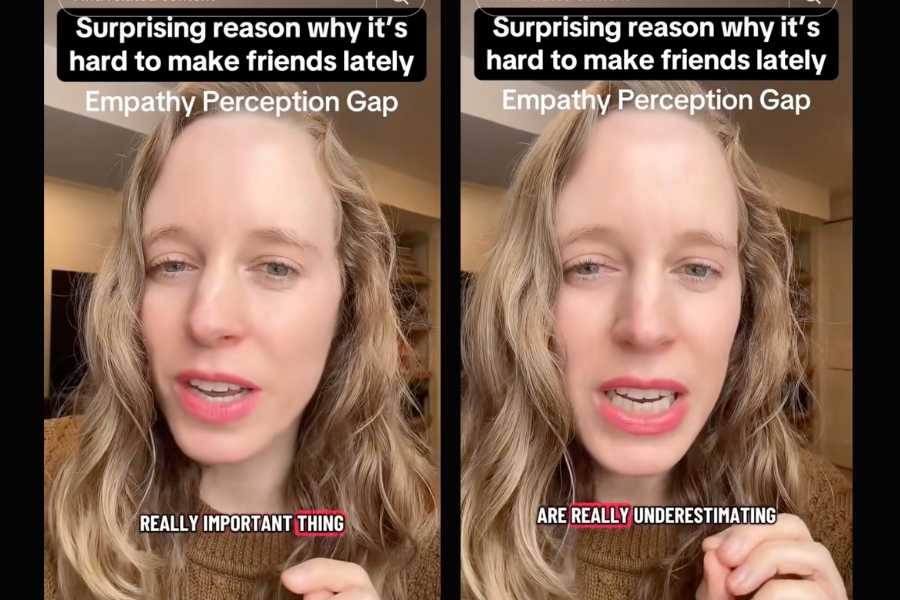
A social skills expert and friendship educator named Mary explains what Stanford termed the “empathy perception gap” and why it makes it so hard for young people to make friends. Contrary to popular belief, it’s not due to everyone just being in front of their phones all the time (though those phones do have an impact, just not in the way people might think).
“So Stanford ran a study amongst college students,” Mary explains, “and they found that these students are really underestimating how empathetic, kind, and friendly one another are. Like, they’re seeing one another, but they’re just assuming that that person wouldn’t want to talk to them, assuming that that person doesn’t want to be friends, assuming that they just shouldn’t bother striking up a conversation. They just assume that other people don’t like them or want to be friends with them. And then it’s not surprise that this results in people having less friends.”
Mary tells Upworthy that this phenomenon is unique to this generation that has grown up as digital natives.
“My working theory is that social media has played a big role in shaping our perception one another’s emotions,” she says. “Young people are constantly exposed to online bullies, trolls, hot takes, unfiltered thoughts, and humanity at its rudest. Even though these behaviors are likely emitted by a small percentage of people — most people are actually thoughtful and respectful, especially in person — this type of combative online content gets lots of engagement, because it elicits strong emotions, so the algorithm shows more and more of it. And after a while, seeing that kind of negative, unempathetic content can really start to shape a person’s outlook on their fellow humans — especially young people, who are at a naturally more impressionable age.”
However, the Stanford study found that some simple interventions helped bridge the empathy perception gap.
The researchers surveyed over 5,000 students at the university and found that those who perceived their peers as more empathic reported better psychological well-being and a higher number of friends. However, the empathy perception gap also revealed itself, as students consistently perceived their peers to be less empathic and caring than those peers saw themselves. To bridge that gap, researchers used the survey data to create posters with statistics like “95% of Stanford students are likely to help others who are feeling down,” and “85% of Stanford students enjoy meeting and becoming friends with students they don’t know.” The posters were distributed in specific dorms and not in others.
The results were clear. Students living in the dorms where the posters were displayed saw their peers as more empathic than students who did not regularly see the messaging campaign and also reported initiating more social interactions with uncertain outcomes.
Researchers also experimented with prompts delivered through a phone app, suggesting practical ways they might connect with peers, such as complimenting a stranger or reaching out to a friend they hadn’t had contact with in a while. After three weeks, the students who received the prompts were almost 90% more likely to step out of their comfort zones and reach out to others.
“There are many things I love about this project,” wrote Stanford professor of psychology Jamil Zaki, “but the most important? To help young people believe in one another, we didn’t need to lie to them. We just had to tell them the truth.”
5 things young people can do to bridge the empathy perception gap themselves
The Stanford interventions are compelling, but Mary shares with Upworthy five things young people can do to decrease the empathy perception gap themselves:
1. For starters, they can harness their powers as digital natives by refusing to engage with vitriolic content online that poisons their empathy perception. They know how to use their engagement to train their algorithm and surface better, healthier content. They know how to spot bots and trolls, and can refuse to engage with them. It just takes a willingness on their part to do this and to consciously resist the allure of the fiery hot-takes that only push us further apart.
2. They can actively seek out content that’s healthy, supportive and demonstrates compassion for others. Social media has plenty of positive, supportive and compassionate content if you just look for it.
3. They can do regular digital detoxes, taking a break from social media, the news and/or their phone in general, in favor of challenging themselves to be social in person. And they can even frame it as a challenge — see if they can talk to one new person that week and maybe even turn that person into a friend.
4. They can see socializing as a form of mental and physical health maintenance. Loneliness is very bad for your health. Lonely people are more susceptible toward diseases and have a shorter lifespan. Studies say having no friends has a similarly negative impact on your health as smoking cigarettes or abusing alcohol. So looking at it from a health and lifespan point of view can be helpful. Exercise, eat your veggies — and nurture your friendships.
5. They can repeat a mantra when they’re feeling nervous about talking with a peer. Thinking a line like, “They’re friendly, just like me” is a good way to coach themselves to feel braver about talking to someone they don’t know. The vast majority of young people are open to making new friends. This narrows a bit as we get older, but young people are in the most socially open period of their lives. They must consciously take advantage of it.
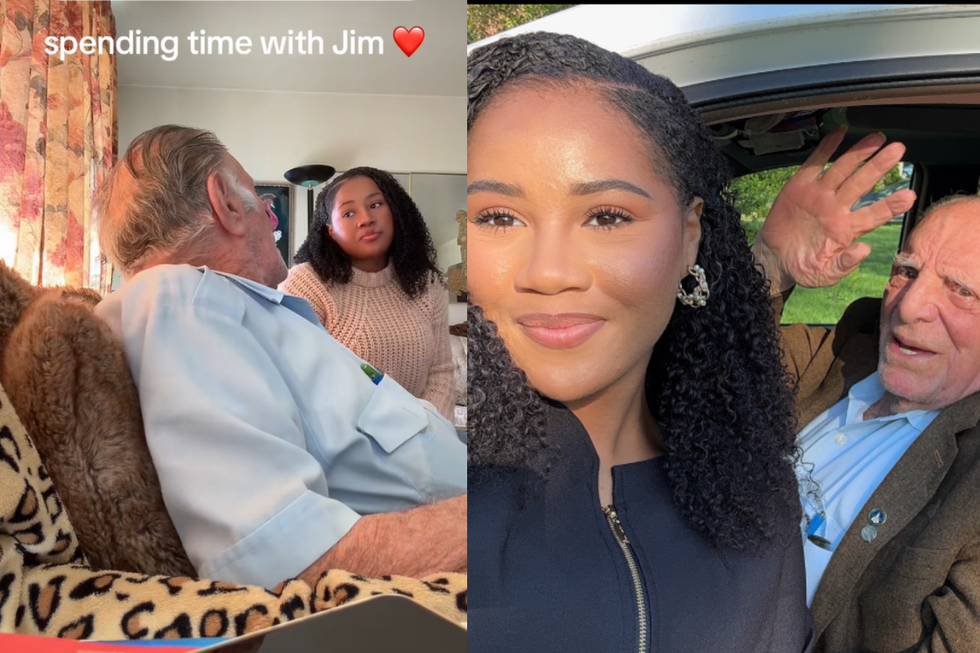
You can follow Mary for friendship and social skills tips on TikTok.