The 8 essential self-care items to ease you through the early days of 2021
2020 has been a long year. So long, that it might have even been five years packed into one. Why not start the new year off right with a little self-care? If you want to turn 2021 into a 365-day spa day, nobody’s going to blame you. These products on Amazon can help you ring…
2020 has been a long year. So long, that it might have even been five years packed into one. Why not start the new year off right with a little self-care? If you want to turn 2021 into a 365-day spa day, nobody’s going to blame you. These products on Amazon can help you ring in the new year with some R&R.
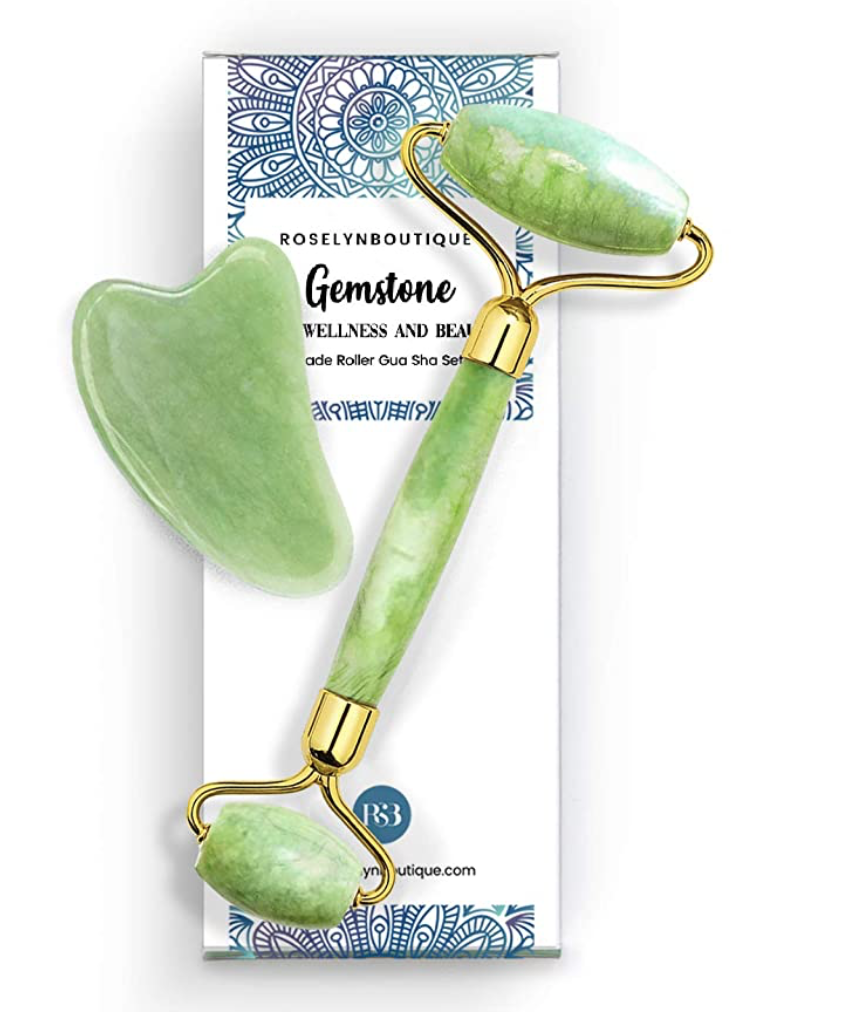
Jade rollers massage your face, reduces puffiness, stimulates collagen, and allows for better penetration of skin products. And at the very least, there’s just something so soothing and satisfying about running a rock over your face. This set also comes with a gua sha scraper, which can boost circulation and alleviate chronic pain.
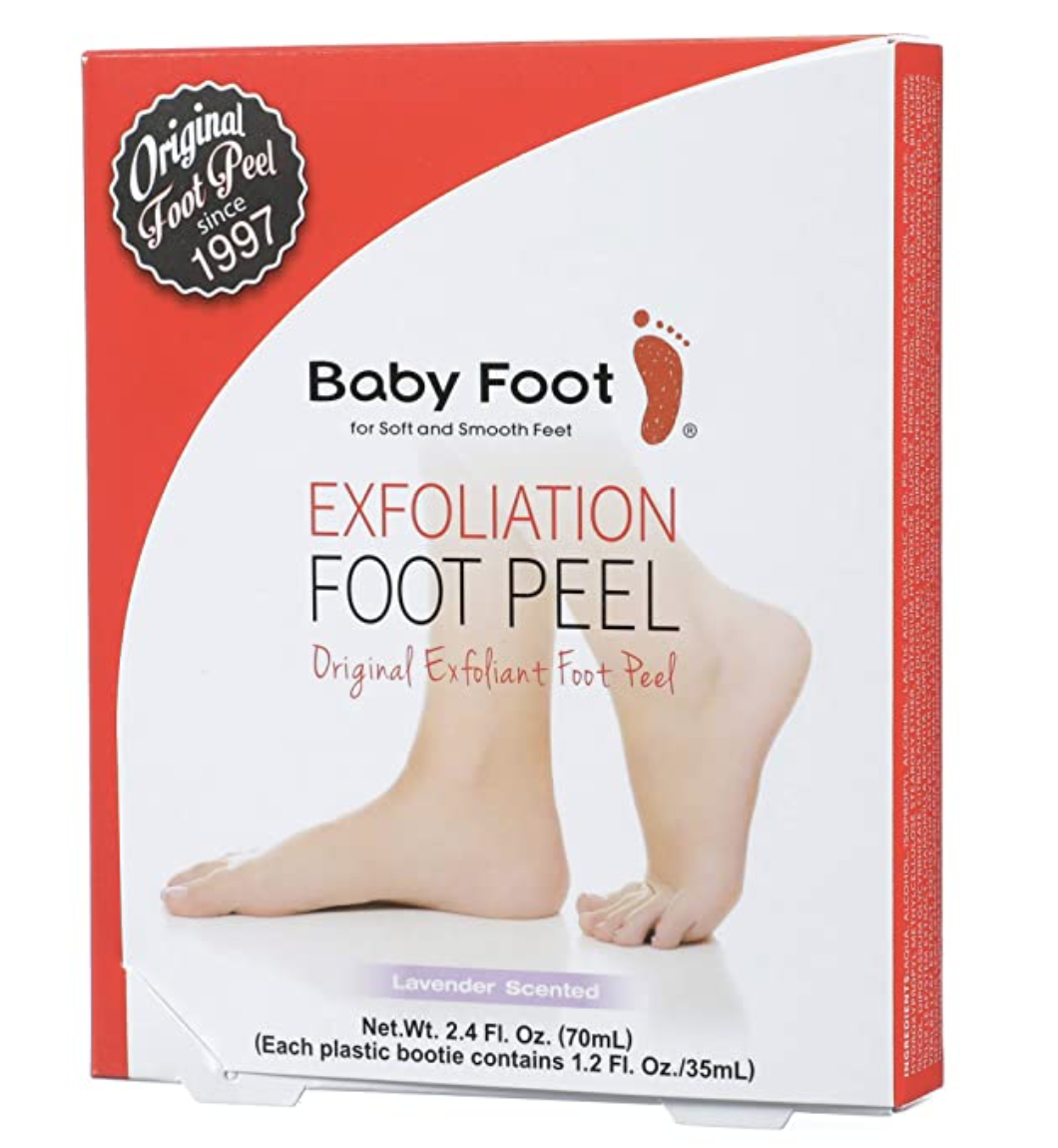
Baby Foot is the original DIY foot peel, intended to make cracked feet feel like, well, baby’s feet. You just leave on the treatment for one hour, then your dead skin will gradually peel away over the course of five to seven days. It’s not a pretty process, but nobody said self-care can never get ugly.
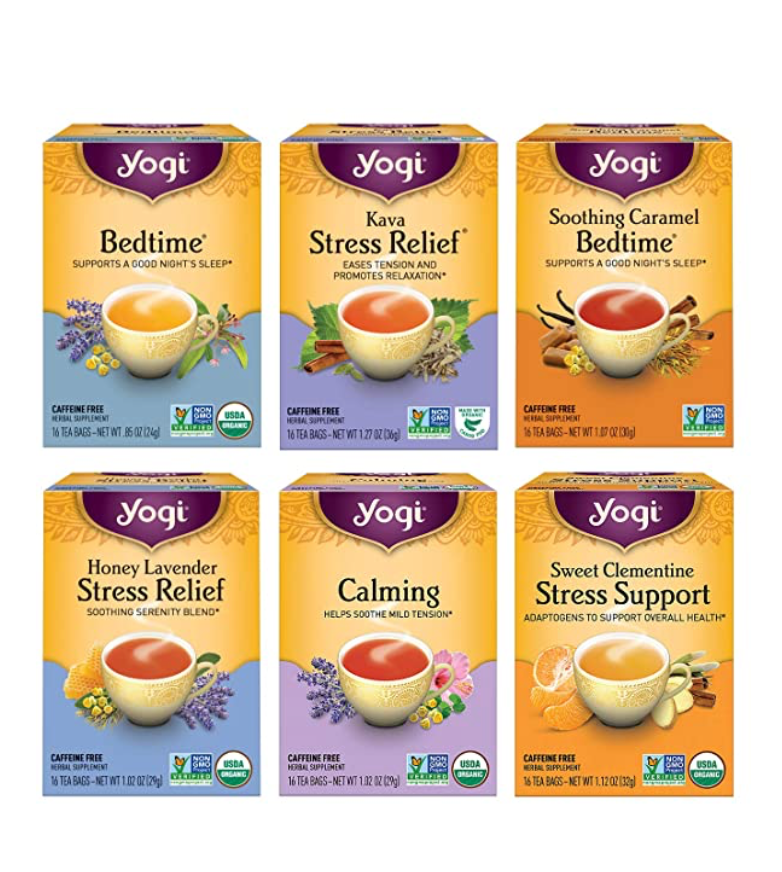
This sample pack has an herbal tea for whatever your self-care need is. Stressed? Clementine stress support tea can calm you down. Can’t sleep? There’s a caramel bedtime tea for that. You may never get stressed again!

Not only is the warmth of Popmask’s Starry Eyes self-heating mask designed to calm you down and help you fall asleep, but the one-time use masks also de-puffs your eyes while it relaxes you. The heat lasts for up to 20 minutes. All you have to do is pop open a pouch, sit back and let the mask work it’s magic.
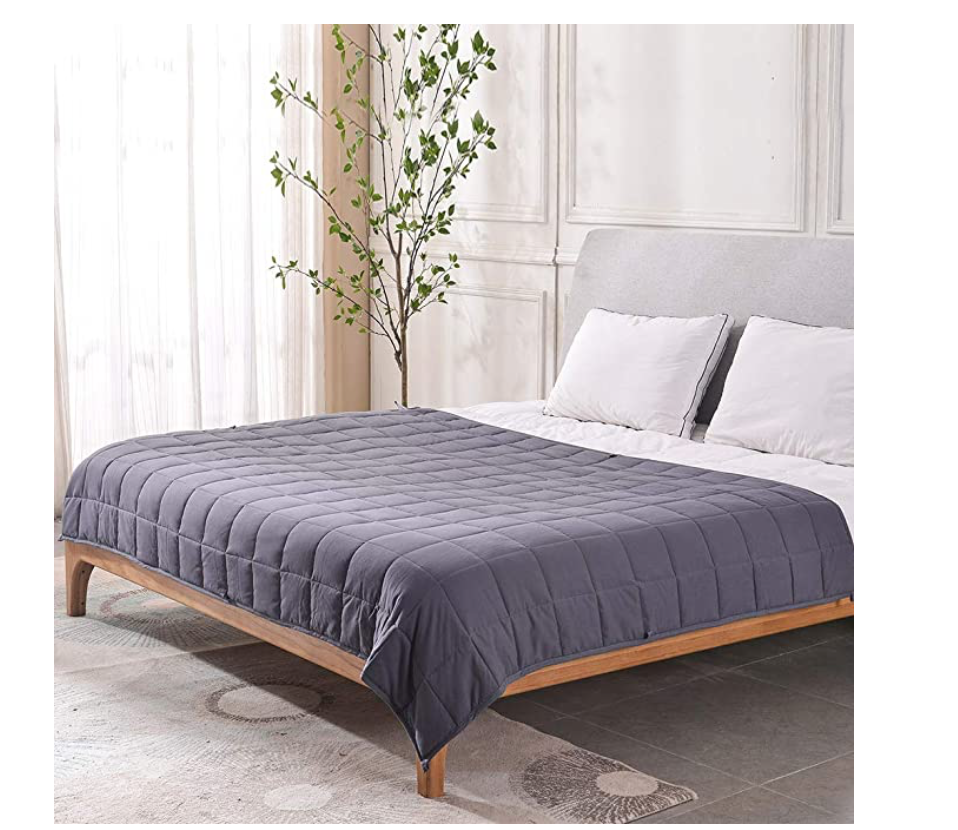
Weighted blankets can help alive anxiety or be used to lull yourself into a deep sleep with the sensation of being hugged. This soothing 100% cotton blanket is also cooling, so you won’t feel as if you’re getting smothered with warmth.
One of the greatest discoveries of the 21st century is that adults can – and should – color in books. This adult coloring book’s Zen gardens can help you achieve your own state of Zen. And if you’re proud of how you stayed inside the lines, there’s no rule saying you can’t hang it on your own fridge!
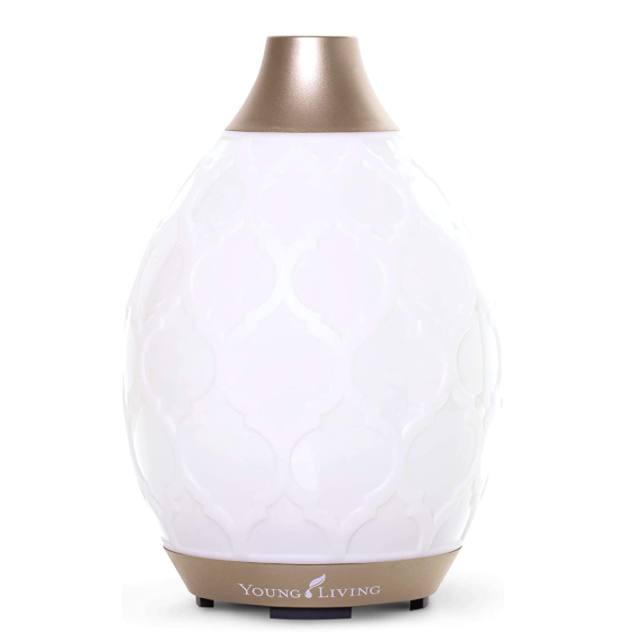
If you’re looking to get a bang for your buck, this triple threat is a humidifier, atomizer, and essential oil diffuser all in one. Plus, it’s shaped like a fancy art piece, because sometimes self-care doubles as home décor. Just put in your favorite essential oil and let the calm wash over you…
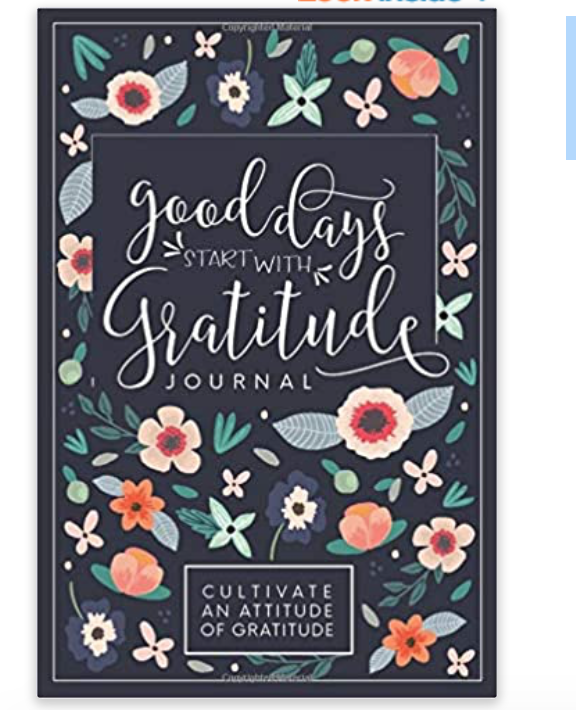
Taking out the time to jot down the things you’re grateful for is a little thing that goes a long way in cultivating peace of mind. This journal is also peppered with inspirational quotes to help you feel like you’re starting your day off right!
In a small village in Pwani, a district on Tanzania’s coast, a massive dance party is coming to a close. For the past two hours, locals have paraded through the village streets, singing and beating ngombe drums; now, in a large clearing, a woman named Sheilla motions for everyone to sit facing a large projector screen. A film premiere is about to begin.
It’s an unusual way to kick off a film about gender bias, inequality, early marriage, and other barriers that prevent girls from accessing education in Tanzania. But in Pwani and beyond, local organizations supported by Malala Fund and funded by Pura are finding creative, culturally relevant ways like this one to capture people’s interest.
The film ends and Sheilla, the Communications and Partnership Lead for Media for Development and Advocacy (MEDEA), stands in front of the crowd once again, asking the audience to reflect: What did you think about the film? How did it relate to your own experience? What can we learn?
Sheilla explains that, once the community sees the film, “It brings out conversations within themselves, reflective conversations.” The resonance and immediate action create a ripple effect of change.
MEDEA Screening Audience in Tanzania. Captured by James Roh for Pura
Across Tanzania, gender-based violence often forces adolescent girls out of the classroom. This and other barriers — including child marriage, poverty, conflict, and discrimination — prevent girls from completing their education around the world.
Sheilla and her team are using film and radio programs to address the challenges girls face in their communities. MEDEA’s ultimate goal is to affirm education as a fundamental right for everyone, and to ensure that every member of a community understands how girls’ education contributes to a stronger whole and how to be an ally for their sisters, daughters, granddaughters, friends, nieces, and girlfriends.
Sheilla’s story is one of many that inspired Heart on Fire, a new fragrance from the Pura x Malala Fund Collection that blends the warm, earthy spices of Tanzania with a playful, joyful twist. Here’s how Pura is using scent as a tool to connect the world and inspire action.
A partnership focused on local impact, on a global mission
Pura, a fragrance company that recognizes education as both freedom and a human right, has partnered with Malala Fund since 2022. In order to defend every girl’s right to access and complete 12 years of education, Malala Fund partners with local organizations in countries where the educational barriers are the greatest. They invest in locally-led solutions because they know that those who are closest to the problems are best equipped to solve and build durable solutions, like MEDEA, which works with communities to challenge discrimination against girls and change beliefs about their education.
But local initiatives can thrive and scale more powerfully with global support, which is why Pura is using their own superpower, the power of scent, to connect people around the world with the women and girls in these local communities.
The Pura x Malala Fund Collection incorporates ingredients naturally found in Tanzania, Nigeria, Pakistan, and Brazil: countries where Malala Fund operates to address systemic education barriers. Eight percent of net revenue from the Pura x Malala Fund Collection will be donated to Malala Fund directly, but beyond financial support, the Collection is also a love letter to each unique community, blending notes like lemon, jasmine, cedarwood, and clove to transport people, ignite their senses, and help them draw inspiration and hope from the global movement for girls’ education. Through scent, people can connect to the courage, joy, and tenacity of girls and local leaders, all while uniting in a shared commitment to education: the belief that supporting girls’ rights in one community benefits all of us, everywhere.
You’ve already met Sheilla. Now see how Naiara and Mama Habiba are building unique solutions to ensure every girl can learn freely and dare to dream.
Naiara Leite is reimagining what’s possible in Brazil
Julia with Odara in Brazil. Captured by Luisa Dorr for Pura
In Brazil, where pear trees and coconut plantations cover the Northeastern Coast, girls like ten-year-old Julia experience a different kind of educational barrier than girls in Tanzania. Too often, racial discrimination contributes to high dropout rates among Black, quilombola and Indigenous girls in the country.
“In the logic of Brazilian society, Black people don’t need to study,” says Naiara Leite, Executive Coordinator of Odara, a women-led organization and Malala Fund partner. Bahia, the state where Odara is based, was once one of the largest slave-receiving territories in the Americas, and because of that history, deeply-ingrained, anti-Black prejudice is still widespread. “Our role and the image constructed around us is one of manual labor,” Naiara says.
But education can change that. In 2020, with assistance from a Malala Fund grant, Odara launched its first initiative for improving school completion rates among Black, quilombola, and Indigenous girls: “Ayomidê Odara”. The young girls mentored under the program, including Julia, are known as the Ayomidês. And like the Pura x Malala Fund Collection’s Brazil: Breath of Courage scent, the Ayomidês are fierce, determined, and bursting with energy.
Ayomidês with Odara in Brazil. Captured by Luisa Dorr for Pura
Ayomidês take part in weekly educational sessions where they explore subjects like education and ethnic-racial relations. The girls are encouraged to find their own voices by producing Instagram lives, social media videos, and by participating in public panels. Already, the Ayomidês are rewriting the narrative on what’s possible for Afro-Brazilian girls to achieve. One of the earliest Ayomidês, a young woman named Debora, is now a communications intern. Another former Ayomidê, Francine, works at UNICEF, helping train the next generation of adolescent leaders. And Julia has already set her sights on becoming a math teacher or a model.
“These are generations of Black women who did not have access to a school,” Naiara says. “These are generations of Black women robbed daily of their dreams. And we’re telling them that they could be the generation in their family to write a new story.”
Mama Habiba is reframing the conversation in Nigeria
Centre for Girls' Education, Nigeria. Captured by James Roh for Pura
In Mama Habiba’s home country of Nigeria, the scents of starfruit, ylang ylang and pineapple, all incorporated into the Pura x Malala Collection’s “Nigeria: Hope for Tomorrow,” can be found throughout the vibrant markets. Like these native scents, Mama Habiba says that the Nigerian girls are also bright and passionate, but too often they are forced to leave school long before their potential fully blooms.
“Some of these schools are very far, and there is an issue of quality, too,” Mama Habiba says. “Most parents find out when their children are in school, the girls are not learning. So why allow them to continue?”
When girls drop out of secondary school, marriage is often the alternative. In Nigeria, one in three girls is married before the age of 18. When this happens, girls are unable to fulfill their potential, and their families and communities lose out on the social, health and economic benefits.
Completing secondary school delays marriage, and according to UNESCO, educated girls become women who raise healthier children, lift their families out of poverty and contribute to more peaceful, resilient communities.
Centre for Girls’ Education, Nigeria. Captured by James Roh for Pura
To encourage young girls to stay in school, the Centre for Girls’ Education, a nonprofit in Nigeria founded by Mama Habiba and supported by Malala Fund and Pura, has pioneered an initiative that’s similar to the Ayomidê workshops in Brazil: safe spaces. Here, girls meet regularly to learn literacy, numeracy, and other issues like reproductive health. These safe spaces also provide an opportunity for the girls to role-play and learn to advocate for themselves, develop their self-image, and practice conversations with others about their values, education being one of them. In safe spaces, Mama Habiba says, girls start to understand “who she is, and that she is a girl who has value. She has the right to negotiate with her parents on what she really feels or wants.”
“When girls are educated, they can unlock so many opportunities,” Mama Habiba says. “It will help the economy of the country. It will boost so many opportunities for the country. If they are given the opportunity, I think the sky is not the limit. It is the starting point for every girl.”
From parades, film screenings to safe spaces and educational programs, girls and local leaders are working hard to strengthen the quality, safety and accessibility of education and overcome systemic challenges. They are encouraging courageous behavior and reminding us all that education is freedom.
Experience the Pura x Malala Fund Collection here, and connect with the stories of real girls leading change across the globe.
Activewear is a $400 billion industry, with no shortage of brands selling moisture-wicking tops, running shorts, yoga pants, and all manner of athletic clothing designed for exercise. In fact, we’ve become so accustomed to “workout gear” that the idea of exercising without it feels almost wrong.
Enter Deb Voisin, who not only challenges the notion that people need to run in any particular clothing, but runs herself barefoot and in skirts or dresses, like a preschooler—one with a keen understanding of biomechanics, that is.
Voisin says she could “barely walk” due to an injury caused by overstretching, and she hadn’t been able to find a healing method that worked. Not wanting surgery, she studied biomechanics and natural movement and made an interesting discovery about sprinting.
“Once I realized that a sprint is an amplified walking pattern, I knew that if I could learn how to sprint beautifully, I could walk pain-free,” she shares.
To hone her form, she filmed herself sprinting on a curved treadmill. But there was a problem: she hated looking at herself.
“So I wore skirts and played dress up like a little girl,” she says. “It worked!”
Watch:
Voisin tells Upworthy it worked on multiple levels.
“I started wearing skirts because they helped me stop hating looking at myself—and I realized they also make healthy movement visible,” she says. “Aligned movement is wavy and alive, not rigid. Running is timeless and human, and the fabric lets you actually see that flow.”
She says she always hated running, but sprinting in skirts shifted her perspective.
“Once I realized that sprinting is the ultimate expression of a naturally aligned body, I aimed high and shot past pain into ease and power I don’t think I ever felt growing up,” she explains. “Now I help others find their way back to that feeling.”
Voisin also says the comments on her video, which has been viewed more than 4 million times, made her weep.
“I had no idea how healing it would feel to be so openly accepted for something that even people close to me didn’t understand,” she says. “I just knew there was beauty and healing in it.”
Here are some of the viewer comments that made Voisin cry:
“Something about a running, whimsical lady in a skirt and no shoes is so magical.”
“Every time a human loves herself, is a win for all the universe.”
“Who noticed, the more she practices, the more she looks younger just like a little girl happy running and discovering the world that she sees as a beautiful and happy place? Beautiful lady, am glad seeing you running, run run run..”
“You literally look like you aged in reverse in the process! Amazing how healing joy can be for our bodies.”
“Every single shot of you running in a skirt looks like it comes from a movie I’d love to watch.”
“People forget, we often don’t like doing things that are good for us, because we copy how everyone else is doing it. Make it fun for you, do it the way you want to do it. Find those joys in your life. It’s your first time living.”
“I also just love the kick in the face to traditional ‘workout’ clothes. It’s just more consumerism, you don’t need special clothes to workout. Just use what you have!”
“I loved the reel, the fabric movement, the timelapse, the self love, the deep desire to heal, fit body at later ages… all of it made me smile at how we all creatively approach our problems.”
“I’ve been an avid runner in my life, but haven’t run much for a few years now. This brought tears to my eyes, your beauty and grace and commitment. I am inspired to run again, for the sheer joy of it!”
It’s amazing what can happen when you infuse joy into physical activity. Maybe joy for you isn’t running in a skirt and watching it flow in slo-mo, but something else entirely. Whatever joy looks like, leaning into it may help you reclaim the motivation you lost somewhere along the way and empower you to keep your body moving and healthy.
The benefits of getting a good night’s sleep are too vast to name. Sleep is as essential for our brains as food and water are for our bodies. If you’re not getting enough, sleeping better has been shown to elevate your mood, improve your memory, and even boost your physical health. And then there’s the obvious: when you don’tsleep well, you’ll have less energy and generally perform worse on tasks that require any kind of effort or thought.
However, we’re all human, and, sometimes, humans sleep terribly. Your infant might wake you up, or a car alarm might go off outside, interrupting your regularly-scheduled REM. It’s not always our fault when we don’t sleep well, but there might be an interesting way to fix it.
A study from 2014 may have demonstrated the existence of something called “placebo sleep,” or tricking your brain into believing you slept better than you did.
The placebo effect, of course, has been studied relentlessly over the years and has shown that the human body can do amazing, almost impossible things, when the brain gets on board. The classic example is when symptoms of disease get measurably better after a patient takes a “fake” pill. Another study out of Harvard showed that people who were told their jobs qualified as exercise showed improved health and fitness markers compared to people who did the same job. Placebos even work when the person knows they’re taking a placebo. It’s called an “honest placebo” and is considered a legitimate, ethical treatment method for many ailments.
The researchers in 2014 wanted to find out if the placebo effect could also apply to sleep. So, they lectured a group of participants about the importance of REM sleep and how it can effect cognitive functioning. The participants were then split into two groups and monitored overnight while they slept. The next morning, one group was told they achieved 28.7% REM sleep, which is terrific, and the other group was told they only spent 16.2% of their sleep time in REM, which is below average. The numbers, however, were complete fiction.
Stunningly, the participants who believed they achieved top quality sleep performed better the next day on a series of arithmetic and word association tests compared to the other groups.
In their conclusion, the authors wrote, “These findings supported the hypothesis that mindset can influence cognitive states in both positive and negative directions, suggesting a means of controlling one’s health and cognition.”
According to Smithsonian Magazine, follow up experiments confirmed the findings.
The key to feeling great and performing as if you had a great night’s sleep may lie in simply believing that you did.
There are a lot of ways to “placebo your sleep” in order to generate that belief. For starters, you can adopt a new routine or technique or even supplement in order to prime your brain.
John Cline Ph.D. asserts for Psychology Today that the popularity of sleeping aids like melatonin may be tied less to the fact that they work, and more to the fact that people believe they work. But you don’t need to take any supplements or medications. Having a slow evening wind down with a book and an herbal tea, trying a new sleeping position, or practicing some measured breathing might work just as well. Or, rather, they might work precisely because you believe they will.
You could take the concept a step further and alter your morning routine on nights you know for a fact you didn’t sleep well. Perhaps it’s by using a new coffee brand, doing some stretches before getting out of bed, or meditating before starting your day. Anything that you truly believe might help make you more alert and focused may just work.
One viral social media sleep trend capitalizes on this research perfectly. Researchers have shown that forcing your mouth into a smile has been shown to improve your mood. Turns out, similarly, you may be able to get sleepy by pretending to be super tired. Psychologist Erica Terblanche calls it the “alpha bridge,” and it involves gently closing your eyes, fluttering them open just a tad, and then closing them again as you relax and breath. It simulates the feeling of “nodding off” and is said to create the alpha brainwaves that transition your brain from wakefulness to sleep. It’s another clever way of tricking your own brain.
It sounds cheesy, but the power of mindset and positive thinking is truly tremendous. Our beliefs and thought patterns can greatly influence our body, our behavior, and our mood. Sometimes, our mindset can even be stronger than actual reality. Now we have the data to prove that it applies to our precious sleep, too.
It’s 2:00 a.m., and you simply can’t get your mind to shut down. You’ve tried counting sheep, but they just keep crash-landing into meadows, making the insomnia even worse. Maybe you’ve tried every trick in the book, from over-the-counter sleep aids to lavender-scented pillows. Well, there’s one more trick to try, and some people swear by it.
It’s called the “Infinity Tracing Technique,” and it’s actually quite simple. Simply put your finger in the air and imagine tracing the infinity symbol (the number eight sideways) for a couple of minutes. This easy technique can instantly help calm an overactive mind.
Dr. Joe Whittington explains the idea in layman’s terms in a TikTok video. “You ever lay in bed at night overthinking all the embarrassing things you’ve done since childhood?” he asks. “Same. So I’m gonna teach you a technique that might help you calm your overactive brain.”
He breaks down exactly how to do it:
“What you do is you take your finger, put it in the air, and you trace the infinity symbol slowly and methodically. Not like you’re casting spells. And as you’re tracing this infinity symbol, you’re gonna just follow it with your eyes. Only your eyes. What this does is it activates your vestibular center, which is involved with your balance and eye movements. When your vestibular system gets activated, it can help calm racing thoughts. Sort of like distracting a toddler with a shiny object, except for the toddler is your overactive brain.”
It’s helpful to the brain in other ways, too. “It’s a technique often used in therapy and neuroscience to help you stop doomscrolling your regrets,” he adds.
Whittington is likely referring to a therapy technique called EMDR, which uses similar methods involving eye movement. EMDR stands for Eye Movement Desensitization and Reprocessing, and it’s used to help people process complex trauma.
“During EMDR therapy, the client attends to emotionally disturbing material in brief sequential doses while simultaneously focusing on an external stimulus. Therapist-directed lateral eye movements are the most commonly used external stimulus, but a variety of other stimuli, including hand-tapping and audio stimulation, are often used.”
Similarly, the Infinity Tracing Technique pairs eye movements with specific brain activity to help calm the mind and redirect focus. This technique has recently become popular due to therapists and influencers sharing it online.
Sarah Jackson offers additional insight in her Instagram Reel, where she demonstrates the process using a capped blue marker to “write” in the air. She explains that “Figure-8 tracking,” as she calls it, activates not only the vestibular system but also the ocular system.
“Eye muscles connect directly to the brainstem — the part of the brain that governs survival functions,” she writes. “Tracking a moving object sends rhythmic signals, saying: I’m balanced, I’m oriented, I’m safe.”
“The vestibular system regulates balance and spatial orientation. Its connection to the brainstem helps calm the nervous system. Smooth, predictable movement supports groundedness, signaling safety. Cross-lateral movement integrates both hemispheres, aiding emotional processing and shifting focus from internal preoccupation to external grounding.”
Many followers of both social media accounts say they’ve benefited from the technique. One TikToker jokes, “So I don’t need to try to remember my junior high school locker combo?”
On the Instagram Reel, one commenter notes that the technique works: “This is great and so effective! I’m always looking for quick wins like this on those days where you can’t tell where the time goes.”
Here’s a morbid question: Would you really want to know how long you have to live? On one hand, it’d probably inspire you to go out and complete your bucket list. On the other hand, it may be depressing to know just how many days you have left. Well, science has yet to find a way to determine the average person’s life expectancy, but some indicators can show whether someone is at risk of having their life cut short by deteriorating health.
You could, if you were so inspired, shell out a bunch of money for fancy genetic and biological testing. Chasing immortality is all the rage with billionaires, so if you’ve got the money, you can find out an awful lot about how long you’re likely to live.
Or you could just hit the gym or local playground and find out for free.
One of the best ways to judge handgrip strength is to time how long you can hang from a bar. To test your grip strength, find yourself a pull-up bar, whether at a gym or local park, take a deep breath, and start hanging. Don’t worry, you don’t need to be able to do a pull up!
Ironically, the move is called a “dead hang.” So-called, because you literally just hang there for as long as possible.
The literature revealed that 30 seconds is a good target for women and 60 seconds is an excellent goal for men.
Therefore, if you go longer than the goal, you’re looking at a long life. But if you can’t quite get there, your life may be shorter than you’d like.
Dr. Peter Attia, founder of Early Medical and author of Outlive: The Science and Art of Longevity (2023), believes that grip strength is a great way to determine one’s overall health.
“It’s just a great proxy for overall body strength and muscle mass, but I think it’s also a very functional form of strength,” he said on The Drive podcast. “Basically, everything in your upper body is mediated through your hands. And if your grip is weak, everything downstream of that is weak. When you watch someone who’s got a weak grip deadlifting, it’s very difficult for them to deadlift correctly because they don’t create a proper wedge.”
There are many ways to measure grip strength, but the dead hang is likely the simplest. When you think about it, it requires an incredible combination of shoulder mobility, spinal stability, core strength, and overall fitness. Not only are these all positive biological health markers, but they’re also all key to preventing falls as we get older.
Regularly practicing the dead hang, on the other hand, has incredible benefits, including stretching your muscles and deloading your joints and spine, giving them a much-needed rest. What could be more fun than increasing your lifespan by just hanging out? You don’t even need a gym membership; most local parks have a small workout area with a pull-up bar. They’are also easy to install at home.
Doctors Eve M. Glazier and Elizabeth Ko at UCLA Health say poor grip strength is connected to numerous diseases. “Research continues to link a decline in grip strength to a range of adverse health issues, including heart disease, arthritis, osteoporosis, Type 2 diabetes and certain cancers. It has also been found to be a predictor of the likelihood of post-surgical complications, post-surgical recovery time, and mortality,” they wrote on the UCLA Health blog.
Losing weight can increase your hang time
Weight can also significantly affect how long a person can hang from a bar. So, do lighter people have an unfair advantage over those on the heavier side? Well, weight is also an important indicator of longevity. A study published in Aging Cellfound a direct correlation between increased body mass and decreased longevity. So, for some, losing a bit of weight can have a two-fold advantage.
Other studies have elaborated on the findings: More important than your absolute grip strength and dead-hang ability may be how they change over time. Losing grip strength is a negative sign for your overall health, but maintaining or even building it is associated with better outcomes.
This is why more and more Americans are turning to white noise, melatonin, meditation apps, special pillows, and anything they think can help them fall asleep fast and get the most rest.
And preparing the body for quality sleep can start by implementing relaxation techniques, such as breathing exercises. Fortunately, a doctor has shared the “most powerful” relaxation technique for sleep he knows to achieve better sleep, and it doesn’t require any equipment or cost a dime.
The 4-7-8 method
Dr. Andrew Weil, an expert in integrative medicine and the founder and director of the Andrew Weil Center for Integrative Medicine at the University of Arizona, has dubbed it the 4-7-8 method and it’s backed up by science.
The technique is simple:
Breathe in through your nose while you count to 4.
Hold your breath while you count to 7.
Exhale while you count to 8.
It’s a unique protocol, especially when compared to another popular technique like Box Breathing. Box Breathing calls for an inhale, hold, exhale, and another hold of equal time (4 seconds). The extended exhale, in particular, is what makes Dr. Weil’s 4-7-8 so original.
The 4-7-8 method is a breathing technique to help you fall asleep. Photo credit: Canva
Dr. Weil says the method creates a “very pleasant, altered state of consciousness” that you may not experience the first time but will come as a “reward” of regular practice. Dr. Weil insists that the 4-7-8 technique is a practice, and you must do four breath cycles at least twice a day to get the benefits. “After a month, you can increase to 8 breath cycles if you’re comfortable with it,” adding that’s the “absolute maximum.”
Dr. Weil says that 4 to 6 weeks of doing the practice can lower heart rate, improve blood pressure, digestion and circulation and can promote sleep. A study published in Physiological Reports agrees, saying that practicing the 4-7-8 technique reduces heart rate and blood pressure for several minutes. It’s important to note, though, that research is limited on the long-term benefits of 4-7-8 and experts urge us not to overhype it as more than it is.
How the 4-7-8 helps with sleep
The 4-7-8 method is also an effective way to help you fall asleep fast.
“If you get up in the middle of the night for any reason, it is the most effective anti-anxiety technique that I’ve found,” Dr. Weil says.
Deep breathing, interestingly enough, has been shown to increase melatonin production in our bodies; that’s the hormone that signals to our body that it’s time to sleep. Combined with its ability to calm our mind and body, it’s no wonder that intentional breathing exercises can put us to sleep in no time.
Why does deep breathing help us calm down and relax so effectively? There are a few reasons. First, when we’re stressed or anxious, our breathing naturally becomes more shallow and irregular. Breaking that anxious breath pattern signals to our body that things are OK, that we’re in control. Counting and being mindful of our breath also gives our mind something neutral to focus on instead of the usual chaotic images, intrusive thoughts, or worries. Third, deep breath settles down the part of our nervous system that controls our “fight-or-flight” response — and helps with elevated heart rate and muscle tension.
Remember again that 4-7-8 breathing is a practice. It can be used situationally to great effect, but for the best benefits its founder urges you to try it every single day for a cycle of 2-8 cycles.
This article originally appeared two years ago. It has been updated.
Spray tans are seemingly the perfect answer for people who want a summer glow year-round. Not only is the application time quick (some take as little as 5 minutes), sprays tans also deliver sun-kissed skin without excessive UV exposure, essential for reducing the risk of skin cancer and premature excess wrinkles.
If you’ve never had a spray tan before, you may have lots of questions like: how long does a spray tan last? How do you care for your skin after getting a spray tan? And how can you make your spray tan last longer?
These are exactly the queries a woman on TikTok named Miss Redacted had after getting her first spray tan. But when given the instructions for how to extend the life of her spray tan through “proper care,” she was left flabbergasted.
Spray tans take time to “develop” on the skin, so she was not surprised to receive the rundown on making sure her skin remained glowingly sun-kissed for as long as possible. What she wasn’t expecting was the lack of care. Or maybe the better description would be the lack of hygiene required to maintain her newly tanned skin.
“Recently I got a spray tan for the first time because I really like being tan but I don’t want to have wrinkles later because I’m obviously very vain. So I went the first time and I expected that I wouldn’t be able to shower normally for the first 12-24 hours, and that didn’t bother me that much because I’m like, okay, I understand the tan has to set in. I can be gross for a half a day, a day max, whatever, it’s not that serious,” Miss Redacted says before explaining the woman who did her spray tan began talking her through the process.
The confused woman recalls a roommate in college who used to get spray tanned all the time as she put the pieces together on hygiene and spray tans. She tells the person doing her spray tan that she generally showers twice a day using soap and a silicone scrubber to wash her entire body, to which the spray tan artist immediately tells her not to use the scrubber on her body because it will take her tan off.
“I was like, ‘Oh so don’t use it the first shower?’ and she was like ‘No, like not at all.’ And I was like ‘What should I use instead of that?’” the first-time customer explains.
She was shocked to hear the artist tell her that she needed to switch to a washcloth and only use it to wash her, “underarms, your bikini area, and under your bra line.” Again, Miss Redacted clarifies that means for the first shower only, but the artist reiterates not to put soap on your body “at all” for the first shower, only using a washcloth in the areas she previously mentioned. Once again, the woman was dumbfounded and asks again, what the spray tan artist means.
“Because I got down this rabbit hole, I started reading about it on Reddit and some of the ways that girls were saying they maintained their spray tans is absolutely insane. Absolutely insane. Like y’all need a bath. Y’all need a…actually a hose down. Let’s like put you in the yard with some Dawn, like you’re one of the ducks in an oil spill. I think that’s what’s needed at this point,” the woman jokes before clarifying that she doesn’t think every woman getting spray tanned is avoiding bathing.
But when it comes to the ick factor over the ones who have been skipping the shower for weeks at a time, the woman isn’t the only one feeling the heebie jeebies. Commenters are also shocked and a little grossed out.
This article originally appeared two years ago. It has been updated.
There’s nothing better than hopping into bed with clean sheets. But let’s be honest: washing your sheets can be a pain. From stripping the bed to putting sheets back on post-washing, it’s a chore. But you may want to re-think how often you should be washing your bed sheets.
If that sounds about right to you, prepare to be shocked. According to experts, you should be washing your sheets *a lot* sooner than that for hygiene reasons.
How often should you wash your sheets?
Hint: It’s a lot more frequent than 24 days.
While there is no definitive number of days or weeks, most experts recommend swapping out used sheets for clean ones every week or two.
Dermatologist Alok Vij, MD told Cleveland Clinic that people should wash their sheets at least every two weeks, but probably more often if you have pets, live in a hot climate, sweat a lot, are recovering from illness, have allergies or asthma, or if you sleep naked.
We shed dead skin all the time, and friction helps those dead skin cells slough off, so imagine what’s happening every time you roll over and your skin rubs on the sheets. It’s normal to sweat in your sleep, too, so that’s also getting on your sheets. And then there’s dander and dust mites and dirt that we carry around on us just from living in the world, all combining to make for pretty dirty sheets in a fairly short period of time, even if they look “clean.”
Maybe if you shower before bed and always wear clean pajamas you could get by with a two-week sheet swap cycle, but weekly sheet cleaning seems to be the general consensus among the experts. The New York Times consulted five books about laundry and cleaning habits, and once a week was what they all recommend.
Sorry, once-a-monthers. You may want to step up your sheet game a bit.
Experts agree that this is how often you should wash your bed sheets. Photo credit: Canva
What about the rest of your bedding? Blankets and comforters and whatnot?
Olivia Parks, Owner + Lead Organizer at Nola Organizers, told Upworthy that duvet covers should be cleaned every week or so.
“Even though the cover protects the insert, the insert still collects body odor, sweat, body oils from lotions or other body products, crumbs if you eat in your bed, dog hair or cat hair, and more,” she explained.
Somewhere between the Gen X and Millennial eras, young folks stopped being about the top sheet life, just using their duvet with no top sheet. If that’s you, wash that baby once a week. If you do use a top sheet, you can go a couple weeks longer on the duvet cover.
For blankets and comforters and duvet inserts, Sleep.com says every 3 months. And for decorative blankets and quilts that you don’t really use, once a year washing will suffice.
What about pillows? Pillowcases should go in with the weekly sheet washing, but pillows themselves should be washed every 3 to 6 months. Washing pillows can be a pain, and if you don’t do it right, you can end up with a lumpy pillow, but it’s a good idea because between your sweat, saliva and skin cells, pillows can start harboring bacteria.
Finally, how about the mattress itself? Home influencers on TikTok can often be seen stripping their beds, sprinkling their mattress with baking soda, brushing it into the mattress fibers and then vacuuming it all out. Architectural Digest says the longer you leave baking soda on the mattress, the better—at least a few hours, but preferably overnight. Some people add a few drops of essential oil to the baking soda for some extra yummy smell.
If that all sounds like way too much work, maybe just start with the sheets. Pick a day of the week and make it your sheet washing day. You might find that climbing into a clean, fresh set of sheets more often is a nice way to feel pampered without a whole lot of effort.
This article originally appeared two years ago. It has been updated.
The CDC reports that about 15% of adults have trouble sleeping “most days or every day.” That number is on the rise, and can be seen in the rapid rise of melatonin usage—up nearly five-fold in the past 20 years or so—and other sleep aids.
There are a lot of modern factors that play a role in difficulty sleeping, from high caffeine consumption to a heavy use of blue-light screens. These, along with high levels of general stress and anxiety, suppress natural melatonin production and make falling and staying asleep a challenge for many people.
One YouTuber decided to take matters into her own hands and try a brand new nighttime routine in order to get better sleep. She borrowed the entire thing from the 1940s.
Hannah, who runs the channel Real Vintage Dolls House, shared in a recent video that she had a “non-existent nighttime routine,” and decided to try a routine similar to what the average woman would have done in the 1940s.
She explains that the 1940s, of course, were a time of great international strife and rationing for the war effort. But even still, people (women, especially) were expected to keep on top of their hygiene and personal appearance.
Many women at the time, Hannah goes on to say, would actually leave the house to work traditionally male jobs during the war. A woman like Hannah may have worked at a shipyard or factory and then returned to a homemaking and child-rearing role at the end of a long day.
For Hannah’s experiment, she began with a bath after working hours. Of course, due to rationing, she could only use five inches of water.
From there, Hannah changes into her “night clothes”: A set of silk pajamas with matching robe and house slippers. Extremely cozy.
Fascinatingly, after sitting down to brush her hair after washing, she rubs the strands together between her fingers to test for cleanliness. Women at the time would often wash with soap once every two weeks or so, then do another pass with lemon juice or vinegar to strip away the soap residue. If the hair made a squeaking sound when rubbed together, it meant you did a good job, hence the term “squeaky clean.” The vintage 1940s nighttime routine then called for a significant amount of time spent brushing the hair. One hundred brushes was a commonly recommended practice at the time.
Hannah then continues following 1940s protocol and cleans her skin with a cleansing cream, plucks her eyebrows, applies Vaseline to her lips, files her nails, and sets her hair in overnight rollers. Men, for their part (if they weren’t at war), would likely be reading the paper or listening to the radio while resting after a long day.
Finally, it’s time to wind down. Hannah sets a dim light in her room, bundles up under a blanket, then proceeds to knit and read a book before turning out the light for sleep.
“The bedtime routine of this era was a much more thorough and communal ritual than I’m used to. Centered around rest and basic comforts… evenings were quieter, slower, and focused on family connections.”
Hannah says she thinks screens are a big reason people today have trouble sleeping, and the experts agree.
“And that’s something that I find really interesting, and is likely a huge reason many of us struggle to go to sleep: Mobile phones and televisions. There weren’t any,” she says. “With fewer distractions, the emphasis was on comfort and quiet. People would actually settle in for a more peaceful and slower transition to sleep. Which probably meant that they got a better nights sleep. And that was a focus. Getting a good night’s rest to prepare for the busy day ahead.”
Working on a laptop, scrolling on a phone, or even watching television are extremely common before-bed activities in many parts of the world now. But scientists unanimously agree that these habits are harmful to our sleeping habits.
In 2022, the National Sleep Foundation noted, “Light exposure within two hours of bedtime can be disruptive to one’s sleep cycle. That’s because exposure to blue light at night stimulates your brain into thinking it’s earlier in the day. Your brain slows or stops its release of melatonin, making it harder to fall asleep.”
Of course, it’s not only the screens. Surveys show that about one third of people don’t have a consistent bedtime routine at all, and if they do, it’s far shorter than what was common in the 1940s (just 21 minutes on average). The long, thorough, completely analog routine demonstrated by Hannah does a lot more than keep your skin moisturized and your hair looking nice. It gradually unwinds you and allows tension, stress, and anxiety to slowly melt away before you attempt to sleep.
Another vintage YouTuber conducted a similar experiment here:
Phones and televisions have made our lives easier and more enjoyable in many ways, and no one would ever yearn for the days of a violent World War. But the data is clear that people are sleeping worse than ever, so there may be some helpful clues we can take from the past.
We may not be able to completely isolate ourselves from the fast-paced society around us, but it’s worth considering if we each can’t slow down our nighttime routines. Try less screen time, more self-care, and a gentler, slower transition from go-go-go to deep rest for better sleep.