It’s hard to believe it’s been over 10 years since the great Robin Williams left our world. The man left a fantastic legacy of laughs, from his time on TV’s Mork and Mindy to his performances in comedy hits such as Mrs. Doubtfire and Disney’s Aladdin.
Williams was also an incredible dramatic actor, giving memorable performances in films such as Dead Poets Society and Good Morning, Vietnam.
But the Comic Relief star always shined brightest when he improvised on stage, whether on talk shows or in stand-up comedy. One appearance on Martha Stewart Living from 2004 has been making the rounds recently because of how quickly he improvised jokes while cooking with Stewart. It’s also great because Stewart plays the perfect straight woman to Williams, although she has a tough time holding it together.
Whenever Stewart mentions an ingredient, whether cumin or brown sugar, Williams turns it into a comedic riff. He also jokes in Spanish and does a few accents that feel off-color over 20 years later, but they’re delivered with the best intentions. Williams also walks a bit of a tightrope during the segment while he tries to keep his humor appropriate for daytime TV while reacting to Stewart, who is “rubbing the meat.”
“I feel incredibly honored to have grown up in an era where we had this wonderful man,” the most popular commenter on the YouTube video wrote. “His ability to change characters on the fly is remarkable,” another added. “His spontaneous humor is unmatched! He was an incredibly smart, kind and funny man. He is sorely missed!” another commenter said.
Who were Martha Stewart’s favorite guests on her show?
Years later, Stewart would admit that Williams was one of her favorite guests on the show. “We had so much fun because he was the fastest wit and the fastest mind and his mind was like a computer,” Stewart told AOL in 2022. “No matter what I said, he had a retort and he was so quick. I was marinating meat and he loved that—can you imagine what he did with ‘marinating meat’ and ‘rubbing the meat’ and ‘ooh la la?’ Watch the segment; it’s really good.”
Martha Stewart relationship advice hits different.
What’s The Many Lives of Martha Stewart film about?
Although Martha Stewart has rarely been out of the spotlight over the past five decades, she’s been in the news recently after releasing the new Netflix documentary about her life, The Many Lives of Martha Stewart.
The film follows Stewart’s journey from teen model to Wall Street stockbroker to the queen of entertaining and good taste. Eventually, she would become America’s first self-made female billionaire. The documentary also discusses the insider trading scandal that sent her to prison in 2004.
The film also reveals Stewart’s guiding philosophy. “I have two mottos. One is: Learn something new every day. And the second one is: When you’re through changing, you’re through,” Stewart says in the film. “Change that garden if you don’t like it. Rip it out and you start all over again.”
If you want to relive the hilarious moments between Stewart and Williams in your kitchen, here’s a recipe for the Chili Espresso Steak Rub.
In a small village in Pwani, a district on Tanzania’s coast, a massive dance party is coming to a close. For the past two hours, locals have paraded through the village streets, singing and beating ngombe drums; now, in a large clearing, a woman named Sheilla motions for everyone to sit facing a large projector screen. A film premiere is about to begin.
It’s an unusual way to kick off a film about gender bias, inequality, early marriage, and other barriers that prevent girls from accessing education in Tanzania. But in Pwani and beyond, local organizations supported by Malala Fund and funded by Pura are finding creative, culturally relevant ways like this one to capture people’s interest.
The film ends and Sheilla, the Communications and Partnership Lead for Media for Development and Advocacy (MEDEA), stands in front of the crowd once again, asking the audience to reflect: What did you think about the film? How did it relate to your own experience? What can we learn?
Sheilla explains that, once the community sees the film, “It brings out conversations within themselves, reflective conversations.” The resonance and immediate action create a ripple effect of change.
MEDEA Screening Audience in Tanzania. Captured by James Roh for Pura
Across Tanzania, gender-based violence often forces adolescent girls out of the classroom. This and other barriers — including child marriage, poverty, conflict, and discrimination — prevent girls from completing their education around the world.
Sheilla and her team are using film and radio programs to address the challenges girls face in their communities. MEDEA’s ultimate goal is to affirm education as a fundamental right for everyone, and to ensure that every member of a community understands how girls’ education contributes to a stronger whole and how to be an ally for their sisters, daughters, granddaughters, friends, nieces, and girlfriends.
Sheilla’s story is one of many that inspired Heart on Fire, a new fragrance from the Pura x Malala Fund Collection that blends the warm, earthy spices of Tanzania with a playful, joyful twist. Here’s how Pura is using scent as a tool to connect the world and inspire action.
A partnership focused on local impact, on a global mission
Pura, a fragrance company that recognizes education as both freedom and a human right, has partnered with Malala Fund since 2022. In order to defend every girl’s right to access and complete 12 years of education, Malala Fund partners with local organizations in countries where the educational barriers are the greatest. They invest in locally-led solutions because they know that those who are closest to the problems are best equipped to solve and build durable solutions, like MEDEA, which works with communities to challenge discrimination against girls and change beliefs about their education.
But local initiatives can thrive and scale more powerfully with global support, which is why Pura is using their own superpower, the power of scent, to connect people around the world with the women and girls in these local communities.
The Pura x Malala Fund Collection incorporates ingredients naturally found in Tanzania, Nigeria, Pakistan, and Brazil: countries where Malala Fund operates to address systemic education barriers. Eight percent of net revenue from the Pura x Malala Fund Collection will be donated to Malala Fund directly, but beyond financial support, the Collection is also a love letter to each unique community, blending notes like lemon, jasmine, cedarwood, and clove to transport people, ignite their senses, and help them draw inspiration and hope from the global movement for girls’ education. Through scent, people can connect to the courage, joy, and tenacity of girls and local leaders, all while uniting in a shared commitment to education: the belief that supporting girls’ rights in one community benefits all of us, everywhere.
You’ve already met Sheilla. Now see how Naiara and Mama Habiba are building unique solutions to ensure every girl can learn freely and dare to dream.
Naiara Leite is reimagining what’s possible in Brazil
Julia with Odara in Brazil. Captured by Luisa Dorr for Pura
In Brazil, where pear trees and coconut plantations cover the Northeastern Coast, girls like ten-year-old Julia experience a different kind of educational barrier than girls in Tanzania. Too often, racial discrimination contributes to high dropout rates among Black, quilombola and Indigenous girls in the country.
“In the logic of Brazilian society, Black people don’t need to study,” says Naiara Leite, Executive Coordinator of Odara, a women-led organization and Malala Fund partner. Bahia, the state where Odara is based, was once one of the largest slave-receiving territories in the Americas, and because of that history, deeply-ingrained, anti-Black prejudice is still widespread. “Our role and the image constructed around us is one of manual labor,” Naiara says.
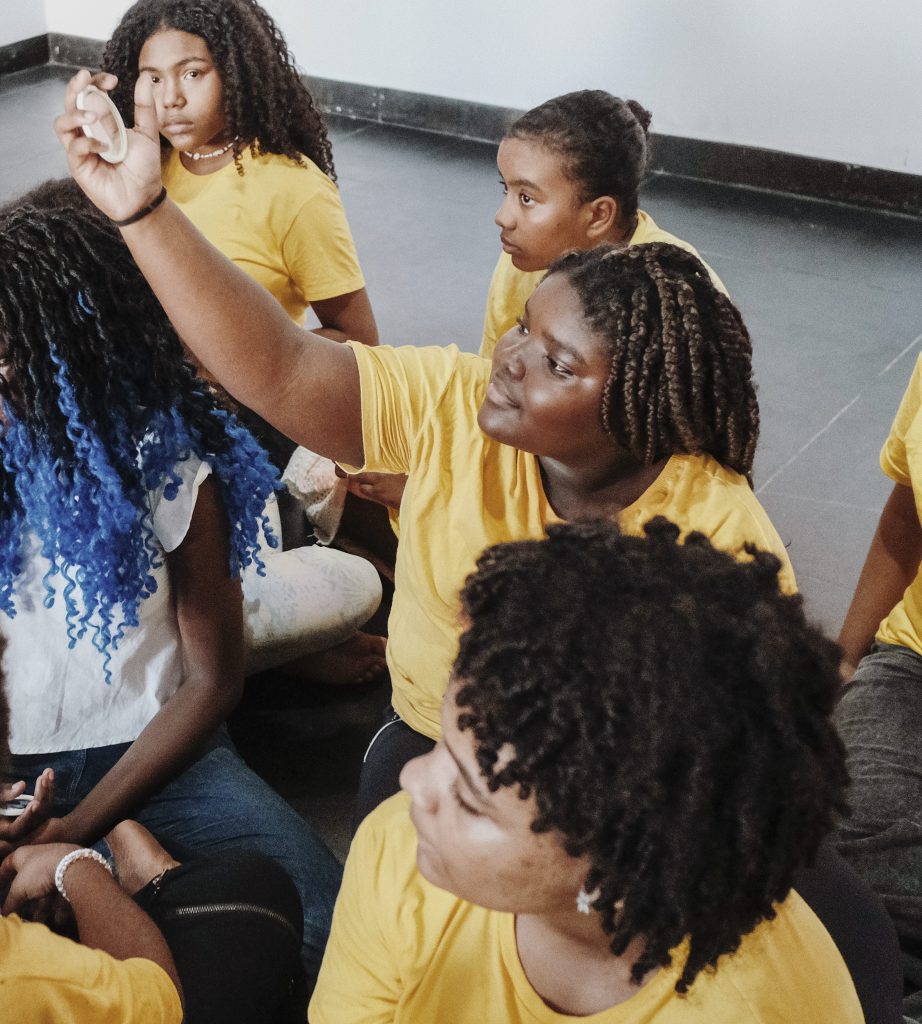
But education can change that. In 2020, with assistance from a Malala Fund grant, Odara launched its first initiative for improving school completion rates among Black, quilombola, and Indigenous girls: “Ayomidê Odara”. The young girls mentored under the program, including Julia, are known as the Ayomidês. And like the Pura x Malala Fund Collection’s Brazil: Breath of Courage scent, the Ayomidês are fierce, determined, and bursting with energy.
Ayomidês with Odara in Brazil. Captured by Luisa Dorr for Pura
Ayomidês take part in weekly educational sessions where they explore subjects like education and ethnic-racial relations. The girls are encouraged to find their own voices by producing Instagram lives, social media videos, and by participating in public panels. Already, the Ayomidês are rewriting the narrative on what’s possible for Afro-Brazilian girls to achieve. One of the earliest Ayomidês, a young woman named Debora, is now a communications intern. Another former Ayomidê, Francine, works at UNICEF, helping train the next generation of adolescent leaders. And Julia has already set her sights on becoming a math teacher or a model.
“These are generations of Black women who did not have access to a school,” Naiara says. “These are generations of Black women robbed daily of their dreams. And we’re telling them that they could be the generation in their family to write a new story.”
Mama Habiba is reframing the conversation in Nigeria
Centre for Girls' Education, Nigeria. Captured by James Roh for Pura
In Mama Habiba’s home country of Nigeria, the scents of starfruit, ylang ylang and pineapple, all incorporated into the Pura x Malala Collection’s “Nigeria: Hope for Tomorrow,” can be found throughout the vibrant markets. Like these native scents, Mama Habiba says that the Nigerian girls are also bright and passionate, but too often they are forced to leave school long before their potential fully blooms.
“Some of these schools are very far, and there is an issue of quality, too,” Mama Habiba says. “Most parents find out when their children are in school, the girls are not learning. So why allow them to continue?”
When girls drop out of secondary school, marriage is often the alternative. In Nigeria, one in three girls is married before the age of 18. When this happens, girls are unable to fulfill their potential, and their families and communities lose out on the social, health and economic benefits.
Completing secondary school delays marriage, and according to UNESCO, educated girls become women who raise healthier children, lift their families out of poverty and contribute to more peaceful, resilient communities.
Centre for Girls’ Education, Nigeria. Captured by James Roh for Pura
To encourage young girls to stay in school, the Centre for Girls’ Education, a nonprofit in Nigeria founded by Mama Habiba and supported by Malala Fund and Pura, has pioneered an initiative that’s similar to the Ayomidê workshops in Brazil: safe spaces. Here, girls meet regularly to learn literacy, numeracy, and other issues like reproductive health. These safe spaces also provide an opportunity for the girls to role-play and learn to advocate for themselves, develop their self-image, and practice conversations with others about their values, education being one of them. In safe spaces, Mama Habiba says, girls start to understand “who she is, and that she is a girl who has value. She has the right to negotiate with her parents on what she really feels or wants.”
“When girls are educated, they can unlock so many opportunities,” Mama Habiba says. “It will help the economy of the country. It will boost so many opportunities for the country. If they are given the opportunity, I think the sky is not the limit. It is the starting point for every girl.”
From parades, film screenings to safe spaces and educational programs, girls and local leaders are working hard to strengthen the quality, safety and accessibility of education and overcome systemic challenges. They are encouraging courageous behavior and reminding us all that education is freedom.
Experience the Pura x Malala Fund Collection here, and connect with the stories of real girls leading change across the globe.
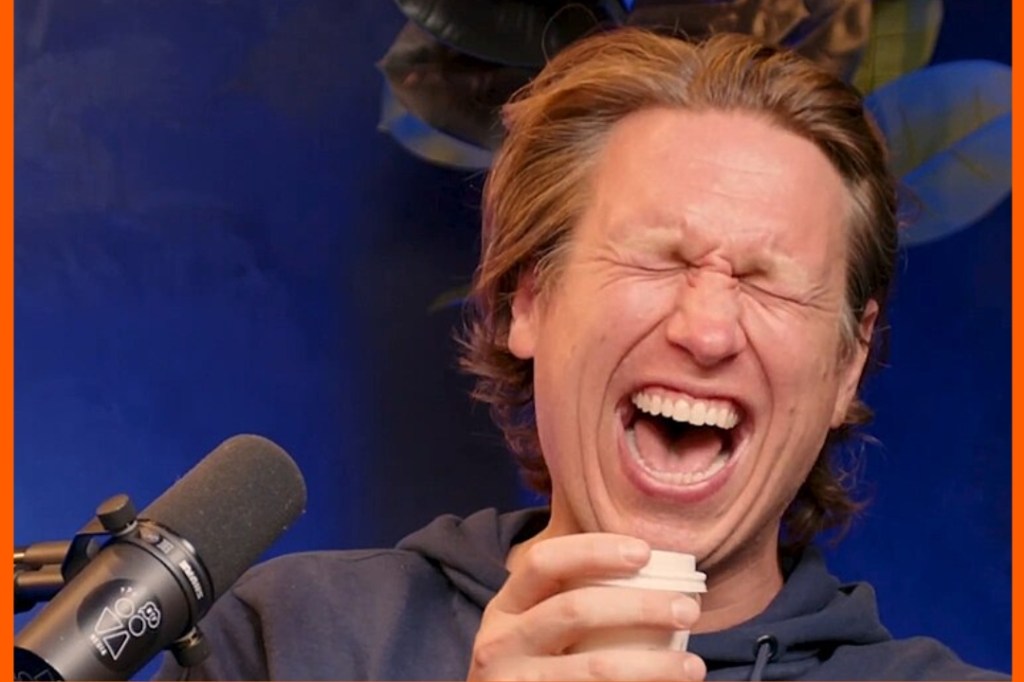
If you’re familiar with comedian Pete Holmes, you probably know he’s not afraid to go deep. He’s seemingly on a constant journey of self-improvement—physically, mentally, and spiritually—and his work as a stand-up comic, author, and podcaster reflects that with relatable, honest humor.
He recently appeared on Dan Harris’ podcast 10% Happier, where he discussed a simple three-word phrase that he claims helped change the way he views life.
Harris asked about his mantra, “Yes, yes, thank you.” Holmes gently corrected him, noting that it’s only three words: “It’s ‘yes, thank you.’” He then explained the concept: “I’ve heard really good teachers say that if you can really just say ‘yes’ to what ‘is,’ that’s all you need.”
“It just really short-circuits your brain if you say ‘Yes, thank you’ to it. And I mean almost instantly. Flight is delayed. ‘Yes. Thank you.’ It’s so weird. That’s why it works. Everything—attraction and aversion—right? So aversion is just charging it with all this push, like a basketball underwater. You’re giving it all the energy. When you just ‘Yeah’ as if it’s what you wanted.”
He gives an example:
“And then you realize you’re in an airport. You’ll be in an hour later. It can just be a clean breath and a recognition that you’re alive. Maybe you see the sun coming through the window. And maybe you remember that people used to die in covered wagons on the journey you’re about to take in four hours.”
Holmes explained that the concept is quite simple:
“But it can really be way less than that. Really, not debating with the bad feeling—just saying ‘Yes, thank you’ to it. That’s been one of the most powerful things in my life.”
10 percent happier
The clip was part of a larger discussion on the aforementioned podcast, with Holmes and Harris delving into faith, meditation, awareness, and how we learn to accept what is given to us.
Harris asked, “So the nature of existence is love because love is acceptance?” Holmes answered, “Even if you’re resisting it, what you’re resisting has already been welcomed into awareness.”
Stoicism
Much of what Holmes is describing is steeped in Stoic philosophy.
Former Roman emperor Marcus Aurelius wrote in Meditations, “And with that in mind I have no right, as a part, to complain about what is assigned me by the whole. Because what benefits the whole can’t harm the parts, and the whole does nothing that doesn’t benefit it.”
According to a site supporting Benny Voncken’s Via Stoicapodcast:
“Gratitude in Stoicism is not a mood but a moral stance, an expression of understanding that everything is given for a time, and that everything that happens can serve the good of the whole. When you practice gratitude, you move closer to what the Stoics called eudaimonia, a good spirit, a flourishing soul. You see life as it truly is: transient, interwoven, and deeply precious.”
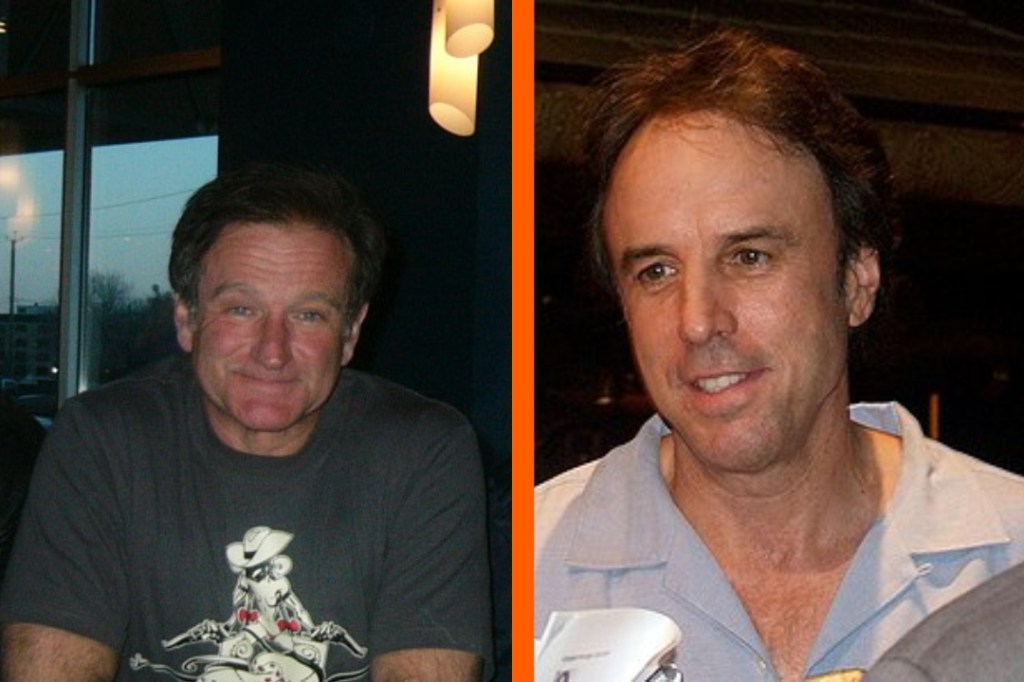
Comedian Kevin Nealon and the late, great Robin Williams first became friends in 1979 in Los Angeles. But according to Nealon, as kind and lovely as Williams was, it took a little bit of maneuvering on his part to make it happen. In fact, Nealon claims he had to outright lie to lock the friendship in.
He recently took to X and Threads to recount a heartwarming memory of pretending he knew anything about cars just to spend a little time with the brilliant comic.
X user @ISScottDavenport shared this Ellis Rosen cartoon. Photo credit: Scott DavenPort, X
“Robin Williams had done his set and left the comedy club. Soon after, he walks back in annoyed.
I said, what’s going on?
He said his car wouldn’t start.
I go, maybe I can help. I know absolutely nothing about cars. He doesn’t know that. I just wanted to make him think I was helping him.
So we go outside. He’s got a Range Rover.
We open the hood. He’s leaning in, swearing.
I’m looking around. Nodding. Like I’m a mechanic.
I have no idea what any of it is.
After a minute, I say, ‘Yeah… I don’t have my tools with me. You might need a mechanic.’
The simplicity and honesty in this one post have so many fans of both comedians truly engaged. Some share their own funny takes. “A technical comedian is an oxymoron,” jokes one X user. Another writes, “The classic mechanic technique: nod seriously and suggest a mechanic.”
Another commenter notes how wholesome Nealon’s story is: “‘I don’t have my tools with me’ is the perfect punch line for a guy who knows nothing about cars. You gave a legend a ride home and a great story to tell. That’s a win-win.”
This person shared their own story of seeing Williams when he dropped in as a surprise guest at the San Francisco Punch Line: “I saw him do a surprise, unannounced set at Punch Line SF, right after Brett Butler. He was a whirling dervish across the tiny stage, blessing us in the front seats with his frenetic sweat. It was amazing, and I’ll never forget it.”
One Threads user shared how much they love stories like these, writing, “I could listen to people recount stories about Robin Williams for hours and hours. That’d be such a great podcast (or something). Just actors sharing stories about their good friend, Robin.”
In past social media posts, Nealon has heaped praise and love on his old friend.
On Instagram, he shared a painting he made of Williams, relaying how their friendship began and blossomed over decades:
“My caricature painting of the brilliant Robin Williams. This was the Robin I first met in 1979 in a Los Angeles comedy club. (Before ‘Mork and Mindy.’) No one was quicker or funnier! I was absolutely floored by his wit, movement, improv skills, characters, and voices. Pure genius on the level of Jonathan Winters. As much as I laughed, I also found myself depressed because I knew I could never be that funny.
He was Amadeus Mozart, and I would be Antonio Salieri at best. But, I eventually realized that Robin couldn’t be everywhere at once (but almost), so I would probably, at least, get some work. It was always a thrill for me whenever Robin hosted SNL when I was a cast member. Absolutely brilliant! So missed!”
Some Olympic sports are obviously difficult and, clearly, inherently dangerous. You can’t watch a snowboarder twirl upside down in mid-air, 17 feet above a 22-foot halfpipe wall, and not admire the heck out of the effort it takes to reach that level of courage, skill, and athleticism. Watching skiers barreling down a mountain at 60 to 80 mph with nothing but a thin suit between them and the ground, expertly avoiding obstacles as they do it, is objectively impressive to the average person.
But the challenge of other sports isn’t as immediately appreciated. Curling may be hard, but it doesn’t look that hard.
And bobsledding might take some level of athletic ability, but other than a 5-second run before you jump into the sled, it’s really just about momentum and steering, right? Sure, they go fast, but bobsledders sit inside a protective metal casing, so it looks more like a thrilling roller coaster ride than a physically challenging and dangerous sport, right?
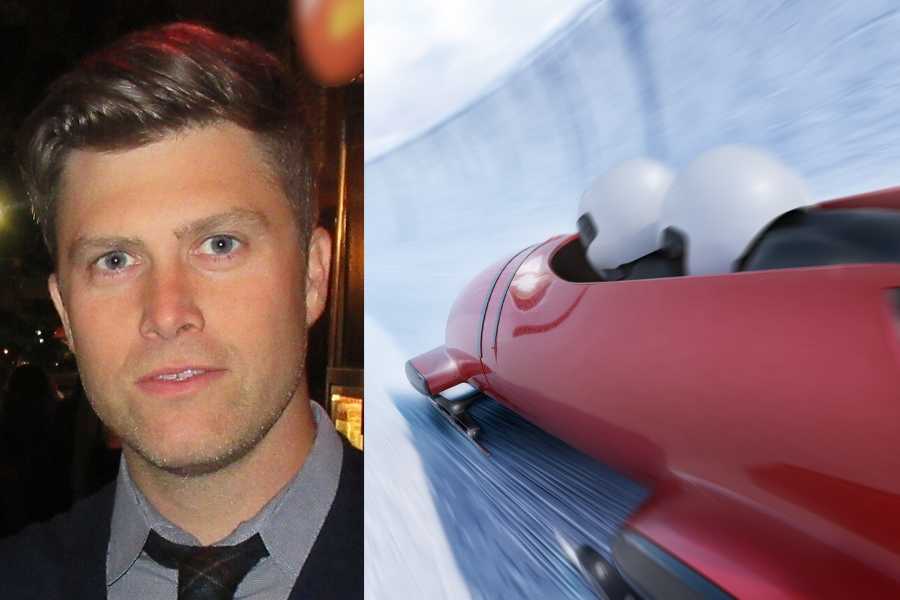
That’s what Saturday Night Live‘s Colin Jost thought. Then he tried it, and thankfully, he took us all along with him.
In a clip from NBC Sports, Jost describes his bobsled ride in Lake Placid, New York, as “by far, the scariest experience I’ve ever had in my life.”
Jost rode along with an experienced driver and didn’t even have to do anything but feel it. And, boy, did he feel it. We can see how his body was violently jostled from the physics of flying down the track. As the driver said, astronauts take off in a space shuttle at about three Gs. In the bobsled, they did about 5 Gs, which means he was feeling five times his body weight pushing down on him.
We can see and hear the shift from “Wow!” to “Holy ____!” as Jost’s thrill turned to terror on the track.
“I was in no way prepared for that,” Jost said. “I truly thought my body was going to break apart. I’m not exaggerating. It was so much more intense than I expected.”
Jost told NBC’s Mike Tirico that he was “not prepared for the level of terror of this bobsled.”
“I swear to God, I thought I was going to die,” he said. “I thought my back was gonna snap in half. I thought my bones were gonna fly off my body and be littered all up and down the bobsled track.”
People loved seeing an average person partake in an Olympic event, especially someone as honest about the experience as Jost was, as evidenced in the comments:
“Now THIS is the kind of commentary I want!”
“Huge thank you to whoever put Colin Jost in a bobsled.”
“Can we have him do every event for a reference point?”
“This is what we’ve been asking for – an average person participating so we can get a real account! Thank you for your service, Colin Jost!”
“He was so horrified he couldn’t even be hilarious about it 💀”
“He completely lost his composure, 😂 you could tell he was scared, and it did look like the fastest thing anyone would ride.”
“You know what… his explanation really helped me understand how scary bobsledding is and now I’m more interested in watching. Keep this guy on the air. That second scream shows me he’s telling the truth 😂“
The video really does offer a whole different perspective on how difficult bobsledding actually is.
Jost was just trying to keep his body together. Imagine having to focus and steer on top of handling those G-forces.
Retired NFL player and popular podcaster Jason Kelce also tried out the bobsled in Park City, Utah, and had a similar “holy ____” experience. He seemed to enjoy it a little more than Jost did, perhaps more accustomed to his body taking a beating as a professional football player, but he said it was far more intense than it looked. It didn’t feel like a roller coaster, he said. The 1,400 pounds of pressure pushing him into the metal bars of the sled bruised his hips, and, at one point, it got so loud he couldn’t hear his own screams.
Seeing how careening down an ice track in an aerodynamic sled feels really does lend a whole new level of wow to a sport that some might mistakenly see as glorified sledding. It also lends more weight to 41-year-old Elana Meyers Taylor’s monobob (single-person bobsledding) run that earned her her first Olympic gold medal in her sixth Olympic Games in Milano Cortina. She had earned three silver medals and two bronze medals, making her the most decorated U.S. female bobsledder of all time.
Seriously, nothing but respect for the bobsledders from here on out.
Some Olympic sports are obviously difficult and, clearly, inherently dangerous. You can’t watch a snowboarder twirl upside down in mid-air, 17 feet above a 22-foot halfpipe wall, and not admire the heck out of the effort it takes to reach that level of courage, skill, and athleticism. Watching skiers barreling down a mountain at 60…
Some Olympic sports are obviously difficult and, clearly, inherently dangerous. You can’t watch a snowboarder twirl upside down in mid-air, 17 feet above a 22-foot halfpipe wall, and not admire the heck out of the effort it takes to reach that level of courage, skill, and athleticism. Watching skiers barreling down a mountain at 60 to 80 mph with nothing but a thin suit between them and the ground, expertly avoiding obstacles as they do it, is objectively impressive to the average person.
But the challenge of other sports isn’t as immediately appreciated. Curling may be hard, but it doesn’t look that hard. And bobsled might take some level of athletic ability, but other than a 5-second run before you jump into the sled, it’s really just about momentum and steering, right? Sure, they go fast, but bobsledders sit inside a protective metal casing, so it looks more like a thrilling roller coaster ride than a physically challenging and dangerous sport, right?
That’s what Saturday Night Live‘s Colin Jost thought. Then he tried it, and thankfully, he took all of us along with him. In a clip from NBC Sports, Jost describes his bobsled ride in Lake Placid, New York, as “by far, the scariest experience I’ve ever had in my life.”
Jost rode along with an experienced driver and didn’t even have to do anything but feel it. And, boy, did he feel it. We can see how his body was violently jostled from the physics of flying down the track. As the driver said, astronauts take off in a space shuttle at about three Gs. In the bobsled, they did about 5 Gs, which means he was feeling five times his body weight pushing down on him.
We can see and hear the shift from “Wow!” to “Holy ____!” as Jost’s thrill turned to terror on the track.
“I was in no way prepared for that,” Jost said. “I truly thought my body was going to break apart. I’m not exaggerating. It was so much more intense than I expected.”
Jost told Mike Tirico that he was “not prepared for the level of terror of this bobsled.”
“I swear to God, I thought I was going to die,” he said. “I thought my back was gonna snap in half. I thought my bones were gonna fly off my body and be littered all up and down the bobsled track.”
People loved seeing an average person partake in an Olympic event, especially someone as honest about the experience as Jost was, as evidenced in the comments:
“Now THIS is the kind of commentary I want!”
“Huge thank you to whoever put Colin Jost in a bobsled.”
“Can we have him do every event for a reference point?”
“This is what we’ve been asking for – an average person participating so we can get a real account! Thank you for your service, Colin Jost!”
“He was so horrified he couldn’t even be hilarious about it 💀”
“He completely lost his composure, 😂 you could tell he was scared, and it did look like the fastest thing anyone would ride.”
“You know what… his explanation really helped me understand how scary bobsledding is and now I’m more interested in watching. Keep this guy on the air. That second scream shows me he’s telling the truth 😂“
The video really does offer a whole different perspective on how difficult bobsledding actually is. Jost was just trying to keep his body together. Imagine having to focus and steer on top of handling those G-forces.
Retired NFL player and popular podcaster Jason Kelce also tried out the bobsled in Park City, Utah, and had a similar “holy ____” experience. He seemed to enjoy it a little more than Jost did, perhaps more accustomed to his body taking a beating as a professional football player, but he said it was far more intense than it looked. It didn’t feel like a roller coaster, he said. The 1,400 pounds of pressure pushing him into the metal bars of the sled bruised his hips, and, at one point, it got so loud he couldn’t hear his own screams.
Seeing how careening down an ice track in an aerodynamic sled feels really does lend a whole new level of wow to a sport that some might mistakenly see as glorified sledding. It also lends more weight to 41-year-old Elana Meyers Taylor’s run that earned her her first Olympic gold medal in her sixth Olympic Games in Milano Cortina. She had earned three silver medals and two bronze medals, making her the most decorated U.S. female bobsledder of all time.
Seriously, nothing but respect for the bobsledders from here on out.
Robbie, who is Australian, shared that she grew up with what she called “Bogan Nachos.” “Bogan” is an Australian slang term signifying the “unsophisticated working class.” It’s similar to “trailer trash” in the US, only it can be used as a bit of lighthearted self-deprecating humor, rather than just an insult.
To make these nachos (or “narchos,” as Robbie calls them, though she admits that’s more of a personal quirk than an Australian one), you lay out a packet of Doritos on “al foil,” aka aluminum foil or tin foil, then top with baked beans and, of course, melted cheese.
“That is bogan nachos, and it is bangin’,” Robbie attested.
@tablemannerspodcast It’s a huge one this week, we have superstar Margot Robbie coming home to Clapham! Fresh from the Eurostar after the Parisian premiere for her new film ‘Wuthering Heights’ (starring Jacob Elordi and directed by friend of the pod, the gorgeous Emerald Fennell) Margot was exactly what we always dreamed she would be; a gem of a guest and gorgeous human! We talked about the juggle with producing and acting in films, the food she ate growing up (including ‘Fivesies’ and ‘Bogan Narrrrchos’), how her own gin ‘Papa Salt’ came to be, teaching Bette Midler about ‘Gavin & Stacey’, the bachelorette party her friends threw for her character Cathy, her husband being a phenomenal cook, the accent training she needed when she started in ‘Neighbours’, and we hear how she nearly killed her grandma-in-law by feeding her raw ham! Margot, you’re welcome to join us every week, and we’re absolutely popping round for one of Tom’s famous ‘egg’ steaks! ‘Wuthering Heights’ is released globally in cinemas on 13th February. #TableManners#MargotRobbie#WutheringHeights#Clapham#Barbie♬ original sound – Table Manners Podcast
She’s not the only one who felt this way. Several other Aussies shared their love for bogan nachos in the comments as well as their own tweaks to the Aussie-fied Tex-Mex dish.
“As an Australian- tin foil, corn chips, salsa, grated cheese into the oven and then out with sour cream.
“Luxurious Bogan Nachos = layer corn chips, 1 layer grated cheese, repeat microwave until cheese melts, top with hot sauce and sour cream, guac if you feel fancy.”
“Oh I eat bogan nachos all the time (exactly how she described it but I also add corn kernels) so good.
“Aussie girl can confirm, especially putting sour cream once out of the oven.”
Nachos have always been an opportunity for creativity ever since Ignacio Anaya, affectionately known as “Nacho” by his friends and patrons, grabbed some tortilla chips, covered them with freshly grated cheese, and added sliced jalapeño peppers to whip up a last-minute dish for a group of military wives in 1943.
Since then, other cultures have made tweaks to the types of chips, cheese, toppings, and layering style to create entirely unique takes. Canada’s “nacho poutine,” replaces standard cheese with cheese curds and gravy, for example. In Ireland, sliced potatoes or French fries are used instead of tortilla chips, and often covered in melted cheese plus bacon. Cuba utilizes plantain chips as a base, topped with ropa vieja (shredded beef), cheese, tomatoes, and onions.
Nachos can even be made into a breakfast food with eggs and bacon, or into a dessert with cinnamon-sugar-dusted chips, chocolate sauce, and ice cream. The possibilities are deliciously endless.
This short clip might not seem like anything too extraordinary, but in a mere few seconds, we witnessed one of the best aspects of being human—the fact that we are all so different, yet have so much in common.
You can find the full Table Manners episode, where Robbie also explains the “Fivesie” tradition in Australia of enjoying a pre-dinner cheese board, below:
James Van Der Beek, best known for his roles in Dawson’s Creek and Varsity Blues, has died at the age of 48 after a journey with stage 3 colorectal cancer.
Since November of 2024, the actor has been open about some of the struggles he’s faced with the diagnosis, including having to sell off much of his iconic memorabilia to pay off his cancer treatment.
And yet, Van Der Beek still left the world on perhaps a grounded, somewhat hopeful note, as indicated by the undeniably profound message he made in an Instagram video, posted a mere few weeks before his death.
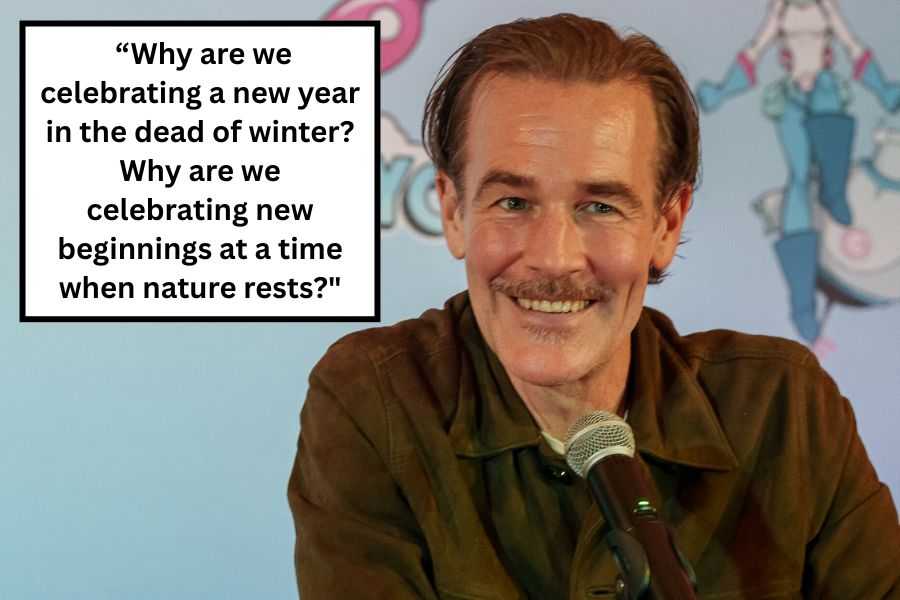
Using his signature down-to-earth, friendly sense of humor, Van Der Beek spoke directly to the camera as he asked the essential question: “Why are we celebrating a new year in the dead of winter? Why are we celebrating new beginnings at a time when nature rests?”
“Animals are hibernating, birds fly south for the winter,” he continued. “The time to celebrate new beginnings, and a new year, and a new you and a new resolution is spring at the vernal equinox, when the flowers bloom and it gets warmer and the birds return.”
He then quipped that the Gregorian calendar, which marks a new year in the winter, goes against nature, and therefore makes “absolutely no sense.”
“In the winter, the days are shorter and the nights are longer,” he wrote in his caption. “But instead of being reminded how perfect this season is for cocooning, eating stew, snuggling and sleeping… why are we being told this is the time to buy a gym membership?”
So, to anyone having trouble keeping to those New Year’s resolutions, Van Der Beek assured, “I don’t think it’s your fault” and offered a different solution: viewing spring as the start of the new year.
“I’m gonna say screw it,” he said. “I’m gonna take the winter to recover, to rest and I’m gonna make New Year’s resolutions in the spring. Who’s with me?”
Obviously, the video hits differently now…the optimism a little bittersweet. But it’s nonetheless a huge testament to how he “met his final days with courage, faith, and grace,” as his wife Kimberly Van Der Beek wrote.
“There is much to share regarding his wishes, love for humanity and the sacredness of time,” she added.
It’s wisdom that still rings true. We can force ourselves to go against nature. Or we can follow in Van Der Beek’s footsteps and give ourselves the grace to let nature work through us, to trust in our inherent worthiness, and to take time to heal. This is just one of many wonderful contributions that he’s given to us all, and he will be deeply missed.
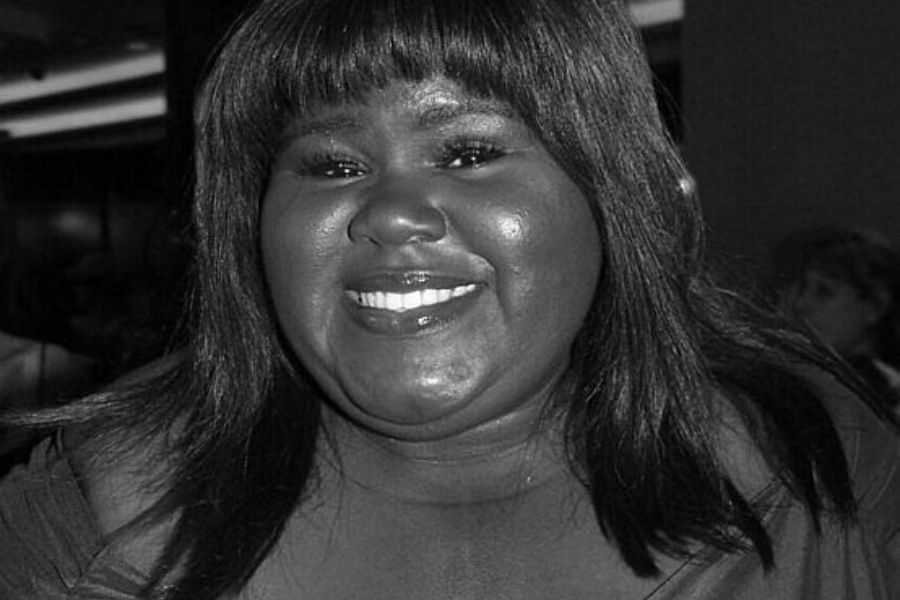
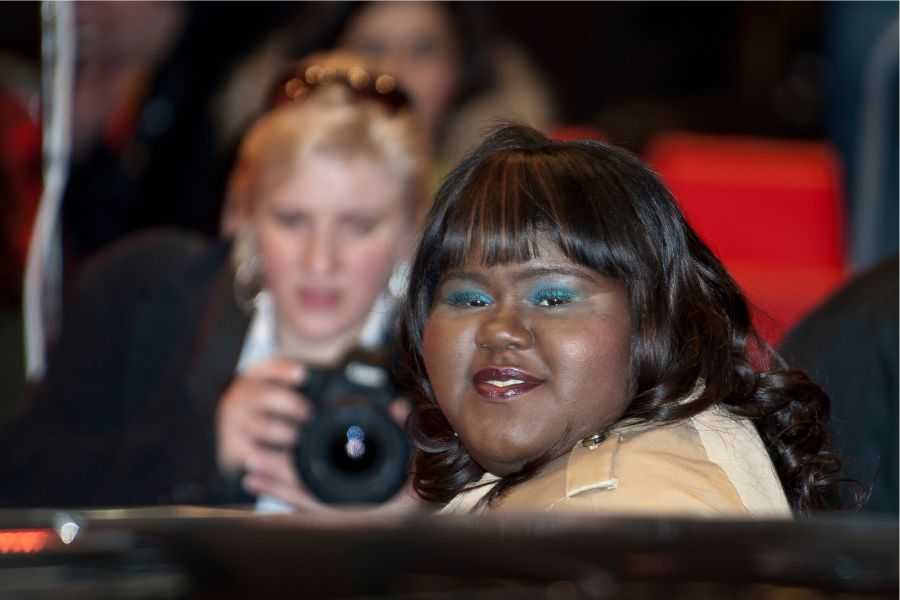
Since stepping onto the scene, the pronunciation of her name seems to vary depending on who says it. But recently, in an interview, the actress revealed that no one has pronounced her name the way her parents intended. Nischelle Turner caught up with the actress on Entertainment Tonight as she promotes her directorial debut for Mary J. Blige Presents: Be Happy, premiering on Lifetime.
After reminiscing on Sidibe’s first interview with the network, the pair shifted gears, eventually landing on the actress’s name pronunciation. Turner appeared shocked when the mom of twins revealed the proper pronunciation.
It starts with Turner asking if her last name is pronounced ” si-da-bay ” or “si-di-bay.” Neither pronunciation was correct. The actress smiles and says, “It’s actually si-DEE-beh. It’s Senegalese, so it’s got accents that I don’t use, but I usually say Sidi-bay because Americans need things to rhyme, so I say it’s Sidi-bay like city by the bay. For the record, my name also is not Gab-ou-ray,” She laughs. “If that matters.”
Turner’s face says what plenty of viewers were probably thinking. Has the world been pronouncing her entire name incorrectly since she became famous? Yes, yes, it has. “It is actually, Ga-BOU-rey,” Sidibe shares while Turner repeats her pronunciation. “You’re from America,” she giggles nearly uncontrollably. The Entertainment Tonight host demands that the actress make people say her name correctly, but she has no plans to correct people.
Turns out, Sidibe began embracing her Americanized pronunciation when she was still in school. Like many with unique names, she was used to people mispronouncing her name, and she used to correct them. Eventually, she decided that Gabby worked because people didn’t have difficulty saying that name. Some people who struggle with others pronouncing their name correctly can go in the opposite direction. They may start not being confident enough to correct others, but as they age, they begin to find themselves demanding that people put in the effort to learn their actual name.
As for Sidibe, she says, “I would rather be some name I decide is good enough rather than it being completely butchered.”
People who viewed the clip are happy to learn the pronunciation of her name, with one person sharing, “I’m actually very happy she is telling us how to properly pronounce her name!!”
This person says they have regrets about shortening their name, writing, “I shortened my name when I was younger because I got tired of people butchering it. As I got older, I realized that’s their problem, not mine. SAY MY NAME! SAY YOUR NAME!”
Another shares that they love how the actress’s name is pronounced, “I LOVE how she actually pronounces it! Beautiful name!”
“Make us learn your name. I love it and it’s who you are . But I get it, folks call me Mya and correcting my whole life is exhausting.. but if I want you to know who I am, ima correct you – it’s ME’YA Miya,” someone else chimes in.
Names are important, but everyone has their own approach to how they deal with incorrect pronunciations. Some prefer nicknames that they choose, like Sidibe, while others prefer people pronounce their full names correctly. While others may not correct anyone and answer to whatever name is called, asking someone how they pronounce their name may help stop mispronunciations and help the person feel seen.
As an actor, Brendan Fraser can strip down to his core and expose the most vulnerable aspects of humanity. (His heart-wrenching work in Darren Aronofsky’s film The Whale earned him a well-deserved Best Actor Oscar at the 2023 Academy Awards.)
So, it’s not surprising when he gets emotional discussing things near and dear to his heart—like autism awareness. In past interviews, Fraser has been very open about his son Griffin’s diagnosis and the unexpected beauty that came with it. In a 2022 piece for Interview Magazine, Fraser shared, “And because of the beauty of his spectrum—call it a disorder if you will, I disagree with you—he knows nothing of irony. He doesn’t know what cynicism is. You can’t insult him. He can’t insult you. He’s the happiest person and is, in my life and many others’, also the manifestation of love.”
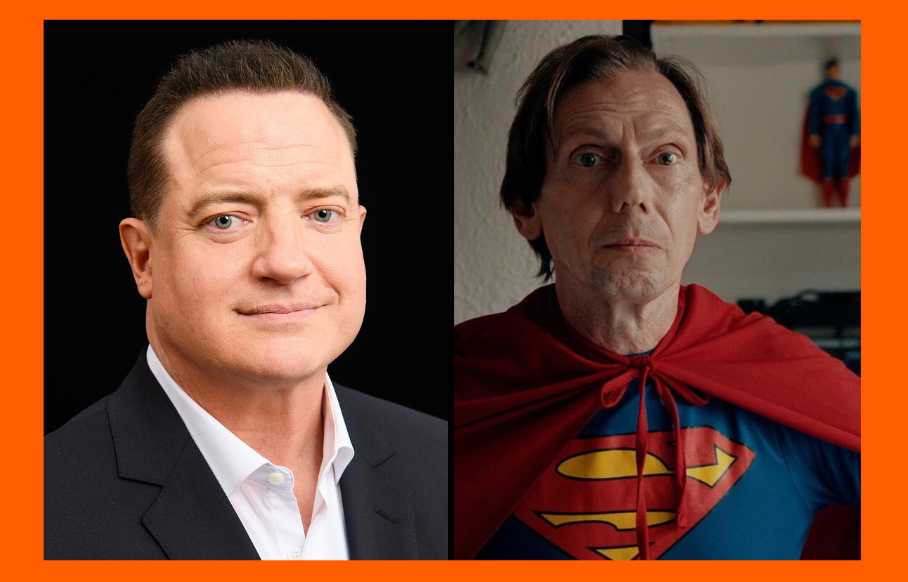
In 2024, Fraser co-executive produced the award-winning short documentary film Saving Superman. It tells the heartwarming story of Jonathan Charbonneau, a man in his fifties on the spectrum who loves to dress up as the DC comic book character. As seen in the film, he delightfully appears around his hometown of Glen Ellyn, Illinois, to play music and greet the community. In the movie, Charbonneau shares why he was specifically struck by Superman, which he learned about on Sesame Street. “I believe in the ideals he represents. There’s only one reason why he does ‘no mischief,’ let alone anything criminal or evil. He chooses not to out of respect for morale.”
On an recent appearance on The Kelly Clarkson Show in November 2025, Fraser tearfully discusses the film and explains how the community in Glen Ellyn wholesomely came together to raise money for Charbonneau after finding out he was not going to be able to afford rent once his apartment building got sold. (In the film, it’s relayed that his dear friend started a GoFundMe which went viral around the world.)
Fraser tells Clarkson, “I’m the dad of a son with special needs. I want to be a part of it and for that reason—we need to do well by everyone who has a family on the spectrum. We need more services available to them. And I do know that he’s the hero that we need right now.” Getting choked up, Fraser then tearfully hugs Clarkson.
This has struck such a deep chord in the community, as exemplified by the comments on The Kelly Clarkson Show (@KellyClarksonshow) Instagram Reel. Many people praise Fraser for his kindness, but also relay tales of Jonathan firsthand. One fan writes, “I grew up and came back to live in Glen Ellyn. Everyone knows Jonathan aka Superman here. He’s a staple in our community and we are lucky to have him. Glad he’s getting the support he very much deserves.”
Another commenter echoes this warm acknowledgement. “As soon as his picture came up in this video, I audibly went ‘Superman!!’ My family is from Glen Ellyn, and I worked in downtown in my late teenage years. Jonathan is a staple!” They later add, “While GE isn’t my hometown, I have spent a lot of time there, and don’t remember him NOT being in town.”
This comment reflects pure love for Fraser: “And I was thinking I couldn’t love this man more. He just proved me wrong! He is simply wonderful!”
And this Instagrammer is especially impressed with Fraser using his platform to effect change, writing, “Thank you for using your voice & speaking for those that need it the most we have more that united us than divides us after all.”



















_(cropped_2).jpg)
.jpg)


