The first pill to treat postpartum depression may be ready this year and it could be a game changer
It's in final approvals with the FDA.

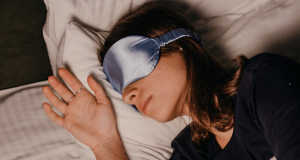
A new mother struggling with postpartum depression.
We may be just months away from having the first-ever pill to help treat postpartum depression (PPD). The drug, called Zuranolone, was developed by Sage Therapeutics and Biogen, two companies out of Cambridge, Massachusetts. The FDA has given the drug’s application priority review and the period ends on August 5, 2023.
Currently, there is only one FDA-approved medication for PPD, Zulresso, which is only available through a 60-hour, one-time infusion and can cost up to $35,000 per treatment.
If the medication is approved, it can also be used to treat major depressive disorder (MDD).
What’s unique about the drug is that it is fast-acting. "We feel a tremendous responsibility to patients with MDD and PPD to deliver a potential new treatment option, which is so desperately needed. Most current approved therapies may take weeks or months to work. We are committed to advancing treatments that could help physicians and patients by addressing depression symptoms quickly," Dr. Laura Gault, chief medical officer at Sage Therapeutics Inc., said in a statement.
Zuranolone causes full remission of clinical depression within 45 days in 53% of women versus 30% who received the placebo, according to the study published in the Journal of the American Medical Association Psychiatry.
The new drug could be a godsend to the 500,000 women who suffer from PPD every year. In these women, what starts as a typical case of the “baby blues” can linger and become more intense and lead to an overwhelming loss of energy, irritability, inability to concentrate or make decisions and thoughts of harming themselves or their babies. It also severely inhibits their ability to care for their newborn child.
Symptoms of PPD can begin as early as during pregnancy and as late as a year after giving birth. In rare cases, it can develop into postpartum psychosis, an extreme mood disorder.
PPD is caused by the intense hormonal changes that happen within a woman’s body before and after giving birth. It can also result from numerous anxieties women feel after giving birth, such as the stress of being a “perfect mother,” the effect that pregnancy has on their bodies, being overtired and a lack of free time.

A happy, healthy mother and child.
via Pexels.
Zuranolone could also provide faster relief for people dealing with MDD. In 2020, over 14 million Americans were diagnosed with MDD, which creates a persistent feeling of sadness and a loss of interest in things they used to enjoy. It can also affect their ability to have happy, healthy relationships.
In rare situations, MDD can lead to suicidal ideation. Studies show that MDD accounts for up to 89% of all suicides.
If Zuranolone is approved, it will give doctors another vital tool in improving people’s mental health that can relieve debilitating depression in less time. It will also help countless babies that need extra care in their early days from a loving and healthy mother.
If you or someone you know is having thoughts of suicide, call the Suicide and Crisis Lifeline at 988 for free, confidential support.




A Generation Jones teenager poses in her room.Image via Wikmedia Commons
An office kitchen.via
An angry man eating spaghetti.via 


An Irish woman went to the doctor for a routine eye exam. She left with bright neon green eyes.
It's not easy seeing green.
Did she get superpowers?
Going to the eye doctor can be a hassle and a pain. It's not just the routine issues and inconveniences that come along when making a doctor appointment, but sometimes the various devices being used to check your eyes' health feel invasive and uncomfortable. But at least at the end of the appointment, most of us don't look like we're turning into The Incredible Hulk. That wasn't the case for one Irish woman.
Photographer Margerita B. Wargola was just going in for a routine eye exam at the hospital but ended up leaving with her eyes a shocking, bright neon green.
At the doctor's office, the nurse practitioner was prepping Wargola for a test with a machine that Wargola had experienced before. Before the test started, Wargola presumed the nurse had dropped some saline into her eyes, as they were feeling dry. After she blinked, everything went yellow.
Wargola and the nurse initially panicked. Neither knew what was going on as Wargola suddenly had yellow vision and radioactive-looking green eyes. After the initial shock, both realized the issue: the nurse forgot to ask Wargola to remove her contact lenses before putting contrast drops in her eyes for the exam. Wargola and the nurse quickly removed the lenses from her eyes and washed them thoroughly with saline. Fortunately, Wargola's eyes were unharmed. Unfortunately, her contacts were permanently stained and she didn't bring a spare pair.
- YouTube youtube.com
Since she has poor vision, Wargola was forced to drive herself home after the eye exam wearing the neon-green contact lenses that make her look like a member of the Green Lantern Corps. She couldn't help but laugh at her predicament and recorded a video explaining it all on social media. Since then, her video has sparked a couple Reddit threads and collected a bunch of comments on Instagram:
“But the REAL question is: do you now have X-Ray vision?”
“You can just say you're a superhero.”
“I would make a few stops on the way home just to freak some people out!”
“I would have lived it up! Grab a coffee, do grocery shopping, walk around a shopping center.”
“This one would pair well with that girl who ate something with turmeric with her invisalign on and walked around Paris smiling at people with seemingly BRIGHT YELLOW TEETH.”
“I would save those for fancy special occasions! WOW!”
“Every time I'd stop I'd turn slowly and stare at the person in the car next to me.”
“Keep them. Tell people what to do. They’ll do your bidding.”
In a follow-up Instagram video, Wargola showed her followers that she was safe at home with normal eyes, showing that the damaged contact lenses were so stained that they turned the saline solution in her contacts case into a bright Gatorade yellow. She wasn't mad at the nurse and, in fact, plans on keeping the lenses to wear on St. Patrick's Day or some other special occasion.
While no harm was done and a good laugh was had, it's still best for doctors, nurses, and patients alike to double-check and ask or tell if contact lenses are being worn before each eye test. If not, there might be more than ultra-green eyes to worry about.