upworthy
Add Upworthy to your Google News feed.
Google News Button
Pop Culture

Millennials nearing 40 are sharing their biggest mistakes so everyone can learn from them

Here are 21 of the most powerful responses.

millennials, regrets, millennial life lessons
via Pexels

Millennials are now old enough to seriously reflect on life.

It seems like only yesterday a millennial was a college kid that baby boomers chided for being entitled and Gen Xers thought were way too sincere and needed to learn how to take a joke. Today, the oldest millennials, those born around 1980, have hit their 40s and have lived long enough to have some serious regrets.

They also have enough experience to take some pride in decisions that, in hindsight, were the right moves. The good news is that at 40 there is still plenty of time to learn from our successes and failures to set ourselves up for a great second half of life. These lessons are also valuable to the Gen Zers coming up who can avoid the pitfalls of the older generation.

A Reddit user who has since deleted their profile asked millennials nearing 40 “what were your biggest mistakes at this point in life?” and they received more than 2,200 responses. The biggest regrets these millennials have are being flippant about their health and not saving enough money when they were younger.

They also realized that the carefree days of youth are fleeting and impossible to get back. So they should have spent less time working and more time enjoying themselves. Many also lamented that they should have taken their education more seriously in their 20s so they have more opportunities now.

The responses to this thread are bittersweet. It's tough hearing people come to grips with their regrets but the realizations are also opportunities to grow. Hopefully, some younger people will read this thread and take the advice to heart.

Here are 21 of the most powerful responses to the question: “Millennials of Reddit now nearing your 40s, what were your biggest mistakes at this point in life?”

1.

"Not taking care of my hearing, not even 35 and going deaf." — Kusanagi8811

2.

"Not getting healthy earlier." — zombiearchivist

3.

"Staying too long at a job in my 20s, just because it was safe and easy. When I finally got the motivation to leave, ended up with an almost 50% pay boost." — Hrekires

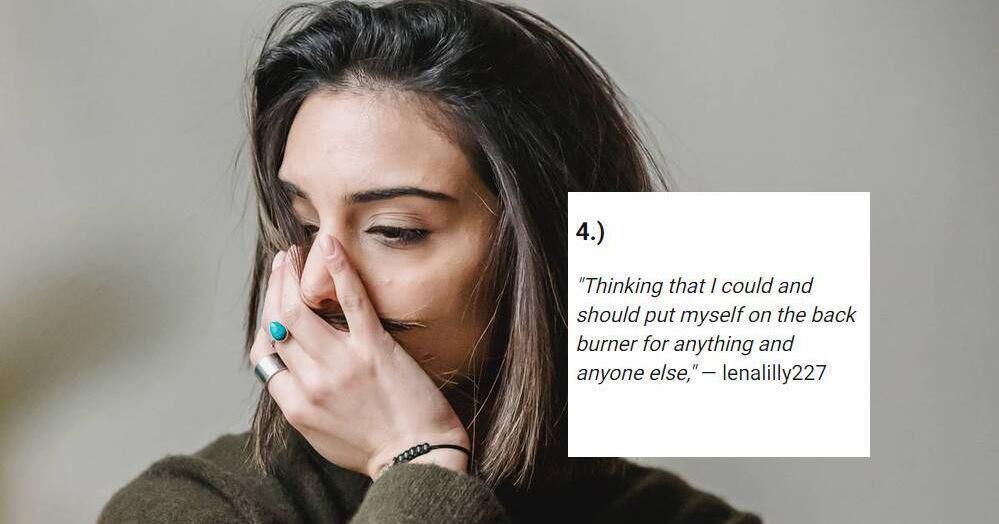
4. 

"Thinking that I could and should put myself on the back burner for anything and anyone else." — lenalilly227

5.

"Smoking and not dealing with my shit the right way." — Allenrw3

6.

"Pining after the wrong person." — runikepisteme

7.

"I turned 40 this year and just started liking who I am. Why the fuck did it take 40 years for self acceptance?" — guscallee

8.


"Take care of your fucking back. Lift with your knees. Sure it's rad when you grab a fridge by yourself and lift it in the back of a moving truck unaided, but one day that shit is going to have consequences that won't just magically go away by resting and "taking it easy" for a week." — GuyTallman

9.

"I wish I spent more time with my dad while I had the chance." — CharlieChooper

10.

"I'm 37. I absolutely could have taken better care of my body, but I'm in relatively good health. I'm starting to realize how important it is to maintain my health. I do also think I drank far too much in my 20 and early 30's. I'm trying to rectify that now, but it's hard. So that I guess." — dartastic

11.


"I'm not sure if people have experienced the same but when I entered my 30s I became convinced I was rapidly running out of time. Rather than using that as motivation I let it paralyze me with indecision because I "couldn't afford to make the wrong choice." Consequently, I'm now 39 and, though I've had great things happen in my 30s, I regret spending so much time worrying and so little time committing to a course of action." — tomwaste

12.

"Work to live, don’t live to work. You have half your working life after you turn 40 but only 20-25 years to really live it up before the responsibilities become heavy and your joints start to ache. Live life. Really LIVE it. Experience as much you can. Every sensation, sight, sound, touch. Be open. Be brave. Live your first few decades in the fast lane. You have the rest of your life to take it easy, when you have no choice." — MrDundee666

13.

"I should have paid more attention to my parents telling me to save money and less attention when they were teaching me about purity culture." — Arkie_MTB

14.

"If I could tell my 18 year old self one thing, it would be to save 10% of every paycheck I ever got." — PutAForkInHim

15.

"Thinking that I have time to do everything I want only to find myself loosing time, and the endless energy I used to have in order to purse them." — ezZiioFTW

16.

"Not wearing sunscreen." — blueboxreddress

17.

"Not recognizing the importance of work/life balance earlier in life. My late teens, all 20's, and early 30's were spent pulling 60-100+hr weeks because I thought it was what was required to succeed. How wrong I was. Others stabbed me in the back and reaped the reward.

1.) Putting work first for too long. Work is my #1 priority during work hours now. After quitting time, I don't think about it (much) anymore. I don't vent to my wife or friends about it anymore either.

2.) Investing more into fast cars than solid long-term investments. Sure, it was fun, but I could have made bookoos more had I put that towards less-fun investments.

3.) Not using PTO and just waiting for the payout. All those years, missed. I'm in my mid 30's and I didn't actually have a real vacation until 3 years ago.

4.) Not realizing that "the good guy" often loses. Just because you're morally justified doesn't mean you're going to win. Just because there's a number to call doesn't mean anyone will actually help you. Just because "law" exists, doesn't mean people follow it, enforce it, or create justice. The world is dog eat dog and cynicism can be healthy in moderate doses." — [Deleted]

18.

"When you get out of college, keep your friends. No matter how hard it is. Hold on to them." — mpssss22

19.

"I imagine these are kinda universal:

  • Not getting fit and healthy
  • Assuming I'd be offered proper guidance on how to achieve my goals
  • Assuming higher education would help me achieve my goals
  • Spending far too long caring what people think
  • Not taking risks that might better my life when I was younger and had nothing to lose
  • Staying in relationships too long after they were clearly done." — katapultperson

20.

"Always ask for more pay. Starting, yearly, before leaving, whatever. Get that money." — SensibleReply

21.

"Spending too much time in front of a screen and not enough enjoying life." — BellaPadella


This article originally appeared two years ago.

Gen Z; Millennials; technology; cell phones; social media; teens and technology; teens social media

Gen Z is the first generation less cognitively capable than their parents. Denmark has the solution.

Nearly every parent hopes their child will be better off than they are: smarter, more secure, and more well-adjusted. Many parents see this as a stamp of successful parenting, but something has changed for children growing up today. While younger generations are known for their empathy, their cognitive capabilities seem to be lagging behind those of previous generations for the first time in history.

Dr. Jared Cooney Horvath, a teacher turned cognitive neuroscientist who focuses on human learning, appeared before Congress to discuss concerns about cognitive development in children. In his address to the members of Congress, he says, "A sad fact that our generation has to face is this: our kids are less cognitively capable than we were at their age. Since we've been standardizing and measuring cognitive development since the late 1800s, every generation has outperformed their parents, and that's exactly what we want. We want sharper kids."


kids, intelligence, sharp kids, generations, education, cognitive abilities Student smiling in a classroom, working on a laptop.Photo credit: Canva

Horvath explains that the reason this happens is that each generation has gone to school longer than the previous generation. Gen Z is no exception to the longer duration of time spent in school, but they're the first ones who aren't meeting this normal increase in cognitive development. According to the cognitive neuroscientist, the decline is due to the introduction of screens in the classroom, which started around 2010.

"Across 80 countries, as Jean was just saying, if you look at the data, once countries adopt digital technology widely in schools, performance goes down significantly. To the point where kids who use computers about five hours per day in school for learning purposes will score over two-thirds of a standard deviation less than kids who rarely or never touch tech at school," Horvath reveals.

In most cases, the decline in performance doesn't result in better strategies. The neuroscientist shares that the standardized testing has been adjusted to accommodate lower expectations and shorter attention spans. This is an approach that educators, scientists, and researchers went to Capitol Hill to express wasn't working. But not every country is taking the approach of lowering standards to meet lowered cognitive ability. Denmark went in the opposite direction when it realized their students were slipping behind.

France24 recently interviewed educators in Denmark following their seemingly novel approach to students struggling with cognitive development. Since the beginning of the 2025/2026 school year, Denmark has not only been having students turn in their cellphones, but they've also taken tablets, laptops, and computers out of the classroom. No more digital learning for the majority of the school day. Danes went old school by bringing back physical textbooks, workbooks, and writing assignments. The results have been undeniable. Even the students can't seem to deny the success of the countrywide shift in educational approach.

"I think the biggest issue has been that, because we kind of got rid of the books and started using screens instead, that we've noticed that a lot of the kids have trouble concentrating, so it's pretty easy to swipe with three fingers over to a different screen and have a video game going, for example, in class," Copenhagen English teacher, Islam Dijab tells France24.

Now, instead of computers being part of every lesson, Denmark uses computers very sparingly and with strict supervision. One student says that it has been nice not having screen time at school because she loves to read and write. But it wasn't just the lack of attention span children were developing, they were also developing low self-esteem and poor mental health due to the amount of time spent on devices.

kids, intelligence, sharp kids, generations, education, cognitive abilities Students focused and ready to learn in the classroom.Photo credit: Canva

The data showing the negative impact of screens on teens' brains has prompted a nationwide change in Denmark that extends outside of the classroom. Afterschool activities are eliminating or extremely limiting electronic use. There is also a national No Phone Day that encourages everyone to put away their devices for the day, and Imran Rashid, a physician and digital health expert, is petitioning parliament to ban social media use for children under the age of 15. The no phone movement in Denmark is a nationwide effort that hopes to right the ship before another generation feels the effects.

Internet

Overwhelmed before you even begin? Viral ‘anti-start’ trick might change everything.

This surprisingly soothing trend is helping thousands tackle procrastination.

Woman relaxing with eye patches and a cup, sitting in a cozy room.

Gentle procrastination alternatives, not hacks, are helping thousands.

You know the feeling. There’s laundry spilling out of the hamper, 47 emails glaring at you from your inbox, and a Word document that’s supposed to become a report by Friday morning through… magic? You need to start. You want to start. And yet, you don’t.

The longer you put it off, the worse it gets. You might feel tempted to call yourself names, like “lazy” or “unmotivated,” but psychologists suggest that procrastination isn’t about laziness at all—it’s about emotional regulation. It’s about dodging discomfort: the anxiety of not knowing where to begin, the fear of doing it badly, the sheer weight of the thing itself.


But what if you didn’t have to start the task at all? What if you only had to start getting ready for it?


@jessekatches Day 2 of 10 Which mental block should we tackle next?
♬ original sound - Jesse Katches

This is the brilliant idea behind the “anti-start” ritual, a concept that’s been taking over TikTok lately. It’s not a grueling productivity hack designed to squeeze more hours out of your day. Instead, it’s a gentle, compassionate way to trick your brain into crossing the starting line without even realizing the race has begun.


What exactly is the ‘anti-start’ ritual?

TikTok creator Ankita Tejwani (@ankitatej) popularized the term while sharing her personal method for overcoming that paralyzing “freeze” response.

The premise is simple. You trick your brain by lowering the stakes. Instead of telling yourself, “I need to write this essay right now,” you pivot and say, “I’m not going to work. I’m just going to set up my space.”


TikTok · Ankita Tejwani Credit: @ankitatej via TikTok

In her viral video, Tejwani describes her inner monologue: “OK, you’re not going to start,” she tells herself. “That’s OK. Just set the stage for someone who will. Clean your space, light a candle, get a coffee, open your laptop, and set the stage for when you are ready. No pressure.”

Another user, @legalwrites, describes their own “anti-start” ritual: “Begin each session with a consistent, positive trigger. Light a candle, drink the same tea, or play a specific song. These conditions help your brain to recognize that it’s time to focus.”

It’s a bridge between doing nothing and doing the hard thing. And for thousands online, it’s been a game-changer.


Why this simple trick actually works

(1) It quiets the fear response

When a task feels big or daunting, the amygdala—your brain’s built-in threat detector—kicks in. We avoid tasks that make us feel bad: anxious, overwhelmed, unsure, and afraid of screwing up. The worse a task feels, the harder we’ll try to dodge it.

“It’s all about our feelings,” says Tim Pychyl, the head of the Procrastination Research Group and an associate professor of psychology at Carleton University in Ontario, Canada. “Procrastination is the misregulation of emotion. We think that by putting things off, we’re going to feel better.”


- YouTube youtube.com

That’s procrastination in action. But if you shift your attention to something small and harmless, like making tea or tidying your desk, your brain relaxes. There’s no threat to react to.

This is what psychologists call “decoupling emotional resistance from task initiation.” Opening a document isn’t scary. Laying out your materials won’t hurt you. Counting down from five takes no courage at all. These tiny gestures are so bland and effortless that your brain’s alarm system has nothing to latch onto.


ritual, procrastination, hacks, autopilot, focus Another user shares their anti-start, or "start," ritual. Photo Credit: @the.1491 via TikTok

Once the trivial action is complete, however, the psychological landscape shifts. You’re in motion—that’s the game. Once you’ve tricked yourself into lighting the candle or organizing your desk, your brain has shifted gears—motivation starts to build, your prefrontal cortex wakes up, and you’ve cleared the hardest hurdle.

(2) It makes you feel motivated, neurologically

Procrastination isn’t about laziness. It’s about motivation. Or, more precisely, the neurochemistry of it. Dopamine, the molecule that drives you to want things and do things, is at the heart of the issue.

Here’s the “anti-ritual” trick: dopamine doesn’t show up before you start. It shows up after. Waiting around to feel motivated is like waiting for a train that only arrives once you’re already on it. That doesn’t make a ton of sense.


When you take even the smallest action—tidying a desk, opening a file, putting on your shoes—you change your physical state. Suddenly, the motivation you were hoping would arrive on its own is there because you summoned it by moving.

Motivation, in other words, is not the cause of action. It’s the result.

(3) It reduces decision fatigue

Rituals offer something valuable to procrastinators: predictability. Psychologists call this phenomenon “implementation intention,” which is basically the “if-then” plans you make in advance. The logic is straightforward: specific cues are linked to specific actions. For example, “If it’s 9 a.m., then I open my laptop.” Or, “If I finish breakfast, then I sit at my desk.”

Once that connection is forged, there’s nothing to think about. You’ve already decided. There’s nothing left to debate.


Desk, laptop, tablet, coffee, headphones, and books in a cozy study setup. This user's start ritual sums it up: we're starting now. Photo Credit: @aaiimmiiee via TikTok

In one study, students were asked to write an essay during Christmas break (arguably the worst possible time to get work done). The students who made implementation intentions about exactly when and where they’d write finished the essay 71% of the time. Those who just set the goal without a plan? Only 32% followed through.

Implementation intentions, or anti-rituals, are so effective because they remove the moment of choice. You hit your cue, and the rest unfolds on autopilot. There’s no window for second-guessing or distraction.


What does an anti-start ritual look like?

The beauty of this concept is that it is entirely personal. Don’t aim for perfection—that’s the exact opposite of an anti-ritual. You need a series of cues that signal to your brain: We are arriving at the workspace.

Here are a few examples of what this might look like for different people.


woman, candle, ritual, glow, warm Woman lighting a candle with a match, surrounded by softly glowing candles.Photo credit: Canva

The “cozy” ritual

This ritual is ideal for writers or administrative professionals who work best when they feel safe and calm.

  • Step 1: Put on a pair of comfy socks.
  • Step 2: Fill a water bottle or make a cup of hot tea.
  • Step 3: Light a specific candle (scent is a powerful trigger for memory and habit).
  • Step 4: Put on a specific playlist, like the minimalist YouTube video, “Give your brain a break.”
  • Step 5: Open the document.


man, stretching, ritual, active, productivity Man stretching neck in living room, wearing a gray shirt, with eyes closed.Photo credit: Canva

The “active” ritual

If you’re feeling sluggish or physically “stuck,” movement can be the spark your brain needs to wake up and get flowing again.

  • Step 1: Stand up and stretch deeply.
  • Step 2: Shake out your hands and feet to release nervous energy.
  • Step 3: Clean one area of the room.
  • Step 4: Sit back down.


Woman writing in a notebook outdoors, smiling while holding a pencil. Writing down your thoughts and feelings by hand is a totally different experience.Photo credit: Canva

The “analog” ritual

For those who feel immediately overwhelmed by screens, starting with pen and paper can be a game-changer.

  • Step 1: Close your laptop.
  • Step 2: Grab a physical notebook and your favorite pen.
  • Step 3: Write down three things you want to accomplish, or fill a page with free-written thoughts.
  • Step 4: Once that’s complete, reopen your laptop.


A gentle word of caution

While the anti-start ritual is an excellent tool, it’s essential to use it in a way that honors who you are. The internet is full of “aesthetic” morning routines that look beautiful but may not be practical in real life.

Beware of the “positivity trap”: It’s easy to get so hyper-focused on perfecting a ritual that it turns back into procrastination. If you spend 45 minutes arranging your desk pens by color before answering an email, the ritual is no longer serving you. The goal is to make starting easier, not to create a more polished obstacle.

Respect your natural rhythm: It’s vital to remember that a ritual should not force you to become someone you aren’t. As reported by Outside Online, forcing a routine that fights your biology can actually backfire.

“Everyone’s routine is super unique, and it’s supposed to be,” Kristen Casey, a licensed clinical psychologist and insomnia specialist, tells Outside Online. “So, if you’re trying to mimic someone else’s routine to a tee, it’s likely that you’ll run into some problems, because you’re not that person.”

For example, if you’re a night owl, forcing a 5 a.m. “anti-start” ritual might lead to sleep deprivation and frustration. Vanessa Hill, a behavioral scientist and science communicator, notes that fighting your circadian rhythm leaves you feeling groggy and less productive.

If your brain works best at 10 p.m., do your anti-start ritual then. The best routine is the one that works with your biology, not against it.


Be kind to your brain

In a culture obsessed with optimization, the anti-start ritual offers an alternative: the permission to begin gently. In this way, it’s not a productivity hack in the usual sense. There’s no weird time-blocking, gamification, or guilt. It’s a way of being kinder to yourself when starting the work feels impossible.


Woman in glasses writing at a desk, surrounded by plants. Photo credit: Canva

Anti-start rituals work because they accept a fundamental truth: starting is the hardest part. You don’t need to run a marathon. All they ask is that you lace up your shoes.

Next time resistance shows up, try this: don’t force it. Light a candle. Clear the desk. See what happens next.

parenting, teens, raising teens, teen hangout, high school, game night for teens, activities for teens, parenthood

Amy White explains how her house became "the house" for her teens.

I grew up in "the house." In high school, my home was the designated place where my friends gathered, sometimes in big groups, sometimes just my small core squad. My three best friends spent the night there almost every Friday and/or Saturday night for four years straight. We devoured Totino's frozen pizzas by the dozen, inhaled soda, and laid waste to any snacks or leftovers that were brave enough to survive in the kitchen. Not only that, but my house was pretty small — four teenage boys took up a lot of space in the living room (the whole thing) and made a lot of noise playing video games deep into the night. It must have driven my parents and older brothers crazy. It's a wonder anyone put up with it.

Or so I thought when I was younger. When I became a parent myself, I started to understand a little more why my mom and dad were so willing to host and feed all my friends and me every single weekend. Why the outrageous grocery bill and constant chaos in the house were probably a small price to pay.


Mom explains how to make your house 'the house' where teenagers hang

One mom has perfectly encapsulated the value of turning your home into "the house" for your kids and their friends, and exactly how she did it for her family.

teens, teen house, teens hanging out, teens having fun, teenagers Teens hanging out in a living room.via Canva/Photos

Amy White shared a reel on Instagram showing her college-aged son hanging in her dining room with a group of friends playing cards. The text overlay reads "What makes your kids' high school friends want to come over, play cards & spend the night on their College Christmas Break." I think most parents can agree that we want our kids to keep coming home as long as possible! So how exactly did White pull this off?

Her explanation in the caption was spot-on.

First, White says that you have to start early. Become "the hang out house" in high school or even earlier. Then you have a better chance of holding onto the mantle into your kid's college years.


Next, be ready to stock the house with snacks and drinks, and don't make a fuss when your kid's friends have at it. "The kids knew we had food," she writes, "BUT they also knew I didn't care what they had. They knew they could eat anything in my pantry and fridge."

Third, and this is a big one, don't mistake being the "cool house" for being "the house." Some parents choose to allow their underage kids and friends to drink alcohol under their supervision, but you don't have to bend your morals and the law to lure the squad over to your place. Pizza and Coke is plenty to keep most teens happy. "We were not the house that served alcohol or even allowed the kids to bring alcohol to our house. And Guess What?? The kids still came and wanted to hang at our house!"

teens, teen house, teens hanging out, teens having fun, teenagers Teenagers eating pizza.via Canva/Photos

Fourth, always say Yes (as often as possible, anyway) when your kids want to have friends over. "They know my answer is 99% of the time YES," White writes. "You have to have your kids take the leadership of offering your home and if your home was 'open' to their friends in high school, they know it will be 'open' to their friends in college."

As a bonus tip, White pleas with parents not to worry about the mess having friends over makes. "I love a clean house and organization, BUT I would much rather have a crazy messy house for the kids where memories are made than a quiet house with nothing going on just to keep my house 'clean.'"

Should parents allow teens to drink at home?

There's an age-old debate over whether parents should allow teens to drink at home because it's better than if they do is unsupervised or keep their home dry as a bone. A recent study out of the University of Buffalo found that kids who grew up drinking at home had a greater chance of having addiction problems when they got older. "A robust relationship was found between parental permission to use alcohol during adolescence and increased alcohol use frequency and quantity, alcohol use disorder symptoms, and alcohol-related harms in young adulthood," the study says.

White writes, "It's worth being 'the house', so let go of control & get to know your kids friends." Commenters agreed.

White's video went viral to the tune of 8.5 million views and hundreds of comments. Parents shared their own experiences of what it's like being the default hang out house.

"Our house was the high school hangout for my son and friends... every weekend... I loved it!! Miss it now that they are all college graduates and have moved away. I love seeing them when they do come home for the holidays"

"A wise man once said don't be the house with the alcohol. Be the house with the food."

"Amy 1000% agree!!! My house is full of teenagers on the weekends and I love every bit of it. Even though I wake up to a kitchen that looked much different from when I left it"


teens, teen house, teens hanging out, teens having fun, teenagers Teenagers eating pizza.via Canva/Photos

"We never allowed alcohol, drugs, bad language, always respectful, and guess what, our house was always the house where the kids hung out. First my daughter, then my son. Through grade school, high school, then when my kids went out of state for college their college friends would come spend a couple weeks during the summer. I always thought of it this way, I loved knowing my kids friends and, who knows, maybe some of those kids, especially during the younger years, just maybe those kids just needed an adult to care. Anyway, it was always fun to have them here!"

"It used to crack me up when my daughter would bring over a bunch of her friends (girls and boys) in high school and instead of hanging out in the family room they all wanted to crowd into either the kitchen with me or our tiny office and happily share all the gossip with me."

Experts say that knowing your kids' friends, and their parents, can have huge benefits. Not only will it bring you the peace of mind of knowing where your kid is and who they're with when they get to those crucial high school years, it has been shown to tangibly improve kids ability to create positive relationships and problem-solve collaboratively. Plus, it can actually be really fun! Kids and teens are the funniest, silliest, most interesting people on the planet. Having a house full of them is messy and loud, but it's always a good time.

One caveat: "don’t feel bad if your house isn’t the chosen house," one commenter reminds us. "Just be happy your kid has a good group of friends and be thankful they have somewhere safe to hang out."

This article originally appeared last year.

Culture

13 behaviors that were totally normal in 2019 but make you look like a 'psychopath' today

"Posting every meal, every location, and every thought in real time."

culture, generations, 2019, 2016, 2000s, society, america, askreddit, people, humanity

People are sharing things that were totally normal in 2019 that are more than a little unusual today.

The world is changing faster than ever. Cultural shifts that may have taken decades before can now happen in just a few short years thanks to rapidly evolving technology and global interconnectedness.

To demonstrate just how much society has changed in the last couple of years, users on social media are sounding off in response to the prompt: "What was normal in 2019, but looks like 'psychopath behavior' in 2026?"


Here are some of the best responses from the viral Reddit thread:

1. Going to work sick

culture, generations, 2019, 2016, 2000s, society, america, askreddit, people, humanity Going to work or school sick. Photo by Towfiqu barbhuiya on Unsplash

"Being sick but still showing up somewhere because its 'just a little cold' but you’re visibly unwell. After the pandemic, showing up to work with a cough or the sniffles is a total no-go."

"Going to work/school sick and acting proud about it. Absolute villain behavior now."

"I had to gently insist with my boss that I could not return to work while still showing positive for the flu."

"going to work sick and bragging about it. coughing through meetings, no mask, acting like you’re a hero for 'powering through' instead of realizing you’re just spreading illness. pre-2020 that was normal grind culture. now it just looks selfish and unhinged."

2. Posting frequently on social media

"Posting your location, meals, and every thought in real time. Totally normal in 2019, kinda unhinged in 2026"

Data confirms that regular people are posting far less on social media. Most users are "passively active," meaning they just scroll and interact with others' content without posting much of their own. The days of the early Instagram algorithm sure are long gone.


@cntrtnr

It's important to remember that people who post on tiktok are not representative of most of humanity. #socialmedia #anxiety

3. Commuting unnecessarily

"Spending 2 hours a day in a cramped train just to sit at a desk you have at home"

Prior to 2020, work from home was typically a special perk reserved for certain workers on certain days. Then it became the norm, and even in 2026 amid the return to office push, a majority of "office" workers work from home either full or part time.

4. Visiting the US for vacation

"Visiting family in the US, sadly"

"There was a dip in international tourism to US in 2025, but it was only 6%. International travelers are still very much visiting the US."

The most recent data shows international visits to America are down about 5-6%. It's hardly a drastic fall-off, but considering that many of the most-visited countries in the world are actually seeing increases, it tells a tale about how foreigners are feeling about the United States right now.

5. American flags

"Having an American flag in your yard. It used to be a sign of patriotism."

American flags have certainly not gone completely out of style, but in 2026 it has gotten much harder to separate any American flag paraphernalia from certain political beliefs. Most people won't buy and display a flag unless they're intending to send a specific message.

culture, generations, 2019, 2016, 2000s, society, america, askreddit, people, humanity Displaying an American flag. Photo by Andrew Ruiz on Unsplash

6. Hustle culture

"Bragging about how hard you work. Work culture stuff like a sign on your desk that says 'The Boss'. Bragging about how much coffee you have to drink to stay up for all the extra work you're doing for your 9-5 job. Making being a good employee a big part of your personality."

Gen Z is primarily driving this change. They work to live, not the other way around.

- YouTube www.youtube.com

7. Apps for everything

"Ordering literally everything through an app. Groceries, food, furniture, therapy, dates all normal now."

COVID-19 was clearly the main driver of a huge surge in apps like UberEats, but they've stuck around and even expanded their foothold since then into new categories.

8. Using Twitter/X

X, formerly Twitter, used to be a main hub for breaking news, live-sports analysis, and funny one-liner jokes. In recent years, usage has fallen significantly and the app has been embroiled in scandals involving its built-in AI assistant, Grok.

9. Having tons of kids

The reasons are many, including inflation, housing costs, and the demands of career. But however you slice it, people are widely choosing to have fewer children, or not to have kids at all. The trend has been steady since the '60s, but the birth rate has fallen even since 2019, with couples finding going with just one child (or even zero) gives them more financial and social freedom.

10. Using public water fountains

COVID-19 definitely took its toll on public drinking fountains, but so did the rise of bottled water and, even more recently, trendy water bottles. Fountains that fill reusable bottles are a lot more popular now than the traditional models where the water went straight into your mouth.

11. Buying a Tesla

In 2019, the Tesla was seen primarily as a marvel of modern engineering and a huge step toward more environmentally friendly transportation. Today, much like the American flag, it's become much harder to separate the product from its political ties. Tesla sales slumped dramatically in 2025 as a result.

12. Calling people on the phone

"Calling someone without texting first. In 2019 it was normal. In 2026 it feels unhinged. If my phone rings now, I assume it’s bad news or an emergency."

Calling was well on its way out in 2019, but the drop off has been accelerated by a rapid rise in spam and robocalls. Junk calls reached an all-time high in 2025 and now, many Americans simply ignore it when their phone rings.

culture, generations, 2019, 2016, 2000s, society, america, askreddit, people, humanity Calling people on the phone unannounced. Photo by Jae Park on Unsplash

13. Questioning the validity of everything

"Is this AI?"

It's a question that inspires many Google searches and even has its own popular subreddit. ChatGPT wasn't released until 2022, so in 2019, AI was a fledgling, far-off idea. In 2026, people all over the world must question almost everything they see and hear on the Internet.


speaking, public speaking, vinh giang, nervousness, voice shaking

Does your voice shake when you're nervous? Here's how to prevent it.

One of the hardest parts of speaking in front of a group is managing the nerves that often accompany public speaking. No matter how much you want to appear cool, calm, and collected, nervousness can hit even experienced speakers, and when it does, it's hard to figure out how to handle it. It's especially disconcerting when your voice shakes, because that's the last thing you want when you're trying to project confidence.

Instinctively, we may try techniques to calm our bodies, such as meditation or deep breathing. But there's a counterintuitive hack that public speaking expert Vinh Giang shared with a woman who asked how to keep her voice from shaking when she gets too nervous.


- YouTube www.youtube.com

"If your voice shakes, what must be shaking?" Giang asked in the YouTube video. "Your body, right? Why do you shake? Because you're nervous. But the main physiological reason why we shake is because of excess adrenaline, because the body's preparing for fight or flight."

The fight-or-flight response is the body's way of revving up with energy, which triggers a surge of adrenaline. But because we're not actually going to fight or flee, we don't know what to do with that adrenaline. Giang pointed out that this is why speakers tend to pace onstage, trying to burn off the excess energy.

"Instead of getting on stage, having a shaky voice, and pacing, get rid of the adrenaline backstage," he said. "Go for a really brisk walk for 3 to 5 minutes. Wim Hof breathing. Twenty star jumps. Five pushups."

Giang said this forces you to take deep breaths, and you'll soon find that the adrenaline has left your body.

It makes sense when you think about it. Adrenaline needs to go somewhere, so doing a few minutes of brisk body movements gives it a place to be processed.

speaking, public speaking, vinh giang, nervousness, voice shaking Star jumps can help you move adrenaline out of your body. Photo credit: Canva

Commenters on Giang's video said they've tried this method and that it works:

"I used to do this before going on stage as a solo pianist. Looked funny at times doing star jumps in my dress and heels or a wall push in the same, but it worked!!"

"I usually have like really bad anxiety before speaking in front of people. I'm talking about hyperventilating, vomiting, and all. For my latest presentation, I remembered this video. I tried shaking my hands aggressively for maybe 1 - 2 minutes, and I kid you not, it works wonders. No nauseousness, lightheadedness, and all that. Thank you so so much for this."

"This is the best piece of advice that I have ever come across... Ever since I saw this video a few months ago I have never been jittery during a performance since THANK YOU!!"

speaking, public speaking, vinh giang, nervousness, voice shaking There are ways to stop the shakes without exercise, too. Photo credit: Canva

What if you aren't able to exercise just before speaking?

While getting your adrenaline out backstage is great, that's not always an option. Sometimes you might be sitting in a room full of people, waiting for your turn to speak, when the nerves hit.

Neuroscientist Andrew Huberman shared that research shows a "double inhale" method can quickly reduce stress without having to move your body around.

- YouTube www.youtube.com

The basic technique, known as a "physiological sigh," involves taking a deep breath through your nose, then inhaling again without letting any air out first, followed by a slow exhale.

Huberman said this method works because it offloads a large amount of carbon dioxide all at once. Carbon dioxide builds up when we're stressed, causing the tiny air sacs in the lungs to partially collapse. Taking that extra, quick breath when the lungs are already full helps reopen those sacs, allowing the body to release more carbon dioxide than it would with a single deep breath and exhale.

People in the comments on Giang's video also shared personal tips for those who can't go for a walk or do pushups before speaking:

"I used to clench my fists under the table with all the strength I got over and over again. Or even my whole lower body. And I learned a breathing technique, where I inhale for 4 seconds, then hold my breath for 4 seconds and then release my breath for 4 seconds or even longer, but it's crucial that your exhale takes as long or even longer as your inhale. Another trick is from a mental coach. You play the presentation in your head like a movie and every time you get anxious you stop for a moment and just breathe. When you feel at ease again you continue the movie in your head. In the end nourish the vision of yourself after a wonderful presentation and experience all the emotions like pride, happiness, relief, feel them in your body, let them thrive. Do it as often as you want to or need to."

"I would get up early and go for a run. You're still getting your blood pumping and releasing endorphins even though it's a good few hours before your presentation."

So many options to try in different situations. Check out this article for more expert ideas to stop your voice from shaking when nerves hit, and follow Vinh Giang on YouTube.