Let’s face it — navigating the financial world can be downright terrifying sometimes.
Whether you’re right out of college and looking to sign up for your first credit card, or you’re applying for a mortgage for the first time, the path to achieving financial independence isn’t always a cake walk. For example, maybe you’ve amounted some debt, or you haven’t built up your credit profile yet. Those realities can leave you feeling like you’re in the dark, and have no idea what steps to take next.
Don’t hit the panic button just yet. It is possible to navigate any financial endeavor you’re looking to embark on, whether it’s securing your first mortgage, or getting approved for your first credit card.
However, before you do, let’s see how much you already know about the main pillars of finance — like credit, savings, debt, and investments.

Ready to test your financial knowhow? Then jump on in and choose what you think are the best answers!
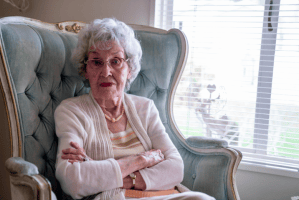
In March 2023, after months of preparation and paperwork, Anita Omary arrived in the United States from her native Afghanistan to build a better life. Once she arrived in Connecticut, however, the experience was anything but easy.
“When I first arrived, everything felt so strange—the weather, the environment, the people,” Omary recalled. Omary had not only left behind her extended family and friends in Afghanistan, she left her career managing child protective cases and supporting refugee communities behind as well. Even more challenging, Anita was five months pregnant at the time, and because her husband was unable to obtain a travel visa, she found herself having to navigate a new language, a different culture, and an unfamiliar country entirely on her own.
“I went through a period of deep disappointment and depression, where I wasn’t able to do much for myself,” Omary said.
Then something incredible happened: Omary met a woman who would become her close friend, offering support that would change her experience as a refugee—and ultimately the trajectory of her entire life.
Understanding the journey
Like Anita Omary, tens of thousands of people come to the United States each year seeking safety from war, political violence, religious persecution, and other threats. Yet escaping danger, unfortunately, is only the first challenge. Once here, immigrant and refugee families must deal with the loss of displacement, while at the same time facing language barriers, adapting to a new culture, and sometimes even facing social stigma and anti-immigrant biases.
Welcoming immigrant and refugee neighbors strengthens the nation and benefits everyone—and according to Anita Omary, small, simple acts of human kindness can make the greatest difference in helping them feel safe, valued, and truly at home.
A warm welcome
Dee and Omary's son, Osman
Anita Omary was receiving prenatal checkups at a woman’s health center in West Haven when she met Dee, a nurse.
“She immediately recognized that I was new, and that I was struggling,” Omary said. “From that moment on, she became my support system.”
Dee started checking in on Omary throughout her pregnancy, both inside the clinic and out.
“She would call me and ask am I okay, am I eating, am I healthy,” Omary said. “She helped me with things I didn’t even realize I needed, like getting an air conditioner for my small, hot room.”
Soon, Dee was helping Omary apply for jobs and taking her on driving lessons every weekend. With her help, Omary landed a job, passed her road test on the first attempt, and even enrolled at the University of New Haven to pursue her master’s degree. Dee and Omary became like family. After Omary’s son, Osman, was born, Dee spent five days in the hospital at her side, bringing her halal food and brushing her hair in the same way Omary’s mother used to. When Omary’s postpartum pain became too great for her to lift Osman’s car seat, Dee accompanied her to his doctor’s appointments and carried the baby for her.
“Her support truly changed my life,” Omary said. “Her motivation, compassion, and support gave me hope. It gave me a sense of stability and confidence. I didn’t feel alone, because of her.”
More than that, the experience gave Omary a new resolve to help other people.
“That experience has deeply shaped the way I give back,” she said. “I want to be that source of encouragement and support for others that my friend was for me.”
Extending the welcome
Omary and Dee at the Martin Luther King, Jr. Vision Awards ceremony at the University of New Haven.
Omary is now flourishing. She currently works as a career development specialist as she continues her Master’s degree. She also, as a member of the Refugee Storytellers Collective, helps advocate for refugee and immigrant families by connecting them with resources—and teaches local communities how to best welcome newcomers.
“Welcoming new families today has many challenges,” Omary said. “One major barrier is access to English classes. Many newcomers, especially those who have just arrived, often put their names on long wait lists and for months there are no available spots.” For women with children, the lack of available childcare makes attending English classes, or working outside the home, especially difficult.
Omary stresses that sometimes small, everyday acts of kindness can make the biggest difference to immigrant and refugee families.
“Welcome is not about big gestures, but about small, consistent acts of care that remind you that you belong,” Omary said. Receiving a compliment on her dress or her son from a stranger in the grocery store was incredibly uplifting during her early days as a newcomer, and Omary remembers how even the smallest gestures of kindness gave her hope that she could thrive and build a new life here.
“I built my new life, but I didn’t do it alone,” Omary said. “Community and kindness were my greatest strengths.”
Are you in? Click here to join the Refugee Advocacy Lab and sign the #WeWillWelcome pledge and complete one small act of welcome in your community. Together, with small, meaningful steps, we can build communities where everyone feels safe.
This article is part of Upworthy’s “The Threads Between U.S.” series that highlights what we have in common thanks to the generous support from the Levi Strauss Foundation, whose grantmaking is committed to creating a culture of belonging.
When Cashia and Terrance Bryant first met, they knew they had something special. But Cashia was keeping something important from her man. The couple, who has now been married for two years, connected very quickly. After a short time together, they knew that their love was real, (even though they still argue about who said…
When Cashia and Terrance Bryant first met, they knew they had something special. But Cashia was keeping something important from her man.
The couple, who has now been married for two years, connected very quickly. After a short time together, they knew that their love was real, (even though they still argue about who said “I love you” first).
However, before they could take their relationship to the next level, Cashia had to come clean about something that had been worrying her since the start of their relationship — her bad credit.
“I didn’t tell you for a long time because I was so scared you were gonna run,” Cashia admits to Terrance.
Cashia’s bad credit has been following her since she was 18-years-old.
As a 42-year-old woman, Cashia knows how to build up and retain good credit. But when the family therapist was 18 years old, she had no idea what responsibility came with owning a credit card. She also racked up some considerable student loans.
Unfortunately, that has affected Cashia’s credit up until this day.
And she’s not only one with credit issues. Terrance’s credit isn’t where he’d like it to be either, and when he has money, a good portion of it goes to supporting his 17-year-old daughter, Ty’asia.
The couple’s been making progress, though, because they have a major goal ahead of them. They want to own a house by next year.
At first, this goal seemed completely insurmountable. How could two (now successful) people with low credit afford to own their own place?
In order to get to on the right path, Cashia and Terrance had to take a long look at their finances and make the decision to save rather than spend. It’s easier said than done, and considering where they’re at in their lives — with so many expenses that need to be taken care of right now — it sometimes felt like they were chasing an impossible dream.
While it took hard work and patience, the Bryants are now much closer to making their dream a reality.
Here’s how they’re doing it:
First, the couple dissected how much money they bring in versus how much goes out each month. Based on that information, Cashia created an aggressive budget for the pair — one that cuts down on spending while still allowing them to have a little fun as they save for a down payment.
As they get into the habit of saving, they’re crafting a future in which making wise financial decisions comes easily and naturally to them.
Due to their lower credit scores, the Bryants may have to put more money down on the house they eventually choose, but thanks to their financial planning efforts, that’s no longer an insurmountable task.
Ultimately, the process of buying a house is bringing the couple closer together. While the decisions that they’ve had to make have been difficult, sharing this mutual goal is like a recommitment to each other.
And all their planning and saving has made it possible for them to afford a down payment on a house next year. With that hurdle behind them, they can now pursue their greater goal beyond home ownership.
“We want our own family,” says Cashia “I want our baby to experience a home.”
“It took both of us,” Terrance beams. “I’m glad we found each other.”
To learn more about the Bryant’s journey to homeownership, check out this video:
When Nyna Sorn came to America, her family had nothing. So she’s had to spend her life making tough financial decisions. When Nyna was only five years old, she and her parents escaped the Khmer Rouge — the brutal regime of the Communist Party of Kampuchea (CPK) in Cambodia. The family had lost everything, and…
When Nyna Sorn came to America, her family had nothing. So she’s had to spend her life making tough financial decisions.
When Nyna was only five years old, she and her parents escaped the Khmer Rouge — the brutal regime of the Communist Party of Kampuchea (CPK) in Cambodia. The family had lost everything, and that meant that they had to scrimp and save in order to get by in their new country of the United States.
When she grew up, Nyna made a promise to herself: she would work as hard as she could in order to ensure that her children didn’t have a childhood like hers. She would do her very best to provide for them in ways that her parents couldn’t provide for her. She would make sure that their future was bright and full of possibilities.
“My dream is to see all my children successful,” Nyna says.
Nyna’s tried to impart her perspectives on money and saving onto her children, but as her kids got older, she’s become concerned about their spending habits.
Nyna has been a single mom for the past decade. While her youngest child isn’t yet old enough to learn about responsible spending, she’s worked hard to teach her older children, who are 15 and 18, how to save money when they can.
However, she worries that they’re being swayed by society’s proclivity for instant gratification, and becoming too materialistic. She’s especially concerned about her daughter Macara who, at 18, will soon be in charge of her own finances.
Nyna and Macara’s situations are very different. At 17, Nyna was already a mother. She didn’t have any financial support. That’s why she feels it’s important for Macara to understand the possible impacts of the money decisions she’s making now. But while Macara appreciates everything her mother’s done for her (including paying for college), she finds it difficult to focus on her finances.
“I don’t want to think about it too deep,” says Macara. “I don’t want to be in the future. I want to be in the present. I don’t want to be stressed out.”
It’s not easy to talk about money, but Nyna knows that being open and honest with her daughter is the only way to help her make smart decisions.
Sometimes Nyna feels like she’s being too hard on Macara, but it’s only because she wants her to have a bright future.
“I want you to be able to do better than I did,” Macara tells her daughter. “I believe in you. I believe that if you wanted to do something, you can do it.”
“I’m just trying to help you. I’m trying to pave a path.”
These kinds of conversations may be tough, but they’re necessary.
By sitting down and talking about money as more than an abstract concept, Nyna’s showing her daughter that she’s someone she can always talk to about her future, financial or otherwise.
“It’s like a signal for me to do something,” says Macara. “Can we keep having these conversations?”
“You need something, you can talk to me. I will always support you,” Nyna responds.
To learn more and Nyna and Macara Sorn, check out the video below.
The Kunziers were rich in the things that matter most—family and love—but their finances were in shambles. John Kunzier had been running a successful construction business when 9/11 happened and changed everything. When the business started struggling, John didn’t want to fire his employees, so he made some decisions that, in hindsight, were the wrong…
The Kunziers were rich in the things that matter most—family and love—but their finances were in shambles.
John Kunzier had been running a successful construction business when 9/11 happened and changed everything. When the business started struggling, John didn’t want to fire his employees, so he made some decisions that, in hindsight, were the wrong ones. The following year, the business failed.
“It was a big blow to my ego,” says John, “to have something you built completely collapse.”
John had to declare bankruptcy. John’s wife, Liz, was pregnant with twins at the time, and the family had to rely on loans to make ends meet. “We actually took out a loan that would never end,” says John.
“It was a horrible financial decision for us,” says Liz.
The Kunziers began, slowly but surely, picking up the pieces of their financial life but then the 2008 Great Recession hit. “It was literally like somebody ripped the rug out from under us,” says John.
Liz kept a “money tree”—a good luck tree people sometimes keep in their homes. The tree wasn’t in great shape, but it limped along, and then one day one of the twins cut it down. It was the perfect metaphor for the family’s financial situation.
As a result, the family took no vacations, never ate out, and didn’t buy any new toys. Despite that, they weren’t unhappy.
The Kunziers are a large family. John and Liz have seven kids including the twins and two grandchildren. So when they hit financial hard times, they had to cut out everything but the necessities. The couple didn’t even give each other birthday or Christmas presents.
They’ve been real with their kids about their situation, especially as they’ve gotten older. The family lives in a very affluent area, and the kids are used to seeing people with lots of material things. But John and Liz maintained the philosophy that “things don’t make you happy.”
“I took it as us being a different kind of rich,” says the Kunzier’s daughter, Claire. “Us being rich in family.”
Not wanting their kids to feel a sense of deprivation, Liz says, “We didn’t say, ‘Oh we can’t do that because we can’t afford it,’ we would just say, ‘No, we’re not doing that. That’s not something we’re going to do.’”
“We wanted to make sure your upbringing was good and memorable and fun, and that you guys didn’t know any different,” John tells his kids.
What’s more, the Kunzier kids have learned valuable lessons from their parents’ financial experiences.
When the market turned around, the Kunziers were able to refinance their home, which helped them climb out of their financial hole. “All of a sudden, things got better and better and better,” says John. “It’s a snowball effect, either way.”
Because the Kunziers are open with their kids about their financial journey, their kids will have a better sense of how to financially plan and make sound monetary decisions.
“I think it’s really important for me to hear this,” says Claire. “Because I am a freshman in college, and I am starting to make these financial decisions for myself, especially with loans.” Claire says she won’t live on campus next year so she won’t have to take a loan out to pay for room and board.
“For me,” she says, “deciding what’s important to do is being shaped by what you guys did.”
The Kunziers now have loads of financial wisdom, guidance, and proven advice to pass on to their kids and grandkids. But perhaps the most crucial lesson is one they’ve already imparted — how to maintain a resilient spirit and focus on what’s most important when times are toughest.
“We didn’t have all the money in the world, but we had each other,” says the Kunziers’ son, Jack.
“Not having a whole lot of money isn’t the worst thing in the world,” says Liz, “because if you’ve got your family with you, and you love each other. That makes it not sting so bad.”
Karleh Wilson didn’t know she had a credit problem until she wanted to buy a house. Karleh and her fiancée, Kareem, have been living in a rented 3-bedroom home with their daughter, Kaari, in Philadelphia. But when they realized how much money they were forking over in rent that wasn’t going towards any long-term investment,…
Karleh Wilson didn’t know she had a credit problem until she wanted to buy a house.
Karleh and her fiancée, Kareem, have been living in a rented 3-bedroom home with their daughter, Kaari, in Philadelphia. But when they realized how much money they were forking over in rent that wasn’t going towards any long-term investment, they decided to start the process of purchasing their first home.
Karleh researched what she’d need to make that happen, and found out she’d need a credit score of at least 650. However, when she looked at her free credit report, she found out her credit score was a dismal 315. So, in order to get a mortgage, she’d have to find a way to at least double her score, and hopefully get it even higher to land a competitive interest rate.
Karleh is a smart and responsible person. She went to an Ivy League school. So how did she end up in such a terrible credit situation?
It came down to an oversight that she made while she was in college.
She had gotten a card at a department store not realizing it was a credit card.
“I remember being in college and getting my first credit card,” says Karleh. “I also remember being confused about the difference between a credit card and a store card. At that point, I was still getting used to using a bank account, much less navigating the complicated world of consumer credit.”
Since Karleh didn’t realize the retail card was actually a credit card, she had been missing payments for quite some time, which ultimately had a negative effect on her credit score.
Like many college kids, she didn’t have the financial education to fully understand how credit worked. Karleh’s dad feels that he bears some responsibility for that fact. “That’s not stuff you talk about in the family,” says Karleh’s dad. “You don’t want to put that stress on your child.”
Thankfully, Karleh was able to turn her credit score around with some diligent research and new habits.
She was embarrassed by her low score, and she and Kareem want to raise Kaari in a financially secure household.
Her dad was a big cheerleader throughout the process. He told Karleh she could turn her credit around, and said it with such confidence that she believed him.
Karleh started paying all of her bills on time. She got a credit card that was built for people with poor credit, used it for all of her purchases, and payed it off in full every two weeks. “That really drove my credit through the roof,” she says.
“At this point, I’ve gotten my credit in a really good situation,” Karleh says, “and now I’m approved for a mortgage.”
At 24 years old, Karleh has gotten her credit under control and will soon be closing on her first home. In addition, she’ll be providing a financially savvy example for her daughter, and her dad couldn’t be more proud.
To learn more about Karleh’s financial journey, check out this video: