Adorable 'Haka baby' dance offers a sweet window into Maori culture
Stop what you're doing and let this awesomeness wash over you.
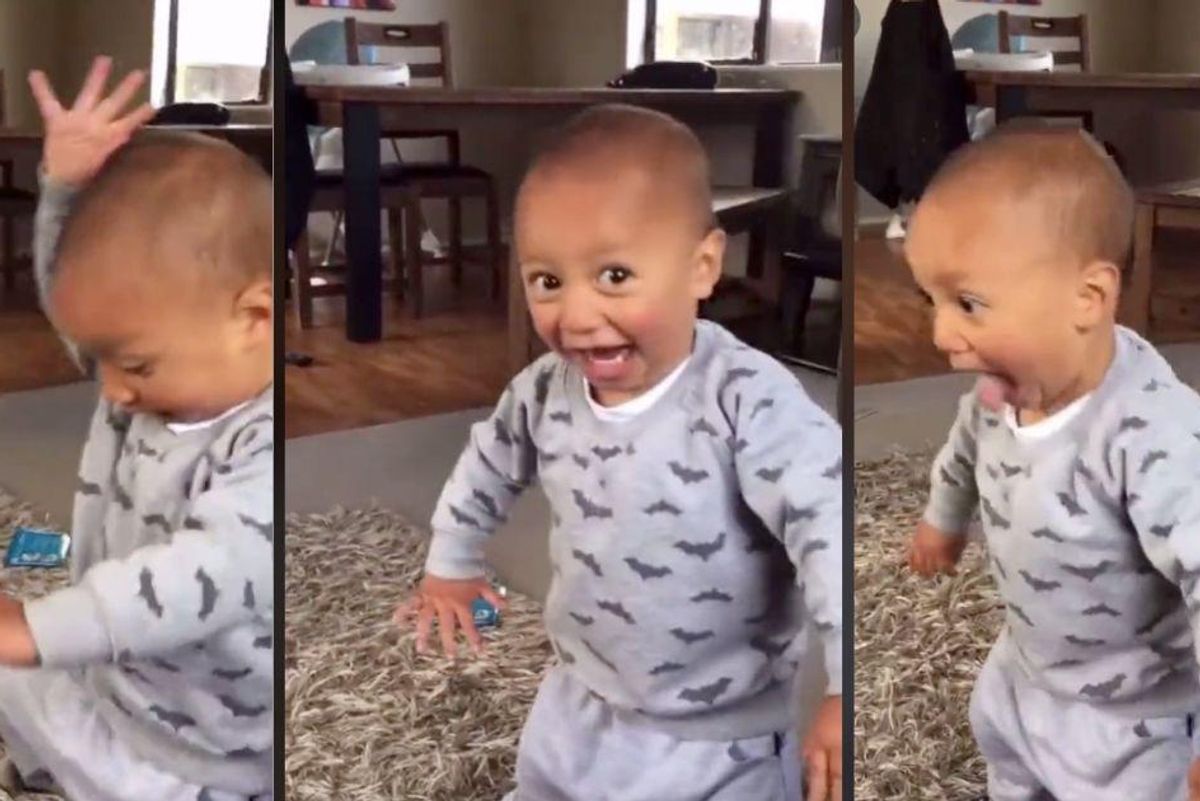
A young Māori performing his haka dance.
If you've never seen a Māori haka performed, you're missing out.
The Māori are the indigenous peoples of New Zealand, and their language and customs are an integral part of the island nation. One of the most recognizable Māori traditions outside of New Zealand is the haka, a ceremonial dance or challenge usually performed in a group. The haka represents the pride, strength, and unity of a tribe and is characterized by foot-stamping, body slapping, tongue protrusions, and rhythmic chanting.
Haka is performed at weddings as a sign of reverence and respect for the bride and groom, at funerals, at other significant events, and are also frequently seen before sports competitions, such as rugby matches.
The intensity of the haka is the point. It is meant to be a show of strength and elicit a strong response—which makes seeing a tiny toddler learning to do it all the more adorable.
Here's an example of a rugby haka:
Danny Heke, who goes by @focuswithdan on TikTok, shared a video of a baby learning haka and omigosh it is seriously the most adorable thing. When you see most haka, the dancers aren't smiling—their faces are fierce—so this wee one starting off with an infectious grin is just too much. You can see that he's already getting the moves down, facial expressions and all, though.
@focuswithdan When you grow up learning haka! #haka #teachthemyoung #maori #māori #focuswithdan #fyp #foryou #kapahaka ♬ original sound - 𝕱𝖔𝖈𝖚𝖘𝖂𝖎𝖙𝖍𝕯𝖆𝖓
As cute as this video is, it's part of a larger effort by Heke to use his TikTok channel to share and promote Māori culture. His videos cover everything from the Te Reo Māori language to traditional practices to issues of prejudice Māori people face.
Here he briefly goes over the different body parts that make up haka:
@focuswithdan ♬ Ngati - Just2maori
This video explains the purerehua, or bullroarer, which is a Maori instrument that is sometimes used to call rains during a drought.
@focuswithdan Reply to @illumi.is.naughty Some tribes used this to call the rains during drought 🌧 ⛈ #maori #māori #focuswithdan #fyp ♬ Pūrerehua - 𝕱𝖔𝖈𝖚𝖘𝖂𝖎𝖙𝖍𝕯𝖆𝖓
This one shares a demonstration and explanation of the taiaha, a traditional Māori weapon.
@focuswithdan Reply to @shauncalvert Taiaha, one of the most formidable of the Māori Weaponry #taiaha #maori #māori #focuswithdan #fyp #foryou ♬ original sound - 𝕱𝖔𝖈𝖚𝖘𝖂𝖎𝖙𝖍𝕯𝖆𝖓
For another taste of haka, check out this video from a school graduation:
@focuswithdan When your little cuzzy graduates and her school honours her with a haka #maori #māori #haka #focuswithdan #fyp #graduation @its_keshamarley ♬ Te Kura Kaupapa Māori o Ngāti Ruanui - 𝕱𝖔𝖈𝖚𝖘𝖂𝖎𝖙𝖍𝕯𝖆𝖓
Heke even has some fun with the trolls and racists in the comments who try to tell him his culture is dead (what?).
@focuswithdan Credit to you all my AMAZING FOLLOWERS! #focuswithdan #maori #māori #followers #fyp #trolls ♬ original sound - sounds for slomo_bro!
Unfortunately, it's not just ignorant commenters who spew racist bile. A radio interview clip that aired recently called Māori people "genetically predisposed to crime, alcohol, and underperformance," among other terrible things. (The host, a former mayor of Auckland, has been let go for going along with and contributing to the caller's racist narrative.)
@focuswithdan #newzealand radio in 2021 delivering racist commentaries 🤦🏽♂️ #māori #maori #focuswithdan #racism DC: @call.me.lettie2.0 ♬ original sound - luna the unicow
That clip highlights why what Heke is sharing is so important. The whole world is enriched when Indigenous people like the Māori have their voices heard and their culture celebrated. The more we learn from each other and our diverse ways of life, the more enjoyable life on Earth will be and the better we'll get at collaborating to confront the challenges we all share.
This article originally appeared four years ago.
- Meet the student fighting for his country's native language. He's ... ›
- The Maori just took Standing Rock solidarity up a notch with their ... ›
- This Māori group's kapa haka performance of Bohemian Rhapsody ... ›
- Man surprises partner by performing haka alone at graduation - Upworthy ›
- American friends learn haka for grieving Māori man - Upworthy ›
- Māori kapa haka performance of 'Bohemian Rhapsody' stuns - Upworthy ›
 A Generation Jones teenager poses in her room.Image via Wikmedia Commons
 A Target store at night.via
  An aisle at a Target.via

 Which map app is best?
 We've become pretty finicky about our map apps in the modern age.