Everyone loves this two-year-old’s reaction to seeing Bruce Banner become the Hulk
There are some moments in life you can never get back. Seeing the twist in “The Empire Strikes Back.” Meeting your husband or wife for the first time. The first time you rode a roller coaster. With the advent of social media, parents have been taking video of their children watching pivotal moments in pop…
There are some moments in life you can never get back. Seeing the twist in “The Empire Strikes Back.” Meeting your husband or wife for the first time. The first time you rode a roller coaster.
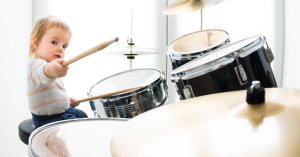
With the advent of social media, parents have been taking video of their children watching pivotal moments in pop culture to share their reactions. Irish comedian Paddy Raff filmed his two-year-old daughter, Clara’s reaction where she saw Bruce Banner turn into the Hulk for the first time.
And we all know what happens when he becomes the Hulk, right? He smashes everything in sight.
In a small village in Pwani, a district on Tanzania’s coast, a massive dance party is coming to a close. For the past two hours, locals have paraded through the village streets, singing and beating ngombe drums; now, in a large clearing, a woman named Sheilla motions for everyone to sit facing a large projector screen. A film premiere is about to begin.
It’s an unusual way to kick off a film about gender bias, inequality, early marriage, and other barriers that prevent girls from accessing education in Tanzania. But in Pwani and beyond, local organizations supported by Malala Fund and funded by Pura are finding creative, culturally relevant ways like this one to capture people’s interest.
The film ends and Sheilla, the Communications and Partnership Lead for Media for Development and Advocacy (MEDEA), stands in front of the crowd once again, asking the audience to reflect: What did you think about the film? How did it relate to your own experience? What can we learn?
Sheilla explains that, once the community sees the film, “It brings out conversations within themselves, reflective conversations.” The resonance and immediate action create a ripple effect of change.
MEDEA Screening Audience in Tanzania. Captured by James Roh for Pura
Across Tanzania, gender-based violence often forces adolescent girls out of the classroom. This and other barriers — including child marriage, poverty, conflict, and discrimination — prevent girls from completing their education around the world.
Sheilla and her team are using film and radio programs to address the challenges girls face in their communities. MEDEA’s ultimate goal is to affirm education as a fundamental right for everyone, and to ensure that every member of a community understands how girls’ education contributes to a stronger whole and how to be an ally for their sisters, daughters, granddaughters, friends, nieces, and girlfriends.
Sheilla’s story is one of many that inspired Heart on Fire, a new fragrance from the Pura x Malala Fund Collection that blends the warm, earthy spices of Tanzania with a playful, joyful twist. Here’s how Pura is using scent as a tool to connect the world and inspire action.
A partnership focused on local impact, on a global mission
Pura, a fragrance company that recognizes education as both freedom and a human right, has partnered with Malala Fund since 2022. In order to defend every girl’s right to access and complete 12 years of education, Malala Fund partners with local organizations in countries where the educational barriers are the greatest. They invest in locally-led solutions because they know that those who are closest to the problems are best equipped to solve and build durable solutions, like MEDEA, which works with communities to challenge discrimination against girls and change beliefs about their education.
But local initiatives can thrive and scale more powerfully with global support, which is why Pura is using their own superpower, the power of scent, to connect people around the world with the women and girls in these local communities.
The Pura x Malala Fund Collection incorporates ingredients naturally found in Tanzania, Nigeria, Pakistan, and Brazil: countries where Malala Fund operates to address systemic education barriers. Eight percent of net revenue from the Pura x Malala Fund Collection will be donated to Malala Fund directly, but beyond financial support, the Collection is also a love letter to each unique community, blending notes like lemon, jasmine, cedarwood, and clove to transport people, ignite their senses, and help them draw inspiration and hope from the global movement for girls’ education. Through scent, people can connect to the courage, joy, and tenacity of girls and local leaders, all while uniting in a shared commitment to education: the belief that supporting girls’ rights in one community benefits all of us, everywhere.
You’ve already met Sheilla. Now see how Naiara and Mama Habiba are building unique solutions to ensure every girl can learn freely and dare to dream.
Naiara Leite is reimagining what’s possible in Brazil
Julia with Odara in Brazil. Captured by Luisa Dorr for Pura
In Brazil, where pear trees and coconut plantations cover the Northeastern Coast, girls like ten-year-old Julia experience a different kind of educational barrier than girls in Tanzania. Too often, racial discrimination contributes to high dropout rates among Black, quilombola and Indigenous girls in the country.
“In the logic of Brazilian society, Black people don’t need to study,” says Naiara Leite, Executive Coordinator of Odara, a women-led organization and Malala Fund partner. Bahia, the state where Odara is based, was once one of the largest slave-receiving territories in the Americas, and because of that history, deeply-ingrained, anti-Black prejudice is still widespread. “Our role and the image constructed around us is one of manual labor,” Naiara says.
But education can change that. In 2020, with assistance from a Malala Fund grant, Odara launched its first initiative for improving school completion rates among Black, quilombola, and Indigenous girls: “Ayomidê Odara”. The young girls mentored under the program, including Julia, are known as the Ayomidês. And like the Pura x Malala Fund Collection’s Brazil: Breath of Courage scent, the Ayomidês are fierce, determined, and bursting with energy.
Ayomidês with Odara in Brazil. Captured by Luisa Dorr for Pura
Ayomidês take part in weekly educational sessions where they explore subjects like education and ethnic-racial relations. The girls are encouraged to find their own voices by producing Instagram lives, social media videos, and by participating in public panels. Already, the Ayomidês are rewriting the narrative on what’s possible for Afro-Brazilian girls to achieve. One of the earliest Ayomidês, a young woman named Debora, is now a communications intern. Another former Ayomidê, Francine, works at UNICEF, helping train the next generation of adolescent leaders. And Julia has already set her sights on becoming a math teacher or a model.
“These are generations of Black women who did not have access to a school,” Naiara says. “These are generations of Black women robbed daily of their dreams. And we’re telling them that they could be the generation in their family to write a new story.”
Mama Habiba is reframing the conversation in Nigeria
Centre for Girls' Education, Nigeria. Captured by James Roh for Pura
In Mama Habiba’s home country of Nigeria, the scents of starfruit, ylang ylang and pineapple, all incorporated into the Pura x Malala Collection’s “Nigeria: Hope for Tomorrow,” can be found throughout the vibrant markets. Like these native scents, Mama Habiba says that the Nigerian girls are also bright and passionate, but too often they are forced to leave school long before their potential fully blooms.
“Some of these schools are very far, and there is an issue of quality, too,” Mama Habiba says. “Most parents find out when their children are in school, the girls are not learning. So why allow them to continue?”
When girls drop out of secondary school, marriage is often the alternative. In Nigeria, one in three girls is married before the age of 18. When this happens, girls are unable to fulfill their potential, and their families and communities lose out on the social, health and economic benefits.
Completing secondary school delays marriage, and according to UNESCO, educated girls become women who raise healthier children, lift their families out of poverty and contribute to more peaceful, resilient communities.
Centre for Girls’ Education, Nigeria. Captured by James Roh for Pura
To encourage young girls to stay in school, the Centre for Girls’ Education, a nonprofit in Nigeria founded by Mama Habiba and supported by Malala Fund and Pura, has pioneered an initiative that’s similar to the Ayomidê workshops in Brazil: safe spaces. Here, girls meet regularly to learn literacy, numeracy, and other issues like reproductive health. These safe spaces also provide an opportunity for the girls to role-play and learn to advocate for themselves, develop their self-image, and practice conversations with others about their values, education being one of them. In safe spaces, Mama Habiba says, girls start to understand “who she is, and that she is a girl who has value. She has the right to negotiate with her parents on what she really feels or wants.”
“When girls are educated, they can unlock so many opportunities,” Mama Habiba says. “It will help the economy of the country. It will boost so many opportunities for the country. If they are given the opportunity, I think the sky is not the limit. It is the starting point for every girl.”
From parades, film screenings to safe spaces and educational programs, girls and local leaders are working hard to strengthen the quality, safety and accessibility of education and overcome systemic challenges. They are encouraging courageous behavior and reminding us all that education is freedom.
Experience the Pura x Malala Fund Collection here, and connect with the stories of real girls leading change across the globe.
For young baseball fans, meeting a Major League Baseball player can be a memorable highlight of a trip to the ballpark. However, one fan not only got to enjoy their favorite hobby with a player, but also walked away with two impromptu autographs from others thanks to him.
MLB veteran Paul Lo Duca met a young baseball card collector named Noah and his brother on the sidelines before a Mets game. He took the time to open a pack of 2008 Topps baseball cards with Noah, even joking that one of his own cards might appear. When the pack was opened, Lo Duca wasn’t among the players—but two of his former teammates were: Mike Piazza and Johan Santana. Without prompting, Lo Duca grabbed the cards and a pen and ran onto the field to have both players autograph them.
Watch til the end! Our number 1 video of the season! We rip a pack of 2008 Topps with Paul Lo Duca! He pulls both a Mike Piazza AND Johan Santana! He then goes and gets both signed! #baseballcards#packrip#sportscards#topps#baseball @Topps @MLB Network @MLB @ESPN @Collect @Fanatics @Baseball Lifestyle @The Athletic @New York Mets
It would have been understandable for Lo Duca to just give Noah a quick hello, maybe even sign a card if one of his had turned up in the pack. Instead, he went out of his way to get signatures from other players for the young fan. Noah graciously thanked Lo Duca for the gesture and even posed for a photo with him.
The comments on the boy’s TikTok were abuzz with praise for Lo Duca and the interaction:
“You never see a professional player interact with a fan this long. He opened a pack and then RAN to get both the cards he got signed. What an amazing guy.”
“That’s so cool, ripping packs with the pros 💪”
“It was unbelievable. The kids will never forget this.”
“This is why baseball will forever be America’s favorite pastime…My friend’s daughter was lucky enough to get a game-used Bryce Harper bat from Harp himself at one game.”
“How can you not be romantic about baseball?”
“Outstanding! Made a lifelong memory for the kids and cost nothing but kindness.”
“I love EVERYTHING about this!!! 💙 I have two grandsons who play baseball and I think I would be literally in tears if this were to happen to them because I know how much they love the game and look up to men like this in the sport! 🧢⚾️”
“This is officially the best card opening pack video I’ve ever seen. Regardless of sport or collectible.”
“Paul is every kid’s dream interaction at the ball park. Class act.”
“Not a Mets fan, but just became a Paul fan!”
“It doesn’t take long for athletes and former athletes to make a story for a kid they’ll never forget. Lots of respect for Paul doing this!”
“He’s just happy to see kids still into baseball cards! Keeping it alive!”
Baseball cards are making a comeback
Since the COVID-19 pandemic, baseball cards and other trading cards have surged in popularity among young fans like Noah, as well as adults. Lo Duca even mentions that he owns a collectible card store. In an era when many young people’s hobbies revolve around screens and online interaction, parents and teachers are largely welcoming the return of trading cards to schoolyards.
Trading cards can have several benefits for kids, including: 1. Fostering a sense of community and social connections through trading and collecting with friends and peers. 2.Encouraging organization and categorization skills as they sort and manage their collections. 3.Developing research and critical thinking skills as they learn about different cards, players, and teams. 4.Promoting patience, persistence, and self-discipline as they hunt for rare or hard-to-find cards. 5.Enhancing knowledge and interest in various subjects, such as sports, history, or pop culture. 6.Encouraging entrepreneurship and business skills through buying, selling, and trading cards. 7.Building self-confidence and pride in their collections and accomplishments. 8.Developing fine motor skills through handling and sorting cards. 9.Learning about the value of money and responsible spending habits. 10.Having fun and enjoying a hobby that can last a lifetime! #lawlerballers#topps#bowman#panini#baseballcards#sportstradingcards#cardbreaks#memories#baseballboys @mlb (Also they have already started a nice little savings!) @topps
While trading cards still require the same parenting and supervision as any hobby, they’re often seen as a way to “trick” kids into learning math. Sports cards like Noah’s offer opportunities to measure and learn statistics, while kids interested in commerce can learn to assess value in collector markets. Even non-sports cards, like Pokémon or Magic: The Gathering, involve similar math both in the cards themselves and in gameplay.
It’s players like Lo Duca who help keep fandom alive, whether it’s baseball, card collecting, or both. As commenters noted, that kind of joy, kindness, and excitement gets passed on to future fans and players alike.
The Oscars are a major event that draws millions of viewers each year. But for Marshall, the March 15 ceremony became a moment of inclusion. As she watched Coogler sign, her emotions grew. The filmmaker took to social media to share her excitement with her followers.
In her Instagram video, Marshall excitedly signs, “That’s director Ryan Coogler signing ‘I love you.’ But there’s more.”
A brief clip of musician Ludwig Göransson saying Coogler’s name plays, prompting the Black Panther director to sign, “I love you. Thank you, brother.” Marshall then reappears to explain that Coogler was signing to people all night. As she shows more clips, her emotions build until she’s nearly in tears.
Marshall adds, “I just learned that his wife Zinzi, is an ASL interpreter… my heart…As a Deaf filmmaker, watching them normalize sign language like that…More please!”
Zinzi Coogler, who co-founded Proximity Media with her husband and Sev Ohanian, didn’t always plan to work in film—in fact, the career wasn’t on her radar. She attended California State University, Fresno, where she studied communicative sciences and deaf studies, according to Marie Claire. After graduating, she worked as an interpreter at the nonprofit Deaf Counseling, Advocacy & Referral Agency. Given their shared professional paths, it’s likely Ryan Coogler picked up some sign language, though it’s unclear to what extent.
The inclusion of ASL isn’t new to the Cooglers. In 2015, Leonard Maltin hosted Ryan Coogler for his film symposium class at the USC School of Cinematic Arts. One student asked why the lead female character in Creed, played by Tessa Thompson, experiences hearing loss.
Maltin shared, “Ryan explained that his fiancée teaches ASL (American Sign Language) and being with her has brought him into that sphere. In other words, a significant facet of the movie is drawn from reality and is not a mere bit of business.”
It seems that ASL is integrated into the lives of the Cooglers, and they regularly incorporate it into their films. This seamless inclusion helps normalize sign language for audiences. Advocates report that the media underrepresents deaf and hard-of-hearing people, as well as ASL users.
In a statement, the National Association of the Deaf said, “Portrayals of deaf and hard of hearing people in film, television, and theater have a significant impact on the public image of our community. There is no shortage of professional deaf and hard of hearing actors to fill these roles. … We call for increased casting of deaf and hard of hearing actors in all roles.”
People who viewed Marshall’s post expressed gratitude for the inclusion of ASL and agreed that representation matters. One person wrote, “Inclusivity is not that hard and makes an incredibly huge impact.”
Advocating for ASL to be taught alongside English, another commenter wrote, “Sign Language should be taught to everyone along English or the main language. Imagine if we could ALL communicate in silence as well! Like calling or texting, we should be able to switch between talking and signing!”
Another person revealed, “His wife has Deaf family members. That’s why he learned (and there’s a lot of stories of him interpreting for Deaf/hoh people without making a big deal of it.) That’s also why there was a push for HBO to have BASL interpreted version of sinners.”
Further in the comments, someone shared their anticipation for the next Creed movie bringing more representation to the big screen. They wrote:
“And in his ‘CREED’ movies one of his main characters has a condition where she is losing her hearing. By CREED 3 there is the introduction of a Deaf character, Creed’s daughter. The two main characters and the daughter use sign language. This daughter seems interested in becoming a boxer…so now that CREED 4 has been announced, I predict the daughter will be the main character. This will be a movie that champions the ASL community, so keep an eye out for CREED 4.”
The notice informed her that a neighbor had filed a complaint about her “inappropriate public displays” and “disturbance of community aesthetics.” She was baffled. She practiced at 6 AM when almost no one else was awake, wore standard workout clothes, and made no noise.
Then it got stranger. When she followed up with the HOA manager for specifics, she learned the neighbor had gone further than a written complaint. They had been photographing her in various poses and submitted the photos as evidence, arguing they were “inappropriate for children to potentially see” and were “promoting Eastern religious practices in a family community.”
A woman meditates while doing yoga. Photo credit: Canva
“I’m literally just doing basic vinyasa flow!” she wrote.
The detail about Eastern religious practices caught significant attention when the post went viral on Reddit, and for good reason. Legal experts and housing advocates are clear on this point: the Fair Housing Act prohibits HOAs from restricting a homeowner’s use of their property based on religion. As one legal resource explains it plainly, an HOA can ban exercise broadly, but it cannot single out yoga specifically because of its perceived religious associations. The same logic applies to holiday decorations — an HOA that bans string lights for Diwali but allows Christmas lights is on legally shaky ground.
Commenters on the post were quick to flag this. “If that whole promoting Eastern religion thing is an exact quote, I feel like that right there is your ticket to fight,” wrote u/cheybananas. “They can’t just outlaw religious practices.”
Others were more focused on the neighbor’s surveillance. Several urged her to file a counter-complaint about someone photographing her on her own private terrace at dawn. “Taking photos of someone on their private residence without their knowledge or consent?” u/ok-pomegranate-6479 wrote. “Involve authorities if you have to, that’s creepy.”
A woman executes an advanced yoga pose on the beach. Photo credit: Canva
The homeowner had already come to the same conclusion on her own. After reviewing her HOA’s bylaws, she found nothing prohibiting yoga or exercise on private terraces, only a vague clause about maintaining community standards. She drafted a formal email to the HOA board requesting the specific bylaw citation they were relying on, along with copies of all photos collected of her. She also made clear she was considering a counter-complaint about the neighbor’s behavior.
“The irony is that yoga is supposed to reduce stress,” she wrote, “but this whole situation is doing the opposite.”
Her experience isn’t unusual. A Rocket Mortgage survey of more than 1,000 HOA homeowners found that more than 3 in 10 feel their HOA has too much power, and 10% have considered selling their home because of it.
This article originally appeared earlier this year.
The word “trending” may have gained a whole new meaning in the Internet age, but trends have always existed as a social phenomenon. A video of teens in the ’90s doing “Cat’s Cradle” has people pondering how trends spread, sometimes worldwide, without social media.
For those who are unfamiliar, Cat’s Cradle is a game of sorts involving a long loop of string wrapped around your hands and fingers in a specific pattern. The game involves transferring the string from one person to another without getting it tangled. Here’s what it looks like:
The video on X triggered a ton of nostalgia in those who remember playing Cat’s Cradle. But the most remarkable thing is that people from all over the world say they played it around the same time:
“HOW is this a universal thing. We did this exact thing, exact same moves, in Norway in the early 90s. Pre internet.”
“That’s a great question. I used to play that game back in the ’90s, too, and I’m from Brazil.”
“Same in Italy.”
“What? This is a global thing, greetings from Chile.”
“This is a game we used to play in Korea. Seeing it for the first time in a long while makes me miss my childhood memories.”
“We did this in Romania too.”
To be fair, Cat’s Cradle has been around for a long time. No one appears to know its exact origin. But a specific reference to the game appears in the 1768 novel The Light of Nature Pursued by Abraham Tucker:
“An ingenious play they call cat’s cradle; one ties the two ends of a packthread together, and then winds it about his fingers, another with both hands takes it off perhaps in the shape of a gridiron, the first takes it from him again in another form, and so on alternately changing the packthread into a multitude of figures whose names I forget, it being so many years since I played at it myself.”
It appears the game has seen surges in popularity at various times—but how? Why did it specifically trend in the ’90s? How did games, fashion, music, dance styles, and more become popular across the country or even the world before the Internet?
Those who remember life before social media have shared recollections of how trends spread on forums like Reddit and MetaFilter. It’s a fascinating glimpse into a nearly forgotten past:
“Everyone at a school would do it. Then, one group of people from this school would go to a youth group, and meet a group of people from a different school. It would become common throughout the youth group.
People from the youth group would go to their own respective schools, and it would spread around the rest of their school mates who don’t go to that youth group – but perhaps go to a different youth group.
Once something got popular enough, it might feature in magazines or even on TV.” – LondonPilot
“Cultural transmission was a lot slower previously. In the 60s it was said New Zealand was five years behind England, later it was three years.
Broadcast radio and later TV sped up cultural transmission immensely. TV shows were transported on film and played on telecine machines at the studios, up to six years behind the original release.
Magazines were a bigger thing than now. International magazine subscriptions by airmail were extremely expensive so surface mail added up to two months to delivery. Many people read magazines via public libraries.
Note none of the above are interactive, and only magazines allowed niche interests. Broadcast media had very few channels (until the US got cable TV) e.g. in NZ in the 70s a in a big city there might be six radio stations and one TV station. Later there were four major TV stations.
There was much less diversity. Record shops had knowledgeable staff who could make recommendations. These were important as an album was a significant investment.
People travelled and brought back new ideas. (In those days, Western countries were different to each other 😉
Schoolkids spread jokes and games – one person could infect a whole school with a good game.” – cyathea
“I think in the pre-internet days some trends and fashions were spread broadly via mass media, but many were regional and local. My wife grew up in small town Midwest and I grew up in the Boston area, both in the 70s to 80s. There were music, fashion and other cultural trends that were part of everyday life for me in the early- to mid-80s that were entirely unknown to her at that time.” –slkinsey
“I think the big thing was that trends moved more slowly. So you’d have a thing that happened on TV and your weekly magazine (Time, Newsweek) would talk about it. Or your monthly humor magazine (Mad, Cracked). A lot more people watched the same channels, so you’d see people dressed on shows and dressed in commercials… I lived in a rural area, and when I’d visit friends in the big city I’d get ideas and some of those would filter down. I assume it was like this for other people, getting ideas from people more cosmopolitan and then the trickle down. Same with radio, there were only so many stations and there would be a culture that built up around each one which might include shows they promoted (you’d go, you’d see other people) and maybe local events or stuff around them.” –jessamyn
“I think social media is more about an acceleration in the spread of trends, as well as an increase in the scope of their spread, than the absence of trend-spreading before. Prior to Facebook/etc, people talked to one another, in person…
Media wasn’t ‘social’ as we mean it today, but it was still… media. That, and people did what people do – watched the ‘in’ person or people among them and often copied/followed along. Based on my memories of summer camp, trends spread there practically in minutes, sans phones or the internet. Some of this had to do with most of the campers originating in the same hometown. They all just… knew… what was “in” (based on all knowing each other, they decided what that was, in turn based on movies, TV shows, etc) and good luck if you weren’t from their town. People set trends, and others follow, or try to follow – whether through gossip and magazines and MTV, or through social media. All that’s changed is the speed in which trends get set, and the size of the area that they reach.” – Armed Only With Hubris
“- Cool kids moving from other parts of the country to my rapidly-growing Minneapolis suburb were a vector for fashion trends in particular.
– Older siblings would see shows at local venues, interact with others in the audience as well as the bands themselves and people traveling with them, and then bring those influences back to their friends and younger siblings.
Record shops played a big role in music trends before the Internet. Photo credit: Canva
– A handful of shops played important roles spreading culture. Music stores were hangout spots where music was discovered and ideas mixed.
– Alternative radio stations and college radio had a big reach even out into the small towns and countryside.” – theory
It’s wild to see these explanations and realize how much the Internet has changed things. Newspapers, magazines, radio stations, and record shops have struggled just to survive in the digital age. Rarely do they serve as influential forces in what’s popular.
The people we used to think of as trendsetters are now “influencers.” Real-life social connections have morphed into social media connections that spread trends in the blink of an eye. It’s hard to remember a time when trends spread slowly, either in person or through influences we all shared. But it sure is fun to remember a time when a simple string game could keep us occupied for hours.
For more than 2,000 years, humankind has known that the Earth is round. That fact was widely demonstrated in 1522, when the Magellan-Elcano expedition sailed around the planet without falling off its nonexistent edge. So for more than 2,000 years, people have made globes to help them navigate the planet and hone their geographic knowledge.
In the second century AD, a major step in globe-making came when Claudius Ptolemy developed a scientific method for locating places using coordinates known as latitude and longitude. Initially, elites exchanged globes with one another. You might also find one in a classroom. But globes began to be mass-produced in the early 19th century, giving more people a way to understand the world from their own homes.
Video shows how globes were made in London in 1955
A charming video by British Pathé, created in 1955, offers an inside look at what it was like to manufacture a globe by hand before machines took over much of the process. British Pathé was a newsreel producer that covered world events from 1896 to 1978, and today its entire archive is available to view for free.
Globe construction in the 1950s was a painstaking process. It began with covering a solid wooden ball with papier-mâché, which was then coated with plaster. Nine separate layers of plaster were applied to the sphere, bringing it to a thickness of 1/8 inch; the entire molding process took more than six hours.
Once dried, the globe was sent to the covering room, where the map was pasted on in small portions, “like restoring the skin to a peeled orange,” the narrator said. After the map was added to the globe’s surface, workers painstakingly smoothed out any lumps and removed excess glue. It was then attached to an axis for display. The entire process took around 15 hours.
In 1955, globes were available in sizes ranging from one inch (£0.60) to six feet (£1,000), which would cost roughly $24 to $35,000 in today’s dollars.
How are globes made today?
Replogle Globes, one of the world’s largest globe manufacturers, shared a video offering a behind-the-scenes look at how globes are made today and how modern machines have made the process much faster.
One big difference from how globes were made in the ’50s is that the maps are printed directly onto chipboard, which is then precisely cut with a hydraulic press and formed into half a sphere. During the pressing process, three-dimensional mountains are embossed into the globe’s surface. After the northern and southern hemispheres are pressed together, they are attached to a central hoop, creating a complete replica of planet Earth.
Globes have been around for more than 2,000 years, and they remain one of the few educational tools that we still use today. You can put a child in front of a computer and show them a representation of the Earth, which they will probably understand. Still, nothing beats running your fingers across a globe and spinning it in your hands to realize what an incredible planet we live on.
As Los Angeles-based content creator Paige Thalia shared with The New York Post, she had been walking her dog just outside the Dolby Theatre where the Oscars are held as crews were setting up for the March 15 ceremony.
Apparently, Thalia had just moved into a nearby apartment and needed a rug “that wasn’t crazy expensive” for her living room.
Then, inspiration struck. Why not deck out her living room with the famous red carpet?
Apparently, when Thalia first moved to Los Angeles 10 years ago, she attended a post-Oscars event at the Dolby Theatre, where she was allowed to “take home a tiny piece.” So, the dream seemed at least somewhat attainable.
Sure enough, when she asked security if she could hop into the dumpsters to procure some pieces, they let her. In her now-viral reel, Thalia is seen with multiple large rolls.
Later in her apartment, we see her casually vacuuming a piece of fabric that so many celebrity feet had traipsed across just hours earlier. No big deal.
After Thalia’s video began making the rounds, several viewers criticized the apparent wastefulness of treating the red carpet as single-use.
“I’m sorry. You’re telling me the Oscars don’t have a storage unit or something in order to reuse it??? They buy/make the carpet for ONE NIGHT and then THROW IT AWAY????? I’m shocked!!!,” one viewer wrote.
Another said, “I was today years old when I learned how wasteful the Oscars are…cause WHAT DO YOU MEAN THEY BUY NEW CARPET EVERY YEAR?! but I can’t use a plastic straw.. Cool.”
Others hoped that Thalia’s story would inspire more sustainable measures in the future.
“Maybe next year they will not just throw it away,” a commenter wrote. “Let’s hope they donate or recycle it for some other use. It is crazy wasteful thank you for the attention you process.”
“That could make so many throw rugs for animal shelters!” someone on X added, while another wrote, “Could they not auction off sections of the carpet and donate portions of the proceeds to charity? Would make for better PR at least.”
It would seem that Event Carpet Pros, the company that has manufactured the carpet for the Oscars for more than 20 years, as well as events on both coasts like the Golden Globes, the Primetime Emmy Awards, and the Grammy Awards, has, in fact, been recycling its carpets as of 2023. Perhaps Thalia was lucky enough to go dumpster diving in a recycling bin. After all, the video shows the dumpster belonged to recycling removal company King Environmental.
Either way, we can probably all agree that, as one viewer wrote, walking through the streets with a random piece of the Oscars red carpet is “the most LA thing ever.”
In April 2020, Christina Marie was doing the math that millions of families were doing that spring, and the numbers weren’t adding up. A mother of four in Saginaw, Michigan, she was struggling to cover her bills as the pandemic ground everyday life to a halt. She had three packs of meat in her fridge and knew she’d need to make a grocery run soon, which meant going out during one of the most frightening early months of the outbreak. Then her landlord called.
His name was Alan, and he had something to tell her: don’t worry about rent this month. They’d figure it out later.
“SOOO My landlord Alan called me earlier and told me not to worry about rent this month and we will worry about it later i said okay!” Christina wrote in a Facebook post that would eventually rack up more than 500,000 reactions. She was grateful, she explained, and that was that. Or so she thought.
During the call, Alan had also asked her a simple question: did she have food? She told him about the meat, mentioned she needed to get to the store. He told her to be safe and hung up.
A little while later, her phone buzzed. It was a text from Alan, asking her to go check her front porch.
She opened the door to find 16 bags of groceries waiting for her. Cartons of milk, potatoes, diapers and more, quietly left without any fanfare. Alan had decided she shouldn’t have to go out at all.
“I couldn’t tell you how I feel right now for him to do this for my family my heart is so touched GOD BLESS YOU,” she wrote, alongside a photo of her porch overflowing with bags.
According to Goalcast, Alan had been inspired by another landlord, Nathan Nichols, who had publicly announced he was giving his tenants a rent-free April because of the “serious financial hardship” the pandemic was causing for hourly and service workers. Nichols had also put out a call to other landlords: “I ask any other landlords out there to take a serious look at your own situation and consider giving your tenants some rent relief as well.” Alan took that to heart, and then went further.
The post spread fast. Commenters poured in from across the country, many of them saying what a lot of people were thinking. “Better keep him as your landlord because it is really hard to find a good hearted person like that,” wrote Balentin Torres. Mivida Loca added, “It’s nice to know that we can stick together during such times and that there are decent human beings like that around.”
Others were more direct: they wished Alan was their landlord too.
The story keeps resurfacing because it captures something people were hungry for in those early, disorienting weeks of the pandemic, and still look for now. Not a grand gesture from a famous face or a corporation with a PR team, but one person quietly deciding that someone else’s situation was his business too, and doing something about it.
This article originally appeared earlier this year.
Gen Z has developed many quirks that have come to define the generation. From “work minimalism” to “soft socializing” to their unique slang, they’re redefining their experience in the world.
They’ve also adopted their own views on grammar and punctuation. Many Gen Zers claim that using periods in texts is “aggressive.” The generation has also seemingly done away with capital letters, arguing that it “feels too intense.”
If you’ve ever texted with a Gen Zer, you may notice that they forgo capital letters and keep their typing all lowercase. But why?
Linguist Tom Scott addresses it in a video about Gen Z’s unconventional views on grammar.
Why Gen Z prefers lowercase letters
According to Scott, for Gen Z, it’s deeper than just bucking a long-standing grammar rule. It comes down to their lived experience in the digital age.
“We don’t speak to everyone in our lives in the exact same way,” he explains, noting that with bosses our speech becomes more formal, while with friends and family it becomes more casual. “We change our way of speaking depending on the identity that we’re trying to project.”
He notes that our voices have different registers and intonations, and that different varieties of language—and the way our voices rise and fall in tone to convey meaning—are used in different situations. The same goes for the written word, aka text messages.
In writing, capital letters simply indicate the beginning of a sentence and proper nouns, such as “A man named John traveled to London to see the Queen.”
“While that might make a paragraph easier to read, we don’t flag that at all when we speak,” Scott explains. “So in informal conversations, those that feel like speaking, we don’t need capital letters.”
Can someone explain this to me? From the most recent podcast episode, we talk about Gen Z not using capitals letters and also how the terms millennial, boomer and Gen z were created by Johnson and Johnson to sell you more soap. #podcast#podcasts#comedy#genz#millennial
In online communities, capital letters convey something else: tone.
“All-caps became shouting [CAN YOU HEAR ME?]. So lowercase is calm, normal conversation,” says Scott. “Remove the capitalization and you get this sort of aloof, don’t-really-care tone that works well for dead pan humor and irony.”
Scott adds that some people think all-lowercase typing is lazy, but intentionally typing in all lowercase requires changing settings and putting in extra effort to delete capitalized letters that get autocorrected, thus debunking that theory.
All-lowercase is a stylistic effect that Gen Z has adopted and used consistently, which Scott emphasizes means it’s understood within the group.
Gen Z responds
On Reddit, many Gen Zers explained why they prefer typing in all lowercase:
“We don’t type everything in lowercase. We know damn well how formal capitalization works. Can use periods too, thank you very much! The usage of no capitals is mainly a thing in informal contexts, and comes from when autocapitalization didn’t exist; when it was genuinely faster to type without them. It has developed into a social tool – along with rigid punctuation standards – to mark informal speech apart from formal.”
“Because it makes the text messages overly serious. Many of my peers find it rude if you text the way I’m texting now with proper punctuation and capitalization.”
“Because the boomers took the ALL UPPER CASE.”
“i write in lowercase when it comes to keeping things casual but then switch to a more formalized sentence structure in situations where i have to be serious.”