upworthy
Add Upworthy to your Google News feed.
Google News Button
Joy

7 things Black people want their well-meaning white friends to know

"You, white friend, need to speak up and say something when I can't."

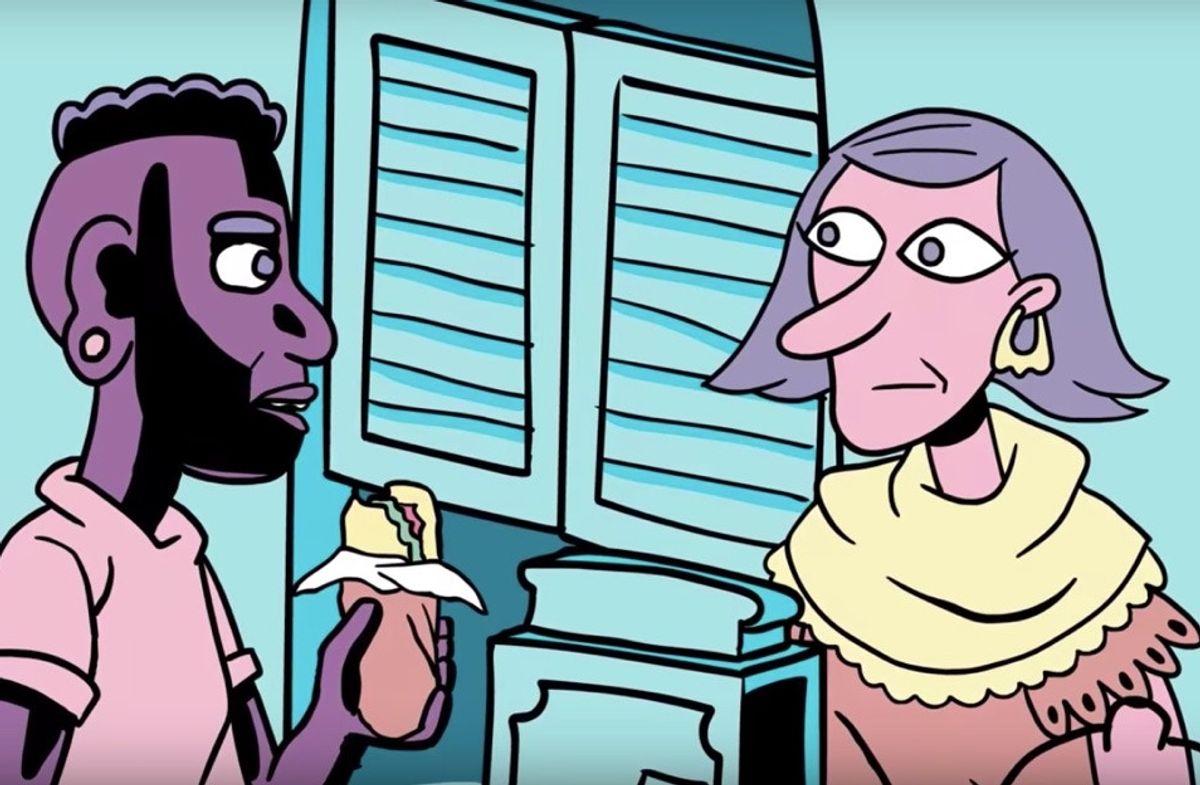
comic of a Black man holding a sandwich speaking to a white woman

Growing up black in a white neighborhood.

I grew up Black in a very white neighborhood in a very white city in a very white state.

As such, I am a lot of people's only Black friend.

Being the only Black friend is a gift and a curse. I am Black and I love having friends. But I am also, at any given moment, expected to be a translator, an ambassador, a history teacher, and/or a walking, talking invitation into "I am not racist" territory. It's a lot to handle. See what I mean about that curse?

So when I saw the animated short-film "Your Black Friend," I felt so seen. Clearly, I am not alone.
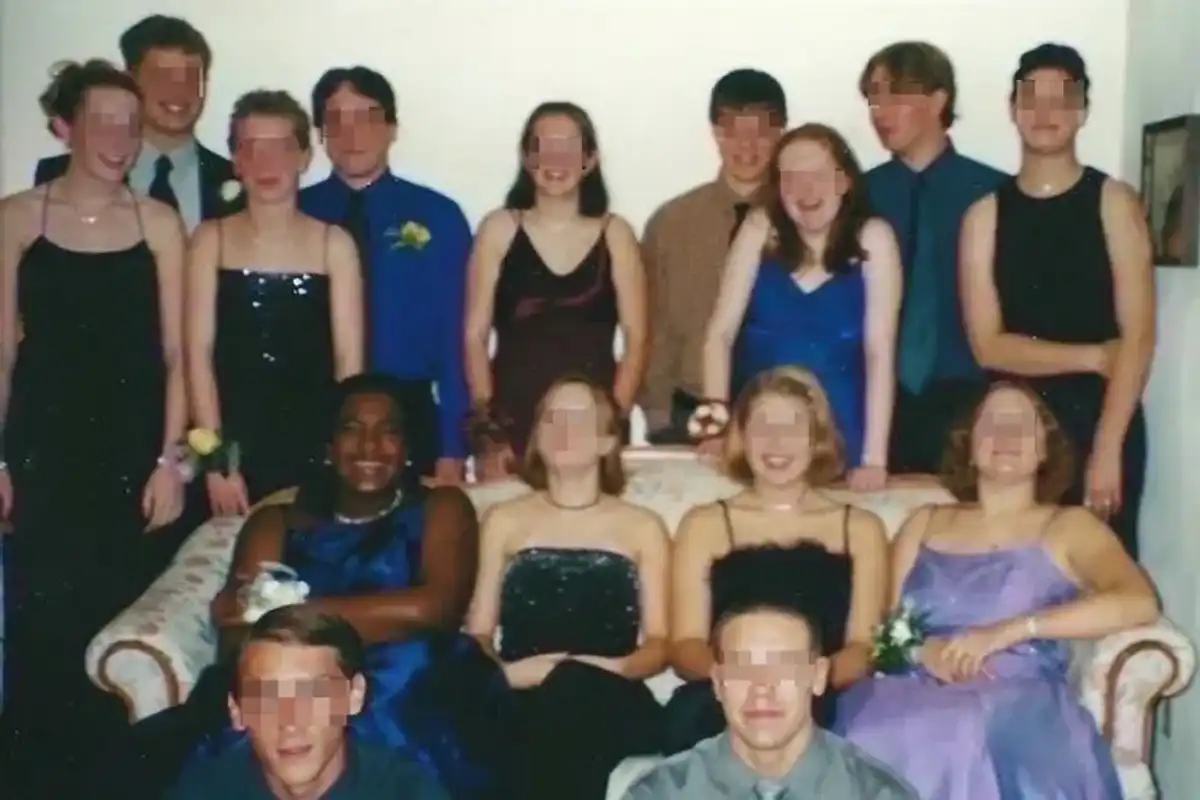
group of teens taking a photo before a dance. all eyes are pixelated except the author's

Don't get me wrong, my friends are awesome, just very white. Here are me and a few of my pixelated pals before a high school dance in the early 2000s.

Photo courtesy of the author.

The film, which was written, designed, and narrated by Ben Passmore and is based on his mini-comic of the same name, is a brilliant, refreshing way to examine whiteness and racism. The comic and animated short are an open-letter from "your Black friend" to you, their well-meaning white friend, about bias, alienation, and what it means to be a good ally and friend.

It's funny, honest, and heartbreaking in equal measure. And speaking from personal experience, it captures the experience of being a Black friend to white people pretty much perfectly.

So if you're a "woke" friend and ally, here are some things your Black friend wants you to know.

1. You're going to have to get uncomfortable.
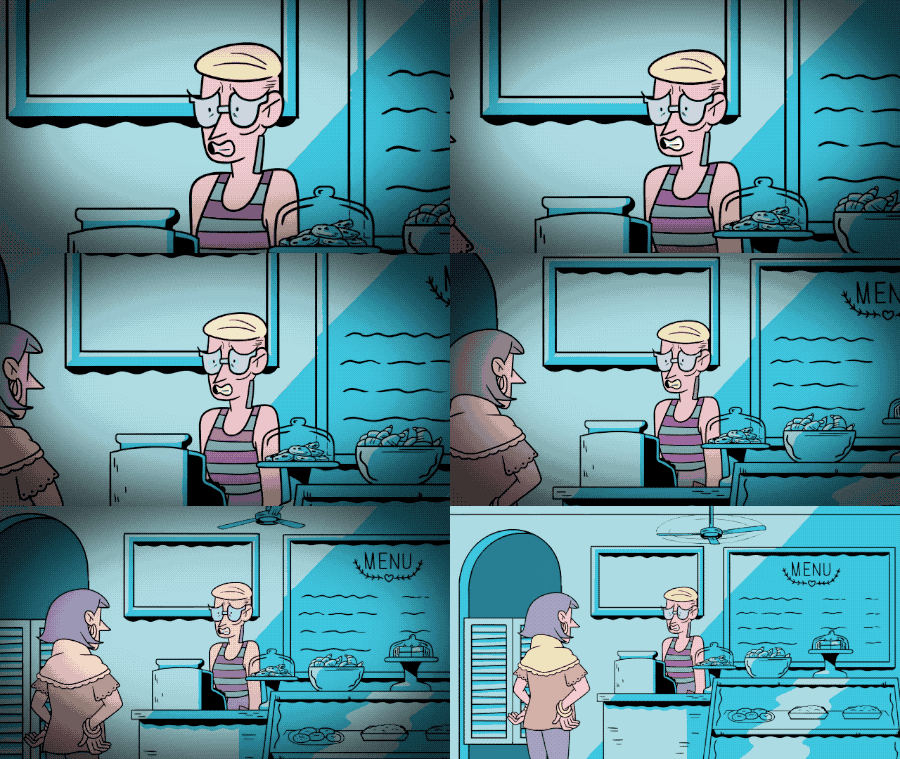
illustration of a white barista looking uncomfortable in front of a customer

Animation depicting a racist joke that creates an awkward and upsetting space.

Silver Sprocket/YouTube

It could be something as obvious and upsetting as a racist joke. Or something as "benign" as your aunt suggesting you cross the street when she sees a group of Black kids walking by. But either way, if you want to be a good friend and a real ally, you're going to have to speak up. You're going to have to have those tough conversations with people you care about.

It's not easy to confront strangers or people you love, but if you don't do it, you are part of the problem. Sitting out isn't an option. No one said being an ally is easy.

2. "Your Black friend would like to say something to the racist lady, but doesn't want to appear to be that 'angry Black man.'"
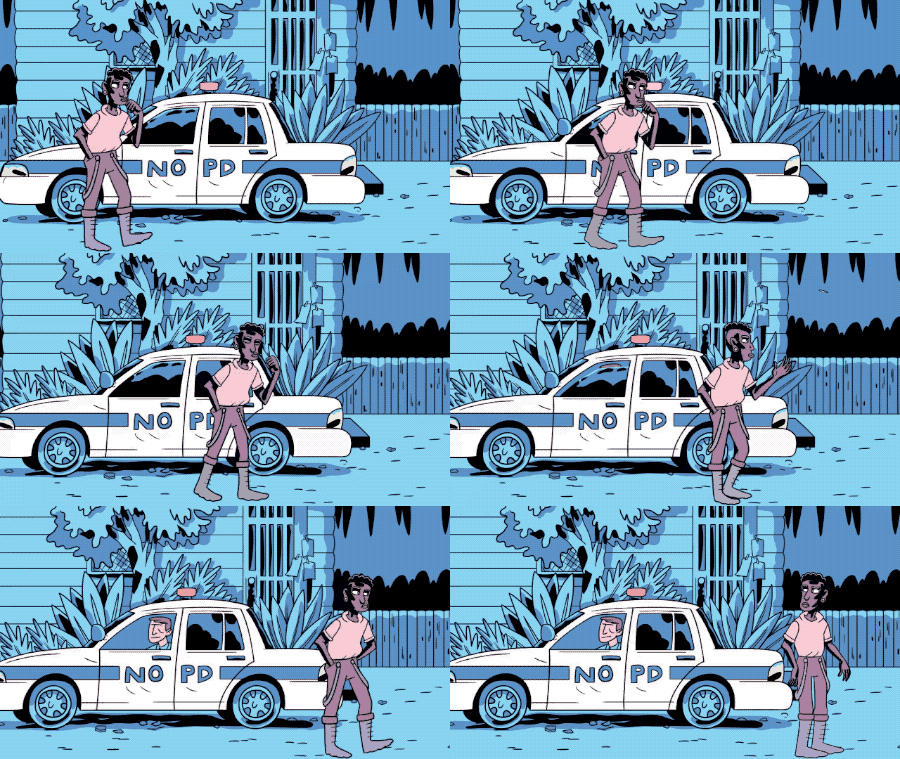
illustration of Black man walking by police car, littering, and the sirens going off

Biased situations that play out uncomfortably true.

Silver Sprocket/YouTube

"He knows this type of person expects that from him, and he will lose before he begins," Passmore says.

Black people can't always react or respond the way we want to. When I am followed in a department store, pulled over for no reason, or stared at while picking up dinner at the fancy grocery store, I can't stop what I'm doing and yell, "YES, I AM BLACK. NO, I AM NOT A CRIMINAL YOU SMALL-MINDED, BIASED ASSHOLES." Trust me, I want to. But especially when police are involved, I have to be calm, respectful, and obedient.

That's where you come in. You, white friend, need to speak up and say something when I can't. If you are not at risk, nor considered a threat, you have a certain amount of privilege in these situations. Use it to demand answers, speak to supervisors, or if things really get dicey, pull out your phone and hit record.

3. We are constantly monitoring our surroundings and adjusting our clothes, hair, speed, and speech to maintain white comfort.
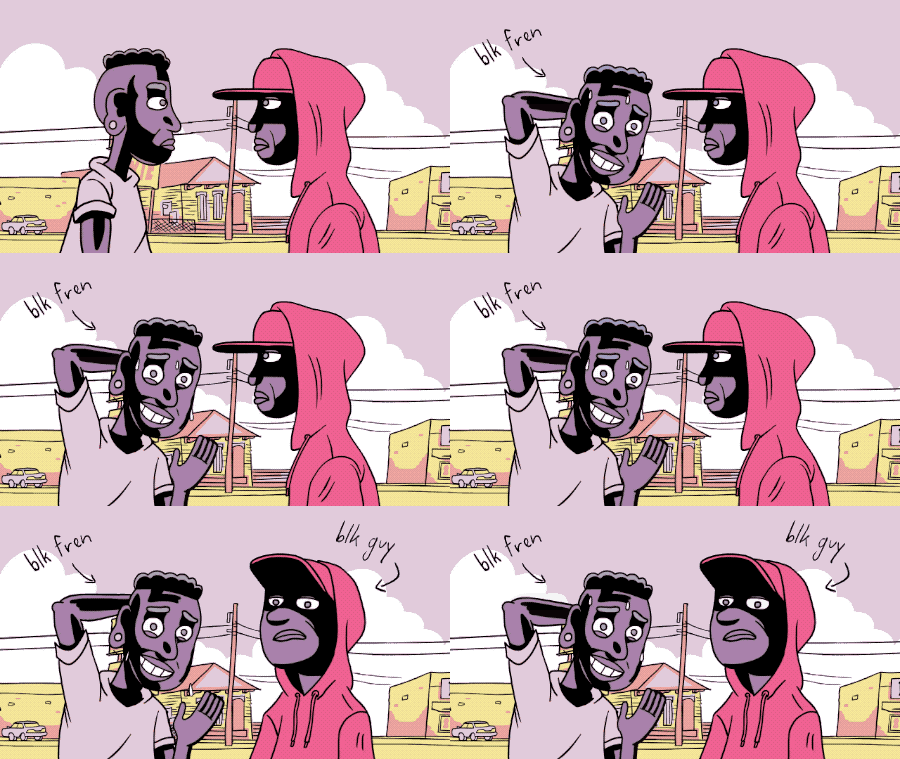
illustration of two Black men talking; one looks anxious and one looks nonplussed

Friends may not realize the challenges in avoiding unwarranted confrontation.

Silver Sprocket/YouTube

We don't like it, but one small choice—like deciding whether or not to wear a hood, or the speed at which we reach into our glove box—can be the difference between life and death.

When I am in a parking garage and walking behind a white woman, I intentionally cough or walk a little louder so she turns and notices me.

Why? Because when I don't, that same white woman will often clutch her purse and occasionally let out an audible gasp as I pass her. This is something my white friends likely don't realize I have to do. Some of them may even be the pearl-clutchers in the parking lot.

But to maintain white comfort and to avoid having the cops called on us, we often have to tamp down clothes, modify our speech and volume, even do our hair differently. We have to have "the talk" with our kids about how the world sees them, and how to act in order to make sure they come home alive.

No, it's not fair. No, we don't like it. But so long as this country and its institutions are built on a solid foundation of white supremacy, it's a grim reality. You need to know that, and take it up with your fellow white people about how to dismantle it.

4. "Your Black friend wishes you'd play more than Beyoncé. There are more Black performers than Beyoncé."
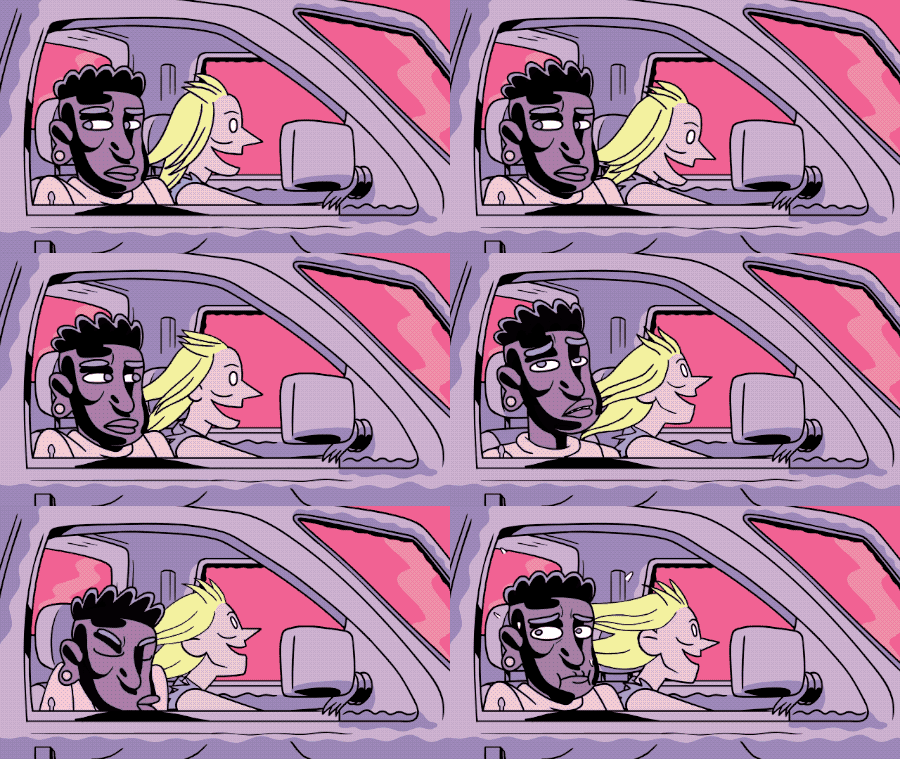
comig gif of a Black man looking uncomfortable in the car with a white friend

Taste isn't only derived from race and culture.

Silver Sprocket/YouTube

Lemonade was awesome. There is no denying it. And yes, I love seeing her iconic looks on Instagram too. But there is more to Black music and Black art than Beyoncé. Dip a toe outside your comfort zone and try new new artists and genres you may not be familiar with. Go listen, see it, and experience it for yourself.

And while we're here, you can't say the n-word when you sing along. Nope. You just can't.

5. Speaking of which, performative Blackness is really uncomfortable.
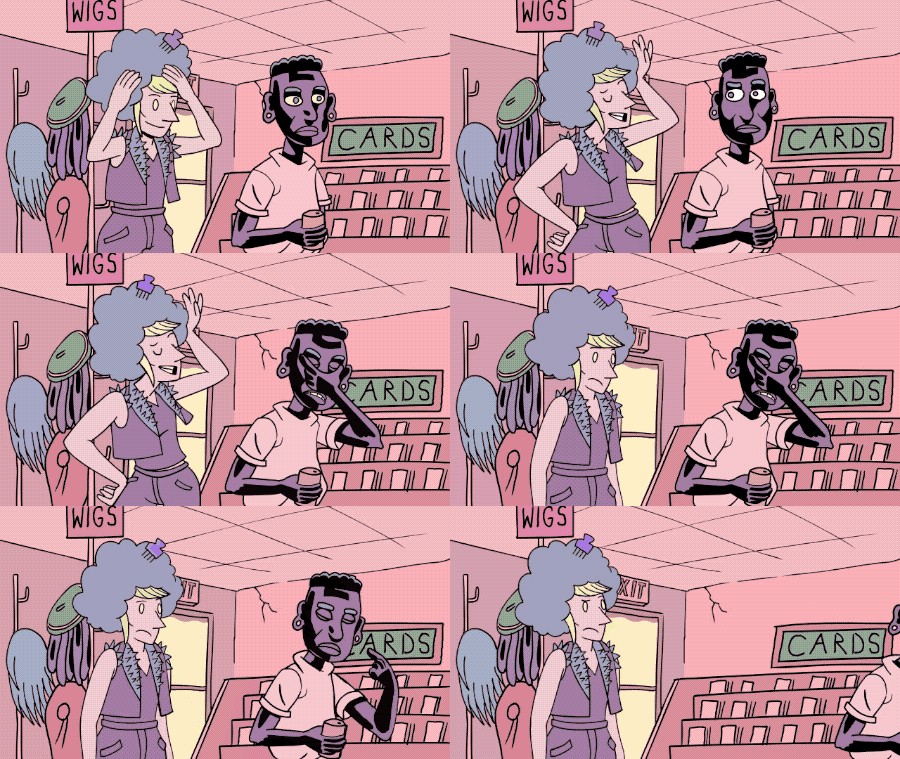
comic of a white woman wearing an afro wig to the chagrin of their Black friend

Sometimes jokes and misguided appreciation is hurtful.

Silver Sprocket/YouTube

When you wear that braided wig on Halloween, or use your "blaccent" when you're around me or other Black people, it hurts. It's not cute or charming, and it definitely doesn't make you seem cool.

Our culture and heritage are not costumes you can slide on and off at your convenience. We don't get to be Black only when it suits us. Neither do you.

6. "Your Black friend feels like a man without a country."
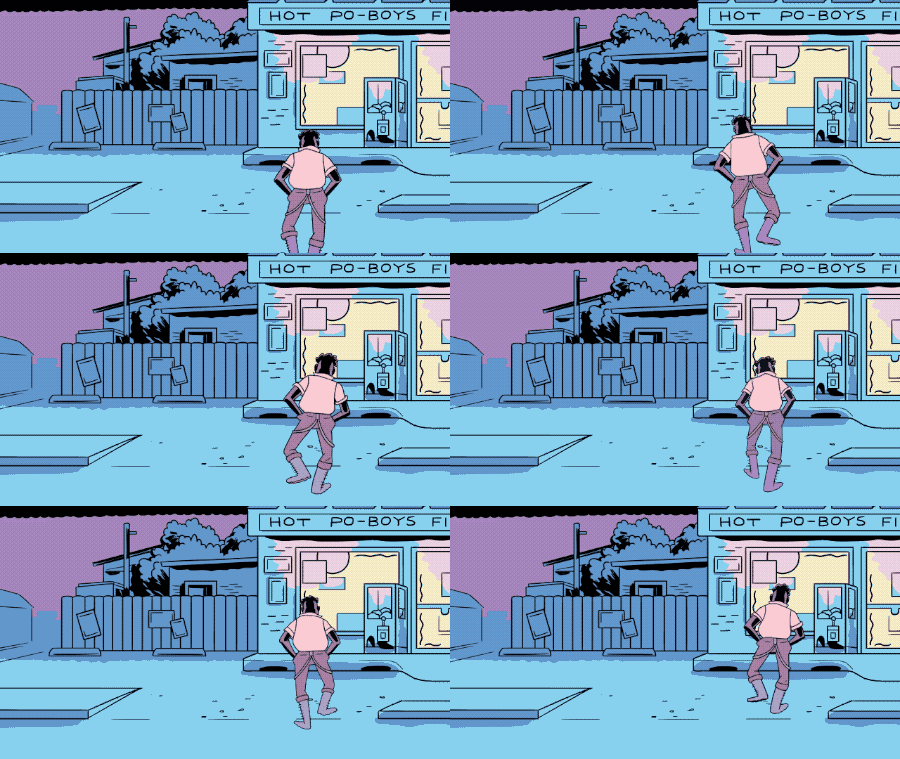
illustration of man walking up to a storefront that says "Hot Po-Boys"

Can we enjoy each others company without pointing out our differences?

Silver Sprocket/YouTube

Having white friends and seeming to "fit in" with the majority can feel really alienating. You can feel too "white" for Black people, and too "Black" for white people when all you want to do is find people to eat pizza with. As Passmore wrote, "He is lost in this contradiction, and held responsible for it."

7. We would love it if we could stop talking about our anxiety and frustrations regarding racism. But right now, that's impossible.

Our concerns are urgent and real. We're getting subpar health care. We're disenfranchised. We're over-policed. We're thrown in jail. We're killed by people sworn to protect us. It's exhausting, but we have to keep talking about it. So do you.

We can't be expected to dismantle white supremacy on our own.

Our white friends and allies need to step up and gather their people. Have the tough conversations. Speak up when you see racism, discrimination, and microaggressions. The time to talk about it is done. Be about it, or find yourself a new Black friend.

Watch "Your Black Friend" in full and check out Passmore's book, Your Black Friend And Other Strangers.


This article was written by Erin Canty and originally published on seven years ago.

1970s, '70s, generations, food, meals

Kids in the 1970s pretending to cook

"What's for dinner?" has been asked by kids for millennia, probably, and the most common answers depend on both where and at what time in history it was asked. In ancient times, people were limited to what they could hunt or gather. Medieval recipes look different than what people ate in the 19th century. And what our grandparents ate when they were children was different from what our kids eat today.

Obviously, people couldn't DoorDash Chipotle in the '70s, but when someone on Reddit asked people born before 1970 what they ate for dinner most weeks, there were some standard meals a lot of Americans clearly ate regularly growing up. Lots of meatloaf and beef stroganoff. Pork chops and chop suey. Convenient assistance from Shake n' Bake, Hamburger Helper and TV dinners. Canned fruits and veggies. So much Jell-O.


Here are some of the most popular responses:

"Overcooked pork chop, minute rice, canned green beans, canned fruit cocktail

Spaghetti with ground beef and sauce made from a packet (Durkee?)

Pot roast (whatever cut of meat was on sale) cooked with Lipton onion soup mix. Frozen peas. Canned peaches.

Meatloaf with mashed potatoes and canned green beans. Canned pears

Shake n bake chicken and scalloped potatoes from a box. Canned fruit of some kind.

On awesome days Chef Boyardee pizza mix from a box.

I liked LaChoy chop suey.

Always with a jug of milk on the table."

1970s, '70s, generations, meals, meatloaf Meatloaf was a staple dinner.Photo credit: Canva

"So I think many of our moms went to the same home ec classes. Our house also had on rotation:

Goulash: It wasn’t what I have come to understand is Hungarian Goulash, but ground beef/spices/tomatoes.

Chicken Diane: Way overcooked chicken with rosemary, thyme and other seasonings.

Meatloaf: Yes, ketchup on top.

And the ever-present rice. Dad bought an aluminum rice cooker from his time in Japan and we had rice (he added soy sauce on top) 3x per week. The other side was baked potatoes.

The big treat!!!??? Chef Boy Ar Dee pizza from a tube on Friday once per month. Mom had a round aluminum baking pan and make dough, spread the included sauce on the dough, add the Parmesan Cheese (in the included packet). That was the biggest treat - and in all honesty I would go back to that day cause I miss my mom. Best pizza ever."

- YouTube www.youtube.com

"Hamburger patty or braised round steak, green salad, canned vegetable (peas, beans, corn, beets). Occasionally a baked potato. Sometimes my mom would toss chicken in a flour/seasoning mix and bake it and we'd have oven fried chicken--maybe once every couple of weeks. We got beef from a cousin so it was cheap, and chicken was expensive.

Mom also made spaghetti with ground beef, and beef stew with the tougher cuts of the cow. Oh--and liver--God how I hated liver night.

We always had cheap grocery store 'ice milk' in the freezer for dessert."

1970s, '70s, generations, food, meals, spaghetti Spaghetti is still a classic.Photo credit: Canva

"Sunday - Spaghetti/macaroni and homemade spaghetti sauce and a salad.

Monday - Roast chicken, a side (potatoes, Rice-a-Roni), and a veg.

Tuesday - Pork chops, a side (potatoes, Rice-a-Roni), and a veg.

Wednesday - Spaghetti/macaroni and homemade spaghetti sauce and a salad.

Thursday - Rump or sirloin steak, a side (potatoes, Rice-a-Roni), and a veg.

Friday - breaded and fried fish (ugh--haddock, halibut, or cod if the latter was on sale), a side (potatoes, Rice-a-Roni), and a veg.

Saturday - Rump or sirloin steak, a side (potatoes, Rice-a-Roni), and a veg.

Dessert would be supermarket ice cream (carton, usually Neopolitan), Jello chocolate pudding, Table Talk pie (usually apple)."

1970s, '70s, generations, food, meals, pork chops Why were pork chops so popular?Photo credit: Canva

"Typical meals: stroganoff made with ground beef and egg noodles. Pot roast. Swiss steak. Chicken cacciatore. Fried chicken. This was in California, but my parents were from the Midwest so pretty meat-and-potatoes. There was always a side vegetable and a starch. Rarely bread or rolls. Occasionally salad but not always until the 1980s. No formal/planned dessert except for special occasions like birthdays and holidays, but sometimes there was ice cream in the freezer or there were cookies (store bought; my mom wasn't a baker). In the late 70s my mom loved Julia Child and started to be more adventurous with cooking; later she took Asian cooking classes too."

"Beef stroganoff, fried bologna, weiners wrapped in bacon and then broiled, baked beans, (from scratch) liver.

Jello 1-2-3 (so space age!) Bundt cake, canned fruit salad, canned pears, canned peaches."

- YouTube www.youtube.com

"When we had some money (early in the pay period):

Spaghetti with sausages and homemade sauce

Liver and onions

Chop suey

Spare ribs and sauerkraut

Pork chops with mashed potatoes and gravy

Beef stew

Boeuf bourguignon

Beef stroganoff

When we were short on money:

Spam & scrambled eggs

Homemade macaroni & cheese

Cold cereal

That’s all I can think of right now.

We very rarely ever had dessert and almost never ate out. We never had fast food, the only fast food chain in town was Burger King, and McDonald’s was a town away and only open about six months of the year."

Here's to all the meals that nourished us in every era of our lives.

Culture

Woman from Denmark shares 'normal' things that are considered rude in Nordic countries

It's fascinating how "common courtesy" can differ so much from place to place.

nordic countries, scandinavia, denmark, norway, sweden finland

Scandinavian countries find certain things rude that are perfectly acceptable elsewhere.

The saying, "When in Rome, do as the Romans do," has been around since ancient times and is still a good reminder that customs and habits vary wherever you go. One of the best things about traveling to another part of the world is discovering how things you think are normal or standard are not universally so, and seeing how different cultures function broadens your ideas of the human experience.

That's why a woman from Denmark explaining "normal" things that are considered rude in Nordic countries has caught people's attention. People are often fascinated with Denmark, Finland, Sweden, and Norway, largely because they regularly top lists of "happiest countries in the world" (which is always a little surprising considering the weather in that part of the world alone).


Here are the 13 behaviors and habits Kelly Louise Killjoy says Nordic countries consider rude in her experience:

- YouTube youtu.be

1. Being late to anything

Of course, being late is rude in a lot of places, so this one may not be surprising, but punctuality is a culturally specific expectation. There are places where it would be considered rude to show up early, and other places where "fashionably late" doesn't exist. In Killjoy's experience, Nordic folks like to be as close to exactly on time as possible. "Like five minutes early or five minutes late, no more, no less," she says. "Preferably exactly on time." And they will often apologize for even being one minute late.

2. Showing up unannounced

Some countries have a distinct "dropping by" culture, but the Nordic nations aren't among them. Even close friends and family call or text before arriving at someone's house, as it's considered rude to just show up. "With Nordic people, it's all about respecting our time," Killjoy says. "We often plan our time very carefully, according to when we're meeting you. And these meetups are often scheduled weeks or months beforehand. So the door may be open, but it doesn't mean the schedule is."

3. Canceling plans last minute

"Unless you have a serious reason, this is more rude than saying no up front because you don't feel like it," Killjoy says. "Again, Nordic people plan their time around you for weeks, if not months, so respect our time and we will love you for it."

Nordic cultures, plans, rude, what's rude, planning, time management Woman disappointed by last minute cancelled plans. Photo credit: Canva

4. Speaking to people without a practical purpose

Even though not everyone loves it, small talk is considered normal in American culture. Not so much in Scandinavia. If you're just running errands or going through your normal daily life activities in Nordic countries, people don't just shoot the breeze with you. "If you talk to us, we will assume there's a reason, otherwise we get confused and awkward," Killjoy says. "If you've ever had a conversation with a Nordic person where you thought, 'Why didn't they like me?' or 'This got awkward very quickly,' it's because that Nordic person was more than likely trying to figure out what you wanted out of that conversation."

5. Being overly polite

Killjoy says this is another area where Americans and Nordic people often misunderstand each other. The idea of politeness being rude even sounds like an oxymoron, but for Nordic folks, it's really about being asked questions you don't want to give real answers to. The example Killjoy gives is asking people, "How are you?" That's standard for Americans, and it's understood that you're not asking someone to spill all of their emotions in the moment. But Nordic folks take questions at face value, so it feels personal and invasive.

6. Speaking loudly in public places

One thing that people sometimes pinpoint with Americans visiting other countries is that we tend to speak loudly. In a public place like a restaurant, where lots of people are talking, it's not really much of a consideration for us. But it is for Nordic folks (and a lot of other European countries, Killjoy points out).

7. Sitting next to someone when you don't have to

"This is a classic Nordic meme, but it's true," Killjoy says. "We do not like people sitting next to us when we can see there's space around for them to divide themselves upon." If you sit next to a Nordic person on a mostly empty bus, they'll think something is wrong with you or that you might wish them harm. (To be fair, this is likely true most places. But there are some friendly folks who like to chat with strangers and will take the opportunity when they see it.)

sitting near someone, bench, social norms, nordic countries, social distance Sitting closer than necessary to someone is rude. Photo credit: Canva

8. Using formal titles

"Unless you're addressing the king or queen, don't," says Killjoy. Although titles like "Mr." or "Mrs." or "Dr." are used to show respect in a lot of places, Nordic folks tend to see them as impersonal and distant. "Even doctors and teachers will think it's weird if you use formal titles with them," she says.

9. Bragging

"This ties into the people being loud part as well," Killjoy says. "Nordic culture is a very conflict-avoidant and don't-stand-outish kind of culture." She says there's even a Danish word for this social norm that heavily discourages standing out and favors humility and equality: Janteloven. "Bragging just goes heavily against that," Killjoy says.

10. Tipping

"Tipping cultures are very awkward to Nordic people," says Killjoy. "Like, I don't understand why you can't just pay your employees." (Same, honestly.)

11. Not taking off your shoes in someone's home

This one is more of a household-by-household preference in the U.S., it seems, but in Scandinavia, it's the norm to take off your shoes in the house. Most Nordic homes have mudrooms for this very purpose.

12. Honking your car horn

Go to any major U.S. city, and you'll hear no shortage of car horns. Killjoy says in Denmark it's illegal to honk your car horn for any other reason than as a danger warning or if someone hasn't seen you. "If you honk, someone will assume there's something wrong," she says, so don't honk there out of impatience.

car horn, honk, honking, driving, rudeness, culture A person honks their car horn. Photo credit: Canva

13. Jaywalking

Killjoy calls jaywalking "kind of rude," primarily because Nordic folks tend to be rule-followers. It's not that they will never jaywalk, but generally, they only do it when no one is really around or would notice.

Of course, these "considered rude" behaviors are coming from one person, and some commenters from Nordic countries added some clarifications in the comments (such as the "no dropping by" rule being something newer or more specific to urban than rural areas). But many fellow Scandinavians corroborated the things on this list. It's good to know, though, what people from one of these countries might find rude when you meet them.

And if you ever find yourself in Denmark? Do as the Danes do.

sleep, andrew huberman, sleep hacks, neuroscience, sleep tips, sleep advice, how to sleep

Andrew Huberman and a woman sleeping.

There is nothing worse than lying in your bed, with your mind racing, and you can’t fall asleep. The longer you lie in bed, the more anxious you get about falling asleep, which makes it even harder to catch some ZZZs. You've tried clearing your mind, but can’t. You’ve tried counting sheep but reached 100. What do you do now?

On a recent Real Time with Bill Maher, neuroscientist Andrew Huberman made an off-the-cuff remark about a sleep hack that he swears by, and it's based on brain research. Huberman is a Stanford University neuroscientist and tenured professor of neurobiology and ophthalmology. He's also the host of the popular podcast Huberman Lab, which focuses on health and science.


How to fall asleep fast

“In fact, if you wake up in the middle of the night and you're having trouble falling back asleep, try just doing some long, extended exhales. And get this, this sounds really weird, but it has a basis in physiology. Keep your eyes closed and just move your eyes from side to side behind your eyelids like this, back and forth,” Huberman told Maher as he moved his eyes from side to side as if he was surveying a vast landscape. “Do some long exhales. I can't promise, but I'm willing to wager like maybe one pinky, that within five minutes or so, you'll be back to sleep.”

- YouTube youtu.be

Andrew Huberman’s hack is based on neuroscience

Huberman explained the exercise in greater detail on Mark Bell's Power Project podcast. In his appearance, he discussed the interesting connection between our eyes and their connection to the amygdala, an almond-shaped part of the brain that controls our emotional response. “Eye movements of that sort actually do suppress the amygdala [to] make people feel calmer, less fearful,” Huberman said. He adds that when we are on a walk, we move our eyes from side to side, to analyze the terrain ahead of us, and the amygdala calms down.

- YouTube www.youtube.com

“But for most people who are sighted, moving your eyes from side to side for 10 to 30 seconds is going to calm you down," Huberman said. "And this makes really good sense because, from an evolutionary perspective, an adaptive perspective, we've always been confronted with interpersonal threats and animal to human threats. Forward movement is the way that you suppress the fear response."

Americans aren’t getting enough sleep

Huberman’s video is important because many Americans need to get more sleep. A 2022 Gallup poll found that only 32% of Americans said they got “excellent” or “very good” sleep; 35% described their sleep as “good”; and 33% said their sleep was “fair” or “poor.”

Sleep is essential to maintaining good health. Getting at least seven hours of sleep a night is great for your memory, focus, emotional regulation, appetite, muscle recovery, and tissue repair. It also reduces the risk of chronic conditions like heart disease and diabetes. It’s great that Huberman shares his hack, which few people would have come up with without a background in neuroscience, to improve their sleep. It’s also another exciting way to show just how interconnected the body is, from eyes to brain and beyond. Sweet dreams.

This article originally appeared last year.

couple fight, married couple, argument, man and woman, upset woman, offended person

A woman is angry at her husband.

Dealing with people who can't admit they're wrong can be aggravating, especially when you present them with facts and they still refuse to budge. What makes it worse is that we are psychologically wired to hold on to incorrect beliefs even more strongly when they are challenged by credible evidence.

What should you do when you have to get through to someone who never admits they are wrong? Jefferson Fisher, a lawyer and communications expert who offers tips "to help people argue less and talk more,” has a strategy that can help you get through to hard-headed people. Or, at least, give them irrefutable evidence that they're being completely unreasonable.


@justaskjefferson

when they are never wrong 😑

Here are the 3 phrases to use when speaking to someone who won’t admit they are wrong.

Phrase 1: “Maybe you're right”

“Not because you actually think that they're right. In fact, you know that they're wrong, but you've reached a point in your life that you're not gonna let someone who's committed to being wrong disturb your peace. It's a more powerful tool if somebody's trying to convince you that the sky is purple. You can easily put an end to it and say with a quick ‘Yeah, maybe you're right.’”

Phrase 2: “What information would change your opinion?”

“If they answer ‘No, nothing's gonna change my mind,’ then you know it's a quick dead end. Thank you, you can now leave the conversation.”

peace, argument, people, communication, protect your peace Woman takes a pause.Canva/Photos

Phrase 3: “Are you willing to think differently, or at least see it from my point of view?”

“If the answer is ‘no,’ then that's not someone you should be in conversation with. So try that.”

The last two phrases do a great job at giving you a leg up in the interaction because the stubborn person has to admit they are unwilling to change their mind, regardless of any information you bring to the table. We can all agree that no one knows everything, so by admitting they won’t even listen to new information, they expose themselves as completely opposed to reason. Therefore, they are not worth your time.

peace, argument, people, communication, protect your peace, friends People talking.Canva/Photos

Why won’t some people change their minds?

It can be frustrating to deal with people who won’t change their minds because we assume they are rational. However, in many cases, especially if the beliefs are political, cultural, or religious, it could be more of an emotional and social decision. Therefore, it can be incredibly difficult to get someone to change their mind because, to them, it feels like social suicide.

Persuasion expert Robert Cialdini says there is one way to encourage people to change their beliefs after they’ve been proven incorrect: offer them a way out of the belief that helps them save face. He uses the example of getting someone to admit they made a poor choice when voting for a political candidate: “Well, of course, you were in a position to make that decision in November because no one knew about [insert future development].”

Some other graceful phrases to give someone a graceful exit from an incorrect belief include:

“Given what we know now, it makes sense to update our thinking.”

“At the time, it made total sense.”

“A lot of people thought that back then.”

It can be hard to change some people’s minds, but by seeing things from their perspective and allowing them to exit their belief with dignity, they may be more open to reconsidering their opinions. But if there’s nothing that would change their mind, you probably don’t need to consider their views in the first place.

cafeteria, cafeterias, cafeteria-style restaurant, cafeteria restaurant, piccadilly cafeteria
Image via Wikipedia

Baby Boomers share their favorite memories and foods from cafeteria-style restaurants, like Piccadilly.

Baby Boomers and Generation Jones (a microgeneration of Boomers born between 1954 and 1966) grew up eating many foods that defined the 1970s. From potluck dishes like fondue and quiche to home-cooked casseroles, they were served at dinner parties and family tables.

And a specific type of dining was also popular during the era: cafeteria-style restaurants. At cafeterias, trays were loaded with nostalgic main dishes, sides, and of course, desserts.


Boomers and Generation Jonesers on Reddit reminisced about the cafeteria-style restaurants that they frequented back in the 1970s. Plus, they shared their favorite meals and dishes that still make their mouths water to this day.

- YouTube www.youtube.com

"In Kentucky, at least, it was Morrison's cafeteria. I fondly remember their beef liver and onions." - Unlikely-Chair-2025

"We had Piccadilly here in Louisville, along with Blue Boar. We also had Banquet Table, but that was a smorgasbord, not cafeteria style." - lysistrata3000

"Luby’s!!! Always ate there with my grandparents in Texas. 'Let’s go to Luby’s. That way everyone can find something they want.' - Grandma. Char broiled steak, mac and cheese, mashed potatoes, fried okra...and then seconds !" - krybaebee, Couscousfan07

"Furr's Cafeterias in New Mexico. Fresh baked breads/dinner rolls/green chile cornbread. Sadly, all closed in 2021. It was always so damn good and the customers were of all generations, many times seeing great grandparents there with 4 generations at their table." - RebeccasRocket

"Bishops Buffet. I have fond memories of their French Silk pie." - Any_Screen_7141, EitherHighlight5986

@retro303

#MorrisonsCafeteria #MorrisonsRestaurant #OldRestaurants #CafeteriaStyleDining #SouthernFoodMemories

"I remember two from my area: York Steak House and The Jolly Troll Smorgasbord which had Scandinavian and American food." - LaLunaLady1960

"I used to go to Sholl's Cafeteria in Downtown DC every Friday night with my AA sponsor before a meeting on 23rd Street. The food was...what you'd expect. I don't think they had blue Jello." - AndOneForMahler

"Clifton’s in downtown L.A. was amazing." Unusual_Memory3133

"I miss these restaurants! You can get the experience in a hospital cafeteria, but I really miss these! There was a small one for so many years in St. Joseph, MO. It was Jere Anne’s cafe. Awesome mile high pies! I was bummed when the finally closed. There was a Wyatt’s for a while, too. It was far larger but no one could beat the pies at Jere Anne’s!" - Happy_Raspberry_6299

"K&W. 1 meat, 2 vegetables, 1 bread 5.99. I would stop in the way home from middle school and the old lady that rang me up would always give me a free drink and dessert." - DullSentence1512

"One of our Kmart stores had a cafeteria in it!" - r1veriared

@kevinearl93

The history of the Kmart cafe, Kmart family restaurants, and Holly’s cafe in Australian Kmart #kmart #kmartcafe #kmartcafeteria #kmartdiner #kmartaustralia #kmartmemories #kmarthistory #ripkmart #kmartmusic #hollyscafe

"Does Ponderosa count? Upstate NY." - NES_Classical_Music

"Minneapolis had the Forum Cafeteria, which closed in the 1970s. As a kid, it was a real treat to go there." - I_am_Partly_Dave

"Soupplantation!!! I miss it so much." - No-Win-8380

"MCL was the best." - IAMImportant

"Cafeteria style is different than buffet style. Most are saying all-you-can-eat (mostly self serve) but cafeteria style is when you go down the line and say I want x, y, and z then you pay for it at the end of the line just like a school cafeteria. Both now are disgusting to me but as a kid it was great. In STL we had Miss Sheri’s (still open) and Garavaglia’s for cafeteria style and Old Country/Hometown buffet style." - Just-aquick-question

"There was one in south Texas called Bonanza, we used to love it as kids because they had a huge desserts section… it was later replaced by a Golden Corral but it was not as good tbh." - User Unknown

"The south had Morrison’s, Piccadilly and S&S cafeterias. Oh the food was so good. The yeast rolls, carved roast beef, the real stuff, the desserts, and Salisbury steak and mashed potatoes, macaroni and cheese. If i could go back in time, I’d make a visit to any of them but especially S&S." - RuleNo8868