J.R.R. Tolkien's Lord of the Rings was inspired by the secret meaning he found in Beowulf
His unique perspective of the story's true meaning not only lead to the creation of his own masterpiece, but the way we all understand Beowulf today.

A classic inspired by another classic.
J.R.R. Tolkien’s Lord of The Rings trilogy remains a source of inspiration for virtually every fantasy writer out there. But not many know the works that Tolkien himself drew inspiration from. Sure, we know his passion for linguistics played a major role.
And it’s common knowledge that he infused his childhood memories, as well as his experience as a WWI soldier. Maybe the most hardcore fans are aware of the nods to Norse mythology in his books. But by and large, the ancient literature that helped build Middle Earth remains hidden knowledge.
As X user @RewiretheWest recently reminded us of, one classic tale of heroism, chivalry and defeating monsters inspired Tolkien more than any other.
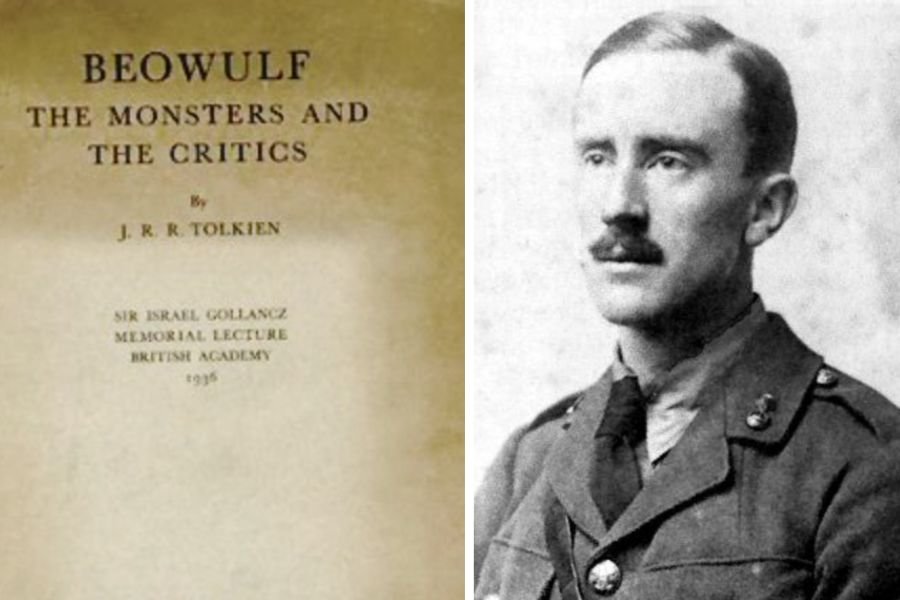
In the now-viral tweet, @RewiretheWest explains that Tolkien studied the epic poem Beowulf for 25 years, primarily because he was “convinced it had a hidden meaning.”
For those who need a quick recap on the story: Beowulf gets word that Danes are being slaughtered by a “shadow walker” named Grendel who “despises the sound of joy.” So he travels across the sea, mortally wounds Grendel, then has to go into a cave to vanquish Grendel’s mother (a “battle with packed w/ sexual & religious symbolism ensues,” @RewiretheWest quips). Fifty years later, a dragon emerges. Beowulf, now a King but well past his prime, once again slays the beast, but dies in the process. His loss is mourned by the people who “dread what will happen without his leadership.” Fin.
While Beowulf was mostly only studied for “historical and linguistic value,” Tolkien argued that the monsters in this epic poem revealed its more “profound” metaphors.
Quoting Tolkien’s famous 1936 lecture on the subject, @RewiretheWest writes, “The monsters are symbols of the inevitable hostility of the world itself to mortal men…they do not only bring physical ruin but spiritual despair,” and “Beowulf is not a hero because he wins but because he fights, even when he knows the battle will bring his doom. His death is the crown of his life.”
In other words, Beowulf is a hero for facing the darkness in spite of the odds, and for sacrificing himself to fight for good. With this theme in mind, it’s easy to see how it influenced a story about a little Hobbit who traveled all the way to Mordor to cast an evil ring into the fire whence it came.
It’s worth noting—Tolkien not only used Beowulf’s values in LOTR, but also many stylistic elements.
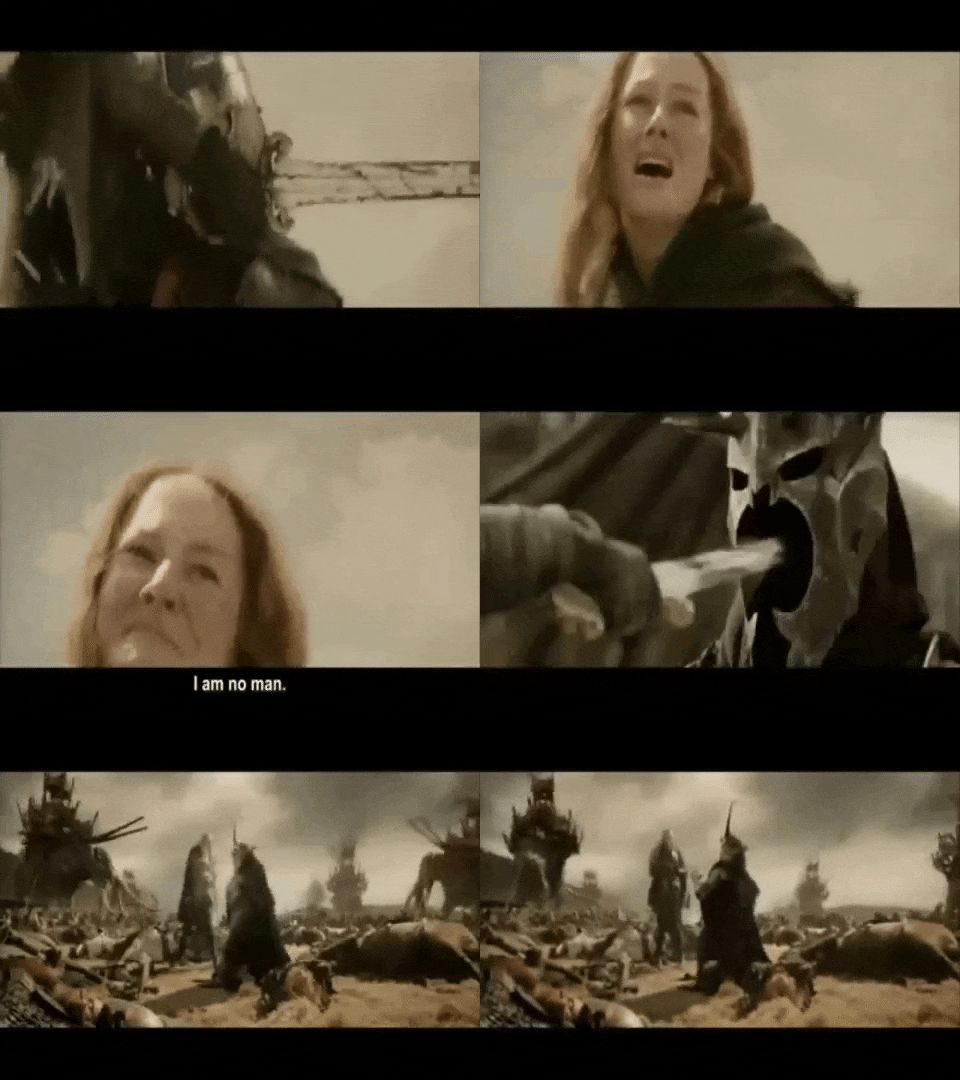
For example, he incorporated the use of alliteration (i.e. connection a group of words with the repetition of the same letter of sound) in family names, as with the badass shield maiden of Rohan, Éowyn, and her father Éomund and brother Éomer. In Beowulf we have the brothers Hrothgar and Heorogar.
In fact, much of the poetry Tolkien used was alliterative verse, just like with Beowulf. You can see it plainly with ““From Dark Dunharrow in the Dim Morning” featured in Return of the King.
There are also a TON of refurbished Old English words that originate in in Beowulf, as with Ents, which was thought to have some connection with large things, and orcs, which denote something possibly demonic and/or associated with “a cunning mind.”
And with that, we have two major takeaways:
One—even the most innovative, forward thinking creators glean their ideas from other creators. Obviously plagiarism is something to avoid, but no new idea is truly a product of immaculate conception. So never undermine your own creation by telling yourself “what’s the point? It’s already been done before.”
And two—classic stories remain timeless because they contain bits of wisdom that continue to serve humanity. As @RewiretheWest put it, “Beowulf was written 1,000 years ago. Yet through Tolkien, it continues to inspire millions. It proves that the values of adventure, honor, heroism, and sacrifice are truly timeless. They’re what make for the best stories — in literature, in film, and in your own life.”
So go forth, read a lot (especially the old stuff), and breathe new life into their messages in whatever way you see fit.

- Hobbit actors share perfect response to racial grumblings over 'Rings of Power' casting ›
- Someone added J.R.R. Tolkien's narration to epic Lord of the Rings battle scene ›
- Fellowship of the hip-hop: Watch 'The Lord of the Rings' cast reunite in an epic rap battle ›
- Read J.R.R. Tolkien's 1925 letter to his kids from 'Father Christmas' - Upworthy ›
- J.R.R. Tolkien's legendary response to Nazis who demanded to know if he was Jewish - Upworthy ›


A Generation Jones teenager poses in her room.Image via Wikmedia Commons
An office kitchen.via
An angry man eating spaghetti.via 


An Irish woman went to the doctor for a routine eye exam. She left with bright neon green eyes.
It's not easy seeing green.
Did she get superpowers?
Going to the eye doctor can be a hassle and a pain. It's not just the routine issues and inconveniences that come along when making a doctor appointment, but sometimes the various devices being used to check your eyes' health feel invasive and uncomfortable. But at least at the end of the appointment, most of us don't look like we're turning into The Incredible Hulk. That wasn't the case for one Irish woman.
Photographer Margerita B. Wargola was just going in for a routine eye exam at the hospital but ended up leaving with her eyes a shocking, bright neon green.
At the doctor's office, the nurse practitioner was prepping Wargola for a test with a machine that Wargola had experienced before. Before the test started, Wargola presumed the nurse had dropped some saline into her eyes, as they were feeling dry. After she blinked, everything went yellow.
Wargola and the nurse initially panicked. Neither knew what was going on as Wargola suddenly had yellow vision and radioactive-looking green eyes. After the initial shock, both realized the issue: the nurse forgot to ask Wargola to remove her contact lenses before putting contrast drops in her eyes for the exam. Wargola and the nurse quickly removed the lenses from her eyes and washed them thoroughly with saline. Fortunately, Wargola's eyes were unharmed. Unfortunately, her contacts were permanently stained and she didn't bring a spare pair.
- YouTube youtube.com
Since she has poor vision, Wargola was forced to drive herself home after the eye exam wearing the neon-green contact lenses that make her look like a member of the Green Lantern Corps. She couldn't help but laugh at her predicament and recorded a video explaining it all on social media. Since then, her video has sparked a couple Reddit threads and collected a bunch of comments on Instagram:
“But the REAL question is: do you now have X-Ray vision?”
“You can just say you're a superhero.”
“I would make a few stops on the way home just to freak some people out!”
“I would have lived it up! Grab a coffee, do grocery shopping, walk around a shopping center.”
“This one would pair well with that girl who ate something with turmeric with her invisalign on and walked around Paris smiling at people with seemingly BRIGHT YELLOW TEETH.”
“I would save those for fancy special occasions! WOW!”
“Every time I'd stop I'd turn slowly and stare at the person in the car next to me.”
“Keep them. Tell people what to do. They’ll do your bidding.”
In a follow-up Instagram video, Wargola showed her followers that she was safe at home with normal eyes, showing that the damaged contact lenses were so stained that they turned the saline solution in her contacts case into a bright Gatorade yellow. She wasn't mad at the nurse and, in fact, plans on keeping the lenses to wear on St. Patrick's Day or some other special occasion.
While no harm was done and a good laugh was had, it's still best for doctors, nurses, and patients alike to double-check and ask or tell if contact lenses are being worn before each eye test. If not, there might be more than ultra-green eyes to worry about.