upworthy
Add Upworthy to your Google News feed.
Google News Button
Health

19 musicals that are not only catchy—they could help with dementia, according to science

Back in 2013, researchers in the U.S. stumbled upon a novel new treatment for dementia patients: listening to show tunes. Seriously.
musicals, theater, art, dementia, treatments
Photo by Jordhan Madec on Unsplash

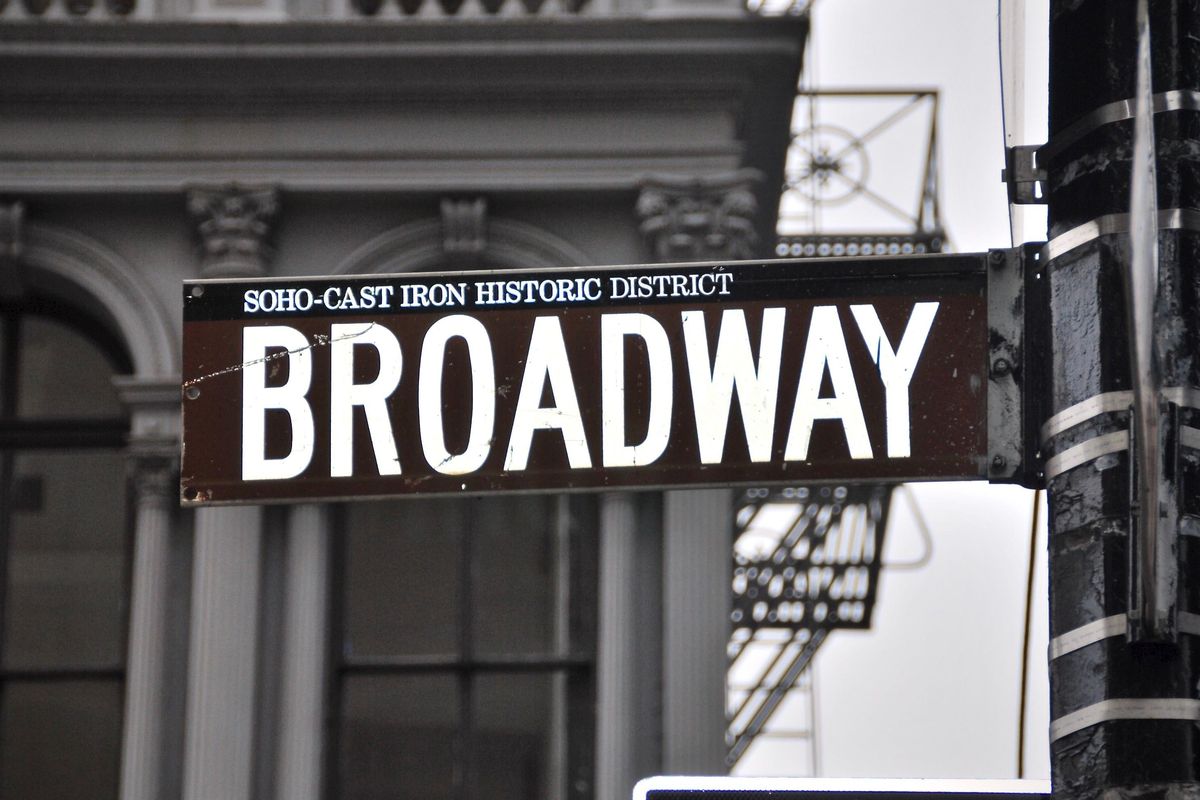
A picture taken of the Broadway street sign in New York City.

Back in 2013, researchers in the U.S. stumbled upon a novel new treatment for dementia patients: listening to show tunes. Seriously.

A study of nursing home patients found that residents who sang show tunes — specifically from "Oklahoma!" "The Wizard of Oz," and "The Sound of Music" — demonstrated increased mental performance, according to a report in the New York Daily News:

"Researchers working with elderly residents at an East Coast care home found in a four-month long study ... that people who sang their favorite songs showed a marked improvement compared to those who just listened."

A similar study in Finland, cited in The Guardian, demonstrated that singing not only helped dementia patients feel better and focus, but actually improved certain types of memory as well.

Even better? There are tons of classic show tunes specifically about remembering.

Here are 23 tunes every Broadway fan needs to memorize for the day when it's not so easy to remember. It'll help to start brushing up now.

1. The one about remembering the good old days.

"Those Were the Good Old Days," "Damn Yankees"

If you're the devil in "Damn Yankees," that means the Great Depression, the Black Plague years, and when Jack the Ripper was running around. Good times!

2. The one about remembering a parade that probably never happened.

Any playlist of show tunes about memory has to include this standard from "The Music Man," in which Professor Harold Hill remembers the best day of his life, when "Gilmore, Liberati, Pat Conway, The Great Creatore, W.C. Handy, and John Phillip Sousa all came to town."

Whether or not any of it actually happened is ... up for debate, to put it mildly.

3. The one about remembering a really fun trip you took to a medium-sized Midwestern city.

"Kansas City," "Oklahoma"

"Oklahoma's" Will Parker is so psyched about his Kansas City vacation he can't help bragging about it to all the other cowboys. And why not? It's a neat city! Have you been to Joe's Kansas City Barbecue? Neither has Will Parker, since he was there in 1906, but you should totally go.

4. The one about remembering how fun it was to murder that guy that one time...

"Cell Block Tango," "Chicago"

...while glancing nervously over your shoulder to make sure Queen Latifah isn't around.

5. The one about remembering the questionable choices it's too late to go back in time and not make.

"Where Did We Go Right?" from "The Producers"

Looking back doesn't always go well for characters in musicals. It definitely doesn't for "The Producers'" Bialystock and Bloom, as they tear around their office wondering how their incompetently directed, poorly acted, aggressively pro-Hitler musical wound up becoming a massive hit despite their every attempt to make it fail.

6. The one about remembering the little things.

"I Remember/Stranger Than You Dreamt It," "Phantom of the Opera"

Perhaps the greatest testament to how emotionally transporting "Phantom of the Opera" is: Christine, removing the phantom's mask for the first time, can just straight-up claim to remember mist like, one mist in particular — and no one calls her on it ever.

7. The one about remembering the worst day of your life.

"The Barber and his Wife," "Sweeney Todd"

No character in musical theater is more nostalgic than Sweeney Todd, who, just moments after we meet him, croons this delightful ditty reminiscing about the time he was framed for a crime he didn't commit and banished from England so that an evil judge could rape his wife who subsequently poisoned herself.

A tune you can hum!

8. The one about remembering things differently than everyone else around you.

"Satisfied," "Hamilton"

Not sure if you've heard, but "Hamilton" is good, you guys.

After Alex and Eliza Schuyler meet and fall in love in "Helpless," Angelica Schuyler basically goes "Wicked" on her sister's song, recalling how agonizing it was watching her sister and the man who she herself is super into get together. But she sucks it up and buries it! Older siblings are the best.

9. The one about remembering that cute girl you just met like five seconds ago.

"Maria," "West Side Story"

A classic from "West Side Story." Sure, it's about remembering a meet-cute that literally just happened — Tony and Maria's orchestral-swell-assisted gaze across a crowded gym — but Tony is super jazzed about it, so it makes the list.

Gosh, I sure hope those crazy kids work out!

10. The one about remembering all the worst things from when you were a kid, and one kind-of-OK thing.

"At the Ballet," "A Chorus Line"

The ballet isn't that great, but it's better than devastating childhood trauma. Score one for the ballet! Thanks, "A Chorus Line!"

11. The one about remembering old hobbies.

"Dentist!" from "Little Shop of Horrors"

"Little Shop of Horrors'" Orin Scrivello, DDS, is just misunderstood. I mean, who among us didn't "shoot puppies," "poison guppies," or "take a pussycat and bash in its head" now and again as a kid? The '50s were a simpler time!

12. The one about remembering watching a dude die on the battlefield and feeling feelings about it.

"Momma Look Sharp," "1776"

47 years before "Hamilton" brought us the swaggery, ass-kicking side of the Revolutionary War, "1776" tore our guts out with this song, in which a courier to the Continental Congress recalls watching a mother comfort a young soldier as he dies at the battles of Lexington and Concord.

Hercules Mulligan does the guest rap. (Just kidding. There is no guest rap. It's just gorgeously somber for a while and then over.)

13. The one about remembering the best four years of your life.

"I Wish I Could Go Back to College," "Avenue Q"

Of course the sad-sack puppet man- and woman-children of "Avenue Q" want to go back to college! Who among us doesn't long for the days of term papers, humiliating romantic encounters, and crushing, debilitating debt? And meal-plan ice cream, too!

14. The one about remembering some A-plus advice from your best friend.

"Cabaret," "Cabaret"

Ladies and gentlemen, Sally Bowles from "Cabaret" is no fool! No matter how many lovers leave, or how much her career nosedives, or how nutty local politics get, she always remembers this important life lesson she learned from her good friend Elsie.

If only you had such a great, wise friend, maybe your outlook would be as good as Sally's. You could be so lucky!

15. The one about remembering last Christmas.

"Halloween," "Rent"

When it comes to the science of memory and cognition, "Rent" asks the big questions:

"Why are entire years strewn on the cutting room floor of memories? When single frames from one magic night forever flicker in close-up on the 3-D Imax of my mind?"

Poetic? Pathetic? We report, you decide.

16. The one about remembering everything and realizing how terrible it all was.

"Rose's Turn," "Gypsy"

Ah, yes. "Rose's Turn." The 11 o'clock number to end all 11 o'clock numbers in "Gypsy," the most musical of all musicals. Truly, there aren't many things more enjoyable than listening to Mama Rose replay the events of the last decade and change inside her own brain in a slow-motion nervous breakdown as the notion that her entire life has been completely worthless gradually dawns on her with ever-increasing dread.

Did I mention how fun musicals are?

Trivia time! You know that thing in music where trumpets go, "Ya da da da daaaa DA. Da DA da DA!" You know that thing? This is the song that thing comes from.

17. The one about remembering the first time you knew what you wanted to be when you grew up.

"Ring of Keys," "Fun Home"

There's nothing better than a song that makes you want to shout: "I am so glad I'm watching a musical instead of a basketball game right now." This moment in "Fun Home," where Alison recalls seeing a delivery woman — the first person who looked like the woman she felt like — is really, really one of them.

"This is a song of identification that is a turning moment, when you think you’re an alien and you hear someone else say, 'Oh, me too,'" composer Jeanine Tesori told Variety. "It’s a gamechanger for Alison. And that’s just Musical Theater 101."

...And the entire audience bursts into happy tears forever.

18. The one about remembering a nice dream you dreamed.

"I Dreamed a Dream," "Les Misérables"

When your life isn't going so great, it's good to remember the positive! Things didn't exactly go super well for Fantine in "Les Mis." But, hey, she had a pretty good dream once!

19. The one about remembering your single greatest regret and vowing to never remember it again.

"Turn It Off," "The Book of Mormon"

What's the ticket to living as fun-loving and guilelessly as the Mormon elders in "The Book of Mormon?" Don't just bury those traumatic, scary, impure memories — CRUSH THEM, OK?!

20. The one about remembering a really successful first date.

"Sarah Brown Eyes," "Ragtime"

Ah, young love. Even in "Ragtime," a musical that features racism, state violence, attempted child murder, and terrorism, at least we have this song, in which Coalhouse Walker Jr. recalls how he got his beloved Sarah to fall truly, madly, deeply in love with him with his peerless piano skills? So romantic.

Gosh, I sure hope those crazy kids work out!

21. The one about remembering a scary dream.

"Sit Down, You're Rockin' the Boat," "Guys and Dolls"

With, perhaps, only a smidge more credibility than grifter-from-another-mother Professor Harold Hill, "Guys and Dolls'" third-most-degenerate gambler Nicely-Nicely Johnson recalls a terrifying dream where he had to convince a group of skeptical evangelical crusaders that he's decided to give up the dice once and for all.

Side note: People in musicals are unbelievably good at remembering dreams. This is, like, full detail. I'd be like, "Um, I was at the Statue of Liberty, and you were there? I think? It wasn't really you, it was like a combination of you and my dad. And we were in prison. But at the Statue of Liberty."

22. The one about remembering how it used to be when you were young and full of hope instead of old and bitter and jaded.

"Our Time," "Merrily We Roll Along"

The closing number of "Merrily We Roll Along" is actually the first chronologically, since the musical goes backward. It's the play's happiest moment — Frank, Charley, and Mary on a roof watching Sputnik go by, giddily talking about how thrilling, perfect, and successful their futures are going to be. It's so hopeful! But so sad, 'cause you already know all the achingly bittersweet stuff that's going to happen.

Ach! So poignant! I'm dead from poignant.

23. The one about remembering.

"Memory," "Cats"

"Cats." The OG.

All right team, what did I miss?

This article originally appeared on 02.26.16

Once a refugee seeking safety in the U.S., Anita Omary is using what she learned to help others thrive.
Pictured here: Anita Omary; her son, Osman; and Omary’s close friends
True

In March 2023, after months of preparation and paperwork, Anita Omary arrived in the United States from her native Afghanistan to build a better life. Once she arrived in Connecticut, however, the experience was anything but easy.

“When I first arrived, everything felt so strange—the weather, the environment, the people,” Omary recalled. Omary had not only left behind her extended family and friends in Afghanistan, she left her career managing child protective cases and supporting refugee communities behind as well. Even more challenging, Anita was five months pregnant at the time, and because her husband was unable to obtain a travel visa, she found herself having to navigate a new language, a different culture, and an unfamiliar country entirely on her own.


“I went through a period of deep disappointment and depression, where I wasn’t able to do much for myself,” Omary said.

Then something incredible happened: Omary met a woman who would become her close friend, offering support that would change her experience as a refugee—and ultimately the trajectory of her entire life.

Understanding the journey

Like Anita Omary, tens of thousands of people come to the United States each year seeking safety from war, political violence, religious persecution, and other threats. Yet escaping danger, unfortunately, is only the first challenge. Once here, immigrant and refugee families must deal with the loss of displacement, while at the same time facing language barriers, adapting to a new culture, and sometimes even facing social stigma and anti-immigrant biases.

Welcoming immigrant and refugee neighbors strengthens the nation and benefits everyone—and according to Anita Omary, small, simple acts of human kindness can make the greatest difference in helping them feel safe, valued, and truly at home.

A warm welcome

Dee and Omary's son, Osman

Anita Omary was receiving prenatal checkups at a woman’s health center in West Haven when she met Dee, a nurse.

“She immediately recognized that I was new, and that I was struggling,” Omary said. “From that moment on, she became my support system.”

Dee started checking in on Omary throughout her pregnancy, both inside the clinic and out.

“She would call me and ask am I okay, am I eating, am I healthy,” Omary said. “She helped me with things I didn’t even realize I needed, like getting an air conditioner for my small, hot room.”

Soon, Dee was helping Omary apply for jobs and taking her on driving lessons every weekend. With her help, Omary landed a job, passed her road test on the first attempt, and even enrolled at the University of New Haven to pursue her master’s degree. Dee and Omary became like family. After Omary’s son, Osman, was born, Dee spent five days in the hospital at her side, bringing her halal food and brushing her hair in the same way Omary’s mother used to. When Omary’s postpartum pain became too great for her to lift Osman’s car seat, Dee accompanied her to his doctor’s appointments and carried the baby for her.

“Her support truly changed my life,” Omary said. “Her motivation, compassion, and support gave me hope. It gave me a sense of stability and confidence. I didn’t feel alone, because of her.”

More than that, the experience gave Omary a new resolve to help other people.

“That experience has deeply shaped the way I give back,” she said. “I want to be that source of encouragement and support for others that my friend was for me.”

Extending the welcome

Omary and Dee at the Martin Luther King, Jr. Vision Awards ceremony at the University of New Haven.

Omary is now flourishing. She currently works as a career development specialist as she continues her Master’s degree. She also, as a member of the Refugee Storytellers Collective, helps advocate for refugee and immigrant families by connecting them with resources—and teaches local communities how to best welcome newcomers.

“Welcoming new families today has many challenges,” Omary said. “One major barrier is access to English classes. Many newcomers, especially those who have just arrived, often put their names on long wait lists and for months there are no available spots.” For women with children, the lack of available childcare makes attending English classes, or working outside the home, especially difficult.

Omary stresses that sometimes small, everyday acts of kindness can make the biggest difference to immigrant and refugee families.

“Welcome is not about big gestures, but about small, consistent acts of care that remind you that you belong,” Omary said. Receiving a compliment on her dress or her son from a stranger in the grocery store was incredibly uplifting during her early days as a newcomer, and Omary remembers how even the smallest gestures of kindness gave her hope that she could thrive and build a new life here.

“I built my new life, but I didn’t do it alone,” Omary said. “Community and kindness were my greatest strengths.”

Are you in? Click here to join the Refugee Advocacy Lab and sign the #WeWillWelcome pledge and complete one small act of welcome in your community. Together, with small, meaningful steps, we can build communities where everyone feels safe.

This article is part of Upworthy’s “The Threads Between U.S.” series that highlights what we have in common thanks to the generous support from the Levi Strauss Foundation, whose grantmaking is committed to creating a culture of belonging.

Mental Health

Happiness expert explains why 'imposter syndrome' is a good thing and how to lean into it

"If you feel imposter syndrome, that's great," says Dr. Arthur C. Brooks. "That means all kinds of good things about you."

imposter syndrome, psychology, human behavior, arthur c. brooks, harvard researcher

If you feel like an imposter sometimes, that says something positive about you.

Have you ever created something, or been asked to give a presentation, or gotten an opportunity at work and felt like you weren't good enough for it? Have you ever thought to yourself, "I'm not as capable as they think I am," and had a deep fear that you were going to be outed as a fraud (despite the fact that you do actually have at least some level of skill and competence)?

Chances are, you have. This wave of self-doubt and fear is called "imposter syndrome," and it's quite common. Not only that, but as much as the feeling sucks, it's actually not a bad thing, according to Harvard behavioral social scientist Arthur C. Brooks.


- YouTube www.youtube.com

Why having imposter syndrome is a good sign

As a specialist in happiness and author of The Happiness Files: Insights on Work and Life, Brooks says he works a lot with "strivers" in his research, people who are ambitious and want to do great things with their lives.

"What all strivers I've ever met have in common is that the higher they climb, and the more success that they have, the more insecure they feel in their own success because they're not quite sure that they've earned it or deserve it," Brooks shares. "That's called impostor syndrome. It's completely natural."

In fact, Brooks says, there's only one group of people that imposter syndrome doesn't really affect, and that's the people who actually are imposters.

"It's one of the great ironies I've found is that people who deserve success through hard work and merit and personal responsibility are not quite sure they deserve it. And the people who don't deserve it are often the people who actually are most sure that they do."

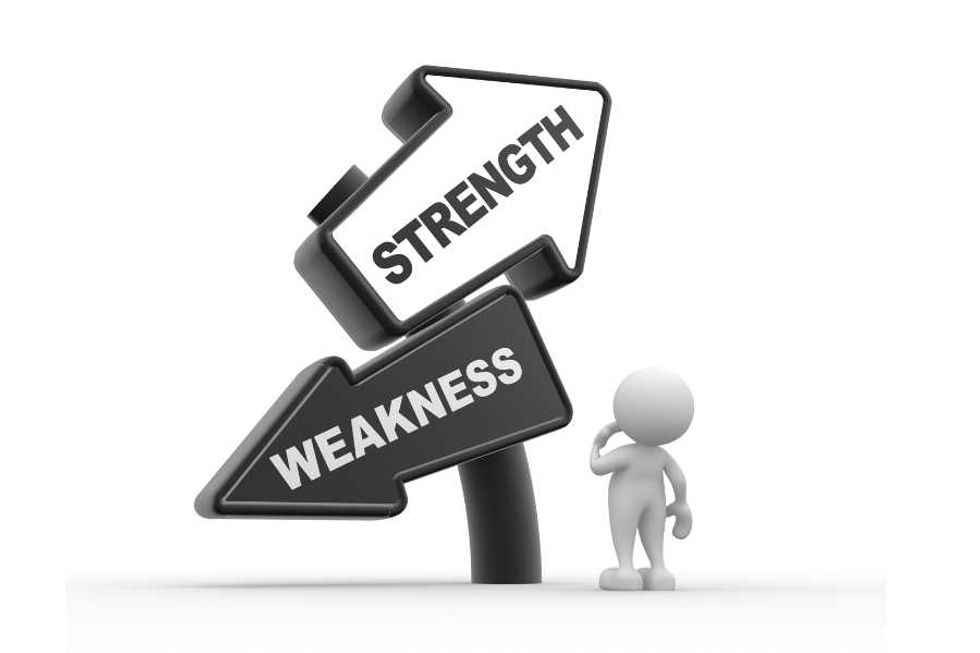
strengths, weaknesses,  imposter syndrome, psychology, self-doubt, Imposter syndrome is very common. Photo credit: Canva

People who don't experience imposter syndrome trigger Brooks' "spider sense," putting him on alert, because it is often a sign of what's known as the "dark triad."

Dark triads, in business or in personal life, are people who are above average in three characteristics: Narcissism (It's all about me). Machiavellianism (I'm willing to do what it takes, including hurting you to get my way.) And psychopathy (to be psychopathic, which is to say, I'm going to hurt you and feel no remorse.) You might think that that's super rare. It's not. One in 14 people in the population is above average on those three characteristics. Dark triads are 7% of the population. You know them. They've broken your heart. They've been disloyal to you. They've taken credit for your work. They've made life miserable, and you try to avoid them."

Brooks says that "good, normal, healthy" people will almost assuredly experience imposter syndrome from time to time, wondering if they have really earned and deserve their success and if they're really up to the task.

 imposter syndrome, psychology, self-doubt, strengths, weaknesses, Self-doubt is normal. Photo credit: Canva

"What you're doing here, as a healthy person, is that you know what you're good at, and you know what you're not good at," he says. But other people only see what you're good at. You see your full internal landscape, and you can see what you're still trying to get better at. But that's not what the world sees.

"They're looking at the ways that you're creating value," Brooks says. "You're looking at the ways that you can't create value yet. And you tend to focus, because of what psychologists call negativity bias, on what you don't have as opposed to what you have. When you focus as a striving, hard-working, ambitious, and upwardly mobile person on what you don't have, you're going to feel like an imposter. That's just the way it is, unless you're a dark triad."

No one wants to be a dark triad, so having imposter syndrome is actually a positive sign. But that doesn't make it easier to deal with.

How to make imposter syndrome work in your favor

Brooks says understanding your impostor syndrome and trying to get better at the things you see you're not good at yet is the key to using it as an opportunity for growth.

"If you feel imposter syndrome, that's great," he says. "That means all kinds of good things about you. But don't miss the opportunity. Don't miss the opportunity to focus on the ways that you actually can get better and keep striving more for it. Lean into the imposter syndrome without giving in to it. Lean in without giving in. When you're an accomplished professional, and you're upwardly mobile, and you're being successful, what that means is that people are focusing more on your strengths than your weaknesses. And it also says you have more manifest strengths than you do weaknesses."

That's a helpful reminder. If things are going in the opposite direction, your weaknesses may be taking center stage, but Brooks also reminds us that we're not all weaknesses and not all strengths.

strengths, weaknesses, imposter syndrome, psychology, self-doubt Use imposter syndrome to assess your strengths and weaknesses. Photo credit: Canva
"Here's the problem: If you're a well-adjusted person with a modicum of humility, you're going to feel like a loser when everybody else sees you as a winner, " he says. "But rest assured that when things are going well for you, that means that people are more focused on your strengths than they are on your weaknesses. Don't focus more on your weaknesses than your strengths, but recognize them, because that's your opportunity for growth and change and improvement."

Self-doubt is evidence of a healthy sense of humility, which is good. If we can reframe imposter syndrome, seeing it as a positive sign and an opportunity to determine which areas we can focus on to improve, perhaps it will feel less scary and more like a catalyst for growth.

You can see more from Dr. Brooks at https://arthurbrooks.com/.

Internet

Why chasing 1,000 rejections might be the key to your biggest dreams

Gabriella Carr asked for 1,000 “no’s.” The universe had other plans.

rejection, tiktok, viral, no's, challenge

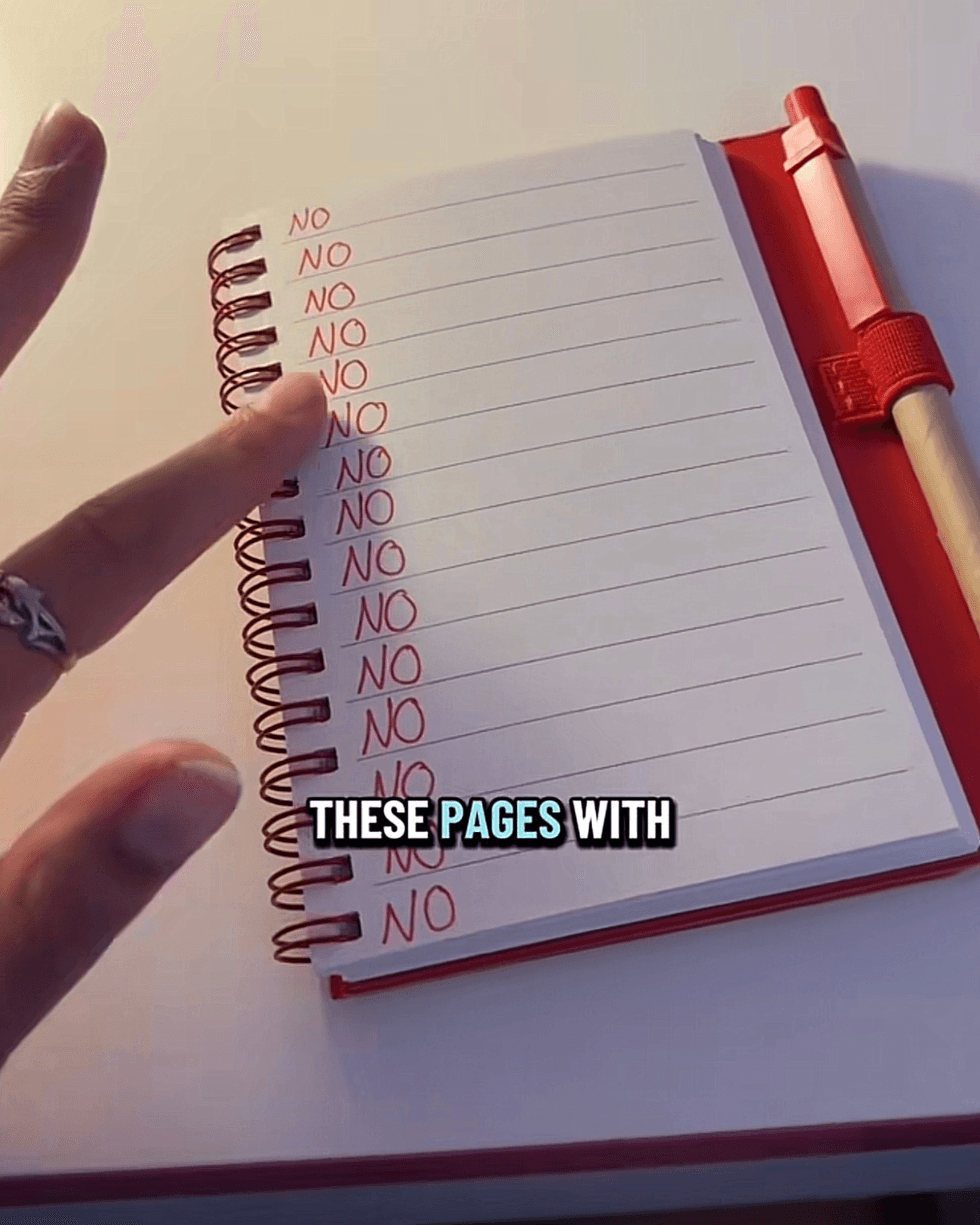
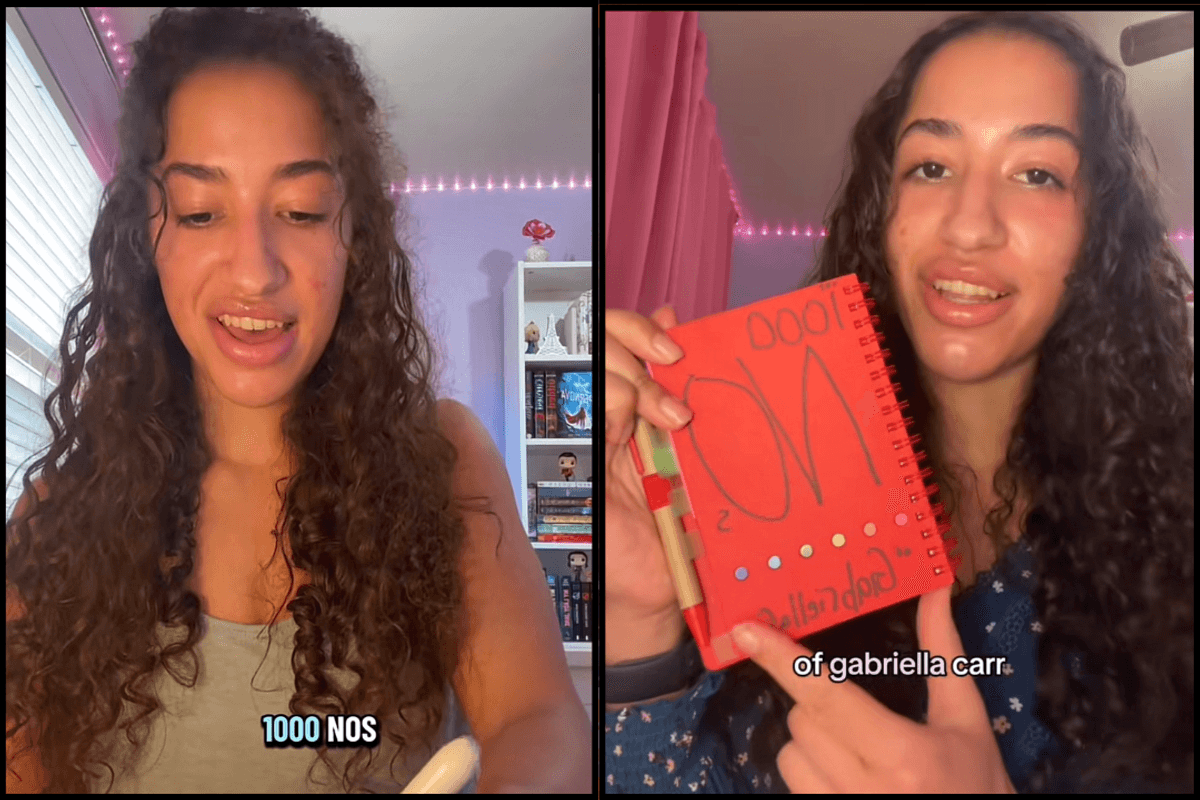
Gabrielle Carr introduces her "Year of 1,000 No's" notebook

If you opened Gabriella Carr's red notebook, you might expect to find a diary, a grocery list, or her homework. Instead, you'd find an organized, numbered list of failures.

That's one way to see it. Gabriella views it differently, though. To her, every entry in that notebook is a victory.


Gabriella, a content creator and actor, is embarking on a fascinating experiment she calls "The 1,000 No's." Her goal: to face rejection 1,000 times in a year. While the rest of us spend our days avoiding the word "no," Gabriella is hunting for it. She asks for opportunities she feels unqualified for. She puts herself in situations where rejection is likely.

Something unexpected happened on her quest for failure: she started to succeed.

In seeking "no's," Gabriella stumbled upon a life filled with unexpected "yeses." Her journey offers a fresh perspective on risk and rejection, and she's not alone in discovering the surprising power of failure.

The notebook that changed everything

Gabriella began her challenge in September 2025. As a creative, the sting of rejection was familiar. Casting directors passed on her self-tape auditions. Brand partners left her emails unread. The constant silence and dismissal started to take a toll on her self-worth.

She switched up her approach. Instead of striving for a "yes" and dreading denials, she set "no" as the goal.

rejection, tiktok, viral, no's, challenge This is where Gabrielle tracks her rejection journey.Photo credit: TikTok

Grabbing a red notebook and a permanent marker, she scrawled "The 1,000 Rejections of Gabrielle Carr" on its front and began to track her journey.

The results surprised her. Amid the rejections lay unexpected wins; she earned a spot in a national pageant she'd written off as a long shot and landed a role in a play.

When Gabriella shared her rejection journey on TikTok, it resonated with hundreds of thousands of people. They recognized their own fears in her red book.

"My daughter shared your account with me, and it inspired me to apply for my dream job! I haven't heard back yet, but yes or no, it felt good to be so daring!" read one comment. "I need to get an internship for spring, and I'm so scared," shared another. One viewer said that Gabriella's courage inspired them to apply for a federal job.

@misscuddy this challenge just gets us in side quests 😭 they took this so serious too so adorbs!#foryouu #nochallenge #rejectiontherapy #newyearsresolution ♬ original sound - Fbrl challenge creator

Users across the Internet are following her lead. TikTok user @theplanistobefamous tracks his outrageous haggling on Facebook Marketplace. Others record similar experiments—renegotiating lease agreements, asking strangers for fashion advice, pitching themselves to major brands for sponsorships.

Gabriella's experiment has led her to a powerful realization: what holds us back from our greatest dreams isn't a lack of talent or opportunity—it's the fear of asking.

Embracing the "no"

Gabriella follows in the footsteps of innovators who saw fear as their sole obstacle.

Jason Comely, a freelance IT specialist, first developed the concept of "Rejection Therapy" in 2009. After his wife left him, Jason felt isolated and hesitant to socialize. His fear of rejection had morphed into a psychological barrier, a self-imposed mental prison that prevented him from forming meaningful connections and living a free life. He recognized the trap he was in—and knew he needed to find a way to confront and overcome his fears.

To toughen up, he modeled his training after Russian special forces. He created a game with one rule: get rejected at least once a day. Accepted requests didn't count—he had to continue until he got a "no." This simple but powerful game became more than a personal experiment, resonating with people worldwide and blossoming into a global movement.

Jia Jiang took the challenge publicly as well. After a difficult rejection from an investor, he decided to try Jason Comely's "Rejection Therapy" experiment for 100 days. Jiang began recording his quest for no's, expecting to document a long string of awkward failures.

On day three, he strolled into a Krispy Kreme and asked an employee to make him doughnuts shaped like Olympic rings.

Jiang braced for laughter and a curt "no," but the employee caught him off guard as she began to sketch a design. Fifteen minutes later, she handed him a box of Olympic ring-shaped doughnuts, free of charge. This encounter went viral, touching millions with its heartwarming display of unexpected kindness.

In 2017, Jiang gave a TED Talk titled "What I Learned from 100 Days of Rejection," which garnered over six million views—one of the most popular lectures released that year.

Why rejection hurts (and how to overcome it)

If these experiments yield such positive results, why do we remain terrified of putting ourselves out there?

The answer lies in our biology. Psychologists have discovered that social rejection lights up the same areas of the brain as physical pain. In other words, hearing "no" triggers a reaction in your brain—the same one that activates when you slam a finger in the door or douse yourself with freezing water by accident.

rejection, pain, evolution, biology, psychology Social rejection feels just like physical pain to the brain.Photo credit: Canva

From an evolutionary perspective, this makes perfect sense. In the beginning, our ancestors relied on social groups for survival. Being a part of the tribe meant access to shared resources, protection from predators, and aid in child-rearing. Outcasts faced starvation and predators solo. Although we no longer live in small, nomadic tribes, your brain is still wired with that ancient software. It perceives modern rejections, like an unanswered text or a chilly response during a job interview, with the same primal panic as banishment from the group thousands of years ago.

This is why Gabriella's challenge works—it's a form of exposure therapy.

Exposure therapy is a well-established psychological method used to help people overcome phobias. The core idea is to gradually expose someone to the object of their fears in a safe and controlled way. For instance, if you have an intense fear of spiders, a good therapist won't place you in a room full of tarantulas. They'll ease you into it. The process might begin with something as simple as looking at a cartoon drawing of a spider. Once you're comfortable with that, you might move on to realistic photos, then to a video of a spider. By the end, you could end up in the same room as one or hold a harmless spider in your hands. This logical, step-by-step approach teaches your brain that what you fear isn't a real threat.

Gabriella's experiment works in a similar fashion. By seeking out small, manageable rejections—like requesting a song on the radio—she began to retrain her brain. With each mini-rejection, Gabriella's fear of hearing "no" faded, making it easier for her to take bigger risks, like signing up for that pageant.

Gen Z and the gamification of failure

This trend has seen a major resurgence with Gen Z viewers at the forefront. It's no surprise given today's challenges. Data shows Gen Z may be the "most rejected generation" in history. By February 2025, the average job posting received 244 applications. Young people sent out hundreds of resumes—and faced a wall of silence or boilerplate automatic rejections.

When life feels out of control, turning challenges into a game can help you regain a sense of agency. Instead of passively waiting and dreading rejections, people like Gabriella are making "no's" the goal. This shifts everything. This powerful reframing tool protects your self-esteem and spins a helpless situation into a conquerable hurdle—you can win the game by participating in life.

Ready to start your own rejection challenge?

You don't need to aim for 1,000 rejections or a "no" every day to benefit. If you want to strengthen your own "rejection muscle," here are some simple strategies to get started.

questions, bravery, asking, rejection, exposure Asking questions can be a form of bravery.Photo credit: Canva

Start with low-stakes requests

Begin by asking for something minuscule, like the time from a stranger. The goal is to feel that jolt of anxiety—then realize you're okay.

Know when to stop

Pushing your comfort zone is healthy, but remember to stay safe. As psychologist Dr. Elisabeth Morray explains, forcing yourself into situations that feel unsafe can yield traumatic outcomes. Know your limits—the goal is growth, not distress.

Track your data

Take a cue from Gabriella and use a pen and paper to record your rejections. Writing them down by hand helps externalize the experience, turning an uncomfortable memory into banal data entry.

Reframe the outcome

Remember what Jia Jiang learned: the worst thing someone can say isn't "no." It's that you never even asked. When you stay silent, you reject yourself by default. Keep in mind that with every brave request, you open the door for the universe to say "yes."

The beautiful truth about "no"

We spend an obscene amount of time trying to be perfect and dodging the embarrassment of disapproval. But people like Gabriella Carr, Jia Jiang, and Jason Comely show us the vibrant, exhilarating world that awaits on the flip side of fear. Rejection is an inevitable part of being human, but there's no shame in asking.

Every "no" in Gabriella's notebook marks an act of courage—an opportunity to embrace possibility over comfort. Within those possible 1,000 rejections lie the "yeses" that will shape her life: the plays, the pageants, and the moments she would have missed if she'd chosen to stay silent.

Buy your red notebook. Approach a neighbor with the favor that's been on your mind. Apply for the job that seems out of your league. The worst outcome? "No." And as Gabriella has shown, hearing a "no" isn't the end of the world—it's proof that you were courageous enough to take the leap and try. Each attempt, no matter how disastrous, is a step forward. You're proving to yourself that you are willing to endure uncertainty to pursue what matters to you.

sleep, sleep tricks, sleeping techniques, science, scientific research, placebo effect, placebo

Tired man (left); energized man (right)

The benefits of getting a good night's sleep are too vast to name. Sleep is as essential for our brains as food and water are for our bodies. If you're not getting enough, sleeping better has been shown to elevate your mood, improve your memory, and even boost your physical health. And then there's the obvious: when you don't sleep well, you'll have less energy and generally perform worse on tasks that require any kind of effort or thought.

However, we're all human, and, sometimes, humans sleep terribly. Your infant might wake you up, or a car alarm might go off outside, interrupting your regularly-scheduled REM. It's not always our fault when we don't sleep well, but there might be an interesting way to fix it.


A study from 2014 may have demonstrated the existence of something called "placebo sleep," or tricking your brain into believing you slept better than you did.

sleep, sleep tricks, sleeping techniques, science, scientific research, placebo effect, placebo a man sitting at a desk with his head on his arms Photo by Vitaly Gariev on Unsplash
The placebo effect, of course, has been studied relentlessly over the years and has shown that the human body can do amazing, almost impossible things, when the brain gets on board. The classic example is when symptoms of disease get measurably better after a patient takes a "fake" pill. Another study out of Harvard showed that people who were told their jobs qualified as exercise showed improved health and fitness markers compared to people who did the same job. Placebos even work when the person knows they're taking a placebo. It's called an "honest placebo" and is considered a legitimate, ethical treatment method for many ailments.

The researchers in 2014 wanted to find out if the placebo effect could also apply to sleep. So, they lectured a group of participants about the importance of REM sleep and how it can effect cognitive functioning. The participants were then split into two groups and monitored overnight while they slept. The next morning, one group was told they achieved 28.7% REM sleep, which is terrific, and the other group was told they only spent 16.2% of their sleep time in REM, which is below average. The numbers, however, were complete fiction.

Stunningly, the participants who believed they achieved top quality sleep performed better the next day on a series of arithmetic and word association tests compared to the other groups.

In their conclusion, the authors wrote, "These findings supported the hypothesis that mindset can influence cognitive states in both positive and negative directions, suggesting a means of controlling one's health and cognition."

According to Smithsonian Magazine, follow up experiments confirmed the findings.

The key to feeling great and performing as if you had a great night's sleep may lie in simply believing that you did.

There are a lot of ways to "placebo your sleep" in order to generate that belief. For starters, you can adopt a new routine or technique or even supplement in order to prime your brain.

John Cline Ph.D. asserts for Psychology Today that the popularity of sleeping aids like melatonin may be tied less to the fact that they work, and more to the fact that people believe they work. But you don't need to take any supplements or medications. Having a slow evening wind down with a book and an herbal tea, trying a new sleeping position, or practicing some measured breathing might work just as well. Or, rather, they might work precisely because you believe they will.

sleep, sleep tricks, sleeping techniques, science, scientific research, placebo effect, placebo Can a warm cup of tea help you sleep better? If you believe it, then yes. Photo by Dana Ciurumelea on Unsplash
You could take the concept a step further and alter your morning routine on nights you know for a fact you didn't sleep well. Perhaps it's by using a new coffee brand, doing some stretches before getting out of bed, or meditating before starting your day. Anything that you truly believe might help make you more alert and focused may just work.

One viral social media sleep trend capitalizes on this research perfectly. Researchers have shown that forcing your mouth into a smile has been shown to improve your mood. Turns out, similarly, you may be able to get sleepy by pretending to be super tired. Psychologist Erica Terblanche calls it the "alpha bridge," and it involves gently closing your eyes, fluttering them open just a tad, and then closing them again as you relax and breath. It simulates the feeling of "nodding off" and is said to create the alpha brainwaves that transition your brain from wakefulness to sleep. It's another clever way of tricking your own brain.


@erica.terblanche

Here's a skill to help you fall asleep on an airplane or anywhere else for that matter. . Its called going over the Alpha Bridge. #EricaTerblanche #ThriveGuru #motivation #sleeping

It sounds cheesy, but the power of mindset and positive thinking is truly tremendous. Our beliefs and thought patterns can greatly influence our body, our behavior, and our mood. Sometimes, our mindset can even be stronger than actual reality. Now we have the data to prove that it applies to our precious sleep, too.

Mental Health

Google productivity expert says 'fun homework' makes you happier. Here's why it actually works.

The simple trick Google productivity expert Laura Mae Martin swears by.

productivity, book, google, expert, homework
Photo credit: Canva, Laura Mae Miller

Laura Mae Miller is rewriting the book on productivity.

We all know the feeling: You walk through the front door after a long day, or slam your laptop shut, and the weight of the world slides off your shoulders. Your overworked brain, desperate to relax, entices you to collapse onto the couch and scroll through your phone until it's time to sleep.

But is this the best way to recharge? By doing nothing? Experts say no.


@xparmesanprincessx Spending this cozy Sunday planning my curriculum for 2026 📚✍️ I’m going to break my year up in to 4 semesters with different themes and focuses for each month and have more long term learning projects like relearning Spanish! #curriculum #learning #personalgrowth #personalcurriculum #books ♬ original sound - Elizabeth Jean

A fascinating practice on social media called the "personal curriculum" is trending. Championed by Google executive productivity advisor Laura Mae Martin, the concept is simple yet counterintuitive. The idea is to assign yourself "homework"—not to earn a degree, promotion, or extra cash, but for the pure joy of learning. TikTok user Elizabeth Jean also helped popularize the term "personal curriculum," and posts videos with tips on how to create your own.

Adding tasks to an overflowing to-do list might sound like a recipe for burnout, but Martin suggests that a structured, self-directed learning plan can boost energy, sharpen the mind, and restore a sense of identity.

The unexpected science of "fun homework"

It's easy to compare our brains to batteries that drain during the day and require total rest to recharge. But cognitive science shows that our minds are more like muscles. To stay healthy, we need new and interesting activities that challenge us.

When we engage in what researchers call "cognitively stimulating activities," the physical structure of our brains changes. A 2017 report from the Global Council on Brain Health highlighted that keeping the mind active is essential for maintaining brain health as we age. Creative activities like painting, photography, or writing can reduce cortisol levels, lowering stress hormones and creating an emotional regulation loop that leaves you feeling refreshed and ready for the next day.

A systematic review in BMJ Open found a clear link between lifelong learning and a lowered risk of dementia. Researchers explained that challenging the brain with new information builds cognitive reserve, a.k.a. its ability to adapt and remain resistant to damage.

Think of it as investing in your mental future. Each time you tackle a new language lesson or deep-dive into Renaissance art history, you're strengthening your brain in ways that can last a lifetime.

Redefining what it means to be productive

The word "productivity" can carry heavy connotations. It suggests endless checklists, exhausting efficiency hacks, and squeezing every drop of output from our waking hours. Laura Mae Martin offers a refreshing alternative, defining productivity in simple terms: "Productivity is accomplishing what you intend to do, when you intend to do it."

This meaning allows us to reclaim our time. It shifts our mindsets from external validation to internal satisfaction.


How to build your syllabus

Let's put this in practical terms. How do you bring these "nice ideas" into the real world? By creating a "personal curriculum" and treating it with the same respect you would have for a college course. Humans respond well to structure and deadlines. Here's how to create a syllabus that sticks:

  1. Follow the spark: Genuine curiosity must drive your personal curriculum. If you hated calculus in high school, don't pick it up again for arbitrary reasons, like trying to feel smart. Look for subjects that make you lose track of time. Identifying every tree in your neighborhood could be one, or mastering the perfect sourdough loaf.
  2. Diversify your materials: Learning exists everywhere, not solely in dense textbooks. Keep required texts engaging and fun, mixing in podcasts, workshops, flashcards, and documentaries. If you are learning a new language, listen to an album in that language. If you're studying paleontology, visit a local natural history museum.
  3. Set the scene: Get yourself in the zone with a little learning mise en place. Find a specific chair and reserve it for reading, or flipping through flashcards. Make a study playlist and fill it with songs to play in the background. When you sit in that chair, or hit play, you are signaling to your brain that it's time to switch into "student" mode.

The 20–30 minute rule

Don't spend all your free time on this. Overload is the greatest pitfall with personal curriculums. We get excited, plan to study every night for two hours straight, then find ourselves exhausted and discouraged.

Sustainability lies in the "Goldilocks" rule for time commitment: keep sessions between 20 and 30 minutes.

Simple 20–30 minute blocks fit into even the busiest schedules yet, they're long enough to achieve a flow state.. Slot one in after dinner or while drinking your morning coffee.

Valerie Craddock, a content creator, shared her November curriculum on TikTok, embracing this method. It included gentle, actionable goals: walk 8,000 steps, practice penmanship three times a week, work out for 30 minutes. By keeping her curriculum low stakes, Craddock set herself up for a winning streak instead of a guilt trip.

Make room for what matters

How do you protect this newfound time? Martin suggests a simple but effective tactic: integrating your personal calendar with your work one.

This gives you a complete view of the week. You might see Tuesday packed with meetings, so you'll make a mental note to keep that evening free. Thursday looks much lighter, offering the perfect window to pencil in that 30-minute creative writing session.

productivity, book, google, expert, homework Woman working, productively.Photo credit: Canva

An approach like this helps you honor the natural ebb and flow of energy, and prevents you from overcommitting on days when you're already drained. When you schedule "fun homework" with the same seriousness as an All-Hands meeting, you're sending yourself a powerful message: personal growth is as important as obligations.

Redefining "you"

One of the most rewarding aspects of the personal curriculum is its ability to reshape our sense of self. In a society obsessed with asking, "What do you do for work?" discovering an answer that's not attached to a paycheck can feel freeing.

When you learn, you transcend the role of parent, employee, or partner—you become a historian, linguist, painter, or botanist.

Buy the notebook, write a syllabus, and enjoy becoming a beginner again. You might discover that a little homework can unlock the key to reconnecting with yourself.

parenting, parenting advice, boomer parents, baby boomer parents, millennial parents, millennial parenting

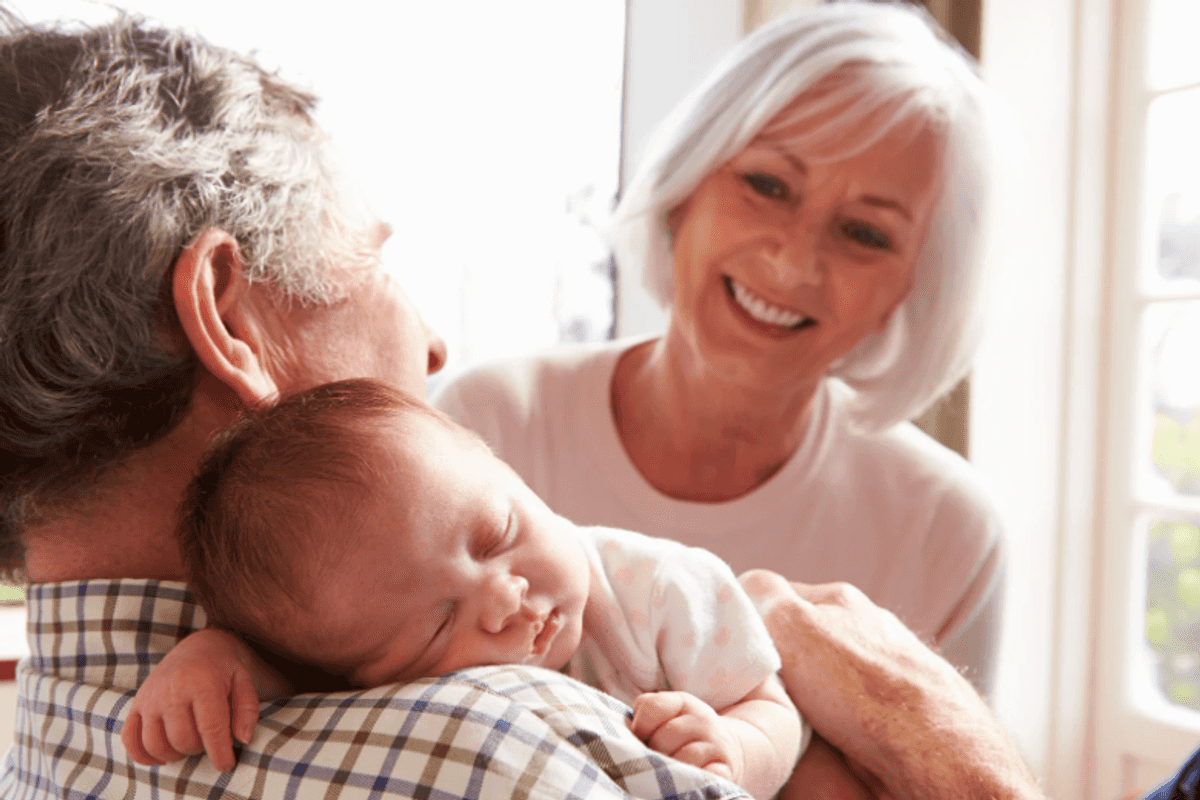
A man holds a baby as a woman looks on.

There are seemingly endless generational differences in parenting between Millennials and their Baby Boomer parents. As grandparents, many Boomers have been described by Millennials as absent. They've also been labeled with "gramnesia," a blend of "grandparent" and "amnesia," referring to how many seem to forget what raising kids was really like.

One Millennial mom shared a similar take on Reddit, explaining that her Boomer parents made it seem like raising babies was far less taxing for them than it is for modern-day parents.


She wrote, "Everyone I've talked to, their parents make it seem like 'back in the day' all babies just slept. They put them in their cribs and they napped and slept and had no problems and it was just rainbows and sunshine. No contact naps, no sleep training etc. Are they misremembering? Was it just easier??"

Fellow Millennial parents offered experiences and insight with their Boomer parents that felt validating.

millennial mom, millennial parents, raising babies, baby, boomer parents An exhausted mom and her baby.Photo credit: Canva

Millennials share receipts on Boomer parenting

Many Millennials agree that the Boomer perspective on raising kids is skewed:

"I know one boomer who put earplugs in and ignored her baby all night. She'll tell you baby slept through the night. The grandma who lived in the house with them and actually got up for the crying baby might tell you a different story." - TraditionalManager82

"My mom was like 'I thought you were sleeping through the night but your 13 year old brother was actually getting up to take care of you'." - Stepharoni523

"My mom gave us dimetapp 🤣 can't imagine doing that to my kid." - ChoptankSweets

"My boomer mom told me she would put me down for a nap and go for a walk around the neighborhood while I cried." - AppropriateAmoeba406

@johnnyhilbrant

Your boomer parent comments on your parenting… #boomer #parenting #millennial #fyp

"Yep, my boomer MIL visited when my eldest was a week old. Baby started crying because it was time to eat. As I tended to her, my MIL told me to just put her in her crib, close the door to the nursery, and go do something for myself out of the house. Like get my nails done, go have coffee, etc. She said that's what she did with all of her kids. 'They're in the crib, so they can't get hurt' was her reasoning. She also felt I was 'spoiling' my 6 pound baby by feeding her when she was hungry. I was HORRIFIED and never left her alone with my babies no matter how much she offered." - littlebittydoodle

"They weren't held to even half the standards parents today are held to. It was easier because many of them were terrible parents, and that was just fine." - allie06nd

"Even 'good parents' following the recommended guidelines of the time would generally be considered sub-par by today's standards. I also think there is so much more information and awareness of the importance of early childhood development today. This has led to added stress and pressure on today's parents to influence development as positively as possible. And parents feel responsible for any setbacks, real or perceived." - heycarlgoodtoseeyou

Some Millennials defend Boomers

Not everyone agreed that Boomer parents simply had it easier, and they explained why:

millennials, millennial parents, millennial parenting, modern parenting, tired mom A mom yawns while feeding her baby.Photo credit: Canva

"I think there is some truth to the idea that babies generally slept better. The advice then was to lay babies down on their bellies, and many babies do sleep better that way. But of course, it's also more dangerous and not worth the risk, so the advice now is to sleep safely on their backs. But for all of the babies who were luckily able to sleep safely that way, there's a good chance that the parents slept better too." - mdb_la

"Yeah, it's an evolutionary thing. We forget how horrible it was otherwise no one would ever have a second child." - tonyrocks922

"My mom just doesn't remember a lot of the details. I think that goes to show that it really does go quickly and is a faint memory one day. My mom is always saying 'I honestly don't remember this with you girls, so it must not have been that bad!' 🤪 I have a 4 year age gap and I even forgot about the newborn stage. It's just a blur now. I also think no social media/internet at their fingertips back then is also a huge part. Parents just…parented and didn't have constant communication with the 'outside world'." - SaveBandit_02

"I asked my granny how she raised four kids because I struggle with just two of them. She said she thinks I put more into it than she did. So I'm guessing they didn't worry themselves over a lot of the details millennials do. Knowing that I'm making life harder on myself than past generations did doesn't change my behavior, but I do feel more capable and calm and less wrecked when I remind myself that I am choosing to be a highly involved and engaged parent, it's not a requirement, and I am giving them everything I've got of my own free will." - dammitjenna